Login
Login
This Clavichord is a Well-Tempered Project
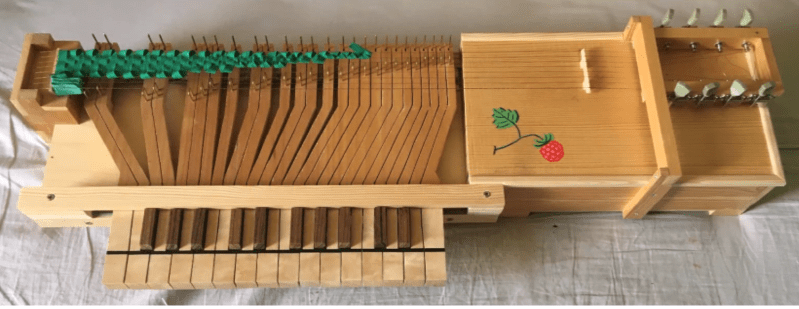
The Clavichord needs no introduction to fans of Early Music, and a lengthy one to literally everyone else. Even classical music buffs who have heard of Bach’s works for the “Well-Tempered Clavier” — another word for clavichord — will mostly have heard them performed on Piano. That is perhaps fitting, as the clavichord is a distant ancestor of the modern piano. It has keys — though fewer of them than a piano — whose action strikes strings — though much, much fewer of those than a piano, as each string is required to generate multiple notes. [Ian Summers] has an excellent guide on how he built his, though be warned that that link goes to a PDF and the SSL certificate was having problems as of this writing. If you aren’t comfortable grabbing a PDF over old-style HTTP, we’ve embedded the demo/build video below so you can give a listen to what this pre-piano instrument sounds like.
[Ian]’s Clavichord isn’t a pure reproduction of a historical example, which makes it unusual in the world of Early Music where most obsess over authenticity. That means [Ian] was able to document his design decisions and why he built the instrument the way he did. There are two octaves and ten strings, which means each string is expresses two or three notes since this instrument is fully chromatic– that means there are ‘dark’ keys for the sharps/flats. Like a piano, the keys whack the strings to make sound, but unlike a piano, they do so directly: no mechanism and no hammers, which makes for some interesting differences in the sound. You can add vibrato, for instance.
[Ian] accomplished this build entirely with traditional woodworking, unlike the 3D printed piano mechanism we saw recently. There’s enough meat in the guide, and the instrument is simple enough that we suspect it would be easy enough to adapt the design to make it with extruded plastic or laser-cut parts, like this Zither.