 Login
Login
Noise wants to help everyday people become paid content creators
Marketing platform Noise is on a mission to help anyone with a smart phone make money from their content.

I’ve made plenty of lentil soups, but this lentil potato soup is the one I keep coming back to. It always wins on flavor and nutrition, and I’ll tell you the simple techniques that make it unbelievably flavorful every time. Each serve packs 20g Protein 14g Fiber (gluten-free, soy-free, nut-free)

This pot of lentil potato soup, including the toasted seed topping, has 75+ grams of protein, 56 grams of fiber, 24 milligrams of iron, about 700 milligrams of magnesium, 12 milligrams of zinc, plenty of omega fats, and lots of vitamins A and C, along with calcium.
This lentil soup has so much flavor from the way we build up the flavor profile and spices. It is hearty with plenty of veggies and kale, and then we level it up with a toasty seed topping that not only adds amazing texture but also boosts the nutrient profile of the soup.
The lentils bring protein, fiber, iron, and folate. Kale adds vitamins K, C, and A, along with calcium. Pumpkin seeds, hemp seeds, and sesame seeds bring magnesium, zinc, calcium, omegas, and even more protein. The potatoes add vitamin B6 and potassium, while the carrots contribute beta-carotene. This lentil soup is truly a powerhouse of nutrients.

To level up this lentil potato soup, we first toast the garlic in the oil. Toasting the garlic releases its flavor into the oil, and then we add the onion. The onion stops the garlic from continuing to cook, so you get perfectly golden garlic without burning it. Next, we toast the tomato paste with the onion. This caramelizes the tomato paste and builds even more umami into the soup.
After that, we build layers of flavor with herbs and spices. I use oregano, but basil or thyme work just as well.
Then, I make a quick harissa-style spice blend with ground coriander, cumin, onion powder, and smoked paprika. You can also use a prepared harissa blend, sumac, shawarma spice blend, baharat, curry powder, or Cajun seasoning. All of these work wonderfully here. I also add black pepper to deepen the flavor and add a gentle heat.
These layers of herbs and spices create an incredibly flavorful broth for the lentils and potatoes to cook in.

The potatoes are added midway through cooking, so they become perfectly tender while still holding their shape. They soak up all of the delicious broth without falling apart. If you prefer a thicker soup, you can add the potatoes at the beginning, so they break down into the broth.
Toward the end of cooking, we stir in plenty of kale to make the soup even more nutrient-dense.
Finally, we make a quick toasted seed topping with pumpkin seeds, hemp seeds, and sesame seeds. The seeds are toasted with lemon zest, which adds a bright, zesty flavor that pairs beautifully with their nutty richness. We finish the topping with Aleppo pepper flakes for a smoky, gentle heat. If you don’t have all three kinds of seeds, use one or two instead, but definitely make the topping. It adds incredible texture and flavor to every bowl of this lentil potato soup!

Continue reading: Lentil Potato Soup with Crunchy Seed Topping
The post Lentil Potato Soup with Crunchy Seed Topping appeared first on Vegan Richa.

Seattle-based Interlune has raised $5 million in fresh funding to support a business plan that involves building space infrastructure as well as mining the moon for helium-3 and other valuable resources.
The funds were raised through a Simple Agreement for Future Equity, or SAFE, in which investors provide upfront cash to a startup in exchange for shares to be issued during a future priced round. Interlune used the same approach to raise $5 million earlier this year.
Interlune said existing and new investors participated in its latest SAFE offering, which came to light today in a regulatory filing with the Securities and Exchange Commission.
“The company’s continued traction with government contracts, along with major milestones across the space ecosystem over the past year, makes this a beneficial approach ahead of our next priced round,” Interlune CEO Rob Meyerson said in an emailed statement.
When Interlune was founded in 2020, the company focused primarily on developing technologies for extracting resources from lunar rocks and soil, also known as regolith. Helium-3 leads its target list because that material is more abundant on the moon than on Earth and is highly valued for applications ranging from medical imaging and quantum computing to fusion power. The price for helium-3 can exceed $9 million a pound.
Meyerson noted that Interlune’s business plan is no longer limited to space mining. “In response to growing market demand, we’ve expanded our product offering to include space infrastructure and survival services, leveraging the same technologies we’ve been developing to harvest natural resources from space,” he said.
In July, Interlune announced it was expanding its partnership with Vermeer, an Iowa-based industrial equipment manufacturer, to develop construction tools for use on the moon. Such tools could support NASA’s 10-year, $30 billion initiative to build the infrastructure for a moon base. Interlune is also adapting its helium-3 extraction process for terrestrial applications.
The company is planning to send its first payload — a mineralogical mapping instrument — to the moon later this year aboard Voyager Technologies’ Griffin-1 lander. Follow-up missions will characterize the moon’s helium-3 reserves and test technologies for excavation and extraction. Interlune plans to start harvesting lunar helium-3 and bringing it back to Earth in the 2030s.

It’s the final call to recognize the Seattle area’s boldest innovators — nominations for GeekWire’s 2026 Uncommon Thinkers Awards close this Friday. Help us select individuals who challenge conventional thinking, push boundaries and make an impact across the region.
Now in its fourth year, and in partnership with Greater Seattle Partners, the program aims to honor inventors, scientists, technologists and entrepreneurs who are transforming industries and driving positive change throughout the world.

Community nominations will be accepted through Friday, Sept. 18 at 11 a.m. PT, after which a panel of judges will select honorees. They’ll be celebrated on stage during a VIP reception at the annual GeekWire Gala on Dec. 10. Early-bird tickets available here.
Honorees are selected based on innovation, creativity and leadership and should have a track record of introducing novel ideas, technologies, or solutions that challenge the status quo. Nominees should also demonstrate a measurable and meaningful impact on their respective fields or industries, contributing to the betterment of society.
Do you know an Uncommon Thinker deserving of recognition? Fill out the nomination form today.
Read the GeekWire profiles of last year’s Uncommon Thinkers honorees:
Thanks to First Tech Federal Credit Union, the title sponsor of this year’s GeekWire Gala. For a recap of last year’s event, head here.
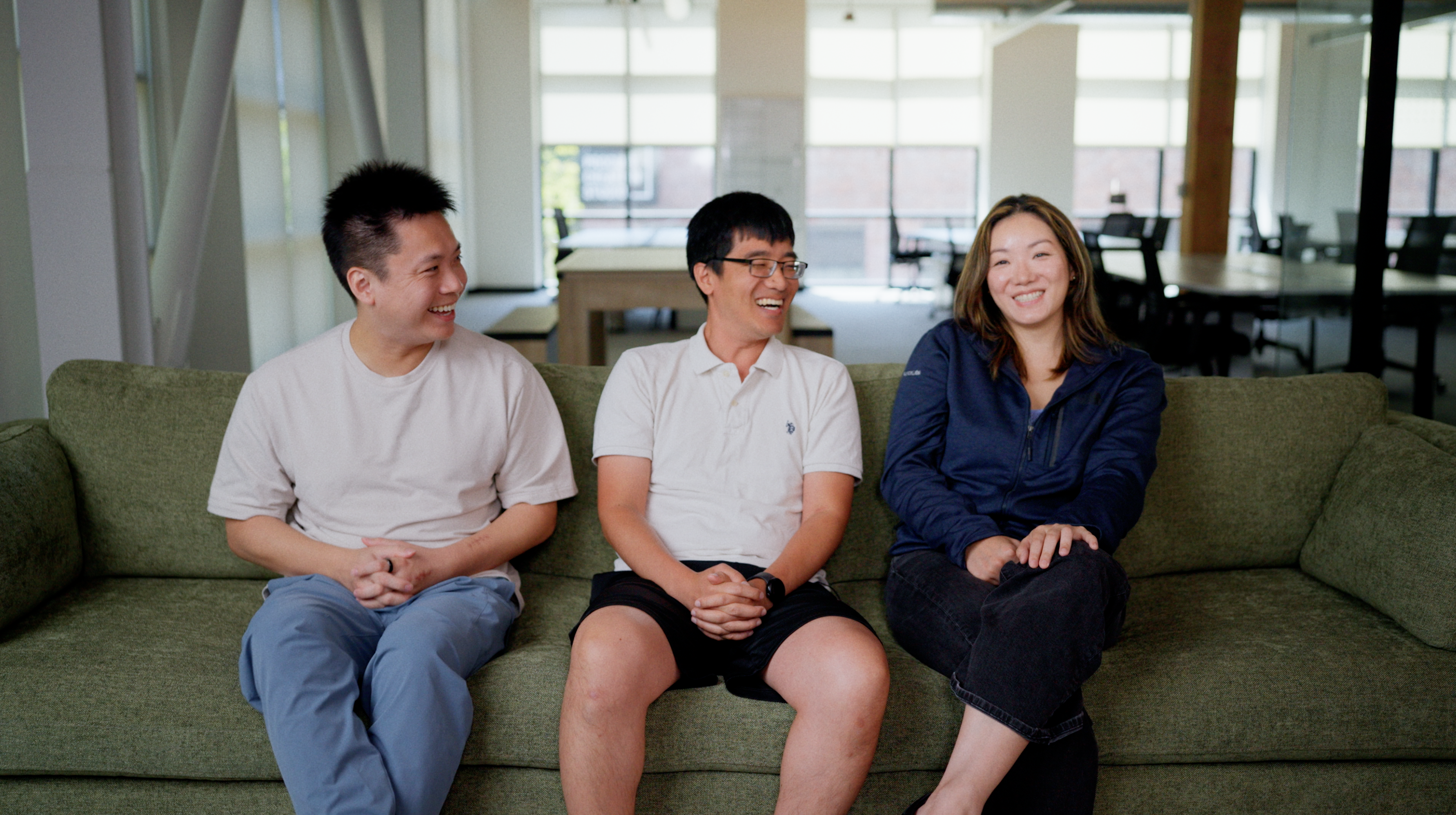
Nuance Labs, a Seattle-based artificial intelligence startup developing a foundational AI model designed to perceive and respond to real-time human expression, raised $50 million in Series A funding.
Founded in early 2025 by former Apple PhD researchers Fangchang Ma, Edward Zhang, and Karren Yang, the research lab is developing a single “full-duplex” foundation model designed to process and generate conversational cues simultaneously.
Unlike traditional setups that chain together separate tools for transcription, text generation, and voice or animation, Nuance’s model ingests live audiovisual signals like tone, gaze, and timing to stream real-time facial and vocal responses.
Existing avatars and voice tools fail because they force humans to adapt to the machine rather than the other way around, according to Ma, Nuance’s CEO.
“The most productive collaboration comes from being able to express yourself freely, in words, tone, gesture, and expression, the way you would with a friend or close colleague, with all the nuance in the back-and-forth that turns talking into understanding,” Ma said in a news release. “That’s what we’re building at Nuance Labs: AI that understands the many ways we express ourselves and responds the way a person does, in the moment.”
In a demo video accompanying the announcement (below), the startup showcased an avatar built to function as an active listener, adjusting its facial expressions and verbal cues dynamically as the user speaks.
Zhang, Nuance’s CTO, earned his PhD in computer graphics from the University of Washington and met Ma at Apple’s engineering office in Seattle. The two spoke to GeekWire last fall about building in Seattle rather than Silicon Valley and how they want Nuance “to be the premier research lab in Seattle.”
The startup plans to release a public research preview of its model later this year, giving users their first hands-on test of the interactive face-to-face avatar. Nuance targets applications where real-time human expression drives outcomes, including sales, customer service, professional coaching, and education.
Returning investor Lightspeed Venture Partners led the round, which also included participation from existing backers Accel and South Park Commons, alongside new investments from NVIDIA and Define Ventures.
The financing brings Nuance Labs’ total capital raised to $60 million following its $10 million seed round last year.
Nuance, which employs 27, plans to use the fresh capital to accelerate model development and hire researchers and engineers across modeling, data, evaluation, and real-time serving as it expands its team.
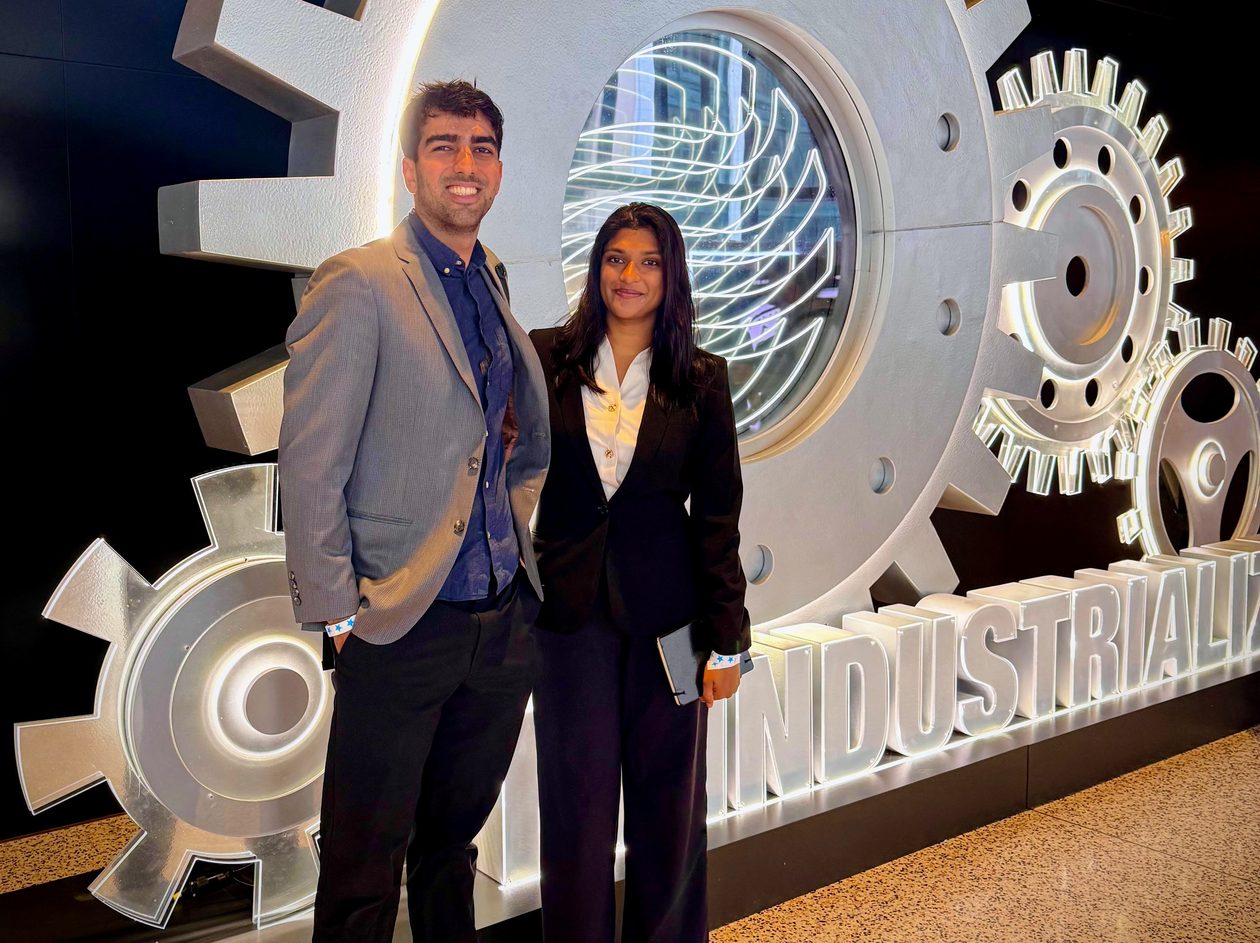
When machinists with decades of experience retire, everything they know about how metal behaves under a cutting tool — or anything else they learned through a career of scrapped parts and expensive mistakes — walks out the door with them.
A startup with roots in Seattle, started by two founders in their 20s, is building technology to capture that knowledge long before that point.
Neuramill, founded last year by CEO Nistha Mitra and COO Nick Khormaei, is developing what the company calls an intelligence layer for high-precision manufacturing.
The software reads a design file and figures out how the part should be made: which tools, which machines, and in what order. A machinist reviews and approves every plan before anything reaches the floor.
“This is a high-skill job, and nobody’s retaining this information,” Mitra said. When the machinists who know how to build complex jet engine parts retire, she said, that knowledge goes with them. “We help retain that for the future generation.”
Khormaei said the two founders spent much of the past year visiting machine shops to watch how the work gets done.
“The craft itself is so impressive,” he said. “They’re able to look at these drawings and models that come in and know exactly how to build it. It’s like they’re doing real-time physics simulation.”
Early customers and partners: The company says it has closed a six-figure contract with a major defense contractor, one of the companies known in the industry as primes. Neuramill declined to name the contractor.
Two of the machine shops using the software are Diamond Machine Works, a Seattle precision machining company founded in 1959, and VTN Manufacturing in San Jose, Calif. Satellite maker Astranis is a design partner.
Mitra said the company is not yet selling broadly, but has been paid by some of the early customers testing the software.
How they got here: Mitra, 26, has a computer science degree from the University of Maryland and spent three years at Oracle, most recently as an AI applied scientist in Seattle, working on multimodal models that reason across several kinds of data at once.
Khormaei, 24, holds bachelor’s and master’s degrees in electrical engineering from the University of Washington. He was a propulsion engineer at Boeing in Everett, where he worked on 777X fuel system electrical certification, and then spent part of last year at SpaceX as an integration and test engineer on Starlink manufacturing in Redmond.
He also grew up around machining. His father, Ron Khormaei, co-founded FINEX Cast Iron Cookware in Portland in 2012 and sold it to Lodge in 2019. Khormaei worked production there as a teenager.
Where the software fits in: Neuramill’s technology works at a stage that has stayed largely manual: after the design file arrives, and before a programmer opens the computer-aided manufacturing (CAM) software that translates decisions into machine instructions.
Rather than position the company against Siemens and Mastercam, Mitra said Neuramill plugs into those systems. The company recently joined Siemens’ Frontier Partner Program, which gives startups access to the company’s software tools.
“At this point we are very collaborative with these companies,” she said, adding that the established vendors are looking for new technology of their own.
Bay Area and Seattle: Both founders worked in the Seattle region before leaving for San Francisco, a move Mitra described to GeekWire in February. They are back every four or five weeks now, working out of Foundations, the Seattle founder hub.
“We love this ecosystem. It gave birth to Neuramill,” Mitra said. They keep coming back in part for the customers: “This is a booming ecosystem in space and in aerospace.”
Funding and team: Neuramill has raised an undisclosed amount from Ascend, Breakwater Ventures, Schema Ventures, Creative Destruction Lab, Acequia Capital and Correlation Ventures.
The team is six people plus a contractor: the two founders, a chief research scientist who worked with Mitra at Oracle, and three engineers, one of them a machinist.
What’s next: The long-term goal, Mitra said, is a “world model” for manufacturing: a system that can reason across geometry, materials and machine behavior at any level of complexity. Even then, she sees a role for the people on the shop floor.
“There is a beauty to the craft of manufacturing that we should really respect,” she said. “There are some places where humans should not be extracted out of an industry, and I think manufacturing is one of them.”
