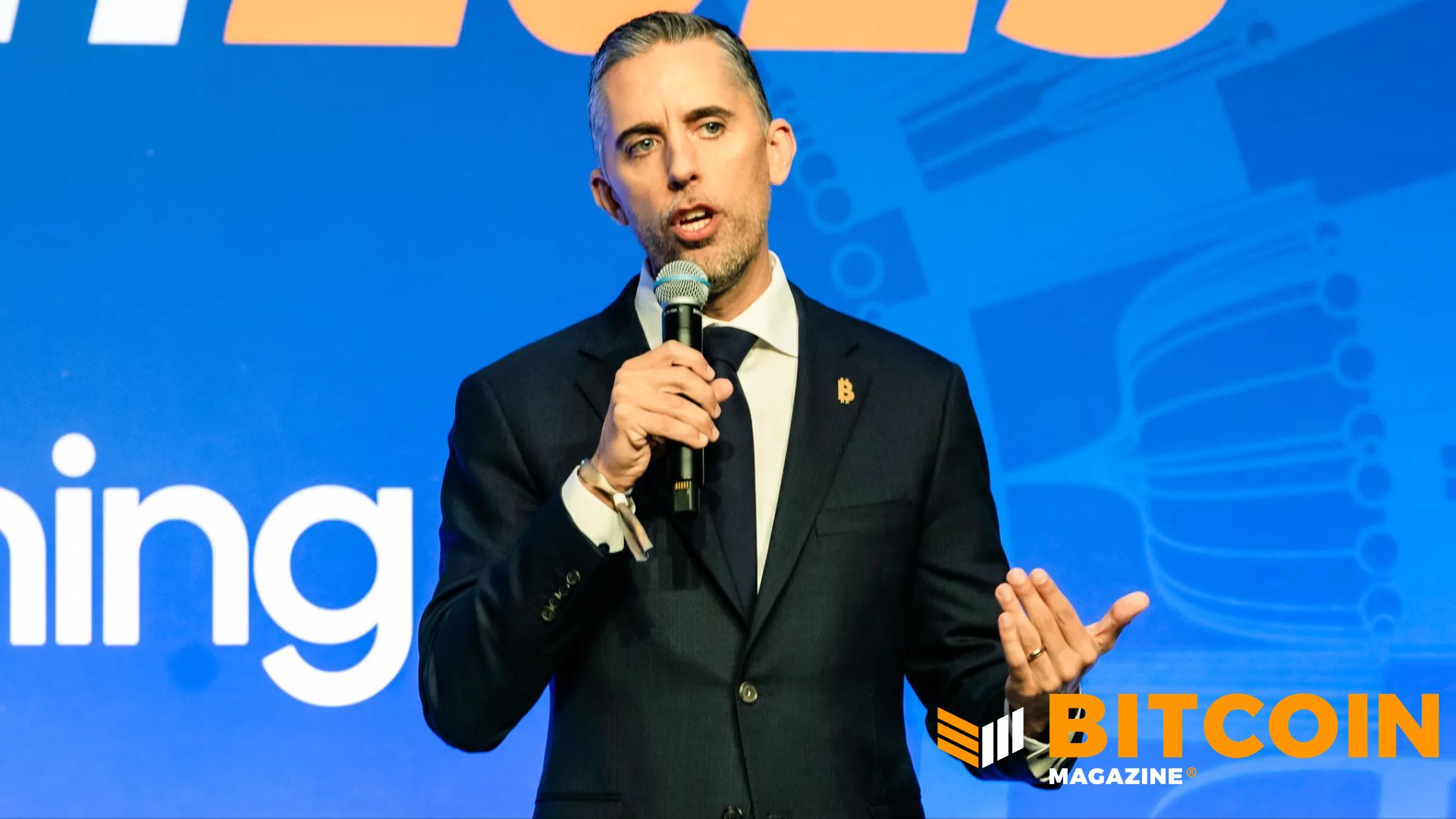
BitMine Immersion Technologies has purchased 28,086 ETH worth about $70.1 million, raising its Ethereum treasury to 5.93 million tokens as Chairman Tom Lee predicts further gains for the asset. BitMine’s Ethereum treasury has reached 5.93 million ETH BitMine said in…
European bitcoin treasury Capital B has announced a BTC buy, snapping up 376 coins — one week after it said Blockstream boss Adam Back was investing in the company.
The Euronext Growth-listed company said Tuesday that it now owns 3,521 bitcoins — worth over $277 million at today’s prices — making it the 25th biggest publicly traded bitcoin treasury in the world, according to Bitcoin Treasuries data.
Capital B’s buy was for €25.3 million (over $29 million), according to its announcement.
Capital B confirms the acquisition of 376 BTC for €25.3 million, the holding of a total of 3,521 BTC, and a BTC Yield of 2.17% YTD
Just last week, the company said that top bitcoiner Adam Back, who heads up bitcoin infrastructure company Blockstream, had invested €7.6 million ($8.8 million) in Capital B to help with its buys.
The firm in August said it had raised €21 million ($24 million) in a private placement backed by Back and asset manager TOBAM.
The bitcoin treasury’s stock was trading 2% lower on Tuesday.
Capital B built most of its bitcoin position through fundraising rounds during the first half of 2026.
In May, it snapped up 192 coins for €13 million after completing three capital raises.
The company, which calls itself “Europe’s first Bitcoin treasury company,” is trying to build a bigger bitcoin position as other treasuries look to raise funds and accelerate their buys.
Capital B says on its website that it wants to eventually hold 210,000 bitcoins. “Our objective is simple: accumulate 1% of Bitcoin’s total supply by 2033,” it reads.
Digital asset treasuries became big in 2025 as more publicly traded companies tried to follow in the footsteps of Nasdaq-listed Strategy (formerly MicroStrategy), which started buying bitcoin in 2025.
Hundreds of publicly traded companies started buying bitcoin — with many buying other cryptocurrencies — to boost their stock prices. But since the price of bitcoin started dropping, a number of them are now under water or have had to sell their holdings.
Strategy, the largest corporate holder of the asset, has this year slowed down its bitcoin buys and instead pivoted to building a stronger cash balance and buying back its stock as the price of its shares has tumbled.
Connecting Excellence Group (XCE) has signed binding Heads of Terms for its first proposed recruitment acquisition, targeting a specialist UK and U.S. recruitment business that generated £1.79 million in revenue and £431,000 in EBITDA over the last 12 months. The target also holds 8.216 Bitcoin.
The deal has not yet closed and remains subject to further due diligence, funding and a definitive purchase agreement. [Read XCE’s full announcement.]
Beyond the headline, the structure of the deal offers an interesting look at how an operating company can use M&A as part of a broader Bitcoin strategy.
XCE (AQSE: XCE | OTCQB: XCELF) wants to acquire profitable recruitment businesses, retain much of the earnings they generate, and expand the pool of internally generated capital available for growth and Bitcoin.
There is also a notable symmetry between buyer and target. XCE’s existing operating business, Spencer Riley, grew revenue 20.6% over its latest 12-month period. The acquisition target grew revenue 21.5% over the same period.
XCE is not simply looking to add scale. It is attempting to acquire growing, profitable businesses and bring them into a listed group with Bitcoin on its balance sheet.
Acquiring Earnings Power
XCE expects to pay £575,000 in initial cash consideration at completion. Approximately £425,000 would settle amounts owed to the target companies by the vendors and return to the group, resulting in an estimated net cash outflow of roughly £150,000 before transaction costs.
Another £60,000 cash payment is due in 2028, while much of the remaining consideration is deferred and tied to EBITDA performance through fiscal 2029. XCE expects to retain approximately 75% to 85% of the acquired business’s cumulative EBITDA during the earn-out period.
Compare that with the business being acquired: £1.79 million in trailing revenue, £1.27 million in gross profit and £431,000 in EBITDA, with revenue growing 21.5% year over year.
The objective isn’t simply to buy more revenue. XCE is attempting to acquire additional earnings power while preserving as much capital as possible.
If the business continues performing after completion, those earnings become another source of capital available for reinvestment, additional acquisitions and Bitcoin.
That is where M&A starts to become part of the Bitcoin strategy.
Acquiring the Balance Sheet, Too
The model can extend beyond revenue and earnings.
When an acquisition target holds cash reserves, XCE can structure a transaction to acquire that reserve from the seller and then change how that capital is held once it sits inside the group. In practice, that could mean raising capital to acquire £1 million of existing cash reserves and subsequently converting that reserve to Bitcoin.
The result is different from simply raising £1 million and spending it on Bitcoin. XCE is acquiring the operating business around the reserve as well: its revenue, earnings and future cash-generating capacity.
This proposed deal provides a direct example of the same principle, except the target has already made the conversion.
It holds 8.216 BTC.
Under the proposed terms, XCE would purchase that Bitcoin at market value with no premium. The cash paid would be matched by Bitcoin of equivalent value moving onto XCE’s balance sheet.
So the Bitcoin isn’t being acquired for free with the operating business. XCE is effectively exchanging cash for an equivalent amount of Bitcoin while separately acquiring the underlying earnings stream.
If completed, however, the transaction would expand both sides of XCE at once: another growing, profitable operating business and another 8.216 BTC on its balance sheet.
That combination is central to the model. An acquisition can potentially add revenue, EBITDA and balance-sheet assets at the same time.
A Decentralized Acquisition Compounder
How XCE intends to operate the businesses after acquisition is another important part of the strategy.
The company is targeting profitable, owner-managed specialist recruitment businesses, but it does not intend to absorb them into a single centralized operating brand.
Acquired companies retain their existing brands, management teams and operating independence while joining a publicly listed group backed by a Bitcoin balance sheet. That makes XCE’s model closer to a decentralized acquisition compounder.
Rather than attempting to create value primarily through integration and cost cutting, the strategy is designed to let individual businesses continue operating with autonomy while XCE provides permanent ownership, access to the listed group and centralized capital allocation.
XCE’s existing business gives some context for the type of growth it is looking to add. Spencer Riley generated approximately £1.84 million in revenue during the 12 months ended June 30, up 20.6% from the prior year. The proposed acquisition target grew at a similar rate, with revenue rising 21.5%.
If XCE can continue acquiring businesses with similar economics, the group can potentially compound by adding new earnings streams without dismantling the businesses producing them. Those earnings then feed into a common capital allocation framework in which Bitcoin is one potential destination.
Building More Than One Source of Capital
XCE isn’t relying on operating earnings alone to grow its Bitcoin position. The company reported 72.94 BTC as of September 1, up from 9.27 BTC at its December 2025 IPO. Capital markets activity has contributed to that growth.
Most recently, longtime investor Adam Back subscribed for new XCE shares through the transfer of 10 BTC to the company, increasing its Bitcoin holdings by 15.9%.
M&A introduces another source of potential capital alongside those transactions: earnings and balance-sheet assets acquired with the operating businesses themselves.
Put together, the model looks something like this:
Acquire profitable businesses → retain their autonomy and earnings power → grow group cash generation → allocate capital across further acquisitions and Bitcoin → repeat.
External capital can provide immediate purchasing power, as the Adam Back transaction demonstrates. Acquired reserves can add balance-sheet capital. Profitable operating businesses can continue generating capital as long as they perform. XCE is attempting to combine all three.
The Operating Economics Come First
Bitcoin does not make a poor acquisition a good one. XCE still has to acquire quality businesses at sensible prices, preserve their earnings power and allocate the resulting capital effectively. But the strategy illustrates how Bitcoin can fit inside a traditional operating company without becoming disconnected from the business underneath it.
The decentralized structure is important here. XCE does not need every acquired company to become a “Bitcoin business.” The recruitment companies can continue serving their customers, operating under their existing brands and generating earnings. Bitcoin sits at the group level as part of the broader capital allocation strategy.
The company can raise outside capital. It can acquire existing reserves and change how they are held. It can acquire profitable businesses and retain the cash they generate. Management can then allocate capital between operations, additional acquisitions, other corporate needs and Bitcoin. That is how XCE is using M&A to turn earnings into Bitcoin.
Not by automatically converting every pound of profit into BTC, but by building a decentralized group of profitable businesses capable of producing more earnings and making Bitcoin one destination for the capital they generate.
For operators, that may be the more interesting question: not simply how to find more capital to buy Bitcoin, but how to build a business capable of generating more capital in the first place.
Disclaimer: This content was prepared on behalf of Bitcoin For Corporations for informational purposes only. It reflects the author’s own analysis and opinion and should not be relied upon as investment advice. Nothing in this article constitutes an offer, invitation, or solicitation to purchase, sell, or subscribe for any security or financial product.
Boyaa Interactive has purchased approximately 205 Bitcoin for $14.3 million, raising its total holdings to roughly 4,316 BTC as the gaming company continues to deploy crypto assets across its Web3 projects. Boyaa Interactive International Limited said in a Sept. 4…
Abraxas Capital has bought another 13,000 ETH worth $32.39 million in the spot market to hedge part of a 141,180 ETH short position on Hyperliquid valued at $353.27 million. Lookonchain said on Sept. 8 that Abraxas Capital purchased the additional…
Strive has signaled another possible Bitcoin purchase after raising its holdings to 23,156 BTC, while its Nasdaq-listed ASST shares have climbed above $27 to a new yearly high. Strive Bitcoin purchase hint follows $143 million deal Matt Cole, Strive’s chairman…
Capital B has acquired 376 Bitcoin for €25.3 million after completing nearly €30.1 million in capital raises, taking the French-listed company’s strategic Bitcoin holdings to 3,521 BTC. According to Capital B’s Sept. 7 press release, the purchase was completed at…
Metaplanet has bought another 1,007 Bitcoin for $69 million, lifting its total corporate treasury holdings to 20,000 BTC.
The company said the latest purchase was made at an average price of $68,520 per Bitcoin. At that level, Metaplanet’s Bitcoin balance is now valued at more than $1.38 billion, making the Japanese company one of the most closely watched corporate BTC holders in the market.
This is not a recycled treasury update from August. It is a fresh purchase disclosure, and it shows Metaplanet is still adding to its Bitcoin position rather than simply sitting on earlier accumulation.
Metaplanet has become one of the clearest examples of the corporate Bitcoin treasury strategy outside the United States.
The model is familiar by now. A public company raises capital, reallocates reserves, or changes its treasury strategy around Bitcoin, then reports BTC holdings as a central part of its corporate identity. That approach has been made famous by larger names, but Metaplanet has carved out its own role in Asia.
The latest 1,007 BTC purchase keeps that strategy alive.
It also gives investors another exact figure to track. Corporate treasury stories can become vague if companies talk about Bitcoin without showing clear buying activity. Here, the numbers are specific: 1,007 BTC, $69 million, $68,520 average price, 20,000 BTC total holdings.
Why The 20,000 BTC Level Matters
Round-number milestones matter in markets.
For Metaplanet, reaching 20,000 BTC gives the treasury strategy a cleaner headline and a stronger identity. It also makes the company harder to ignore for investors tracking public-company Bitcoin exposure.
A larger BTC balance can increase visibility, but it also increases sensitivity.
When Bitcoin rises, the treasury can become a powerful part of the equity story. When Bitcoin falls, the same exposure can add pressure. That is the trade-off companies accept when they make BTC central to the balance sheet.
Metaplanet appears comfortable with that trade-off.
A Corporate Bitcoin Proxy
Some investors use companies like Metaplanet as indirect Bitcoin exposure.
That can happen when investors prefer equity markets, cannot hold Bitcoin directly, or want exposure to a company actively accumulating BTC. The equity wrapper changes the risk. Shareholders are not holding Bitcoin itself. They are holding a company whose value may become heavily influenced by its Bitcoin strategy.
That distinction matters.
Corporate Bitcoin holders can trade at premiums or discounts to the value of their BTC. They also carry operating, financing, dilution, governance, and execution risks that Bitcoin itself does not carry.
Still, the appeal is obvious. If a company can keep accumulating BTC and convince investors its strategy creates value, the stock can become part of the broader Bitcoin trade.
What Traders Watch Next
The next question is how Metaplanet funds future purchases.
Corporate Bitcoin accumulation often depends on access to capital markets. Companies may use equity issuance, debt, convertible instruments, operating cash flow, or other financing structures. The sustainability of the strategy depends on the cost of that capital and the market’s willingness to support more accumulation.
Bitcoin price also matters.
A rising BTC market makes treasury growth easier to sell to investors. A falling market tests conviction and balance-sheet resilience.
The Market Signal
Metaplanet’s latest purchase is another sign that the corporate Bitcoin treasury trade remains active.
The company is not just holding. It is still adding. The 20,000 BTC milestone gives traders a new reference point and strengthens Metaplanet’s position among public-company Bitcoin holders.
The key is not to overcomplicate the story.
Metaplanet bought more Bitcoin, disclosed the numbers, and pushed its treasury to a new milestone. The market will now judge whether that strategy continues to create value for shareholders.
This article draws on Metaplanet’s public Bitcoin purchase disclosure.
This article was written by the News Desk and edited by Samuel Rae.
This report is based on information released by X. at X
Top bitcoiner Adam Back has invested €7.6 million ($8.8 million) in Capital B, the Euronext Growth-listed company that bills itself as Europe’s first bitcoin treasury company.
The company said Wednesday that the investment will be used to buy more bitcoin. Adam Back is the CEO of bitcoin infrastructure company Blockstream, and one of the biggest and well-known figures in the space
Capital B’s announcement comes after the company last week said it had raised €21 million ($24 million) in a private placement backed by Blockstream’s Adam Back and asset manager TOBAM.
Capital B announces a €21.0 million capital raise with global institutional investors, including strategic investors Adam Back and TOBAM, to accelerate its Bitcoin Treasury Company strategy
“The proceeds of the Private Placement will be used primarily to strengthen Capital B’s balance sheet through the accumulation of bitcoin as a long-term reserve asset,” the company said in a statement.
“This capital increase is a key step in implementing the company’s Bitcoin Treasury Company strategy, focused on increasing the number of bitcoin per share on a fully diluted basis over time.”
It added that the placement would fund it buying 376 additional bitcoins, taking its potential holdings to 3,521 coins from its current stash of 3,145.
Capital B is the 26th biggest publicly traded bitcoin treasury in the world, according to Bitcoin Treasuries, with a total of 3,145 bitcoins in its coffers — worth $242 million at today’s bitcoin price of $76,959.
Capital B built much of that position through fundraising rounds during the first half of 2026.
In May, it acquired 192 coins for €13 million after completing three capital raises.
Capital B’s is trying to build a bigger bitcoin position as other treasuries look to raise funds and accelerate their buys.
NYSE-listed AI-powered education company Genius Group last week said it was aiming to build parallel AI and bitcoin treasuries worth a combined $1.6 billion, after the company sold its entire bitcoin reserves to repay $8.5 million in debt.
The Bitcoin treasury model has taken a hit since last year when the price of the leading cryptocurrency took a hit.
A number of companies in the space have had to liquidate their holdings — including the biggest corporate holder of bitcoin, Nasdaq-listed Strategy.
BitMine has added 53,501 ETH to its corporate treasury in a $131 million acquisition, giving the market another example of public-company balance sheets moving beyond Bitcoin-only treasury strategies.
The purchase was disclosed through a company filing, putting Ethereum back into the corporate treasury conversation at a time when investors are watching how listed firms use digital assets as reserve holdings. Bitcoin still dominates that category, but Ethereum has been gaining a clearer role as companies explore assets linked to staking, settlement, tokenization, and smart contract infrastructure.
For BitMine, the latest allocation is not just a headline number. It is a statement about how the company wants its balance sheet to be read.
For more details, visit the official Sec platform.
TL;DR
BitMine disclosed the acquisition of 53,501 ETH.
The purchase was valued at roughly $131 million.
The move adds to the growing public-company Ethereum treasury trend.
Ethereum Enters The Treasury Conversation
Corporate crypto treasuries were once almost entirely a Bitcoin story.
That made sense. Bitcoin had the clearest monetary narrative, the deepest institutional liquidity, and the simplest balance-sheet pitch: scarce digital reserve asset, fixed supply, global settlement, and no operating company behind it.
Ethereum is different.
ETH is not usually framed as digital gold. It is tied to a network that powers stablecoins, DeFi, tokenized assets, NFTs, Layer 2s, and smart contract activity. That gives it a broader technology and infrastructure narrative, but also a more complex investment case.
BitMine’s acquisition shows that some companies are now comfortable making that distinction.
They are not simply copying Bitcoin treasury playbooks. They are treating Ethereum as a separate kind of strategic digital asset.
Why The Size Matters
The reported $131 million allocation is large enough to be material.
Smaller crypto purchases can be treated as experimentation. A nine-figure acquisition signals a much more deliberate treasury decision. It also places BitMine in a more visible group of public companies using digital assets as part of their corporate positioning.
That visibility can cut both ways.
If ETH performs well, the balance sheet can attract investor attention. If ETH weakens, treasury volatility can become a major part of the company’s equity story.
That is why these moves are not risk-free.
A corporate treasury allocation can strengthen a digital asset narrative, but it also exposes shareholders to market swings that may sit outside the company’s core operations.
Not A Bitcoin Replacement Story
The market should not read this as Ethereum replacing Bitcoin in corporate treasuries.
Bitcoin still has the strongest reserve-asset identity among digital assets. It remains the cleanest choice for companies that want crypto exposure without smart contract, staking, or protocol complexity.
Ethereum brings different trade-offs.
It may appeal to companies that want exposure to tokenization, network fees, stablecoin settlement, DeFi infrastructure, and programmable finance. But those advantages come with different risks, including protocol upgrades, regulatory interpretation, staking-market dynamics, and competition from other smart contract networks.
BitMine’s move is best understood as Ethereum entering more corporate treasury discussions, not as Bitcoin being pushed aside.
What Investors Will Watch
Investors will now want to see how BitMine manages the position.
The important questions are whether the company plans to hold ETH passively, whether it may stake any portion of the holdings, whether it will add more, and how it will communicate crypto-related balance-sheet risk to shareholders.
Treasury transparency matters.
Digital asset holdings can become a central part of how a listed company trades. That means investors need clear reporting around purchase size, custody, valuation, risk controls, and any future changes.
For now, the headline is straightforward: BitMine has added 53,501 ETH in a major corporate treasury acquisition.
The bigger story is that Ethereum is becoming harder for public-company treasury investors to ignore.
This article draws on BitMine’s SEC disclosure relating to the ETH acquisition.
This article was written by the News Desk and edited by Samuel Rae.
This report is based on information released by Sec. at Sec
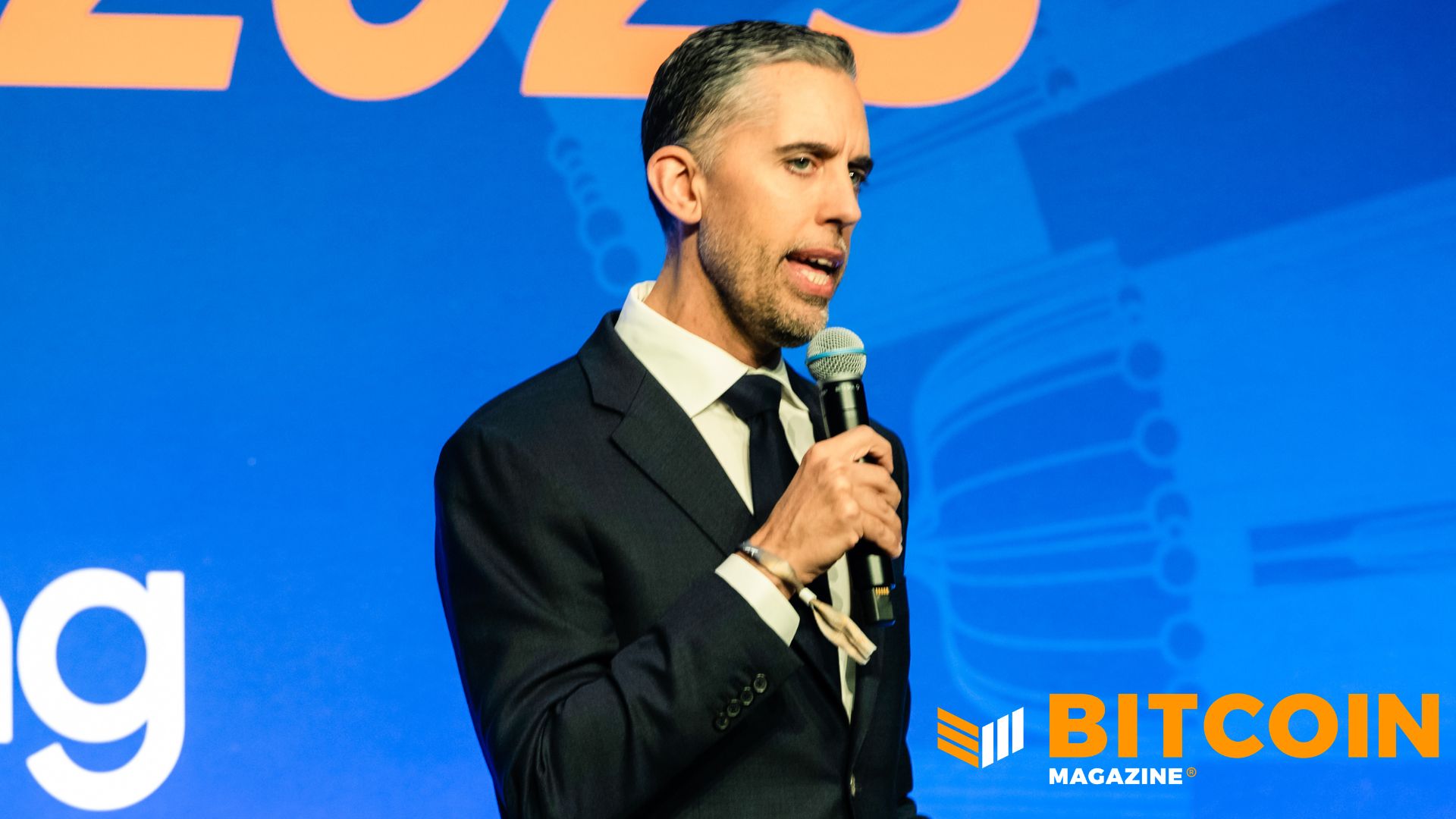
Strive’s stock soared on Monday after the company announced a $143 million bitcoin buy, making it the fifth biggest publicly traded crypto treasury.
The Nasdaq-listed company announced its latest buy of 1,800 bitcoins between August 24 and August 28. It snapped up the coins for an average price of $79,431, according to a filing with the Securities and Exchange Commission.
The Dallas, Texas-based company now holds 23,156 coins worth $1.8 billion at today’s prices. Its stock (NASDAQ: ASST) was trading 9% higher at about 12.30pm in New York. Year-to-date, Strive’s stock has risen by nearly 40%.
Strive’s year-to-date Bitcoin yield, a metric that compares growth in bitcoin holdings relative to share count, reached 40.8% as of its Aug. 28 filing, up from less than 37% in early June.
Strive now is the fifth biggest bitcoin treasury, behind only Strategy, Twenty One, Metaplanet, and MARA.
Founded by former Ohio gubernatorial candidate Vivek Ramaswamy in 2025, after raising $750 million to buy Bitcoin, Strive debuted as an official bitcoin treasury.
In January 2026, it completed the acquisition of Semler Scientific in an all-stock deal — the first instance of a publicly traded Bitcoin treasury company acquiring another such company.
The idea is that investors can get amplified returns from Strive’s stock. The company buys bitcoin with equity, and maintains a debt-free balance sheet: no bonds, no credit lines, and no leveraged positions that could trigger forced liquidation in a downturn.
Strive CEO Matt Cole has described the company as debt-free with zero margin requirements and zero encumbered bitcoin.
Strive’s latest purchase comes as Strategy, the biggest corporate holder of bitcoin, restarted its buying last week.
The software company had paused buying bitcoin for 10 weeks but announced it had bought 4,603 bitcoins for $369.7 million between August 24 to August 30.
Bitcoin treasury Strategy resumed its bitcoin buys last week, snapping up nearly $370 million in the leading cryptocurrency, according to a Monday announcement from the company.
A filing with the Securities and Exchange Commission shows that Strategy bought 4,603 bitcoins for $369.7 million between August 24 to August 30. Each coin was bought at an average price of $80,318, according to the filing.
The buy comes after Strategy paused its bitcoin buys in June, instead focusing on building a cash buffer, buying back its stock and even sometimes selling some of its holdings.
“Strategy is evolving from one-way capital issuance to active capital management,” Strategy CEO Phong Le said in June.
“We intend to move between issuing securities when capital is attractive and repurchasing securities when our instruments trade at levels that make buybacks accretive. This flexibility is designed to create shareholder value, improve corporate performance, and strengthen the quality and market standing of Strategy’s securities in the eyes of investors.”
Strategy now has $5.1 billion in its USD Reserve and $1.61 billion its new USD Cash reserve — which was announced last week.
The company holds 845,050 bitcoins worth $65.8 billion at today’s prices.
Software company Strategy — formerly MicroStrategy — began buying bitcoin in August 2020 as a treasury strategy to boost shareholder returns during the pandemic.
It has since spent more than $63.7 billion on buying bitcoin and remains by far the largest corporate holder of Bitcoin in the world. Its approach spawned a wave of copycat companies that have since adopted similar crypto-treasury strategies of their own.
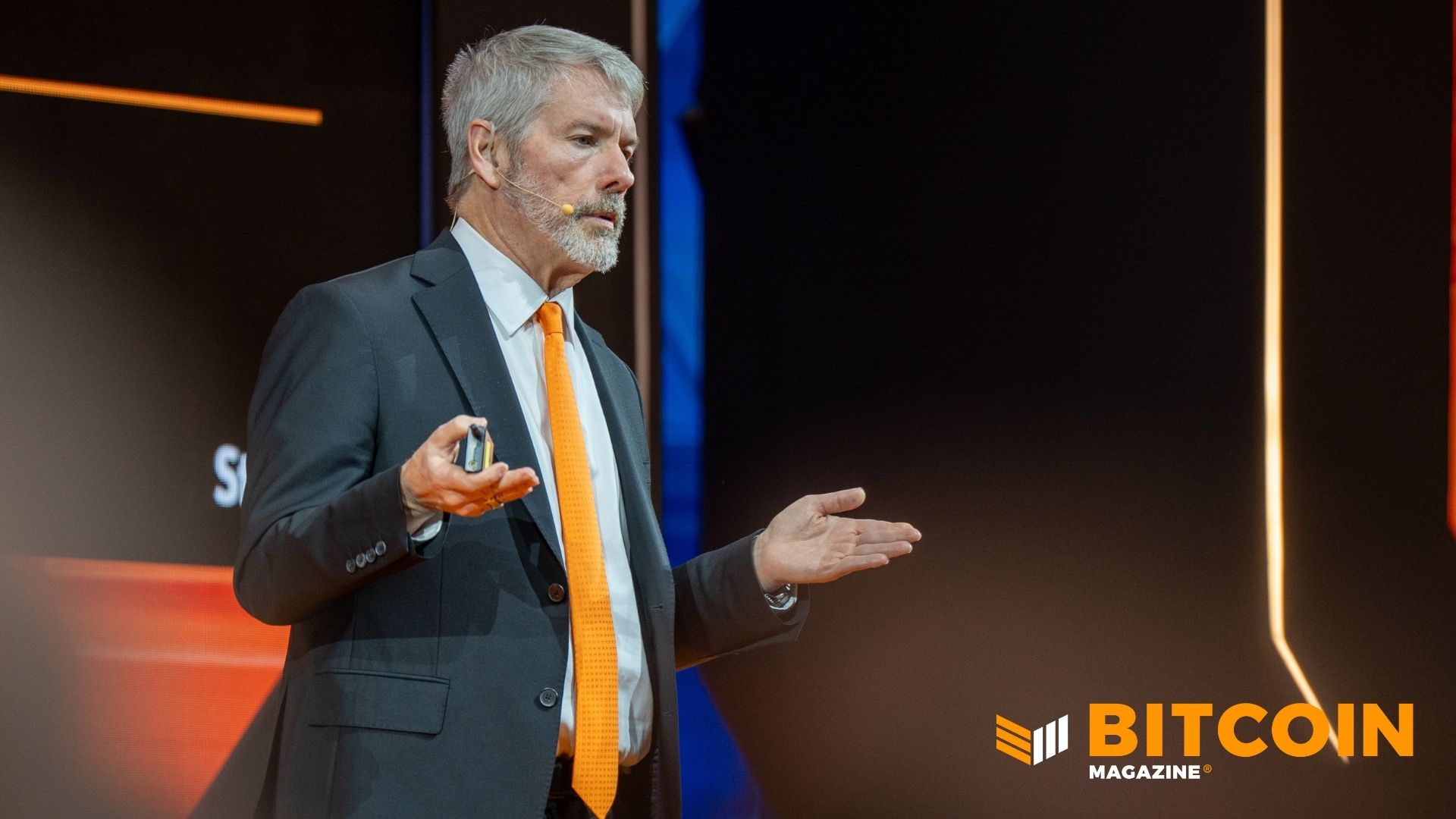
Chairman and Strategy founder Michael Saylor has said that the company is now focusing on creating digital credit: high-yield products, such as its preferred equity, STRC, which are backed by its bitcoin holdings.
Strategy’s stock (NASDAQ: MSTR) was trading slightly higher on Monday morning in New York. Year-to-date, its price has dipped nearly 20%.
Bitcoin was trading for $77,821 on Monday morning in New York after hitting a high last week of $81,281. Over a 24-hour period, the coin now sits unmoved, but over a 30-day period, it has jumped by more than 24%.
Bitcoin’s time has come in Asia — especially with a changing regulatory landscape — and its people and companies should take advantage.
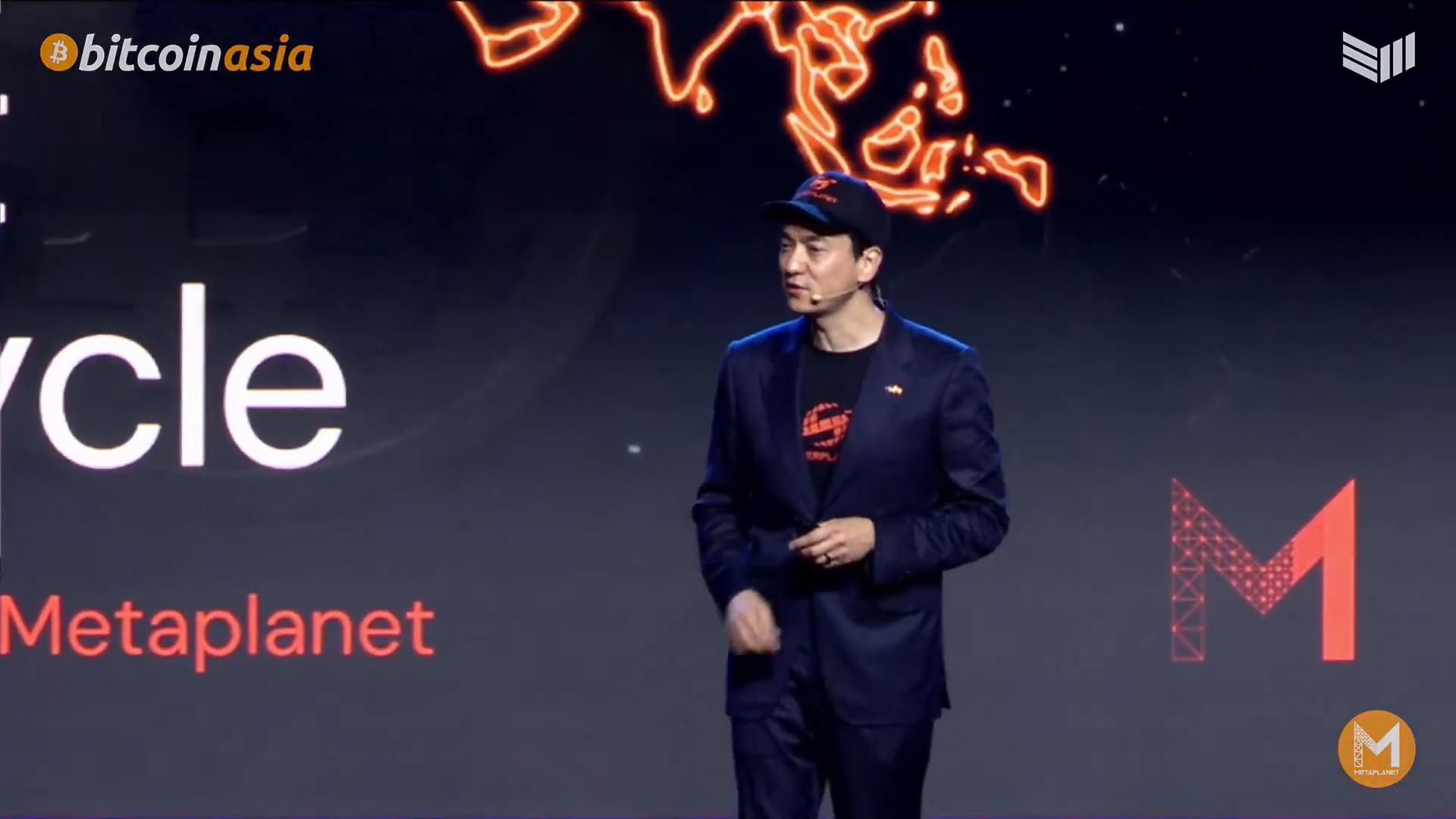
That was the message Metaplanet CEO Simon Gerovich gave at this year’s Bitcoin Asia conference, where on Friday he spoke of how his company went from failing to the third biggest bitcoin treasury in the world.
Bitcoin Asia kicked off on Thursday in Hong Kong, bringing the biggest names in the space to Hong Kong to talk about everything from treasury companies to building apps from scratch.
JUST IN: Japanese public company Metaplanet CEO says the bottom for Bitcoin's price is in
"The buyers arriving now aren't going anywhere. I believe the bottom is in. And I'm expecting a much brighter rest of the year." pic.twitter.com/zz0RUxspSz
“The previous cycles belonged to the West, and the first Asian cycle has already started,” Gerovich said. “The only question left is who builds it. Will you?”
Often dubbed Asia’s answer to Nasdaq-listed Bitcoin treasury Strategy, Metaplanet pivoted from its core hotel and technology business to buying Bitcoin in 2024. The Tokyo Stock Exchange now holds 43,000 bitcoins worth about $3.3 billion at today’s prices.
Gerovich said in his speech that his company was small and going nowhere fast until it started putting bitcoin on its balance sheet, basically allowing investors to buy exposure to the biggest digital coin via its regulated shares.
He said that the strategy is a major opportunity for Asian companies, which can now capitalize on the changing regulatory landscape and the growing interest in Bitcoin.
Asian nations, including Japan, Hong Kong, and Singapore, are making regulatory changes to support digital assets.
Gerovich noted that Japan in particular is a country where its citizens have saved like no other part of the world — and that capital can now be put to good use.
“Hoarding cash has stopped making sense, and every household in Japan can now feel it,” he said.
“Japanese households hold roughly 14 trillion dollars in financial assets. About half of that sits in bank deposits, earning almost nothing, and that’s just Japan, add Korea, Southeast Asia, and the wealth managed out of this place, Hong Kong, and you’re looking at the deepest pools of patient savings on Earth.
“And for the first time in a generation, these savings are looking for somewhere to go.”
Gerovich added that Asian companies, institutions, and savers should take advantage of the current market conditions and build the Bitcoin infrastructure in their own regions.
“The end of the cash hoarding strategy and new rules are arriving at exactly the same time, and together, they set up what I think is the single biggest opportunity in Asian markets today,” he added.
Capital B, the Euronext Growth-listed company that bills itself as Europe’s first bitcoin treasury company, has raised €21 million ($24 million) in a private placement backed by Blockstream’s Adam Back and asset manager TOBAM — money it says could buy 270 more bitcoin and push its stack to roughly 3,415 BTC.
The company said Friday that a total of 36,219,070 shares were sold at €0.58 each as part of the deal, a 6.45% discount to Wednesday’s closing price.
Capital B said the net proceeds are expected to reach about €19.9 million after fees and transaction costs.
JUST IN: French company Capital B announces a €21.0 million capital raise to "accelerate its Bitcoin Treasury Company strategy" pic.twitter.com/I3RcJYlSsI
Capital B is the 27th biggest publicly traded bitcoin treasury in the world, according to Bitcoin Treasuries, with a total of 3,145 bitcoins in its stash — worth $245 million at today’s bitcoin price of $77,960.
Capital B, which describes itself as Europe’s first bitcoin treasury, built much of that position through fundraising rounds during the first half of 2026.
In May, it acquired 192 coins for €13 million after completing three capital raises.
Capital B’s announcement as other treasuries look to raise funds and accelerate their buys. Just this week, NYSE-listed AI-powered education company Genius Group said it was aiming to build parallel AI and bitcoin treasuries worth a combined $1.6 billion, after the company sold its entire bitcoin reserves to repay $8.5 million in debt.
Bitcoin treasuries have faced headwinds since 2025 when the price of the leading cryptocurrency took a hit. A number of companies in the space have had to liquidate their holdings, including the biggest corporate holder of bitcoin, Nasdaq-listed Strategy.
Genius Group has announced a new plan to buy bitcoin — just months after selling its entire stash.
The NYSE-listed AI-powered education company said in a Thursday statement that it was aiming to build parallel AI and bitcoin treasuries worth a combined $1.6 billion, with total company assets targeted at $2 billion by fiscal year 2031.
Just in April, Genius Group sold its entire bitcoin reserves to repay $8.5 million in debt. The sale came as a number of digital asset treasuries were struggling due to a drop in crypto prices.
“Every dollar of preferred capital deployed into our bitcoin and AI Treasury that generates returns above the preferred dividend rate flows directly to our ordinary shareholders’ net asset value,” Genius Group CEO Roger James Hamilton said.
Genius Group first adopted a “Bitcoin first” strategy in late 2024, building a position that grew to 440 BTC by February 2025.
That effort was disrupted when a court order blocked the company from raising funds or issuing shares, forcing a series of sales that reduced its holdings — including roughly 86 BTC sold in a single month, leaving about 84 BTC by February 2026.
The company has now sold its remaining bitcoin entirely, using the proceeds to eliminate $8.5 million in debt. The liquidation reportedly came at a loss, leaving Genius Group with no crypto reserves.
Against that backdrop, the company is now proposing to rebuild a bitcoin treasury — this time alongside a similarly sized AI treasury — funded not through equity sales but through a new preferred stock offering.
Genius Group intends to draw on its $1.2 billion SEC-cleared shelf registration to issue Perpetual Preferred Securities, targeting an initial $12.5 million raise. Proceeds would be split between the AI treasury, the bitcoin treasury and a cash reserve covering about 18 months of dividend payments.
The plan mirrors moves by the biggest corporate holder of bitcoin, Strategy. The company has raised over $16 billion via perpetual preferred stock for its bitcoin holdings. Nasdaq-listed Strive Asset Management has raised more than $150 million similarly.
Genius Group says preferred capital will become its primary funding tool going forward, reducing reliance on its ordinary share ATM program.
Strive, Inc. bought 1,110 bitcoin last week, the Dallas-based company’s largest single-week purchase in months, lifting its treasury to 21,356 coins, according to Monday filing.
The company’s stock (Nasdaq: ASST) soared following the news, with shares trading over 7% higher on Monday. Strive is an asset manager which rebranded in 2025 as the first publicly traded asset-management bitcoin treasury company. In January 2026, Strive completed the acquisition of Semler Scientific in an all-stock deal — the first instance of a publicly traded Bitcoin treasury company acquiring another publicly traded Bitcoin treasury company.
An 8-K filing with the Securities and Exchange Commission revealed Strive made the buys from August 17 through August 21 at an average price of about $73,409 per bitcoin, including fees and expenses, for a total near $81.5 million.
More than 1 out of every 1,000 Bitcoin that will ever exist is now owned by Strive.
The buy raised Strive’s holdings roughly 5.5% from the 20,246 coins it reported in mid-August, and it lands at prices well above the low-$60,000 range the firm paid through most of the summer.
Strive funded the purchase with proceeds from at-the-market offerings of its ASST and SATA shares. Cash and cash equivalents stood at $171.9 million, up from the $154.1 million the company reported in July.
A faster pace as prices climb
Monday’s filing marks a sharp change in cadence. Strive bought 147 bitcoin between August 3 and 7 at an average of just over $64,800, then another 79 the following week at $63,231. Last week’s total exceeds those two rounds combined by a factor of five.
The acceleration tracks a rally in the underlying asset. Bitcoin rose nearly 25% last week, closing Friday at $77,387, and traded near $80,000 on Monday.
ASST closed Friday at $18.22, up almost 13%, and gained more than 5% in premarket trading Monday. SATA preferred shares held near their $100 par value.
Strive now ranks as the seventh-largest public corporate holder of bitcoin, behind Strategy’s 840,447 coins, Twenty One Capital, Metaplanet, MARA and Bitcoin Standard Treasury Company.
Strategy, by contrast, has sat out the market for close to two months while rebuilding its dollar reserve.
Chief executive Matt Cole said Sunday he holds “very strong” conviction that the bitcoin bear market has ended, pointing to breakouts against both the dollar and gold.
The US Treasury has increased the maximum size of liquidity-support buyback operations for longer-dated nominal coupon securities, adding another macro signal for traders watching liquidity conditions across risk assets, including Bitcoin.
The Treasury’s program raises the purchase limit per operation from $2 billion to at least $4 billion for the 10-20 year and 20-30 year sectors. The updated operation size is set to run from September 9 through November 4.
This is not a crypto policy.
It is a Treasury market liquidity measure. But Bitcoin traders care because macro liquidity, Treasury market functioning, and dollar conditions increasingly sit at the center of the BTC narrative.
When liquidity signals shift, crypto markets pay attention.
TL;DR
The US Treasury is increasing certain long-end buyback operation limits from $2 billion to at least $4 billion.
The change applies to 10-20 year and 20-30 year nominal coupon securities.
This is a macro liquidity signal, not a crypto-specific policy move.
Why Treasury Buybacks Matter
Treasury buybacks are designed to support market functioning.
When liquidity in certain parts of the Treasury curve becomes less smooth, buybacks can help absorb securities and improve trading conditions. This is not the same as monetary easing by the Federal Reserve, and it should not be treated that way.
But it still matters.
US Treasuries are the foundation of global collateral markets. If Treasury liquidity improves, broader financial conditions can feel less stressed. If Treasury markets become strained, risk assets often feel pressure.
Bitcoin now trades inside that global macro environment.
That means BTC investors watch not only crypto-native flows, but also Treasury operations, dollar liquidity, rates, and collateral conditions.
Not Directly About Bitcoin
It is important not to overstate the connection.
The Treasury is not buying securities to support Bitcoin. It is not running a crypto stimulus program. It is not targeting digital assets. Any BTC relevance is indirect.
The link comes through liquidity expectations.
If traders believe Treasury market support reduces stress or adds cash-like flexibility to the system, they may become more willing to take risk. Bitcoin, as a liquid macro-sensitive asset, can benefit when risk appetite improves.
But that does not make the relationship automatic.
Treasury buybacks can support market plumbing without guaranteeing a crypto rally.
Long-End Liquidity Has Been A Market Concern
The affected sectors — 10-20 year and 20-30 year nominal coupon securities — are important because long-end Treasuries are closely watched by global investors.
Longer maturity debt can be more sensitive to inflation expectations, fiscal concerns, term premium, and demand from pensions, insurers, foreign central banks, and asset managers.
If liquidity is weak in those sectors, it can create broader concerns about market depth.
Increasing buyback operation size is one way to address those conditions.
For Bitcoin traders, the question is whether improved Treasury liquidity feeds into a broader risk-on environment.
Bitcoin’s Macro Identity Keeps Expanding
Bitcoin used to be covered mostly through exchange flows, mining, wallets, and regulation.
Those still matter, but the asset is now also interpreted through the lens of macro liquidity. Traders watch the Fed, Treasury issuance, fiscal deficits, money-market stress, ETF flows, dollar strength, and global central-bank behavior.
That is a sign of maturity.
It also makes Bitcoin more complicated. BTC can rally on crypto-native news one day and sell off on macro positioning the next.
The Treasury buyback expansion fits into that second category.
What To Watch Next
The key is whether the buyback change affects broader liquidity sentiment.
If Treasury market conditions improve and risk appetite strengthens, Bitcoin may find support from the macro backdrop. If the market sees the move as a technical adjustment with limited broader impact, the effect on BTC may be muted.
Either way, the development belongs in the macro watchlist.
Bitcoin is not the target of the Treasury’s buyback program, but it is sensitive to the financial conditions that program may influence.
Metaplanet has executed a subscription agreement that will put 2,100 BTC into a Nasdaq-listed vehicle as part of its push to build a US-facing Bitcoin treasury arm.
The company’s disclosure says Metaplanet will contribute 2,100 BTC, subject to a five-year lockup, along with $2.5 million in cash to Super League Enterprise. In exchange, Metaplanet will receive a 95.7% ownership stake. Super League Enterprise is expected to be renamed Superplanet, Inc., with the ticker SUPA, and will operate as Metaplanet’s US treasury arm.
The structure is important because this is not a simple Bitcoin purchase.
It is a corporate expansion transaction, using BTC as strategic capital to build a listed US vehicle around Metaplanet’s treasury strategy.
TL;DR
Metaplanet will contribute 2,100 BTC and $2.5 million in cash to Super League Enterprise.
The company will receive a 95.7% ownership stake.
Super League Enterprise is expected to be renamed Superplanet, Inc. and serve as Metaplanet’s US treasury arm.
Metaplanet Is Building Beyond Japan
Metaplanet has already become one of the most visible Bitcoin treasury companies outside the United States.
Its strategy has drawn attention because it mirrors parts of the public-company Bitcoin playbook while operating from Japan, where currency weakness and corporate balance-sheet debates have made BTC treasury stories more compelling.
This new transaction expands that strategy.
By using a Nasdaq-listed company as the base for a US treasury arm, Metaplanet is not just holding Bitcoin. It is building a structure that could give the company deeper access to US capital markets, investors, and corporate-finance tools.
That makes the deal bigger than a balance-sheet allocation.
The Five-Year Lockup Matters
The 2,100 BTC contribution is subject to a five-year lockup.
That detail matters because it changes how the market should read the transfer. Locked BTC is not the same as freely tradable BTC. It signals long-term commitment to the structure, but it also reduces short-term flexibility.
A lockup can reassure investors that the BTC is meant to support the vehicle rather than be quickly monetized.
At the same time, it ties up a large amount of capital inside the new structure. That makes execution important. If Superplanet becomes a successful US-facing Bitcoin treasury arm, the lockup may look like discipline. If the strategy struggles, locked capital can become a constraint.
Superplanet Gives The Strategy A New Wrapper
The expected rebrand to Superplanet, Inc. is more than cosmetic.
It creates a public identity for Metaplanet’s US expansion. A dedicated US treasury arm can speak directly to investors who want exposure to a Bitcoin-heavy corporate structure but may prefer US-listed securities.
That has become a major theme in crypto equity markets.
Investors do not always want to hold BTC directly. Some want corporate wrappers, treasury models, preferred structures, equity upside, or operational exposure tied to Bitcoin.
Metaplanet appears to be leaning into that demand.
Not Just Another BTC Buy
This should not be confused with a separate minor Bitcoin purchase or a routine treasury update.
The 2,100 BTC contribution is part of a corporate transaction that changes Metaplanet’s structure and geographic reach. It is about expanding the treasury model, not simply adding coins to the balance sheet.
That distinction matters for readers.
A regular BTC purchase affects holdings. This deal affects holdings, ownership, listing exposure, subsidiary strategy, and investor access.
What To Watch Next
The next key question is how Superplanet is financed and operated after the transaction closes.
Metaplanet also retains a 24-month right to invest up to $210 million in preferred stock, which could give the company another way to fund or shape the US arm.
Investors will watch whether Superplanet becomes a pure Bitcoin treasury vehicle, a broader corporate-finance platform, or something closer to a public-market Bitcoin reserve company built for US investors.
For now, the message is clear.
Metaplanet is not only accumulating Bitcoin. It is exporting its treasury strategy into the US market through a listed vehicle built around BTC.
That could make the company a more important player in the global corporate Bitcoin race.
 Login
Login




Capital B confirms the acquisition of 376 BTC for €25.3 million, the holding of a total of 3,521 BTC, and a BTC Yield of 2.17% YTD








Public company Strive bought 1,800 BTC for $143 million
pic.twitter.com/xEkWx3ZNZp
Japanese public company Metaplanet CEO says the bottom for Bitcoin's price is in
French company Capital B announces a €21.0 million capital raise to "accelerate its Bitcoin Treasury Company strategy"