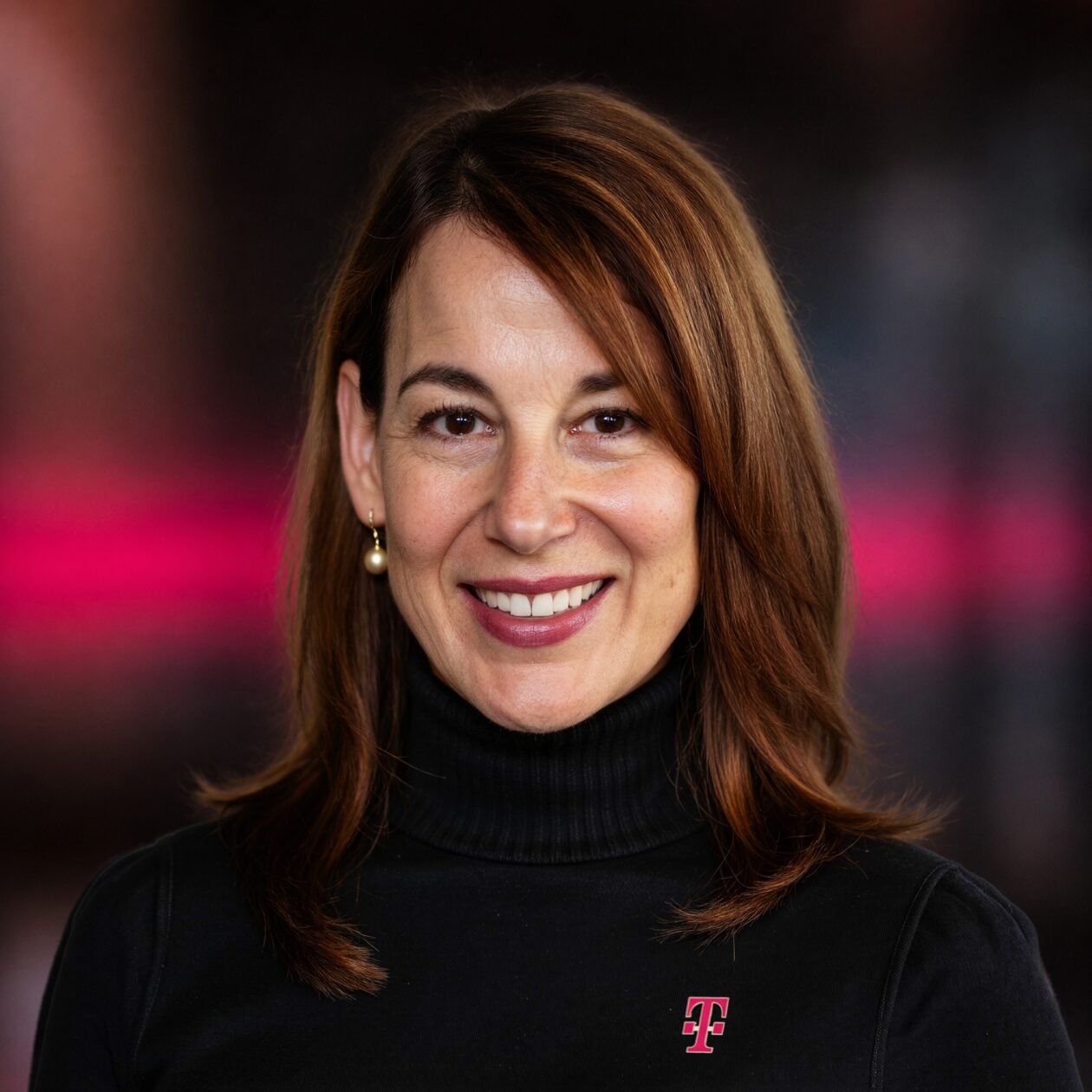
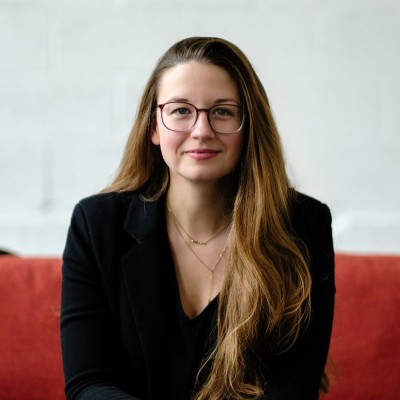
— Telecom giant T-Mobile announced that Jessica Uhl will join as chief financial officer-designate later this month, and succeed Peter Osvaldik as CFO in February. Uhl served as CFO of Shell and worked for the global oil and energy giant for more than 17 years. She joins T-Mobile from GE Vernova, where she was president.
“I am thrilled to welcome Jessica to T-Mobile,” Srini Gopalan, president and CEO of T-Mobile said in a statement. “She brings deep financial and strategic acumen, capital allocation expertise and an innovative growth mindset that is a perfect fit for T-Mobile’s next era.”
Osvaldik will transition to strategic advisor and retire from T-Mobile in July. He joined the company in 2016 and became chief financial officer in 2020. Osvaldik’s tenure “has been defined by disciplined financial stewardship, consistent financial outperformance, and an unwavering commitment to T-Mobile’s mission,” the company said.
The move marks the latest leadership shakeup at the Bellevue, Wash.-based company. Mike Katz, T-Mobile’s chief business and product officer, announced his departure in July, and Chris Sambar was named chief enterprise officer. T-Mobile has cut 470 jobs in its home state this year and closed numerous retail locations.
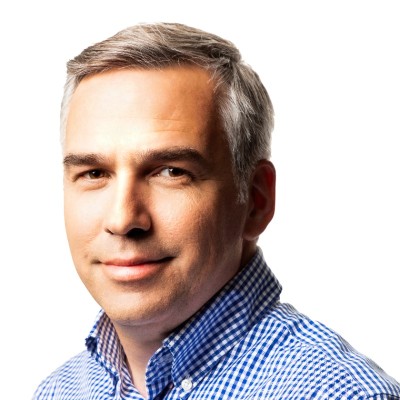
Brent Colburn. (LinkedIn Photo)
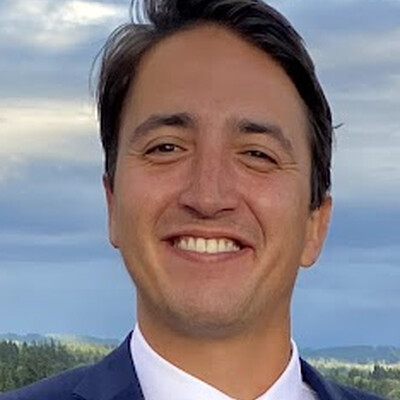
— Brent Colburn, Microsoft‘s vice president of global public affairs, is resigning after three years, effective mid-October.
“Stepping away from Microsoft is not a decision that I made lightly, but ultimately it is the right one for me and my family,” said Colburn, who has been commuting weekly between his home in Oakland, Calif., and Microsoft’s Redmond, Wash., headquarters.
Colburn’s career has spanned leadership roles in government, academia and philanthropy. That includes serving as principal advisor to the secretary of defense for communications and chief of staff to then-Secretary Shaun Donovan. More recent roles include communications vice president for the University of California in Oakland, Princeton University and the Chan Zuckerberg Initiative.
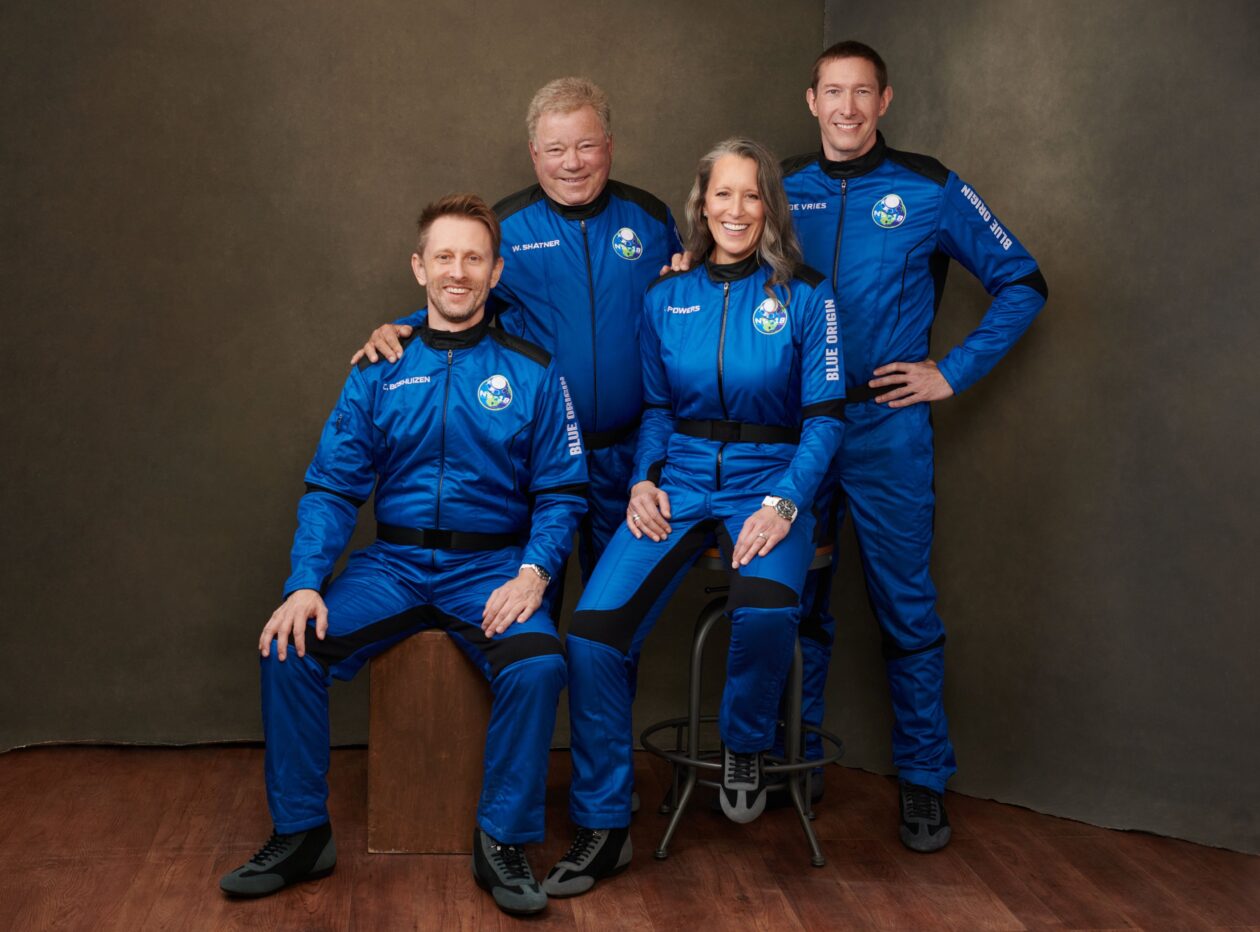
William Shatner stands alongside crewmates Chris Boshuizen (left), Audrey Powers and Glen de Vries. (Blue Origin Photo)
— After nearly 13 years, Audrey Powers has left Blue Origin, the aerospace company founded by Jeff Bezos that develops reusable rockets, spacecraft and rocket engines. She was on Blue Origin’s October 2021 spaceflight that also carried “Star Trek” star William Shatner and two others.
“Hopefully, I’ve helped change peoples’ impressions of rockets (they land, too), astronauts (they are everyone), and our Earth,” Powers said, adding that she was sad to leave, but grateful that she took a chance on “a little startup no one had heard of.”
Powers held the title of deputy and vice president of the New Shepard Business Unit, which is the program that carries people and research payloads into suborbital space. She is an attorney who has previously worked at NASA as a flight controller and as a senior systems engineer at Lockheed Martin.
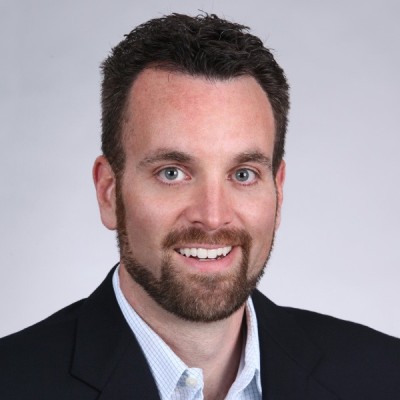
Michael Levi. (LinkedIn Photo)
— Michael Levi has joined AZX as chief commercial officer of the Bellevue-based startup, which works with utilities and other industries to build in-house AI technologies supporting their missions.
Levi is based in San Francisco and was previously vice president of marketing and growth for KloudGin, where he helped reposition the company’s field service software into an AI-native platform for utilities and the public sector. He earlier founded L1CG, a go-to-market advisory, and has held leadership roles in energy, renewables, supply chain and fintech.
Jason Alafgani. (LinkedIn Photo)
— Jason Alafgani was named head of marketing for Caddi, a Seattle startup that launched out of AI2 Incubator and is automating basic business operations with generative AI. Alafgani is the co-founder of startups including the podcast company Jellypod and worked as marketing leader for Appwrite, Dodgeball, Mode and others.
— Dr. Amir Iravani has joined Los Angeles-based UCLA Health as director of the theranostics program, which focuses on treating cancer using targeted radiation therapy. Iravani previously served as theranostics clinical director at Fred Hutchinson Cancer Center in Seattle and was an associate professor of radiology at the University of Washington School of Medicine.
Kelly Lyons. (LinkedIn Photo)
— Portland Metro Region Innovation Hub has hired Kelly Lyonsas director of the organization, which provides networking, coaching, funding and other support to entrepreneurs. Lyons is the founder of two startups and has served in leadership at Core Education, Umpqua Bank and Development House, a social services nonprofit.
— DigiStor, a Vancouver, Wash.-based provider of secure data-at-rest protection solutions, appointed Michael Callahan to its board of directors. Callahan co-founded Awake Security and PolyServe, which was acquired by HP.
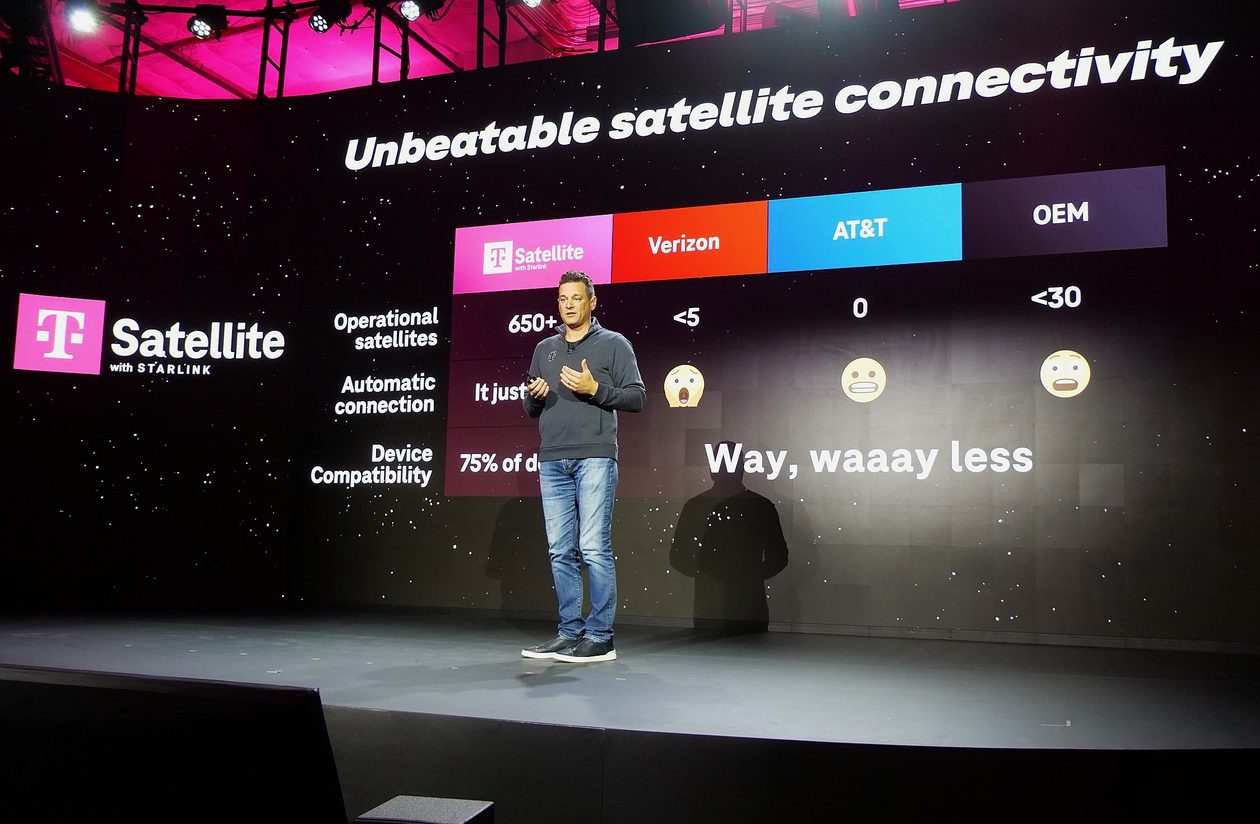
Longtime T-Mobile exec Mike Katz touts the company’s T-Satellite service in Bellevue, Wash., in June 2025, with a slide taking shots at Verizon and AT&T — a tradition dating to the early Un-carrier years. (GeekWire File Photo / Todd Bishop)
In 2012, T-Mobile was losing hundreds of thousands of customers a quarter. AT&T’s attempted acquisition of the Bellevue, Wash.-based wireless company had just collapsed. T-Mobile was the fourth-place carrier in a four-carrier market, with a network that was a punchline and no obvious plan for fixing any of it.
Mike Katz was one of the leaders responsible for figuring it out.
The result of their work was the “Un-carrier,” a series of moves starting in 2013 that upended one industry tradition after another, launched under CEO John Legere and continued by his successor, Mike Sievert.
T-Mobile today is worth nearly $195 billion and claims the country’s best network. The company is now led by Srini Gopalan, who became CEO in November 2025.
Mike Katz. (LinkedIn Photo)
Katz, whose wireless career began selling VoiceStream phones at a Circuit City in Fort Collins, Colo., is leaving after 28 years. The company announced July 7 that Katz, then chief business and product officer, would pursue “new professional interests,” staying on as an advisor through December.
During his tenure at T-Mobile, Katz worked in sales and corporate strategy, ran the company’s prepaid business, led consumer marketing through the first Un-carrier moves, built the company’s business division, and served as chief marketing officer, before becoming chief business and product officer in December 2025.
In an interview with GeekWire, Katz reflected on his experience inside one of the most improbable and irreverent comebacks in American business.
Continue reading for the lessons we took from his story.
Use speed to your advantage against bigger competitors.
When the AT&T deal died, Katz was put on a small team assigned to assess the company’s position and come up with a plan. Their advantage, he said, was that T-Mobile was too small to compete on everyone else’s terms.
“We were so subscale relative to AT&T and Verizon at the start, and what we developed because of being subscale was agility,” Katz said. “We would do things, and AT&T and Verizon would take forever to respond, and by the time they responded, all their customers were gone.”
It started with Un-carrier 1.0. Under the standard model then, a customer could get a phone for well below cost if they signed up for a two-year plan. But the carrier recovered it through the monthly service rate, which never came down once the phone was paid off. Customers paid a penalty for leaving early.
T-Mobile separated the device from the service plan in March 2013, pricing service on its own and putting the phone on monthly installments that ended when the device was paid for.
Getting copied was the point. Katz said one measure of success for every Un-carrier move was whether AT&T and Verizon would eventually imitate it, because by the time they did, T-Mobile had already gotten all the credit and attention.
They were clearly having fun. Asked whether T-Mobile ever worried it had gone too far in baiting its rivals, Katz said, “Not really.” The mission then, he said, was to change wireless for everyone and not just for T-Mobile’s own customers.
The mockery extended to the events themselves. Katz recalled preparing for an early Un-carrier launch in New York when Legere, around 10 p.m. the night before, decided he wanted to open by parodying AT&T’s “It’s Not Complicated” campaign, in which a man interviewed small children at a tiny table. That meant finding dolls. Katz said the team spent the night working out how to get into the American Girl store in Manhattan.
“It was wild,” Katz said. “There were so many things in those early events.”
The next morning the lights came up on Legere at a small table, talking to the dolls.
“Maybe we were the only ones that got it,” Katz said. “But it was funny to us.”
Look for the unexpected and find out why it’s happening.
Back in 2010, then-CEO Robert Dotson put Katz in charge of the company’s prepaid business. It was not a marquee assignment.
Prepaid customers of that era “didn’t really pick prepaid. Prepaid picked them,” Katz said. “They had no other choices. They had tough credit, or they socioeconomically were in a really tough place.”
T-Mobile was also losing ground. A price war broke out in January 2009, when Sprint’s Boost Mobile introduced a $50 unlimited plan and MetroPCS answered at $40. The recession was pushing customers toward prepaid, and the flat-rate carriers were taking market share.
Katz ran prepaid as a business of its own, operations and marketing together, and looked for a way to compete without matching the price. Those cheaper plans limited customers to 3G, so T-Mobile charged a bit more, gave them 4G, and called it Monthly 4G. (A deliberately clear and functional name, as he pointed out.)
It worked. Through 2010, 2011 and 2012, while the postpaid business was shedding customers, prepaid was the only part of T-Mobile that was growing.
The surprise: a lot of the new growth was coming from previously postpaid customers, people who had other options and were choosing prepaid anyway. Katz’s team asked them why.
“There’s no contract. I sign up for a $50 plan, and it actually costs $50 a month. It’s just simple and predictable,” Katz said, quoting customers. It might seem obvious now, he said, “but at the time it’s like, wow, that’s a pretty interesting insight.”
Expand what’s working to other parts of the company.
They found inspiration in that when they turned to what T-Mobile should do next. The idea was to give postpaid customers the same simplicity that was drawing them to prepaid.
They called it pain-free wireless. They mapped out six moves in advance, including the end of upgrade restrictions and international roaming fees. These were the origins of the Un-carrier.
They pitched it to Legere, and to Sievert, the chief marketing officer at the time. Both signed on. The launch was originally set for the end of 2013. Legere moved it to the beginning of the year.
“There is something about desperation that really helps create crisp decision-making,” Katz said. “You can keep trying to make a gameplan that’s been failing for years work, or take some swings and take on some risk. … Because what’s the downside? It can’t get much worse than it was.”
Make sure people know the ad was yours.
Storytelling is the thing companies and brands get wrong most often, Katz said, and he called it the biggest thing he learned from Sievert, whom he worked with for more than a decade. It’s especially important in the wireless industry, where customers are effectively buying a promise.
“At the end of the day, we sell invisible air. You don’t really see the product we sell,” Katz said. “There’s phones, but we don’t make the phones. Apple makes the phones. There’s towers that you can see, but the tower companies, those are their towers. We sell the invisible air in between.”
Katz divides the profession into two camps: the “award show CMOs,” motivated by collecting trophies at Cannes, and the ones who measure themselves by business impact. He puts himself in the second group.
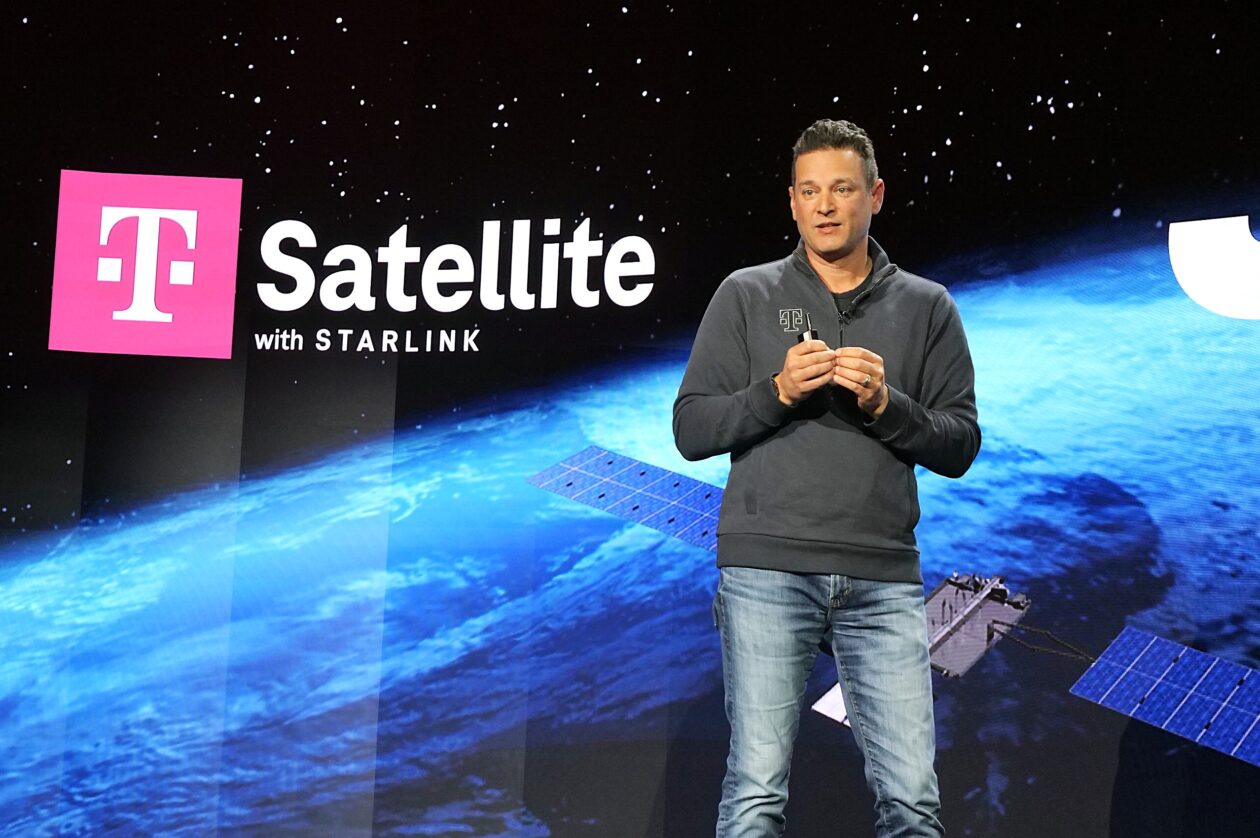
Mike Katz at a T-Mobile event in 2025. (GeekWire File Photo / Todd Bishop)
One example: T-Mobile’s February 2025 Super Bowl spot, which launched the public beta of its Starlink partnership, offering satellite-to-cell texting in the parts of the country terrestrial networks don’t reach.
It was tempting to fill it with celebrities and gimmicks, he said. Instead the spot was built around a voiceover and a direct call to action: try it out for free during the beta, open to AT&T and Verizon customers too.
“If we wanted to build a Super Bowl commercial to win the best Super Bowl spot in Ad Age, we would have done something very different,” Katz said. “We would have done the celebrity-palooza.”
“Within 30 minutes of that Super Bowl spot running, we achieved all the goals that we had for the rest of the month in signups,” Katz said.
One of the lessons Katz learned from Legere, in addition to taking risks and failing fast, came from how the incoming T-Mobile CEO treated the people who were already there when he arrived. Legere took over a company that was losing badly and kept the team in place.
“It would have been really easy for him to come in and assume, hey, company’s not doing well, we must have a bunch of bad people here, and change everybody out, and he didn’t do that,” Katz said. “Don’t assume simply because the results of the company are bad that the people are bad.”
Katz said that was in his head during the Sprint merger, where the same thing applied: a business in rough shape, staffed by people who weren’t the reason. T-Mobile’s leadership today is a mix of the two companies.
Perception can sometimes lag reality.
Katz said T-Mobile passed Verizon on network quality years before customers believed it. Verizon “had so much built up brand equity around being the best network,” he said, that four or five years later, people still named Verizon when asked who had the best network.
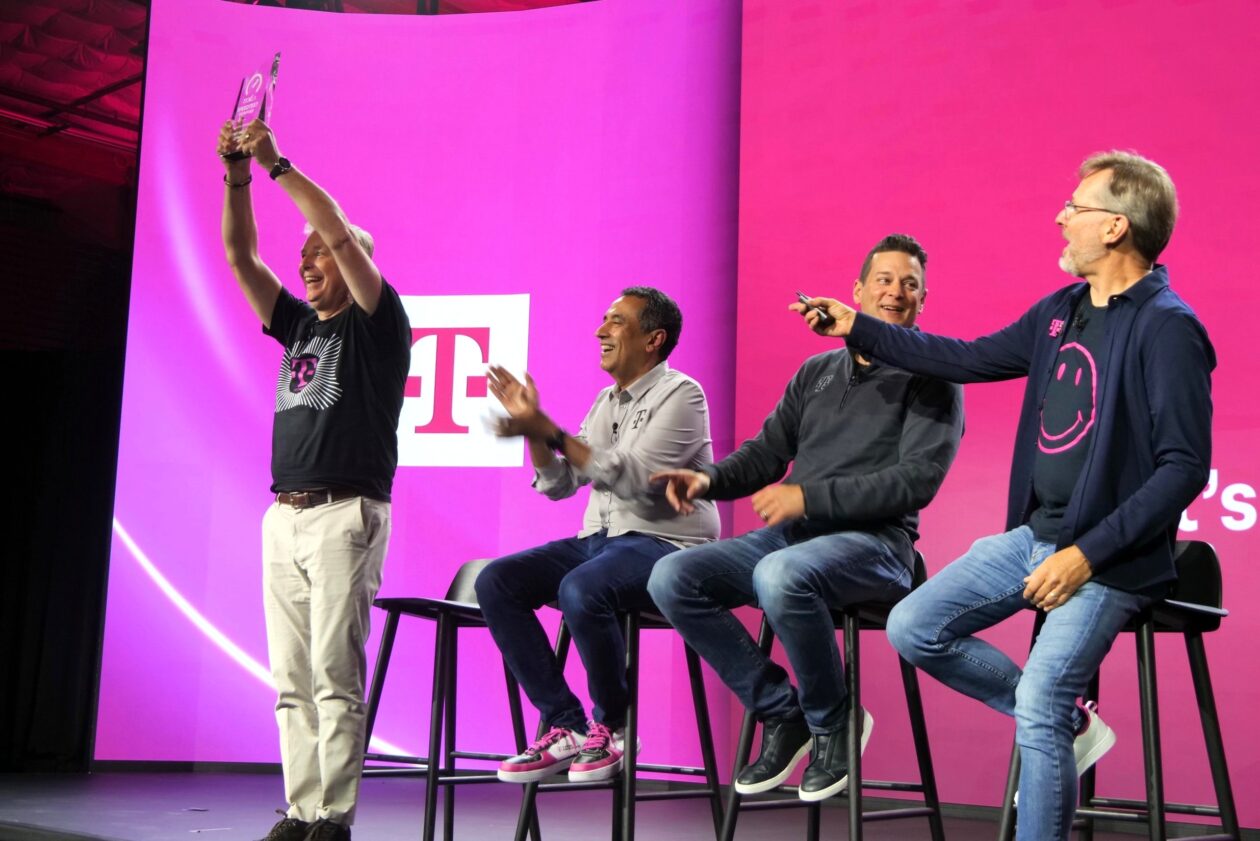
Ulf Ewaldsson, T-Mobile president of technology, hoists a trophy proclaiming the company’s victory in a landmark network test by Ookla, as (left to right) then-COO Srini Gopalan; Mike Katz, then president of marketing, strategy and products; and then-CEO Mike Sievert celebrate the milestone in June 2025. Gopalan has since been named CEO. (GeekWire File Photo / Todd Bishop)
T-Mobile declared victory at an event in Bellevue in June 2025, citing an Ookla study built on half a billion crowdsourced data points. Verizon disputed the methodology, saying crowdsourcing can’t control for variables, and pointed instead to RootMetrics drive tests that it said still showed Verizon the most reliable.
T-Mobile then began running ads with Billy Bob Thornton declaring it the best network in the country. Earlier claims had carried qualifiers, like fastest 5G or most available 5G. This one didn’t. Katz said the gap in how customers rate the two networks is now down to a couple of points.
Staying on top is harder than the turnaround.
For all the attention the comeback gets, Katz said the more remarkable part has been what came after it.
“If you look at companies that have done big turnarounds, you don’t really see a lot that have had the kind of sustained success and continued growth for a decade and a half like T-Mobile has,” he said.
He gives much of the credit to the network. The Sprint merger gave T-Mobile a spectrum position it didn’t have before, and the company bet that 5G would play out in mid-band spectrum, which was seen as risky at the time. Protecting that advantage through later spectrum deals was one of the things he worked on.
Building the network was not.
“There’s a couple jobs that they never let me do, probably for very good reason,” Katz joked. “You actually need to know what you’re doing.”
A mature company also needs different things from its leadership than a struggling one does. Gopalan spent years on T-Mobile’s board before joining as COO and then taking over as CEO. Katz describes him as an operator who brings discipline to the details of a business that by now has years of success behind it.
Asked for his biggest mistake, Katz said he moved too slowly at times.
“There are big decisions, risky decisions, that I could have made a lot faster,” he said. “I wish I’d pushed harder to make some of those decisions.” Some of what became the early Un-carrier moves were ideas that had been floated years earlier, in corporate strategy.
Katz says he still believes the company’s best days are ahead.
T-Mobile is cutting 77 jobs across Washington state, trimming staff across its Bellevue headquarters, regional retail stores, and remote roles, according to a new state filing.
The workforce reductions span frontline, regional, and corporate roles, eliminating positions ranging from retail mobile experts and account care specialists to principal systems architects and senior directors at the wireless carrier.
In addition to 63 newly disclosed job cuts, the filing includes 14 workers whose previously announced departures were deferred to this fall.
Beyond corporate offices, the cuts will result in permanent store closures across Washington. Locations expected to close include retail sites in Seattle (45th & Stone Way), Bothell, Kennewick, Tacoma, Vancouver, and Yakima.
“Like all businesses, we’re constantly looking at where we allocate our resources so we can invest in the areas that matter the most to our customers,” a T-Mobile spokesperson said in an emailed statement. “That means making adjustments where needed while continuing to hire in areas that support our priorities, strengthen our momentum and help us keep changing the industry through innovation.”
The spokesperson pointed to a broader retail pivot aimed at concentrating its store footprint toward company-operated locations integrated with digital tools like its T-Life app, rather than third-party dealer operations.
“Changes to third-party dealer-operated locations do not affect T-Mobile employees,” the spokesperson added. “In most cases, T-Mobile retail employees can apply for positions in other locations or relocate if there is a change to their current store.”
A subset of the latest cuts stems from facility relocations, where some employees were offered transfer opportunities, according to the filing.
The company previously cut 393 workers in Washington in February.
Editor’s note:A previous version of this story incorrectly stated that a T-Mobile store in Bellingham would be closing. That information came from an error in the WARN filing.
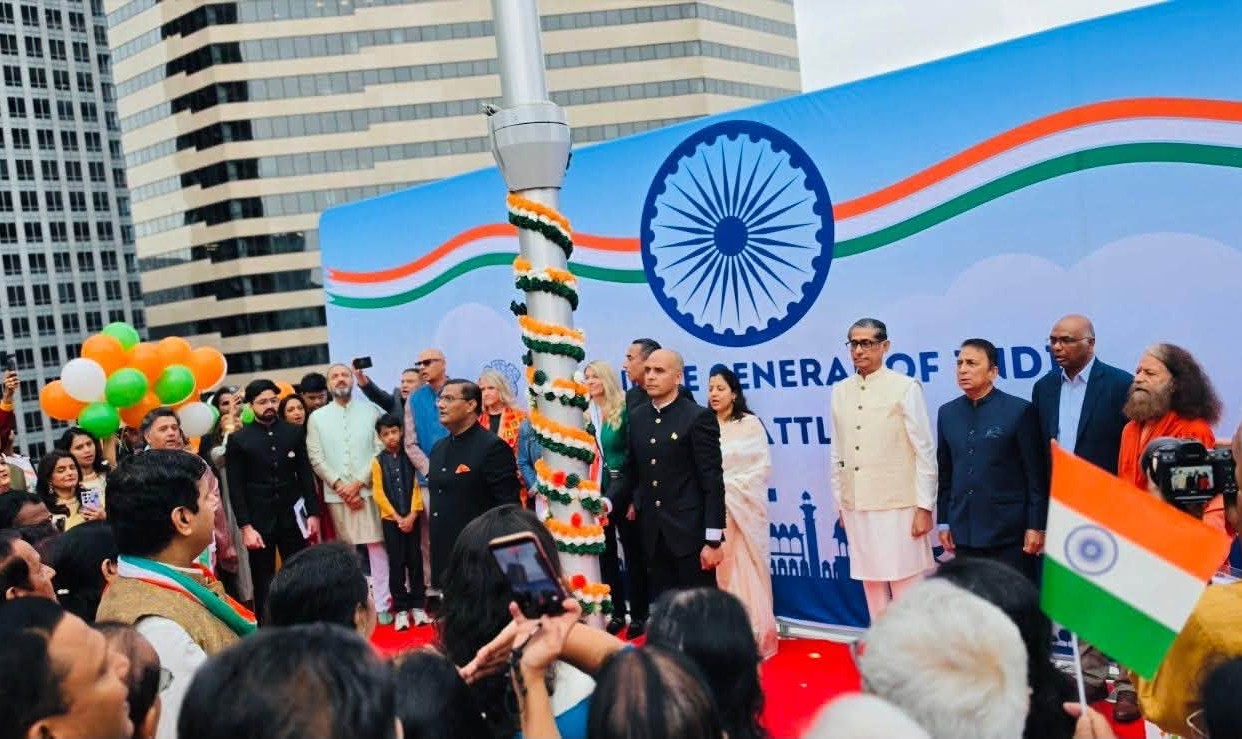
Consul General Prakash Gupta, left of the flagpole, joins elected officials, tech leaders and guests at the flag-raising for India’s 80th Independence Day in downtown Seattle on Aug. 15. (Consulate General of India Photo)
Note: Former Microsoft and AWS exec Harini Gokul serves on the Medina (Wash.) City Council.
Guest Opinion: Saturday, Aug. 15, was India’s 80th Independence Day. I marked it at the Indian Consulate in Seattle, at a celebration hosted by Consul General Prakash Gupta. The Indian American diaspora attended in full force, from community members to tech CEOs.
The event was open to the public, and the line to get in stretched over a block, a powerful, visible display of India’s economic success and soft power, right here in the Pacific Northwest.
But the more interesting story is not the celebration itself. It is who showed up to celebrate, and why.
Washington Gov. Bob Ferguson issued a statewide proclamation declaring Aug. 15 “India Day.” The mayors of Seattle, Bellevue, Kent, and SeaTac each signed their own municipal declarations, joined by the King County Council, which represents 39 cities across the region. U.S. Reps. Suzan DelBene and Marilyn Strickland sent official messages marking the occasion.
In person, state Sen. Tina Orwall was joined by the mayors of Redmond and Kent, alongside council members from cities including Redmond, Bothell, DuPont, and Medina.
In King County alone, more than 100,000 residents are of Indian origin; statewide, the figure is roughly 200,000. In cities like Redmond and Kent, the Indian American community makes up a meaningful share of the tax base, the school population, and the local business community.
This is one of the reasons elected officials are showing up. Because their Indian American communities are central to their growth story, a constituency whose economic and civic weight has become too significant to ignore.
This momentum has been building in the region for decades. What has changed is the altitude. The same talent pool that once filled engineering organizations is now filling CEO offices, board seats, and, in smaller but growing numbers, elected office.
Business success is turning into civic and cultural presence. Many of our Indian American leaders started in tech. Satya Nadella has run Microsoft since 2014. Anand Eswaran has led Veeam since 2021. Srini Gopalan became CEO of T-Mobile in November 2025.
And increasingly, this leadership is branching out. You see the impact in venture capital, through investors like the late S. “Soma” Somasegar, who moved from Microsoft to Madrona; and in culture, through the Seattle Orcas cricket franchise, launched in 2023 by an investor group including Soma, Satya, Sanjay Parthasarathy, Samir Bodas, and Ashok Krishnamurthi to grow the sport nationally.
With the change in demographics, civic influence is increasing as well. Redmond, Kent, and Bothell all elected Indian-origin council members in the most recent cycle. I represent the trend myself, now serving in my second term as a city council member for Medina, Wash.
My story is an all too familiar one. I came to the U.S. as an engineer two decades ago and grew up alongside this region’s hyperscalers, first at Microsoft, then Amazon. Today I sit on corporate boards and work across private equity and venture, and I have the honor to represent the city I live in. I am one small example of how we are scaling our impact and giving back to our adopted home.
Eighty years after India’s independence, the story of its diaspora in our state has moved well past individual success stories. It’s measurable now, at scale, in the leadership of some of the most important companies in the state, and in its growing influence across culture, economics, and politics.
This is why everyone from the governor’s office to city halls across Washington has decided this partnership is worth investing in and worth showing up for.
Finding a mobile plan used to be simple. Today, it’s easy to be drawn in by a low advertised monthly price, only to discover additional costs once it’s time to check out. Activation fees, taxes, device payments, and fluctuating monthly bills can quickly turn what looked like a bargain into a much more expensive commitment. […]
A painting of Jimothy, the viral raccoon, by Seattle artist Ryan Henry Ward. (@henry_beyond_museums via Instagram)
A friendly challenge sparked by a portrait of Jimothy, Seattle’s favorite short-spined raccoon, has now drawn in 11 regional heavyweights — and with a big new donation from Amazon, driven the total raised for the Ballard Food Bank past $270,000.
Amazon announced Friday that it is adding an additional $200,000 to a pot that already included $71,975.31 in matching contributions from coffee and software giants, airlines, pro sports teams, and others.
The corporate generosity started as a grassroots effort on Instagram in July, where prolific Seattle artist Ryan Henry Ward auctioned a 24-by-24-inch painting of the internet-famous raccoon to benefit the food bank. Buyer Angela Galdabini won the piece with an exact bid of $6,543.21 — prompting Amazon to match the amount and issue a public callout challenging other local brands to step up.
Ten companies stepped up to match the bid: Alaska Airlines, Brooks Running, Microsoft, the Seattle Mariners, the Seattle Kraken, Stanley 1913, Starbucks, T-Mobile, WaFd Bank, and Windermere Midtown.
It all sparked a Jimothy love-fest on social media with the brands responding to each other.
(Click to enlarge) Some of the Jimothy messages between Amazon and other brands on social media.
Jimothy’s path from Ballard backyards to corporate mascot of sorts began when photos and videos of the round raccoon started circulating online. Born with a rare condition that gives him a compressed, neckless posture, the creature quickly captured Seattle’s — and the internet’s — heart.
The flood of artwork, music, tattoos, food items, memes and more dedicated to Jimothy doesn’t appear to be slowing down, as this Reddit sub demonstrates.
The Mariners held a Jimothy night on Wednesday at T-Mobile Park, where the first 20,000 fans received trading cards with the raccoon’s “stats.” Ben Trammel, who shot video of Jimothy as a baby last year, threw out the first pitch. It all proved so popular that a second Jimothy night was added for Friday.
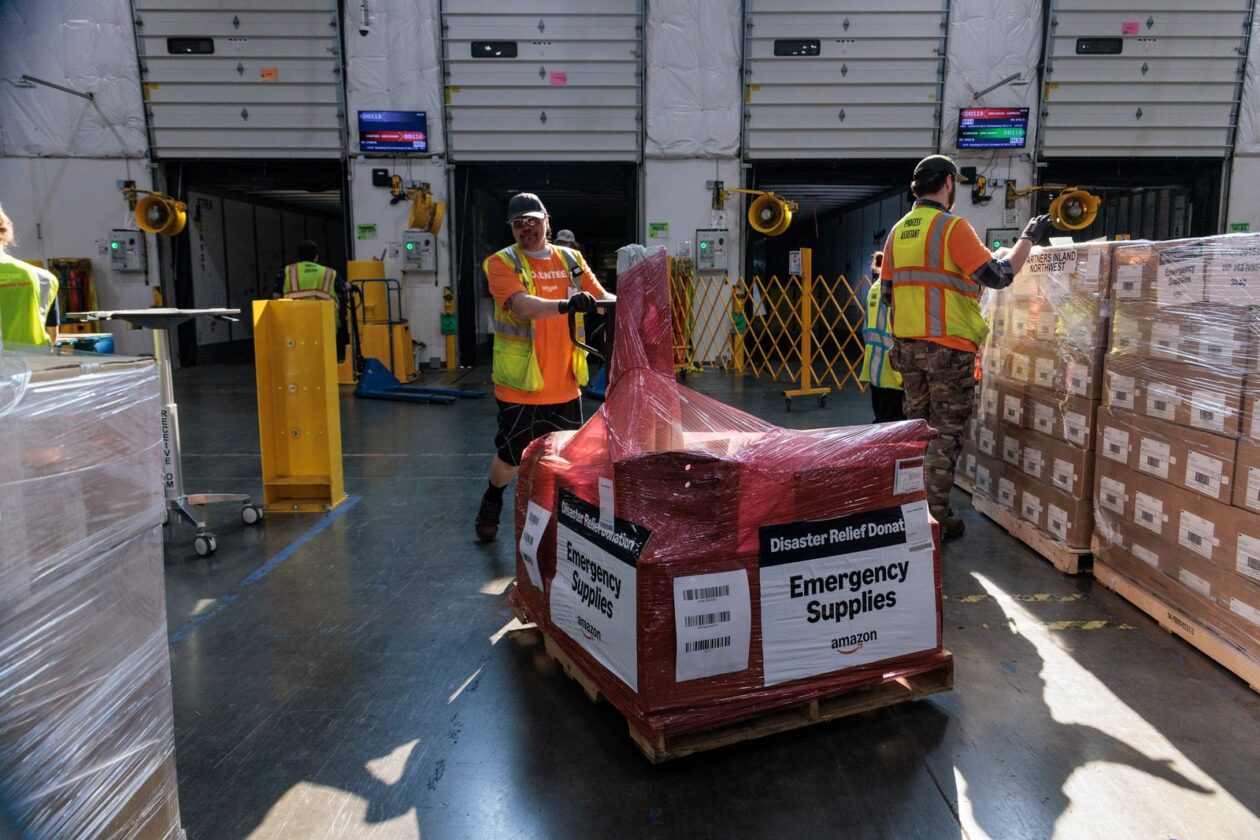
Amazon has 12 Disaster Relief hubs around the world — including this one in California handling wildfire relief supplies — designed to respond quickly to natural disasters with delivery of emergency materials. (Amazon Photo)
Amazon’s Disaster Relief team responds with emergency supplies to support victims of crises around the world. Recent efforts have provided aid following a hurricane in Jamaica, earthquakes in Venezuela and wildfires in France.
Devastation from wildfires on the eastern side of Washington hit especially close to home — for Amazon and number of companies in the state.
The Seattle-based tech giant announced this week that it is donating a range of supplies to assist nearly 65,000 people who have been evacuated from their homes in the Spokane area, as crews battle three major wildfires that have destroyed hundreds of homes and businesses.
“Washington is home to Amazon and to tens of thousands of our employees. As the situation evolves, we remain committed to supporting our employees and the wider community affected by the Spokane wildfires,” Abe Diaz, Amazon’s head of Disaster Relief, said in a statement.
Through its work with the American Red Cross, Save the Children, and local nonprofits in Spokane, Amazon is helping to donate and deliver more than 26,000 emergency supplies, including air purifiers, masks, diapers, and hygiene kits for displaced families. Heavy-duty gloves, boots, and hydration packets for firefighters are also arriving this week, and a second wave of donated supplies will follow.
Amazon relies on 12 Disaster Relief hubs across seven countries, and aid for Spokane is coming from a hub that opened in California’s San Bernardino Valley in 2024.
The global network first launched in the U.S. in 2021 and enables the company to respond to natural disasters in just a couple of days or less. The company says that since 2017, it has donated and delivered more than 30 million essential supplies in response to over 200 disasters around the world.
In a post on LinkedIn on Wednesday, Kara Hurst, chief sustainability officer at Amazon, said the fires created “a living nightmare” in Eastern Washington.
“Every natural disaster is one too many, but the latest one hits especially hard,” she wrote.
Amazon is not alone in providing aid.
Boeing announced that it’s donating $250,000 from its Charitable Trust to assist those impacted by Washington wildfires.
The aerospace company said the funding will support the Innovia Foundation of Eastern Washington and Northern Idaho, to help nonprofits, businesses and community organizations provide relief.
Boeing employs more than 65,000 people in Washington. The company said it will match qualifying employee contributions made to charitable gift match programs in support of relief efforts.
F5 is assisting its employees and others in the broader Spokane community impacted by the fires, the company told GeekWire Wednesday.
The Seattle-based networking and security giant has a significant presence in Spokane Valley.
“The safety and well-being of our team members are our highest priorities during this challenging time of rapid evacuations and profound uncertainty,” an F5 spokesperson said, adding that the company is committed to ensuring employees have the resources they need to recover and rebuild.
To assist those directly affected, F5 said it is actively mobilizing support through two primary avenues:
Direct Employee Assistance: Offering immediate aid to impacted employees through the F5er Emergency Relief Fund. Fully sustained by F5, the fund delivers direct financial relief to employees facing hardships, emergency evacuations, and long-term recovery efforts due to natural disasters.
Community Donation Matching: F5 launched dedicated donation campaigns to nonprofits actively providing on-the-ground relief and matches employee donations and volunteer time — up to $5,000 USD annually per employee.
A visualizer from Microsoft’s AI for Good Lab, which uses satellite imagery to show buildings in the Spokane, Wash., area damaged by wildfire. (Image via data.humdata.org)
Microsoft’s AI for Good Lab is putting its technology to use in the form of a building damage visualizer that uses satellite imagery to show the effects of the Spokane fires.
The lab supports HASTE (High-speed Assessment and Satellite Tracking for Emergencies), an open-source, no-code platform that turns vast amounts of data into actionable insights. Responders can assess destruction faster and more accurately, supporting relief and recovery efforts.
So far in the Spokane area, 16,171 buildings have been analyzed, with 624 buildings (3.9%) identified as damaged. Another 49 (0.30%) could not be analyzed due to smoke, haze, or clouds. Microsoft stresses that the results are considered preliminary and on-the-ground validation will be needed for an accurate understanding of the full impact.
Microsoft also told GeekWire that an employee giving campaign was launched to raise funds for the American Red Cross’s wildfire relief fund and the Innovia Foundation’s Spokane Complex Wildfire Response Fund. “With all employee donations fully matched by Microsoft, we remain committed to assisting those directly affected,” a Microsoft spokesperson said.
T-Mobile is providing a range of services to help keep communities, customers, and first responders stay connected in the wake of the disaster. These include:
Free Wi-Fi, device charging and supplies at its Five Mile Plaza Experience Store at 1910 W. Francis Ave. in Spokane.
Unlimited talk, text and data to T‑Mobile, Metro by T‑Mobile, USCellular, Assurance Wireless, Mint and Ultra customers in impacted areas who don’t already have it.
Activation of T-Satellite with Starlink in impacted areas, enabling compatible devices to send basic text messages and text-to-911 if traditional connectivity is disrupted, while also delivering Wireless Emergency Alerts.
Wi‑Fi, device charging support and power packs at the Spokane Convention Center.
The Bellevue-based wireless provider, which is relaying updates online at its Emergency Response Hub, said it is also working to ensure that cell tower sites remain in operation after having restored service at each site. And T-Mobile is coordinating with state and local agencies to assess community needs and identify additional opportunities to support first responders and residents.
Starbucks is providing support through its foundation to the American Red Cross and World Central Kitchen, and the Seattle-based coffee giant said it’s continuing to assess additional opportunities to support recovery efforts in Spokane.
Customers at Starbucks coffeehouses across Washington, Oregon, Idaho and Alaska are invited to join in giving to the Red Cross’s Washington Wildfires 2026 campaign, a spokesperson told GeekWire.
Starbucks partners (employees) who are looking to help during times of need, or year-round, can contribute to the Caring Unites Partners (CUP) Fund, a financial assistance program funded by partners, for partners.
The company is also offering a double match for Starbucks partner donations made to American Red Cross – Disaster Relief; Feeding America – Disaster Response; and World Central Kitchen – Disaster Relief Efforts.
Washington Secretary of State Steve Hobbs announced that his office has activated its Disaster Relief Center (DRC) to encourage donations for communities hit by wildfires across Central and Eastern Washington.
The DRC operates as a specialized program under the Office of the Secretary of State’s Combined Fund Drive (CFD). The portal aggregates verified, registered crisis-relief nonprofits so state employees, retirees, and the broader public can quickly connect with vetted organizations providing immediate aid.
“In times of crisis, I know Washingtonians’ first thought is ‘How can I help?'” Hobbs said in a statement. “Anyone looking for a way to support our neighbors in Eastern Washington can feel confident their donations will go directly to organizations doing life-saving work on the ground.”
Washington Attorney General Nick Brown’s office is also encouraging people to take precautions to ensure wildfire relief donations go to reputable charities.
“The destruction in Spokane is heartbreaking, and generous people across our state want to help,” Brown said in a news release Wednesday. “It’s important to give safely to ensure your hard-earned money is helping those in need.”
The city of Spokane is accepting donations through its H.O.M.E. Starts Here Fund, which had attracted $234,000 from more than 1,100 donors by Wednesday.
The AG’s office is providing online tips to guide those giving to non-profits or charities.

 Login
Login