
 Login
Login
Building Custom Backyard Solar Lights
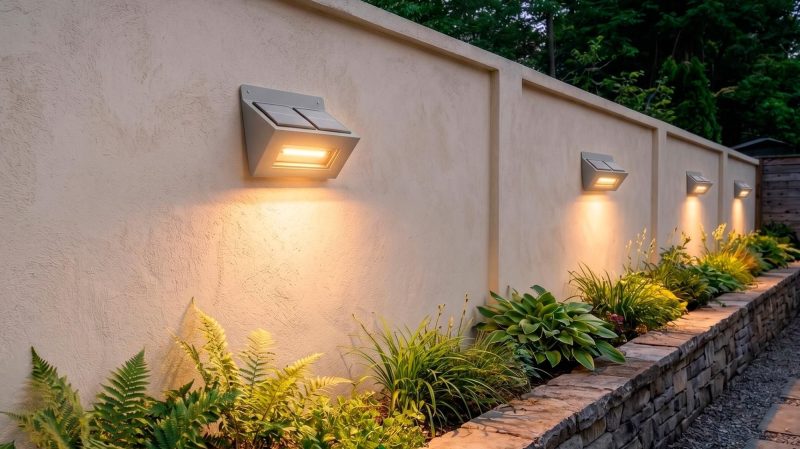
In this modern age, if you want a truly swish garden that makes your friends sad when they visit, you need good lighting. [technocraftStudio] has been working on just such a project, creating custom wedge lights to illuminate garden beds in style.
You might look at the plastic housings involved and assume that they’re 3D printed, like the vast majority of such projects we cover these days. Instead, the enclosures are crafted out of PVC plastic, harvested by flattening sections of pipe with a heat gun. It has the benefit of being highly weather resistant, and cheap to boot. The lights themselves are small LED panels mounted on aluminium plate as a heatsink, and fitted with an acrylic diffuser to spread the light out more evenly. Power for the lights comes from an 18650 lithium-ion cell, charged by a pair of solar panels hooked up to an MPPT charge controller. A TP223 capacitive touch module is also included in the design to allow the lights to be turned on with just the touch of a finger.
The result is a surprisingly stylish bit of garden furniture which provides warm, even light and, ideally, needs a minimum of maintenance and attention since the sun provides the power. We’ve featured some other great solar lamps before, too, like this lovely Pokemon-themed build. If you’re building your own solar projects at home, or doing weird things with PVC, we’d probably love to hear about it on the tipsline!
