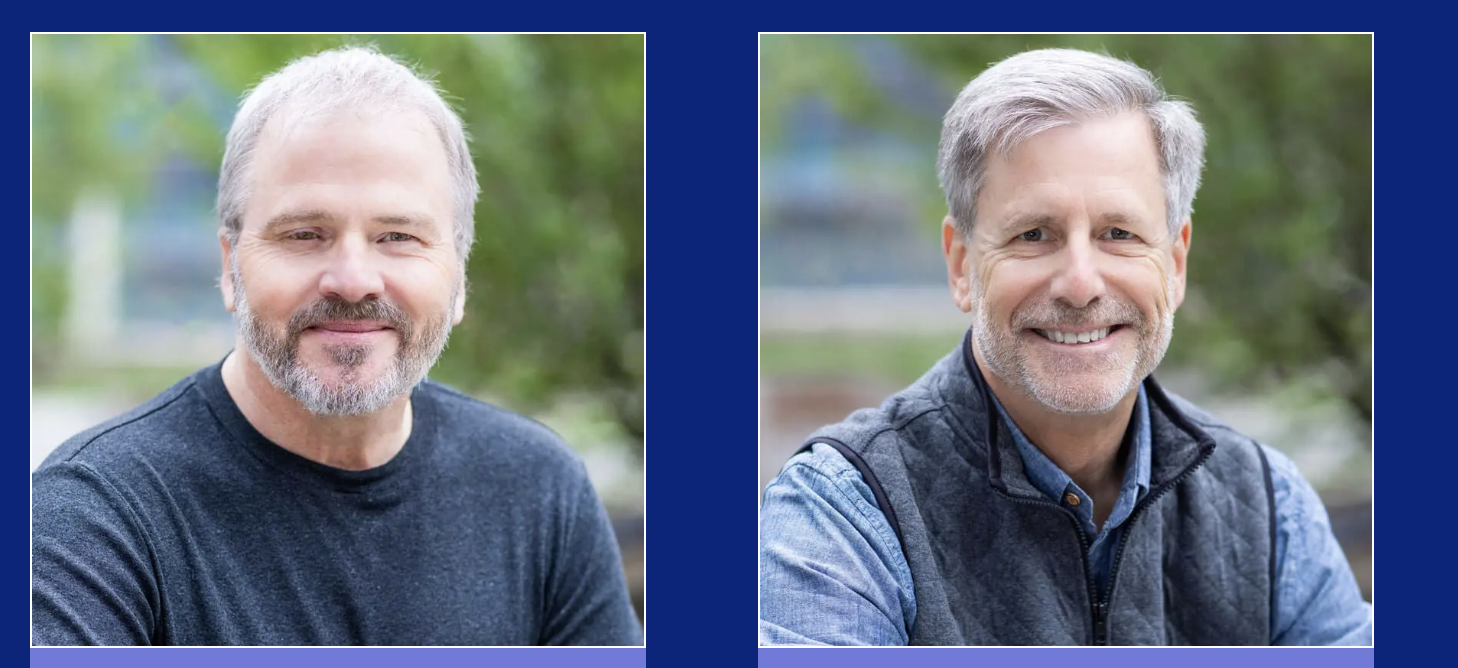
Michael Jensen, left, and Steven Brugger are leading BrainChild Bio. (Photos via BrainChild Bio)
Seattle biotech startup BrainChild Bio has raised $116 million to advance an experimental CAR T cell therapy for one of the deadliest forms of childhood brain cancer.
The Series A financing will primarily fund a pivotal Phase 2 clinical trial of an investigational therapy being developed for diffuse intrinsic pontine glioma, or DIPG. The rare brainstem tumor primarily affects children ages 5 to 10 and has few treatment options.
The financing was led by an undisclosed private family fund and foundation, with participation from BrainChild Bio’s initial investor, Seattle Children’s, and new investor WRF Capital.
BrainChild Bio is building on CAR T cell technology developed at Seattle Children’s and licensed exclusively to the company in 2023. The approach involves genetically engineering a patient’s own T cells to recognize and attack cancer cells.
The company says its new therapy has now entered its ILLUMINATE Phase 2 study, designed as a registration-stage trial that could eventually support an application to the U.S. Food and Drug Administration.
DIPG presents a particularly difficult challenge for cancer researchers because the tumors grow in the brainstem, an area critical to basic functions, and the blood-brain barrier can limit the ability of treatments to reach the tumor.
BrainChild Bio’s approach delivers the CAR T cells directly into cerebrospinal fluid through an implanted catheter, allowing the cells to reach the tumor locally and potentially be administered repeatedly.
About 300 children in the U.S. are diagnosed with DIPG each year, a devastating brain tumor with no cure and few treatment options. Radiation is the current standard of care, but children diagnosed with DIPG have a median overall survival of only about 11 months.
BrainChild Bio also plans to use proceeds from the new financing to advance a CAR T therapy designed to target three different cancer markers, toward initial clinical testing in glioblastoma.
The company was founded by Michael Jensen, who previously helped develop the underlying work at Seattle Children’s and was a co-founder of Umoja Biopharma and Juno Therapeutics. The CEO is Steven Brugger, who most recently served as founder and CEO of Affinivax, a biotech company which was acquired by GSK for $3.3 billion in 2022.
“This financing enables us to chart our path forward to serve the children and families afflicted with devastating brain tumors and represents a new paradigm for treating CNS brain tumors in children and adults,” Jensen said in a statement. “Our team at BrainChild Bio is steadfast in its commitment to harness CAR T cell technology in CNS tumors and we are uniquely positioned to do so.”
Seattle’s foundation as a hub of technology, science and innovation runs deep. Its confidence should, too. (GeekWire Photo / Kevin Lisota)
[Editor’s Note: Jacob Colker is co-founder and co-managing director of AI House.]
Seattle is one of the most talented, creative and inventive places in the world. But if we want the rest of the country to see us that way, we have to start acting like we believe it ourselves.
First, we need more pride around here.
Let’s talk about what it means to be proud.
My mother grew up in Tarnów, Poland. She escaped communism and came to the United States in 1978 looking for a better life. She found one, built a family, and has lived in America for nearly 50 years.
But my mom is still very, very Polish.
Several times a year, I get a message: “Jakub. Did you see this?”
I already know what’s coming.
Some Polish person did something. A Polish athlete won something. A Polish scientist discovered something. Some guy with a Polish grandmother finished third in a regional Nebraska chess tournament. Doesn’t matter. Poland.
“Jakub. Look at this person.”
Okay, Mom. Who is she?
“POLISH.”
That’s it. That’s the story.
And I love it, because Mom has this completely indestructible pride in where she comes from. Plenty of us know someone like this: a Greek mom, Vietnamese dad, Indian uncle or Nigerian aunt. Somebody from their corner of the world did something great, and you are going to hear about it.
There is power in that instinct. Not because your people are better, but because you believe your place matters.
Seattle could use more of that.
We are almost pathologically humble. Our response to notable achievements is often a polite nod before everybody gets back to our regularly scheduled Seattle freeze.
That humility is working against us.
Second, Seattle isawesomeand the evidence is everywhere.
I see Seattle’s potential every day working alongside dozens of entrepreneurs building startups. Some of the most ambitious and talented people in the world are already here.
We have many billion-dollar startups across the region and more than 200,000 people working across technology, science, space, health and startups. That is more than enough talent to build yet a dozen more unicorns.
Nearly 40% of the world flies every day on airplanes built here. Blue Origin and SpaceX build rockets here. Starbucks, Amazon, Costco, REI and Nordstrom reshaped how the world shops. Microsoft helped put computing into our homes. AWS and Azure helped make the cloud the infrastructure of modern life. The University of Washington ranks among the world’s best. Seattle medical breakthroughs have helped save tens of millions of lives. We are pushing forward fusion energy, aerospace and maritime innovation. And let’s not forget: we just won the darn Super Bowl.
And so, so much more.
So why, despite all the evidence, do we still seem to have a communal case of imposter syndrome?
This is not a city lacking accomplishments.
It is a city with a branding problem.
Third, we have let other people tell our story for far too long. This ends, today.
Cities have brands whether they intend to or not. Silicon Valley is where ambitious people build companies. Nashville is music. Los Angeles for film and television.
Seattle’s cultural humility mostly assumes our accomplishments speak for themselves.
They don’t.
Reputation gets built one story at a time. You hear one story and it is interesting. You hear 10 and you notice a pattern. You hear 50 and your beliefs begin to change: That’s where important science happens. That’s where talented people live. That’s where I should invest, build or work.
Those beliefs shape real decisions about where people move, where companies get built and where investors put their money.
So to fix Seattle’s branding problem, here’s what we need to do.
Step 1: Let’s tell one clear story — Seattle’s talent pool is ridiculous.
Seattle is where deep technical talent meets deep domain expertise to build consequential things: AI, aerospace, cloud computing, medicine, fusion, robotics, maritime technology and enterprise software.
We do not need 50 slogans. We do not need another consultant-led branding exercise. We need one simple idea that people outside this region can remember: Seattle’s talent pool is ridiculous.
There is a reason some of the world’s most important companies have built major engineering centers, research hubs and second headquarters here for decades. They come for the talent.
And that talent is why Seattle will not just participate in the future. We will lead in building it.
Step 2: Let’s use the megaphones we already have.
Seattle already has outlets (including this one) telling this story — publications, podcasts and social channels that document the region’s startups, breakthroughs and product launches.
Every day, startups are raising money, scientists are making breakthroughs, companies are launching products, engineers are building technology and institutions are pushing this region forward.
That is not just tech news. That is the raw material of Seattle’s reputation. So let’s use it.
When you read or hear about a Seattle startup doing something remarkable, share it. When you see a story about a breakthrough at Fred Hutch or the University of Washington, send it to someone outside the region. When a local company raises money, lands a major customer or gets acquired, don’t just scroll past it. Amplify it.
Step 3: Let’s treat every local win as Seattle’s win.
When a local robotics company ships something remarkable, that is Seattle’s story.
When a maritime startup reinvents how ports operate, that is Seattle’s story.
When our AI research labs, or hometown heroes in Amazon and Microsoft, create breakthroughs, that is Seattle’s story.
When a biotech company lands a major breakthrough, when a game studio creates a global hit, when a clean-energy company reaches a milestone, that is Seattle’s story.
Our companies, universities, hospitals, labs, investors, civic organizations and business leaders should act like an amplification network for one another. Stop treating somebody else’s success as somebody else’s news.
Their win is our collective proof.
Step 4: Let’s put Seattle on the label.
Founders need to say where they are building. “Made with ❤️in Seattle” should be on the bottom of every website. Put Seattle in the press release. Put it in the LinkedIn post. Mention it onstage. Say it in interviews. Tell investors. Tell customers.
Silicon Valley companies have spent decades attaching their success to their geography. We should do the same. If you build something extraordinary here, make sure the world knows it was built here.
Step 5: Let’s do a better job of selling Seattle.
Every venture capitalist, founder, executive and civic leader in this region should be able to explain in 60 seconds why somebody should build a company here.
Not defend Seattle. Not apologize for Seattle. Sell Seattle.
Reminder: It’s the talent.
(And also cream cheese on hot dogs.)
When investors and founders from New York, Boston or San Francisco come to town, show them the region. Introduce them to engineers, researchers and entrepreneurs. Bring them into the community. Let them see what is happening.
The best branding campaign is somebody getting on a plane home saying, I had no idea all of this was happening in Seattle.
If we’re going to succeed, we need tobelievefirst.
Insert all the Ted Lasso jokes you want, but this stuff matters.
There is no giant Seattle marketing department coming to save us. There is no national referee who will eventually review the evidence and declare that Seattle deserves more respect.
When somebody here does something extraordinary, act like it. Read the story. Share the post. Send the article to your team. Text it to your friend in New York. Put it in the group chat. Bring it up over dinner. Tell your kids.
Basically, become my Polish mother.
My mom doesn’t give a hoot that Kraków ranks No. 6 on some list or Warsaw is No. 8 on another. She doesn’t need a clickbait listicle to tell her Poland matters. She already believes it does.
We have to build our reputation ourselves. The good news is that we already have everything we need: extraordinary companies, world-class institutions, ambitious people, groundbreaking science and media documenting it all.
What we have been missing is the confidence to start being more loud. Stories become patterns, patterns become reputation, and reputation becomes gravity.
Gravity is what creates influence and respect.
Pride is not something somebody else gives you. You don’t wait until the rest of the country decides your home is important. YOU decide it is. Then you act like it.
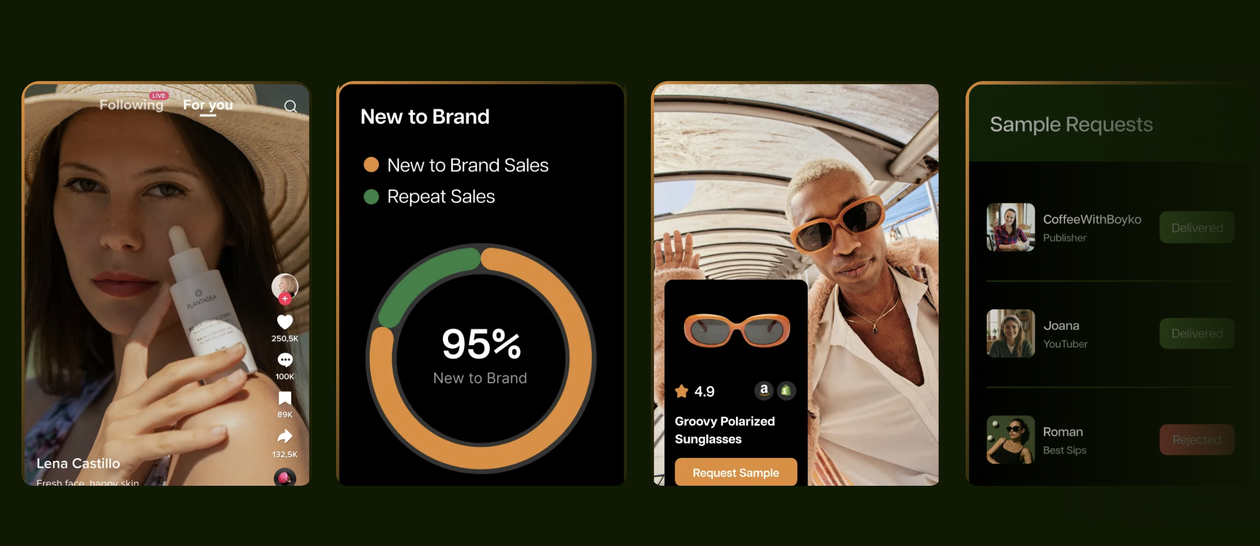
Levanta builds marketing tools so influencers and creators can connect with brands. Image via Levanta.
Influencers and online creators have become an increasingly powerful way for brands to sell products. But managing those relationships can get complicated — especially for companies selling across Amazon, Walmart, Shopify and other channels.
That’s the market Seattle startup Levanta is targeting, which today is announcing $22 million in new funding led by Volition Capital. The company provides software that helps brands find creators, send them products, set up affiliate commissions, track sales and handle payments.
The company says it now has more than 90,000 vetted creators on its platform. Brands can offer creators products to review or promote, pay commissions when their links generate sales, or arrange flat-fee partnerships. Levanta tracks the performance across Amazon, Walmart and Shopify and handles payments.
The startup originally focused on Amazon sellers but has expanded to Walmart and Shopify. Its revenue is up 80% year-over-year in 2026, according to the company.
“Every marketplace has thousands of sellers that want more customers, and there are millions of creators and affiliates capable of driving those customers,” said CEO and co-founder Ian Brodie in a press release. “The missing piece is infrastructure that connects the two, handles the economics, and accurately measures what happens.”
In 2023, Goldman Sachs estimated that the the influencer marketing category was expected to grow to $480 million by 2027.
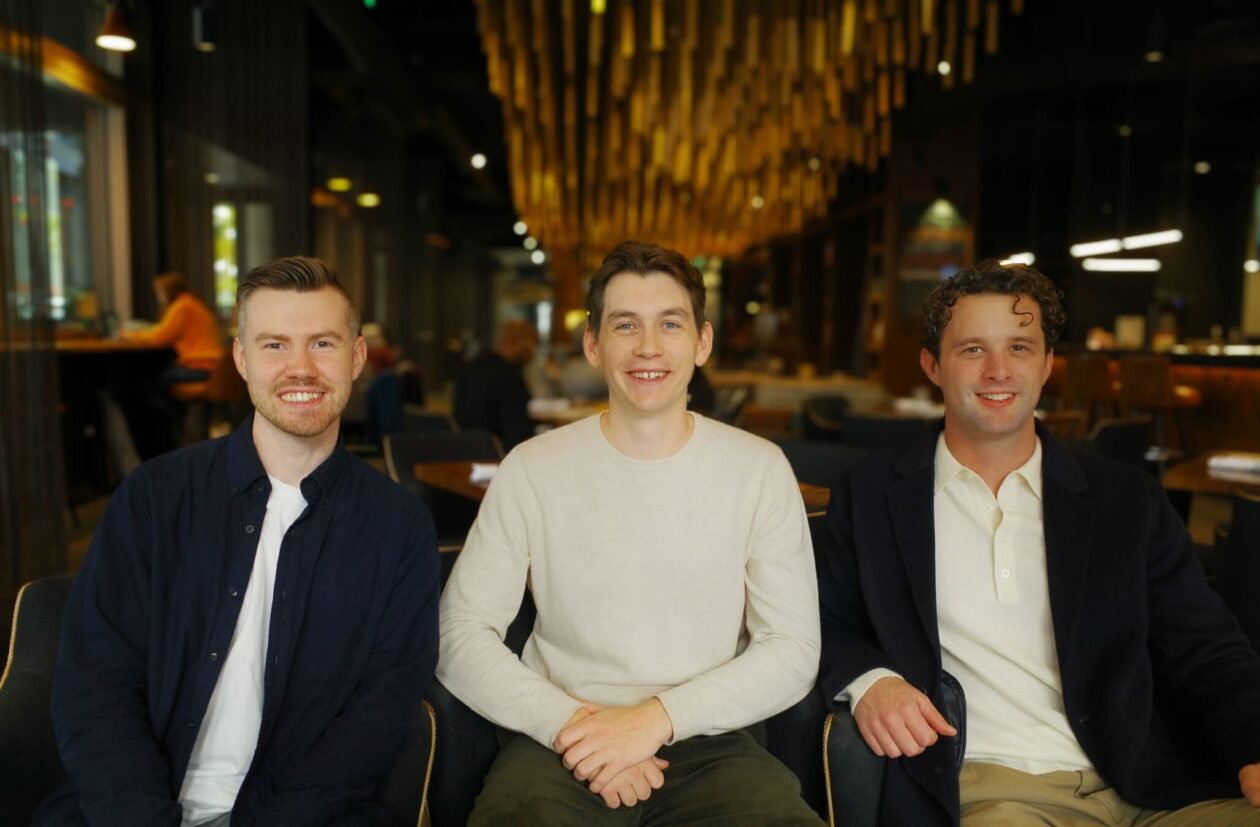
Levanta co-founders, from left: Spencer McKenney, Ian Brodie, and Rob Schab. (Levanta Photo)
Levanta was founded in 2023 by Brodie, CTO Spencer McKenney and Chief Marketplace Officer Rob Schab, all University of Washington graduates. The three previously founded Grovia.io, an affiliate marketing company that was acquired by Acceleration Partners in 2022.
With more than 100 employees, Levanta is the rare startup that has already reached profitability with Brodie telling Business Insider that it has been profitable or roughly break-even since its launch. With the new funding, it also provided cash liquidity to some eligible employees.
“This is a milestone moment for Levanta and it reflects how far the company has come and the value our team has created together,” Brodie said in the release. “At the same time, it allows us to reward the people who have been instrumental in building the foundation of the business while ensuring they remain deeply aligned with where we’re going next as we continue building Levanta for the long term.”
The new funding will support expansion to additional retail marketplaces and international growth.
Previous Levanta backers include Long Run Capital, OpenSky Ventures and Arrived Homes CEO Ryan Frazier. The latest series B round brings Levanta’s total funding to more than $43 million.
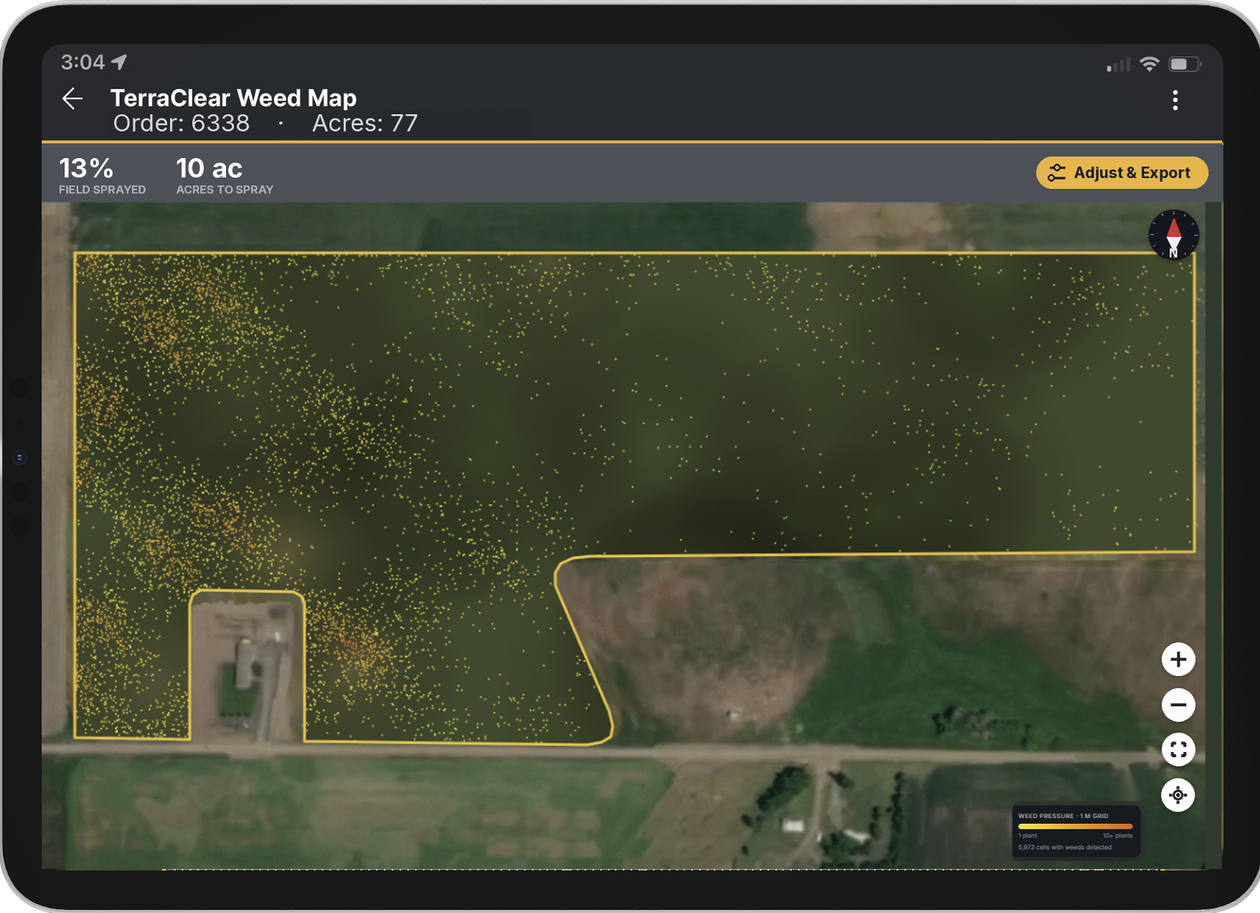
TerraClear’s new Weed Maps helps farmers identify individual weeds as small as a quarter inch. (TerraClear Photo)
The next big test for AI isn’t happening in a data center. It’s happening in the dirt.
Really, it’s in the weeds.
Two Seattle-area startups are betting that AI can transform how farmers find and eliminate unwanted plants — one by mapping every weed, the other by zapping them with lasers.
Issaquah, Wash.-based TerraClear is commercializing a new system that uses ultra-high-resolution imagery and machine learning to map individual weeds across entire fields of corn and soybeans, then turns those detections into digital prescriptions that can be sent directly to precision sprayers.
Meanwhile, Seattle-based Carbon Robotics is taking a different approach: Its autonomous LaserWeeder uses computer vision to identify weeds and then blasts them with lasers.
Now, the AI powering these systems is getting smarter, too — moving beyond simple weed detection toward models that can recognize and understand plants across different crops, fields and growing conditions.
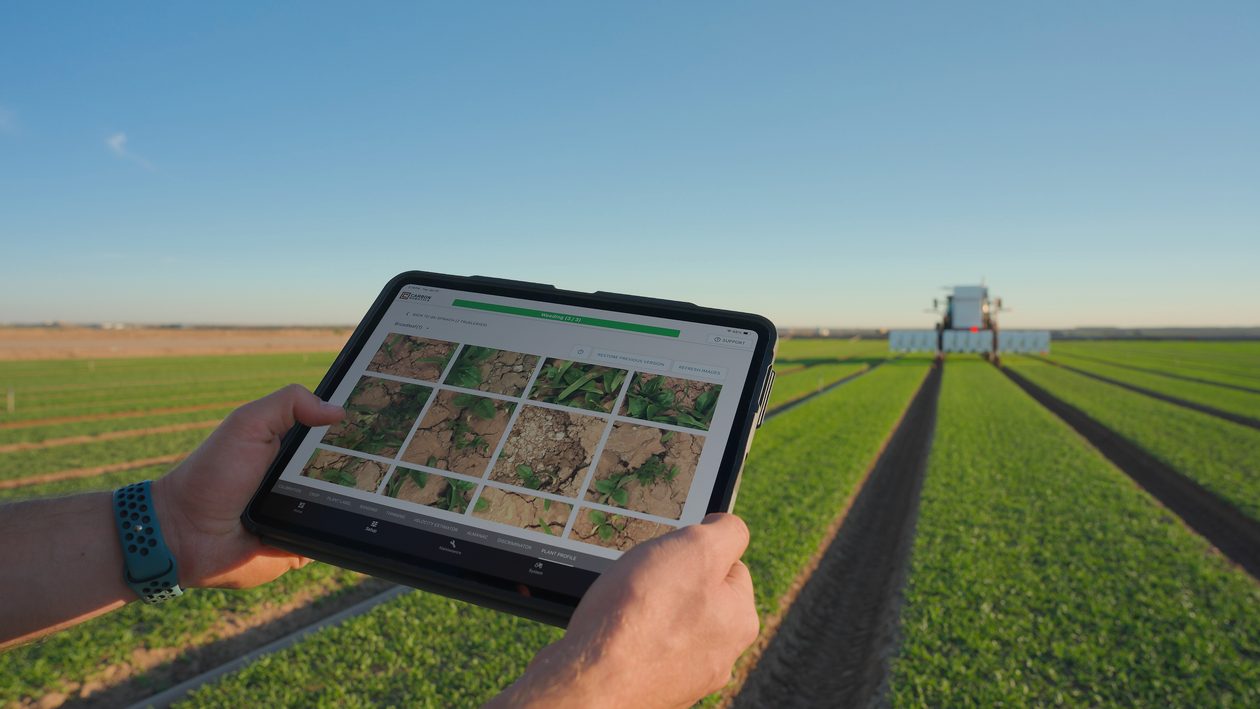
Carbon Robotics recently-released Plant Profiles, a feature added to all LaserWeeders, enables farmers to tailor the foundational LPM to their unique crops, weeds, and field conditions. (Carbon Robotics Photo)
TerraClear’s new Weed Maps, announced Tuesday, captures imagery at 1.5-millimeter resolution and identifies weeds as small as the eraser on a pencil. Rather than sampling portions of a field, the company says it collects images of every acre and produces a geo-referenced map that can be uploaded to section or nozzle-controlled sprayers used by farmers.
The goal is precision at a level that would be difficult for a human to achieve, allowing a farmer to know where the individual weeds are.
TerraClear says the maps can be delivered the next day, giving growers a chance to act while weeds are still small and easier to control.
Devin Lammers, the chief executive of TerraClear, tells GeekWire that its approach “sidesteps the capital problem entirely.” In other words, farmers need not buy a new piece of expensive equipment, instead using software to turn existing sprayers into precision instruments by telling them exactly where to spray.
He called Carbon Robotics laser-weeding system “impressive technology,” noting that it works well for specialty crops and organics.
But bigger farms producing commodity crops like corn and soybeans — the market TerraClear is going after — need a different approach, he said.
“Modern grain and oilseed sprayers already have individual nozzle control and RTK positioning — the actuation hardware is sitting in the shed,” Lammers said via email. “We just hand the sprayer a shapefile of individual weed locations and it turns the nozzle on only where a weed actually is.”
Given that large corn and soybean growers farm more acres at a lower revenue per acre, Lammers said it’s a “very different P&L” where expensive new equipment needs to pencil out.
With TerraClear’s new system, Lammers added that “the farmer buys a map, not a machine.”
RFK Jr. and new ways to farm
One of the benefits of both approaches is chemical use reduction in the field, a hot topic in political circles with President Trump earlier this year committing $1 billion to modernize farming and reduce chemicals in agriculture. That federal investment could help spark new innovations, like the ones TerraClear and Carbon Robotics are developing.
Robert F. Kennedy Jr., the U.S. secretary of health and human services, earlier this year touted Carbon Robotics’s machines on an episode of The Joe Rogan Experience as a possible solution in cutting pesticide use.
In the case of TerraClear, Lammers said the precision mapping technology alone could cut pesticide and herbicide use by up to 80% with no loss of efficacy.
Both startups are part of a broader Pacific Northwest ag-tech ecosystem that has been applying AI and robotics to agriculture, building on the regions farming and tech roots.
TerraClear founder Brent Frei represents that unique farming and tech DNA. He grew up on a family farm in Grangeville, Idaho, before studying at Dartmouth and then moving to the Seattle area where he co-founded Onyx Software and Smartsheet.
Founded in 2017, TerraClear originally attacked a much less glamorous agricultural problem: identifying and removing rocks from farmers’ fields. In 2024, the company raised $15 million, bringing its total funding to $53 million.
By February of this year, TerraClear had expanded to about 50 employees and was approaching 1,000 customers. At that time, it also launched an autonomous field robot called TerraScout, designed to collect high-resolution imagery across a field and convert that information into actionable maps for existing farm equipment.
The company says TerraScout can collect more than 4 billion image samples per acre and map more than 1,000 acres a day under favorable conditions.
In addition to TerraScout, Lammers said they are using aerial drones to ingest field-level data into its new Weed Maps product.
“That’s the part that compounds — the imagery we gather is field-level, repeated season over season, and specific to the commodity acre,” Lammers said. “Models get better, which makes the maps better, which brings more acres, which produces more data.”
TerraClear’s autonomous field robot the TerraScout. (TerraClear Photo)
Carbon Robotics is further down the road in making the machine the decision-maker, and eradicating weeds without the use of chemicals.
The Seattle startup’s LaserWeeder combines cameras, AI and high-powered lasers to identify weeds and destroy them without applying herbicides or pesticides. The company has deployed its machines on farms around the world and has built an enormous dataset in the process.
Announced in February, its so-called Large Plant Model was trained on 150 million labeled plants, which Carbon describes as the largest agricultural plant dataset of its kind. The company’s goal is to move beyond narrowly trained computer-vision systems that need to be retrained whenever a new weed or field condition appears.
With the Large Plant Model, farmers can use Carbon’s Plant Profiles feature to show the system a handful of images and customize what the machine should recognize and target.
Given the changing dynamics of a weed during various stages of its growth — and based on conditions such as soil, weather and crop varieties — Carbon wants to correctly identify the difference between a weed and a crop.
“When our robots can understand any plant in any field immediately and adapt behavior in real-time, farmers immediately get maximum value from the machines,” Carbon Robotics CEO Paul Mikesell said in a press release. “The Large Plant Model provides farmers with the most advanced AI technology to maximize the weeding quality of LaserWeeder in their unique environments.”
Founded in 2018, Carbon Robotics has raised $177 million to date and as of last year employed about 260 people at offices in Seattle and a manufacturing facility in Richland, Wash.
The farm becomes a giant AI dataset
TerraClear and Carbon Robotics are attacking one of agriculture’s thorniest problems — weed management — from different directions.
TerraClear wants to allow a farmer to keep using a conventional precision sprayer, while making it dramatically more selective via its Weed Maps.
Carbon, meanwhile, is developing autonomous laser-weeding equipment itself, identifying and eliminating the individual weeds in real time without chemical spray or tractor operators.
The bigger opportunity for both companies may ultimately be neither maps nor lasers, but the underlying data they gather.
Every time a camera passes over a field, it can collect information about plants, soil, crop health and growing conditions. That’s vital information to farmers, seed producers, agriculture researchers and equipment manufacturers.
A federal judge has entered a final judgment requiring Guardant Health to pay more than $245 million to Seattle biotech TwinStrand Biosciences and the University of Washington over DNA sequencing technology developed at the university.
The judgment, entered Friday in U.S. District Court in Delaware, follows a 2023 jury verdict that found Guardant willfully infringed two patents covering TwinStrand’s Duplex Sequencing technology.
The case also establishes a continuing revenue stream for the university and TwinStrand from some of Guardant’s products.
Jesse Salk, co-founder of TwinStrand. (TwinStrand Photo)
The court’s final judgment includes $83.4 million in damages awarded by the jury for infringement through June 2023, plus $19.5 million in supplemental damages, $119.4 million in accrued royalties and $22.9 million in interest.
Going forward, Guardant is required under the judgment to pay a 6% royalty on covered sales through March 2033, when the patents expire.
The technology at the center of the case traces back to research at the University of Washington, where scientists, including co-founder Jesse Salk, developed Duplex Sequencing as a way to make DNA sequencing more accurate. Salk — who stepped down as CEO of TwinStrand in 2022 — now is the co-founder of cancer diagnostics startup CytoTerra.
The molecular biologist and clinical oncologist is the grandson of the late Jonas Salk, the scientist who discovered and developed the polio vaccine.
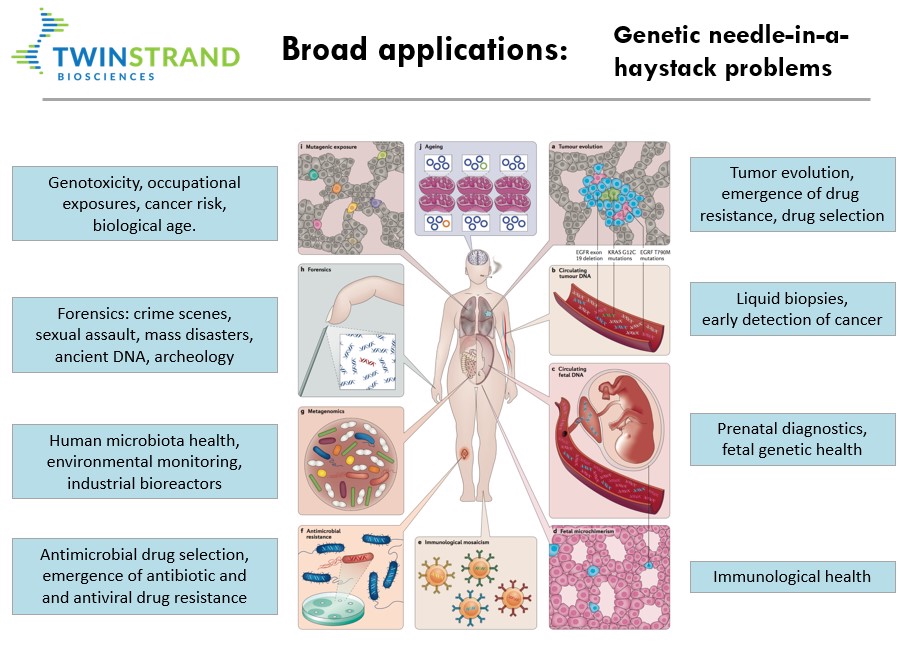
TwinStrand says its Duplex Sequencing technology can improve the accuracy of next-generation sequencing by more than 10,000-fold, allowing researchers to detect extremely rare genetic mutations that can be obscured by sequencing errors.
“Duplex Sequencing solved an accuracy problem the sequencing field had worked on for years, and this judgment affirms the jury’s finding that Guardant Health built products on that invention without a license,” said Chad Waite, chair of the TwinStrand board of directors, in a press release. “We remained steadfast in our conviction that the facts would prevail, and they have. We intend to see this through and stand firmly behind the intellectual property at the core of our technology.”
Salk and his colleagues from the University of Washington launched TwinStrand in 2015 to commercialize the technology. Based in Seattle, the startup raised funding from Madrona Venture Group, Soleus Capital, Janus Henderson Investors, Ridgeback Capital, Alexandria Venture Investments. Section 32 led a $50 million series B round in the company in 2021.
A jury found in November 2023 that Guardant willfully infringed the patents through 11 products and services. The products identified in the judgment include Guardant360, Guardant Reveal, Guardant Shield and other cancer-testing products.
The Delaware court subsequently rejected Guardant’s effort to overturn the verdict or obtain a new trial. In June, the court also awarded TwinStrand and UW ongoing royalties and supplemental damages. The final judgment now formalizes those awards.
Guardant is not accepting the ruling.
The California-based precision oncology company said Monday that it plans to appeal the judgment, arguing that the court’s order covers products that existed at the time of the 2023 trial and that many have since been discontinued or substantially upgraded. Guardant also said current versions of its Reveal and Shield products are excluded from the final district court order.
Guardant — founded in 2012 — said the judgment and collection of potential royalties will be stayed pending the appeal.
“We strongly disagree with this decision and will promptly be appealing for its overturn,” said John Saia, Guardant Health Chief Legal Officer, in a press release. “We have full faith in the strengths and merits of Guardant’s intellectual property and R&D and are confident we will ultimately prevail on appeal.”

 Login
Login