❌

Reading view

There are new articles available, click to refresh the page.

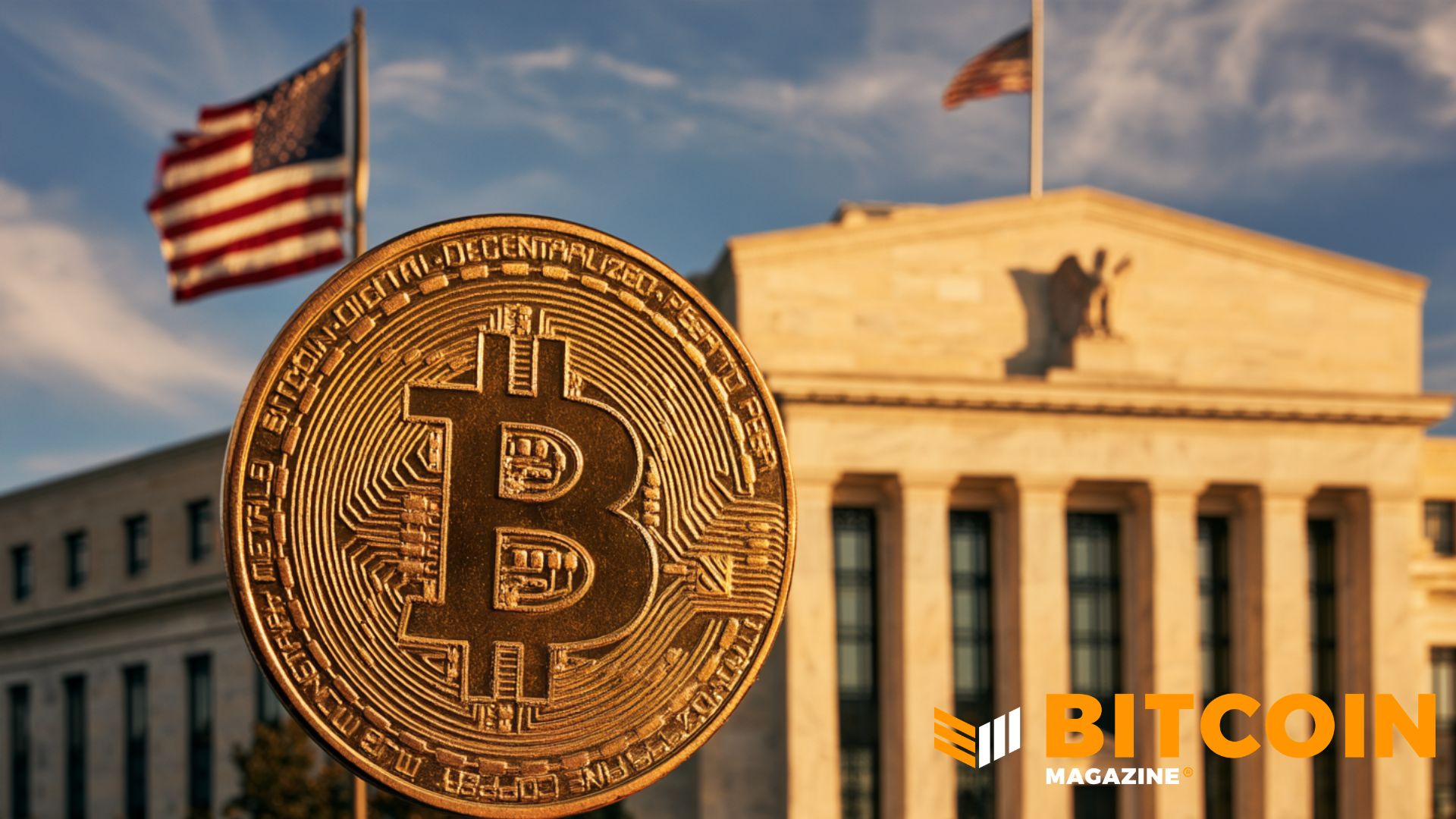
Bitcoin Price Trades Above $81,500 as Fed Keeps Rates Steady in Split Vote

Bitcoin Magazine

Bitcoin Price Trades Above $81,500 as Fed Keeps Rates Steady in Split Vote

The Federal Reserve left its benchmark rate unchanged Wednesday, holding the federal funds target range at 3.75% to 4%. The bitcoin price showed some volatility around $81,000.

The decision passed 10-2, and the dissents carry as much weight as the outcome. Governor Lisa Cook and Cleveland Fed President Beth Hammack wanted a quarter-point increase. It is the first time since 1992 that a Fed governor and a regional bank president have dissented together on the same side.

Fed Chair Kevin Warsh faced reporters after the vote and said politics played no role in the decision, days before the midterm elections. Warsh has said he does not favor forward guidance absent a crisis, which leaves investors to read the data themselves. 

The committee’s statement dropped its earlier language about when a hike might support a return to 2% inflation. In its place is a line saying more information will guide the policy stance. The Fed also described growth as strong, up from solid.

The signal points toward tightening. Fed funds futures and the Fed’s own dot plot lean toward a rate increase by December, and some pricing puts the odds near three in four. Inflation has been running hot, and the two dissenters are the officials who want to act on it.

Bitcoin price reaction

Bitcoin price’s reaction was restrained. The bitcoin price spiked to about $81,700 in the minutes after the announcement, fell below $80,500, and then recovered toward $81,000. Most traders expected a hold, so the muted move surprises nobody.

Bitcoin’s first response to Fed news tends to be modest, and that the real direction often emerges over the following day. Spot Bitcoin ETFs drew $110 million in net inflows on October 26 and $176 million on October 27, a sign that some institutional money is buying the dip. Other observers have flagged large holders selling into strength.

That tension defines crypto’s position right now. Bitcoin sits about a third below its October 2025 record near $126,000. A rate-hike path works against an asset that has thrived on cheap money, and the market has spent months adjusting to the possibility that the easy-money era is over. 

Some traders read the hold as evidence the Fed will move slowly. Others see December as the real test. For now, the level to watch is a bitcoin price of $80,000. It has held as support in recent sessions, and a clean break below it would expose the next floor. 

Warsh and his colleagues have said they will wait for incoming data before acting. Bitcoin will have to wait along with everyone else.

Midterms up next

Bitcoin’s next big political test arrives on November 3, when voters across the country head to the polls. Crypto has not really dominated the campaign trail. 

The crypto industry spent about $176 million on more than 100 midterm races to build a bipartisan bloc in Congress that could protect its interests after President Donald Trump left office. Fairshake, the industry’s largest super PAC, led the effort and directed strategy as it had in the 2024 cycle.

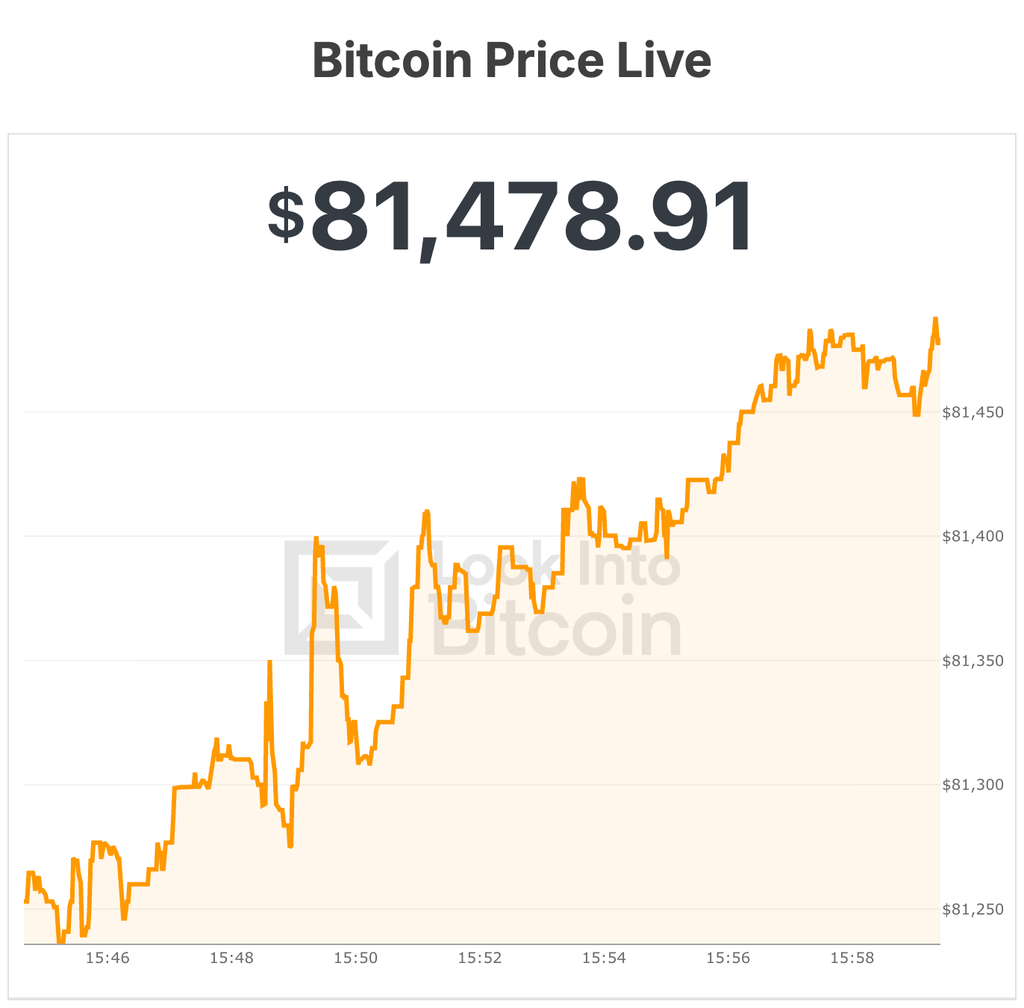
At the time of writing, the bitcoin price is $81,478.

bitcoin price

This post Bitcoin Price Trades Above $81,500 as Fed Keeps Rates Steady in Split Vote first appeared on Bitcoin Magazine and is written by Micah Zimmerman.

Bitwise Raises Bitcoin Target to $1.6 Million as Institutions Keep Buying

Bitcoin Magazine

Bitwise Raises Bitcoin Target to $1.6 Million as Institutions Keep Buying

Bitwise Asset Management this week released its 2027 Bitcoin Long-Term Capital Market Assumptions, raising its 2036 base-case price target for bitcoin to $1,599,766 from $1.3 million a year earlier. 

The forecast implies a 34.3% compound annual growth rate from the roughly $83,557 price the firm used as of September 30, 2026. Bitwise’s bear case is $130,686 and its bull case is $3.67 million.

The base case rests on three arguments. Institutional investors will keep adding bitcoin to portfolios. New supply stays fixed on a predictable schedule. Rising government debt will push investors toward assets that cannot be printed. 

Institutional investors love bitcoin

Bitwise estimates that institutions controlling about $147 trillion could allocate 1% to 5% of their portfolios to bitcoin, which the firm says would mean $1.5 trillion to $7.4 trillion of purchases. The network issues about $14 billion in new coins per year, and Bitwise argues that gap will push prices higher.

Institutional plumbing is already expanding. U.S. spot bitcoin ETPs hold about $108 billion, according to the report. Banks and brokerages are building custody and trading services, and a recent report describes sovereign wealth funds and family offices buying during the 2026 decline. 

Regulators are also moving. A Federal Reserve capital proposal aimed at easing bank custody rules could widen access for large institutions, if adopted.

The past year tested that thesis. Bitcoin fell 53.4% from its October 2025 peak of $126,080 to a June 30, 2026 low of $58,717. Bitwise calls that drawdown the shallowest in the asset’s history. Prior cycle declines were 77%, 84% and 86%. 

Whether the shallow decline signals a new pattern or a pause is less settled. Bitwise expects the four-year cycle to weaken as the investor base broadens. Others see the cycle still at work. 

VanEck argues the current slump follows the historical halving pattern, and Fidelity has pointed to a possible floor around November 2026 if past timing holds. NYDIG has said a repeat of earlier bear markets could push the cycle low near $38,000 to $39,000. Cathie Wood has argued the market is nearly through the downturn. Each view carries a different price floor and timeline.

Bitcoin’s volatility 

Volatility is the other pillar of the forecast. Bitwise models a 27.8% average volatility over the decade, the midpoint between today’s level and its 2036 expectation. Grayscale’s research head recently put one-year volatility at 43%, against a 10-year average of 64%, and lower than the volatility of 19% of S&P 500 companies. Charles Schwab’s research found the asset remains prone to sharp drawdowns despite the lower readings. A Deutsche Bank analyst has described the trend as a sign of a maturing market.

Bitwise also reports that bitcoin’s correlation with gold reached a record 0.58 in September 2026. The firm expects that relationship to deepen, which positions bitcoin as a store-of-value asset. That link cuts both ways. If gold weakens, bitcoin may lose the support it gained from the same investor demand. Gemini has predicted that at least one country will shift part of its gold reserves into bitcoin in 2026, a forecast that has yet to materialize.

The report is candid about what could go wrong. Bitcoin’s track record is short. Its software was developed in 2008 and 2009, trading began on public exchanges in 2010, the first institutional product with bitcoin exposure launched in 2014, and spot ETPs arrived in 2024. 

Bitwise writes that forecasts built heavily on history carry uncertainty because future returns may differ from the past. Regulation is a second concern. The Clarity Act’s failure in Congress, which the report traces to Democratic concerns about ethics provisions, shows that progress can stall, even as the firm argues recent advances are unlikely to be rolled back. 

Technology is a third. Quantum computing, and mathematical advances accelerated by AI, could threaten the cryptography that secures bitcoin wallets. Bitwise says the network will need a major upgrade at some point, and holders who fail to move funds to new addresses could be exposed. The developers have made progress over the past year, the report says, but major issues remain unresolved.

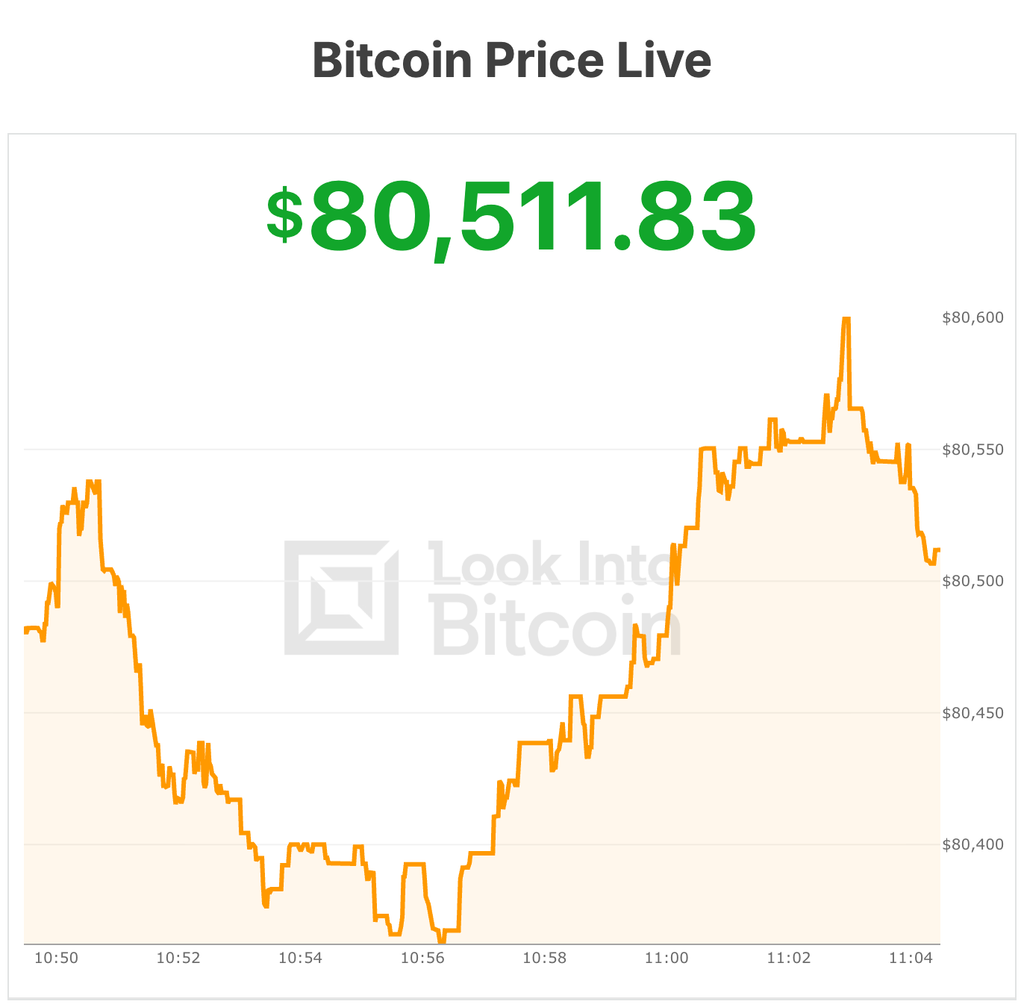
Bitcoin’s price is near $80,500.

Bitcoin

This post Bitwise Raises Bitcoin Target to $1.6 Million as Institutions Keep Buying first appeared on Bitcoin Magazine and is written by Micah Zimmerman.

Bitcoin Price “Climbing the Wall of Worry” – Early Signs of Bull Market | Michael Sullivan


Bitcoin Magazine

Bitcoin Price “Climbing the Wall of Worry” – Early Signs of Bull Market | Michael Sullivan

Bitcoin is holding near $80K, yet the crowd has never seemed less excited and that might be the most bullish signal of all. Michael Sullivan, software engineer and author of Bitcoin Sentiment Weekly, breaks down what language-based sentiment data says about this market. He explains why excitement, conviction and desire are washed out to levels he compares to 2015, and why that looks like the early stages of a disbelief rally.

Chapters:
00:00 Michael Sullivan on Bitcoin and Currency Decay
00:58 Bitcoin’s Pullback From $86K: Is This a Disbelief Rally?
02:10 Bitcoin Sentiment Compared to 2015 and 2022
03:50 How to Tell When the Bitcoin Market Is Overheated
05:05 Measuring Excitement, Conviction and Desire in Bitcoin
06:42 The Next Bitcoin Bull Run Narrative: Bitcoin and AI
08:12 Investor Psychology: Buying Near All-Time Highs vs. DCA
09:42 Bitcoin and Traditional Finance Growing Together
10:54 Why Short-Term Bitcoin Holders Are So Frustrated
12:52 How AI’s Deflation Strengthens the Case for Bitcoin

DISCLAIMER: The views and opinions expressed in this show are those of the participants and do not necessarily reflect the official policy or position of BTC Inc., Bitcoin Magazine, or any affiliated entities. This content is provided for informational and educational purposes only and should not be construed as investment, legal, tax, or accounting advice. Nothing contained in this show constitutes a solicitation, recommendation, endorsement, or offer to buy or sell any securities or financial instruments. Viewers should consult their own advisors before making financial or business decisions.

This post Bitcoin Price “Climbing the Wall of Worry” – Early Signs of Bull Market | Michael Sullivan first appeared on Bitcoin Magazine and is written by Patrick Green.

Bitcoin Price Rests Near $80,500 as Midterms, Fed Decision Loom

Bitcoin Magazine

Bitcoin Price Rests Near $80,500 as Midterms, Fed Decision Loom

Bitcoin price traded near $80,500 most of Tuesday, holding above the $80,000 level that has become the market’s line in the sand. Prices ranged between roughly $79,400 and $80,800 over the day, according to Bitcoin Magazine Pro data, and the asset was up about 0.3% over the prior 24 hours by mid-afternoon Eastern time.

The steadiness follows a rough stretch. Bitcoin price fell below $80,000 on Monday as investors cut risk exposure, weighed down by concerns about AI-sector valuations and higher oil prices. Spot Bitcoin ETFs have also been shedding money. Still, the selling hasn’t turned into panic. Bitcoin price has mostly stayed in a band between about $79,000 and $81,000 this week.

The longer view is harder on anyone who bought near the top. Bitcoin’s all-time high sits near $126,000, set in October 2025, and the price is roughly 30% below where it was a year ago.

The Federal Reserve’s policy meeting runs October 27 and 28, with the decision due Wednesday. The central bank has held its target range at 3.75% to 4% after raising it in September, and officials have signaled another increase may be needed by year-end. 

Market odds leaned toward a hold the last time they were clearly reported in early October, but those numbers are stale and likely have moved. Traders will watch Fed Chair Kevin Warsh’s press conference for hints about a December hike.

Bitcoin price logic amidst the midterms

The logic for Bitcoin is simple. Higher rates drain liquidity from speculative assets, so a hawkish surprise would likely push the price back toward $80,000 or below. 

A hold, or a softer tone, could give buyers room to push toward the $88,000 range seen earlier this fall. The November 3 midterm elections add another layer. Prediction markets have favored Democrats winning both chambers of Congress, according to one Polymarket reading cited in recent coverage. 

For crypto, the most immediate policy question is the pending market structure bill, and lawmakers’ votes on it could shape how the industry approaches the races. Bitcoin and other risk assets have tended to rally in the 12 months after past midterm cycles. 

TD Cowen analysts have warned the results could stall the CLARITY Act for two years. Prediction markets gave Democrats a 90% chance of winning the House and 62% of winning the Senate, a scenario TD Cowen called the most negative for bitcoin. 

A split Congress, with Republicans holding the Senate, was seen as better, while a Republican sweep was viewed as the best path for crypto. The bill had stalled after a failed Senate cloture vote in September, with ethics provisions and stablecoin yield still dividing lawmakers.

At the time of writing, the bitcoin price is roughly $80,600.

bitcoin price

This post Bitcoin Price Rests Near $80,500 as Midterms, Fed Decision Loom first appeared on Bitcoin Magazine and is written by Micah Zimmerman.

Bitcoin Price Hovers Near $80,000 as Traders Await Fed Decision

Bitcoin Magazine

Bitcoin Price Hovers Near $80,000 as Traders Await Fed Decision

Bitcoin price traded near $80,000 on Monday, after falling about 2% earlier in the session. The price has dipped below that level several times in recent days and recovered each time.

Selling pressure has been building. Spot Bitcoin ETFs recorded about $635 million in outflows on October 22. A brief drop below $80,000 last week also triggered roughly $800 million in liquidations of long positions, or bets that prices would rise.

The next major test to look out for is the Federal Reserve’s two-day meeting, which ends October 28. The Fed raised its target range to 3.75% to 4% in September, and its minutes suggested another increase could come by year-end. 

Most recent market odds favor the Fed holding rates steady, though those odds have shifted. Traders are watching Fed Chair Kevin Warsh’s remarks for signs of a December hike.

Higher interest rates typically pull money away from risky assets, including crypto. Broadly speaking, a hold could keep bitcoin price between roughly $80,000 and $88,000. A rate hike could push it toward the lower end of that range.

Bitcoin price backdrop

Geopolitical tensions are also weighing on markets. Oil rose above $100 a barrel in early September as strikes between the U.S. and Iran escalated. Higher energy prices feed into inflation, which affects the Fed’s decisions. 

In tech, Anthropic is reportedly preparing an initial public offering that could value the AI company near $965 billion. The timing has shifted toward the weeks before the November midterm elections, but no date has been confirmed. 

U.S. stocks surged a bit Monday as investors geared up for a busy week of Big Tech earnings and the Federal Reserve’s interest-rate decision. The Nasdaq rose 0.8%, the S&P 500 gained 0.6%, and the Dow climbed 0.3%. 

Alphabet and Microsoft report Wednesday, followed by Amazon Thursday, while markets largely expect the Fed to hold rates steady. 

AI-related stocks rallied following Anthropic’s IPO filing. Tesla jumped 6%, while Meta plans to raise up to $95 billion for AI investments. 

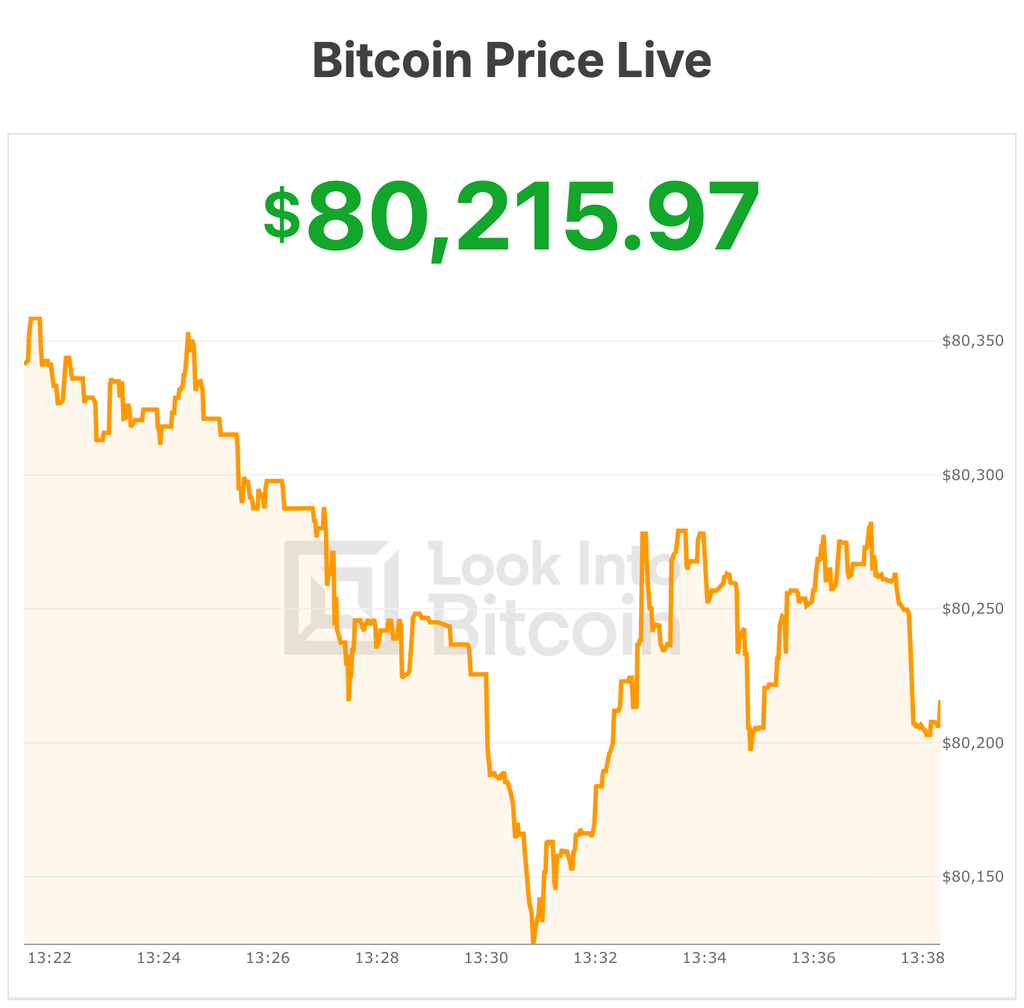
As of writing, bitcoin price trades at $80,215, down nearly $4,000 or 4.75%, on the month. Over the past month, prices have ranged from a high of $86,806.95 to a low of $79,397.76. Bitcoin price peaked above $86,000 in early October, then slid toward $80,000 in the second week of the month. 

A brief rally around October 21 pushed it back near $84,000, but those gains faded within days. Trading volume over the past 24 hours reached about $18.12 billion. 

Bitcoin price remains far below its all-time high of $126,277.05.

bitcoin price

This post Bitcoin Price Hovers Near $80,000 as Traders Await Fed Decision first appeared on Bitcoin Magazine and is written by Micah Zimmerman.

Bitcoin’s Bear Market Is Over, Galaxy Says

Bitcoin Magazine

Bitcoin’s Bear Market Is Over, Galaxy Says

Galaxy Research believes bitcoin’s bear market ended in June and that the asset has entered an accumulation phase, according to a research alert from the firm.  “We believe now is an attractive time to buy and hold bitcoin,” the report said.

Bitcoin traded near $80,000 at the time of the note, about 35% below its October 2025 high and 39% above the June 30 low. The price would need to rise 53% to retake the previous record. The S&P 500, by comparison, sits within 1% of a record set on Oct. 6.

The report lays out four arguments: technical, positioning, fundamental and sentiment.

Bitcoin technicals

Galaxy uses two weekly moving averages to track bitcoin’s bear markets. The 200-week average has acted as a floor in each one, and the 50-week average has acted as a ceiling, according to the firm.

Bitcoin lost the 50-week average in November 2025 and stayed below it for 44 weeks. The June low tested the 200-week average and held, with the worst weekly close coming 4.7% beneath it. Price closed back above the 50-week average in September, and the week ended Oct. 18 was the fifth consecutive weekly close above that level.

Galaxy counted 13 such reclaims since 2011 and said the outcome depended on how long price had spent below the line. The four reclaims that ended spells of 20 weeks or more were higher a year later, by between 55% and 1,497%, and none closed more than 8.4% below the reclaim level in the following 12 months. Of the nine that ended shorter spells, seven fell more than 25% within a year.

The firm said the halving cycle supports the same conclusion. Prior cycles bottomed on days 777, 889 and 912 after their halvings. Oct. 22 was day 916 of the current cycle. Galaxy said the gains that followed those lows (87x, 19x and 7.6x) have shrunk each cycle and that it does not forecast a repeat.

The current drawdown of 53% is the shallowest in bitcoin’s history, the report said, and the first in which price did not fall below the network’s realized cost basis.

Positioning

The report identified basis traders and macro funds as the main sellers since the top. Asset managers’ net long position in CME bitcoin futures fell 57% from the week of the all-time high, according to Commodity Futures Trading Commission data cited by Galaxy. 

Leveraged funds’ net short position, which represents the futures side of the cash-and-carry trade against spot ETFs, shrank by a similar amount. The front-month basis averaged 7.9% annualized in the 30 days before the high and 4.8% in the 30 days to Oct. 21, which the firm said no longer covers the trade’s costs and risk.

Galaxy pointed to 13F filings to identify the sellers. Millennium Management, Brevan Howard, Goldman Sachs, Capula, Farallon, D. E. Shaw, Schonfeld, Symmetry and Tudor cut their spot ETF holdings by between 29% and 100% between the September 2025 and June 2026 quarter-ends, a combined 68,000 BTC. 

Because total holdings across all 2,200 filers fell by 48,000 BTC, the remaining institutions added in aggregate. Morgan Stanley’s wealth management arm, Mubadala and the Abu Dhabi Investment Council were among the buyers.

Spot ETF holdings dropped 11% from peak to trough while price fell 53%, and the funds have added 87,000 BTC since the June low, the report said.

Fundamentals and sentiment

Galaxy’s fundamental case centers on U.S. fiscal conditions. Federal debt reached $40.44 trillion on Oct. 20, fiscal 2026 ended with a $1.99 trillion deficit, and the 10-year Treasury yield hit 5.31% on Oct. 5, its highest since 2007. 

The firm argued that a government refinancing that debt at 5% while running 6% deficits faces pressure to inflate.

The report described AI-related borrowing, which Morgan Stanley expects to reach $570 billion this year, as a contributor to that pressure rather than a competitor for capital.

On sentiment, Galaxy compared the current environment to 2015–16 and 2018–19, when mainstream finance embraced “blockchain” and dismissed bitcoin. Both periods coincided with cycle lows. The firm said the 2026 version is “stablecoins and tokenization, not bitcoin,” citing bank pilots of tokenized deposits, the Senate’s failed cloture vote on the Clarity Act on Sept. 15, and Google searches for “bitcoin” at multiyear lows.

Risks

Galaxy set a tripwire for its view: a weekly close below the 50-week average, about $76,540, that is not regained within a month. It cited AI-enabled theft, including the $387.5 million Bitget exploit, while noting none of the incidents involved the Bitcoin protocol itself.

On quantum computing, the report said 7.1 million BTC sit in outputs with exposed public keys but that no cryptographically relevant quantum computer exists. It pointed to BIP-360’s merge into the BIP repository in February and Galaxy’s own $5 million quantum readiness commitment.

This post Bitcoin’s Bear Market Is Over, Galaxy Says first appeared on Bitcoin Magazine and is written by Micah Zimmerman.

Blockstream Executive Peter Bain: Institutional Clients Say Bitcoin “Poised for a Big Bull Run”


Bitcoin Magazine

Blockstream Executive Peter Bain: Institutional Clients Say Bitcoin “Poised for a Big Bull Run”

Bitcoin is holding $81K through an equity selloff, a rising 10-year and unrest in Europe, and Blockstream CMO Peter Bain calls that “a really, really strong signal.” He joins Grace Remington and Sean Hagan to explain why the technology build-out comes before the price, what Blockstream’s new Lugano hub and consulting division mean for institutional adoption, and why Switzerland’s clear rules and banking depth make it the right launch market. He also gives the first update on the Liquid Network incident: the swap service is back and users can move Bitcoin to the main chain.

Chapters:
0:00 Bitcoin Holding $81K Through the Equity Selloff Is a “Strong Signal”
0:44 Build-Out Before Price: Adoption, Stablecoins and Tokenized Equities
1:26 Blockstream’s Lugano Hub and New Consulting Division for Institutions
2:10 Why Treasury Companies Are Mostly American and Why Switzerland Is Next
3:19 Quantum Is Decades Away: Bitcoin’s Real Weak Spots
4:22 The PHP Exploit and Why Everyone Must Rethink How Software Ships
5:07 Making Bitcoin Quantum Resistant: Blockstream Research and Signature Schemes
6:18 How Consensus Reaches a Quantum Upgrade and the Bitcoin Security Consortium
7:33 Liquid Network Hack Update: Swap Service Restored, Network Back Online
8:27 Outlook Through 2027: “Poised for a Big Bull Run”

DISCLAIMER: The views and opinions expressed in this show are those of the participants and do not necessarily reflect the official policy or position of BTC Inc., Bitcoin Magazine, or any affiliated entities. This content is provided for informational and educational purposes only and should not be construed as investment, legal, tax, or accounting advice. Nothing contained in this show constitutes a solicitation, recommendation, endorsement, or offer to buy or sell any securities or financial instruments. Viewers should consult their own advisors before making financial or business decisions.

This post Blockstream Executive Peter Bain: Institutional Clients Say Bitcoin “Poised for a Big Bull Run” first appeared on Bitcoin Magazine and is written by Patrick Green.

The Bitcoin vs. Nasdaq Signal Has Flipped Bullish


Bitcoin Magazine

The Bitcoin vs. Nasdaq Signal Has Flipped Bullish

Tech stocks are selling off, and Bitcoin is holding. Today’s Chart of the Day looks at Bitcoin priced in tech stocks, the Bitcoin-to-Nasdaq ratio, which reclaimed its 200-day moving average on September 18 after 235 straight sessions below it and hasn’t closed under it since. Sean Hagan walks through why Bitcoin was higher one year after reclaims like this five of six times with a median gain of roughly 84%, why this cycle’s 62% reset was the shallowest on record, and what the 2021 fake-out looked like by comparison. He also gives his invalidation level and his $100K line in the sand.

Chapters:
0:00 Bitcoin Priced in Tech Stocks: Four Cycle Resets From 87% to 62%
0:37 The Ratio Reclaims Its 200-Day After 235 Sessions Below
1:05 Is Bitcoin Just a Leveraged Tech Bet? What the Critics Are Missing
1:49 Beta Falls to 0.75 and the Leveraged Drawdown Already Happened
2:32 How Much Confidence in a 5-of-6 Hit Rate? 15 Backtest Combinations
3:03 Above the 100, 150 and 200-Day Averages With Puell Multiple Confirming
3:52 The 2021 Fake-Out: Why Mid-Cycle Dips Aren’t Resets
4:56 The Harder Macro Backdrop: Brent at $113 and the 10-Year Near 5%
5:39 Invalidation at $76–77K and the $100K Line in the Sand
6:39 Drawdowns Along the Way and Why the Reset Is Complete

DISCLAIMER: The views and opinions expressed in this show are those of the participants and do not necessarily reflect the official policy or position of BTC Inc., Bitcoin Magazine, or any affiliated entities. This content is provided for informational and educational purposes only and should not be construed as investment, legal, tax, or accounting advice. Nothing contained in this show constitutes a solicitation, recommendation, endorsement, or offer to buy or sell any securities or financial instruments. Viewers should consult their own advisors before making financial or business decisions.

This post The Bitcoin vs. Nasdaq Signal Has Flipped Bullish first appeared on Bitcoin Magazine and is written by Patrick Green.

Which Microwavable Rice Meals Are Suitable for Airline Catering in the UAE?

Food products used in airline catering need to be accessible, consistent, safe to prepare, and suitable for large-scale foodservice operations. Rice meals offer menu flexibility, but the right choice depends on packaging, storage, heating instructions, serving sizes, shelf life, and product specifications.

For airline catering companies and institutional foodservice buyers in the United Arab Emirates (UAE), ready-to-eat rice meals may be an option worth evaluating.

This guide explains the key factors buyers should consider when sourcing microwavable rice meals for airline catering and how to evaluate potential ready-to-eat rice suppliers.

Why Do Rice Meals Matter in Airline Catering?

Rice is used in many international cuisines and can be served with vegetables, curries, sauces, and protein. Its versatility makes it a useful component of a wide range of catering menus.

When selecting rice for airline catering, buyers should consider the menu, preparation process, serving requirements, ingredients, and consistency of the finished meal.

Depending on the product and its specifications, ready-to-eat rice meals can provide an alternative to preparing rice from scratch at every stage of food production.

Component 2Component 6

Five Factors in Choosing Microwavable Rice Meals

1. Heating Performance and Rice Quality

Rice should deliver the intended texture and flavour when prepared according to the manufacturer’s instructions. Buyers should assess how the product performs using the heating equipment available at their facility.

Before purchasing, catering operators should:

  • Request samples and test them in the intended preparation setting.
  • Confirm the required heating time and temperature.
  • Check whether standing time is required after heating.
  • Verify that the packaging is compatible with the intended heating method.

Not every package is suitable for microwave heating. Always follow the manufacturer’s packaging and preparation instructions.

2. Food Safety and Handling Procedures

Foodservice buyers should request relevant food safety documentation and handling information for products being considered for large-scale use.

Review the following before approving a product:

  • Ingredients and allergen information.
  • Product specifications and handling instructions.
  • Required storage conditions.
  • Applicable food safety and labelling documentation.
  • Compliance with relevant UAE import and food regulations.

Verify the requirements with the relevant UAE authorities and qualified import partners before bringing products into the market.

3. Packaging and Portion Sizes

Packaging affects how a rice meal is stored, heated, handled, and served. The selected format should fit the catering facility’s operational process and serving requirements.

Ask potential suppliers these questions:

  • Are heating and preparation instructions clearly displayed?
  • What is the net weight of each pack?
  • Is the packaging suitable for the intended heating method?
  • Can the product be stored and prepared at the facility?
  • Does the portion size match the planned menu?

The right packaging format depends on food safety requirements, portion sizes, and the catering operation.

4. Storage Conditions and Shelf Life

Shelf life affects purchasing, stock management, and food waste. Buyers should compare the declared shelf life of shortlisted products with their storage capacity and supply schedules.

Shelf life can vary according to formulation, processing, and packaging. Request product-specific specifications instead of relying on general assumptions.

Confirm whether each product requires ambient, refrigerated, or frozen storage and ensure that the facility can maintain the specified conditions throughout storage and handling.

5. Ingredients and Range of Menu Options

Airline catering menus can include traditional, international, vegetarian, and other meal options. Different rice varieties and seasonings can help support a range of menu requirements.

  • Basmati rice: For South Asian-inspired meals.
  • Jasmine rice: For suitable Asian-style dishes.
  • Brown rice: For whole-grain meal options.
  • Seasoned rice: For menus requiring additional flavour.

Compare ingredients, nutritional information, allergens, and product specifications against the requirements of the intended menu.

What Types of Ready-to-Eat Rice Meals Should Airline Caterers in the UAE Consider?

The best choice depends on the menu, passenger preferences, preparation process, and product specifications.

Protein Beans & Grains

Plain or lightly seasoned rice may complement a separate curry or protein dish. Flavoured rice can suit menus that call for seasoned accompaniments, while brown rice may be considered for whole-grain meal options.

Before selecting a product, confirm that it can be prepared safely and consistently using the equipment and procedures available at the facility.

How Can Ready-to-Eat Rice Meals Assist Airline Catering?

Cilantro-Lime-Rice-2-2-700×700

Ready-to-eat rice meals can offer an alternative to preparing rice from scratch. Depending on the product, they may help standardise ingredients and preparation procedures across foodservice operations.

Buyers should evaluate delivered cost, storage requirements, preparation time, serving yield, and product quality before making a purchasing decision.

The final assessment should establish whether the product meets the facility’s operational requirements and can be prepared and served to the required standard.

What Questions Should Buyers Ask a Rice Meal Supplier?

UAE airline caterers and institutional foodservice buyers can use the following checklist when comparing potential suppliers:

  1. What rice varieties and ready-to-eat meal options are available?
  2. What are the ingredients, allergens, and pack sizes?
  3. What are the heating instructions and packaging recommendations?
  4. What is the documented shelf life and required storage condition?
  5. What quality control and food safety documentation is available?
  6. What are the minimum order quantities and production lead times?
  7. Can product samples and detailed specifications be provided? You can request samples and product specifications from Regal Kitchen Foods.
  8. Can the supplier meet the required order volumes and delivery schedules?
  9. Which export and import documents are required for the UAE market?

Comparing suppliers against consistent criteria helps buyers evaluate product suitability, operational requirements, and overall purchasing value.

Explore Eat Regal Ready-to-Eat Rice Meals

Eat Regal Ready-to-Eat Rice Meals is a product range that institutional foodservice buyers and distributors in the UAE may wish to evaluate.

Before making a purchasing decision, review the relevant product specifications, ingredients, packaging, preparation instructions, shelf life, and supporting documentation to determine suitability for the intended operation.

Regal Kitchen Foods works with food businesses and buyers to discuss packaged food products and potential distribution opportunities.

Contact our team to discuss product options and supply requirements for your market.

Discuss Your Rice Meal Requirements

Regal Kitchen Foods Distribution Markets Beyond the UAE

If you source or distribute packaged foods in other regions, explore how Regal Kitchen Foods supports buyers and distribution partners in these markets:

Frequently Asked Questions

Which type of rice works best for airline catering?

The right rice depends on the menu and passenger preferences. Basmati, jasmine, brown, and seasoned rice may all be considered for suitable dishes. Review product specifications, texture, flavour, and preparation requirements before selecting a product.

Are ready-to-eat meals suitable for airline catering?

Ready-to-eat rice meals may be suitable when the product meets the facility’s food safety requirements and preparation needs. Buyers should assess packaging, instructions, and documentation before approving a product for large-scale use.

Can microwavable rice be used in commercial catering?

It may be used when the product and its packaging are suitable for the intended heating equipment. Always follow the manufacturer’s instructions and the facility’s food safety procedures.

What should buyers verify before importing ready-to-eat rice meals?

Buyers should check ingredients, allergens, labelling, shelf life, product specifications, and supporting documentation. They should also verify applicable UAE requirements for imported food products. For supplier-side documentation, you can contact the Regal Kitchen Foods export team.

How can buyers compare rice meal suppliers?

Compare product quality, packaging, heating instructions, documented shelf life, food safety information, compliance documentation, order quantities, and delivery schedules. Request samples and specifications to assess suitability.

The post Which Microwavable Rice Meals Are Suitable for Airline Catering in the UAE? appeared first on Regal Kitchen Foods.

Bitcoin ETFs Lose Over $635M In One Day Following Oil Price Spike 

Bitcoin Magazine

Bitcoin ETFs Lose Over $635M In One Day Following Oil Price Spike 

U.S. investors quickly reversed course on Thursday, cashing out over half a billion dollars from spot bitcoin exchange-traded funds as risk-off sentiment surfaced again. 

A total of $635.6 million left the funds on Thursday, data from Farside Investors shows. The redemptions put downward pressure on the price of bitcoin, which dropped under $81,000 at one point. 

The coin has since rebounded and was recently trading for nearly $81,669, down just 1% over a 24-hour period. 

BlackRock’s iShares Bitcoin Trust saw the biggest outflows, with investors cashing out over $254 million. Fidelity’s Wise Origin Bitcoin Fund followed, losing close to $218 million. 

Over $109 million left the ARK 21Shares Bitcoin ETF; Morgan Stanley’s fund and Bitwise’s ETF lost nearly $30 million and over $27 million, respectively. 

But the investment vehicles this week have this week received net positive investment of over $439 million. 

Investors went into “risk-off” mode after flare ups in the Middle East sent the price of oil higher. Brent crude hit its highest price in five months after Yemeni rebel group the Houthis on Thursday attacked Saudi Arabia, sparking concerns over more disruption to energy supplies. 

Bitcoin’s price has been rattled this year since the U.S. and Israel attacked Iran, halting oil supplies as ships have struggled to pass through the strategic Strait of Hormuz, where a fifth of the world’s oil passes through. 

A higher oil price can hurt the price of bitcoin and other “risk-on” assets because it increases the chances of the U.S. central bank raising interest rates. 

Bitcoin has typically done well in a low interest rate environment because it means the asset has more liquidity to rally. 

Investors on Thursday also sold off tech stocks, which had rallied earlier in the week off the back of SpaceX’s impressive earnings. 

Analysts are saying bitcoin is entering a bull market again. Data last month showed that  the leading cryptocurrency crossed above its 365-day moving average — a typical sign it is out of a bear market — following a strong run in August. 

Bitcoin notched a record of $126,080 in October 2025 but then began to sink later that month after the biggest liquidation event in crypto history saw over $19 billion in bets closed. 

The coin spent the first half of 2026 trading well below that level but picked up again in August and September, having its best quarter in years. 

This post Bitcoin ETFs Lose Over $635M In One Day Following Oil Price Spike  first appeared on Bitcoin Magazine and is written by Mathew Di Salvo.

Bitcoin Slides Towards $81,000 as Oil Above $110 Revives Rate-Hike Bets

Bitcoin Magazine

Bitcoin Slides Towards $81,000 as Oil Above $110 Revives Rate-Hike Bets

Bitcoin’s price on Thursday slid — erasing the gains it made earlier in the week — after oil prices jumped. 

The largest cryptocurrency was down by nearly 4% over a 24-hour period on Thursday in New York, trading as low as $81,331 at one point. 

On Wednesday, the price of the top cryptocurrency was fast closing in on $85,000 as investors piled back into tech stocks following Elon Musk’s SpaceX earnings. 

But conflict in the Middle East pushed the oil price higher, spurring inflation fears with U.S. A surging oil price can — at least in the short-term — hurt the price of bitcoin and other “risk-on” assets because it increases the chances of the U.S. central bank raising interest rates. 

Bitcoin has in the past done well with low interest rates because of increased liquidity, moving at times with tech stocks and the Nasdaq. 

Stocks on Thursday slid on the news of more attacks from the Yemeni Houthis on Saudi Arabia — stoked fears of oil supply disruptions and a wider Middle East conflict.

Bitcoin has typically faced downward pressure on news of war and rallied in hopes of a ceasefire. 

When the U.S. and Israel first attacked Iran in February, the coin nosedived, and had been shaky on news of war in March and April. 

Oil rising is stoking what many politicians are calling an affordability crisis in the U.S. Americans will go to the polls on November 3, and surging inflation is one of the hottest topics. 

The Federal Reserve has said getting inflation down in the world’s largest economy is its top priority. 

Despite the price of bitcoin dipping, the asset just had its best quarter in years, and analysts have said the coin is now in a bull market after rising above its 365-day moving average. 

Bitcoin last month shrugged off the Federal Reserve raising interest rates and lawmakers blocking landmark crypto legislation, the Clarity Act. 

This post Bitcoin Slides Towards $81,000 as Oil Above $110 Revives Rate-Hike Bets first appeared on Bitcoin Magazine and is written by Mathew Di Salvo.

Bitcoin Nears $85,000 as SpaceX Earnings Reignite Risk Appetite

Bitcoin Magazine

Bitcoin Nears $85,000 as SpaceX Earnings Reignite Risk Appetite

Bitcoin’s price rose above $84,500 on Wednesday as investors flooded back into risk-on assets — particularly tech-related stocks. 

The leading cryptocurrency was recently priced at $84,461 after rising nearly as high as $84,588 earlier on Wednesday morning in New York. 

Over a 24-hour period, the coin is up 2%. Zooming out over a seven-day timeframe and it is up 3%. 

JUST IN: $84,003 Bitcoin 🚀 pic.twitter.com/ht1VmQnDQ5

— Bitcoin Magazine (@BitcoinMagazine) October 21, 2026

Bitcoin’s rise comes as SpaceX reported surging revenue growth in its third quarter, and its owner, Elon Musk, talked of a potential SpaceX-Tesla merger.

SpaceX — which debuted in June on the Nasdaq in the biggest initial public offering ever — reported third-quarter revenue on Tuesday of $14.6 billion, up 161% from the previous year and smashing estimates. 

Technology stocks rallied on the news. Bitcoin has in the past risen with risk assets and been correlated with the Nasdaq. 

But this year, the OG cryptocurrency has moved with gold as the so-called debasement trade becomes hot again. The trade is when investors buy certain assets to hedge against currency being devalued. 

The dollar slid in value in August after the U.S. Treasury Department said it would more than double the size of its government debt repurchases. Bitcoin had its best quarterly run in three years and third best August ever.   

U.S. investors this week have piled back into spot bitcoin exchange-traded funds, too. On Monday and Tuesday, the funds managed by BlackRock, Fidelity, Grayscale, and others received new investment of over $549 million, according to Coinglass data. 

Bitcoin’s price is still over 30% below its all-time high of $126,080 — reached in October 2025 — but analysts are saying the cryptocurrency is now back in a bull market after spending most of this year in a bear. 

This post Bitcoin Nears $85,000 as SpaceX Earnings Reignite Risk Appetite first appeared on Bitcoin Magazine and is written by Mathew Di Salvo.

No ‘Uptober’ Yet: Bitcoin Slips 2% in a Month That’s Historically Bullish

Bitcoin Magazine

No ‘Uptober’ Yet: Bitcoin Slips 2% in a Month That’s Historically Bullish

Bitcoin’s price retook $82,000 on Monday as choppy trading last week stunted the coin’s gains. 

The biggest cryptocurrency by market cap was recently trading for close to $82,393 — up by close to 2% over the past day but still down over a seven-day period. 

Bitcoin has gotten off to a slow start for so-called Uptober, a month when the cryptocurrency has typically surged: Since the beginning of October, bitcoin’s price has dropped by 2%. 

U.S. investors last week cashed out of exchange-traded funds, with speculators redeeming $228.4 million in shares from the investment vehicles managed by BlackRock, Fidelity, and Grayscale, according to data from Farside Investors. 

Bitcoin is often moved by investors buying shares of the U.S. ETFs. The funds give investors easy exposure to the asset via shares they can buy on their brokerage accounts. 

Despite the slow October so far, analysts have said that bitcoin is now in a bull market after spending most of 2026 trading under $70,000 — well below its all-time high of $126,080. 

Bitcoin’s price started rallying in August after the U.S. Treasury Department said it would more than double the size of its government debt repurchases. The coin had its best run in three years and third best August ever.  

The coin’s price has recently benefited from the so-called debasement trade: when investors buy certain assets to hedge against currency being devalued. The dollar slid in value in August. 

It continued to have a good September, rising nearly 6% over a 30-day period. Bitcoin in the third quarter of this year had its best three months since 2024. 

After a record third quarter, will October keep the streak alive?

This post No ‘Uptober’ Yet: Bitcoin Slips 2% in a Month That’s Historically Bullish first appeared on Bitcoin Magazine and is written by Mathew Di Salvo.

Hot Inflation Data Puts Bitcoin Under Pressure, but ‘Difficult’ Isn’t ‘Bearish’: CoinShares

Bitcoin Magazine

Hot Inflation Data Puts Bitcoin Under Pressure, but ‘Difficult’ Isn’t ‘Bearish’: CoinShares

Bitcoin’s price has dropped this week as new inflation data has come in hot. 

But while the largest cryptocurrency’s near-term setup is difficult, it’s not “fundamentally bearish,” according to European asset manager CoinShares’ Head of Research, James Butterfill. 

In a report Friday, the analyst said that bitcoin’s near-term challenge stems from a macro environment that’s caught in an awkward middle ground: inflation is too elevated for the Fed to ease up, while the economy is too resilient to force a policy pivot. 

“Bitcoin and the broader digital asset market have moved lower on the resulting hawkish repricing, a reminder of how sensitive Bitcoin remains to monetary policy over short horizons,” he wrote. 

Bitcoin’s price recently stood at $81,473, down 2% over a seven-day period. 

The price of the leading cryptocurrency dropped Wednesday after data showed that U.S. consumer prices shot up more than expected in September. 

Then, on Thursday, the Labor Department’s Bureau of Labor Statistics said that U.S. producer prices rose in September at the fastest pace in more than four years. 

This has weighed on bitcoin’s price because higher inflation means the Federal Reserve may hike interest rates. Higher borrowing costs can restrict the liquidity the digital coin needs to rally. 

The Federal Reserve hiked rates in September and will meet at the end of this month. 

But Butterfill added that investors should be patient and advised investors to instead think in the long-term and not react to any single weekly data point. 

“For investors, that argues for reading the coming weeks as a data-driven range rather than a trend, and for sizing digital asset exposure against a strategic allocation rather than against this week’s print,” he wrote. 

Bitcoin spent the first half of 2026 in a bear market but had its best quarter in years after surging in August and September. Analysts have now said the leading cryptocurrency is now back in a bull market after trading above its 365-day moving average. 

This post Hot Inflation Data Puts Bitcoin Under Pressure, but ‘Difficult’ Isn’t ‘Bearish’: CoinShares first appeared on Bitcoin Magazine and is written by Mathew Di Salvo.

Bitcoin’s Volatility Has Fallen Within S&P 500 Ranks, Study Shows

Bitcoin Magazine

Bitcoin’s Volatility Has Fallen Within S&P 500 Ranks, Study Shows

Stocks and shares are a safer bet than buying bitcoin? Not so fast. 

According to research from crypto asset manager Grayscale, the digital coin’s realized volatility fell within the distribution of S&P 500 constituents — with a meaningful number of large-cap stocks exhibiting more price swings. 

Bitcoin’s price surged in August and September, giving it its best quarter in years and leading a number of analysts to declare that it’s back in a bull market. 

“As the asset has matured, with deeper liquidity, broader institutional participation, and more regulated access venues, its price swings have narrowed considerably from the extremes of its early years,” the Grayscale’s head of research, Zach Pandl, wrote in a Wednesday note. 

“That shifts the question from whether to own a volatile asset to how to size an allocation.”

He added that bitcoin’s volatility has declined to 43% over the past year, from an average of 64% over the past 10 years and 81% five years ago. 

It is now lower than that of 19% of S&P 500 constituents. “For those comfortable owning volatile equities, Bitcoin’s price fluctuations may be less daunting than assumed,” the report added. 

December data from K33 Research revealed that 2025 was the least volatile year for the asset so far. 

Bitcoin’s price became notorious for wild swings in its early days — with drawdowns of over 80% in the space of months. 

But as more investors have piled into the asset — especially since the 2024 approval of U.S. spot bitcoin exchange-traded funds — it’s become harder to move its price. 

Still, bitcoin at one point in 2026 was down over 50% from the all-time high it hit last October . It has since recovered and was recently trading for $82,485 — 35% below its record of $126,080. 

The coin in August benefited from news that the U.S. Treasury would at least double the size of its liquidity-support buyback operations. The so-called debasement trade — where investors buy an asset to hedge against a weakening currency — has become popular again, especially as the dollar has dropped. 

This post Bitcoin’s Volatility Has Fallen Within S&P 500 Ranks, Study Shows first appeared on Bitcoin Magazine and is written by Mathew Di Salvo.

Bitcoin Briefly Slides Below $80,000 On More Hot Inflation Data

Bitcoin Magazine

Bitcoin Briefly Slides Below $80,000 On More Hot Inflation Data

Bitcoin’s price momentarily dipped below $80,000 on Thursday following more hotter-than-expected U.S. inflation data. 

The price of the biggest cryptocurrency recently stood at $81,028 after dropping as low as $79,805 on Thursday morning in New York. 

Over a 24-hour period, it’s only down over 1% after making a recovery. But over the past week, it’s shed nearly 3% of its value. 

Data Thursday from the Labor Department’s Bureau of Labor Statistics showed U.S. producer prices rose in September at the fastest pace in more than four years.

The numbers came one day after September’s Consumer Price Index came out higher than expected. 

Bitcoin has news that high prices won’t go away in the world’s largest economy — leading traders to bet that the Federal Reserve may keep interest rates higher for longer. 

The Federal Reserve will make a decision on what to do with interest rates at the end of this month. 

Bitcoin’s price has previously done well in a low interest rate environment as when borrowing costs are cut, more liquidity can be used to buy the cryptocurrency. 

But the Fed this year has raised interest rates, with the head of the central bank claiming that getting inflation down in the U.S. is its number one priority. 

The biggest cryptocurrency is currently nearly 36% below the record of $126,080 it touched last October. 

Despite the dip this week, analysts have declared the asset to be out of the bear market it spent most of 2026 following a rally in August and September. 

This post Bitcoin Briefly Slides Below $80,000 On More Hot Inflation Data first appeared on Bitcoin Magazine and is written by Mathew Di Salvo.

Bitcoin Slips Below $83,000 After Hotter-Than-Expected US Inflation Data

Bitcoin Magazine

Bitcoin Slips Below $83,000 After Hotter-Than-Expected US Inflation Data

The price of bitcoin slid Wednesday after data dropped showing that U.S. consumer prices shot up more than expected in September due to rising gasoline prices. 

The biggest cryptocurrency by market cap was recently trading for close to $82,827 after dropping nearly 1% over a 24-hour period. At one point on Wednesday morning in New York, bitcoin fell as low as nearly $82,331. 

Over the past seven days, the coin has dropped by more than 1%. Bitcoin’s price had its best quarter in years after rallying in August and September and leading many analysts to declare it to have exited a bear market. 

But sticky inflation is still weighing — in the short-term — on the cryptocurrency. 

Data Wednesday showed that the Consumer Price Index rose 0.6% in September after climbing 0.4% in August. 

In the 12 months through ​September, the CPI advanced 3.7% after rising 3.4% in August, the Labor Department’s Bureau of Labor Statistics said. 

High prices in the U.S., in part spurred by the Trump Administration’s decision to attack Iran with Israel this year, have led the Federal Reserve to hint it may keep interest rates higher for longer. 

The central bank in September said getting inflation down was its number one priority and hiked rates. 

Bitcoin’s price has been sensitive to interest rate hikes in the past because higher borrowing costs restrict the liquidity the digital coin needs to run — along with other “risk-on” assets like stocks. 

Still, the price of bitcoin rose in September despite the Federal Reserve talking tough on inflation.  

The central bank will reveal what it plans to do with interest rates on October 28. As of Wednesday, fed funds futures were pricing a 47% chance of a rate hike at the Fed’s October meeting, according to CME Group’s FedWatch tool.

This post Bitcoin Slips Below $83,000 After Hotter-Than-Expected US Inflation Data first appeared on Bitcoin Magazine and is written by Mathew Di Salvo.

The Amount of Bitcoin on Exchanges Is Shrinking. Is a Rally Imminent?

Bitcoin Magazine

The Amount of Bitcoin on Exchanges Is Shrinking. Is a Rally Imminent?

Bitcoin’s price could be due a move upwards as the supply of the leading cryptocurrency on exchanges shrinks. 

That’s according to a researcher at data firm CryptoQuant, who wrote in a Monday report that bitcoin on exchanges has dropped to 2.67 million from 2.8 million since February. 

The price of bitcoin was recently $83,485, unmoved over a 24-hour period but up 8% over the past 30 days after having its best quarter in years. Its surge in August and September has led a number of analysts to declare the bear market is over.  

“If buying demand continues to improve while exchange supply remains low, BTC could benefit from a supply-demand imbalance, creating favorable conditions for a longer-term upward trend,” the report by on-chain researcher Rei Researcher read. 

It added: “More importantly, in recent weeks, bitcoin has recovered from its lows while exchange reserves have continued to decline. This is a notable development, suggesting that the supply readily available for trading is decreasing even as the market recovers.”

The report further noted that it was possible investors were taking bitcoin off exchanges to put in cold storage solutions. 

Bitcoin’s price was mostly trading under $65,000 for the first half of 2026. The coin spent most of this year in a bear market following the all-time high of $126,080 it hit in October 2025. 

But that all changed in August. News that the U.S. Treasury would double the size of its liquidity-support buyback operations, weakening the dollar but strengthening bitcoin and other non-yield bearing assets. 

Now, the so-called debasement trade — where investors throw money at an asset to hedge against a currency losing its value — is hot again. Bitcoin is benefiting from the trade, analysts say, as it did in 2024 and 2025. 

Bitcoin’s price is still more than 30% below its record. 

This post The Amount of Bitcoin on Exchanges Is Shrinking. Is a Rally Imminent? first appeared on Bitcoin Magazine and is written by Mathew Di Salvo.

Bitcoin Extends Slide — Can ‘Uptober’ 2026 Beat Last Year’s?

Bitcoin Magazine

Bitcoin Extends Slide — Can ‘Uptober’ 2026 Beat Last Year’s?

Bitcoin’s price dipped further on Monday, sliding 2% over a 24-hour period to trade at a little over $82,423. 

The coin over the past week has dropped by 3%, and so far this month, it’s trading down. 

October is usually a strong month for the OG cryptocurrency. Data from Coinglass shows that it has finished eight of the last 10 Octobers in the green. 

Last year was one of the exceptions: while bitcoin’s price notched an all-time high of $126,080, it then started to enter a bear market after October 10 — when the biggest crypto liquidation event in history battered the asset’s price. 

Markets across the board got hit hard following tariff threats from U.S. President Donald Trump. Crypto long positions got wiped out and over $19 billion in digital asset bets were liquidated. 

Bitcoin then spent most of 2026 in a bear market. 

The good news? That the coin just had its best quarter in years and a good September — historically a rough month for the cryptocurrency. Analysts now are saying that while it’s got off to a bad start so far in “Uptober”, signs of a bottom this month may already be in. 

Writing for data firm CryptoQuant, Japanese asset management platform XWIN said it could be up from here. 

“Now, signs of a potential bottom are emerging,” XWIN said in a note. “On October 12, markets priced roughly an 18% chance of an October Fed hike, while Brent crude had eased from nearly $110 to around $103.”

It added: “‘Uptober’ need not mean uninterrupted gains: a correction can build the foundation for the next advance.”

High oil prices have — at least in the short-term — hurt bitcoin’s price as investors then expect the Federal Reserve to hike interest rates in order to control inflation. 

But while the U.S. central bank last month raised interest rates, bitcoin’s price was unfazed and rose following the news. 

Other analysts have now said the biggest cryptocurrency is out of a bear market due to it crossing its 365-day moving average — a signal that has marked the start of its bull markets in past cycles.

This post Bitcoin Extends Slide — Can ‘Uptober’ 2026 Beat Last Year’s? first appeared on Bitcoin Magazine and is written by Mathew Di Salvo.

❌