❌

Reading view

There are new articles available, click to refresh the page.

Bouncy castle launches horrifying MRSA outbreak, striking 48 kids in Ireland

For a child bursting with energy, few things are more fun than hurtling through a bouncy castle, launching into the air, and ping-ponging between every surface. But that childhood buoyancy will quickly deflate when it turns out those surfaces are smeared with a hypervirulent, multidrug-resistant pathogen.

That was the horrifying reality for a community in Ireland in fall 2025. Neighbors had gathered for an afternoon of merriment, complete with a barbecue, a sweets station, and three bouncy castles. Officials estimate that about 120 people joined the festivities, and around half of them were children and teens. Within a day, some children began developing signs of an infection. In all, 48 children in the community developed aggressive skin and soft-tissue infections.

Of the 48 cases, 33 were treated by their regular doctor, and 15 sought emergency care. Four children ended up being hospitalized. Luckily, all of the children recovered. The results of the outbreak investigation were reported this week in the journal Eurosurveillance.

Read full article

Comments

Β© Getty | Marko Stojkovic

The Different Ways To Look at Negative Resistance

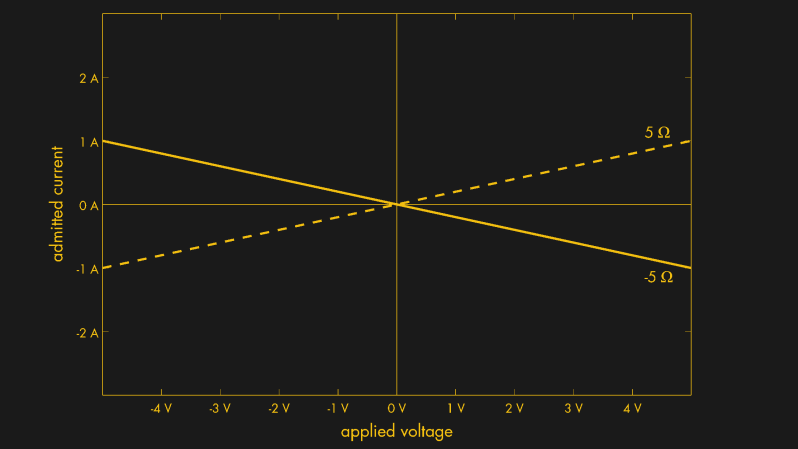
[lcamtuf] has an in-depth look at the concept of negative resistance that goes somewhat further than one might expect. Normally, as voltage across a resistance increases so too does the current. Negative resistance is the concept of current decreasing as voltage increases. But beyond the raw concept, there are a few other ways to look at this idea.

The usual way to think about it is negative differential resistance (NDR). Not everything has a linear relationship between voltage and current, and for a device to exhibit NDR means that in certain ranges the I–V curve actually slopes downward; increasing one of voltage or current decreases the other. This kind of thing occurs in neon lamps. Once they are glowing, increasing current can result in decreasing voltage.

True negative resistance, that of a literal -100 Ξ© resistor, does not exist. Not in the sense of a passive component, anyway. Such a device would supply power into a circuit rather than dissipating it, and would therefore require an external power source to do so. If that’s not a deal breaker, then it’s actually fairly simple to build one. [lcamtuf] provides a design for a device that uses an op-amp to exhibit ideal constant negative resistance. Naturally it only does so within its operating range; going beyond risks letting out the magic smoke.

Is making a literal negative resistor of practical use? Perhaps only in very specialized situations. But it is worth having a basic understanding if for no other reason than it rears its head in unusual places: the strange tunnel diode comes to mind.

No Fork Required: Bitcoin’s First Quantum-Safe Transaction Just Happened

Bitcoin Magazine

No Fork Required: Bitcoin’s First Quantum-Safe Transaction Just Happened

Should fund managers dealing in Bitcoin be worried about the threat of quantum computing?Β 

The short answer is yes β€” but there’s time to prepare and solutions are already being found.

One of them? Post-quantum Bitcoin transactions on the mainnet. And the first one happened this week thanks to the Starknet Foundation.Β 

JUST IN: The first post-quantum resistant Bitcoin transaction was mined today.

"It required no soft forks. It required no hard forks. It required no core protocol upgrades. And it's live today." pic.twitter.com/YyZbHhm8HI

β€” Bitcoin Magazine (@BitcoinMagazine) August 27, 2026

Speaking at Bitcoin Asia in Hong Kong on Thursday, Damian Chen, VP of growth at the Starknet Foundation, demonstrated how funds vulnerable to future quantum attacks can be secured without requiring a network-wide fork, thanks to the company’s latest solution.Β 

β€œThis is a monumental moment,” Chen said. β€œThis is the first post-quantum-resistant Bitcoin transaction on bitcoin mainnet today. It required no soft forks; it required no hard forks; it required no core protocol upgrades, and it’s live today.”

The transaction happened using a method created by StarkWare researcher Avihu Levy. It works like this: Bitcoin transactions sit briefly in a public queue before confirmation. During that window, they expose cryptographic material that a sufficiently powerful quantum computer could use to forge a signature and steal the funds before the transaction is confirmed.

But rather than accepting the first valid signature, his method generates millions of signature candidates until it finds one with a specific structural property that doesn’t expose that vulnerable material while waiting in the mempool.Β 

This β€œsignature grinding” is deliberately computationally expensive β€” a single transaction takes hours to produce β€” but that cost is what makes it resistant to quantum shortcuts.

Touting Quantum safe Bitcoin transactions β€” dubbed β€œQSB” β€” to institutions, Chen said that even if attackers have a fund’s private keys, they couldn’t make a fraudulent transfer.Β 

β€œQSB introduces a new hash authorization, and so an attacker with a sufficiently capable computer, even if they have your exposed public key, even if they derive your private key from your public key, even if they try to use that to authorize a spend to move your coins out of your wallet, those things are not enough for them to do so,” he said.Β 

It’s worth noting that ordinary Bitcoin nodes currently don’t recognize this non-standard transaction format, so it couldn’t go into the public mempool and instead had to be handed straight to a miner willing to accept it β€” with mining company MARA’s Slipstream service being the one that mined the QSB transaction.Β 

Quantum researchers have warned that a time will come when Bitcoin’s software β€” which underpins the biggest and strongest computer network in the world β€” will need to be upgraded to deal with quantum computing.Β 

While some crypto VC firms have urged action, top Bitcoin developers have argued that many of today’s quantum computers have limited capabilities, and have only demonstrated trivial computations.Β 

Still, they have noted that their development could arrive unexpectedly β€” just like advances with artificial intelligence β€” and have started developing some solutions.Β 

Chen added: β€œThe question to me has never been when will quantum arrive. We all know quantum will arrive at one stage, but the question to me has always been, how long will it take for you to be ready when quantum does arrive?”

This post No Fork Required: Bitcoin’s First Quantum-Safe Transaction Just Happened first appeared on Bitcoin Magazine and is written by Mathew Di Salvo.

πŸ’Ύ

Tune in to the Bitcoin Asia 2026 Day 1 livestream, featuring CZ, Gracy Chen, Justin Sun and more global Bitcoin leaders live from Hong Kong β€” the center for ...

Injective Price Breakout Puts INJ Bulls Back At The $5.30 Resistance Line

Injective Price Breakout Puts INJ Bulls Back At The $5.30 Resistance Line is a useful reminder that crypto coverage is not only about token prices. Sometimes the more important story is the infrastructure, regulation, security, or product layer sitting underneath the market noise.

The immediate point is straightforward: iNJ is being watched for a possible move toward $5.30 resistance. That gives readers something concrete to work with, rather than another vague sentiment update.

TL;DR

  • INJ is being watched for a possible move toward $5.30 resistance.
  • The setup depends on volume support and continued bullish momentum.
  • The piece should stay conditional and avoid presenting the target as guaranteed.

Why This Matters Now

The timing matters because Injective is already part of a wider conversation across the market. Traders want to know whether the development changes liquidity or risk. Builders want to know whether it changes what can be deployed. Compliance teams want to know whether it changes how platforms operate.

In that sense, the story is bigger than one headline. It sits inside the ongoing shift from speculative crypto cycles toward more practical questions: who can use these systems, how safe are they, and whether the underlying incentives actually work.

The best way to read it is with discipline. It is not a guarantee of immediate upside, and it should not be treated as one. But it does add a fresh data point to the way the market is thinking about Injective.

The Injective Angle

For Injective, the important part is the specific mechanism. If this is a security issue, the risk sits in dependencies and user protection. If it is a listing or product launch, the question is access and liquidity. If it is a governance or research proposal, the question is whether the idea can survive implementation.

That is where this update becomes useful. It is not just a label attached to a trend. It gives readers a way to understand what might actually change if the development gains traction.

Crypto has a habit of turning every announcement into a broad market claim. This one deserves a narrower read. The value is in seeing how it affects the users, developers, institutions, or traders closest to the issue.

The Risk Side

There is also a caution attached. Source material can confirm that a development exists, but it cannot prove that adoption will follow. A proposal still needs support. A product still needs users. A chart still needs confirmation. A compliance tool still needs integration.

That is why the responsible reading is not to oversell the story. The stronger takeaway is that this adds to a pattern. The crypto market is steadily becoming more professional, more technical, and more sensitive to real operational details.

Readers should also watch for follow-up signals. That could mean developer feedback, exchange support, regulatory response, wallet adoption, liquidity data, or simply whether market participants continue reacting after the first headline fades.

What Comes Next

The next stage will decide whether this remains a narrow update or becomes part of a larger market theme. In crypto, that difference matters. Plenty of stories look important for a few hours and then disappear. The ones that last usually show up again through usage, liquidity, enforcement, governance, or developer adoption.

For now, this gives the market another piece of information to weigh. It is specific enough to be useful, but still early enough that readers should keep the caveats in view.

That makes it worth covering without pretending it settles anything. The story is a signal, not a final verdict.

The key is not to confuse coverage with certainty. Injective stories can move quickly, especially when they touch security, regulation, listings, infrastructure, or price levels. The useful approach is to track the next confirming detail rather than assume the first update carries the whole market story. That is how traders avoid chasing noise and how readers separate a genuine development from another passing headline.

This report is based on information from coinjournal.net.

This article was written by the News Desk and edited by Samuel Rae.

❌