AI or Artificial intelligence concept. Businessman using computer use ai to help business and used in daily life, Digital Transformation, Internet of Things, Artificial intelligence brain, A.I.,
The Commodity Futures Trading Commission and the U.S. government have sued Utah over its enforcement against prediction markets, bringing the agency’s state jurisdiction challenges to 10. The CFTC’s Oct. 27 announcement said the lawsuit seeks to stop Utah from using…
The US Treasury proposes tighter China investment restrictions covering AI, biotechnology and advanced chips. Here's what businesses and investors should know.
The US Treasury proposes tighter China investment restrictions covering AI, biotechnology and advanced chips. Here's what businesses and investors should know.
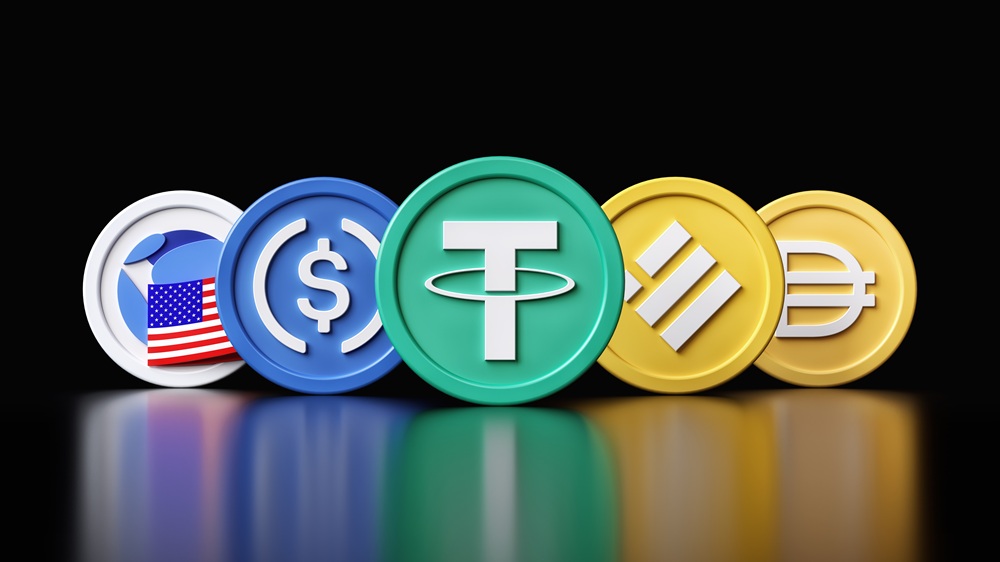
One line did most of the work: a permitted payment stablecoin issuer cannot pay a holder interest or yield simply for holding, using or storing the coin.
Most outlets filed that under American news.
It is not. It quietly redrew the map for everyone else.
Because “non-US investor” is not a category. It is roughly 190 different answers wearing one label.
If you are planning around a US border, you are planning around a line that has already moved.
Can Non-US Investors Access Onchain Yield? The Short Answer First
Yes. In most jurisdictions, and often through fewer gates than a US retail investor now faces.
Onchain yield is produced by smart contracts on public blockchains. Those contracts do not read your passport. That is the design, not a loophole.
But three things sit between “the contract will accept you” and “you should proceed”:
Your local law. Some countries restrict or ban holding cryptoassets. Some require a licence you do not hold.
The interface you use. A website is a company. Companies have regulators, lawyers and a registered address.
Tax. Access is not permission, and it is never a tax ruling.
Two routes exist in practice.
The first is permissionless DeFi yield, reachable with a wallet and nothing else.
The second is tokenized real-world-asset products built specifically for non-US investors under securities exemptions.
Those are aimed at you and still gated, usually with KYC, wallet allowlisting, minimums and lockups.
So the honest picture is split. One route is open. The other was designed for you and still asks for papers.
Permissionless at the protocol layer does not mean permitted at the personal layer.
Hold that, because the rest of this depends on it.
Why the US Border Stopped Being the Real Line for Stablecoin Yield
Here is what the “escape the US” takes keep missing.
The EU got there first. Under MiCA, interest on e-money tokens and asset-referenced tokens is already prohibited.
The US arrived at the same place with the GENIUS Act in July 2025, and this week’s final rule confirmed it.
Two of the world’s largest regulatory blocs now agree: the issuer of a payment stablecoin does not pay you for holding it.
So the interesting question is no longer whether you sit inside or outside America.
It is this: where does the yield actually come from, and who is paying it?
A rate funded by a protocol’s own surplus and set by token holder vote is a structurally different object from an issuer passing along reserve interest. That distinction now does real work.
Most of those dollars are idle. Not because people chose idleness, but because the route to anything else was unclear.
The protocol does not check your passport. The front end does. That is where access actually breaks for non-US investors.
Protocol vs Interface: The Two Layers That Decide Your Access
This part surprises people.
The protocol layer is permissionless. Open-source smart contracts, deployed on Ethereum and other public chains. No gatekeeper. Reachable directly, or through any independent front end.
The interface layer is not. A front end is operated by a legal entity, and that entity geo-restricts.
Take a real example instead of a hypothetical. Sky.money publishes its prohibited jurisdiction list in its Terms of Use, version 2.0, updated 1 September 2026.
Thirty-five countries and regions are named. China, Hong Kong, Russia, Iran, Venezuela.
The border is not America versus the world. It is drawn country by country, by lawyers, and it moves.
So much for “non-US access.”
Roughly $1.62 of collateral value behind every $1 of USDS obligation, published live rather than attested once a quarter.
What Actually Crosses Borders? Measurement, Not Tokens
Tokens move freely. Trust does not.
An allocator in Singapore, a founder in Lagos and a saver in Sao Paulo share no vocabulary for “is this safe.” That gap is the real barrier to global onchain yield. Not geography.
Which is why two announcements this year matter more than they look.
It was the first rating Moody’s has issued on any stablecoin protocol. S&P Global had already assigned a B- in August 2025, the first credit rating ever given to a DeFi protocol, and affirmed it this year.
Sky Protocol is currently the only stablecoin protocol formally rated by both.
Neither rating is investment grade. Nobody is pretending otherwise, and both agencies published what would need to improve. That is the point of a scale. A rating is not a compliment.
A credit rating is the one document that reads the same in Singapore, Sao Paulo and Lagos.
Two agencies, two separate processes, one scale that institutional allocators already use in every market.
The protocol underneath is not running on fumes either. Sky Protocol generated $107.35 million in gross revenue in Q2 2026, its second consecutive quarter above $100 million and its fifth straight quarter of surplus.
Trailing twelve-month net protocol revenue stood at $159.63 million, and protocol collateral climbed 45.5% year over year.
Those are numbers a rating agency can audit. Which is exactly why one did.
Four steps from a stablecoin in your wallet to the Sky Savings Rate. No lockups, no maturity date, no claim button.
How Non-US Investors Reach the Sky Savings Rate Through USDS and sUSDS
The mechanics are deliberately boring.
Convert USDC to USDS at 1:1 through the Peg Stability Module. No fees, no slippage.
Supply USDS and receive sUSDS, the world’s largest yield-bearing stablecoin.
Your sUSDS accrues the Sky Savings Rate continuously. No lockup, no maturity date, no claim button.
Redeem back to USDS whenever you want.
What separates the Sky Savings Rate from most stablecoin yield:
It is governance-set, not demand-set. SKY holders vote it up or down onchain, in public, before it takes effect.
It is funded from aggregate protocol surplus, not one lending market or one borrower.
It is not paid from token emissions.
You hold exposure to the rate itself, not to any single Agent, pool, strategy or asset manager.
The rate is variable and can change. Check it live on the sUSDS page rather than trusting a number in an article.
For anyone who wants something other than the baseline, there is Fixed Yield, where the rate is fixed only if you hold to maturity, Vaults curated on Morpho, stUSDS for advanced risk capital, and Sky Ecosystem Rewards. Different risks, different reasons. sUSDS stays the baseline.
Access is not permission. Six things to confirm before you supply anything, anywhere.
The Jurisdiction Checklist Before You Supply a Single Dollar
Run this first:
Check your own country’s rules. Not the protocol’s. Yours.
Read the prohibited jurisdictions clause. Two paragraphs, usually decisive, and it changes without a press release.
Never use a VPN to pass a geo-block. Sky.money treats misrepresenting your location as a material breach of its terms. Most interfaces do the same.
Confirm whether you get the full app or a limited version. Feature-level restrictions are common and rarely advertised.
Understand where the yield comes from. Reserve interest, borrowing demand and protocol surplus are three different risks.
Assume tax applies. It is your filing, in your country.
So What Is the Honest Answer?
Non-US investors can access onchain yield. Many have more routes open than US retail does right now.
But the useful question was never “am I non-US.”
It is: is my specific jurisdiction served, by this specific interface, for this specific product, today?
The protocol does not care where you live. The front end does. Your tax authority definitely does.
What makes any of this work at global scale is not permissionlessness on its own. It is measurement. Published collateral. Rates voted onchain.
Two independent credit ratings on the same scale a pension fund already uses. A shared language for capital that reads the same whatever the jurisdiction or currency.
That is the part that actually crosses borders.
This is informational only. Not legal, tax or financial advice. Yields are variable and not guaranteed.
Now tell me where you are reading this from. Which jurisdiction are you in, and has an interface ever geo-blocked you out of something you were perfectly entitled to hold? I want to see how wide the gap really is. Comments are open.
TL;DR: The FCA opened its crypto authorisation gateway on September 30 and asks firms planning to continue operating to apply by February 28, 2027.
For crypto businesses serving UK customers, next October’s rulebook begins to matter this autumn. The Financial Conduct Authority opened its authorisation gateway on September 30, starting the period in which firms can apply to operate under the broader regime due to take effect on October 25, 2027.
The FCA says businesses intending to remain in the UK market should apply by February 28, 2027. Applicants will have to demonstrate compliance with requirements covering issues such as safeguarding, market integrity, consumer protection and financial resilience. Existing registration under anti-money-laundering rules is not a substitute for approval under the incoming framework.
The commercial consequences could arrive before the rules formally start. Platforms must plan capital, staff, systems and applications while continuing to service customers. International groups also need to decide which UK-facing activities fall inside the new permissions regime.
For investors, a licence application should not be mistaken for a completed authorisation, and an approval elsewhere in the world does not automatically satisfy the FCA. The next milestones are procedural but important: which firms apply on time, what permissions they seek and whether their operating models are capable of passing the regulator’s review.
TL;DR: ESMA says EU-licensed crypto service providers should cease services involving stablecoins that do not meet MiCA requirements.
A stablecoin does not need to be issued in Europe to create a European compliance problem. ESMA’s October 8 opinion tells authorised crypto-asset service providers to stop offering clients services involving asset-referenced or e-money tokens that fall outside MiCA’s requirements.
The scope is deliberately broad. ESMA lists trading, exchange, custody, transfers, order execution, investment advice and portfolio management, among other services. That means an exchange cannot necessarily solve a token’s regulatory problem by removing one trading pair while continuing other activities involving it.
For stablecoin issuers, distribution through regulated platforms is a major source of liquidity and reach. For exchanges, the risk is fragmented access: a dollar-linked asset widely used elsewhere may require restrictions for EU clients if the relevant authorisation and compliance conditions have not been met.
The regulator’s opinion explains supervisory expectations; it does not claim every stablecoin is non-compliant or announce enforcement against a named platform. Consumers should avoid reading a delisting headline as evidence that a particular token has lost its peg. The immediate issue is legal permission to provide specific services in a particular market, and firms will have to map their products against that perimeter carefully.
TL;DR: The SEC has proposed a tailored crypto custody framework for advisers and regulated funds, but the changes are not yet final.
The conversation about crypto access inside conventional investment funds is increasingly focused on custody. An SEC proposal released October 1 would modernise parts of the federal rules affecting how registered advisers and regulated funds safeguard digital assets.
According to the agency, the planned changes are intended to remove obstacles that prevent advisers from offering some crypto strategies while keeping investor protections. It is an important distinction: proposing a framework does not immediately authorise every fund structure or settle questions about which institutions can qualify as custodians.
For investment managers, wallet technology is only part of the problem. They also need ways to establish control, segregate client assets, deal with lost or compromised keys, value holdings and satisfy external oversight. Those tasks look different from holding conventional securities in a familiar account, even if both portfolios appear together on the investor’s screen.
A successful final regime could make crypto investments easier to distribute through existing fund and advisory relationships. Equally, a poorly matched custody requirement could increase costs or limit which assets institutions are willing to support. The key question for industry participants is what the final rules demand operationally, not whether the SEC’s proposal can be treated as permission already granted.
TL;DR: SEC staff guidance spells out a 30-day public-notice requirement for venues seeking to operate under the temporary tokenised-stock exemption.
The SEC’s experiment with blockchain-based stock trading comes with a meaningful preparation period. Guidance published on October 20 says a tokenised securities venue relying on the agency’s conditional innovation exemption must publish a public operating notice at least 30 calendar days before starting.
The document does more than specify a deadline. It says venues should have their operations and access standards ready for production when they disclose them, and must keep the notice accurate as details change. A platform cannot simply announce that it intends to trade tokenised shares and treat that as permission to begin immediately.
There are issuer protections too. Where a venue proposes to trade shares tokenised by a third party, a separate objection period may still be running. The SEC staff says the venue can disclose that pending status, but cannot make those shares available before the relevant period concludes without an objection.
Importantly, these are staff FAQs interpreting a conditional order, not a generally applicable new rule with the force of law. The exemption remains limited in scope. Its wider significance is that US regulators are testing whether distributed-ledger market infrastructure can be introduced with ordinary disclosure, investor rights and accountability still visible to the public.
TL;DR: The SEC’s new examination priorities identify tokenisation and advanced technology risks among areas attracting supervisory attention in fiscal 2027.
Tokenised securities are gaining room to develop in the US, but firms should not confuse that opening with an absence of supervision. The Securities and Exchange Commission’s October 23 examination-priorities announcement places tokenisation and emerging technologies among the risks its examination staff intend to monitor during fiscal 2027.
The programme spans advisers, funds, broker-dealers, clearing agencies and other registered participants. Alongside conventional issues such as conflicts of interest, custody of customer information and operational resilience, it explicitly recognises the changing architecture of securities markets. AI and what the regulator calls super intelligence are included for their possible effects on compliance, fraud and market operations.
That matters because an onchain share is still connected to a familiar set of questions: who keeps the records, what happens when a transaction fails, how an investor exercises rights and which entity owes duties to the customer. Faster settlement does not eliminate those responsibilities.
The examination priorities are a risk-based agenda, not a new prohibition on tokenised products or a finding that specific firms have breached the rules. For market participants exploring new venues and custody models, however, the signal is clear. They will need to show that the control environment is developing at the same speed as their financial technology.
TL;DR: The OCC’s final GENIUS Act rule takes effect on January 18, 2027, setting federal requirements for payment stablecoin issuers under its jurisdiction.
The US stablecoin industry has a firmer regulatory timetable. The Office of the Comptroller of the Currency published its final regulations implementing the GENIUS Act on October 21, with an effective date of January 18, 2027. For businesses planning dollar-backed payment tokens, that date now matters more than another headline about adoption.
The OCC’s bulletin covers reserves, redemptions, custody, audits, risk management, applications and supervisory obligations. It applies to a defined range of bank-related, federally qualified and certain state-qualified issuers, as well as qualifying foreign issuers. It is not an announcement that every token in circulation has suddenly obtained federal approval.
There is also unfinished business. The regulator says Bank Secrecy Act, anti-money-laundering and sanctions requirements will be addressed through separate rulemaking with the Treasury. Issuers therefore have a substantial implementation framework, not an assurance that compliance work is over.
For traders, the distinction between a popular stablecoin and one eligible for particular US distribution channels could become more important as the deadline approaches. For payment companies, the operational questions are more immediate: whether they can meet the reserve, reporting and redemption standards and which supervisory route actually applies to them. Those practical details will determine how quickly the new framework changes what customers can use.
Robinhood announced DFSA authorization and a Dubai International Financial Centre headquarters on October 22, with a Middle East rollout planned for 2027. Regulatory permission precedes customer availability.
TL;DR
The announcement concerns a planned regional rollout.
Permissions, product terms and local funding arrangements will shape actual access.
Crypto, shares and investment tokens can carry different rights within one app.
A financial-center authorization has a defined scope
Robinhood’s statement covers trading and custody. Those are separate functions, with different responsibilities for handling customer orders and safeguarding assets.
The regulator’s own crypto framework explains that financial-services activities involving crypto tokens in or from DIFC require appropriate authorization. It also distinguishes the use of a token from the regulated service performed with it. That distinction is relevant when a platform combines dealing, custody and access to several kinds of asset.
A regional headquarters is a base from which to build a business. It does not, by itself, establish that every product will be available to every resident of every nearby country. Customer eligibility depends on the permissions and terms governing the particular offering.
Those boundaries can be easy to miss in an app with a unified interface. Two products may sit next to each other on a screen while using different custodians, settlement processes or contractual protections.
Stock-linked perpetual contracts illustrate the importance of checking the instrument. Exposure to a share price does not necessarily mean owning the share or receiving the rights of its shareholder.
The launch will need usable banking and custody connections
Authorization creates the possibility of service; the customer experience depends on execution. Deposits, currency conversion, withdrawals, support and account recovery all become part of whether a platform is practical for ordinary users.
A low headline trading commission, for example, cannot describe the complete cost of funding an account in one currency and buying an asset quoted in another. The exchange rate, transfer method and timing can change the amount that reaches the market.
For crypto, custody arrangements add another decision. A balance recorded by a platform and assets held in a personal wallet expose users to different operational responsibilities. NewsBTC’s examination of institutional key-control structures shows why custody needs more explanation than a generic security claim.
The DFSA’s implementation guidance also identifies token-suitability assessment and continuing monitoring as regulatory concerns. Permission to operate a business is not an assurance about the future price of every asset it offers.
As with the expansion of tokenized equities, the useful next evidence will be the actual product documentation and working service. Robinhood has supplied a timetable and an authorization milestone; the rollout will determine how those translate into access.
Written by the News Desk and edited by Samuel Rae.
A final stablecoin rule has not ended the argument over rewards. The Bank Policy Institute used its October 24 newsletter to renew criticism of how the Office of the Comptroller of the Currency will judge arrangements that pay stablecoin holders through third parties.
The dispute concerns implementation of the issuer yield prohibition.
The OCC says its broader GENIUS Act rule takes effect January 18, 2027.
The disagreement is about how the prohibition is applied
In the newsletter, BPI repeated its October 21 response to the final rule. The banking trade group objects to removal of a proposed presumption covering certain issuer arrangements with third parties. It says the replacement approach lacks a clear process for explaining decisions and making outcomes public.
This is a lobbying position from an organization representing banks. Its concern about deposits moving into stablecoins is a forecast about competitive and financial effects, rather than evidence that the newly finalized rule has already caused a measurable outflow.
The OCC’s announcement presents the rule as a framework covering reserve backing, redemption and risk management. It confirms the January effective date and says separate work will address anti-money-laundering and sanctions requirements. BPI’s criticism addresses one part of that wider framework.
The practical distinction is between a payment token’s reserve income and a customer incentive offered elsewhere in its distribution chain. Identifying who pays, who ultimately funds the payment and what behavior earns it can matter more than whether a product calls the transfer a reward, rebate or yield.
Product design now has a regulatory interpretation problem
Consider two hypothetical offers: a payment app discounts a purchase, while another pays a recurring amount for keeping tokens idle. Both benefit the user, but their commercial purpose, funding and connection to the issuer may differ. Their labels alone cannot establish their treatment under the rule.
That is why published reasoning would be useful beyond the banks lobbying for it. A decision about one arrangement can help other providers understand which features the regulator regarded as decisive. Without that detail, firms may struggle to compare their own structures with earlier cases.
The product boundaries are already becoming more complex. SoFi’s tokenized-deposit plan raises a different set of claims from a payment stablecoin, even when conversion makes the customer experience look continuous.
Meanwhile, stablecoin payment activity measures how tokens are used, not whether an incentive is legally permissible. Operational activity cannot answer the policy question by itself.
The scrutiny of transaction purpose also connects with wallet and financial-crime controls: the institution still needs to understand the economic relationship behind the transfer. For the OCC dispute, the next useful evidence will be supervisory guidance and disclosed decisions, rather than competing descriptions of what the rule should mean.
Written by the News Desk and edited by Samuel Rae.
TL;DR: The FCA is consulting on updated financial crime guidance for crypto businesses, including customer checks, blockchain analytics and the Travel Rule. Responses are due December 24, and the guide itself would not create new rules.
Crypto businesses preparing for the UK’s expanded regulatory regime have a more detailed picture of the controls the Financial Conduct Authority expects them to build.
The regulator’s October 23 consultation proposes changes to its Financial Crime Guide, covering cryptoassets alongside fraud, sanctions, data security and money laundering. The proposals apply to the FCA’s financial crime supervisory population, including cryptoasset businesses and firms overseen under the Money Laundering Regulations.
The practical focus is on how firms assess customers and transactions, and how they react when risk changes. A blockchain record can help an investigation, but a record alone does not decide whether a customer explanation is credible or a transfer needs further scrutiny.
Analytics Must Sit Inside A Working Control System
The consultation paper proposes examples of good and poor practice for enhanced due diligence, onboarding and transaction monitoring. It specifically addresses the use of blockchain analytics and further guidance on the Travel Rule, which concerns information accompanying certain transfers.
The paper also reminds firms that governance must evolve as their businesses grow. Its proposed changes include a question about whether policies and staff training distinguish obligations under proceeds-of-crime legislation from those under terrorism legislation.
For an exchange or provider of custody, the implication is that buying a screening product is only one part of the job. Someone still has to set its thresholds, review alerts and document decisions. A technically accurate warning is of limited use if it sits unreviewed while funds move elsewhere.
That matters for stablecoin transfers as much as for volatile tokens. A stable unit price does not establish the identity of a sender or the origin of funds. Transaction risk and market risk are different questions, and control systems need to reflect that distinction.
Guidance Now, A Wider Regime In 2027
The FCA says the guide contains no rules and imposes no new requirements. It is intended to help firms understand supervisory expectations and assess their own arrangements. The consultation closes on December 24, after which the regulator plans to publish feedback and the final text in a policy statement.
Separately, the FCA’s regime overview says the wider cryptoasset framework is expected to begin on October 25, 2027. Applications for authorization are already open, and the regulator published a package of final rules in June.
The distinction between those stages matters for firms planning investment in compliance. This consultation does not postpone existing anti-money-laundering duties until next year, nor does it bring the whole future regime into force immediately. It fills in the proposed guidance firms can use when translating their obligations into day-to-day decisions.
Written by the News Desk and edited by Samuel Rae.
TL;DR: New York’s attorney general is seeking $1.3 billion in monetary relief in the NovaTech case and has announced nearly $6 million in promoter settlements. The larger sum is a request to the court, not money recovered for investors.
New York’s effort to recover losses from the NovaTech cryptocurrency scheme has reached a new stage, with Attorney General Letitia James asking a court to impose roughly $1.3 billion in damages and disgorgement.
The October 22 announcement also disclosed nearly $6 million in settlements with four promoters. Those are separate from the much larger claim involving founders Cynthia and Eddy Petion. The announcement does not establish that either amount has already reached victims.
The case concerns investment packages sold through NovaTech and an earlier business, AWS Mining. According to the attorney general, the schemes targeted Haitian and other immigrant communities through religious networks, social media and messaging groups.
The New Filing Follows An Earlier Judgment
An affirmation filed on October 22 supports the request for monetary relief. It records that New York sued in June 2024 and that the defaulting defendants did not respond or appear. The court entered a default order and judgment on August 4, 2025.
The latest motion asks the court to determine the financial consequences. It should not be confused with a new criminal conviction, a completed recovery or a guarantee that a judgment can be collected. Those distinctions are particularly important when the sums sought are much larger than the settlements announced alongside them.
The promoter figures listed by the attorney general are $2.9 million from Martin Zizi, $2.05 million from Frantz Ciceron, $750,000 from James Corbett and $275,861 from Ricardo Roy Sr. All four face permanent bans from the securities, commodities and cryptocurrency industries.
The timing also needs care: the Zizi consent papers were filed in November 2025. This week’s announcement brings the settlement figures together; it does not mean every agreement was signed this week.
Recruitment Promises Outran The Trading Business
The original mining operation offered high returns and recruiting bonuses, according to the court affirmation. NovaTech later marketed cryptocurrency trading packages. The cryptocurrency label described how investors supplied money, but the underlying issue was what operators actually did with it.
That is a useful distinction for readers assessing similar pitches. An account balance on a website does not establish that assets exist, that trades occurred or that withdrawals can be honored. Nor does a familiar community connection answer questions about custody and control of funds.
For affected investors, the next substantive development will be the court’s decision on monetary relief and any subsequent recovery process. The announced settlements and the requested award address different defendants and different steps in that process; combining them into a headline recovery figure would overstate what has happened.
TL;DR: The SEC has named tokenization among its fiscal 2027 examination priorities, bringing the systems behind blockchain securities into closer supervisory focus. The staff document sets inspection priorities and creates no new legal obligations.
The SEC’s tokenization agenda now includes a practical question for financial firms: can the infrastructure work reliably when something goes wrong?
In its October 23 announcement, the US regulator placed tokenization among the market developments its examiners will scrutinize during fiscal 2027. The wider program also covers investment advice, complex products, private credit and cybersecurity across more than 34,000 registrants.
For companies building services around tokenized assets, that brings the discussion down from the promise of faster trading to the controls supporting it. A share recorded on a blockchain still needs dependable ownership records, functioning markets and an orderly response to disruption.
Clearing And Trading Systems Enter The Frame
The 20-page examination document explicitly includes tokenization among high-risk areas for clearing-agency reviews. In its discussion of Regulation Systems Compliance and Integrity, it lists tokenized securities alongside extended trading hours, advanced AI and quantum computing. Cloud providers and other technology suppliers also feature in those reviews.
That combination matters. Extending trading hours can leave less time for maintenance, while connecting a token to conventional securities records adds another place where systems must agree. The relevant test is whether the complete service remains dependable, including the handoffs between systems.
The document separately emphasizes cybersecurity governance, access controls, incident response and risks from shared technology. It also states that the priorities are staff views, carry no legal force and do not amend existing law. An examination focus should therefore be read as a signal about supervision, rather than a new tokenization license or prohibition.
A Permission To Experiment Still Comes With Conditions
The context is the SEC’s September innovation exemption for certain tokenized stock venues. That temporary framework requires equivalent shareholder rights, issuer notification and an opportunity to object when an unaffiliated party tokenizes shares. It also imposes trading limits and requirements for public, auditable smart contracts.
Those conditions illustrate why market access and operational supervision move together. A permitted venue can still have weak controls; a technically impressive platform can still mishandle an investor’s rights. The new priorities put attention on that gap.
For investors, the useful distinction is between the token and the service built around it. Questions about who holds the underlying security, how transactions reconcile and what happens during an outage remain relevant alongside the blockchain’s design. Custody and market infrastructure do not become incidental simply because a trade uses a token.
The SEC says its priorities are non-exhaustive and may change during the year. Tokenization’s place in the published agenda nevertheless gives firms a clear reason to expect scrutiny of how their systems operate, as well as what their products promise.
Written by the News Desk and edited by Samuel Rae.

 Login