❌

Reading view

There are new articles available, click to refresh the page.

Heat Dome Broils the Western U.S.

Map of the United States shaded orange to red, with the deepest red over parts of Montana, Wyoming, and Utah, where air temperatures neared or exceeded 45Β°C (113Β°F). Deseret, Sheridan, and Miles City are labeled as sites of all-time record highs.
Temperatures soared in the Western U.S. on July 12, 2026, as shown in this map of modeled air temperatures from the GEOS (Goddard Earth Observing System). Numerous weather stations in Montana, Utah, and Wyoming recorded their highest temperatures since record-keeping began.
NASA Earth Observatory/Michala Garrison

It’s still relatively early in the summer season in the Northern Hemisphere, but several parts of North America were sweltering in mid-July.

The latest purveyor of heat was a strong ridge of high pressure that lingered in the upper atmosphere over the northern Rockies on the weekend of July 11-12, 2026. This pushed hot air toward the surface and trapped it thereβ€”a weather phenomenon meteorologists call a heat dome.

Heat domes put the brakes on convection and suppress clouds and precipitation. This allows sunlight to reach Earth’s surface relatively unhindered and further elevate air temperatures. As a result of the July heat dome, sites in Montana, Wyoming, and Utah broke all-time temperature records.

The map above shows air temperatures across the United States on July 12, 2026, at 2 p.m. Mountain Time, modeled at 2 meters (6.5 feet) above the ground. It was produced by combining satellite observations with temperatures predicted by a version of the GEOS (Goddard Earth Observing System) model, which uses mathematical equations to represent physical processes in the atmosphere. The darkest reds indicate areas where temperatures approached or exceeded 45 degrees Celsius (113 degrees Fahrenheit).

A preliminary analysis from the National Weather Service office in Billings found that temperature sensors at airports in Billings and Miles City, Montana (111Β°F and 115Β°F, respectively), and Sheridan, Wyoming (109Β°F), all recorded new all-time record highs on July 12. Each of these stations topped its previous record by at least 2Β°F, with Miles City breaking its record by a full 4Β°F. The Montana records date to the 1930s; the Sheridan record begins in 1907.

Multiple locations in Utah broke all-time records as well, according to the National Weather Service office in Salt Lake City, including Deseret (111Β°F), Salt Lake City (109Β°F, or 4Β°F above the previous record), and Randolph (100Β°F, or 6Β°F above the previous record). These stations in Utah have records that date back to the 1890s.

Extreme heat doesn’t just make people uncomfortable. It can have serious health consequences, particularly for older people. Extreme heat worsens common age-related health conditions such as heart, lung, and kidney disease. Health tracking data from the U.S. Centers for Disease Control and Prevention shows that the rate of heat-related emergency department visits in the Mountain states spiked tenfold during the July heat.

Heat waves like this one have become more frequent in the United States in recent decades, according to researchers at NASA’s Goddard Space Flight Center. Using a NASA modeling system called MERRA-2 (Modern-Era Retrospective analysis for Research and Applications-2), one NASA team found that summer heat waves in the U.S. roughly doubled in number between 1980 and 2023, increasing from an average of two to four per month.

Forecasters expect the heat dome to spread east into the Midwest, New England, and the Mid-Atlantic in the coming days, where triple-digit temperatures are likely in some areas. The United States isn’t alone in facing significant heat. Parts of both Western Europe, Central Asia, and East Asia are also facing heat waves.Β Β Β 

NASA Earth Observatory image by Michala Garrison,Β usingΒ GEOS-FPΒ data from theΒ Global Modeling and Assimilation OfficeΒ at NASA GSFC. Story by Adam Voiland.

Downloads

Map of the United States shaded orange to red, with the deepest red over parts of Montana, Wyoming, and Utah, where air temperatures neared or exceeded 45Β°C (113Β°F). Deseret, Sheridan, and Miles City are labeled as sites of all-time record highs.

July 12, 2026

JPEG (1.98 MB)

References & Resources

You may also be interested in:

Stay up-to-date with the latest content from NASA as we explore the universe and discover more about our home planet.

A Hot Start to Spring in the Southwest
3 min read

Temperatures in several states climbed over 100 degrees Fahrenheit in March 2026, which in some places was the highest March…

Article
El NiΓ±o Is Underway
4 min read

Satellite observations of sea surface height indicated that the 2026 event continued to strengthen in early June.

Article
Gravity Waves From Super Typhoon Sinlaku
4 min read

Satellites observed striking upper-atmosphere phenomena generated by an intensifying tropical cyclone.

Article

NRC is (sort of) getting rid of "as low as reasonably achievable" standard

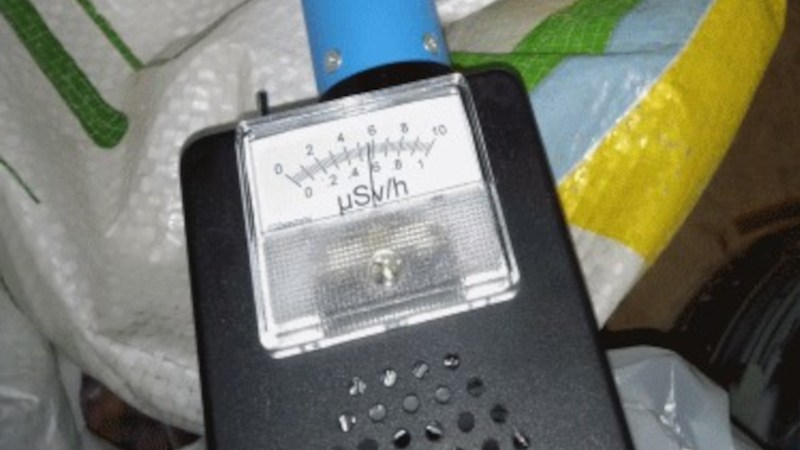
Last week, just before the US started its break for the July Fourth holiday, the Nuclear Regulatory Commission (NRC) proposed a new rule that would change how it regulated exposure to radiation. The Trump administration has been pushing to restart construction of nuclear power plants in the US, and many pro-nuclear advocates have been complaining about the US's existing regulations, portraying them as the main barrier to the flourishing of the industry. So, it had seemed likely that major revisions were coming.

Instead, the NRC's proposed new rules endorse the science behind its current rules and suggest that any problems are largely in the vagueness of the terminology that it has been using. So, instead, it's endorsing standards that are meant to accomplish the same thing, but avoid using some of the language it had relied on. Probably the clearest indication of the evolutionary change at play is that the NRC estimates the changing rules will save industryβ€”not just power, but also medical and research applicationsβ€”only about $9.5 million a year.

LNT and ALARA

There are two technical abbreviations at the center of US nuclear regulations. The first is LNT, which stands for "linear non-threshold." It's in reference to the issue of whether there's any level of radiation that is so low that it no longer produces harmful biological effectsβ€”the "threshold" in LNT. The "non-threshold" implies that it doesn't, and that's in keeping with biology, which has demonstrated that even single particles or photons of radiation can damage DNA and that the mechanisms cells have for repairing that damage are inherently error-prone. The "linear" in LNT simply describes how the impact of radiation scales directly with the dose.

Read full article

Comments

Β© SOPA Images

❌