 Login
Login
Fusion power startups find new partners in the defense world
Fusion startups are inking defense-related deals, reigniting the relationship between fusion and national security that might have gone dormant, but never completely disappeared.

Oracle’s proposed investment in 2 gigawatts of renewable energy projects for New Mexico comes as local opposition could delay development of the Project Jupiter data center that Oracle is building for OpenAI.
The two tech companies are developing the $165 billion Project Jupiter data center in Santa Teresa, New Mexico, as part of the broader Stargate AI infrastructure project announced by President Donald Trump in 2025. But Project Jupiter faces local protests and court battles over concerns about its environmental impacts—and the latest Oracle announcement on September 8 seeking proposals for renewable energy projects does not change the fact that the data center will be powered by fuel cells that consume natural gas.
“Like all matching programs, this would be synthetic in the sense that 2 GW of renewables wouldn't directly power the data center,” wrote Michael Thomas, CEO of the Cleanview data platform that tracks renewable energy and data center projects, in a LinkedIn post.


© STACK Infrastructure


Read more of this story at Slashdot.
Read more of this story at Slashdot.
Read more of this story at Slashdot.
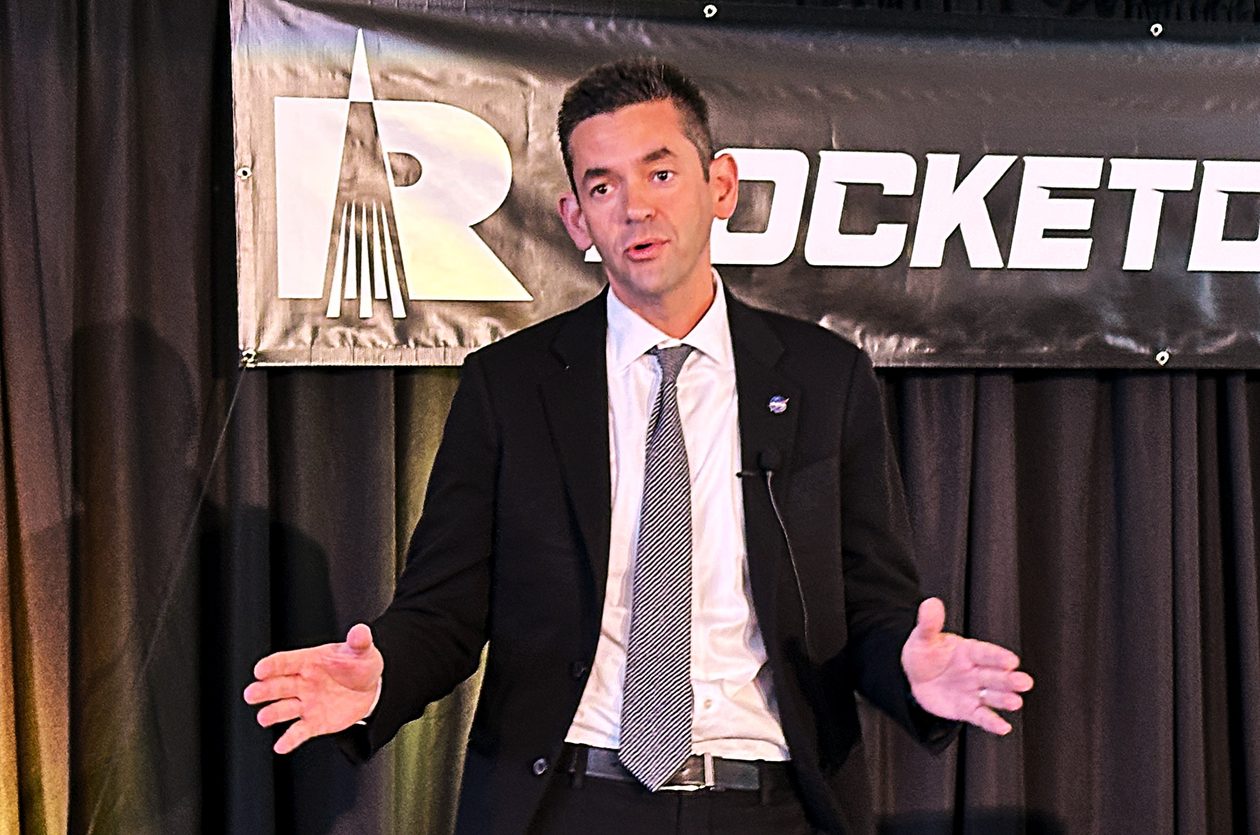
REDMOND, Wash. — NASA Administrator Jared Isaacman came to Rocketdyne’s facility here today to give a pep talk to the space company’s employees — and lay out his vision for the future of America’s space effort.
Isaacman made clear that nuclear power will be a big part of that vision.
“NASA is at our best when we’re doing the near-impossible,” he said. “There is no obvious revenue model or business case for what we’re doing. We’re just out there pursuing the secrets of the universe, and nuclear or fission-powered spacecraft make sense in that it helps us extend our reach farther into the solar system.”
The pathfinder mission for NASA’s nuclear ambitions is likely to be SR-1 Freedom, a Mars probe that’s scheduled for launch in 2028. SR-1 Freedom is designed to carry a fission reactor and nuclear electric propulsion system.
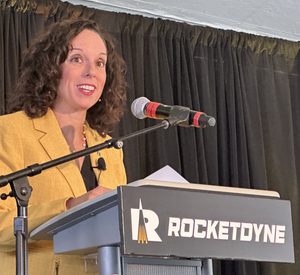
Rocketdyne’s Redmond facility is working on thrusters for the system. “We built here, in Redmond, the Advanced Electric Propulsion System,” Rocketdyne CEO Kristin Houston told GeekWire before Isaacman’s talk. “It’s a 12-kilowatt Hall-thruster system, and that is going to be the propulsion element on the SR-1 Freedom. So, yeah, we’re really proud of that.”
Today’s visit was part of the Pacific Northwest leg of Isaacman’s nationwide “Inspiration Tour,” aimed at strengthening the connections between NASA and its partners. A similar tour in August brought Isaacman to Idaho National Laboratory, which will play a key role in providing the 20-kilowatt reactor for SR-1 Freedom.
In partnership with the U.S. Department of Energy, NASA is also looking into the prospects for putting a nuclear reactor on the lunar surface by 2030 as part of its Moon Base initiative. Houston said Rocketdyne is interested in playing a part in that program.
“That’s not as much out of the Redmond site, but as Rocketdyne, we’re doing a lot of investment in the power conversion and the power management and distribution design that could be used for that,” she said.
Over the course of nearly 60 years, Rocketdyne’s Redmond site has played a role in nearly every interplanetary NASA mission — and has gone through several ownership changes along the way. The company’s latest transition, including its rebranding as Rocketdyne, became official last month after AE Industrial Partners acquired a majority stake from L3Harris.
Nowadays, Rocketdyne is arguably best-known as one of the commercial partners in NASA’s Artemis moon program. “We have 21 engines on the Orion spacecraft,” Houston said. “That’s between the crew module and the service module … all built in Redmond.”
The Redmond facility oversees the refurbishment of space shuttle engines for upcoming Artemis missions and is redesigning the spacecraft’s Orion Main Engine for missions starting with Artemis 7. “Our in-space propulsion business, really based here, has the lead on the entire OME program,” Houston said. “So we’re already concurrently doing the design and test of the new engine while doing all the refurbishment.”
Isaacman said the Artemis program is one of NASA’s top priorities, in part due to geopolitical competition. The current schedule targets a crewed lunar landing in early 2028, followed by initial work on a permanent base near the moon’s south pole later that year.
“NASA is very hot,” he said. “But NASA is hot right now because we are in a great-power competition. That’s across AI, energy and infrastructure, and everything you can imagine militarily, but certainly in the domain of space. We cannot take our foot off the gas. Really, if we miss our time by a matter of months, there are only so many good parking spots in the south pole of the moon, where we want to build our moon base. Well, the Chinese want to build their moon base there, too.”
NASA is relying on Rocketdyne and other commercial partners to set a fast pace.
“For all the great companies, the partners that are contributing to our near-impossible objectives, now is absolutely the time,” Isaacman said. “Just as so many of you were probably inspired by the space race in the 1960s and what we accomplished — all those books and movies that came from it — you’re now contributing to that.”
One of the VIPs in the audience, Redmond Mayor Angela Birney, said she was energized by Isaacman’s visit. “I am so excited that Rocketdyne is on the forefront of missions in space,” she said. “For me, as a former science teacher and someone who’s so interested in encouraging innovation and development, this just feels like a fantastic day to celebrate all of that.”
Rocketdyne wasn’t Isaacman’s only scheduled stop on this week’s tour. Earlier in the week, the administrator and other federal officials paid a visit to Lawrence Livermore National Laboratory and the Castle Air Museum in California’s Central Valley. In addition to Rocketdyne, today’s visits included stopovers at United Precision Corp.’s headquarters in Washougal, Wash., Seattle’s Museum of Flight and Boeing’s Everett facility. Stoke Space is on the agenda for Friday.
After his talk, Isaacman told GeekWire that Washington state is home to a “lot of industry” that’s contributing to America’s space effort.
“It takes contributions from great talent all across the nation to contribute to our world-changing efforts,” he said, “but it just happens to be that a lot of it is here in Washington.”
Read more of this story at Slashdot.
Kairos Power announced the Nuclear Center for Advanced Manufacturing and Precast (NuCAMP), an initiative focused on maturing new manufacturing and construction methods and developing vocational training for skilled workers in East Tennessee to support the deployment of advanced nuclear reactors.
Luther “Sunny” Miller is nearly 80, but in his younger days, he worked at Aerojet, a rocket and missile manufacturer located quite literally in his backyard. He can’t prove it, but he worries that his thyroid and bladder problems, and his wife’s kidney disease, can be traced to the plant.
Energy security concerns augmented by recent years of war in Ukraine and the Middle East have fueled a global resurgence of nuclear energy. In Asia, Europe, and elsewhere, governments are looking to nuclear energy as a stable power source in the face of geopolitical uncertainty, increasing electricity demand, and accelerating climate change. This includes the United States, which recently signed a thirty-year civil nuclear cooperation agreement with Saudi Arabia, though it has yet to go into effect. This resurgence marks a stunning reversal.
Donald Trump is presiding over an unexpected clean energy boom, as rising electricity demand spurs investment in new capacity despite the US administration’s efforts to thwart a solar and wind rollout.
Clean energy additions will rise by a record 45 gigawatts this year, according to S&P Global Energy—equivalent to the average electricity demand of Turkey. The increase is roughly 25 percent higher than the record set in 2024.
The US president’s war in Iran, which has driven up global energy prices, along with surging power demand from AI data centers and developers’ rush to capitalize on expiring tax credits, are driving the cleantech boom, said analysts. Trump’s administration has also been pragmatic in the face of its energy needs.


© CFOTO/Future Publishing via Getty Images
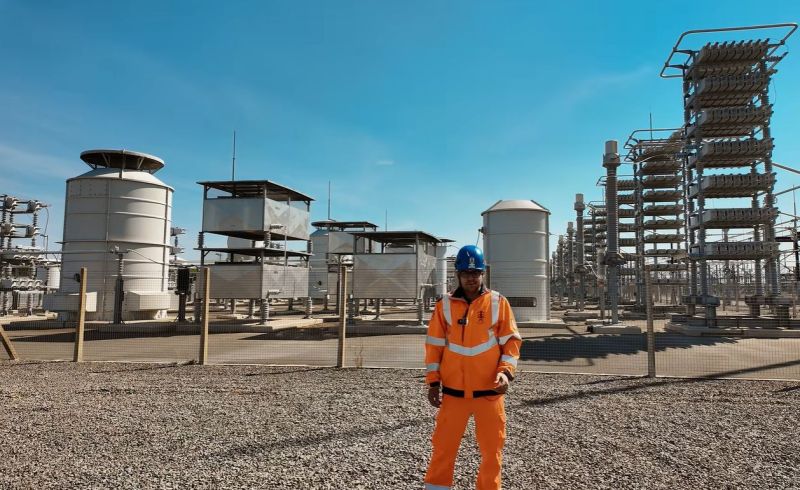
A fun way to think about a national electrical grid is as a massively upscaled electrical circuit, one in which you have multiple power supplies injecting AC power, with various bits and bobs involving resistors, inductors and capacitors in between working to synchronize and clean-up this power before it gets to the end users. Recently [Jordan Taylor], also known as [The Electric Brit] took a look at the grid’s harmonic filters that do a lot of this sinewave scrubbing after the HVDC to AC conversion.
Using a UK-based line-commutated converter (LCC) HVDC converter station as a physical example [Jordan] takes us through the elements of this harmonic filter, what it is, what it does and why it’s a necessity. The design considerations with components at this immense scale are also covered, along with the types of filters possible.
The Cliff’s Notes version is that following the conversion step from said HVDC there are harmonics introduced in the AC, not unlike in a much lower-voltage converter. This results in a noisy sinewave that can potentially cause harm to AC-powered devices, not to mention cause heating and other losses along the way. The answer is naturally to add an LC-filter, just on a slightly larger scale than for consumer electronics.
Also noted by [Jordan] is the nice synergy of these harmonic filters when it comes to absorbing and generating reactive power on the AC grid, due to their massive capacitors and inductors. This helps to dampen oscillations on the grid and thus further contributing to its stability.

In this modern age, if you want a truly swish garden that makes your friends sad when they visit, you need good lighting. [technocraftStudio] has been working on just such a project, creating custom wedge lights to illuminate garden beds in style.
You might look at the plastic housings involved and assume that they’re 3D printed, like the vast majority of such projects we cover these days. Instead, the enclosures are crafted out of PVC plastic, harvested by flattening sections of pipe with a heat gun. It has the benefit of being highly weather resistant, and cheap to boot. The lights themselves are small LED panels mounted on aluminium plate as a heatsink, and fitted with an acrylic diffuser to spread the light out more evenly. Power for the lights comes from an 18650 lithium-ion cell, charged by a pair of solar panels hooked up to an MPPT charge controller. A TP223 capacitive touch module is also included in the design to allow the lights to be turned on with just the touch of a finger.
The result is a surprisingly stylish bit of garden furniture which provides warm, even light and, ideally, needs a minimum of maintenance and attention since the sun provides the power. We’ve featured some other great solar lamps before, too, like this lovely Pokemon-themed build. If you’re building your own solar projects at home, or doing weird things with PVC, we’d probably love to hear about it on the tipsline!

Amazon is quietly accumulating a stake in Einride, the Swedish electric trucking company that said Tuesday it will deploy 500 Tesla Semis for Amazon and other customers.
Einride’s SEC filings show Amazon holding warrants for 25.2 million shares — about 12% of the company — that vest as Amazon buys freight services. The company’s financial report Tuesday, its first since going public in June, has the warrants on its books for the first time.
An Einride spokesperson confirmed that a “warrant contract asset” of 1.5 billion Swedish kronor (roughly $160 million) on the company’s balance sheet represents the Amazon warrants. It is the largest single asset on Einride’s books, worth more than its trucks and more than its cash.
At the same time, Einride is relying heavily on Amazon for growth, forecasting a 60% to 73% year-over-year revenue increase in the second half, “fueled by the Amazon ramp and other deployments in the U.S. and Europe,” as the company said in its earnings release.
Amazon announced in April that Einride would deploy 75 electric trucks with charging at five U.S. sites in its middle-mile network, the leg between warehouses and delivery stations.
Tesla Semi rollout: Einride also said Tuesday it will deploy 500 Tesla Semis across North America, calling it the largest deployment of Tesla’s electric big rigs in the world to date. The trucks will serve Amazon and other Einride customers on freight corridors in California, Texas, New Jersey, Illinois and Georgia, rolling out in phases over two years beginning in September, financed by third parties.
Tesla Semis are already hauling some Amazon freight. Nevoya, an all-electric trucking carrier based in Southern California, says it runs Amazon loads using Tesla Semis.
Amazon’s electric semis: Amazon has been turning to other manufacturers to electrify its freight network beyond the last-mile delivery vans it buys from Rivian. It deployed nearly 50 Volvo electric semis at Southern California ports and ordered more than 200 electric big rigs from Mercedes-Benz for Europe, part of a pledge to reach net-zero carbon across its operations by 2040.
Einride, for its part, doesn’t sell trucks. It buys and finances them, hires the drivers or contracts carriers, builds the charging infrastructure, and hauls a customer’s freight for a fee — using its own software, called Saga AI, to plan routes around charging windows and battery range.
The pitch to a shipper like Amazon is that it gets electric trucking capacity without purchasing vehicles itself or creating electric charging infrastructure.
Long-term autonomy: Einride is also one of a small group of companies running fully driverless trucks in commercial service in the U.S., with Level 4 autonomous vehicles operating in Ohio and more than 5,400 driverless hours logged for customers as of June 30.
The trucks hauling Amazon’s freight, however, have drivers, as will the Tesla Semis, for now. Tesla CEO Elon Musk said on the company’s July earnings call that self-driving capability for the Semi is about a year away. That timeline would fall inside Einride’s two-year rollout.
Einride’s Amazon deal: Roozbeh Charli, the Einride CEO, said on the earnings call Tuesday that the April announcement with Amazon brought a wave of new business.
The takeaway for customers about Einride was, “If these guys can handle the complexity of Amazon’s network, they can handle ours,” he said, explaining that there was “quite a lot of inbound” following the news.
Charli said customers rarely specify hardware, and that Einride selects truck platforms based on the routes and the data. That would suggest Einride chose the Tesla Semis, not Amazon.
The Amazon warrants did not come up on the call. The terms have been technically public since April, buried in an exhibit to Einride’s merger filings with the SEC, but haven’t been previously reported, in part because Einride’s prospectuses refer to Amazon as “the Specified Party.”
Amazon’s financial arrangement with Einride follows a pattern.
Amazon did not respond to questions about the arrangement.
Editor’s Note: This story has been updated with comment from Einride. It was also corrected to note that Tesla Semis already haul Amazon freight for Nevoya, an electric trucking carrier.
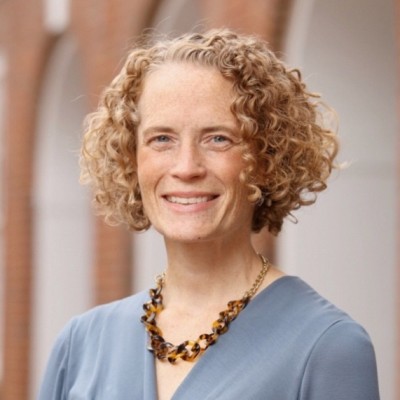
— Hannah McClellan Richards has left Amazon after more than 15 years to become chief operating officer of micromobility company Lime.
“Ensuring hundreds of thousands of light electric vehicles are available, fully charged, when and where riders need them, at global scale is exactly the kind of operational challenge I love,” she said on LinkedIn, praising Lime’s carbon-free, affordable transportation model.
McClellan Richards previously served as VP of operations, product and tech for Amazon’s pharmacy division. Other past roles include technical advisor and chief of staff to the CEO of Worldwide Amazon Stores, and VP of freight, inbound transportation and returns. She will serve in the new role remotely.

— Ankur Sinha, former chief product and technology officer at Remitly, shared that he’s taken a role at Anthropic as head of enterprise and verticals. Sinha was at Seattle’s Remitly for more than four years, and was previously an engineering director at Google and spent more than a decade at Microsoft, working primarily on Xbox.
“Moving from transforming lives with trusted financial services that transcend borders (Remitly’s mission) to ensuring the world safely makes the transition through transformative AI (Anthropic’s mission), a few things stay constant,” Sinha said on LinkedIn. “The impact on human lives is what makes the work worth doing, and trust and safety are critical to doing it well. I’m super stoked to be part of this and to help carry it forward.”
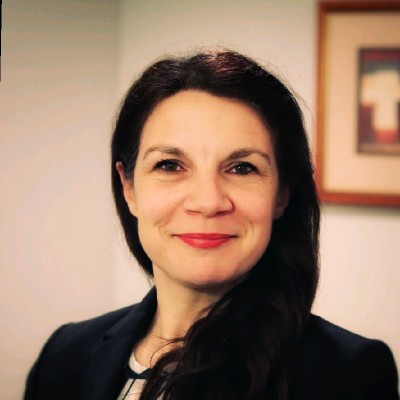
— Christine Chambers has been named chief financial officer of Redmond, Wash.-based lidar maker MicroVision. She joins from Fusemachines and previously served as CFO of PetMeds and RealNetworks. Chambers was also a financial vice president at Seattle-area company Rosetta Stone.
MicroVision, which develops lidar sensors and perception software for autonomous driving and security use cases, cut 49 jobs in March, targeting engineering and technical roles.
Chambers’ appointment was disclosed in a federal filing and takes effect Aug. 27.
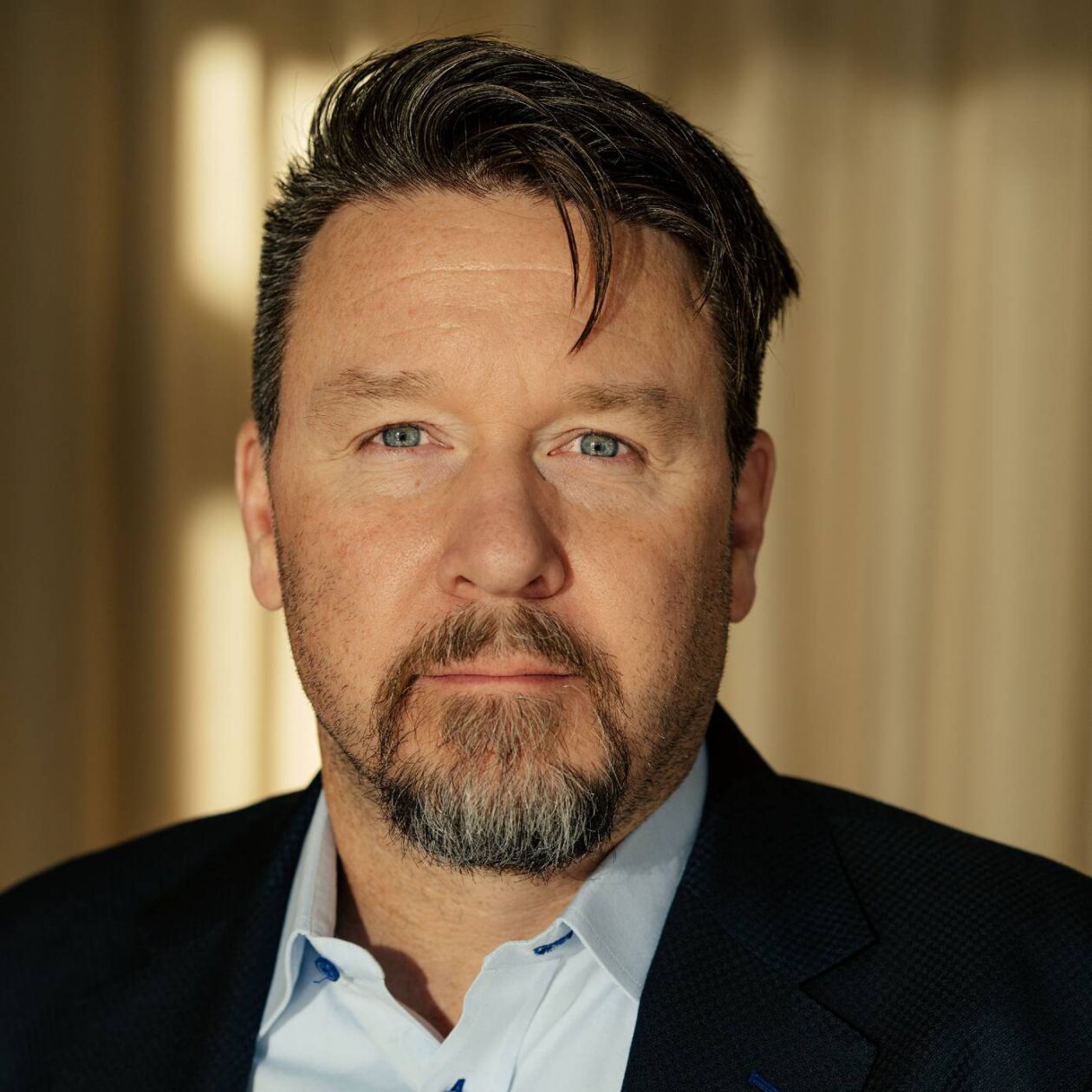
— Slalom has appointed Dan Garrison chief AI officer of the Seattle-based global business and technology consulting firm.
Garrison, who is based in Detroit, spent nearly 30 years at Accenture, most recently serving as chief technology officer for Accenture Song. His experience there included work in quantum computing and generative AI, integration of acquired businesses, and technology strategy leadership.
“Dan has an incredible amount of hands-on technical depth, enterprise transformation experience, and entrepreneurial energy,” said Brian Turner, Slalom’s chief capability officer, in a statement.
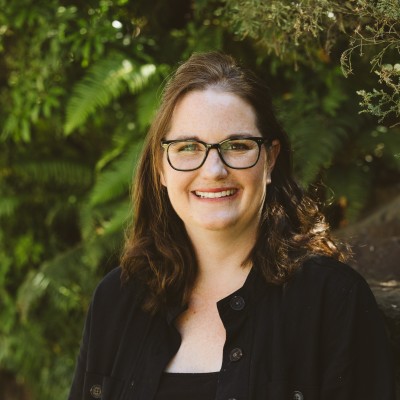
— AI infrastructure and data center company Crusoe has hired Celeste Grebe as senior vice president of financial planning and analysis. She will be based in Crusoe’s Bellevue office, which opened in December.
Grebe joins from CoreWeave and was previously with Microsoft for more than a decade across two stints. She left the tech giant as chief financial officer of cloud and AI data centers. She was also with PicMonkey as a vice president.
“It’s rare to find a company positioned to shape infrastructure at this scale, with such a deep understanding of, and partnership with, its customers—and that’s exactly what drew me here,” Grebe said on LinkedIn.
— Gravyty, a Seattle-based ed-tech company, named two new executives:
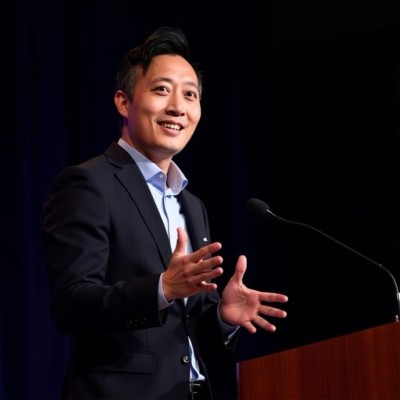
— Richard Tso has taken a role as senior director analyst of AI marketing strategy for Gartner. He joins from Microsoft, where he worked for nearly a decade over two stints. Tso was most recently director of product marketing management for Azure and has held marketing roles for Microsoft Viva, Edge, PowerPoint and other products.
Tso was a founding member of Round, an organization providing mentorship and support for tech executives. Other past roles include leadership positions at Persefoni and LivePerson.
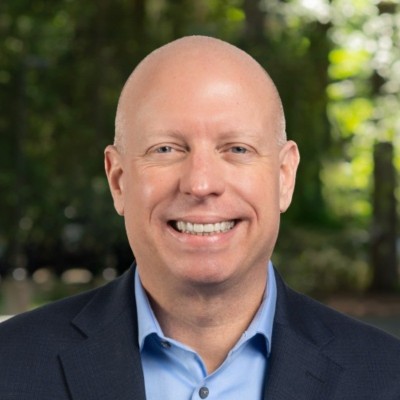
— TerraPower’s former chief operations officer, Eric Williams, is joining rival Hadron Energy as executive vice president of engineering. Williams was with Bellevue, Wash.-based TerraPower for 12 years, leading design and operations of its modular nuclear reactor and helping secure Nuclear Regulatory Commission construction permits.
“I have spent my career proving that advanced nuclear technology can be engineered, licensed, and deployed in the United States,” Williams said in a statement. “The mission at Hadron to commercialize a first-of-a-kind microreactor (MMR) is exactly where the nuclear industry needs to go.”
Williams’ move to New York-based Hadron is effective Aug. 31.
— Seattle’s Ian Wathen was promoted to chief financial officer of Conga, a Houston-based company that helps businesses coordinate their pricing, quoting, contracting, rebates and communications.
— Brittany Jarnot was promoted to senior manager of state and local government affairs in the West for Salesforce.
— Kristy Carrington was promoted to the role of chief executive for the North Division for Providence, overseeing operations in Western Washington and Alaska for the healthcare system.
— Colin Dale is now director of sales for Factal, a Seattle company providing risk intelligence, working out of its London office.
— And in case you missed it, Zillow announced a series of executive changes: CFO Jeremy Hofmann‘s role is expanding to include chief operating officer, while Jun Choo, who became chief operating officer in 2024, is stepping down to focus on his health and will serve as an advisor through the end of the year.
Editor’s note: Updated on Aug. 10 at 1:20 p.m. with news of Ankur Sinha’s new role.
