Even for 1982, the Sinclair ZX Spectrum had poor sound: a piezoelectric speaker that could beep. But you can do a lot with a single bit if you turn it on and off really fast. Michael Martin's Bumbershoot Software site has done some fascinating deep dives into several long-gone computer systems, including a whole series on implementing a game on the ZX Spectrum, starting in May with Giving the ZX Spectrum a Fair Shake. More recently, though, Martin turned his attention to the Spectrum's very limited sound capabilities. As we write, his newest post is Experimenting With 1-Bit Sound. The post concerns the original 16K and 48K ZX Spectrum models, not the Spectrum 128, with its fancy AY-3-8912 sound chip (also found in the US Timex Sinclair 2068). Even as devoted Spectrum enthusiasts, we didn't expect an article about the machine's limited sound hardware to lead to hours of listening pleasure. The Manic Miner intro music, after all, is a fair representation of early Spectrum chiptunes. (Turn your speakers way down before you listen!) The ZX Spectrum could play music from the outset – Steven Vickers' original Spectrum BASIC Manual includes the code for a tiny fragment of Mahler. As The Register reported in 2015, Matt Westcott's Mahler Project used a networked collection of original Spectrum computers to play all the parts of Mahler's First Symphony. Over at Bumbershoot Software, Martin is interested in programming the very limited hardware of these early home computers, and so his Spectrum audio post discusses audio-encoding methods, pulse-width modulation, and more in considerable depth. Toward the end, it links to a remarkable music demo called We are Vocoders. A discussion among Spectrum aficionados on Hacker News then led us to the astounding work of Tim Follin in the 1980s. (The Video Game Music Preservation Foundation has an excellent profile, including a contemporary photo. Dean Belfield's touching tribute to his brother Geoff has a more recent picture.) Follin hand-coded the music for Spectrum games such as Mastertronic's Agent X… And indeed Agent X II… And Raw Recruit… There are many more remarkable Follin tracks, including the music for Future Games, and the title music for Chronos. Follin achieved this without additional hardware such as the RAM Music Machine – which even impressed the great Aphex Twin. There are also some very impressive demos, such as Dark Fusion by the late Ben Daglish. Rich "Tufty" Hollins even created an entire half-hour album of one-bit audio, ON and OFF. You can listen to it in its entirety on Bandcamp, or accompanied by some Spec-tastic graphics on YouTube. ®
BORK!BORK!BORK! We still don't know what caused the air traffic control mayhem in the UK in early September, but one information board at Luton Airport appears to have gone out in sympathy. Spotted by Register reader Mark, the digital sign usually shows passenger information. Today, however, it looks like either the system clock is wrong or someone has forgotten to renew a server certificate. It's not the usual "DNS. It's always DNS," but not far off. For those blissfully unaware, the UK's air traffic control system has had a bad week. A glitch in National Air Traffic Services (NATS) resulted in thousands of flight cancellations and travel disruption for around 330,000 passengers. And it appears whoever is running this information board at Luton has done the computing equivalent of "anything you can do I can do better." Luton Airport is a base for the likes of Ryanair and easyJet. Its logo looks like someone was playing Tetris when they were asked to dream up the branding, and it celebrated 5.5 million passengers passing through over the summer. The airport was not spared the chaos, along with many others, but the good news is that our reader's flight departed on time, and a delicious, cold adult beverage was waiting at the destination. For others wondering what has become of their flight, it's good to see that the information boards are already in another time zone, or whoever is responsible for keeping the server certificate valid has taken a well-earned vacation. Nobody really needed that information anyhow, did they? ®
If humans ever make it to Mars - and that’s still a big IF - they will need to build shelters there. And they could build those shelters out of yeast and gelatin, if a method described by Hong Kong-based researchers makes it out of the lab. A paper published on Thursday by a group of researchers from The Hong Kong University of Science and Technology and The Hong Kong Polytechnic University describes a method for building structures on Mars that doesn’t rely on energy-intensive heating to turn regolith into building blocks. The team instead turned to bioengineered yeast and gelatin mixed with simulated Mars dirt to 3D print structures. "My inspiration came from freeze-dried fruits that become harder,” senior author Jishen Qiu, an associate professor at The Hong Kong University of Science and Technology, told Cell Press, the publisher of the paper. Qiu’s idea is a relatively simple one once you break it down: Take one part yeast bioengineered to produce adhesive proteins that bind the components. Combine with artificial gelatin hydrosol to serve as a growth medium for the yeast. Add plain old Martian dirt, and extrude the material through a 3D-printing nozzle. If everything works as intended, the recipe should create a foamy substance that, when exposed to the dry, cold Martian atmosphere, essentially freeze-dries. As the ice sublimates into vapor, you should be left with a light, porous, but incredibly strong material. According to the researchers, that’s exactly what they got. “The hardened material achieved mean compressive and flexural strengths of approximately 12 and 6 MPa, respectively,” the team said. For reference, that’s roughly the same strength as low-grade terrestrial concrete. As an added perk, the team noted, the energy demand is one to two orders of magnitude lower than that of heat-processing Martian (or lunar, for that matter) dirt into building material. According to the paper, the material can be broken down and reused too - provided at least a single yeast cell survives the process, and the cold, barren wasteland of Mars, that is. The team isn’t sure that would necessarily be the case, but nothing is stopping Martian yeast masters from keeping a supply on hand for future projects just in case. The structures they built and tested in their simulated Martian conditions were tiny little beehive-shaped things, measuring just 45 mm tall (a little under 2 inches). “Is there any physical law or fundamental mechanism that prevents us from doing this?" Qiu asks of his work. "I can't see any at this point in time.” Qiu said his team is confident that it can scale the tech, but that’s not the only thing that needs to be tested more fully. Per the paper, testing the ability of the yeast-gelatin building foam to retain the pressure necessary to keep humans from succumbing to the Martian elements was outside the scope of the research. “A practical lunar or Martian habitat must integrate pressure retention, gas tightness, mechanical support, thermal regulation, radiation shielding, dust protection, repairability, and resource recycling,” the paper notes. “These requirements will likely require hybrid architectures” that include both the yeast foam and more traditional structures. Either way, avoiding the need to heat Martian dirt could reduce the energy and heavy equipment required to build structures there. That’ll be important if we ever actually want to get to Mars. But if we get there, at least we’ll have yeast. ®
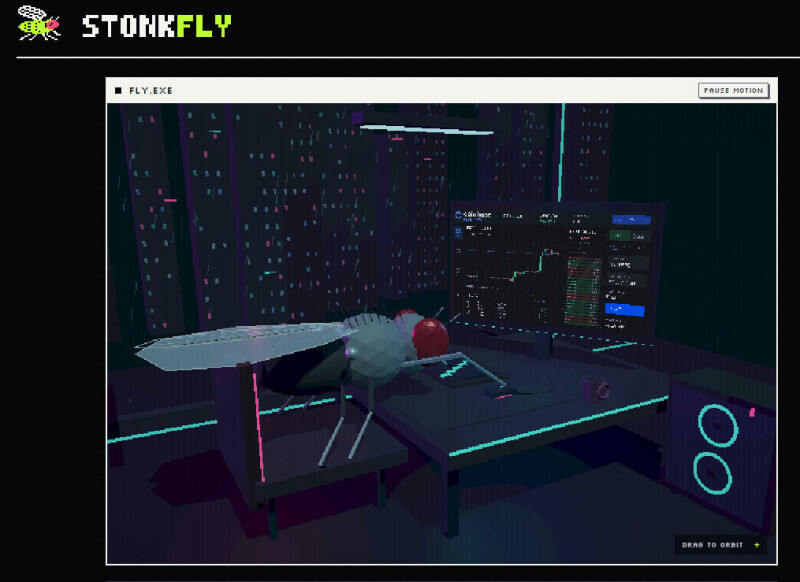
If you want to understand how 2026 is going, in March The Register reported that scientists had connected a simulated fruit fly brain to a virtual body and let it wander around a virtual world. Now another simulated fly nervous system is trading crypto. Behold Stonkfly, the brainchild of Coinbase software engineer Alex Wormuth. His X post boasted: "I gave the fly brain $100 to trade bitcoin. Dopamine neurons are stimulated when the fly makes profit. Neuron activity controls buy/sell decisions and makes trades on coinbase. Will the fly get rich?" Well, all we can say is Alex should question his life choices. But really, more stupid things have happened this year, like the US president suggesting he could bring in the military to correct a misbehaving bond market. Keen readers will recall that researchers at Eon Systems took several preexisting components: a fruit fly brain scan, a tool for modeling neurons, a model of some of the fly's muscles and body, and a very simple virtual environment. After connecting them, the team claimed that the result displayed some of the behavior of a real insect. Stonkfly is different. It uses a model of a male fly's brain and ventral nerve cord, rather than the female brain scan used in the earlier experiment. It has no body, and engineered interfaces feed it market information and translate neural activity into trading decisions. The explanation on GitHub – it is an open source project – makes clear that the model uses engineered reinforcement signals, not modeled pain receptors, while synaptic changes "do not establish that it learns to trade profitably." The underlying network is substantial, comprising 166,700 nodes, 25,582,938 directed connections, and 124,177,617 synaptic contacts. The project documentation nonetheless sets out criteria for what would qualify as successful learning, along with some careful caveats. "Compare to cash and simple exposure baselines as well: rising crypto prices alone can make any buyer look skilled," the documentation says. "No profitable learning, strategy improvement, biological replication, or live-funded performance has been demonstrated by this repository's tests," it adds. We call on Wormuth not to be so modest. Before the year is out, we expect Federal Reserve chair Kevin Warsh to be replaced by a disembodied virtual insect brain. It's not even the end of September, after all. ®
There’s a lot of garbage floating around in low Earth orbit that threatens both crewed and uncrewed spacecraft, but a new idea based on one of nature's enduring shapes could offer better protection against debris impacts that's no yolk. Bad puns aside, and we do beg your forgiveness, Chinese researchers at Dalian University of Technology have developed a new spacecraft armor design that, according to a research paper published on Tuesday, offers considerably more protection by taking inspiration from the shape of a typical egg. “Natural biological structures have evolved to demonstrate excellent energy absorption performance over long-term adaptation,” lead author Yuxin Wang told the American Institute of Physics, whose journal published his team’s results. Debris in orbit poses serious risks to spacecraft and satellites: Even a tiny piece can cause massive damage, as chunks of metal and other spacecraft debris travel at blistering speeds. Debris in low Earth orbit typically travels at around 7 to 8 kilometers per second, while impacts between orbiting objects can occur at relative velocities approaching 15 kilometers per second. For reference, even the most high-powered military rifles struggle to achieve a muzzle velocity over 1.45 km/s. According to orbital debris tracker Orbital Radar, a 1 cm aluminum sphere traveling at 10 km/s packs the same amount of kinetic energy as a hand grenade. With so many satellites in orbit, collision risks are rising. Starlink is lowering its orbit, while SpaceX has separately proposed launching up to one million satellites for an orbital datacenter system. Things are getting crowded and better spacecraft protection is definitely needed. Wang’s team’s design is simple: Sandwich a bunch of 3D-printed aluminum eggs between two aluminum plates, fill the shells with water, and model what happens when fake space debris smacks into them at hypervelocity. The researchers also produced 3D-printed structures for testing. Several designs were compared: one with the pointy ends of the shells against the faceplate, an inverse of that design, a mix of shell configurations, and one with spheres instead of eggshells. The design with the pointy ends against the faceplate performed best in the simulations, reducing projectile velocity by 64.9 percent. For comparison, a single aluminum plate reduced projectile velocity by 51 percent under the same simulated conditions. The eggshells don’t have to be large, either: The design tested by Wang’s team used water-filled eggs that were just 12 mm high (around half an inch), with aluminum plates a single millimeter thick on either side. Weight is still likely to be a concern, as covering a spacecraft in half an inch of water-filled eggshells will likely make it considerably heavier. We asked Wang if his team had considered that, but didn’t hear back. Per the AIP, the group is now working to optimize their design and conduct further tests. Regardless, Wang told AIP Publishing the results show that better spacecraft protection is possible. “This work demonstrates that bionic, lightweight metastructures are a promising route for hypervelocity-impact protection,” Wang said. “We hope this research can attract more attention to bio-inspired protective structures.” No matter how the protection ends up being designed, it’s sorely needed. ISS residents have had to shelter in place on multiple occasions due to the potential of space junk collisions, and the growing number of satellites and debris in orbit raises the risk of further collisions, moving some orbital regions closer to conditions associated with Kessler syndrome, where collisions create more debris that can trigger further collisions and potentially make heavily affected orbits unusable. It’s either eggshells, or someone really quickly figures out how to develop spacecraft shields akin to those from Star Trek. My money’s on the shells, but in this case, I’d love to end up with egg on my face. ®
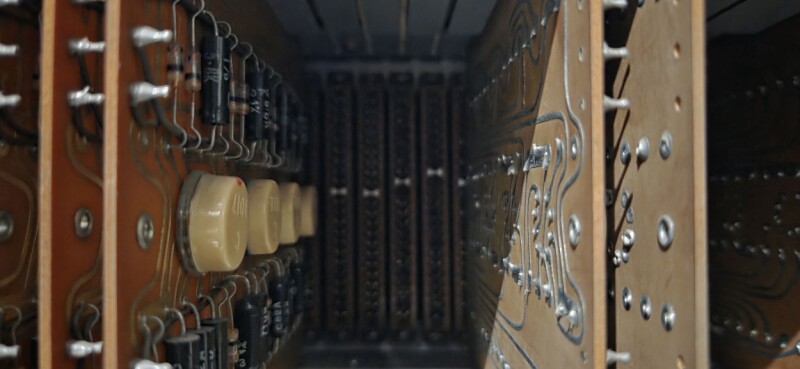
You can go retro by using an old video game console or a PC from the 1980s, but why stop there when, like one man, you can build your own vacuum tube computer using 75-year-old recycled components? A UK resident who identifies himself only as “Mike” has done just that, as detailed on his tube computer website and accompanying Hackaday project page. Mike’s tube computer is primarily made up of 460 recycled, Soviet-era 6N3P vacuum tubes, which were common enough in their age to be readily and cheaply available online. “Many were used and then stored for over 50 years, so life expectancy may be questionable,” Mike explained on Hackaday. A new 6N3P tube is supposed to have around 500 hours of life, but because each has been used, its current condition is essentially a mystery. Throw in manufacturing inconsistencies of mid-century Soviet Russia, and each tube had enough variability to necessitate extensive testing, Mike explains in the technical writeup on his website. “I calculated the component values and tested the results, but in many cases the theory did not accurately match the practice,” Mike writes. “So I built a test rig to test the viability of various component values and found a range of values that seemed to work in most cases.” All told, Mike’s tube computer, with its 460 6N3P tubes, consists of 920 thermionic triodes that use heat to release electrons for his computing work. Those tubes are mounted to 46 separate 10-tube PCBs, which in turn sit on five backplane PCBs. The entire thing includes a control console that Mike describes as “far too simple” and in need of a complete redesign to better handle variations in the computer’s logic levels. It takes between 10 and 15 minutes for the entire system to stabilize once switched on, Mike said, resulting in a “warm and cozy computer room.” The tubes all power up in random states, requiring the machine to be reset each time it is switched on, but then it’s ready for the fun part: computing. The entire thing uses NOR (i.e., not OR) gates, just like the Apollo guidance computers that got humans to the Moon, which allows it to be a bit smaller than some of the other classic tube computers of yesteryear. As for what it can do, well - 16-bit math is a possibility, as well as anything else that can be done with a limited set of 16 instructions on a 4-bit instruction register. Mike has it configured to output a 64-bit Fibonacci sequence and, more excitingly for his grandchildren and the kid in all of us, plans to use it to power a simple flight simulator once its I/O system is finished. “The basic idea is that back in the 1920s the commercial development of the British R80 airship had actually been approved by the government and the Airship is moored overnight at the wonderful Brighton Aerodrome before a morning launch on a voyage to Paris,” Mike says on his website. “By pressing controls on the image of the bridge of the R80 you can direct the airship software,” he adds. “You can control the ballast, gas release, engine power, elevators, rudder and the bow mooring gear, which is used to release the airship from the tower.” He says that “a bit of vision” is needed to picture oneself flying an airship from Brighton to Paris, as the machine has no graphical output aside from a single mechanical display that used to serve as a clock at a British Rail station. The tube computer’s binary output is used to directly control the mechanical display. Mike describes his fascination with tube computers as “an addiction,” noting that this is the third such system he’s built since getting his first one up and running in 2021. “I designed The Tube Computer so it could show itself working at the most fundamental level of computing,” Mike says, while noting that he’s always careful to keep a fire extinguisher handy thanks to the fact you can smell it running due to all the heat it generates - enough to keep its entire room warm. “The Tube Computer has behaved itself so far, unlike a previous system that went BANG twice,” Mike said, adding that it still requires regular adjustments which, due to its size and position hanging on a wall, require a ladder to undertake. “It is probably one of the few computers that needs both a small tweeker [sic] and a big step ladder.” ®
Tesla's Cybercab's wheels have only just hit the asphalt for its commercial launch and the autonomous vehicle has already attracted the attention of the US National Highway Traffic Safety Administration (NHTSA). The body announced an investigation into Tesla's self-certification of the vehicle at the weekend. Central to the probe is the fact that the Cybercab famously lacks conventional controls. The NHTSA says there are "clear vehicle performance requirements" – stuff like brake controls – that "in order for automakers to access the US market, they must certify that their vehicles meet these standards – subject to oversight from the agency to confirm compliance. When certified vehicles appear to not adhere to these requirements, NHTSA conducts an investigation." The NHTSA is updating the requirements for autonomous vehicles designed never to be operated by a human, but Tesla appears to have jumped the gun somewhat, prompting the agency to open an Audit Query (AQ) just hours after the Cybercab began a commercial rollout on the streets of Austin, Texas. Tesla told the NHTSA that it had certified the Cybercab "as compliant with all applicable Federal Motor Vehicle Safety Standards (FMVSS)." The vehicles lack permanently attached manual controls such as a brake pedal, accelerator, steering wheel, or mirrors. In the AQ, the agency wrote it intended to "examine the process and technical data on which Tesla relied when certifying the Cybercab and related issues. "Among other things, NHTSA will consider the extent to which Tesla’s certification depended on determinations that certain FMVSS are inapplicable to the Cybercab." Tesla is not the only company with autonomous vehicles ferrying passengers around on US roads without using conventional controls in the cabin. Amazon tentacle Zoox, for example, was granted a two-year exemption [PDF] at the end of July 2026, with the proviso that "not more than 2,500 exempted vehicles are introduced into interstate commerce for commercial deployment in any 12-month period." There is therefore precedent. However, the NHTSA wants to see how Tesla came up with its self-certification for the Cybercab. NHTSA Administrator Jonathan Morrison said, "NHTSA fully supports the safe development and deployment of automated vehicles. But as the federal regulator, we need to ensure that all of our laws are followed." The agency noted, "When certified vehicles appear to not adhere to these requirements, NHTSA conducts an investigation." ®
The prospect of a negative leap second – combined with decades of irritation over leap seconds generally – looks set to inspire a bit of global procrastination among international timekeepers. Next month, the General Conference on Weights and Measures is set to vote on effectively calling time on leap seconds. A draft resolution [PDF] would make Coordinated Universal Time (UTC) continuous from May 20, 2027, and allow the difference between UTC and UT1, a measure of time based on Earth's rotation, to reach as much as one hour. Leap seconds keep UTC, which is based on atomic clocks, within 0.9 seconds of time determined by the slightly wobbly rotation of our home planet. Since the system was introduced in 1972, 27 leap seconds have been added to UTC. The urgency comes partly from a slight increase in Earth's rotational speed in recent years, raising the possibility of an adjustment never attempted before: a negative leap second. Experts convened by international timekeeping bodies estimated a 30 percent probability that one would be needed by 2035. Many computer systems were designed on the assumption that a leap second would always be added rather than removed, explained Setnam Shemar, principal scientist at the UK's National Physical Laboratory (NPL). "Most digital architectures and network time servers are hardcoded under the assumption that leap seconds are strictly additive. Losing a second could trigger severe disruption across critical national infrastructure, including telecommunications, electricity grids, and satellite navigation systems," he said. The risks posed by a negative leap second – and leap seconds generally – are behind the proposal to let UTC diverge from rotational time by as much as an hour, which is due to be put to a vote in October. Shemar said the proposal would remove the need for further leap-second adjustments for many years. "This would remove the risks entirely for a very long time. Next month's resolution is likely to pass since it will be based on the outcome of a majority vote of the national delegates from many different countries, and most of them have been keen to end leap seconds for several years due to the risks posed to national infrastructure." UTC would be unlikely to diverge from rotational time by a full hour for at least a thousand years, Shemar said. If humankind lasts that long, it might be the least of our worries. ®
BORK!BORK!BORK! Windows 10 is lingering on after its friends have gone home, plaintively flickering out an update notification on a digital sign at London's O2 arena. The sign was advertising the venue and some of the activities available inside, including an indoor skydiving experience. We'd recommend indoor skydiving as an alternative to jumping out of a perfectly good aircraft for those minded to give it a go, although the sight of Windows 10 making its presence felt is less than ideal when considering undertaking an extreme sport. Indeed, a device bleating about a restart is not something one wants to think about just before you go inside and rely on the center's tech to safely blast you toward the ceiling using a fan mounted below the floor. Certainly, mid-air acrobatics would take on an entirely new frisson if there was the added danger of Microsoft's finest abruptly turning off the hardware to give itself a jolly good update. We've all been in that meeting when Windows decides a restart is needed mid-presentation. It's not great, and even less so when you're dressed in a jumpsuit, helmet, and about to venture into a column of air. Not that this hardware was part of the indoor skydiving activity, of course. The digital sign was showing an advertisement for the company beneath the notification. Rather, it's a very visible reminder of how much Windows 11 still has to do before it stamps its predecessor out of significance. According to Statcounter (not the most reliable source, but in the absence of official data from Microsoft, a useful indicator), Windows 11 currently enjoys a market share of just under 70 percent, while Windows 10 stubbornly hangs on at 30 percent. Windows 10 left support last year, although the security update lights can be kept burning for a few extra years via Microsoft's Extended Security Updates (ESU) program. In June 2026, Microsoft quietly extended the updates for consumers to 2027. Up to three years are on offer for commercial users. For a fee, of course. Microsoft's extension and the notification on O2's digital sign suggest Windows 10 isn't going anywhere anytime soon. Then again, considering how well things have gone for Windows 11 since release, perhaps it too would benefit from a blast of air from below to lift it convincingly above its predecessor. ®
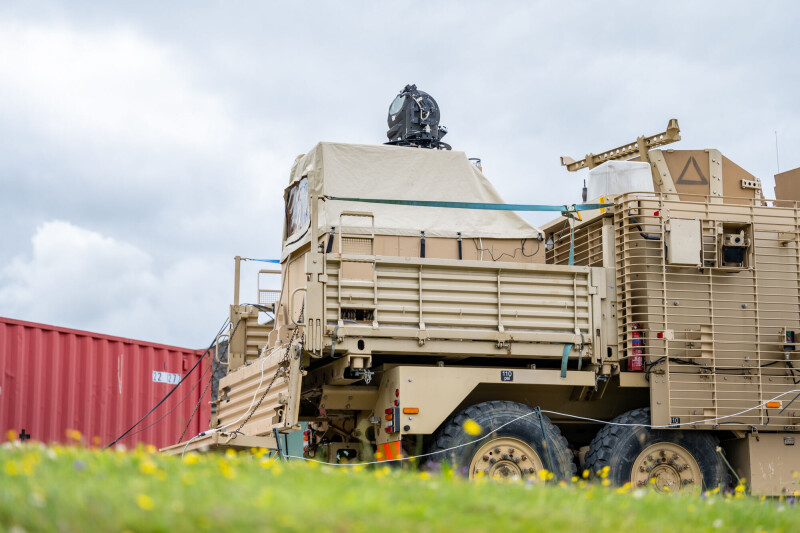
Britain's Ministry of Defence (MoD) is seeking anti-drone technology capable of protecting troops from saturation attacks designed to overwhelm defenses or exhaust their ammunition. The tender, dubbed Project PANOPTES, is being run by UK Defence Innovation (UKDI) on behalf of the MoD, with an initial £5 million ($6.8 million) available to successful bidders. First-stage submissions close at midday on September 23, suggesting that the MoD is in something of a hurry. According to the competition document, PANOPTES aims to deliver "an integrated Counter-Uncrewed Aerial System (C-UAS) force-protection capability, capable of autonomous operation." The MoD wants a system that complements its existing defenses by detecting, tracking, and defeating low-cost threats without being overwhelmed or rapidly exhausting its ammunition. It must operate autonomously and be mountable on an Army vehicle. UKDI is "particularly interested in capabilities centred on Laser Directed Energy Weapon (LDEW) effectors," although it will consider credible alternatives. The initial focus is on NATO Class 1 uncrewed aerial systems, a category covering military drones weighing up to 150 kg. These include the small battlefield craft used extensively in Ukraine against targets ranging from armored vehicles to individual soldiers, rather than larger drones intended to strike fixed installations. The requirement covers "single, repeated, sequential and simultaneous threat profiles" – including potential swarm attacks – as well as drones used for disruption or surveillance. Reg readers may recall that the British Army tested anti-drone laser systems a couple of years ago. Soldiers from 16 Royal Artillery fired a 15 kW infrared laser mounted on a Wolfhound armored truck against airborne targets, "neutralizing" them at distances beyond 1 km. The MoD told us at the time that those trials were merely a capability demonstration intended to improve its understanding of laser technology. PANOPTES appears to move closer to procuring an operational system, although it wouldn't be the first defense competition to lead nowhere. We asked the MoD for further details, including when it anticipates any successful solutions might make it into service with the British Army. PANOPTES has two stages: applicants first outline their ideas, after which those behind the most promising submissions will be invited to submit detailed proposals. Vulnerability to drones is a major concern for armed forces around the world. US defense startup Mara recently unveiled a counter-drone system that launches small interceptors from a vehicle roof, but these would eventually be used up in a battlefield situation. Britain's Royal Navy also put out a request for ship-based counter-drone systems earlier this year. Project TALON envisages combining kinetic projectiles with non-kinetic defenses such as lasers, microwaves, and electronic jamming. Royal Navy ships are already due to receive the DragonFire laser weapon, with the first system expected to be fitted to a Type 45 destroyer next year. Whether that technology can be shrunk or adapted for an Army vehicle is another matter. ®
UPDATED In what some are dubbing the "Uber rapture," the ride-hailing pioneer has abruptly quit Nigeria and Uganda. Far from drivers and their cars ascending to some surge-priced afterlife, users reported the service shutting down while rides were still underway. "A friend of mine said they were on a ride when they got the message," one observer wrote on X. "She told the driver and he said, 'It's a lie!'" – a phrase widely used in Nigeria to express disbelief or call out what one perceives to be bullshit. Unfortunately for drivers who rely on the platform for their livelihood, it wasn't. The shutdown came with little apparent warning. In both countries, Uber sent notices on September 2 saying the service would cease that same day. "We are writing to share some difficult news," the email to Nigerian customers began, according to TechCabal. A separate message to drivers acknowledged: "We know this is heavy news," and promised active drivers a one-off goodwill payment "to help ease this change." Some customers lamented the service's departure, describing it as one of the country's safer transport options. Ugandan users and local partners received much the same abrupt farewell. Uber said it had been "an absolute privilege" to serve Kampala since 2016 and promised to keep in-app support available for 21 days to settle outstanding issues, according to the Daily Monitor. Rivals Faras, Bolt, and SafeBoda will now be eyeing the space it left behind. Uber confirmed that it had wound down operations in both countries on September 2. "This decision is limited strictly to these two markets and does not impact our operations across the rest of the continent," it said in a statement. "Uber remains deeply committed to sub-Saharan Africa, where we continue to see robust growth and long-term opportunity." The exits come amid a wider Uber restructuring that will cut more than 3,000 jobs, reduce management layers, and free up cash for investment in areas including autonomous vehicles, according to the BBC. Uber launched in Nigeria, Africa's most populous country, in 2014 and expanded into Uganda two years later. In Nigeria's traffic-choked commercial hub of Lagos, it even launched a boat service in 2019 to help commuters bypass the gridlock. Uber offered no explanation beyond its boilerplate about changing priorities, but Nigeria had become a tough place to make the ride-hailing sums work. Drivers had complained that fares failed to keep pace with soaring fuel costs while Uber's commissions remained stubbornly high, and the company faced growing competition from Bolt, inDrive, and local rivals, according to the BBC. The removal of Nigeria's fuel subsidy in 2023 pushed up operating costs, while inflation and another rise in petrol prices this year squeezed drivers further. Uber has not said whether those pressures prompted its exit, but they can't have made staying especially attractive. The withdrawal continues a broader retreat from Africa. Uber also left Ivory Coast and Tanzania over the past year, leaving it operating in Egypt, Ghana, Kenya, and South Africa. The Register asked Uber whether the service really ground to a halt while rides were still in progress, as reports of an "Uber rapture" suggested. We also asked when it decided to leave the two markets and how much notice it gave customers, drivers, and employees. Uber had not responded by the time of publication. Users worldwide will recognize a lesser form of rapture: a driver accepts your booking, then cancels and vanishes from the app. ® Updated at 13.15 UTC on September 3, 2026, to add: In a statement sent to The Register, an Uber spokesperson, said: "After a thorough review, we have made the difficult decision to wind down operations in Nigeria. We are deeply grateful to drivers for their dedication and contributions over the years, and we are committed to supporting them through a smooth and responsible transition. In line with global best practices, we provided a clear timeframe between communicating our decision and suspending the app, allowing drivers time to prepare. We have also been in touch with active drivers to extend a token of our appreciation and provide support during this period."
Shipping giant Maersk is testing a modern rotor sail from British firm Anemoi Marine Technologies in an effort to cut fuel consumption and greenhouse gas emissions. Anemoi says Maersk will fit one of its rotor sail systems to an 8,700 TEU Lima-class container ship. TEU, or twenty-foot equivalent unit, is the standard measure of container-carrying capacity. That makes the Lima-class vessels relative tiddlers in the container-shipping world. Rival MSC's Irina-class ships measure 400 m (1,312 feet) long and can carry 24,346 TEU. Under the agreement, Anemoi will design and manufacture a rotor sail measuring 5 m (16 feet) in diameter and 35 m (115 feet) high. Promotional images identify the vessel as the Maersk Labrea. Anemoi will provide the engineering and installation support needed to integrate the sail with the ship's existing systems. Installation is scheduled for mid-2027, after which it will be tested during regular voyages across the North and South Atlantic. Rotor sails, also known as Flettner rotors, differ radically in appearance and operation from traditional sails. They use the Magnus effect, in which a spinning body moving through an airstream generates lift. The rotor's surface moves with the airflow on one side and against it on the other, creating a pressure difference and a force perpendicular to the apparent wind. When that force has a component in the ship's direction of travel, it provides additional thrust and reduces the load on the engines. Anemoi claims that a ship equipped with three of its rotor sails achieved average net fuel and emissions savings of 9.1 percent during a year-long assessment, rising to 21 percent on some voyages. "We're delighted to be working with Maersk on this pioneering project. It's a strong example of how collaboration can support the adoption of wind-assisted propulsion, and we look forward to carrying out the installation and working together as the project progresses," said CEO Clare Urmston. Maersk head of fleet technology Ole Graa Jakobsen commented: "Wind-assisted propulsion is one of several promising maritime solutions with the potential to improve vessel efficiency and reduce emissions. It has already been tested in other parts of the shipping sector, and we see this pilot with Anemoi as a valuable opportunity to build practical experience and assess its relevance for our fleet and for container shipping more broadly." The trial comes as the International Maritime Organization (IMO) pushes the shipping industry to reduce total annual greenhouse gas emissions by at least 20 percent from 2008 levels by 2030 and at least 70 percent by 2040, before reaching net zero by or around 2050. ®
If you see a mushroom in the forest and you're wondering if it's safe to eat or poisonous, don't ask an AI. Polish software engineer Piotr Migdał, a founding engineer at AI analytics and cost analysis firm Quesma, explained in a Wednesday blog post why trusting the mushroom insights of leading AI models is a dubious, potentially life-threatening idea in an experiment he ran. Armed with a dataset of Danish mushrooms and additional information about safe and deadly species in Poland and abroad, he tested everything from ChatGPT to Qwen to see which gave the most reliable advice. It likely won’t surprise you to learn that none of them are worth trusting with your life. A total of 55 mushroom species were included in the safe and deadly datasets, which he compared against the Danish library by running 1,040 photos through 16 models, using 20 photos per species where available and topping up rarer species from the validation set. Each model was asked to identify the most likely species, and four other contenders, from each photograph. Even the best performing model - Gemini-3.8-flash - was only correct with its first guess 65 percent of the time. It managed to correctly identify species in its top five guesses 85 percent of the time, but if you’re simply asking the model what a mushroom is and giving it a single chance, there’s a 35 percent chance it’s going to get it wrong. Qwen3.8-27b performed worst by far, correct on the first guess 13 percent of the time, and somewhere in its five guesses 24 percent of the time. As for what sort of mistakes the models make, most were harmless, Migdał said, but when the models got it wrong, boy did they get it wrong. “The dangerous ones are not random,” Migdał noted. “A deadly webcap was called a chanterelle - the same mistake that kills foragers.” The aptly named death cap mushroom was mistaken for edible 16 percent of the time, the fool’s funnel 48 percent of the time, and the fatal dapperling, often mistaken for its similar looking but safe relatives, 31 percent of the time, among others. False negatives were also noted, but there’s no harm in leaving a tasty mushroom uneaten. As for which models made the potentially deadly misidentifications, Qwen3.8-27b led the pack there too, calling poisonous mushrooms edible 36 percent of the time, with Qwen3.8-flash following close behind at 30 percent. Meta’s Muse-spark-1.2 led with just an eight percent false positive rate, but Migdał said that’s an anomaly due to the fact that the model simply declined to guess - the right move in a situation where a bad decision could be deadly for a user. "I am surprised that the top generalist off-the-shelf models were able to identify most cases. Still, in this case, most is not enough, as errors could have dire consequences," Migdał told us in an email. "A single photo is often not enough to identify a species - errors are expected." Mushroom hunting isn’t for the faint of heart As someone who’s grown up foraging for mushrooms (it’s a popular pastime in Migdał’s Poland, and my Polish heritage has led to my family preserving the tradition in the US), I’m well versed in the fact that even well-trained humans have a tough time telling some species apart from their dangerous look-alikes. Migdał isn't a forager himself, he explained - he'd rather accompany his friends and trust their judgment. "I do love eating mushrooms, especially fried with nothing but butter and salt," he told The Register. "But I only join people whom I trust to know what they are doing." That’s a big part of the reason common sense prevails in mushroom hunting: There are plenty of delicious fungi that don’t have imitators, so seek those if you’re not sure. If you trust your knowledge of mushrooms a bit more, it’s generally pretty easy to tell most safe species from their dangerous counterparts, as there are some obvious signs if you know what you’re looking at and have experience. It’s also worth noting that death from mushroom foraging is quite rare, as some of the most deadly species out there lack lookalikes among edible varieties. You’re far more likely to end up hallucinating or with a very upset stomach if you make a mistake, but don’t take that as a license to go mushrooming if you don’t know what you’re looking at. Most of all, “do not eat a mushroom because AI told you it is safe,” Migdał warns again in his writeup. “AI slop … might be annoying, but it is fixable with a few prompts, or a manual edit,” he adds. “It is much better than having to prompt ‘Do I need a liver transplant?’” Migdał's dataset is available for anyone who'd like to tweak it to see how it performs in their locality. We're guessing it won't be any more confidence inspiring than the results from Poland. ®
BORK! BORK!BORK! There was a time when catching a bus meant knowing how the local network worked: a dog-eared timetable or encyclopedic knowledge of routes and numbering systems was required before you even got on board. Not anymore. Modern mapping apps now bake in bus guidance, and route data flows freely from web services. The rather excellent kit from UK Departure Boards, for instance, can show bus services just as happily as rail departures. Public transport networks have gradually grown smarter as a result - witness digital signage such as this example in Manchester, spotted by eagle-eyed Register reader Jay. There's the Bee network logo, estimated arrival times… and a Windows Defender Firewall notification. The latter one is new to us, and almost certainly not intentional. Given the state of the tech industry, "AI" is a plausible destination though it's more likely to be "Altrincham", just obscured by Windows' protestations. It looks like Vix Technology's Remote Software Manager is trying to poke its nose through Windows Defender Firewall, which would rather it didn't. More likely, it's due a to shonky configuration than any real threat or ill intent. The display is one of Vix's own units, so hopefully the engineers behind the scenes are on the case. The screens themselves are rather neat kit. Bee is rolling out nearly 300 of these in 2026, and beyond showing upcoming buses, they let visually impaired users hear arrival updates at the push of a button, though presumably not Windows shrieking about an app trying to hop the firewall. Nobody needs that. We'd guess the unit is a Vix Technology ITD-2810S or similar, a low-power display that charges overnight when power is available, making it a natural fit for a bus shelter's lighting system. It's also high-resolution enough that Windows' innards show through loud and clear. Arguably overkill for the job, but Windows does have a habit of turning up in the most curious places, and remains, arguably, King of Bork. Even so, the blame here lies with whoever configured the sign, not Windows itself, which is only trying to protect passengers from whatever horrors lurk beyond the firewall. ®

 Login
Login