Constellation Energy will get $5 billion in government loans to modernize nuclear reactors. Most of the new capacity is already committed to Google, Amazon, and Meta.
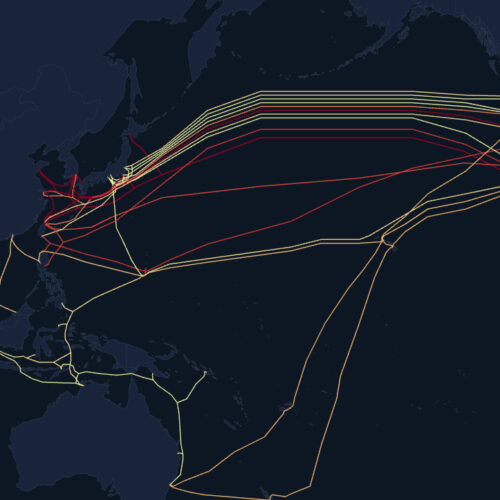
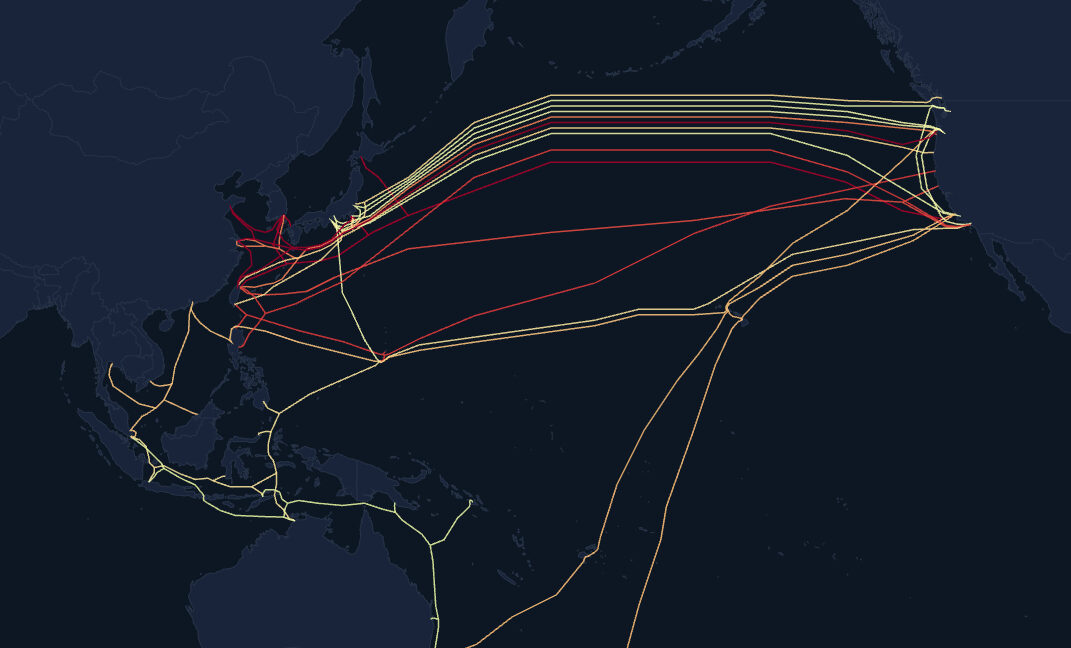
Subsea cable projects owned by US companies such as Google and Meta face some of the greatest risks from the threat of deep-sea sabotage in the Pacific Ocean, according to a new report. That coincides with Chinese research ships spending an extraordinary amount of time apparently surveying undersea cables—not to mention Chinese commercial ships being investigated for cutting cables in both European and Asian waters.
Most damage to the undersea cables that form the Internet’s backbone is the result of accidents involving bottom-trawling fishing nets and ship anchors dragging on the seabed, with storms and undersea landslides also factoring in. But the recent rise in international tensions and open conflicts have placed new scrutiny on more suspicious instances of cable-cutting damage, with analysts warning about Russia and China in particular engaging in cable sabotage or tampering as “gray zone” tactics that fall short of direct military confrontation.
One of the newest risk assessments of China’s gray zone tactics targeting the Internet’s undersea infrastructure comes from a research report published by the US-China Economic and Security Review Commission, an independent government commission that advises Congress. The report was contracted to the London-based think tank China Strategic Risks Institute and published in September 2026.
Rohit Patel is departing Meta after eight years working on AI evaluations and reinforcement learning, TechCrunch has exclusively learned. His startup, Ndoc, aims to take on Microsoft Office Suite.
A newly launched stock class being offered was partially engineered to help Meta founder and CEO Mark Zuckerberg pay the "billionaire's tax," should the measure be voted into law.
In his opinion Wednesday, US district court judge Francis J. Mathew said there was no “bright line rule” for determining the appropriate penalty for Meta's repeated and willful deception of users since 2010 about their “control of data, third-party data misuse, misinformation, hate speech, and equal enforcement.”
 Login