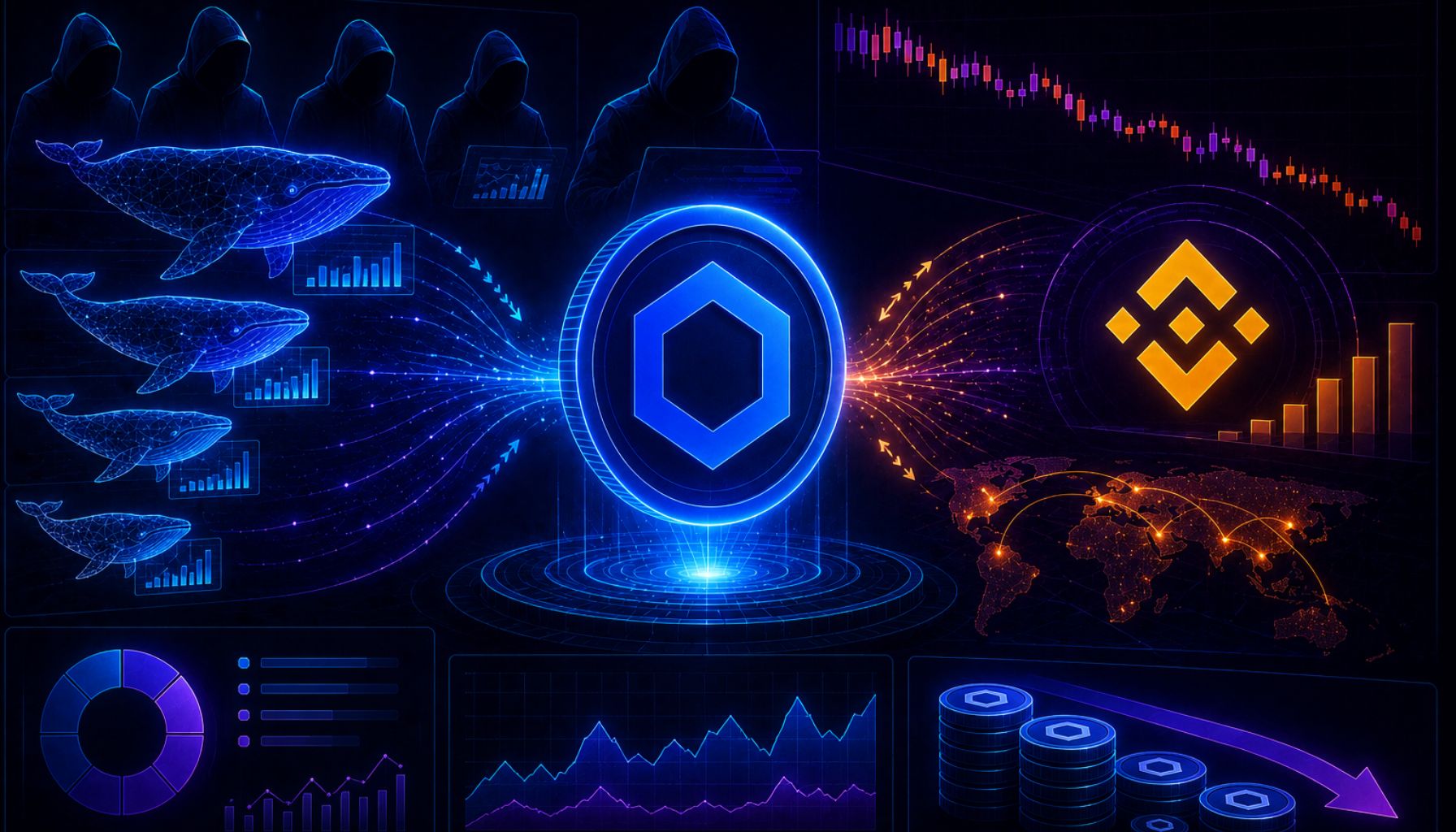
Senator Steve Daines backs Chainlink ahead of Link event

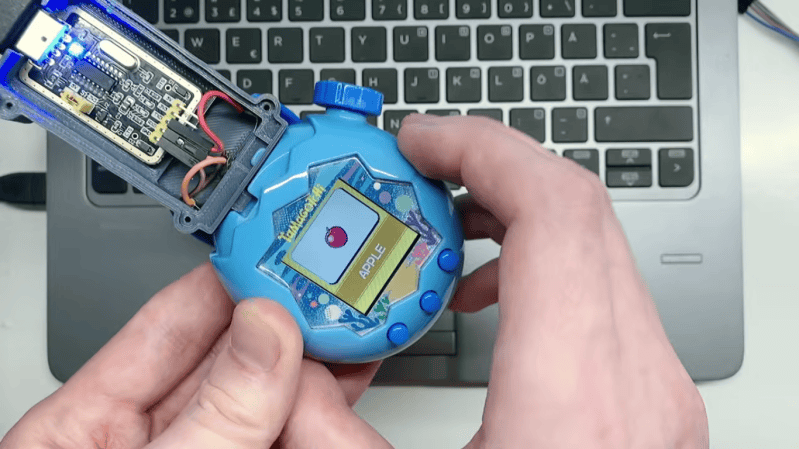
Although not technically the first virtual pet, the Tamagotchi handhelds certainly popularized the idea and made it a worldwide phenomenon. In the late 90s it was hard to go out in public and not see them dangling from backpacks and belt loops. They turned out to be more than a passing fad, too. There have been Tamagotchis in various forms since then, and one of the latest, the Tamagotchi Paradise, is uniquely hackable thanks to this custom UART interface.
The build starts with a simple and inexpensive CH340G UART adapter with a built-in USB interface. A custom 3D printed enclosure is used to house the adapter and also help to expose the interface to the Tamagotchi. This is done by wiring three pins to nickel strips, which are threaded through slits in the case and looped back around to create a pogo-style adapter for the Tamagotchi’s custom dock. Normally this would be used to link to other Tamagotchis, but in this case the USB-to-UART adapter mimics it, allowing for all kinds of in-game shenanigans. The project’s creator [Squalius] shows it off by connecting it directly to a browser tool in Google Chrome.
Not only that, but this can also be used to modify the software running on the handheld entirely, with the video showing demos playing not only Super Mario but also DOOM (of course). This isn’t too surprising given that these games are built with modern 32-bit ARM microcontrollers. For the 90s purists, though, it probably won’t surprise anyone to know that these devices have been the subject of various hacks almost since they came out.
ASELSAN, Türkiye’s largest defense electronics company, ended the third quarter of 2026 with a record order backlog of $30.7 billion, after adding $7.5 billion in a single quarter and passing the $30 billion mark for the first time in its history. The Ankara-based company reported its results for the first nine months of the year […]
Two satellites from Russia’s Rassvet broadband constellation, the country’s answer to SpaceX’s Starlink, are expected to fall back into the atmosphere and burn up within the next day or two after failing to raise their orbits, Harvard-Smithsonian astrophysicist and satellite tracker Jonathan McDowell said, while most of the other Rassvet-3 satellites have now settled into […]
Bitcoin Magazine

Blink Wallet Adds Inactivity Fee to Custodial Accounts, Accelerating Migration to Self Custody
Blink Wallet announced a new $1 a month inactivity fee, aimed at custodial accounts that have not logged in to the app in over 12 months.
The decision was put into motion in early September via a Terms of Service change, with push notifications sent out to inactive users, and the first charge made by mid-October. Fees charged will be refunded if users log back in within 12 months, according to a blog post published by the company.
The fee, which only affects custodial accounts, serves to relieve the burden of inactive accounts on the startup. According to the announcement, these inactive accounts have ongoing costs such as “ledger and infrastructure, retention of verification records, compliance monitoring and reporting, and support claims.” These costs are in turn borne by active user accounts via normal in-app transaction fees.
A source familiar with the matter told Bitcoin Magazine that around a hundred thousand such accounts fit the inactive category at the time of the first fee charge, with an aggregate balance of over $800,000. The first fee pulled in about $45,000, mostly from accounts that had dust amounts of bitcoin inactive for over a year. None of these figures could be independently verified.
Blink Wallet may be one of the most popular Bitcoin wallets in the world, favored by advocates of Bitcoin Circular Economies across Latin America and Africa. Designed for an audience not already familiar with Bitcoin, the wallet first came to prominence as the ‘Bitcoin Beach Wallet’. It grew out of El Salvador’s initial wave of Bitcoin adoption, choosing design principles similar to Wallet of Satoshi, which had seen viral success in earlier years. The wallet was initially custodial and oriented around fast Lightning payments, with the innovative option of hedging value in USD via the Stable Sats feature.
Historically, custodial wallets have seen accelerated early growth compared to their non-custodial counterparts. It is arguably due to the friction introduced by non-custodial setup steps like the 12-word backup, but also by the lack of key material under the company’s control, which enabled features like the first generation of Stable Sats in the first place.
Because of the smooth interface and user experience Blink offered, it quickly became a favorite for evangelists to recommend. One particular evangelist allegedly got everyone he met to download the app and gave them about $1 worth of bitcoin. Some of those new users might have stuck around. But events like today’s Blink announcement put into question the effectiveness of such evangelism strategies, given that they may just be turned into dormant dust accounts.
Blink was eventually spun off from Galoy Inc its founding firm, to be run by Lukas Duczko and a new board of directors. The announcement published in October 2024 stated that Duczko now had a controlling stake in the company, while Galoy continued to be a service provider and minority stakeholder. The Bitcoin Beach Fund was also established at the time, seeded with Blink shares as part of the transaction. The wallet once headquartered in El Salvador is now based in the free economic zone of Roatán, Honduras, though it maintains corporate entities in El Salvador and the United States.
Despite its success gaining international adoption among Bitcoin circular economies, evangelists and supporters of the Lightning Network, the company has also faced significant headwinds. And not just Blink but custodial wallets in general, like Wallet of Satoshi, Alby, and Blue Wallet, all phased out their custodial wallet offerings in recent years, pivoting to self custody infrastructure like Spark. The tide began to rise with the EU’s MiCA regulations, which sought licensing and KYC compliance standards from custodians that these wallets simply could not provide.
On the U.S. side of the pond, the Samourai Wallet case and the broader war on crypto by the Biden administration pushed wallet operators outside of the country, with notable examples like Phoenix Wallet, Wallet of Satoshi, Wasabi Wallet, and Blink, limiting or altogether exiting American app stores. The legal uncertainty took place under the shadow of the Samourai Wallet and Tornado Cash cases, which the industry read as threats to user privacy and certainly to self custody wallets, let alone custodial ones.
Fast forward a couple of years and Google Play decided to enforce EU and American laws by limiting Play Store distribution of wallets or exchange apps that do not hold licenses in corresponding jurisdictions. The viral nature and stunningly easy-to-use apps that were possible thanks to custodial Lightning had, in a matter of 2 years, become a liability. It was time to pivot to self custody.
By 2025, Blink’s counterparts already offered self custody options; WOS was beginning to push their Spark-powered wallet, with 2027 as the deadline for custody wallet users to migrate. Alby had shipped a feature to connect self-hosted Lightning nodes to its hub and shut down its custodial Lightning option. Blue wallet had long ago shut down its custodial offer and had since doubled down on becoming an onchain wallet for new and power users alike.
Unlike its competitors, however, Blink’s biggest differentiator is the Stable Sats feature, which likely required a significant redesign to fit the limitations of self custody. It wasn’t until June 2026 that Blink launched its Spark supported self custodial wallet, a big move and one that its user base is still adapting to.
To make things worse, on September 19th, hackers managed to withdraw 6.61 bitcoins from custodial wallet users via compromised admin tools. The company’s backers quickly announced they would make the affected users whole, and the bleeding was stopped, but the blow nevertheless must have shaken the company.
Remarkably, despite some of the most difficult years for the Bitcoin wallet industry, Blink wallet has so far not just survived but stayed in the game. It has retained the slick design that made it so popular, while delivering advanced features that users in developing nations need, such as dollar-denominated value at the speed of lightning, meanwhile pivoting to self custody. The inactivity fee is but an inevitable step further down that transition. Perhaps having teams like Blink’s working on self custody will yield a new crop of sovereign technologies, its fruits badly needed by a sector of the industry battered by regulators and now AI cyber threats.
This post Blink Wallet Adds Inactivity Fee to Custodial Accounts, Accelerating Migration to Self Custody first appeared on Bitcoin Magazine and is written by Juan Galt.
Elon Musk accused Ukraine of violating Starlink terms of service by using it for lethal drone strikes.
Musk said Ukraine used the Starlink commercial service for offensive drone strikes. Musk's comment on Saturday came after SpaceX imposed a restriction preventing Ukraine from using the satellite technology on drones flying above certain speeds.
One current and one former Ukraine official denied Musk's accusation and said previous limits imposed by SpaceX already prevented Ukraine's military from using Starlink in the way Musk described. Ukraine officials have accused Musk of throttling their use of Starshield, the military variant of Starlink that Ukraine has access to through a deal with the US government.


© Dmytro Smolienko/Ukrinform/Future Publishing via Getty Images
Ukraine says Starlink service has been restored after days of disruption. The incident highlights why enterprises need tested, independent backup systems.
The post Starlink Restrictions Explained: What Enterprises Can Learn appeared first on TechRepublic.
Ukraine says Starlink service has been restored after days of disruption. The incident highlights why enterprises need tested, independent backup systems.
The post Starlink Restrictions Explained: What Enterprises Can Learn appeared first on TechRepublic.
Ukraine has rejected Elon Musk’s claim that its military broke Starlink’s terms of service by using the civilian satellite network for offensive drone strikes, with a presidential adviser saying that restrictions SpaceX placed on the service in February make such use physically impossible. Musk made the accusation on X on Oct. 24, the same day […] TL;DR: Chainlink and LG CNS are partnering on oracle and cross-chain infrastructure aimed at South Korea’s financial institutions; the announcement is a partnership, not a completed nationwide deployment.
South Korea's next wave of digital-asset infrastructure may be built less around speculative trading apps and more around the plumbing banks need to move real money and securities. That is the market Chainlink and LG CNS are pursuing with a partnership announced on Thursday.
LG CNS, the technology-services arm of the LG group, will work with Chainlink on connecting digital-asset platforms to verified external data and other blockchain networks. The arrangement is directed at institutional systems rather than a new consumer token sale or a stablecoin being launched immediately.
An institution moving a claim on a bank deposit or a security onto a blockchain needs more than a place to record ownership. It needs reliable pricing, identity and compliance processes, instructions from existing banking systems and mechanisms for transferring assets across networks without losing the underlying obligations.
That is where oracles and cross-chain messaging come in. Chainlink supplies tools designed to connect smart contracts to data and communicate between networks. LG CNS brings software integration experience and financial-sector relationships within South Korea. The companies say they plan to combine those strengths in institutional digital-asset products.
The partnership also points to LG CNS's role in the Bank of Korea's Project Hangang experimentation. In the context of that work, the relevant question is how commercial banks and infrastructure providers could build services around tokenized money. It is not evidence that South Korea has adopted a single national digital currency standard.
The announcement cites large figures for Korean participation in crypto markets, but those market-size estimates are company-supplied context. They do not establish revenue from this particular agreement, nor do they guarantee that banks will adopt the products.
Success will be measured in completed integrations, actual financial-institution customers and transaction flows. Each comes with operational hurdles: regulatory permissions, data quality, network availability and the willingness of banks to rely on external technology providers for critical infrastructure.
For Chainlink, the agreement offers another route into traditional financial technology beyond decentralized finance. For LG CNS, it is an opportunity to offer Korean institutions blockchain connectivity without asking them to build every component from scratch.
There is an important distinction between announcing a partnership and processing institutional transactions at scale. Thursday's news establishes the former. The latter remains the test.
Source: www.prnewswire.com original announcement or data.
Related Reading: smart contracts; tokenized assets; stablecoins.
Written by the News Desk and edited by Samuel Rae.
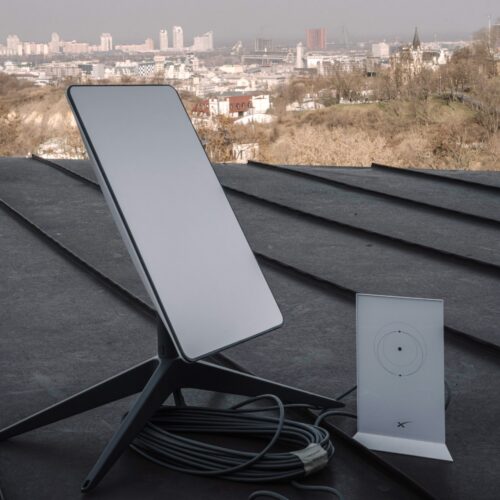
Elon Musk’s Starlink satellite service has played a pivotal role in supporting Ukraine’s successful resistance to Russia’s full-scale invasion for years. But with Starlink having become increasingly unreliable due to Musk’s political inclinations and the latest surprise disruptions to service in Ukraine, the Ukrainians and Europe as a whole are now facing urgent questions about how to move forward without it.
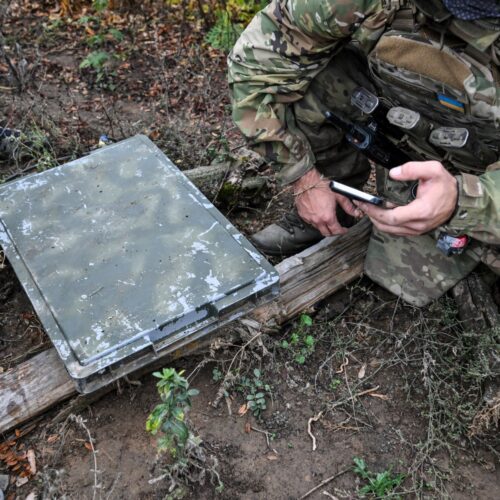
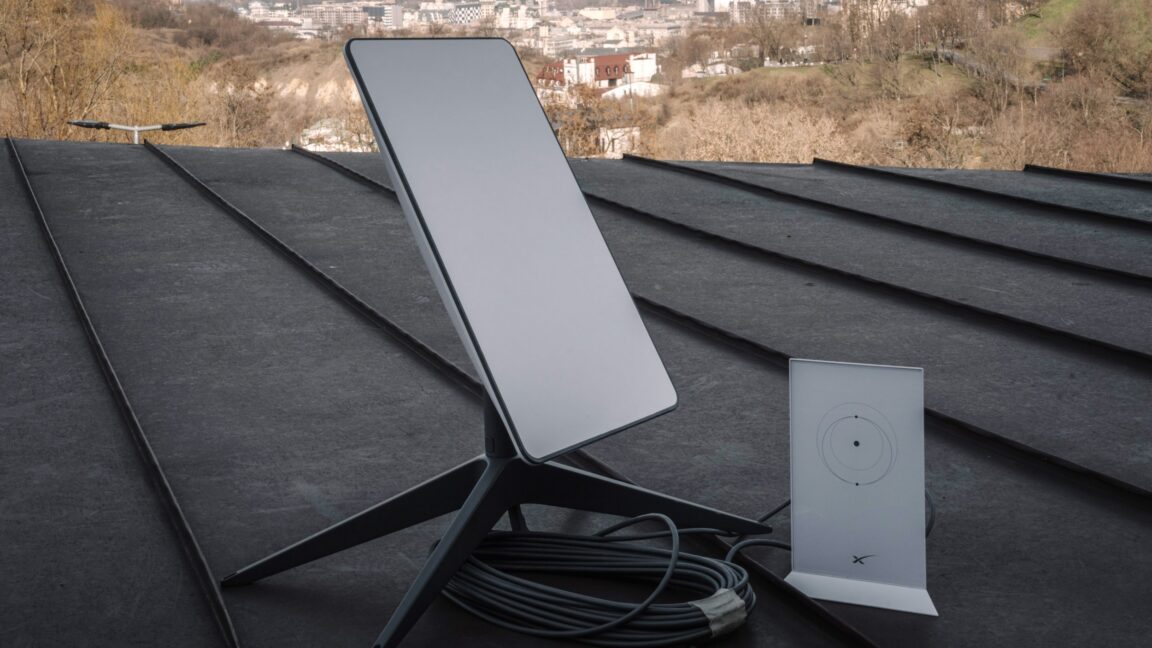
As the world’s largest communications satellite network, Starlink can typically support high-speed Internet and data streams for any user or vehicle equipped with a relatively compact Starlink terminal. This has enabled Ukraine to maintain vital communications for both civilian purposes and military operations—and has also expanded the Ukrainian military’s capability to remotely control or provide guidance to drones used in both air defense against Russian attacks and for striking back at Russian targets.
“Starlink currently offers some of the best satellite coverage available, with virtually no competitors when you consider the combination of cost, availability, and ease of use,” according to the head of hardware R&D at the Ukrainian defense company BlueBird Tech, who provided comments to Ars anonymously for security reasons. “In practical terms, the main limitation is the need to position the antenna so it can receive signals from the satellites.”


© Dmytro Smolienko/Ukrinform/NurPhoto via Getty Images
Amazon introduces five Blink security cameras with 4K video, long-range wireless connectivity, and new viewing features. Compare prices and key limitations.
The post Amazon’s New Blink Cameras Offer 4K Video and Up to 7,000 Feet of Wireless Range appeared first on TechRepublic.
Amazon introduces five Blink security cameras with 4K video, long-range wireless connectivity, and new viewing features. Compare prices and key limitations.
The post Amazon’s New Blink Cameras Offer 4K Video and Up to 7,000 Feet of Wireless Range appeared first on TechRepublic.
TL;DR: Archax has adopted Chainlink Data Streams to supply pricing information for GOVY, its tokenised US Treasury product, as it develops collateral use cases.
Putting Treasury bills on a blockchain is only the beginning. If an institution wants to borrow against them or use them as margin in an automated market, the software also needs reliable, timely information about their value.
That is the gap Archax is addressing with Chainlink. The regulated digital asset platform said it has adopted Chainlink Data Streams for GOVY, its continuously rolling tokenised US Treasury product. The aim is to supply pricing data to support lending, treasury management and other on-chain collateral applications.
GOVY is designed to provide exposure to short-dated US government bills, with the underlying securities held in regulated custody. Archax describes features including transfers between approved wallets and subscriptions or redemptions using supported stablecoins.
Those details matter because a tokenised security still needs rules around custody, eligibility and price discovery. A faster oracle feed cannot remove credit, liquidity or operational risk, and a proposed DeFi integration still has to be approved by individual markets. What it can do is make the underlying asset’s price usable by programmable financial systems. That is a practical step towards institutions treating tokenised Treasuries as working collateral, not simply a digital certificate.
Written by the News Desk and edited by Samuel Rae.


A Wall Street Journal report said SpaceX CEO Elon Musk ordered the Starlink throttling that blindsided Ukraine's air assault forces last week, despite Musk's claim that all decisions on the military version of Starlink are made by the US military and President Trump.
Trump denied ordering the restrictions. While Musk may have spoken to Trump and administration officials before the decision, The Wall Street Journal reported yesterday that Musk made the final call. The decision came after both Musk and Trump criticized Ukraine for attacking Russian diesel refineries.
"Elon Musk ordered the slowdown of a military-grade version of Starlink relied on by Ukraine, a decision that sparked panic in Kyiv and confusion inside the Trump administration," the WSJ wrote, citing unnamed US officials and people familiar with the matter. The report said that "Musk capped the speeds at which Ukrainian hardware could stay connected to the satellite-based network... rendering some offensive drones and interceptor drones virtually useless."


© Getty Images | Bloomberg
In its current iteration, SpaceX is largely a data company seeking to provide enormous amounts of compute for artificial intelligence. During an earnings call on Tuesday afternoon, company officials spent much of their time discussing ambitious plans to roll out up to 10 GW of compute in 2027—on the ground.
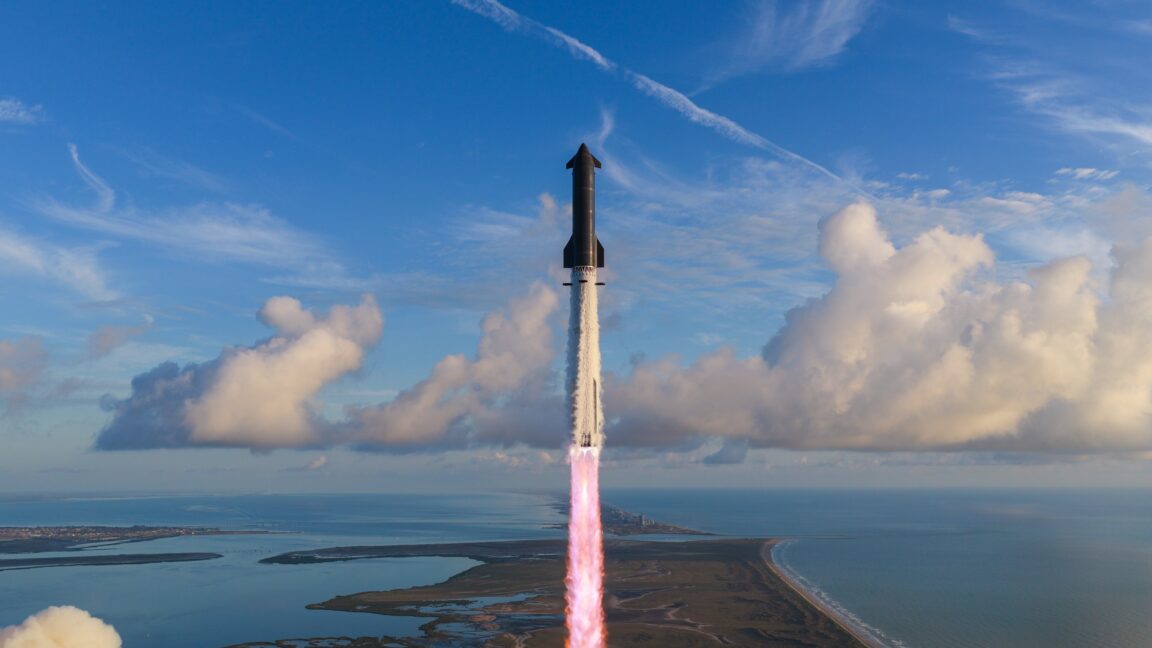
Gone are the days of aspirational talk about sending humans to Mars and settling the red planet. Now it is almost all about artificial intelligence and the data needed to support its expansion. However, the company's long-term ambitions to provide data services from space, initially with the Starlink Internet constellation and eventually through the "Starmind" data center constellation, still rely on an actual rocket.
That would be the Starship vehicle, and during the earnings call, SpaceX founder Elon Musk and the company's president and chief operating officer, Gwynne Shotwell, provided new performance targets for the vehicle.


© SpaceX
TP-Link yesterday announced plans to assemble Wi-Fi routers in the US, as the company attempts to get the Trump administration's approval to sell its newest routers to American consumers.
The timing is uncertain, as TP-Link's press release said it expects US-based assembly to begin "as early as" 2027. TP-Link's application to sell new routers in the US could be rejected by the Trump administration or remain pending long enough to push the US-based assembly to 2028.
"Pending US regulatory approval, TP-Link expects domestic assembly of its groundbreaking Wi-Fi 8 home networking product line to begin as early as next year," the company said. TP-Link said it signed a Letter of Intent with US company Keytronic, which agreed "to become a primary domestic manufacturing partner for TP-Link, supporting assembly of the company’s advanced networking portfolio in Corinth, Mississippi."


© TP-Link