Reading view

There are new articles available, click to refresh the page.

From OK grades to Dartmouth Hall of Fame: Remitly’s Matt Oppenheimer on his ‘strengths and shadows’

Matt Oppenheimer, second from right, at his Dartmouth College Entrepreneur Hall of Fame induction ceremony in San Francisco on Thursday. The Remitly co-founder is joined by school friends and dignitaries, from left, Jeff CroweAndrea Reisman JohnsonTrevor JensenMaia Josebachvili, Dartmouth President Sian Leah Beilock, and Jamie Coughlin. (Photo courtesy of Matt Oppenheimer)

Nearly 25 years after enrolling at Dartmouth College to study psychology and embarking on a path that led him to co-found Seattle fintech giant Remitly, Matt Oppenheimer has been inducted into the Ivy League school’s Entrepreneur Hall of Fame.

The honor, presented Thursday night in San Francisco as part of Dartmouth’s annual Entrepreneurs Forum, comes seven months after Oppenheimer stepped down as Remitly’s long-time CEO to become chairman of the board.

Created by the Magnuson Center for Entrepreneurship, the Hall of Fame honors Dartmouth alumni who have made lasting positive impacts through their ventures. Oppenheimer joins a select group of honorees with Northwest ties — including Smartsheet co-founders Brent Frei and Mark Mader — and used his acceptance remarks to express deep gratitude to the admissions officers who took a chance on a kid from Boise, Idaho, with “OK grades” and “below average SAT scores.”

Speaking with GeekWire ahead of the event, Oppenheimer recalled how his early college years studying social psychology helped shape his understanding of business.

“I think a lot of business and entrepreneurship does come down to interpersonal dynamics,” Oppenheimer said. “I am a people person. But how do you find what I call career-market fit when it comes to really understanding and connecting with people? That’s ultimately my strength, but it was really hard to define earlier in my career.”

After graduating from Dartmouth in 2005, Oppenheimer earned an MBA from Harvard Business School and worked in Kenya for Barclays Bank, where seeing families hit with steep fees on cross-border money transfers inspired him to start Remitly in 2011.

He served as CEO for nearly 15 years, guiding the company through its 2021 NASDAQ IPO and building it into a fintech powerhouse serving over 9 million customers across more than 170 countries before transitioning to chairman in February.

In his acceptance speech on Thursday, Oppenheimer focused on a central philosophy he calls leading authentically through “towering strengths and shadows.”

“Each of us has a few towering strengths — things we are in the top 10% of the world at doing. Not good at. Towering,” he said. “And almost always, that tower casts a shadow. The same trait that makes you exceptional at one thing quietly makes you a liability at another. They aren’t two traits. They’re one trait, seen from two sides.”

Matt Oppenheimer was introduced in San Francisco on Thursday by his Dartmouth classmates, Maia Josebachvili, left, and Trevor Jensen, right. (Photo courtesy of Matt Oppenheimer)

He pointed to his own extreme tenacity as an example, noting how it helped him build Remitly through years of investor rejections and early product stumbles, but how it also had a darker side.

“That same tenacity can lock onto things that are unhealthy, or unchangeable, or both,” Oppenheimer shared, candidly discussing his personal experiences with OCD-related anxiety and depression. “This isn’t a character flaw sitting next to my strengths. It is the shadow of my greatest strength, from the same place. Which means it’s something to work with … harness the tower, manage the shadow … rather than something to be ashamed of.”

Seven months into his transition from operational CEO to board chairman, Oppenheimer says the shift has felt surprisingly comfortable. Free from managing daily execution, he now channels that same intensity into coaching current leaders and serving on corporate boards.

“I have so much trust in Sebastian [Gunningham], our CEO, and it’s super exciting to support him in a chair capacity,” Oppenheimer told GeekWire. “I get to share reflections on the journey, mentor, and coach. I didn’t know that would be the case, because you hear so many examples of founder-CEOs who transition and have a really hard time with it.”

That mentorship extends to Seattle’s broader startup community, where Oppenheimer is an active member of Foundations, a collective of local tech founders and AI leaders. When advising early stage entrepreneurs, he urges them to remain hyper-focused on solving a single, deep customer problem rather than spreading themselves thin.

And while AI has vastly accelerated product development, Oppenheimer notes that the core fundamentals of building a business haven’t changed.

“With fintech, you still have to build the trust, get the licensing, and build out the compliance infrastructure and banking relationships,” he said. “The actual building and deployment of product got a lot faster, but if you don’t have great judgment, you can go down the wrong path pretty quickly.”

Looking back 25 years later, Oppenheimer noted that the Dartmouth admissions officers who took a chance on him didn’t look past his test scores by accident — they told him years later that they were drawn to his personal qualities and humanity.

“Two strangers in an office in Hanover found my tower before I had any idea what it was, and then they handed me the place to build on it,” Oppenheimer said in his closing remarks. “That isn’t a debt. It’s a privilege. And the only sensible thing to do with a privilege is use it well.”

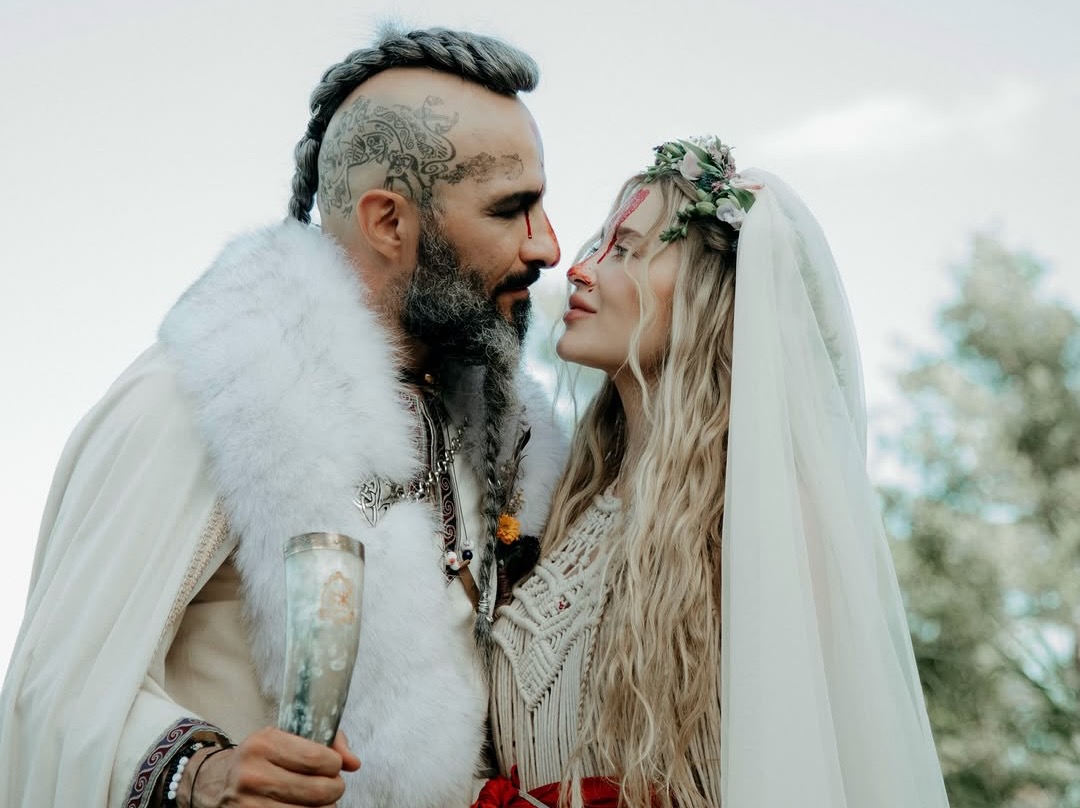
‘100% real, no AI’: Watch video from Code.org founder Hadi Partovi’s Viking-inspired wedding

Hadi Partovi, left and Becca Oystila during their wedding in a recreated/historic Viking village in Sweden. (Tommy Agriodimas Photo)

Maybe Hadi Partovi could use his sword or hammer to slay AI slop.

The co-founder of CodeAI, the computer science education platform that rebranded from Code.org earlier this year, is sharing video and images from his summer wedding, and it’s “100% real, no AI,” he says in a LinkedIn post.

It’s a smart disclaimer to add on social media, because the Viking-themed wedding to Becca Oystila appears unbelievable enough to be considered AI-generated — especially in an age where every other thing we scroll past is presumably touched by the tech.

Partovi told GeekWire it’s a statement about both AI’s advances and the work of Booka, the marketplace of beauty and events professionals started by Oystila.

“AI has gotten so good that people can hardly tell the difference from reality,” Partovi said via email. “And meanwhile, the Booka team delivers cinema-quality looks, which is why they have been chosen by Billboard, Soho House, and the Gold Gala as the beauty partner of choice for events.”

To build out the July nuptials in Oystila’s native Sweden, the couple transformed the historic island of Birka — home to the remains of an authentic Viking settlement — into a fully functioning village, circa 826 A.D., according to The Information.

Partovi said the setup featured 200 “villagers” acting as merchants, armorers, goat herders, and a blacksmith, alongside Swedish Viking experts and actors from Netflix’s “The Last Kingdom.” Guests were given custom hand-aged gold and silver coins — which Partovi personally aged himself — to spend on period attire, weapons, or jewelry throughout the island.

“Becca deserves the credit for suggesting a Viking theme,” Partovi said. “And once she said that, the rest of the story wrote itself. Of course the longships and the battle were my idea.”

To keep the immersive experience intact, the couple enforced a strict no-phones policy once guests stepped onto the island, which is a UNESCO World Heritage Site.

“Our goal was to make it the most authentic / immersive Viking experience created in history, and so the reason we had a phone library is because the Vikings didn’t have phones,” Partovi said. “We requested guests leave behind anything modern other than prescription glasses.”

Guests who didn’t dress authentically were provided alternate clothes. Professionals booked through Booka provided appropriate hair-braiding and face-painting. Some behind-the-scenes footage made this Instagram video.

When guests handed their phone in at the phone library, they received a Viking horn for drinking and a pouch of currency for use in the village. Partovi said even the few cameras on site were disguised for the sake of authenticity.

The guest list included prominent tech founders, executives, and venture capitalists, including Partovi’s twin brother and Neo CEO Ali Partovi; Rover co-founder Aaron Easterly; Sequoia Capital’s Alfred Lin; investor and former Snapchat executive Emily White; and Uber CEO Dara Khosrowshahi (Partovi’s cousin).

Hadi Partovi and Becca Oystila during their traditional Persian wedding ceremony in Stockholm, Sweden. (Tommy Agriodimas Photo)

Partovi and Oystila started dating in April 2024 and got engaged in August 2025.

Oystila is founder and CEO of Booka, a Los Angeles-based beauty platform that connects clients with vetted, top beauty professionals and provides them with tools to manage and grow their businesses. Oystila said the 2-year-old startup is now launching nationwide and bringing its events concept and corporate events to the public across the country.

The Viking wedding wasn’t the only event that weekend in July. A second, traditional Persian ceremony was held in the Hall of Mirrors at the Stockholm Grand Hotel.

“That ceremony was followed by a reception in the large Winter Garden decorated in the style of the ancient Persian capital of Persepolis, transitioning to the architecture from Isfahan and Shiraz, mixed with peacocks, fountains, and fires to celebrate Hadi’s Persian culture,” Oystila wrote on Instagram.

Partovi, who lives in Bellevue, Wash., founded Code.org in 2013 alongside his brother. Its mission is to expand computer science education to K-12 students, and in June the Seattle-based nonprofit announced its name change and that AI was replacing coding as the primary focus. Partovi is also CEO of Payam Music, a Bothell, Wash.-based piano school that he planned to expand nationally.

Asked whether he was considering keeping the braided mohawk hairstyle from his Viking look, which also included a skull “tattoo,” Partovi laughed and said no.

“My blue contact lenses and mohawk were for the day only,” he said. “I grew my beard out for six months for this!”

All a circuit board! Tech engineer tracks trains, ferries and more in real time with a post-layoff project

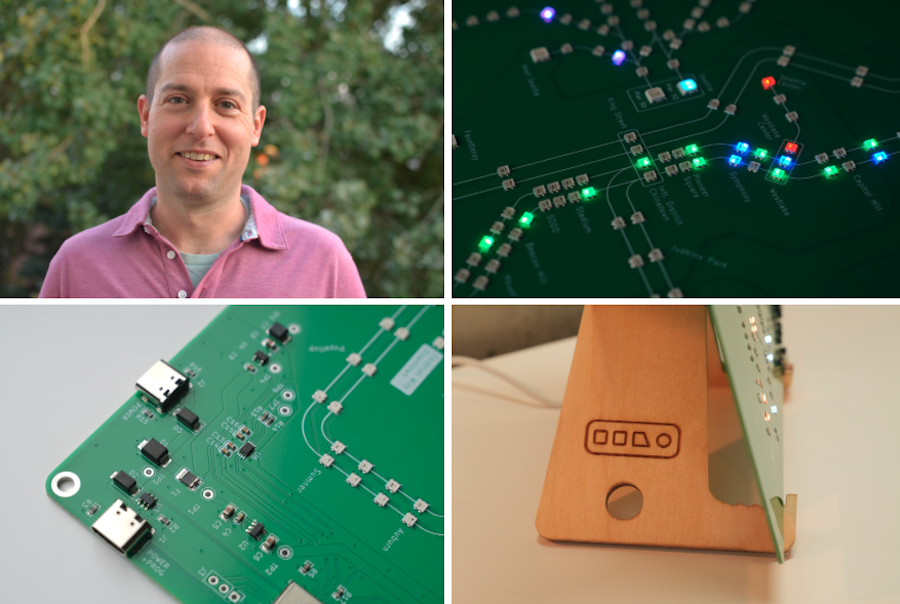
Seattle Transit Live, a circuit board map of Seattle-area trains, ferries and more. (Michael Benedict Photo)

When Sound Transit opened the light rail 2 Line across Lake Washington in March, software engineer Michael Benedict built a custom gift to mark the milestone for his transit-fanatic wife: a circuit board map of Seattle with tiny lights depicting moving trains.

Today, that personal birthday project has evolved into Seattle Transit Live, an interactive LED map that tracks Puget Sound-area light rail, trains, ferries, and the water taxi in real time using public transit data.

The extra time to indulge in such a detailed build came after Benedict was laid off from Amazon — where he worked as an engineer for a little over three years. Rather than rushing into another full-time corporate role, he picked up some freelancing and gave himself room to dive into CAD design, custom hardware and the prototyping process.

“I put way more time than is ever going to be economic into this,” Benedict told GeekWire. “I really kind of luxuriated in it because I didn’t have a job and I could just go deep.”

Designed on a custom fiberglass circuit board with etched copper detailing Seattle-area waterways, the $219 device plugs into Wi-Fi to display live positions of vehicles like Sound Transit trains, Washington State Ferries, the Sounder, and Monorail.

Michael Benedict is a software engineer and creator of Seattle Transit Live. The $219 interactive LED map tracks transit across the Puget Sound region and comes with a custom-built stand. (Michael Benedict Photos)

After Benedict posted an early prototype on Reddit and saw an enthusiastic response from local transit geeks asking to buy one, he refined the design and turned the side project into a full production run.

To power the display, the board uses an ambient light sensor to adjust to room brightness and features three distinct software modes. Alongside the real-time data mode, users can switch to a schedule replay mode or a fast-forward option that cycles through a full 24-hour transit schedule at 400x speed — letting users watch a day’s worth of regional traffic zip across the board in minutes.

The 8.6-by-11.8-inch boards are pretty jammed with assorted routes, but we had to ask if there would ever be room for Sound Transit’s eternally delayed Ballard neighborhood line.

“If I’m still making transit maps by the time they put Ballard in,” Benedict laughed, “I’m going to consider that a huge win all around.”

While circuit board maps and LED transit art have been built for transit networks in major cities like New York and Tokyo, Benedict sees Seattle’s unique geography and growing light rail as a compelling canvas for the concept. The board isn’t intended to replace trip-planning apps like OneBusAway, but rather to serve as a piece of functional art that captures the living movement of the region in a physical medium. And it’s all open-source.

The printed circuit boards are manufactured in Shenzhen, China — a standard approach for small-batch electronics — but Benedict wanted to keep a key part of the production local. He partnered with Oxbow Fabrication in Seattle’s Georgetown neighborhood to CNC-machine custom wooden stands, ensuring each board ships with a locally made mount.

The initial run of 50 pre-orders sold out quickly, prompting Benedict to order another 150 units to carry him through the end of the year. And going all-in on an independent hardware project has come with its own brand of founder anxiety.

“Putting 75,000 LEDs on your personal credit card is enough to make you think, ‘Maybe I should send some emails,'” he laughed.

Benedict recently showcased the project at the Seattle Design Festival, and he’s considering potential retail establishments in the city where offering such a niche piece might make sense — such as the gift shop at the Seattle Art Museum.

Beyond Amazon, Benedict’s tech career has included data science roles at 98point6 and Modernist Cuisine. Originally from Queens, N.Y., his embrace of the Pacific Northwest has been accentuated by his hardware project. Living next to the new Judkins Park station for the 2 Line, with a front-row seat to the region’s evolving transit landscape, has helped, too.

“Transit is just a really cool subject matter for it,” Benedict said. “It’s on a schedule, the data’s there, and it feels very Seattle — how the boats and trains move around.”

New Seahawks co-owner with deep Seattle tech roots says, ‘I’m the 12th man … I want to represent that’

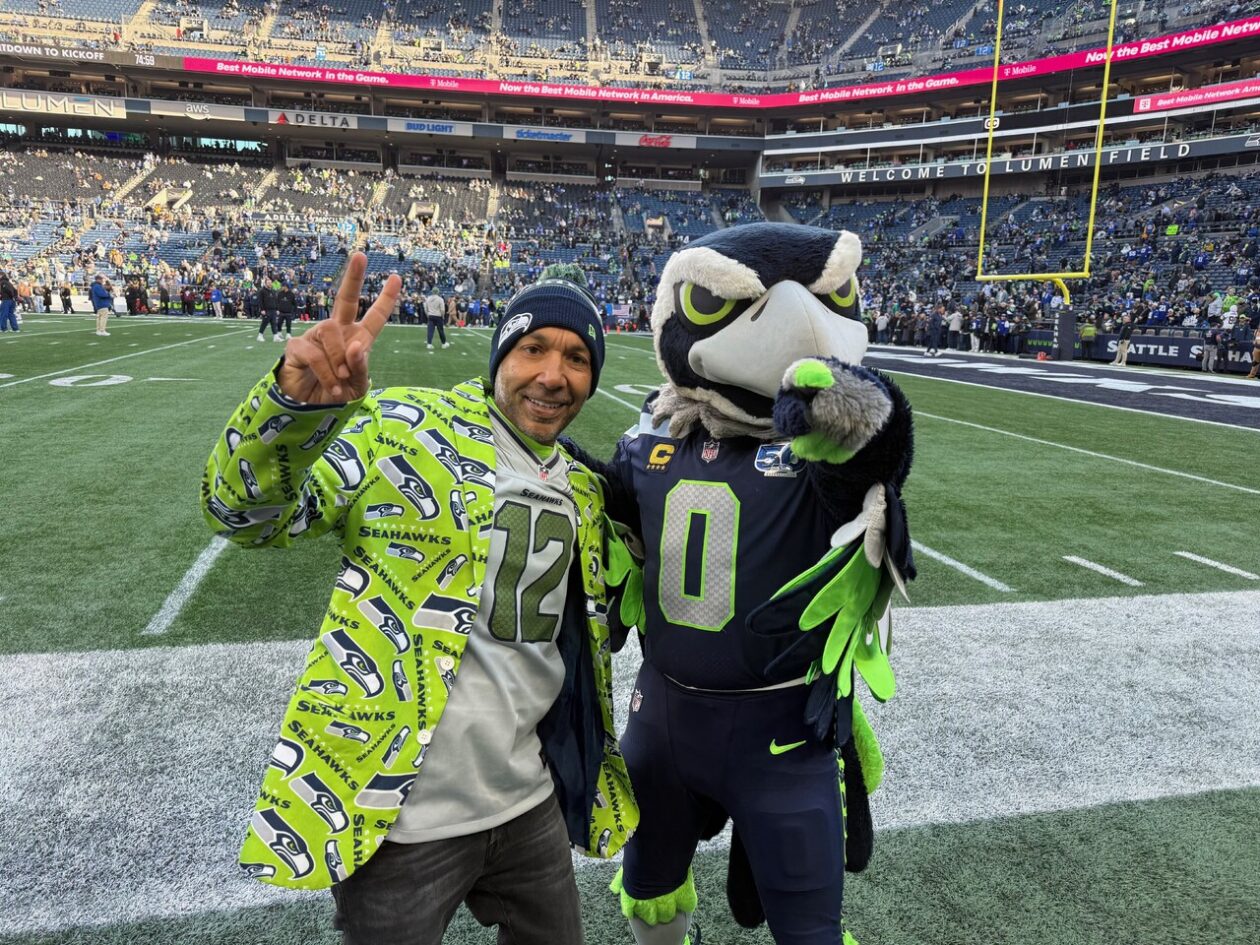
Sunny Gupta and the Seattle Seahawks mascot Blitz during a game at Lumen Field. (Photo courtesy of Sunny Gupta)

Sunny Gupta has been a diehard Seattle Seahawks fan for almost 20 years, hosting tailgates and sitting in the exact same club-level seats with his family and friends since 2007. Now, the longtime Seattle tech entrepreneur is taking his place in the franchise’s new ownership group as a self-described “fan No. 1.”

With the sale of the team to the family of Silicon Valley billionaire investor Vinod Khosla finalized on Thursday, Gupta’s name appeared on a newly revealed list of co-owners. Nader Naini, managing partner at Seattle-based healthcare private equity firm Frazier Healthcare Partners, is also among the group.

For Gupta, it was an opportunity he couldn’t pass up — and a dream come true.

“I would have never considered investing or being in ownership in sports other than the Seahawks,” Gupta told GeekWire in an interview following Thursday’s announcement. “This is a dream come true of something I love so much. The city I love so much, fan base, the team.

“I’m the 12th man,” he added. “I want to represent that as a part of the ownership group.”

Gupta is best known in Pacific Northwest tech circles as the co-founder and former CEO of Bellevue-based enterprise software maker Apptio, which he guided through an IPO, a private equity buyout, and an eventual $4.6 billion sale to IBM in 2023. He recently served as executive chair at Smartsheet during its $8.4 billion acquisition, and earlier this summer launched his fourth venture-backed startup, an enterprise AI company called Thira, with $21 million in seed funding.

But fall Sundays are strictly about football for Gupta, who describes himself and his family as “complete supporters, rabid fans” since 2007. He estimates he’s missed two games in that time.

Together with his wife, son, and daughter, the family holds five season tickets. They’ve sat in the same seats alongside a tight-knit crew of friends for nearly two decades — and don’t plan to change things with the perks of ownership.

“When we were going through this, this was like the biggest debate in our family,” Gupta said. “We’ve never been suite owners. We like being in our club section behind the Seahawks sideline, and that’s where we love watching the game. All our friends are there … that’s our community.”

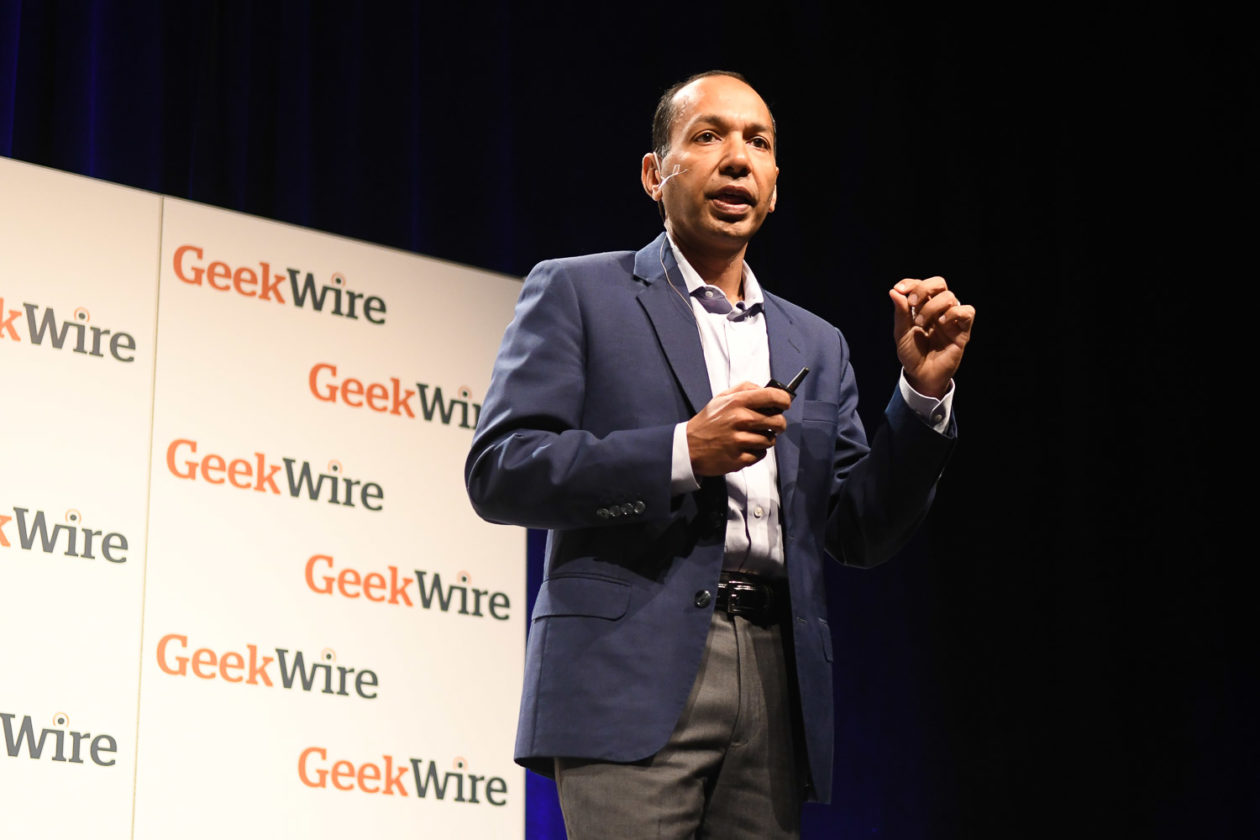
Sunny Gupta at GeekWire’s Cloud Tech Summit in 2017. (GeekWire File Photo)

While Gupta hasn’t directly partnered on a startup with Vinod Khosla, their paths have frequently crossed in venture capital circles. Over a career raising funds for four separate startups, Gupta noted Khosla Ventures was always on the “short list” of firms entrepreneurs hope to align with. Joining forces on the Seahawks deal presented an ideal way to combine those two worlds.

“Seattle is mostly a tech story and it’s a Seahawks story,” Gupta said. “The ability to have these two worlds combine is like a dream.”

Beyond his personal fandom, Gupta expressed strong confidence in the team’s current leadership. He noted that he caught up this week on the final episode of HBO’s Hard Knocks in anticipation of Thursday’s sale completion, coming away energized by the culture built by general manager John Schneider and second-year head coach Mike Macdonald.

“I was fired up last night on just what a great organization it is and the amazing job Mike and John do,” Gupta said. “The ability to continue the winning culture and just continue to win and support our fan base and community — that’s what it’s all about.”

Drone meets bobcat: Police find novel use for UAV after wild animal breaks into Seattle-area home

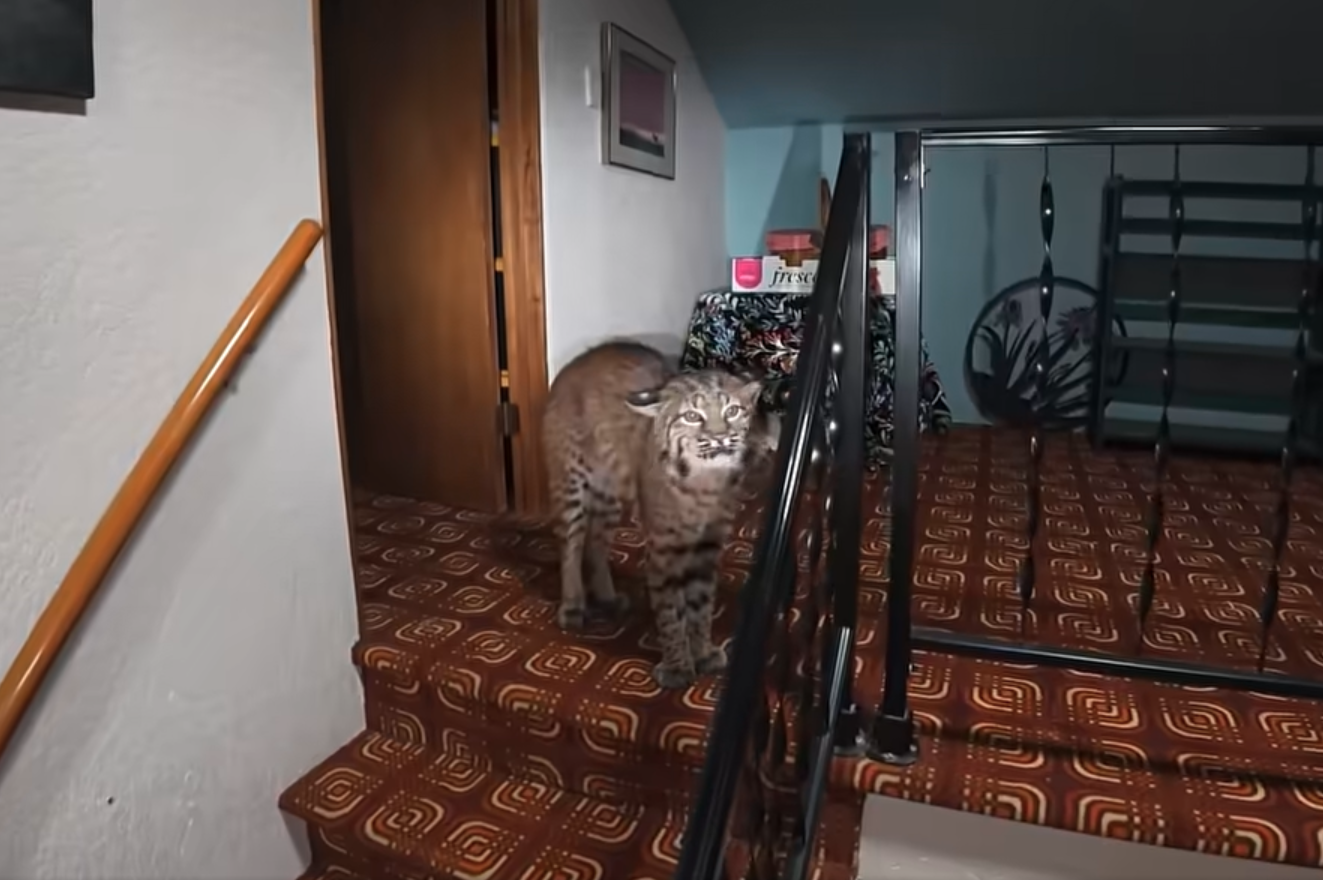
A bobcat inside a home as seen on video captured by a Kirkland Police Department drone. (Kirkland Police Department Image)

Most high-tech police drones are deployed for high-speed chases or search and rescue missions, but officers in Kirkland, Wash., recently launched one indoors for a wilder reason: tracking a live bobcat sitting at the top of a resident’s staircase.

According to a Kirkland Police Department Facebook post, the incident unfolded in the Moss Bay neighborhood last week after a resident heard loud banging inside their home and called 911 to report a break-in.

Responding officers expecting a human burglar were surprised to find the intruder was a bobcat.

In order to maintain a safe distance and manage the response, officers deployed an unmanned aircraft to monitor the cat’s movements inside the home.

The bobcat was corralled into an isolated room until the Washington Department of Fish and Wildlife arrived, according to the Facebook post. The bobcat was sedated and later released near Forbes Creek, close to the natural habitat where it was found.

The bobcat is believed to have climbed a tree and jumped through an open window to gain entry possibly drawn inside by the resident’s cat, which was later found unharmed.

The indoor operation highlights how Kirkland has expanded its use of aerial technology since launching a public safety drone program in 2022. Managed centrally across the city’s Police, Fire, and Public Works departments, the program maintains five aircraft and 17 FAA-licensed pilots specifically trained for tactical searches, search-and-rescue missions, and scene documentation.

Police recommend that if a bobcat enters your home, move people and pets away from the area and call 911.

❌