
❌

Reading view

There are new articles available, click to refresh the page.

Cowboy Space leases a huge facility in the Seattle area to produce hardware for orbital data centers
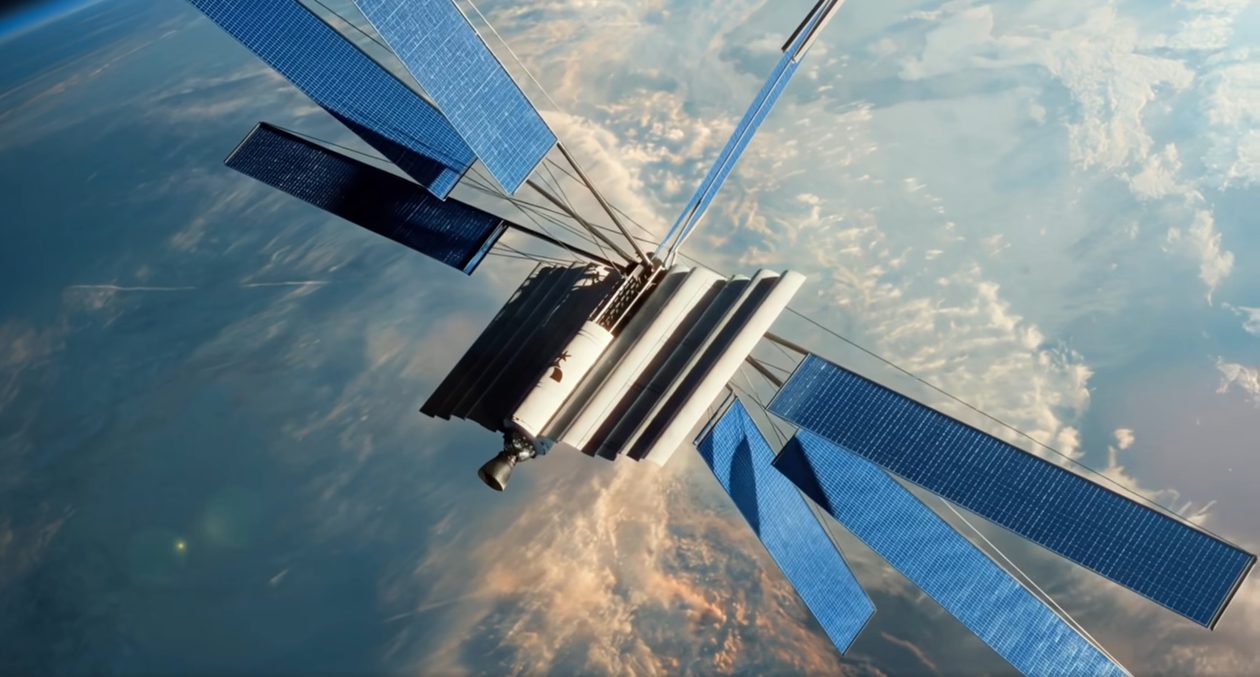
An artist’s conception shows one of Cowboy Space’s data centers in Earth orbit. (Cowboy Space via LinkedIn)

California-based Cowboy Space is leasing a 291,035-square-foot industrial facility in Kent, Wash., to support the production of hardware for its planned constellation of AI data center satellites, according to the company that arranged the lease.

β€œAccording to Newmark Research, the transaction is the largest industrial lease in the Puget Sound region year-to-date,” Newmark, the real estate broker for the deal, said in a news release. Newmark represented CenterPoint Properties, Cowboy’s new landlord.

The facility at 7650 S. 228th St. previously served as a Costco distribution and delivery center. β€œThis building was originally designed for large-scale logistics users, but Cowboy Space recognized the opportunity to reimagine it as a highly specialized production facility,” said Taylor Hoff, a vice chairman at Newmark’s office in Bellevue, Wash.

Newmark said Cowboy Space plans to convert the facility into a manufacturing operation supporting space and rocket development. The operation is expected to add 300 jobs, Newmark said. Cowboy is currently listing 46 Kent-based positions in its careers database.

The city of Kent, which is about 20 miles south of Seattle, is one of the hotspots for space companies in the Pacific Northwest. Boeing’s Kent Space Center remains active more than 50 years after building NASA’s Apollo moon rovers. The city also hosts Jeff Bezos’ Blue Origin space venture and Stoke Space, which was founded by Blue Origin alumni.

Cowboy Space, previously known as Aetherflux, plans to send its own rockets into low Earth orbit starting as early as 2028, with the upper stages outfitted to serve as solar-powered orbital data centers. The Stampede constellation is one of several planned projects aimed at getting around the land, power and water constraints that have made ground-based AI data centers increasingly controversial.

β€œWe are building what I call the last big clean-sheet launch vehicle in my lifetime, so it’s going to be a very big heavy-lift vehicle, and we’re working every day to bring it to reality,” Warren Lamont, Cowboy Space’s head of launch and propulsion, said this week in a LinkedIn video. Lamont, who previously worked for IonQ and Blue Origin, is one of the executives heading up Cowboy Space’s engineering hub in the Seattle area.

The company announced in May that it raised $275 million in a Series B funding round, in part to expand its production capability. Cowboy is collaborating with Nvidia to deploy the chip giant’s Nvidia Space-1 Vera Rubin Modules in orbit. And in July, it secured a deal to test its propulsion system at NASA’s Stennis Space Center in Mississippi.

β€œWe’re really excited to get into first engine hot-fire next year,” Lamont said.

Cowboy Space’s potential competitors include SpaceX, which wants to launch up to a million AI-processing satellites; and Redmond, Wash.-based Starcloud, which is setting up a production facility in Woodinville, Wash., and seeking authorization for up to 88,000 data center satellites.

We’ve reached out to Cowboy Space and will update this report with any new information.
From engineering to elected office: How a generation of Indian Americans is reshaping civic life

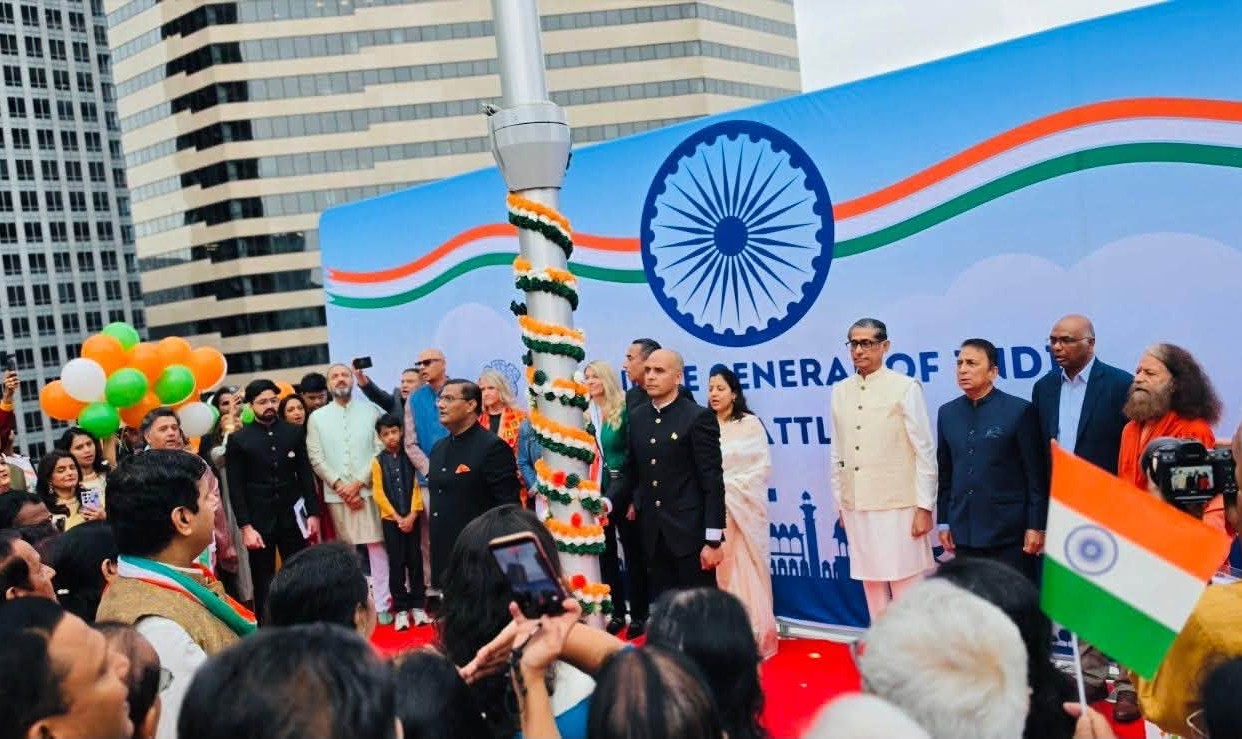
Consul General Prakash Gupta, left of the flagpole, joins elected officials, tech leaders and guests at the flag-raising for India’s 80th Independence Day in downtown Seattle on Aug. 15. (Consulate General of India Photo)

Note: Former Microsoft and AWS exec Harini Gokul serves on the Medina (Wash.) City Council.

Guest Opinion: Saturday, Aug. 15, was India’s 80th Independence Day. I marked it at the Indian Consulate in Seattle, at a celebration hosted by Consul General Prakash Gupta. The Indian American diaspora attended in full force, from community members to tech CEOs.

The event was open to the public, and the line to get in stretched over a block, a powerful, visible display of India’s economic success and soft power, right here in the Pacific Northwest.

But the more interesting story is not the celebration itself. It is who showed up to celebrate, and why.

Washington Gov. Bob Ferguson issued a statewide proclamation declaring Aug. 15 β€œIndia Day.” The mayors of Seattle, Bellevue, Kent, and SeaTac each signed their own municipal declarations, joined by the King County Council, which represents 39 cities across the region. U.S. Reps. Suzan DelBene and Marilyn Strickland sent official messages marking the occasion.

In person, state Sen. Tina Orwall was joined by the mayors of Redmond and Kent, alongside council members from cities including Redmond, Bothell, DuPont, and Medina.

What’s driving this goodwill? Β There are now 5.2 million Indian Americans in the U.S., about 1.6% of the population, according to the latest Census Bureau figures.

In King County alone, more than 100,000 residents are of Indian origin; statewide, the figure is roughly 200,000. In cities like Redmond and Kent, the Indian American community makes up a meaningful share of the tax base, the school population, and the local business community.

This is one of the reasons elected officials are showing up. Because their Indian American communities are central to their growth story, a constituency whose economic and civic weight has become too significant to ignore.

This momentum has been building in the region for decades. What has changed is the altitude. The same talent pool that once filled engineering organizations is now filling CEO offices, board seats, and, in smaller but growing numbers, elected office.

Business success is turning into civic and cultural presence. Many of our Indian American leaders started in tech. Satya Nadella has run Microsoft since 2014. Anand Eswaran has led Veeam since 2021. Srini Gopalan became CEO of T-Mobile in November 2025.

And increasingly, this leadership is branching out. You see the impact in venture capital, through investors like the late S. β€œSoma” Somasegar, who moved from Microsoft to Madrona; and in culture, through the Seattle Orcas cricket franchise, launched in 2023 by an investor group including Soma, Satya, Sanjay Parthasarathy, Samir Bodas, and Ashok Krishnamurthi to grow the sport nationally.

With the change in demographics, civic influence is increasing as well. Redmond, Kent, and Bothell all elected Indian-origin council members in the most recent cycle. I represent the trend myself, now serving in my second term as a city council member for Medina, Wash.

My story is an all too familiar one. I came to the U.S. as an engineer two decades ago and grew up alongside this region’s hyperscalers, first at Microsoft, then Amazon. Today I sit on corporate boards and work across private equity and venture, and I have the honor to represent the city I live in. I am one small example of how we are scaling our impact and giving back to our adopted home.

Eighty years after India’s independence, the story of its diaspora in our state has moved well past individual success stories. It’s measurable now, at scale, in the leadership of some of the most important companies in the state, and in its growing influence across culture, economics, and politics.

This is why everyone from the governor’s office to city halls across Washington has decided this partnership is worth investing in and worth showing up for.

❌