❌

Reading view

There are new articles available, click to refresh the page.

Keeping Old Wi-Fi Radios Alive With Stream Conversion
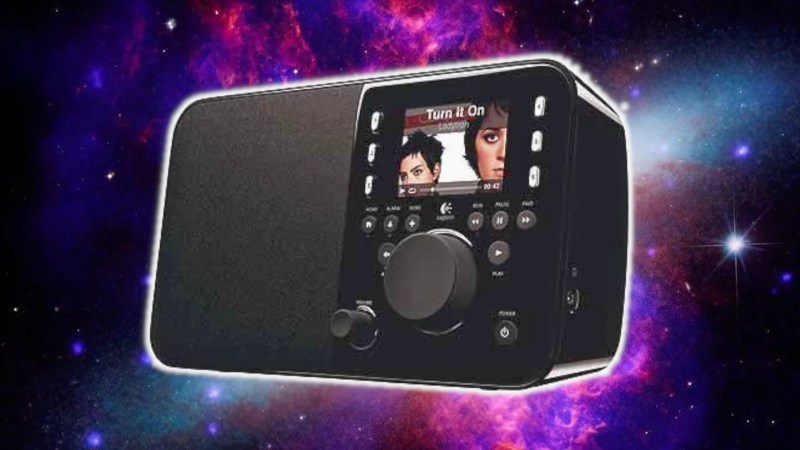
There are plenty of Wi-Fi radios out there that were built over the last two decades or so. However, many older models are now becoming less useful because many internet radio stations are switching to newer streaming formats that they don’t support. [Clifford Farrugia] has been working on a little project to save these appliances from the e-waste bin.

The HLS Radio Converter is the result of that work. It’s a small open-source tool that converts modern HTTP Live Streaming (HLS) protocol streams into regular old HTTP MP3 streams that older internet radio appliances are built to decode. You can run the tool on something as simple as an old Raspberry Pi. To make it work, you just give the tool the URL of the stream you’re looking to convert, and it then spits out a new URL to point your radio to which has the stream in the old-school format instead.

It’s a simple tool, but one that should prove very useful if you have a beloved old internet radio that can’t handle modern streams. We’ve featured lots of fun projects in this vein before, too, like this ultra-tiny internet radio build. If you’re working on your own projects in this space, be sure to let us know via the tipsline.
Building a Simple Internet Radio

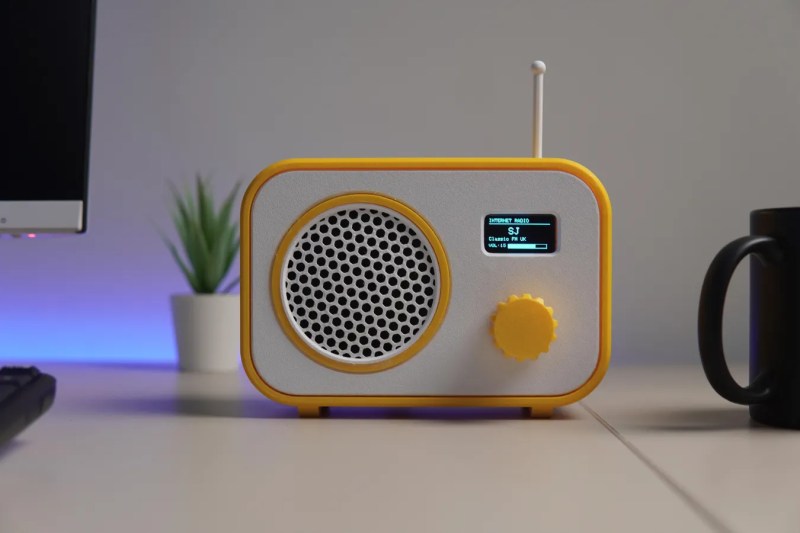
Broadcast radio isn’t as popular as it once was, its popularity suffering in turn due to technologies like MP3 players and music streaming services. If you don’t fancy either of those, you might like to listen to some internet radio stations, using a rig like the one [CodersCafeTech] built.

It’s a simple desktop radio set, but instead of tuning in to AM or FM broadcast bands, it has an antenna for 2.4 GHz instead. That’s because inside this radio is an ESP32-S3 development board, which is equipped with onboard WiFi hardware that lets it connect to the internet. It’s hooked up to a 1.3-inch OLED display over I2C, which acts as a user interface in concert with a rotary encoder. Sound is handled with a MAX98357 I2S audio amplifier, hooked up to a small 3 W speaker. Once programmed appropriately, all the unit needs is a WiFi SSID and password, and the URL for the internet radio station you’d like to listen to.

We’ve featured a few internet radio builds over the years, as well as a rather fun build that saw a Macintosh SE/30 hooked up to Spotify. If you’re tinkering with something along those lines, don’t hesitate to let us know on the tipsline!

❌