
❌

Reading view

There are new articles available, click to refresh the page.

Purely Random TV In Your Browser

One of the things we used to appreciate about broadcast television is that… you kinda just got what you got. You didn’t have to choose beyond picking a channel, and then you settled in to imbibe whatever media the CRT was spraying at you. A vague recreation of part of this experience is now available, in the form of [Sergei’s] RND.TV.

The concept is simple enoughβ€”it’s a webpage that plays random videos from The Internet Archive. Each session draws videos from a random sequence, with no algorithm or fancy social media nonsense to push some videos over others. As you might expect, you’re in for lots of random and weird stuff, from old Army videos to middle-school basketball games. You can swipe to flick to a different β€œchannel” if you don’t like what’s playing, or you can mark videos you like if you fancied what came up in the random feed. You can also use your phone as a remote if you want to sit back and flick channels like it’s the 90s again or something.

We’ve featured other projects in a similar vein beforeβ€”like little TVs from The Simpsons that play episodes on repeat. Sometimes, it’s fun to just avoid the paralysis of choice, and a random stream of content can provide that relief. Or, alternatively, you could always hook up your TV to an antenna and watch free-to-air… it’s still out there, for those that wish to view it!
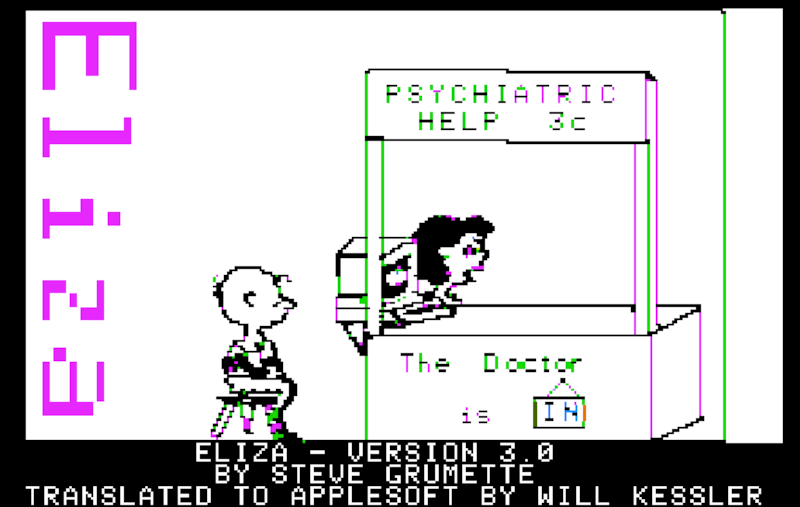
Artificial Intelligence as It Once Was

One day, people will look back at what we call Artificial Intelligence and laugh. We do the same thing today, as chat bots totally outstrip what the computer industry called AI up until pretty recently. This didn’t escape curators at the Internet Archive, apparently, and [Jason Scott] tells us about a recent collection, β€œVintage Artificial Intelligence.”

These are old software titles that will run for you in emulated machines right in your browser, ranging from somewhere in the 1970s to the 1990s. There’s Eliza, of course. Actually, there are several copies of Eliza. Given how simple it was to write Eliza, it did a pretty good job. Then there are adventure games that are pretty conversational, Lisp, Prolog, which was going to spawn expert systems to replace us all, and Racter, which tried to write fiction.

There was even Alter Ego that was supposed to help you explore life decisions, maybe? There are a couple different versions of even a few versions of Conway’s Game of Life. We aren’t sure that’s ever really been AI, but perhaps it depends on your definition. We’re happy to see Sargon, the chess program, represented.

We didn’t see Hexapawn, which is a shame. We also didn’t see Parry (the paranoid counterpart to Eliza) or that elusive software we remember but can never find that built word chains from text called George.

We’ve written about Eliza before. If you want to experiment with Prolog and you like PokΓ©mon, you’ll appreciate this tutorial.

❌