❌

Reading view

There are new articles available, click to refresh the page.

Yoodli’s next act: AI that can teach workers almost any job skill
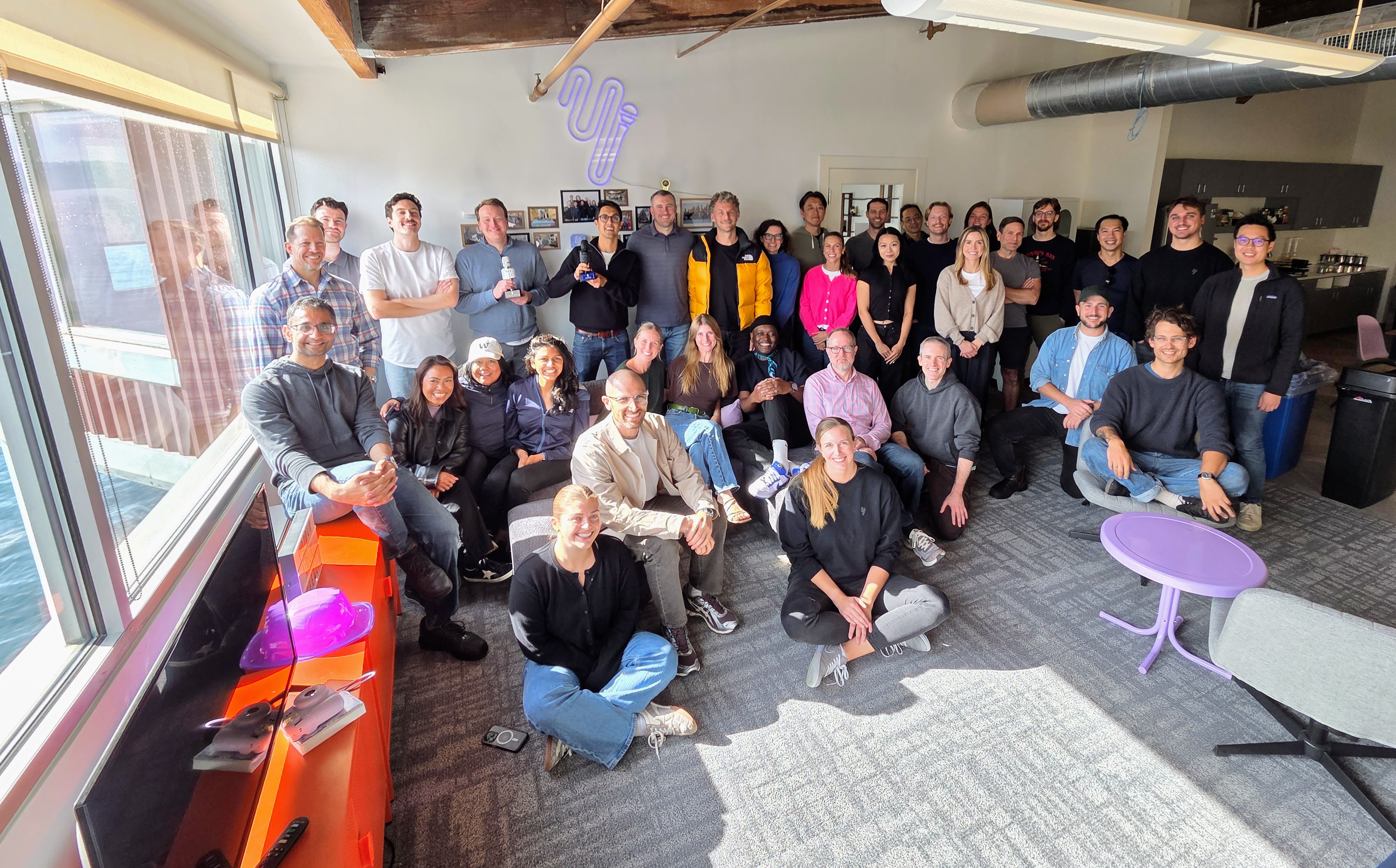
A portion of the Yoodli team gathers for a photo this week inside the company’s new headquarters on Seattle’s Pier 70, under a neon version of the startup’s logo. (GeekWire Photo / Todd Bishop)

Yoodli, the Seattle startup that offers AI to help people practice speeches, sales pitches and job interviews, is expanding to pursue a larger vision: AI that can teach people almost any skill they need on the job, and track whether they’re improving.

The company is recasting itself as the “AI platform for human skills” with the launch of new tools that create courses, teach people to use AI and software, answer employees’ questions, coach them during calls and meetings, and show managers whether the training is paying off.

One of the new tools takes the AI personas that companies build for practice sessions and puts them to work elsewhere. Loaded with a company’s own material, they can answer questions on an intranet, a partner site or a live call, handing off to humans when needed.

The move pushes Yoodli beyond practice sessions and into the much larger business of corporate training, where Workday and Microsoft’s LinkedIn are among the larger companies offering AI tools for training and coaching employees.

It also expands the potential market for the company, which counts Google, Snowflake and Databricks among its customers and has raised nearly $60 million from investors including WestBridge Capital, Neotribe, Madrona and AI House.

Yoodli co-founders Varun Puri, left, and Esha Joshi at the company’s new headquarters on Seattle’s Pier 70. (GeekWire Photo / Todd Bishop)

Varun Puri, Yoodli’s co-founder and CEO, said the goal is to use AI to help people get better at their jobs, at a time when the technology is more often raising concerns and questions about the future of work.

“This is all about upskilling humans and believing in the human potential,” Puri said in an interview this week at the company’s new headquarters on Seattle’s Pier 70. “How do we help humans be the best versions of themselves and get measurably better?”

Esha Joshi, Yoodli’s co-founder and chief customer officer, said the company is taking its cues from what businesses were already starting to do: using Yoodli to teach employees new skills, beyond the situational AI “roleplays” that have fueled the company’s growth.

Many of Yoodli’s first business customers were tech companies, but the list has since expanded to include the likes of governments, pharmaceutical companies and banks.

“There’s a whole world of people that need to develop their skills,” Joshi said.

How Yoodli got here: GeekWire has followed the company almost from the start. Our first story ran five years ago today, when the startup had just spun out of what was then known as the AI2 Incubator, with an AI tool to help people improve their public speaking.

Puri had run special projects for Google co-founder Sergey Brin and worked at X, the research arm of Google parent Alphabet. Joshi spent more than four years at Apple as a software engineer and product manager, and was Yoodli’s original chief technology officer.

With its transition to AI roleplays about two years ago, Yoodli shifted to selling primarily to companies and other organizations. Google, Snowflake and Databricks use it to train sales teams, Puri said. The government of El Salvador uses it to train doctors on talking with patients, and the University of Washington uses it to prepare students for job interviews, he said.
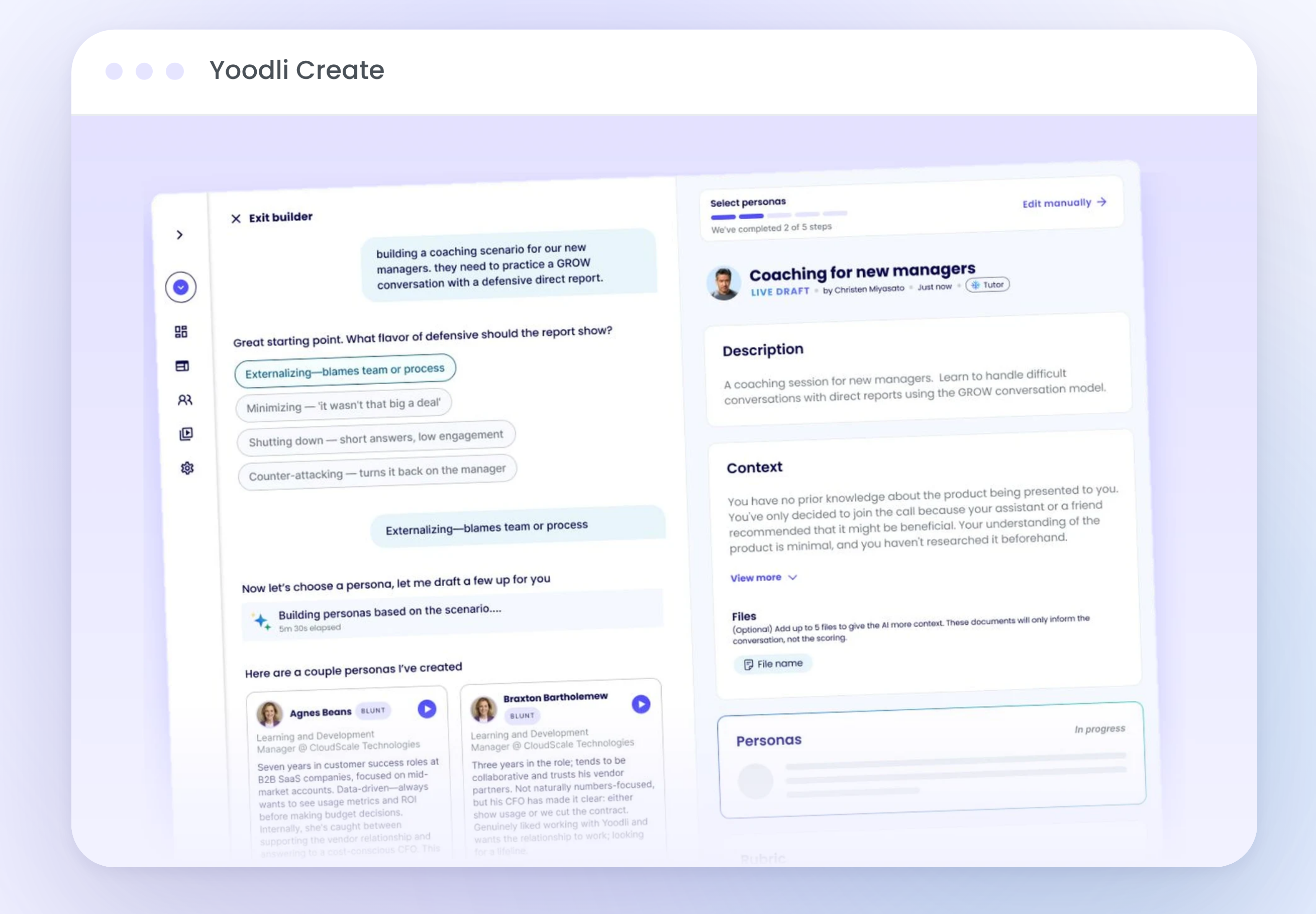
Yoodli’s new “Create” tool builds a training program from a prompt, asking follow-up questions and drafting personas along the way. (Yoodli Image)

The company raised $13.7 million in May 2025 and another $40 million in December, in a round led by WestBridge Capital that valued it at more than $300 million.

Yoodli reported 900% revenue growth when it announced the December round. Puri declined to disclose current revenue or say whether the company is profitable, but said it isn’t actively raising money. “It’s been a very strong year,” he said.

The startup will face plenty of competition as it expands into the broader market. Tech giants Salesforce and Microsoft, for example, both offer AI roleplay coaching as part of their larger platforms.

Workday last year acquired Sana, an AI startup with a corporate learning platform. Highspot, the Seattle company that merged with rival Seismic in August, offers an AI roleplay tool, and startups including Hyperbound and Second Nature focus on sales roleplay.

Yoodli also integrates with some of them, including Workday and Highspot.

Asked what keeps Yoodli from becoming a feature in a larger company’s product, Puri cited the depth of its software, and pointed out that Google, for example, uses Yoodli to train its own teams on Gemini.

The company today: Yoodli has grown to about 100 employees, up from 25 in May 2025. Recent executive hires include:

Other executives include Josh Vitello, the chief revenue officer, who joined in April 2025 after more than 15 years at Tableau and Salesforce; and Derek Sessions, the chief technology officer since February 2023, previously an engineering manager at video software company Panopto.

Yoodli’s new offices are on the eastern side of Pier 70, sharing a building with AI House, the incubator and venture capital fund formerly known as the AI2 Incubator. Yoodli began at the incubator when it was across town near the northern shore of Lake Union.

The conference room names reflect the company’s culture. “Speakeasy” was Yoodli’s code name before launch. “PlankoClock” honors a daily ritual: at 3:45, the whole company stops to do planks. “Agnes Potts” is named for one of Yoodli’s earliest AI personas — a “customer” so tough that users wanted T-shirts saying they’d booked a call with her, Puri said.
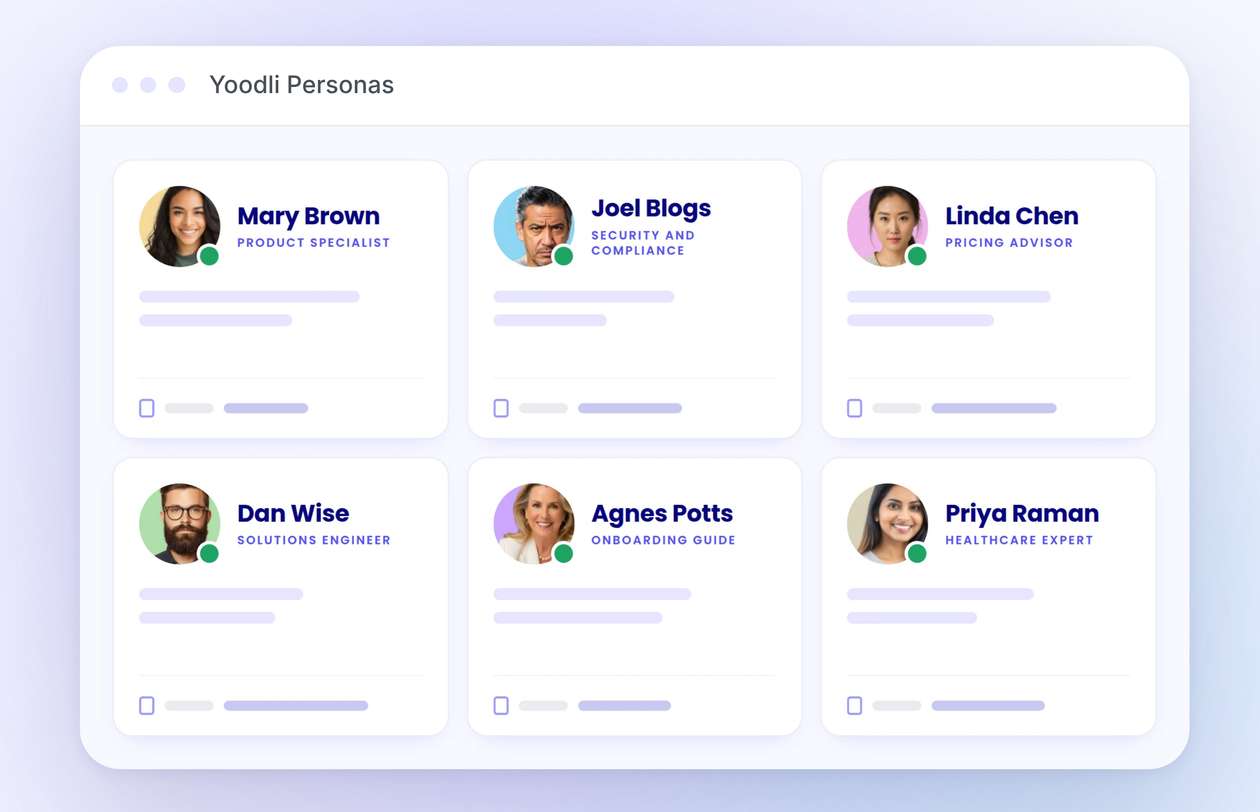
Yoodli’s “Personas” are AI experts that companies can create and train on their own material. (Yoodli Image)

The new tools: Yoodli describes the expanded platform as five products.

  • Roleplays: The practice sessions the company is known for, in which an employee rehearses a sales call or other conversation with AI personas. They now teach as well, with an AI tutor that can explain a topic, pull up slides and take questions.
  • Personas: AI experts that companies build for practice sessions can now also answer questions on an intranet, a partner site or a live call. Yoodli has an AI version of Puri that job candidates can talk with before they interview with the real CEO.
  • Create: Builds a full training program from a single written request, in minutes instead of weeks, Yoodli says. In a demo, Puri typed a request for a course on Google’s Gemini and got back a multi-step training program.
  • Coach: A personal coach that works inside apps such as Zoom, Slack and Teams, and learns each employee’s strengths and weak spots. Puri compared it to a friend “kicking you under the table” in a meeting.
  • Measure: Reports for employees and managers on whether skills are improving, not just whether the training was completed. For sales teams, Puri said, that can mean tying training to deals closed.

Yoodli’s website lists individual plans at $8 and $20 a month, billed annually, with custom pricing for businesses depending on team size and use case.

When GeekWire visited this week, employees took a quick break from preparing for the new platform launch to gather for an impromptu team photo. They goofed around under a Yoodli sign with the type of energy you’d see at a much smaller startup.

As they headed back to their desks, I mentioned that we’d all remember this moment when the company has its IPO in 10 years. They laughed and groaned at the suggestion that it would take that long.

Editor’s note: Yoodli is a client of GeekWire’s GeekWork recruiting business.
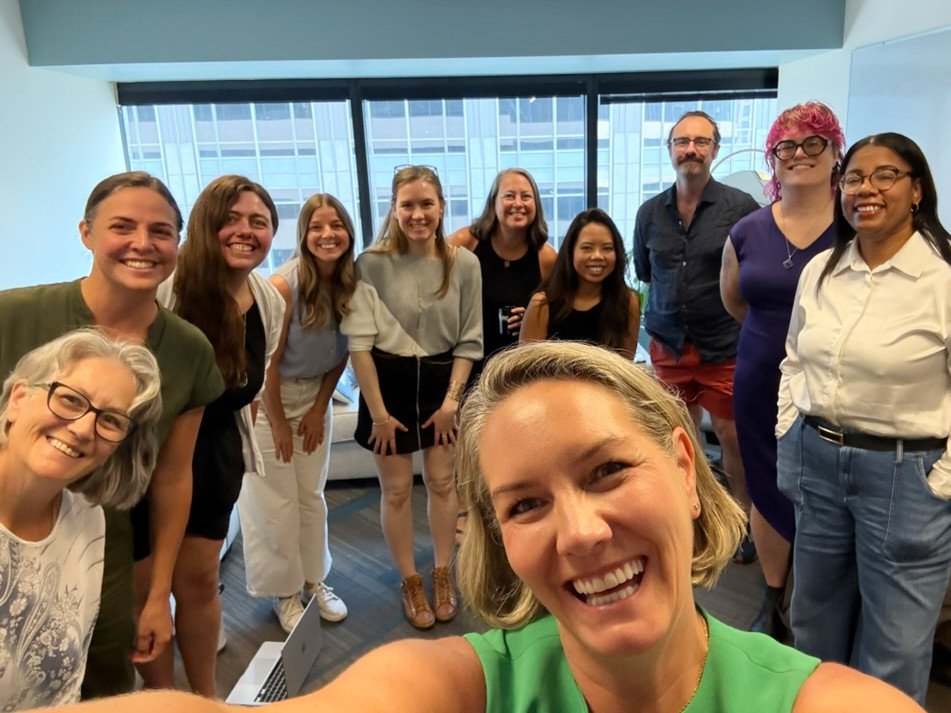
Beyond co-working: Former tech leader launches new hub for Seattle’s women founders

The SWELL hosts a weekly open house for entrepreneurs, including non-members, to meet up. Sally Revell, The SWELL founder, at lower center. (The SWELL Photo)

A new hub for women entrepreneurs is taking shape in Seattle and will host its official launch party tonight. Less than 10 weeks after opening, The SWELL has 53 members and quickly evolving programming that includes an accelerator, its own consulting startup and weekly “hot seats” where founders hash out challenges.

“What we’ve created is a community that happens to have a co-working space,” said founder Sally Revell. “I am not in the business of co-working. I’m in the business of building a women’s founder community, and we have a space that we convene in.”

Revell decided to launch The SWELL after 25 years in marketing leadership roles for tech companies including Google, Amazon Web Services, Philips and Intuit. Her parents’ deaths in 2024 were a “catalyst for change,” she said, prompting her to strike out as an independent consultant. But she still craved an in-person professional community.

The SWELL, an acronym for “Seattle women entrepreneurs leading and lifting,” is based at SURF Incubator, a longtime co-working and events venue in downtown Seattle.

Revell said the organization is built on three pillars:

  • A shared physical workspace
  • A structure that supports bootstrapping rather than pressuring founders to seek venture capital
  • Programming supportive of women, including daytime sessions in a central location that leave evenings free for childcare, eldercare, pets and other obligations, as well as integrated self-care offerings such as midday meditation breaks

A membership costs $200 a month and includes access to the co-working space Monday through Friday. The hub is currently capped at 75 members, and Revell is exploring a virtual program.

A survey of participants found that 40% resigned from corporate roles to launch their own ventures and 30% were laid off. An overwhelming majority have worked for big companies, and the cohort has a median of 17 years of work experience.

About 60% said they never want to return to corporate roles, and all are using AI in their business.

“There’s this movement of middle-aged women [feeling] like, ‘I’m empowered. I can choose to do something different,'” Revell said. “And when they get together, then the magic starts to happen.”

The SWELL is part of a broader push toward women-led companies. Women launched 44% of new businesses last year, according to Gusto, a payroll and HR platform. A key reason mid-career women are leaving corporate roles for entrepreneurship is that the jobs “did not line up with their needs, values, or realities,” as they struggled to balance work and caregiving, said researchers from the Rutgers Center for Women in Business.

Seattle has long been the birthplace of ventures supporting women founders and leaders. The Riveter, a pioneering, investor-backed co-working space for women, launched in 2017 but shuttered its physical locations in 2020 amid the COVID-19 pandemic. It pivoted to an online community with expert webinars, mentoring and retreats.

Other related efforts include Female Founders Alliance, which has grown into a national organization operated by its own investment fund, Graham & Walker; TheWMarketplace, an e-commerce platform promoting women’s businesses; and Intentionalist, a site highlighting small businesses with diverse owners.

Revell is working with other women-focused efforts in the city, including the University of Washington’s Women’s Entrepreneurial Leadership program. The SWELL recently announced a partnership with Formidable Media, a Seattle-based media and membership organization that helps women nationwide promote their businesses. And Nicole Doyle, who leads the Founder Institute’s Pacific Northwest cohort, created a custom accelerator for SWELL members that kicks off in January.

UW, Microsoft and E8 back climate tech incubator targeting data centers as AI energy concerns surge

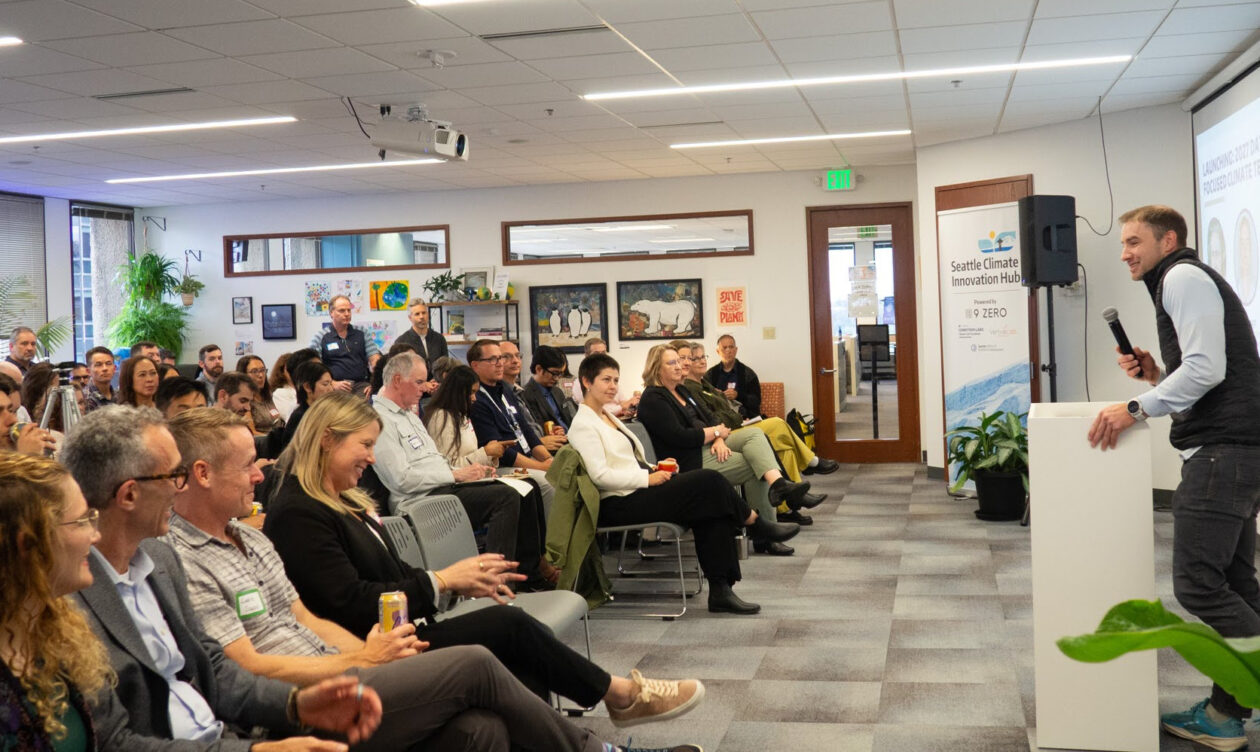
Taylor Brugh, Microsoft sustainability markets partnerships & ops lead, at Tuesday’s CoMotion Labs Climate Tech Incubator Demo Day, where the data center-focused program was announced. (CoMotion Photo)

As public concern grows about the environmental impact of AI data centers, the University of Washington is launching a startup incubator to support climate tech innovations addressing those challenges.

UW CoMotion Labs is partnering with Microsoft and the investment network E8 to create a four-month program targeting technologies in areas including backup energy storage, grid improvements, efficient data center cooling, electronics waste reduction and low-carbon building materials.

“This is a really important initiative,” said Karin Kidder, executive director of E8. “The other really great part about this is it’s elevating the Pacific Northwest. There’s so much good work happening here.”

CoMotion has previously run two climate tech incubator cohorts, the second of which wrapped up Tuesday with a public demo event. The new effort is the first to focus on a specific industry within the climate space. Organizers are seeking early-stage applicants with technologies ready to commercialize, deploy as pilot projects or scale.

“Meeting growing demand for digital infrastructure requires continued innovation across energy, water, materials, and cooling,” said Brandon Middaugh, Microsoft’s general manager for sustainable markets, in a statement.

E8, which has invested $77 million in climate startups over two decades, will provide an investor-in-residence to advise founders and a representative on the startup selection committee. Microsoft will share technical and industry expertise and other support. Both organizations are providing funding for the effort, but the UW did not say how much.

In addition, the climate tech investment group Elemental Impact previously launched a Data Center Innovation Initiative to similarly address these challenges and will offer advisory support for the Seattle-based program.

The kickoff for the CoMotion Labs initiative coincides with a poll released Wednesday finding that 53% of Americans are “extremely or very concerned” about the environmental impacts of AI, up from 41% a year ago.

The survey, from the Associated Press-NORC Center for Public Affairs Research and the Energy Policy Institute at the University of Chicago, found that 80% of adults are concerned about data center effects on electric bills, power outages or water supply. The computing facilities are a central issue in the upcoming elections.

When it comes to technologies to lessen the burden of data centers, “these solutions are needed today,” Kidder said. “So I’m hopeful that while some of these solutions may be a couple years out, some may be relevant for today.”

Sarah O’Sell, manager of CoMotion Labs’ climate tech incubators, said one strategy will be connecting startups with partners and customers to speed deployment of new technologies.

“We recognize that climate solutions aren’t necessarily always looking for venture investment,” she said. “They might be looking for a strategic partner or customers or grant funding. There’s all kinds of ways to scale these businesses.”

The 2027 Data Center Innovation Cohort will be based at the Seattle Climate Innovation Hub downtown.

An information session is set for Oct. 15, and applications are due Nov. 15. The cohort begins in February.

❌