The idea of painting a roof or wall white in order to reflect sunshine and keep the building’s insides cool is hardly a new one, and even in the loosest interpretation of the word ‘white’ it generally works pretty well. This is also what [NightHawkInLight] found after using an off-the-shelf silicone-based coating for his shed’s tin roof, though with a few caveats.
One might say that this is mostly a problem for people who live in non-desert climates — like Michigan in this case — yet it’s undeniable that having a cooler indoors in a high-humidity climate will inevitably lead to a higher indoor humidity level. This was the first issue that was encountered, though it mostly meant that instead of running an air conditioner eight hours a day, a weekly dehumidifier session was required, which was at least less expensive in terms of kWh.
While the current silicone-based paint on the roof stays above ambient, in a subsequent test both [NightHawkInLight]’s DIY sub-ambient cooling paint and a commercial option get a sample panel down to around ambient temperature, which could cool down the roof even more. Of course, in this case the humidity issues would get worse, with likely condensation forming that would have to be dealt with.
Overall, a cooling paint on the roof is a pretty thing even if you’re not living in the desert, but you have to be able to tame the resulting humidity and condensation issues.
The average hot water is a relatively simple appliance to understand. It uses gas or electricity to dump energy into water in the form of heat, keeping it at a pleasant temperature for uses like bathing and cleaning. Basic mechanisms are in place to ensure the water stays at a relatively constant temperature, neither too hot where it could cause burns, nor too cold such that it wouldn’t be fit for purpose.
Legionella pneumophila is a bacteria that loves to grow in warm water. It can enter the body via aerosol and cause of Legionella’s disease. Credit: CDC, public domain
One of the interesting problems of our modern era is that changing our water usage has changed the risk profile for pathogens growing in hot water. NIST has noted for some time that while the pipes in our walls haven’t changed size, things like our shower heads have changed their flow rate to save water. Less flow rate in the same sized pipes means that water stays in the pipes for longer, increasing the time in which harmful pathogens have to grow in that environment.
Chief amongst these pathogens? The one most commonly feared is legionella pneumophila, the bacterium responsible for causing Legionnaires’ disease. The severe form of pneumonia comes with a fatality rate of 10%, and infection typically comes from inhaling aerosolized droplets containing the bacteria.
Of course, a great way to create aerosolized droplets filled with bacteria is to spray not-quite-hot water through a shower head. This is why hot water systems, particularly in large multi-occupancy buildings, are a risk for such infections. Legionnaires’ disease is rare, but it’s always out there, with 6000 confirmed cases showing up in the US each year. It’s possible that the true number is up to 10 times higher because the disease isn’t routinely tested for. The disease’s rarity is in part because engineers and tradespeople put in plenty of work to minimize the ability for the bacterium to breed in hot water systems. As NIST’s work demonstrates, though, there is possibly even more that could be done to tackle this problem.
Ideally, your hot water pipes in your house would not host any nasty bacteria. But often, hot water systems sit around 49 °C (120 °F), a temperature that’s hot enough to be useful and pleasant without a major scalding risk. Legionella pneumophila won’t easily grow at that temperature; the bacteria thrives between 20 °C to 45 °C (68 °F – 113 °F). Unfortunately, though, it’s not hot enough to kill the bacteria completely. Furthermore, water cools as it travels through pipes to an outlet, and thus pipes can be a perfect environment to spur further growth.
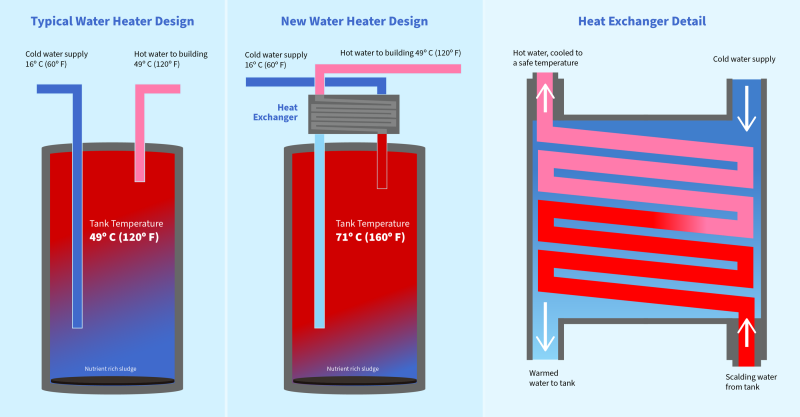
The solution developed by NIST is simple—jack up the set point of the hot water heater, then fit a heat exchanger on top to cool outgoing hot water with the incoming cold supply. Credit: Brandon Hayes/NIST
The simple solution would be to simply jack up the hot water system to store water at a much higher temperature, say around 70 °C (160 °F). This could be undesirable in many contexts, though, as water that hot can more easily cause burns. It would be ideal to store the water at a higher temperature, while making sure it was delivered at a slightly lower temperature so it didn’t hurt anybody when it left the tap or shower head.
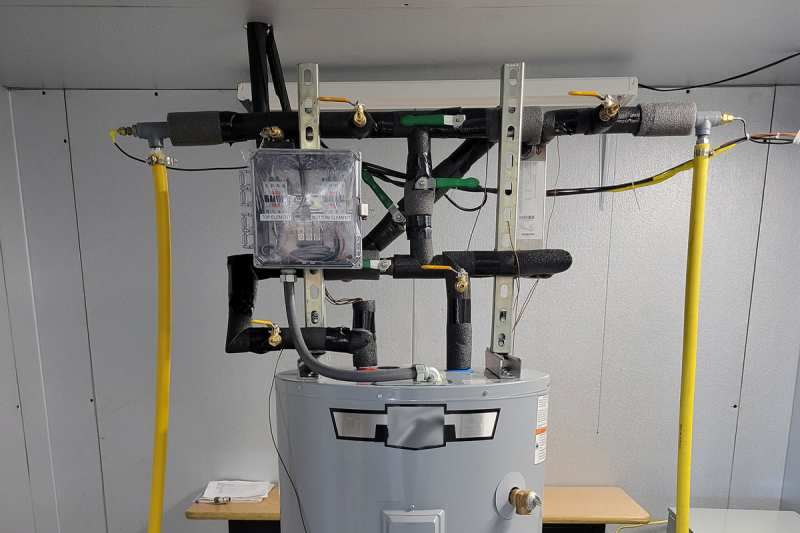
A prototype unit whipped up by NIST cost only about $100. Credit: NIST
It turns out that there is a remarkably simple way to achieve this. NIST developed a simple heat exchanger which can be mounted atop any old hot water system. It’s designed such that the hot water leaving the tank passes through a heat exchanger where it’s surrounded by cold water which is running to the water heater’s intake pipe. This has dual benefits. The hot water inside the tank can be stored in the tank at 70 °C, which kills almost all legionella peumophila almost instantly. That water, though, is then cooled to a slightly safer temperature as it passes through the heat exchanger and out to the tap or shower. The hot water remains at a safe temperature for the user, and contains far less harmful bacteria, and cooling it doesn’t introduce any pathogens from another source. In turn, the cold water coming into the tank is pre-warmed slightly by the hot water, so the energy isn’t simply wasted.
This trick isn’t just simple, it’s also cheap. NIST engineers were able to fabricate a prototype unit to fit to a residential water heater using just $100 of components. It could be a useful addition for homeowners looking to make their hot water service a little cleaner. However, the real benefits are likely to be for larger operators of multiple-occupancy facilities, like nursing homes and hotels. These facilities often have to take great care to avoid the build up of harmful bacteria in building-wide hot water systems. Having the ability to increase the tank temperature to the point that legionella pneumophila bacteria simply die off would be a huge boon to this effort.
Sometimes, it’s possible to make great gains with a simple hack. Using the cold water service to cool hotter outgoing water is a smart trick that uses only minimal additional equipment to offer a safer hot water supply. It could yet become a common install for hot water systems in order to fight the good fight against a harmful disease that likes to lurk in our pipes. If you happen to see a heat exchanger atop a hot water heater in future, you can smile that someone has done the work to try and make that hot water supply just a little safer going forward.
In the modern world USB has become a truly universal connector, with its inclusion on almost every major piece of consumer electronics. It has even expanded well beyond things that we’d think of as consumer electronics, like the solenoids on automatic sprinkler systems.
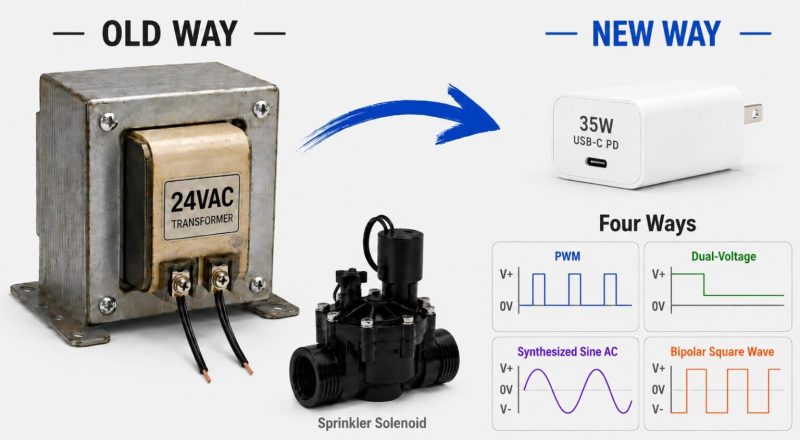
This project comes to us from [Ray Wang] at opensprinkler.org who has been working on various ways of controlling the old sprinkler standards, which generally rely on a 24 VAC power supply to drive solenoids. This tests uses the power available from USB-PD and closely examines four methods of energizing the solenoids: unipolar PWM, dual voltage, synthesizing an AC wave from a DC supply, and producing a bipolar square wave. The bipolar square wave had some interesting results, being able to get pretty close to the behavior of a true sine wave while minimizing the dedrmand on power electronics.
For those working on old sprinkler systems, or many other antiquated systems that still rely on 24 VAC, this project shows that USB can deliver a surprising amount of power in unique ways, and the fact that it’s near-ubiquitous and affordable makes it that much easier to adapt into situations it was never really designed for.
The world’s refusal to standardize on a single type of mains power outlet has led to a vibrant market of so-called travel adapters, all of which try to outdo each other in convenience and universality. This comes at the cost of complexity, something which ultimately reflects in the price. The cheapo $9.26 universal travel adapter that [Brainiac 75] got off an online retailer’s site is thereby a good example of how safety suffers if the overarching goal is to ‘make it cheap’.
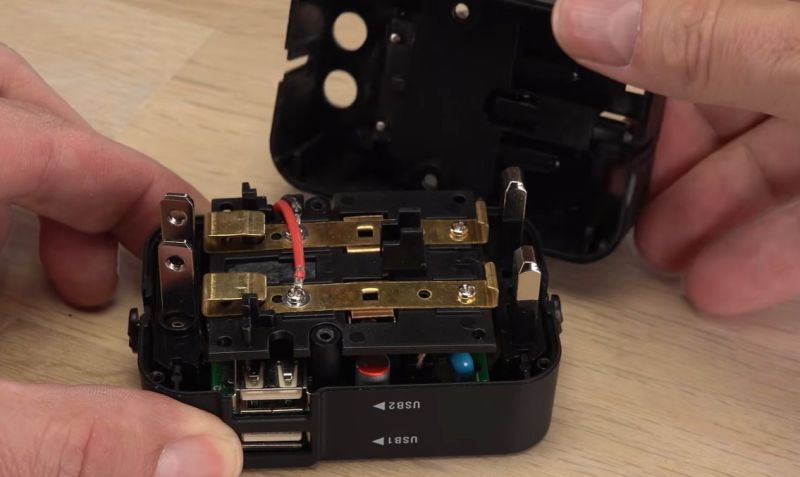
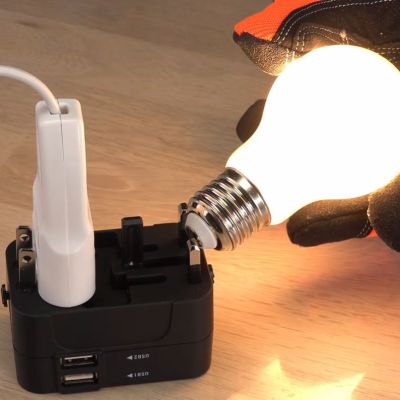
The first exciting discovery is that when you plug any of its three sets of connectors into an outlet, the others become live at the same voltage. This would suggest that they’re just wired together, a fact soon confirmed with a quick resistance check between the respective prongs. Though to the adapter’s credit, the prongs are not live when fully retracted into the enclosure. Yet as demonstrated in the video, the retracting of prongs is not enforced, so mistakes here are possible.
The adapter also has two USB ports that claim to provide 5 V at 2.1 A, with as it turns out no hard cut-off. This is probably the best part of the adapter despite not featuring any advanced charging features. After opening the adapter, you can see that the sliding mains prongs connect to a central bus bar when either unfolded or extended, which is definitely straightforward, but doesn’t enforce that only one type of prongs can be used at any given time.
To make it safer, [Brainiac75] removed the less useful US and UK plugs, taping over the empty holes. It’s now just a USB charger with a universal mains port to plug random non-EU plugs into, which is probably relatively safe and a better idea than really using it as a travel adapter.
Those who have never lived in a cold climate might romanticize winters around a fire, keeping warm under blankets while snow gently falls outside. While it certainly can be a cozy experience, using a woodstove comes with a number of pitfalls, and when operated improperly can even cause house-destroying chimney fires. Modern stoves operated properly with properly dried wood make this possibility extremely remote, but it’s still worth keeping an eye on. Reddit user [nas886] built a system called Oru which takes a lot of the guesswork out using one of these pieces of heating equipment.
The real danger of a woodstove isn’t necessarily running the fire too hot, although that can be a problem, but running it too cold. Without full combustion of the wood, flammable creosote builds up on the inside of the chimney which eventually can combust. This system uses a probe placed in the stovepipe to monitor the temperature of the exhaust gasses. If it’s too low an ESP32 notifies [nas886] remotely with with a status LED inside a seperate custom-built walnut enclosure so that more wood can quickly be added or airflow increased to bring up the temperature, and in the case that the fire gets too hot the LED changes to a different color and the air can be closed off a bit.
Woodstoves themselves have quite a bit of variability in the size wood they can burn, the amount they can hold at once, their efficiency, and their thermal mass, so this could find utility for anyone from those with tiny stoves that have to be fed constantly to those trying to get all-night burns in massive units, all without having to constantly sit by the fire and monitor it. [nas886] found initial success selling a few of these custom units and plans to put it into further production as well, but the general idea is not too difficult to replicate for most of us here either.
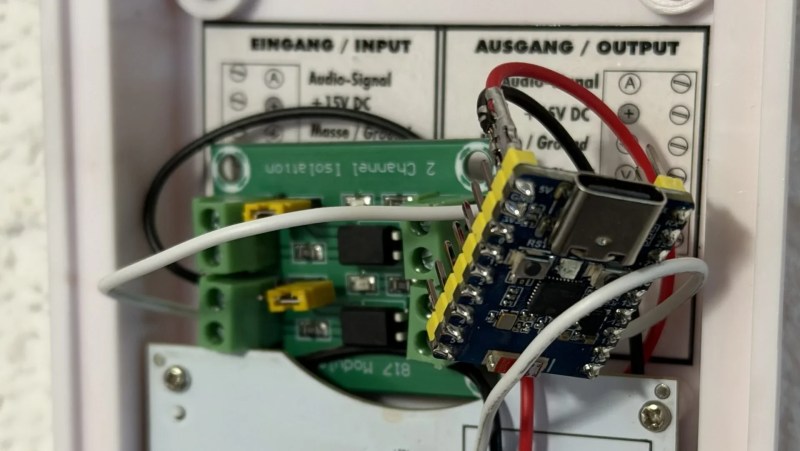
The build is based around a wired doorbell setup, in particular, a Vistadoor ADV-100. [Philipp] was able to find a simple place to tap in to a signal that went to 5 V when the doorbell was rung. He wanted to hook this into his smart home system as easily as possible. Thus, he grabbed a rather unique part—the ESP32-H2. This is notable in the ESP32 family for having no WiFi connectivity. What it does have, however, is an 802.15.4 radio good for Thread and Zigbee communications.
[Phillip] explains that hooking the ESP32-H2 up to fire a notification to Home Assistant every time the doorbell goes off is easy—and it doesn’t mess with the standard doorbell’s chiming behavior one bit. He also explains how to set up neat automations, such as having a separate smart camera capture an image when the door bell is fired.
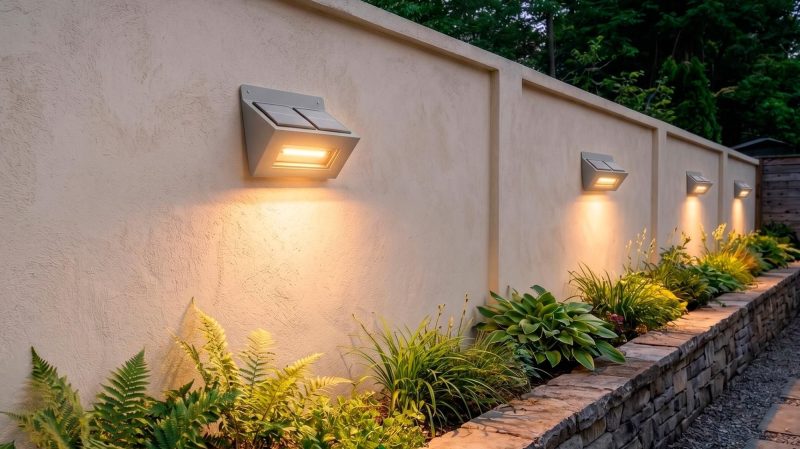
You might look at the plastic housings involved and assume that they’re 3D printed, like the vast majority of such projects we cover these days. Instead, the enclosures are crafted out of PVC plastic, harvested by flattening sections of pipe with a heat gun. It has the benefit of being highly weather resistant, and cheap to boot. The lights themselves are small LED panels mounted on aluminium plate as a heatsink, and fitted with an acrylic diffuser to spread the light out more evenly. Power for the lights comes from an 18650 lithium-ion cell, charged by a pair of solar panels hooked up to an MPPT charge controller. A TP223 capacitive touch module is also included in the design to allow the lights to be turned on with just the touch of a finger.
The result is a surprisingly stylish bit of garden furniture which provides warm, even light and, ideally, needs a minimum of maintenance and attention since the sun provides the power. We’ve featured some other great solar lamps before, too, like this lovely Pokemon-themed build. If you’re building your own solar projects at home, or doing weird things with PVC, we’d probably love to hear about it on the tipsline!

 Login
Login