 Login
Login
Evvy raises $40M as it seeks to further women’s health research with vaginal microbiome data
Women’s health company Evvy announced Tuesday a $40 million Series B led by Catalio Capital Management.

Last year Ruxandra Teslo, a policy analyst who focuses on clinical trials, posted an idea for supercharging medical AI systems: Use data from failed biotech companies.
By bidding at their bankruptcy proceedings, she proposed, it might be possible to obtain detailed regulatory filings, manufacturing strategies, and safety data—types of information usually considered trade secrets. She called these documents “biotech’s lost archive” and said they could be used to help train AIs that would act as powerful copilots in the often opaque drug approval process.
Today the OpenAI Foundation, the nonprofit parent of OpenAI, said it would fund her idea as part of a new effort it calls Public Data for Health, which aims to help artificial intelligence make big leaps in medicine by paying to create “high-quality scientific datasets.”
The basic idea is that AI isn’t going to be capable of making important breakthroughs in curing disease unless researchers can feed the models much more information than they have so far.
“Everyone is recognizing that data is the biggest bottleneck in successfully applying AI to biology,” says Morgan Levine, a former vice president for computation at Altos Labs, a longevity company.
In its initial round of data grants, the OpenAI Foundation also announced that it would give $40 million to a program to collect data about novel cancer vaccines at the University of North Carolina, Chapel Hill, and support OpenAdmet, a group that runs competitions in which researchers try to predict drug effects.
Teslo’s idea for a biotech archive received $500,000 and will be pursued by 1Day Sooner, an advocacy group representing clinical trial volunteers, which she advises.
“We expect many remaining breakthroughs in preventing and curing disease to come from pairing the intelligence of new models with more observations of the world—in other words, more data,” the OpenAI Foundation said in a statement.
OpenAI started as a nonprofit, but leader Sam Altman restructured it to form a for-profit corporation that develops new models, launches products, and is now planning an initial public offering of stock that could value it at $1 trillion.
Because the foundation holds a 26% equity stake in OpenAI, it is now be on track to become the richest charitable organization on the planet, potentially sitting on $250 billion in stock value. (By comparison, the Gates Foundation and a trust associated with it held about $180 billion at the end of 2025.)
Making good use of that kind of money will not be easy. The foundation, based in San Francisco, is still hiring for many key roles and started ramping up its grantmaking only this year. Its largest single gift so far, of $100 million, was awarded in August to the Common Health Coalition, an organization that helps patients get access to drugs for hepatitis C.
OpenAI’s charitable efforts come even as apocalyptic fears have broken out about the possibility that runaway AI could wipe out all human life, possibly by launching a deadly bioweapon.
Those fears have been stoked by AI company insiders, some of whom say the chance of human extinction within the next decade is 10% or more. Last week, Altman and xAI founder Elon Musk both endorsed a call by Anthropic CEO Dario Amodei to “slow the pace at which we improve the capabilities of AI models” so that risk prevention can catch up.
Jacob Trefethen, an executive at the foundation, says it essentially operates separately from OpenAI but shares an official mission of ensuring that artificial intelligence “benefits all of humanity.”
“We’re starting grantmaking when we think the best way to achieve that mission is to make grants to external nonprofits, research institutions, and other third parties,” Trefethen said in an interview. He says the foundation hopes to give away $1 billion by the end of the year.
The $500,000 grant to 1Day Sooner will help the group prove it can obtain the data troves of bankrupt companies, says the organization’s president and cofounder, Josh Morrison. He thinks nonexclusive copies of company datasets could be acquired for only “a few tens of thousands of dollars” each.
His organization is currently in possession of three datasets, two of them donated by Lumen Bioscience, a biotech that previously used the Chapter 11 strategy to gain insights into another company’s drug development efforts.
Morrison says two other attempts to obtain drug company files this year proved unsuccessful, after 1Day Sooner’s bids were not accepted.
Bankruptcies could become what some are calling a “new land grab” for AI training. Last month, Google won a bid to take over the corporate data of the failed carrier Spirit Airlines, including 100 million emails. That led to objections from flight attendants and others who worried that private or proprietary data could be exposed.
The drug company files that 1Day Sooner is seeking are known as common technical documents. They typically contain the back-and-forth between companies and regulators, as well as detailed scientific and medical measurements, and essentially provide everything that is known about a drug.
According to Teslo, who is a writer for Works In Progress and a nonresident fellow at the Institute for Progress, a think tank in Washington, DC, a stockpile of such files could help turn an AI into a regulatory expert, which in her view could be one of the main ways AI helps speed cures to market.
“People say ‘We will invent AI, and AI will cure cancer,’ but that’s very removed from the messy reality and the regulatory process,” she says. “About 70% of the money and time in drug development is spent in clinical development—organizing the trials and testing the drug—but despite that, the process is basically a black box, especially for small biotech companies generating the innovations.”

.jpg)

The Gates Foundation is pledging to spend at least $1 billion over the next two years on artificial intelligence for health workers, farmers and teachers, largely in the world’s poorest countries, funding AI tools for people the market would otherwise overlook.
The bet is that AI can help reaccelerate the world’s progress against child mortality, poverty and disease, which has slowed sharply as governments cut global health funding.
The Seattle-based foundation’s new financial commitment, released Monday evening in conjunction with its 10th annual Goalkeepers Report, illustrates the double-edged sword of AI at a moment when the U.S. in particular is preoccupied with what the technology might damage or destroy.
Bill Gates, who issued his own AI warnings in an essay three weeks ago, writes in the new report that the risks “are real and deserve serious attention.” He adds, “AI could be a great equalizer — or widen the gap. This is not a long-range prediction. It’s a present-tense choice.”
In this case, Gates writes, he’s focusing on “the possibility that AI, if shaped well, could expand who has access to solutions, opportunities, and knowledge that has too often been out of reach.”
The window is short, he writes: “I believe that the decisions made in the next 12 to 18 months — about how AI is built, funded, and deployed — will determine whether this technology primarily benefits the people who already have the most or reaches those who have the least.”
Gates Foundation CEO Mark Suzman, in an interview with GeekWire, called the $1 billion a “down payment,” saying he expects the figure to grow significantly after the first two years.
For this first installment, 40% of the money will go to education, 40% to health care, 10% to agriculture and 10% to digital infrastructure, including datasets in languages the models don’t handle, according to the foundation.
More than 90% of the data used to train early large language models came from English-language sources, according to the report. Leading AI speech recognition systems make errors less than 6% of the time in English and more than 60% of the time in Yoruba, a West African language spoken by tens of millions of people, for example.
Most people in Africa use feature phones rather than smartphones, Suzman said, so the tools have to work by voice. That means collecting recordings of speech, not just written text, in local accents and including children’s voices. He said the foundation works with Google and Microsoft on AI language initiatives.
Winding down: Gates announced in May 2025 that he would give away virtually all his wealth and close the foundation in 2045, which requires doubling its spending over those 20 years. The foundation had previously planned to close 20 years after his death.
As part of that plan, the foundation will need to give away $200 billion before it shuts down. Its budgeted payout is $9 billion this year, the largest in its history. Suzman said the $1 billion over two years comes out of its core budget.
Goals for its final two decades include cutting preventable child deaths in half again, eradicating polio and malaria, and bringing tuberculosis and HIV under control.
The report’s data section shows how far off the pace the world is. Child mortality, neonatal mortality and HIV are all projected to miss their 2030 targets. HIV incidence is on track to fall only to 0.22 new cases per 1,000 people, more than 10 times the target of 0.02.
Early AI results: The report makes the case that AI could change those trajectories. It points to a number of tools already in use in different settings:
The foundation has supported all three, according to the report’s endnotes. The endnotes also cite OpenAI’s account of its work with Penda Health on the clinical copilot.
One caveat: the evidence behind the examples is early. Suzman said the education work is “still on a relatively small scale,” and pointed to agriculture as the area already operating at size.
Suzman said the foundation spent years experimenting with AI without committing at this scale, wary of getting ahead of what the technology could actually deliver in its areas. Progress in the models over the past year, and results from early investments, convinced him otherwise.
“We now can state with a pretty high degree of confidence there are real deliverables that we can see across health, across education, across agricultural development,” he said.
What AI won’t fix: Asked whether AI can substitute for the money the U.S. and other governments have cut from global health, Suzman said: “Sadly, no.” The cuts run to “tens of billions of dollars,” he said, and they are hitting basic services now. He cited the purchase of bed nets and antiretroviral drugs, and care for mothers before and after birth.
“That’s affecting families right now with a real impact,” he said. “Ideally, you combine the two [AI and aid funding], and that’s how you get hugely accelerated progress.”
Suzman said the foundation will keep pressing the U.S. to remain a leader in global health. Despite the cuts, he said, it has been encouraging to see the country stay a partner in programs such as the Global Fund to Fight AIDS, Tuberculosis and Malaria, and he noted that Congress has moved to fund these areas more fully than the administration has.
“We believe that currently reflects the U.S. public’s broad view and support for these areas, when you can see the concrete results,” he said.
The Epstein review: Asked how the scrutiny of Gates’ ties to Jeffrey Epstein has affected the foundation’s work, Suzman pointed to the external review the foundation released in July.
Conducted by the law firm WilmerHale, it found no evidence that Epstein received foundation money or that the foundation knew of his crimes. It counted roughly 30 meetings from 2011 to 2014, involving Gates and nine other foundation leaders and staff, and found that staff had repeatedly raised concerns about associating with him.
The board adopted the recommendations that followed, among them centralized vetting of brokers and co-funders and tougher conflict-of-interest rules.
Suzman expressed optimism that the review has cleared the way for the foundation to keep working across the full range of governmental and philanthropic partnerships. “Hopefully it’s full speed ahead,” he said, “and with these AI shifts, that’s more important than ever.”
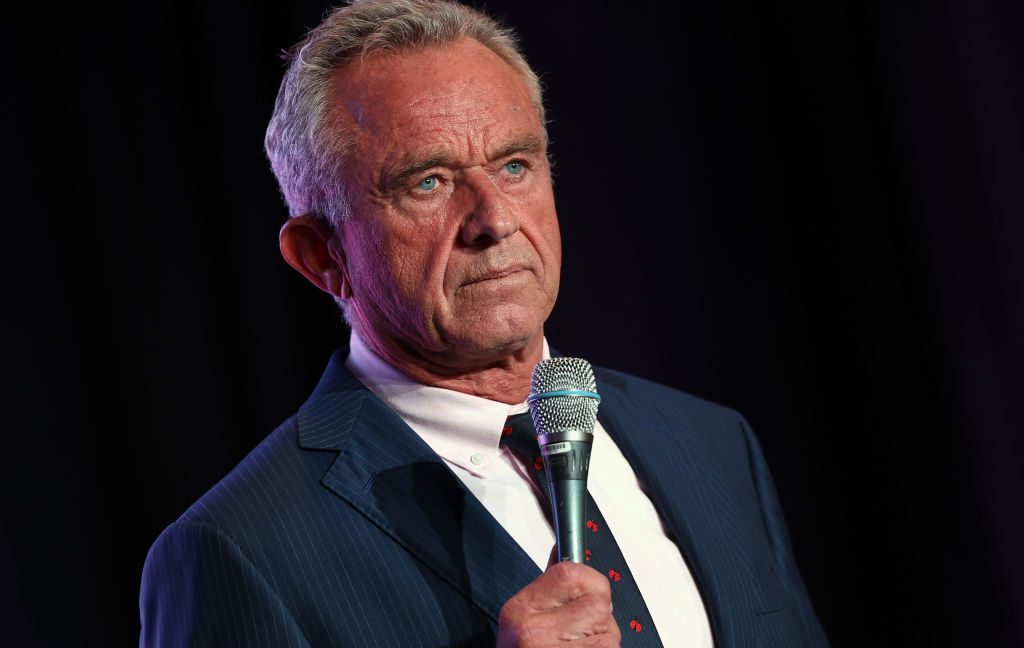
US Health Secretary Robert F. Kennedy Jr. will deliver a keynote address at an anti-vaccine conference being held in Washington, DC, later this week and hosted by the anti-vaccine organization he once led, Children's Health Defense (CHD). The organization announced Monday that Kennedy had signed on to the event.
Kennedy will appear alongside other high-profile figures in the anti-vaccine world, including Andrew Wakefield, the disgraced former doctor who was stripped of his medical license over a fraudulent, now-retracted study that falsely claimed a link between autism and the measles, mumps, and rubella (MMR) vaccine. An investigation by a medical board found that Wakefield had mistreated vulnerable children and that his actions amounted to serious professional misconduct.
Despite being ostracized from the medical community, Wakefield has become an enduring figure in the anti-vaccine community. His dangerous falsehood that vaccines cause autism has also endured—with significant help from CHD and Kennedy, who have embraced and widely promoted the erroneous link.

© Kevin Dietsch / Staff | Getty Images News
Once an organ is removed from a donor’s body, the clock starts ticking. Surgeons usually flush the organ with a preservative solution, bag it, and put it on ice—where it immediately starts to degrade. The team has a matter of hours to get it into a recipient’s body.
There’s another option—one that has been growing in popularity in recent years, especially for donated organs that aren’t in the healthiest state. Some hospitals opt to put them on machines that pump them with nutrients and remove waste products, usually for around six to 12 hours. It’s a bit like being back in a body.
This allows doctors to assess the organs, and some recent studies suggest that time spent on these perfusion machines helps them do better once they’re transplanted. Now, scientists have found that perfused organs seem to get younger, at least at a molecular level.
The research, shared with MIT Technology Review, provides molecular clues as to why organs from younger donors are known to have a higher success rate. It might also help explain why perfused organs are less likely to fail once they make it into a recipient.
The researchers behind the study hope to find new ways to test the health of donated organs and potentially develop additional tools to repair organs that might otherwise be discarded. “If [we] can improve the utilization of organs beyond what the current systems can do, then that’s a win in my book,” says Jesse Poganik, who studies aging at Brigham and Women’s Hospital in Boston and coauthored the study.
Poganik—along with colleagues including Heidi Yeh and Alban Longchamp, transplant surgeons at Mass General Brigham—used “aging clocks” to assess donated livers. These are scientific tools designed to measure biological age—a result that is meant to convey more about the health status of an organ (or person) than chronological age.
In an initial experiment, the team used a clock to look at the patterns of chemical marks on DNA in 37 samples taken from 19 donated livers. Such epigenetic patterns are known to change as we age. But when the team compared samples from livers kept on ice and those that were perfused, the team found a “striking” pattern in the latter.
“Machine-perfused livers, in spite of being older or having other disadvantageous characteristics, had a biological age that was lower than [non-perfused] livers that were chronologically younger,” says Yeh, who led the work.
To investigate further, Yeh and her colleagues analyzed another 208 samples from 103 donated livers. This time, they used different aging clocks—ones that essentially measure how genes are working. They studied samples biopsied from the livers after they had been stored for up to around six hours either in cold storage or on machine perfusion.
In most cases, they also assessed a second sample taken around an hour after the livers had been transplanted into a recipient. Once the organ’s blood supply is reestablished in the body, “you have a few other things to do,” says Longchamp. “Then you just do a quick biopsy before you close.”
According to the clocks, which were developed to measure age and risk of death, the machine-perfused livers were biologically younger, the team found. “Pumping them at 34 degrees with oxygen and nutrients actually reversed the biological age,” says Longchamp. The results have been been shared with colleagues at an industry conference, he says.
“If you adjust out chronological age … to have a fair head-to-head comparison, the difference between the two is on the order of 30%,” says Poganik. “It’s logical to say that perfusion drives this effect.”
The biological ages of all the livers tended to increase as soon as they were put into a recipient’s body, probably as a result of stresses on the organs. But still, the effect endured—the perfused organs remained biologically younger.
Nathanael Raschzok, a transplant surgeon at Charité Universitätsmedizin Berlin in Germany who was not involved in the research, says the work is impressive. But it’s not yet clear what these changes might mean for the recipients of these organs, he says. The organs in the study were donated by people in their 30s, 40s, and 50s. Raschzok wants to know the effect of perfusion on the liver of an 80-year-old. “Every so often, we use organs from 70-, 80-, 85-year-old donors,” he says.
A better understanding of why the organs appear to be getting biologically younger might lead to therapies that achieve the same effect with a drug that could potentially be used to treat a donated organ for a fraction of the price, he adds. That’s important because perfusion is expensive—Raschzok says it costs around €10,000 in Germany (a quarter of the budget for a transplant), while the cost in the US comes to around $80,000 to $100,000 per organ, says Yeh.
Yeh and her colleagues weren’t able to study most of the livers before perfusion. That’s because donated organs are generally not considered to be under the purview of the hospital until they’ve been placed on perfusion machines, she says. (Organ procurement procedures vary, but for the team as Mass General Brigham, donated organs are put on perfusion devices at the donor’s hospital. “There’s this sort of nebulous period where it’s not clear who the organ belongs to,” says Yeh.)
Still, by looking at the genes and molecular pathways that seem to be altered in perfused organs, she and her colleagues can garner some clues. At a molecular level, the team saw changes in cell pathways linked to inflammation and the structure of tissues, for example. They also saw more activity in a pathway that allows cells to remove and recycle damaged cell parts, says Yeh.
Poganik hopes to develop some kind of test that would determine which organs, on the basis of their biological age, are suitable for transplantation. He and his colleagues are also experimenting with potential drug treatments that might push the biological age of an organ even lower.
In the meantime, any liver that is not from a “perfect, young, brain-dead donor” could probably benefit from perfusion, says Yeh. The devices are already transforming transplant surgery. Just a few years ago, she says, she and her colleagues would avoid using livers from people who’d suffered a circulatory death (when the heart stops beating and there’s a damaging lack of blood flow to organs) and were over 40. Today, they use livers from such donors over the age of 70. “Perfusion has completely changed the landscape of transplantation in the last three years,” she says.
Ant Group’s AQ health app has reached 150 million users as it expands into wearable data, nutrition, sleep, exercise, and AI-powered health coaching.
The post China’s Ant Group Pushes AQ Into Everyday Health as Users Reach 150M appeared first on TechRepublic.
Ant Group’s AQ health app has reached 150 million users as it expands into wearable data, nutrition, sleep, exercise, and AI-powered health coaching.
The post China’s Ant Group Pushes AQ Into Everyday Health as Users Reach 150M appeared first on TechRepublic.
A 40-year-old woman in Jefferson County, Pennsylvania, has died of complications from measles, according to the county's coroner.
It marks the third vaccine-preventable, measles-linked death in the US this year. All three have occurred in Pennsylvania, which is experiencing an explosive outbreak that has caused over 670 cases and 124 hospitalizations across 37 counties. Prior to these deaths, Pennsylvania had not reported a measles death in 35 years.
In a news release dated September 12, Jefferson County Coroner Greg Furlong said the death of the woman was "a heartbreaking loss for the family and an unfortunate reminder that measles can be a serious and potentially life-threatening disease."
© Getty | BSIP
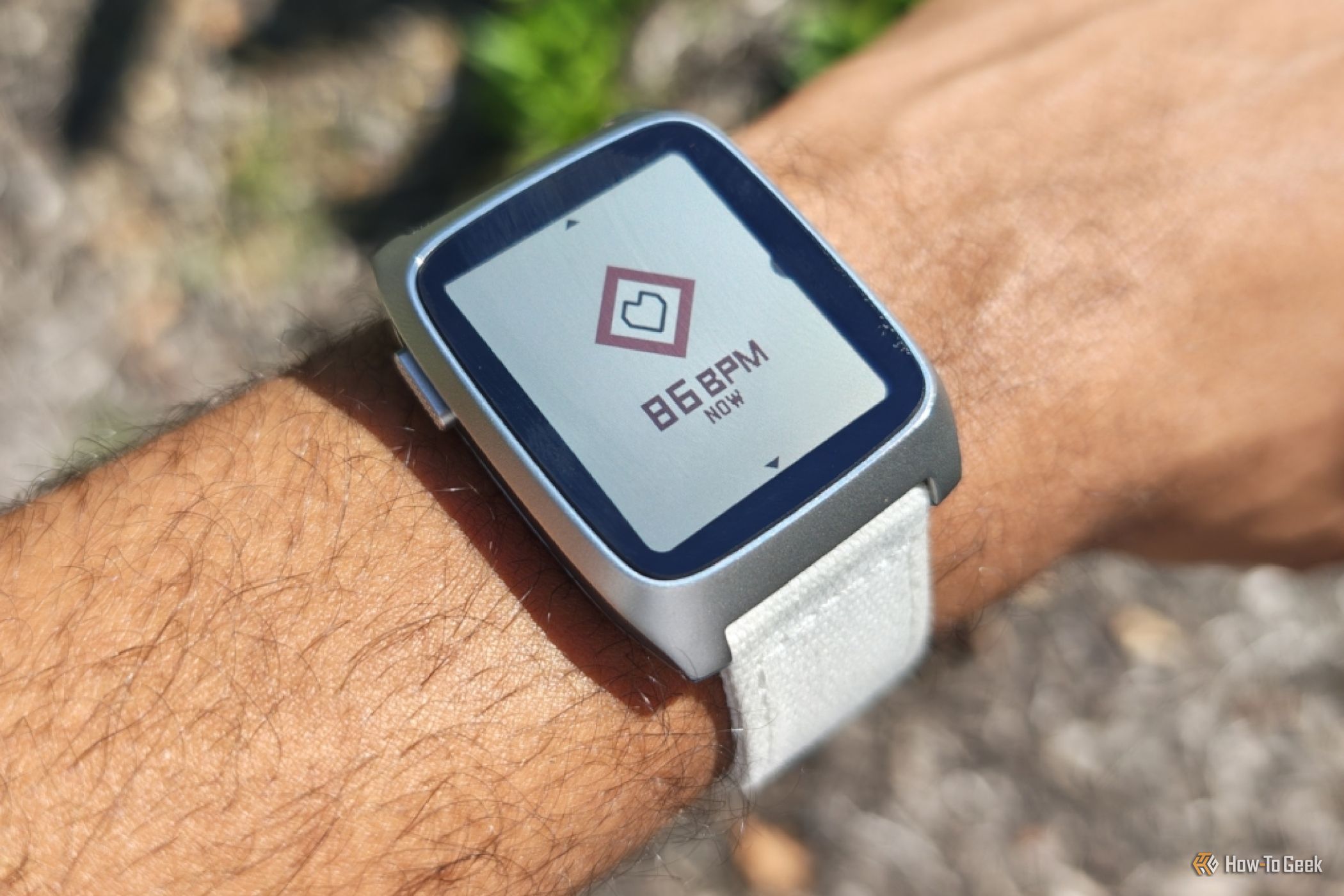
I am suspicious of fitness trackers. I'm not saying we can't trust companies to safeguard the data they generate, but it would be nice to not have to trust them in the first place. That is why I've been happy to wear a Pebble Time 2, which is the first Android-compatible product I've worn that generates health metrics without also uploading that information to the web.
A mother in New York State who claims to oppose vaccines because of her Catholic faith lost an emergency appeal to the Supreme Court of the United States (SCOTUS) this week—though Justices Samuel Alito and Neil Gorsuch said they would have granted her application. For now, the woman’s kindergarten-aged son must be vaccinated to attend school.
For a child bursting with energy, few things are more fun than hurtling through a bouncy castle, launching into the air, and ping-ponging between every surface. But that childhood buoyancy will quickly deflate when it turns out those surfaces are smeared with a hypervirulent, multidrug-resistant pathogen.
That was the horrifying reality for a community in Ireland in fall 2025. Neighbors had gathered for an afternoon of merriment, complete with a barbecue, a sweets station, and three bouncy castles. Officials estimate that about 120 people joined the festivities, and around half of them were children and teens. Within a day, some children began developing signs of an infection. In all, 48 children in the community developed aggressive skin and soft-tissue infections.
Of the 48 cases, 33 were treated by their regular doctor, and 15 sought emergency care. Four children ended up being hospitalized. Luckily, all of the children recovered. The results of the outbreak investigation were reported this week in the journal Eurosurveillance.


© Getty | Marko Stojkovic
Argonne researchers study the movement of dust particles from concrete surfaces during a simulated radiological contamination scenario, measuring how pedestrians and moving cars affect the spread of the particles.
Every year, MIT Technology Review puts together a list of some of the brightest and best young minds working across science and technology. Our 35 Innovators Under 35 are the ones to watch—people whose research and technical work stands to shape the future of their fields.
This year, the list includes nine people who are transforming biotech. And this week, I’m going to give you a taste of some of the very cool stuff five of them are working on, which includes lifesaving innovations and groundbreaking “age reversal” tech.
1. Preventing maternal deaths
Let’s start with Paschal Kija, a 28-year-old who has developed a device to treat postpartum hemorrhage—a dangerous birth complication that contributes to around 29% of maternal deaths in his home country, Tanzania. The Mkanda Salama (“Safe Wrap” in Swahili) is easy to use and costs just $70. A study found that it stopped postpartum bleeding in 73% of women within 20 minutes.
2. Making brain electrodes inspired by Japanese art
For decades, scientists have been developing, testing, and implanting brain electrodes. These devices are literally inserted into people’s brains, so while they can help us understand brain activity and treat various neurological disorders, it’s not totally surprising that they can also cause a bit of damage. Xiao Yang, 34, is working on ultra-small electrodes, which she hopes will have less of an impact on surrounding brain tissue. Her electrodes are flexible, too—in fact, they look a lot like actual neurons.
Yang is also creating sheets of electrodes to study brain cells in the lab. Inspired by kirigami—the traditional Japanese art of cutting paper to form three-dimensional shapes—she’s created a sheet of electrodes with a honeycombed structure shaped like a spiral basket. And she’s already using it to study brain cells.
3. Developing an all-new treatment for baby KJ
In 2024, Kyle “KJ” Muldoon Jr. was born with a rare and potentially fatal genetic disorder. Sarah Grandinette was a member of a team that developed an entirely new, personalized treatment for him—a gene-editing therapy essentially designed to correct a genetic misspelling.
Grandinette, who is now 26, created cells with KJ’s genetic variant and used them to screen gene-editing approaches; then she tested potential medicines in mice and monkeys. KJ ultimately got his first dose of the resulting treatment when he was about seven months old. He responded well and was eventually discharged from hospital. He’s “doing pretty great,” she says.
4. Reversing the aging process to treat eye disease
The buzziest tech in longevity right now centers on reprogramming—attempts to rewind the age of cells by resetting them to a more embryonic-like state. In a study published in 2020, Yuancheng (Ryan) Lu (now 34) and his colleagues showed that a reprogramming therapy reversed vision loss in aged, blind mice. Now an almost identical version of that therapy is being tested in people with eye disease. Life Biosciences, the company developing the drug, dosed its first volunteer in June.
5. Using AI to design new viruses
Last year, Samuel King used a generative AI model to come up with new genetic blueprints for bacteriophages—teeny viruses that can infect bacteria. Once he had those blueprints, he printed them out as strands of DNA. In experiments, he found that those AI-designed viruses could create new copies of themselves, burst out of bacterial cells, and infect other nearby bacteria. Viruses aren’t alive, but King, 27, hopes that AI-designed life forms might one day be used to make drugs or soak up pollution.
You can read more about these innovators, and the others on the biotech list, here.
This article first appeared in The Checkup, MIT Technology Review’s weekly biotech newsletter. To receive it in your inbox every Thursday, and read articles like this first, sign up here.
