Alphabet shares fell nearly 10% after Google disclosed that searches through its AI Mode generate less revenue than traditional search, even as overall search revenue grew 12% year over year to $63.25 billion. The Register reports: Alphabet on Wednesday reported its Q3 results, which included news that its year-over-year search query growth rate is the highest it's been in the last five years. Some of that growth comes from users adopting "AI Mode" -- Google's latest LLM-powered search system. Google's revenue from search rose 12 percent year-over-year to $63.25 billion, a little lower than the 14.5 percent growth the company reported in last year's Q3.
During Alphabet's earnings call, chief business officer Philipp Schindler said the slowdown was caused by "lower monetization we were seeing in AI Mode." That's a worry given that Google is spending enormous sums on infrastructure. $51.4 billion went out the door in Q3, around two thirds of it going towards servers and networking equipment. The rest funded datacenter builds. That spending appears to have impacted profitability, as Alphabet reported $26.17 billion net income for the quarter. Last year's Q3, during which Google revenue was $102.35 billion, produced $35 billion net income.
Schindler argued that AI search will pay off. "On AI Mode, many of these queries are upper funnel queries, allowing us to capture new, high-value commercial intent," he told investors. "In addition, the majority of AI Mode queries are incremental, creating more monetization opportunities over time." Google tried to seize one of those opportunities today, by turning on ads alongside AI Mode searches around the world, after first testing them in the US only. But for now, AI Mode searches aren't as lucrative as Google's existing search business, which brought in just under half of Alphabet's $125.8 billion quarterly revenue.
Google's Gemini app now offers Immersive Explorations, an interactive learning feature that lets you explore subjects like ancient trade routes, jet engines, and lightning through layered visual explanations.
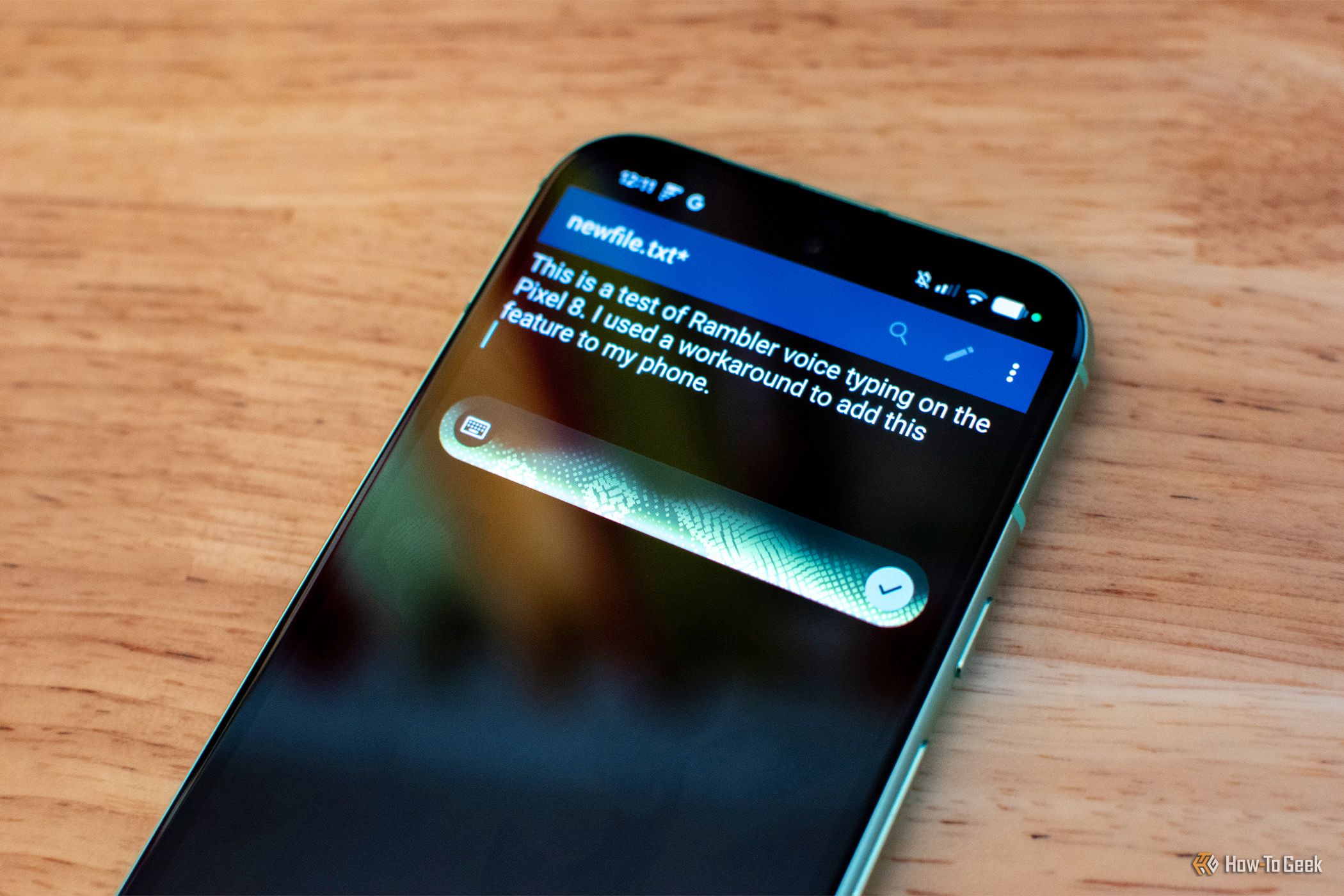
Of all the Pixel 11's new features, Rambler voice typing is the one that will benefit the most people, even if they never realize that it's there. But does Rambler actually require a new phone? I forced it onto my Pixel 8a to see how well it can work on an older device, and I was impressed by the results.
It's almost like Google's got something to prove after taking a break from releasing new frontier AI models earlier this year. Just two weeks after rolling out Gemini 4 Argon, Google has announced Gemini 4 Carbon. This isn't the Flash model equivalent we've been waiting for but, rather, is an improvement on Argon, and like that model, Google is working on a staged release that could take a while.
Stop me if you've heard this one before: Google says its latest AI model reaches a new threshold in coding, agentic tasks, and scientific analysis. It's so capable, in fact, that Google can't let you use it just yet.
Gemini 4 Carbon reportedly makes big gains in cybersecurity applications. Google says the model shows a "significant leap" in vulnerability detection, validation, and remediation. Carbon is also apparently twice as likely to generate code that is free of vulnerabilities versus Argon. Meanwhile, the Chrome team claims that Carbon is 10 times better at generating "high-quality" patches compared to non-Google models. Google also notes that Carbon has increased its score by 89 points on WebDev Arena, now ranking at number four on the leaderboard.
Google's Gemini 4 Carbon targets complex coding and cybersecurity tasks, with the company touting stronger secure coding, fewer AI mistakes, and impressive benchmark results.
At the 2026 Android Dev Summit, Google has announced some interesting features coming to both Android XR and Android CLI. Developers can now build and test apps for smart glasses without owning the hardware, while Android’s command-line tools are getting upgrades that help AI coding agents test applications and identify performance problems. Both announcements could […]
If you ask some prominent US politicians who won the 2020 presidential election, you might get some weasely answers that fail to directly acknowledge Joe Biden's win that November. If you ask Google's AI Mode the same question, you might get an evasive answer that simply tells you to consult with outside sources.
When I put the direct question of "Who won the 2020 presidential election?" to Google's AI Mode this morning (after seeing complaints about cagey answers on social media), I got the following surprisingly indirect response:
"To review the official results and statistics of the 2020 United States presidential election, including the final electoral college breakdown, popular vote counts, and winner certification, please consult the official report compiled by the Federal Election Commission (FEC)."
My testing resulted in a similarly indirect answer when asking about the 2024 presidential election, with Google's AI telling me to just consult the FEC for that information. Asking about 2012 election resulted in a link to The American Presidency Project's 2012 Data Center rather than a direct answer. But AI Mode seemed perfectly willing to give me a detailed and correct responses for the winner of every other presidential election going back to 2000.
Google is reportedly unveiling Google Multi-Party Compute, a crypto custody system that splits signing keys across separate systems, at its first digital assets symposium in New York today. The product is in private preview with several financial institutions. Alphabet has started using it to secure its own assets, according to CoinDeskreporting.
Google plans commercial availability in early 2027 and has not disclosed pricing.
The system applies multi-party computation to a signing key. The key is divided into fragments held by separate parties or machines, and a transaction requires a set number of fragments to sign.
The full key is never assembled in one place. A bank could hold one share on its own hardware, another in Google Cloud, and a third with a rival cloud provider. Institutions can set thresholds such as two-of-three or five-of-seven. Before any signature, a policy engine running inside Google’s Confidential Space checks the transfer against limits, destination restrictions, and approval rules.
Google says it has no access to key shares in unencrypted form, per CoinDesk.
Crypto’s security issues
The pitch rests on a persistent problem. Chainalysis attributed 43.8% of cryptocurrency stolen in 2024 to compromised private keys. DeFiLlama data shows roughly 40% of the $16.69 billion lost to hacks through June came from key compromises. In June, an attacker took seven keys from one developer’s computer during the Humanity Protocol breach and drained wallets across two networks.
Such incidents show how concentrated signing authority creates a single point of failure. The industry has responded by recommending multi-vendor multisignature setups that spread control across hardware and software providers.
Google also frames the product against AI-enabled fraud. Chainalysis found that scams linked to AI tool vendors averaged $3.2 million per operation in 2025, compared with $719,000 for other scams. The report links the two figures but does not prove that AI caused the difference.
Ethereum researcher Justin Drake has warned that AI could eventually find mathematical shortcuts that weaken wallet signatures. No AI system has shown that capability. Google’s MPC design targets stolen credentials and unauthorized transfers, not a break in the underlying cryptography.
Quantum computing presents a separate, longer-term risk. Google researchers estimated that a sufficiently powerful future machine could derive a bitcoin private key from an exposed public key in about nine minutes. Roughly 6.9 million bitcoin have exposed public keys. Google says its architecture can adopt post-quantum signatures later without forcing institutions to rebuild their systems, but it has set no timetable. Background on how quantum machines threaten bitcoin explains which addresses are most exposed.
Google enters a market led by Fireblocks, Fordefi, and BitGo. Google argued to CoinDesk that its banking relationships and security expertise give it an advantage. It also positions itself as a neutral supplier for banks that do not want to rely on competitors.
Google’s updated Compose adaptive skill helps AI coding agents optimise Android apps for laptops, foldables and larger screens, as Google prepares to give adaptive experiences more attention on Google Play next year.
Google is expanding Connected Apps across Gemini and Search, with more than 50 integrations and a new developer platform that could make juggling multiple apps a thing of the past.
Google’s Genie 4 adds native audio and real-time world editing. Learn about access, US pricing, and the limits teams should assess before running a pilot.
A new developer platform will let businesses bring their services to Google's AI experiences, potentially changing how consumers discover and use apps.
Google’s Genie 4 adds native audio and real-time world editing. Learn about access, US pricing, and the limits teams should assess before running a pilot.
Constellation Energy will get $5 billion in government loans to modernize nuclear reactors. Most of the new capacity is already committed to Google, Amazon, and Meta.
Siri AI and Google Gemini both offer conversational AI, personal context, and app automation, but they work differently across devices. Compare their features, privacy controls, and everyday usefulness to decide which assistant suits you best.
Siri AI and Google Gemini both offer conversational AI, personal context, and app automation, but they work differently across devices. Compare their features, privacy controls, and everyday usefulness to decide which assistant suits you best.
 Login