Ripple CEO Brad Garlinghouse has cited an 86-tonne reallocation of Dutch gold reserves to argue that crypto networks can move value across borders faster than physical reserve systems. Dutch gold transfer changed where reserves were held De Nederlandsche Bank said…
The articles in the pages ahead examine how government is balancing innovation, risk management, workforce readiness and operational effectiveness as AI increasingly becomes inseparable from cybersecurity itself.
Bitcoin’s correlation with gold is at its highest in six years as investors increasingly look for ways to hedge against currency debasement.
That’s according to a new report from Bitwise, which this week pointed out that the precious metal and leading cryptocurrency are trading in lockstep because the U.S. government has “materially intervened in the macro picture.”
Bitcoin started surging last month, after the U.S. Treasury Department said it would more than double the size of its government debt repurchases. The coin had its best run in three years and third best August ever.
JUST IN: Bitcoin's correlation with gold hit a six-year high, according to Bitwise
“The last time the bitcoin-gold correlation was that high was in 2020, following the rounds of fiscal and monetary stimulus during the Covid crisis,” Bitwise’s European Head of Research, André Dragosch, wrote.
He added that bitcoin’s correlation with the stock market dropped to a one-year low, “implying some kind of decoupling between hard assets and the stock market.”
Bitcoin has been pushed as “digital gold” for years but has sometimes traded with tech stocks as a “risk-on” asset.
But the so-called debasement trade — when investors buy an asset as a way to hedge against a currency losing value — was a much-talked about investment strategy last year and appears to be back.
The reason is down to the government intervening in markets, Dragosch argued. When the Treasury said it would try to rein in long-term borrowing costs, the dollar’s value slid and sent investors flooding back to gold — and bitcoin.
The Treasury the same week also said the U.S. public debt exceeded $40 trillion for the first time. Excessive debt also undermines confidence in the dollar.
“Investors are no longer asking whether to hedge currency debasement with gold or bitcoin. They’re simply hedging with both,” the report added.
“Bitcoin spent its first fifteen years being priced as a risk asset. If this correlation trend with gold holds, the next fifteen may look very different.”
The leading cryptocurrency again rallied this week, and was recently trading for close to $81,438 after jumping nearly 6% over a 24-hour period.
A new geopolitical shock is pushing oil higher, Treasury yields are rising, and rate-hike fears are returning. Yet Bitcoin is still holding near $79,000.
Something unusual is happening in financial markets.
Oil is rising sharply.
Treasury yields are climbing.
The U.S. dollar is under pressure from a complicated mix of fiscal and geopolitical concerns.
And investors are once again discussing the possibility of tighter monetary policy.
Normally, this would be a terrible combination for Bitcoin.
Yet Bitcoin is still hovering around $79,000.
That divergence may be one of the most interesting signals in crypto right now.
The Geopolitical Risk Is Back
The latest escalation between the United States and Iran has immediately changed the market’s risk calculation.
Brent crude moved above $91 per barrel, while WTI climbed toward $87 as investors began pricing in renewed risks to energy supplies and shipping through the Strait of Hormuz.
The Strait is particularly important because roughly one-fifth of global oil flows through the waterway.
Any prolonged disruption could therefore create a second-order problem for global markets:
And that chain reaction is exactly what investors are worried about.
The Fed Problem Just Became More Complicated
Oil isn’t just an energy story.
It’s a monetary-policy story.
When energy prices rise sharply, inflation can become much harder to control.
That creates a difficult situation for the Federal Reserve.
If economic growth weakens while inflation rises, policymakers face a classic dilemma:
Do you support growth or fight inflation?
The market has already started adjusting.
The U.S. 10-year Treasury yield moved above 4.75%, reaching its highest level in roughly 19 months, as higher oil prices increased expectations that the Fed may need to keep rates higher for longer.
That should normally be a major headwind for Bitcoin.
But Bitcoin hasn’t collapsed.
Bitcoin Is Refusing to Behave Like a Pure Risk Asset
This is where the story gets interesting.
Bitcoin is currently around $79,000, after August delivered one of its strongest monthly performances in years. Bitcoin gained roughly 25% during August, according to recent market data.
Now the market is facing:
Higher oil prices
Higher Treasury yields
Renewed geopolitical risk
Greater rate-hike expectations
Yet BTC remains relatively resilient.
That doesn’t mean Bitcoin has become immune to macro conditions.
It means investors may be treating Bitcoin differently than they did several years ago.
The Bitcoin Narrative Is Splitting in Two
There are now two competing stories around Bitcoin.
The first is the traditional risk-asset narrative.
Higher rates hurt liquidity.
Higher yields make bonds more attractive.
A stronger dollar pressures speculative assets.
Under this framework, Bitcoin should struggle.
The second is the monetary-hedge narrative.
Government debt keeps growing.
Inflation remains difficult to eliminate.
Geopolitical tensions are increasing.
Investors want exposure to scarce assets.
Under this framework, Bitcoin can benefit.
These two narratives can coexist.
And that explains why Bitcoin can simultaneously behave like a risk asset and a monetary alternative.
Gold Is Sending a Similar Signal
Bitcoin isn’t the only asset attracting attention.
Gold has also remained extremely strong, with spot gold recently trading above $4,600 per ounce.
That matters because Bitcoin and gold are increasingly being discussed together.
When investors become concerned about:
currency debasement,
government debt,
geopolitical instability,
and long-term purchasing power,
both assets can become part of the conversation.
The difference is that gold has thousands of years of monetary history.
Bitcoin has only existed for less than two decades.
The fact that investors are increasingly comparing them is itself significant.
But Here’s the Catch
Bitcoin’s resilience doesn’t mean the market is safe.
If oil remains above $90 for an extended period, inflation expectations could continue rising.
That could force central banks to remain restrictive for longer.
And higher rates eventually affect almost everything.
Stocks.
Credit.
Real estate.
Crypto.
So Bitcoin may be resisting the first wave of macro pressure.
That doesn’t mean it will necessarily resist the second.
September Could Be a Very Different Month
August was spectacular for Bitcoin.
September could be much harder.
Historically, September has been one of Bitcoin’s weakest months, with average performance often lagging other periods.
This year, however, the market enters September from a completely different position.
Bitcoin has already rallied sharply.
Institutional participation has increased.
Crypto sentiment has improved.
But macro uncertainty is rising again.
That creates an interesting battle between:
Crypto momentum
and
Macro pressure.
Whichever side wins could determine the next major move.
The $80K Level Is Still the Psychological Battlefield
Bitcoin remains close to $80,000.
That number has become more than a technical resistance level.
It represents a psychological dividing line.
Above it, the market can start talking about:
$85K.
$90K.
$100K.
Below it, traders may start questioning whether August’s rally was simply an aggressive rebound.
The interesting part is that Bitcoin doesn’t necessarily need to break $80K immediately.
It may actually be healthier if it spends some time consolidating below the level.
The market needs to absorb the gains.
Watch Oil Before You Watch Bitcoin
This may sound strange for a crypto article.
But over the next few weeks, oil could become one of the most important variables for Bitcoin.
If Brent stays above $90:
Inflation risk increases.
Rate expectations rise.
Treasury yields remain elevated.
Liquidity becomes tighter.
That creates pressure on crypto.
If geopolitical tensions ease and oil retreats:
Inflation expectations could cool.
Rate pressure could decline.
Risk appetite could recover.
Bitcoin would have a much friendlier environment.
In other words:
The next Bitcoin catalyst might not come from crypto at all.
The Market Is Entering a Much More Interesting Phase
The easy narrative is gone.
Bitcoin isn’t simply moving higher because investors are bullish.
There are competing forces now.
Institutional demand wants Bitcoin.
Macro conditions are pushing against it.
Geopolitical risk is creating uncertainty.
Gold is attracting capital.
Oil is creating inflation pressure.
The Fed is watching the data.
And Bitcoin is sitting in the middle of all of it.
That is exactly what makes the current market interesting.
Final Thoughts
The biggest crypto story today isn’t that Bitcoin is around $79,000.
It is that Bitcoin is holding around $79,000 while the macro environment is becoming significantly more hostile.
Oil is above $90.
Treasury yields are approaching 4.75%.
Rate-hike expectations are rising.
Geopolitical tensions are escalating.
Yet Bitcoin remains relatively resilient.
That doesn’t prove Bitcoin has become a safe haven.
It doesn’t prove the bull market will continue.
But it does suggest that the Bitcoin market is evolving.
Investors are no longer looking at BTC through a single lens.
Some see a risk asset.
Some see digital gold.
Some see a hedge against monetary instability.
And increasingly, institutions appear willing to hold exposure regardless of which narrative eventually wins.
That’s the real story behind today’s Bitcoin market.
The question is no longer simply:
“Can Bitcoin reach $100,000?”
The more interesting question is:
“What happens to Bitcoin if the world becomes significantly more uncertain?”
We may be about to find out.
About SoonTech
SoonTech follows the global digital asset market, Web3 trends, and the macro forces reshaping the future of digital finance.
Binance founder Changpeng “CZ” Zhao has said that Bitcoin will hit $1 million dollars per coin sooner than we think — and eventually surpass gold’s market value.
Speaking at this year’s Bitcoin Asia on Thursday, the crypto entrepreneur also said that Bitcoin is “dangerous” for countries that don’t use it.
Bitcoin Asia kicked off on Thursday in Hong Kong, bringing the biggest names in the space to Hong Kong to talk about everything from treasury companies to building apps from scratch.
JUST IN: Former Binance CEO CZ says "I think for Bitcoin to hit $1,000,000 would be a good thing. And it'll happen."
“I think for Bitcoin hitting a million dollars would be a good thing — it will happen,” CZ said. “You think we need 25 years for that to happen? No, I actually don’t think we need 25 years, I think it’s going to happen much quicker.”
CZ continued: “Bitcoin will, for sure, become more important than gold,” adding that large counties would over the years realize that the leading cryptocurrency is a “much better asset.”
Bitcoin’s price started surging last week on news that the U.S. Treasury would at least double the size of its liquidity-support buyback operations. The announcement last week hurt the dollar but non-yielding assets like Bitcoin and gold have benefited.
The price of Bitcoin has jumped nearly 12% over the past seven days, touching as high as $81,160 this week before dropping again to its current price of $80,520.
Bitcoin’s $1.6 trillion market cap is still well below gold’s $32.2 trillion value.
Regarding nation state adoption, CZ said that countries that don’t end up adopting Bitcoin will lose out — just like with other emerging technologies, such as AI.
“If you think about AI, which country doesn’t want to hold the AI technology itself? Not investing in AI technology, not promoting the AI industry in your country, is dangerous for you,” he said.
“Many countries view Bitcoin as this dangerous thing — it’s not. Bitcoin is much more dangerous if you don’t use it: you’re missing out.”
He added that countries making the move to shift into Bitcoin would take time but would eventually happen.
Bitcoin exchange-traded funds have continued their winning streak, attracting billions of dollars in new investment over the past week.
U.S. investors have thrown $2.56 billion since last Monday, according to Farside Investors data, helping push the leading cryptocurrency’s price higher.
And this week alone, nearly $652 million in fresh cash has hit the products managed by the likes of BlackRock, Morgan Stanley, and Fidelity.
Bitcoin was recently trading for $78,302 after jumping nearly 25% over a seven-day period. The coin touched as high as $81,160 on Monday.
JUST IN: U.S. spot Bitcoin ETFs have taken in $2.08 billion over the past 5 trading sessions pic.twitter.com/GskNy0yPfc
Bitcoin’s rise comes after a sluggish June and July when it mostly traded below $65,000.
The cryptocurrency has benefited from news that the Treasury would at least double the size of its liquidity-support buyback operations. The announcement last week hurt the dollar but non-yielding assets like Bitcoin and gold have benefited.
Bloomberg Intelligence ETF Analyst Eric Balchunas wrote on X Wednesday that the debasement trade was back.
“Gold and Bitcoin ETFs have combined for +$7b in flows in past week, by far a record for a 5-day period as debasement trade steals spotlight from AI,” he said.
The debasement trade is when investors buy an asset to hedge against a currency losing value. Investments like Bitcoin and precious metals have done well as part of the trade as they cannot be endlessly printed.
Last year, the investment strategy was much talked about but then went quiet as investors focused more on buying artificial intelligence-related equities.
Investors now are fretting over U.S. borrowing, a weak dollar and efforts to contain long-term yields.
Bitcoin ETFs had their best week since October last week, with nearly $2 billion in inflows.
Positive regulatory coming out of the White House has also spurred the flurry of trading activity. President Donald Trump held a meeting with crypto executives earlier last week before urging lawmakers to get the long-awaited crypto Clarity Act over the line.
This content is supported by MEXC Learn, an educational initiative covering Web3 trends, market insights, and crypto learning resources.
“Don’t put all your eggs in one basket.” You’ve heard the saying a hundred times. But have you ever stopped to ask what’s actually going on under the hood? The answer comes down to a single concept: correlation.
What Correlation Actually Means
In investing, correlation measures whether two assets tend to move in the same direction at the same time.
When two assets consistently rise and fall together, they’re positively correlated.
When one tends to rise while the other falls, they’re negatively correlated.
When their price movements have little to no relationship to each other, they’re uncorrelated (or weakly correlated).
Take Bitcoin (BTC/USDT) and the broader altcoin market on MEXC as an example. Over the long run, these tend to show fairly high positive correlation — when overall sentiment turns bullish, capital tends to flow across the entire crypto market and lift most tokens together; when panic selling hits, most coins tend to drop in tandem too. That’s largely because they belong to the same broad asset class and share much of the same sentiment and capital flows.
Gold-backed tokens (GOLD/XAUT), on the other hand, have historically shown low or even negative correlation with high-volatility crypto assets. When macro risk-off sentiment kicks in and investors dump riskier holdings, some of that capital tends to rotate into gold as a traditional safe haven — a textbook case of negative correlation in action.
This is exactly why the “Opportunities Beyond Crypto” lesson makes a point of saying: a crypto crash doesn’t automatically mean your stock positions or gold holdings are about to tank too. Whether they move together comes down to correlation — not some blanket assumption that “everything falls when sentiment turns sour.”
Why Correlation Is the Whole Point of Diversification
The goal of diversification was never simply “buy more different things.” It’s about combining assets with low or negative correlation to smooth out the swings in your overall portfolio.
Consider two extreme scenarios:
Scenario one: You buy 10 different altcoins on MEXC. On the surface, that looks diversified. But because most altcoins tend to move closely with BTC, when the broader market turns bearish, all 10 are likely to drop together — and your “diversification” barely does anything.
Scenario two: Alongside your core BTC and ETH holdings, you also hold some gold tokens and US equities through RealStocks. When a sudden piece of bad news drags the crypto market down across the board, your gold and equity positions won’t necessarily fall in lockstep — capital may even rotate from crypto into these safer assets, cushioning some of the drawdown. The result: your overall portfolio swings a lot less than if you’d gone all-in on crypto alone.
This is exactly why experienced investors rarely ask just “will this asset go up?” They ask, just as often, “how does this asset move relative to everything else I’m already holding?”
Correlation Isn’t Fixed
One important caveat: correlation isn’t a fixed number carved in stone. Assets that show low correlation under normal market conditions can suddenly move in lockstep during extreme, systemic events — a global financial crisis, for instance — when correlations across nearly all risk assets spike at once. That’s because panic tends to trigger indiscriminate selling: when investors need cash fast, they sell whatever can be liquidated, regardless of category. This is also why diversification, while genuinely useful, was never meant to be an absolute guarantee of safety.
The Takeaway
Understanding correlation is the first step to understanding why diversification matters in the first place. Next time you see one of your holdings drop sharply, resist the urge to assume everything else is about to follow. Ask yourself first: are these assets actually correlated — or was that just an assumption?
Top investor Ray Dalio has again sung Bitcoin’s praises. But only a little bit.
The billionaire hedge fund boss said in his latest essay that he expected “non-government-produced monies like gold and bitcoin to do relatively well” as government debt grows.
Dalio, who founded one of the world’s largest hedge funds, Bridgewater Associates, has long warned investors about the size of America’s debt. U.S. national debt passed the $40 trillion mark this week.
JUST IN: Billionaire Ray Dalio suggests diversifying into gold, bonds, "and a bit of Bitcoin." pic.twitter.com/Z0TCviiTBV
“As general advice, I suggest diversifying well in asset classes and countries that have strong income statements and balance sheets and are not having great internal political and external geopolitical conflicts, underweighting debt assets like bonds, and overweighting gold and a bit of Bitcoin,” Dalio wrote.
He added that major economies like the U.K., U.S., Europe, and Japan all have similar debt and deficit problems and therefore assets like bitcoin — which are not issued by governments — could end up benefiting.
Dalio has gone from saying he wouldn’t invest in Bitcoin over the years to finally admitting it was in his portfolio.
Last year, Dalio said that bitcoin only made up 1% of his investments. He reiterated that point this year, and warned that although no one can print more bitcoin, it can be hurt by quantum computing advances.
Back in 2020, the billionaire investor said that the cryptocurrency was too volatile to use as money but that it was worth holding a little bit. Gold, on the other hand, should be held by all investors, he added.
Dalio’s latest essay explains that when governments over-borrow and central banks respond by printing money to cover the gap between debt supply and demand, the value of the currency gets debased.
Bitcoiners have long argued that the oldest cryptocurrency can work as a hedge against government printing, just like gold.
And Bitcoin has in the past benefited from governments expanding their money supplies.
Bitcoin is sending two notable signals to the market this week: on-chain data suggests the cryptocurrency may be forming a macro bottom, while its price behavior is increasingly echoing gold’s role as a safe-haven asset.
That’s according to two reports from blockchain data firm CryptoQuant, whose analysts pointed to the early stages of a bottoming process for the biggest and oldest cryptocurrency.
The price of the largest cryptocurrency recently stood at $63,362, mostly unmoved over a 24-hour period. Over the past week, Bitcoin is down nearly 2%. Since it notched a record of $126,080 in October, it has shed nearly 50% of its value.
JUST IN: Bitcoin is now trading in its "Cost of Production" zone, typically the sign of a bear market bottom.
“At each major cycle bottom, long-term holders were sitting on deeper unrealized losses than the broader market,meaning the cohort normally associated with the strongest conviction and lowest sensitivity to volatility is carrying greater unrealized stress than the market as a whole,” wrote analyst MorenoDV.
“The current structure fits that pattern,” he added.
The signal comes from adjusted Net Unrealized Profit/Loss (NUPL) data for long-term holders (LTH) — investors typically seen as the most resilient cohort in the market.
Currently, LTH aNUPL has crossed into negative territory and sits below the broader market average, meaning even long-term holders are now sitting on losses greater than the market as a whole. Historically, this exact pattern — long-term holders hurting more than average — has shown up at every major cycle bottom.
The setup lines up with Bitcoin trading roughly 50% below its cycle high, reinforcing the view that this is more than an ordinary correction.
But analysts caution against calling a bottom just yet. In previous cycles, LTH aNUPL fell into much deeper, more prolonged negative readings before a true low was in — a level of losses some describe as “depression territory.” Today’s numbers haven’t reached that extreme.
The report added that Bitcoin could still need one more capitulation leg to push long-term holder losses to historical extremes. Alternatively, stronger institutional demand and a more structurally resilient holder base could allow the market to bottom with comparatively less damage than in past cycles.
Bitcoin’s 90-day correlation with gold has swung from nearly -0.9 in early 2026 to around +0.7, according to data highlighted by CryptoQuant CEO Ki Young Ju, who described the move as a return to “digital-gold-era levels.”
The shift suggests investors are once again pricing Bitcoin as a scarce, non-sovereign asset — one that can act as a hedge against currency debasement, fiscal stress, and geopolitical uncertainty, much like gold.
Investors have long-touted Bitcoin as “digital gold” — a long-term store of value like the precious metal. And sometimes, they have been correlated.
But Bitcoin’s behavior remains split. A month-to-date comparison shows it sometimes trading in step with the Nasdaq, behaving like a liquidity-sensitive risk asset, while at other times tracking gold’s moves as a scarcity play.
Its volatility, though, continues to run far higher than gold’s.
Analysts also urge caution in reading too much into the correlation shift. A positive correlation isn’t inherently bullish — the two assets can just as easily fall together as rise together.
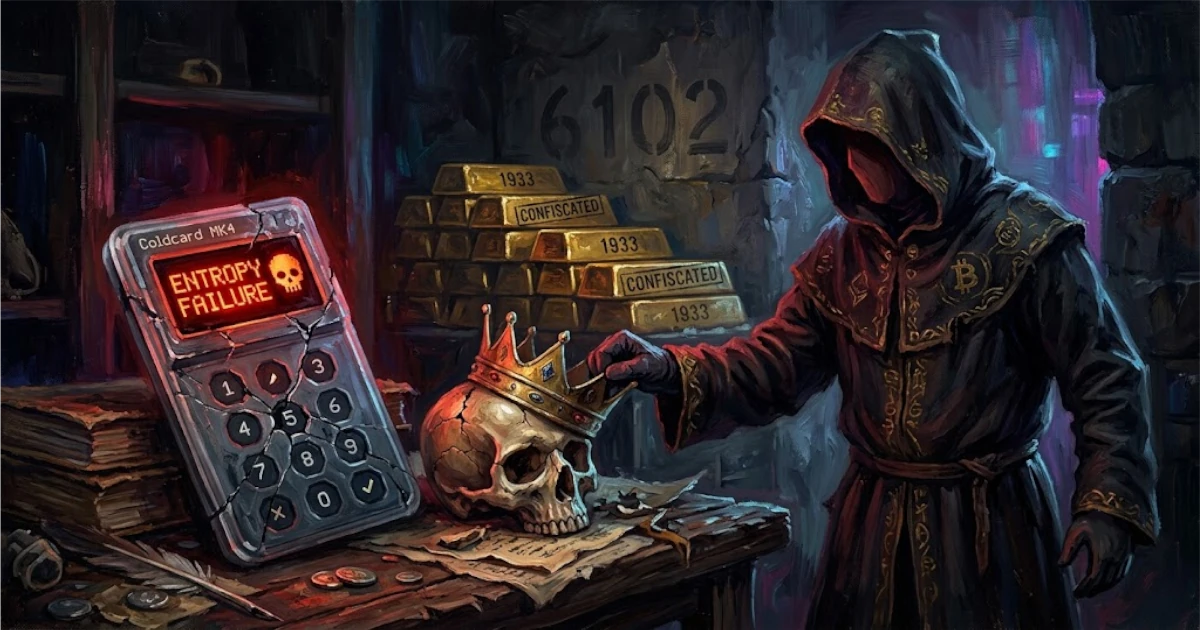
The Coldcard hack last week dealt a low blow to certain elements of the Bitcoin industry. A somber introspection has begun to question many of the practices and assumptions involved in securing bitcoin at a retail level. The consequences of this process might not be visible for many months.
Some are saying that self-custody is dead. Some reports estimate that over 11,000 bitcoins were moved to custodial exchanges last week as users fled one of the most popular hardware wallets in the Bitcoin industry. The hack, which is ongoing and users can still save themselves from, has seen north of 1,300 bitcoins stolen, with some estimates as high as 2,000 coins.
Coinkite in particular and its most vocal founder, NVK, had very strong opinions about what it took to secure bitcoin private keys from hackers. Its hardware wallets were airgapped to make sure malware could not exfiltrate data through USB cables. It used low-resolution, LED screens to avoid the complexity of touch screens. It developed protocols like BBQR and integrated NFC so that information could be transferred between the device and a computer without them touching or sharing SD cards. The list of paranoid design choices that made Coldcards iconic is long.
Yet the hackers involved in the theft of bitcoins held in Coldcards last week did not use any methods you might see in a modern spy movie. They exploited the one feature Coldcard should have had absolutely locked down. The generation of keys with high enough randomness, also known as entropy. In other words, secrets securing that are actually, mathematically hard to guess. While the devices were intended to use high-quality sources of entropy, the firmware had a bug which did not, resulting in Bitcoin private keys that were, in turn, easy to guess. The bug went undiscovered for years, and the product only grew in popularity in the meantime, until last week.
“Just buy the ETF bro”
Despite this loss, which wounded a cohort of Bitcoiners who were among the most committed. Bitcoin can not give up on self-custody and expect to retain its integrity. At least that is what many in the industry believe, and the case for that is clear.
Satoshi Nakamoto’s white paper clearly intended Bitcoin to be a solution to trusted third parties and intermediaries. It eloquently made the case against trusted hierarchies of finance, as the 2008 financial crisis revealed the deep systemic risks and flaws legacy finance has led to. Many believe the 2008 crisis was never escaped, its consequences haunting us to this day.
This may be unpopular, but we never escaped the 2008 financial crisis. We just shifted the pain.
Going further back to the birth and proliferation of the modern banking system and its fiat currency. The 6102 executive order signed by President Franklin D. Roosevelt in 1933 saw the persecution and confiscation of gold from centralized trusted third parties and citizens alike. $300,000,000 in gold was returned after the executive order threatened gold owners with heavy fines and jail time if they did not sell their bullion to the banks at $20,67 per ounce. Over 14 million troy ounces worth of gold were turned in as a result. Another 200 million troy ounces are estimated to have been held in the American banking system at the time. The banking system, not just in the U.S. but worldwide at the time, was built atop the gold standard.
The U.S. was the largest economy of the world at the time, with the biggest concentration of gold inside its borders. Its abandonment of the gold standard was a death blow to gold as a free market pricing mechanism for goods and services as a whole. Governments throughout the world, now free from the chains of sound money, quickly fed and fattened from the hidden tax of inflation. At the time of the EO, the price of gold was artificially fixed to $20.67 an ounce; not a year later, it was repriced to $35 with the passing of the Gold Reserve Act in 1934, a 69% devaluation in the dollar.
The fiat standard was thus delivered to governments throughout the world on a silver platter, by an unholy alliance between the banking system and politicians. It granted central banks the legal right to counterfeit money, to print it at will. It was soon followed by World War Two, which was of course funded by fiat currency. Tens of millions of people sacrificed in this war at the altar of state power.
Confiscation of gold in a rising power like the United States murdered the gold standard. It, however, could not have been possible if civilian custody of gold had been wider and more distributed. Many of the civilians who returned millions in gold after the 6102 EO had just taken it out of their accounts in a bank run. Their names were known, the amount of gold they held, tallied.
If gold was easier to move in large quantities. If private gold ownership totals had been more ambiguous. If removing the free flow of gold had not been so easy for the state to do, by knocking on the doors of bankers and pointing a gun, then perhaps the economies of the world would not have been able to withstand such a vast and destructive war, as was WWII for so long, in the following decade.
Bitcoin is Gold, Engineered To Survive a 6102 EO
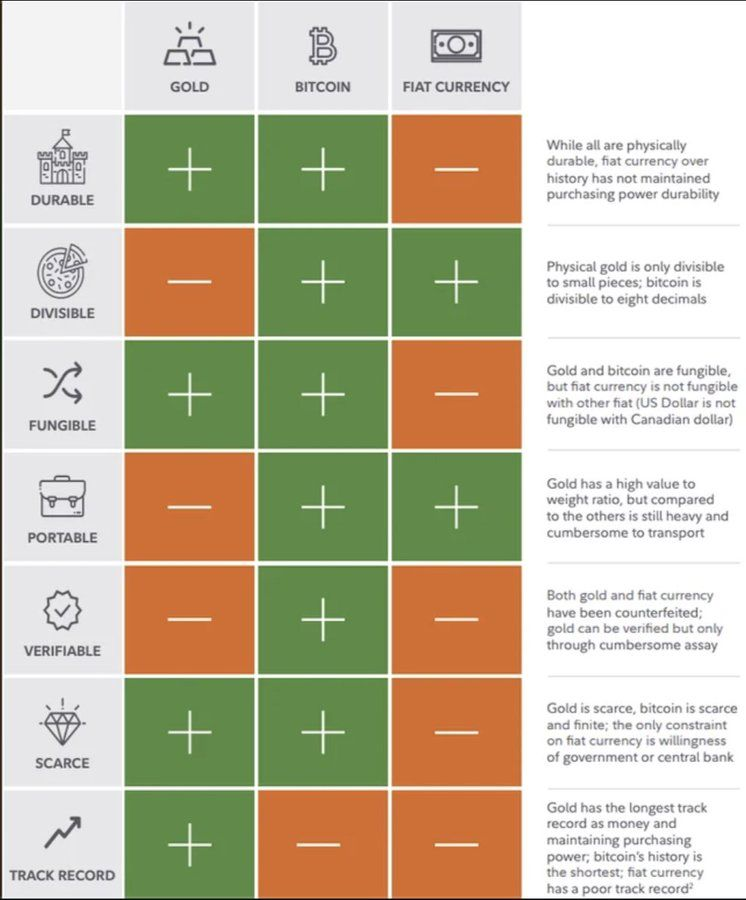
Bitcoin poses an alternative to gold, designed to learn from its inadequacies. Bitcoin has better properties to resist and survive such a confiscation. Bitcoiners envision and aspire to unlock a world that adopts Bitcoin as a global monetary standard. Where a large minority or even a small majority of the global economy uses Bitcoin as their primary store of value. In such a future, Bitcoin would take the place of gold and return sound money to the so-called capitalist order.
To reach global reserve currency and defend this position, Bitcoin will need to be better than gold, and it can be better precisely because of its digital nature. The control of private keys, as difficult as it seems now in the shadow of the Coldcard hack, nevertheless can be far more powerful than any physical vault. Multi-signature scripts alone unlock distributed storage of Bitcoin private keys, such that a threshold of them must approve to move coins. This means that multi-jurisdictional, multinational vaults can exist and escape or resist the greedy hands of a large state that might attempt a new kind of 6102 takeover.
The digital nature of Bitcoin means large amounts of value can be moved easily as well, without having to send the navy on a mission to pick up the gold. Without having to build a trusted hierarchy of banking custodians to transfer it. Civilians, with tools available today and better tools that are yet to come, might be able to hide their Bitcoin ownership as has been done in war-torn countries like Ukraine already, escaping a fearsome state’s grip over the public’s wealth.
Ultimately, a major hardware wallet manufacturer has failed the Bitcoin industry. The fundamental qualities of money remain the same, and among them all, as identified by Aristotle and others beyond him, Bitcoin remains king.
Legendary investor Ray Dalio still only holds 1% of his portfolio in Bitcoin — and prefers gold instead.
Speaking on a Thursday episode of the Diary of a CEO podcast, the Bridgewater Associates founder explained that while there are different types of money, and Bitcoin was one of them, gold was a better investment.
Dalio has gone from saying he wouldn’t invest in Bitcoin over the years to finally admitting it was in his portfolio.
“[Bitcoin] is a type of money that can’t be printed, but there are technologies that can hurt it — in other words, if there’s quantum computing,” he said.
“And it can be monitored by governments and so on, and it could be taxed. And digital currencies are somewhat similar.”
Dalio added that Bitcoin only makes up 1% of his portfolio. “I prefer that — I’m pointing to the gold bars here — rather than the Bitcoin,” he added on the show.
Last year, Dalio also admitted that Bitcoin only made up 1% of his investments.
This isn’t the first time Dalio has criticized Bitcoin and praised gold: Back in 2020, the billionaire investor said that the cryptocurrency was too volatile to use as money but said everyone should have some gold in their portfolio.
Dalio continued that governments could crack down on Bitcoin. “When the governments say I don’t want it, they have the power, therefore, to do whatever they want with it, and central banks will not own any significant amount of that because of the reason I said: they want their transactions to be private and in their control.”
While Dalio still takes a cautious approach to Bitcoin buying, over the years, the asset has become more widely accepted among traditional investors and even Wall Street heavyweights — including BlackRock, the world’s largest asset manager.
BlackRock CEO Larry Fink in recent years has called Bitcoin an “international asset” and a way of “digitizing gold.”

 Login
Login






 U.S. spot Bitcoin ETFs have taken in $2.08 billion over the past 5 trading sessions