 Login

Amazon debuts the Alexa Photo Frame and Echo Time smart clock, plus other upgraded devices
Amazon's other new devices include an upgraded Echo Dot, an Echo Studio with visual intelligence features, and the Echo Show 16.

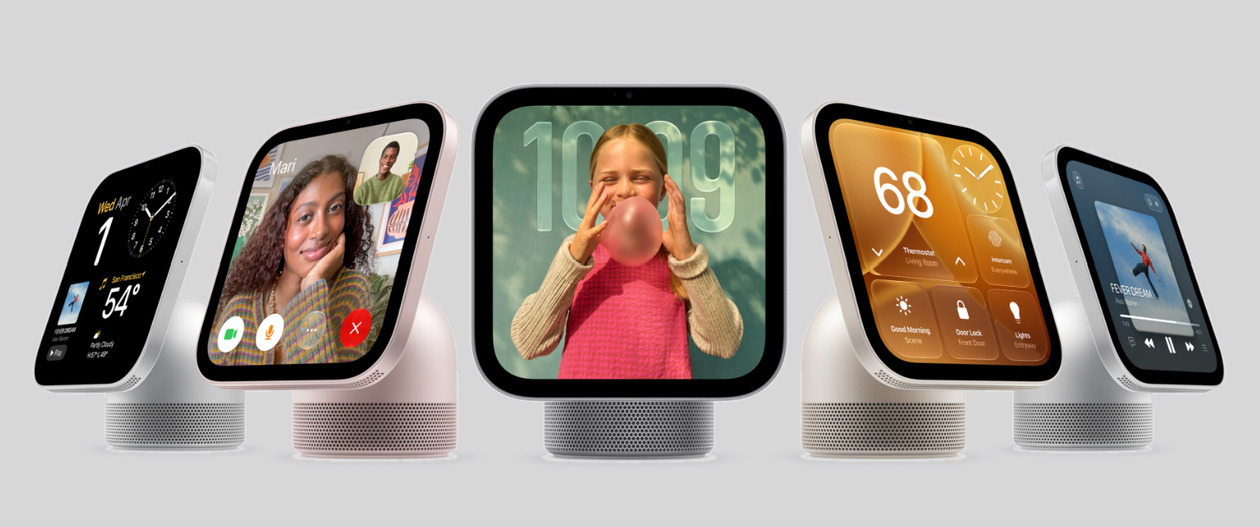
Apple is going after Amazon’s smart home business on several fronts at once.
The iPhone and iPad maker on Tuesday unveiled HomeView, a $299 smart display that competes directly with Amazon’s Echo Show, along with a lineup of cameras, a video doorbell and a smart lock made by LG Electronics. That puts Apple in the core categories of Amazon-owned Ring for the first time.
Apple also announced a new Apple TV 4K and the HomePod mini 2, which will go up against Amazon’s Fire TV and Echo speakers.
Amazon made its own move into Apple’s territory last week, unveiling premium Alexa Tablets, including a Pro model that competes more directly with the iPad.
The new Apple HomeView has a 7-inch screen and comes in a tabletop version with a speaker base and a wall-mounted version. It recognizes up to six household members by their faces and switches to each person’s messages, calendar and apps.
It runs Siri AI, Apple’s rebuilt version of its voice assistant, which the company calls “profoundly more capable and conversational.” Pre-orders started Tuesday, and the device ships Nov. 13.
Amazon’s big lead: About two-thirds of U.S. smart speaker owners have an Amazon device, compared with about a quarter for Google and 7% for Apple, according to the latest data from Consumer Intelligence Research Partners, covering the 12 months ending in June. Apple’s share has stayed in the mid-single digits for years.
CIRP’s Michael Levin and Josh Lowitz wrote that Apple may go after people who don’t own a smart speaker rather than try to convert Amazon and Google customers. Only 57% of recent Apple buyers have a smart speaker of any kind, the firm found.
The HomeView is aimed at people already using Apple devices. Setup and the personal features require an iPhone or iPad. It won’t be sold in the European Union because Siri AI isn’t available there.
Apple is also hinting that its AI won’t stay free. A footnote in the HomeView announcement says certain Apple Intelligence features that rely on server-side models are subject to daily limits, with expanded access “available for a fee in the future.” Amazon’s Alexa+ is free with Prime or $19.99 a month on its own.
Competition for Ring: The new Apple Home Collection, designed with LG and Schneider Electric, includes a $249.95 LG video doorbell with two cameras, LG indoor, outdoor and floodlight cameras priced from $199.95 to $399.95, and a $349.95 LG deadbolt that unlocks automatically as its owner approaches, using ultra-wideband technology.
The accessories are set for release starting in December, with some arriving in early 2027.
Camera video history requires an iCloud+ storage plan, and Apple says there’s no separate camera subscription. Apple’s retail stores will also offer installation by ADT for an extra charge.
The LG lock was announced a week after Ring unveiled its first smart lock, a $249 deadbolt with no keyhole and a hand-turned dial that revives a dead battery. It’s due in the first quarter of next year. Ring also announced five new cameras priced from $69.99 to $219.99.
The LG lock includes a backup key slot. “If you have to have a key, it’s like, well, why have a smart lock?” Ring founder Jamie Siminoff told GeekWire last week.
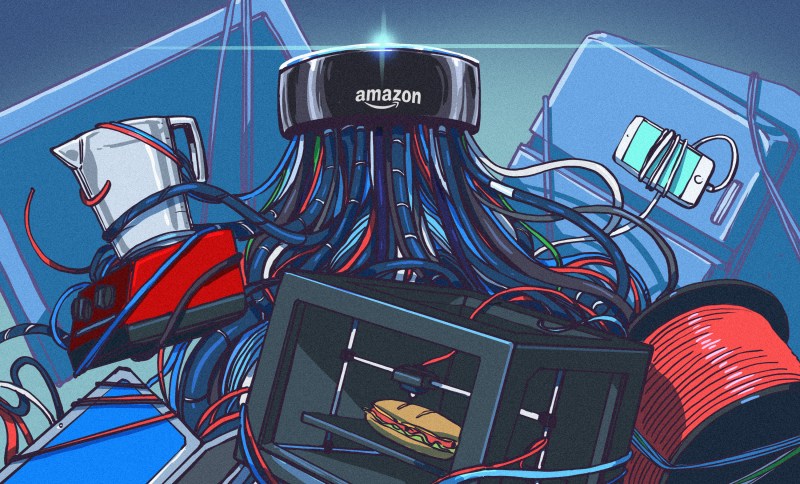
Although the feature has been deleted from newer models, there was a time when Amazon’s Echo devices included a 3.5 mm “aux” input jack that let you connect other audio sources to the smart speaker. Alexa would even let you switch over to an external source with a voice command — or at least, it used to.
As first reported by Reddit user [n8-sd], Amazon has started informing users that voice control over the 3.5 mm jack is no longer supported. While the physical input will still function on models equipped with it, if you want to mute the audio coming from an external device you’ll have to wade through the Alexa smartphone application to do it.
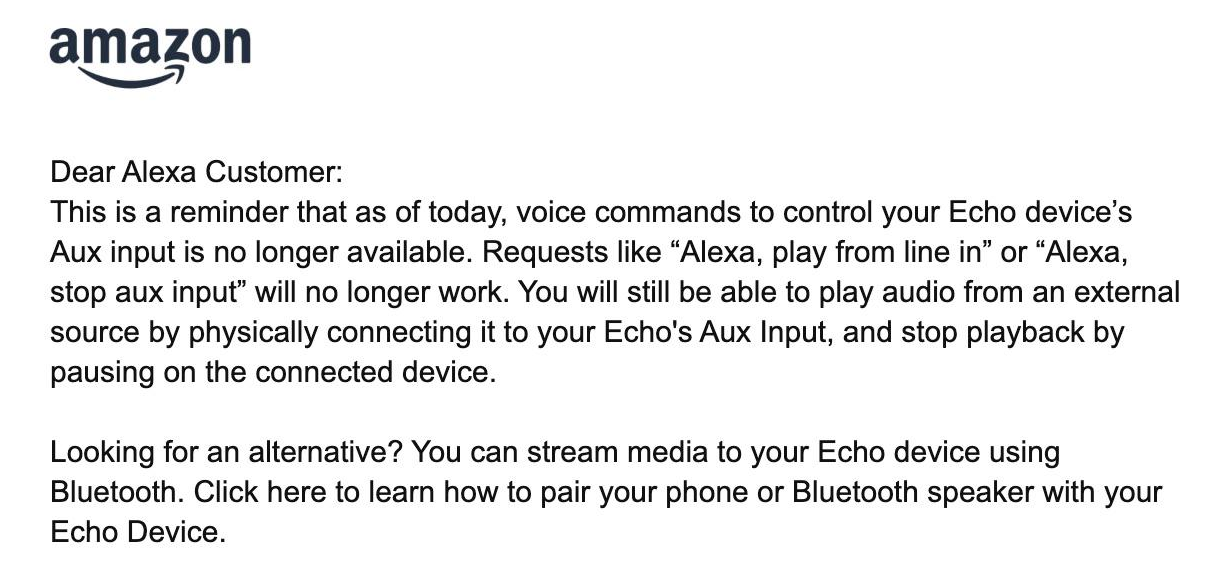
In a statement to Ars Technica, an Amazon rep confirmed that voice control over the auxiliary input has been removed as of the latest software version, and that their analytics showed not many people were using the feature in the first place. They also pointed out that no changes have been made to voice control of Bluetooth devices. While we don’t doubt that the total number of users that were physically plugging an audio source into their Echos was probably low in the grand scheme of things, that doesn’t really explain why such a simple feature needed to be actively removed.
Some commenters have theorized that the real reason behind the change is the fact that Amazon has no way of monitoring what users are playing over the auxiliary input. Since cataloging and selling the media consumption habits of users is big business these days, that’s a problem. While they might prefer to disable the feature entirely, they know that would stir up some bad press, so they’re opting to simply make it more annoying to use. We’re not saying we entirely buy this explanation, but it’s not the craziest thing we’ve ever heard either.
Although the Echo devices have never been particularly hackable, they have enjoyed a certain amount of success with tech-savvy users, making it all the more disappointing to see the ecosystem seemingly becoming less capable over time.
