Amazon is expanding shopping integrations across Prime Video, letting viewers discover products tied to thousands of shows, movies, and live sports through X-Ray, its shopping app, and a new Lens-powered “Shop the Scene” feature.
Amazon is adding a scam-detection feature to Alexa for Shopping that can verify whether suspicious emails, texts, and other messages actually came from the retailer.
Amazon is adding a new Alexa-powered feature called “Update Me When” that can send personalized alerts about product launches, tours, books, shows, and other events that could trigger a purchase.
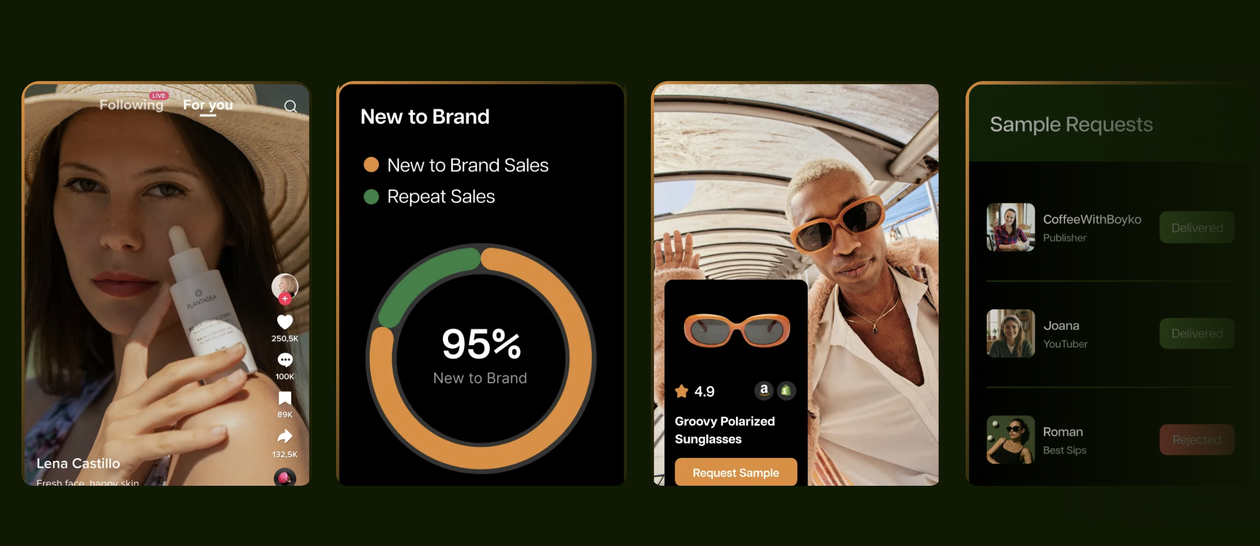
Levanta builds marketing tools so influencers and creators can connect with brands. Image via Levanta.
Influencers and online creators have become an increasingly powerful way for brands to sell products. But managing those relationships can get complicated — especially for companies selling across Amazon, Walmart, Shopify and other channels.
That’s the market Seattle startup Levanta is targeting, which today is announcing $22 million in new funding led by Volition Capital. The company provides software that helps brands find creators, send them products, set up affiliate commissions, track sales and handle payments.
The company says it now has more than 90,000 vetted creators on its platform. Brands can offer creators products to review or promote, pay commissions when their links generate sales, or arrange flat-fee partnerships. Levanta tracks the performance across Amazon, Walmart and Shopify and handles payments.
The startup originally focused on Amazon sellers but has expanded to Walmart and Shopify. Its revenue is up 80% year-over-year in 2026, according to the company.
“Every marketplace has thousands of sellers that want more customers, and there are millions of creators and affiliates capable of driving those customers,” said CEO and co-founder Ian Brodie in a press release. “The missing piece is infrastructure that connects the two, handles the economics, and accurately measures what happens.”
In 2023, Goldman Sachs estimated that the the influencer marketing category was expected to grow to $480 million by 2027.
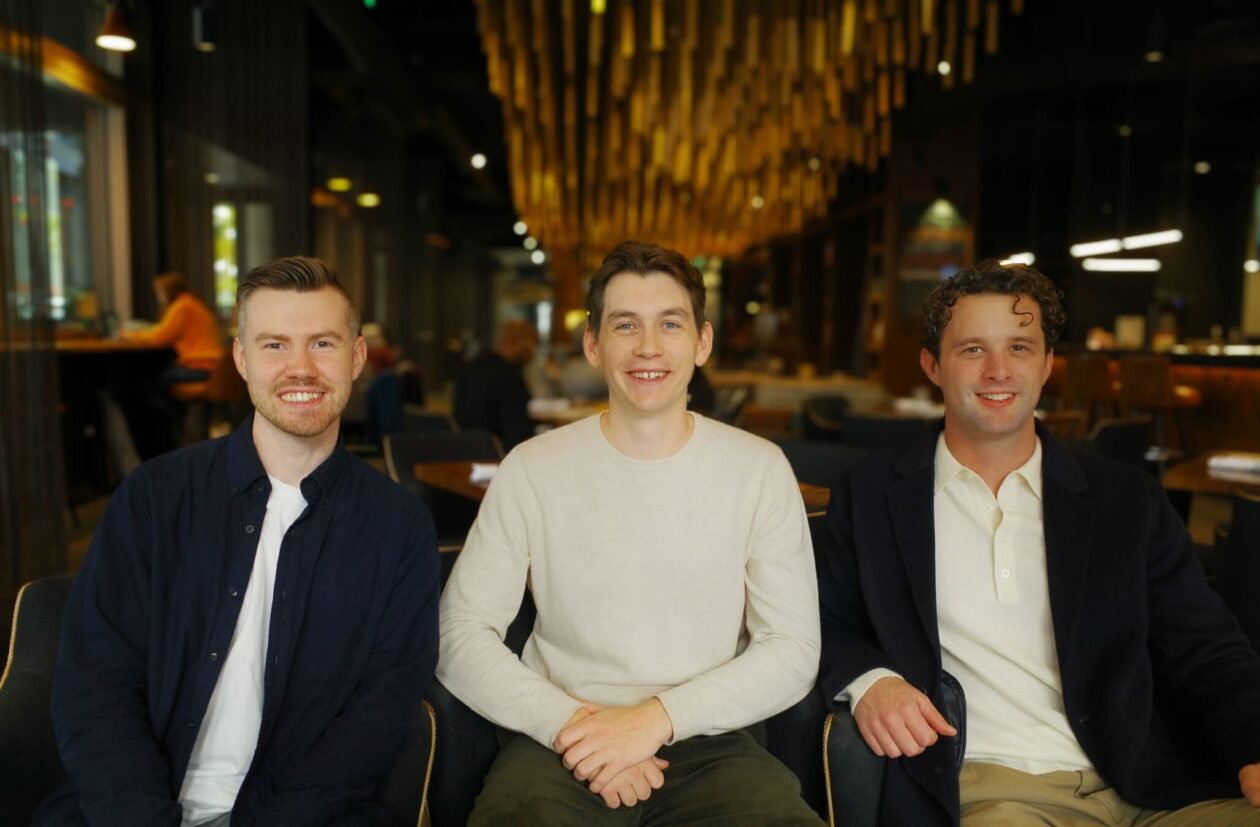
Levanta co-founders, from left: Spencer McKenney, Ian Brodie, and Rob Schab. (Levanta Photo)
Levanta was founded in 2023 by Brodie, CTO Spencer McKenney and Chief Marketplace Officer Rob Schab, all University of Washington graduates. The three previously founded Grovia.io, an affiliate marketing company that was acquired by Acceleration Partners in 2022.
With more than 100 employees, Levanta is the rare startup that has already reached profitability with Brodie telling Business Insider that it has been profitable or roughly break-even since its launch. With the new funding, it also provided cash liquidity to some eligible employees.
“This is a milestone moment for Levanta and it reflects how far the company has come and the value our team has created together,” Brodie said in the release. “At the same time, it allows us to reward the people who have been instrumental in building the foundation of the business while ensuring they remain deeply aligned with where we’re going next as we continue building Levanta for the long term.”
The new funding will support expansion to additional retail marketplaces and international growth.
Previous Levanta backers include Long Run Capital, OpenSky Ventures and Arrived Homes CEO Ryan Frazier. The latest series B round brings Levanta’s total funding to more than $43 million.
TikTok is laying off 75 workers in the Seattle region, focused largely on the company’s e-commerce business, according to a notice filed Tuesday with Washington state.
Job titles listed in the notice are almost entirely TikTok Shop and Global E-Commerce roles in Bellevue, Wash., including anti-fraud and governance program managers, seller and creator operations staff, campaign managers, data scientists, and backend and frontend engineers.
The notice Tuesday was filed by TT Commerce & Global Services LLC on TikTok letterhead, and lists two ByteDance employees as contacts. It gives the affected facility as Lincoln Square North at 700 Bellevue Way NE, with a separation date of Oct. 19.
TikTok Shop is the company’s in-app shopping business, which lets brands and creators sell products directly in TikTok videos and livestreams. The company has used the Seattle region as a base for the e-commerce push, expanding its Bellevue offices as it built out the business.
GeekWire has contacted TikTok representatives for comment, and asked for details on the size of the company’s remaining workforce in Bellevue and the Seattle region.
The cuts follow TikTok’s announcement on Aug. 6 that it will close its Nashville office and lay off all 250 workers there, most of them on content moderation teams.
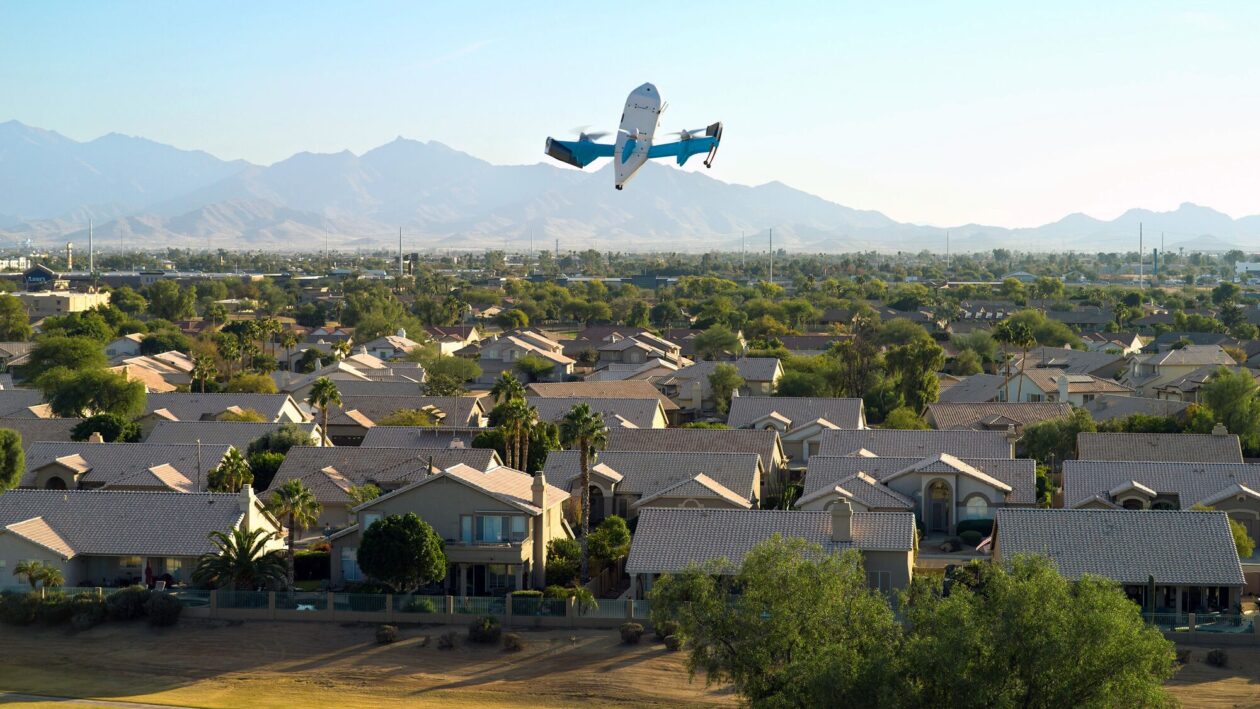
An Amazon Prime Air delivery drone flies over a suburban neighborhood in Arizona. (Amazon Photo)
Amazon’s drones are finally going national.
The company’s autonomous aerial vehicles are set to deliver packages to nearly 500 cities and towns across the country by the end of this year, zipping items through the air to drop them in backyards and driveways as quickly as 30 minutes after ordering.
Amazon announced the plan Wednesday, describing it as a sixfold increase in its Prime Air footprint, reaching communities collectively representing tens of millions of customers.
“I know this looks like science fiction — it’s not,” the Amazon founder said at the time.
Bezos acknowledged that it would take at least four or five years, optimistically, and that convincing the FAA the drones were safe would be one of the biggest hurdles. Amazon’s FAQ that night said it hoped the agency would have rules in place “as early as sometime in 2015.”
Both the technology and the regulations took far longer than the company expected.
Amazon said Wednesday morning that Prime Air will launch soon in the Chicago, Syracuse, Cleveland, Atlanta and Boise metro areas, with more communities to come later this year. The drones fly primarily over suburban areas, which allows them to avoid the tall buildings and crowded airspace that complicate flights over dense urban areas.
There’s no word yet on when or whether drone delivery will come to the Seattle area.
Amazon said the drones launch from two types of facilities: smaller same-day delivery sites and its larger robotic fulfillment centers. The mix is what lets Prime Air offer anywhere from tens of thousands to millions of items depending on the location, according to the company.
Nearly any item weighing 5 pounds or less and small enough to fit in a large shoebox is eligible for drone delivery. That translates into millions of products, as noted by Amazon CEO Andy Jassy in his annual letter to shareholders earlier this year. He wrote that Prime Air would carry “a much larger selection of items inside a half hour” than Amazon’s other fast-delivery options.
Drone delivery will be free for Prime members on orders of $50 or more. Prime orders below that carry a $2.99 fee, and customers without a membership pay $4.99.
Amazon’s reference to expanding to 500 cities and towns does not reflect the number of planned Amazon drone launch locations, but rather the number of municipalities that fall within delivery range of the planned hubs, each of which covers roughly 175 square miles.
The 30-minute delivery scenario is a best case. Most orders arrive around 60 minutes after checkout, Amazon said in its announcement.
Amazon isn’t the only company betting on drones. Amazon retail rival Walmart and Google parent Alphabet’s Wing have been building what they call the largest drone delivery network in the U.S., adding seven new markets in June including Phoenix, Philadelphia and the Bay Area. They plan to reach 270 stores and more than 40 million people by next year.
Local approvals remain a hurdle for delivery drones. Noise has been a recurring concern for residents near drone operations. Amazon says its drones are quieter than an idling delivery truck during drop-off and comparable to a window fan while in flight. A proposed federal rule that would more broadly allow flights beyond the pilot’s line of sight has not been finalized.
The Associated Press first reported on the expansion Tuesday afternoon in what appears to have been an inadvertent break of a news embargo, to which GeekWire had not agreed. Post updated Wednesday morning with details from the official announcement.
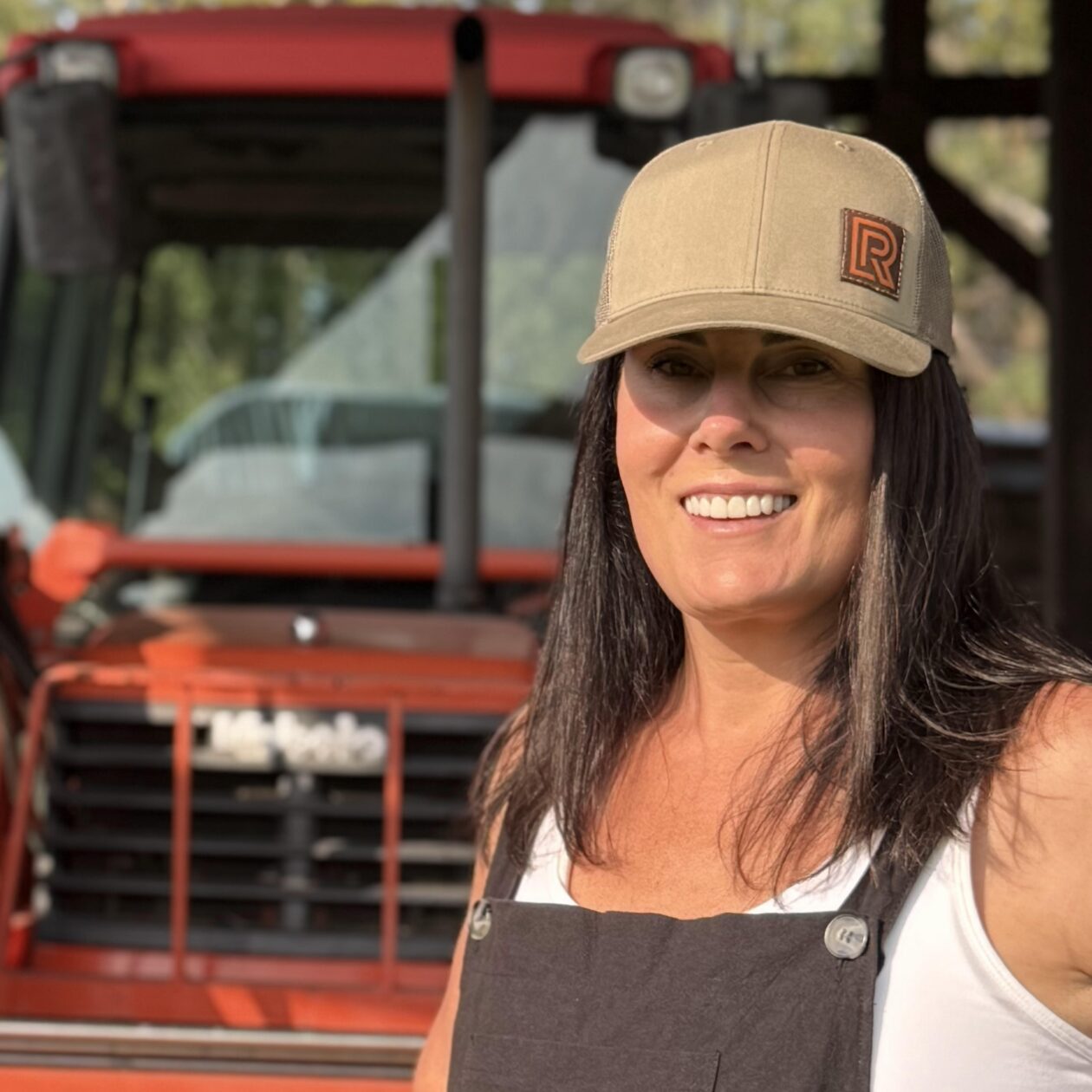
Reroot founder Genevieve Priebe, a fourth-generation member of a Montana farm family. (Photos courtesy of Genevieve Priebe)
Genevieve Priebe took a business meeting this summer while bottle-feeding baby goats. A couple of years ago, she was advising executives at some of Seattle’s largest tech companies.
“Best decision I’ve ever made,” she said of her career change.
Priebe is the solo entrepreneur behind Reroot, a bootstrapped Seattle startup trying to make local food as easy to find and buy as anything else online.
Genevieve Priebe, founder of Reroot.
The company operates a marketplace where independent farmers, ranchers, bakers and makers sell direct to customers, currently live with founding partners in the Pacific Northwest. In July it launched a free companion app, Reroot: Find Local Food, that maps more than 50,000 producers across the U.S. and parts of Canada.
She has also built a patent-pending tool called Walk & Talk, which lets a farmer update an online store by voice while walking the field, with or without a cell signal. When they’re back in range, it reconciles what they said against any sales that came in while they were offline.
A fourth-generation farm kid from Whitefish, Mont., Priebe grew up driving her dad’s tractor before she could reach the pedals and counting change at farmers markets for her mom, a flower farmer. She left for college and spent two decades in Seattle consulting, starting at Accenture and working for clients including Microsoft, T-Mobile, Starbucks and Boeing.
After her parents passed away, she and her brother took over the family farm. Priebe ran the numbers on what it takes to make a living growing food, and found it “close to impossible.” That’s a big part of what she’s now looking to solve as a startup founder.
“I didn’t want to be a founder,” she said, “but I couldn’t walk away from the problem.”
Continue reading for Priebe’s answers to our Startup Spotlight questionnaire.
In 50 words or less, give us your startup’s elevator pitch?
Local food is all around you, but finding it is hard. Buying it directly from the source is even harder. Reroot exists to fix that. We’re a discovery app and marketplace that connects independent producers to the people who love what they grow, raise and make.
What problem are you obsessed with solving?
Something that perhaps most people wouldn’t see as a problem. That is: why is it easier to buy a mango from Peru than a tomato from a farm 10 miles away?
What surprised you after talking to customers?
My biggest surprise was that most small farms pay to be farmers. They don’t make money, they lose money. Less than 50% of the 1.9M farms in the US are profitable. Average median farm income is over a thousand dollars in the red. It’s no surprise that 15,000 farms go out of business every year and unfortunately the story isn’t much better for other independent food producers. Growing our food is one of the most important jobs, yet it’s close to impossible to make a living doing it.
How has AI changed the way you build your company?
Dramatically. Two years ago, I’d have needed a 5-person development team, 18 months, and $1.5M to do what I’ve done solo in about four months. Traditional development cannot compare to the speed with which AI has enabled me to operate.
I do have a strong tech background, but haven’t written a single line of code and yet I’m live with a fully functioning marketplace that processes financial transactions, integrates with Square and Stripe, has sent over 100,000 marketing emails for our customers, manages inventory, fulfillment, and analytics. And, bonus — we just launched a free discovery app called Reroot: Find Local Food that maps 50,000+ local food producers in the US and parts of Canada.
What’s one thing people misunderstand about your startup?
In a world of AI-powered, niche, technology businesses, people seem surprised at how simple the idea is. They assume it already exists. It doesn’t. There is no single place to discover, follow, and buy from local producers. That gap is exactly why I built Reroot.
What’s the toughest decision you’ve made in the past year?
Every advisor and investor I’ve talked to has told me to find a technical co-founder, and even better if he’s younger and male. The decision to ignore that advice and bootstrap solo as a woman in my forties was simultaneously the hardest decision I’ve made and the easiest. I’m choosing a different path than raise-and-burn: heads-down building for real customers who need what I’m making. It’s working.
What’s the one piece of advice you give to other entrepreneurs?
Don’t overthink it. I spent decades in environments where every decision needed a PowerPoint deck and three rounds of approvals. The best thing I’ve done as a founder is just move: build it, ship it, learn, repeat.
We’ll know our company has made it when…
When the hardest part of farming is no longer the marketing. When farmers like my parents, grandparents, and great grandparents can actually afford to do the work that they love. And when I can conveniently replace most of my grocery store spend with local food purchased directly from my favorite producers.
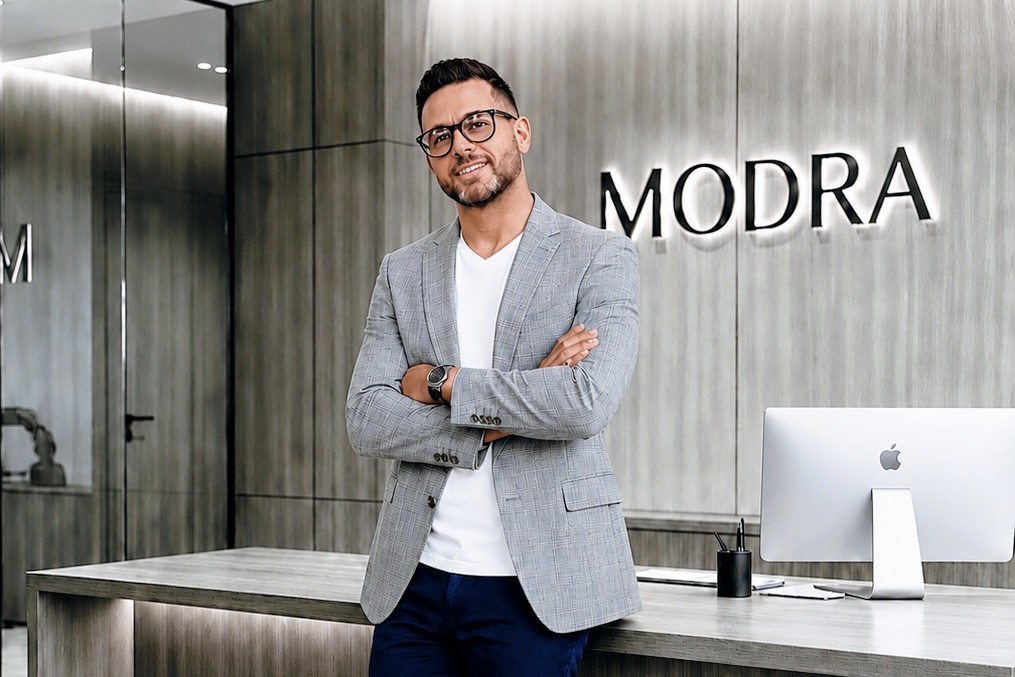
Jeremy Bernier, a plumber and U.S. Navy veteran, recently started retail delivery startup MODRA.
Jeremy Bernier has spent years fixing clogged pipes. Now he’s trying to fix another everyday frustration: shopping local.
The U.S. Navy veteran and owner of Nerd Plumbing and Drain has founded MODRA, a Seattle-area startup that is designed to let shoppers browse inventory from nearby retailers and have purchases delivered the same day.
The 46-year-old says the idea struck him earlier this year after he needed a collared shirt in Portland and discovered there was no easy way to find one nearby and get it delivered.
MODRA’s AI-powered shopping assistant, “Savvy” — named after his firstborn daughter — is designed to learn customers’ sizes, style preferences and budgets to recommend products that fit their tastes. It is working on securing retail partners, with plans to launch in the Seattle area in September. MODRA plans to contract with local independent drivers, similar to marketplaces like Uber Eats or DoorDash.
He’s carving out a niche in a larger market that includes some big players, such as Amazon with its 30-minute Amazon Now delivery service for grocery and convenience items. And Bernier acknowledges he’s an unlikely tech founder. “I’m a blue-collar guy by trade,” he said.
While his Navy background taught him discipline, accountability and how to perform under pressure, his plumbing background also is helping him run MODRA. The experience “taught me that customers do not care how complicated the operation is behind the scenes,” he said. “They care whether you solve their problem and keep your word.”
We connected with Bernier for this latest installment of GeekWire’s Startup Spotlight.
In 50 words or less, give us your startup’s elevator pitch.
MODRA is an on-demand retail marketplace that lets customers shop nearby stores, boutiques, malls, and national retailers through one app, then have purchases delivered quickly. Savvy AI learns each customer’s style, size, budget, and preferences to create a faster, more personal shopping experience.
What problem are you obsessed with solving?
I’m obsessed with making local retail as convenient as ordering food. People should not have to search five websites, call stores, drive across town, and hope an item is available. MODRA is meant to bring all of that into one experience.
What surprised you after talking to customers?
What surprised me is that speed is only part of the problem. People also want confidence.
They want to know what is actually available nearby, whether it will fit, whether it matches their style, and whether they are making the right choice. Convenience gets people interested, but personalization and trust are what make the experience valuable.
How has AI changed the way you build your company?
AI has allowed me to move much faster than I could have with a traditional startup team.
I’m a blue-collar guy by trade. I know how to build businesses, solve problems, market, and create the vision, but I’m not a backend engineer. My founding engineer is actively building the technical side of MODRA from that vision, while AI helps me with research, strategy, operations, communication, and testing ideas.
What’s one thing people misunderstand about your startup?
People may hear “fast retail delivery” and think MODRA is simply DoorDash for clothing. Delivery is only one part of it.
MODRA is a retail marketplace, discovery platform, logistics network, and personalized shopping experience. The larger vision is to help retailers compete in the same-day economy while giving customers one place to discover and buy what is available around them.
Jeremy Bernier describes himself as a “blue-collar guy.”
What’s the toughest decision you’ve made in the past year?
The toughest decision has been committing fully to building a technology company while continuing to run Nerd Plumbing and Drain.
A plumbing company generates revenue today. A startup requires you to invest time, money, and energy into something that is still being built. I had to decide whether this idea was worth taking seriously enough to act on it. Two weeks after getting the idea, I started building. On May 16, MODRA became a Delaware C corporation.
What’s the one piece of advice you give to other entrepreneurs?
Do not wait until you feel qualified.
I came from the Navy and the plumbing industry, not Silicon Valley. I’m an idea guy and a problem solver. When I do not know how to do something, I find the right person, learn what I can, and keep moving.
You do not need to know everything. You need a clear vision, the willingness to work, and enough humility to bring in people who are stronger where you are not.
We’ll know our company has made it when…
Opening the app to find and receive something from a nearby store feels as normal as ordering dinner. I also want retailers to see MODRA as an essential sales and delivery channel, and I want Savvy to become a shopping assistant people genuinely trust.

 Login
Login