The Space Force sees NASA’s new Space Academy as a potential civilian talent pipeline, while keeping the Air Force Academy as an officer commissioning source.
FILE - In this photo released by the U.S. Air Force, Capt. Ryan Vickers stands for a photo to display his new service tapes after taking his oath of office to transfer from the U.S. Air Force to the U.S. Space Force at Al-Udeid Air Base, Qatar, Sept. 1, 2020. (Staff Sgt. Kayla White/U.S. Air Force via AP, File)
In July, a judge blocked as unconstitutional an immigration policy that the US relied on to weigh whether to detain and deport people who flag illegal or harmful online content as national security risks. In his announcement of the policy, Secretary of State Marco Rubio explained that by targeting a list of researchers—which he stood “ready and willing” to expand—the policy supposedly served to prevent foreign nationals from manipulating digital town squares and censoring Americans.
However, in his order siding with the Coalition for Independent Technology Research (CITR) and staying the policy, US District Judge James Boasberg said the US showed no evidence linking any targeted researchers to a foreign power that might be attempting to censor Americans or manipulate US public debate. Deemed too broad, the policy could sweep in seemingly any noncitizen working in content moderation, the judge said.
Bitcoin price has risen about 3% to $79,143 after touching $79,325, even as conflicting U.S. and Iranian statements have kept the path toward a possible agreement unclear. Trump’s comments have supported the Bitcoin price rebound Bitcoin’s recovery unfolded as U.S.…
Obama recently said that Democrats need to make artificial intelligence one of their “central agendas” and “have a very clear plan” to address concerns around the technology’s economic impact and safety.
White House economic adviser Kevin Hassett has disclosed owning between $1 million and $5 million in Coinbase shares while the Trump administration advanced policies affecting the U.S. crypto industry. Coinbase shares remained in Hassett’s disclosed portfolio CNBC, citing Hassett’s latest…
Trump dismisses AI extinction warnings and says beating China is the priority as researchers and lawmakers call for stronger safeguards on advanced systems.
Trump dismisses AI extinction warnings and says beating China is the priority as researchers and lawmakers call for stronger safeguards on advanced systems.
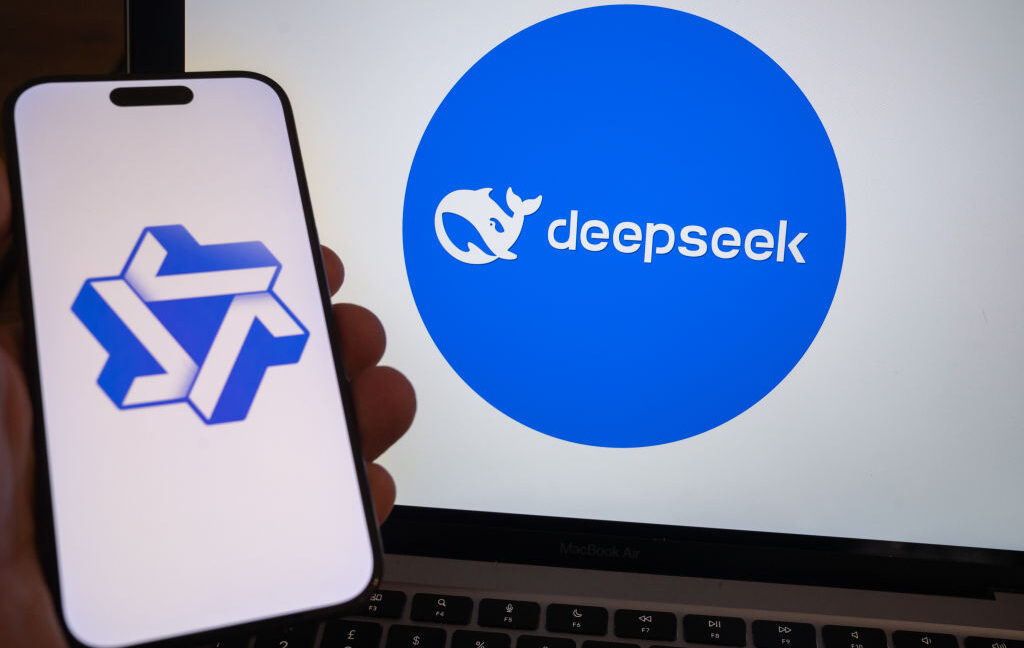
The United States has now named six Chinese AI firms accused of waging industrial-scale attacks distilling US frontier AI model capabilities and perhaps sparing billions in Chinese development costs.
In a joint release Tuesday, the National Security Agency (NSA), Cybersecurity and Infrastructure Security Agency (CISA), and Federal Bureau of Investigation (FBI) alleged that DeepSeek, Moonshot AI, Alibaba, MiniMax, StepFun, and Z.AI have been attacking US models since at least late 2024. The firms “likely” acted with “Chinese government awareness” when extracting capabilities from US models, including variants of Claude, GPT, Gemini, and Grok, agencies said.
“China-based AI companies that conduct industrial-scale distillation against US AI models see significantly shorter AI development timelines and reduced financial expenditures in training a frontier model,” agencies said.
Hunter Biden has defended his LAPTOP memecoin hours before its Sept. 9 launch on Base, saying 20% of the supply will be distributed through community airdrops while 30% will be tied to political, crypto and cultural predictions. In an X…
The $LAPTOP token will go live on Base with 1 billion tokens, a six-month founder lockup, and conditional burns tied to the 2028 election. The 20% airdrop targets wallets that bled money on $TRUMP, Substack subscribers, and the mailing list…
Military officials are using medical and personnel data to uncover troops with current or past gender dysphoria as the Pentagon moves ahead with separations.
Hunter Biden has prepared to launch a 1 billion-supply meme coin called LAPTOP on Coinbase-developed Base on Sept. 9, with part of the token allocation set aside for people who lost money trading President Donald Trump’s TRUMP meme coin. The…
Four federal agencies have been sued amid calls to release information about the secret framework that the Trump administration uses to conduct safety reviews of frontier AI models prior to release.
In a Wednesday press release announcing the lawsuit, a nonpartisan nonprofit called Protect Democracy alleged that “almost no details” have been released to the public or Congress. To everyone except a few vague “trusted partners,” it remains unclear what the government’s review process looks like, which companies are involved in constructing the framework, or what legal authority Trump officials have to conduct the reviews.
“Neither the identities of those entities nor the criteria by which they were selected have been made public,” Protect Democracy said.
In the wake of Trump's planned pay freeze, federal groups intensified calls for the passage of the FAIR Act or another measure to provide for a 2027 raise.
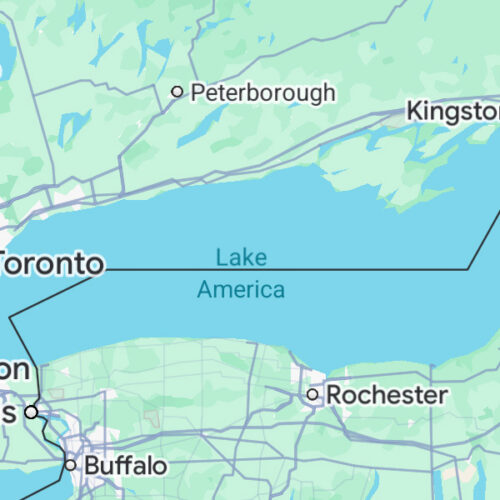
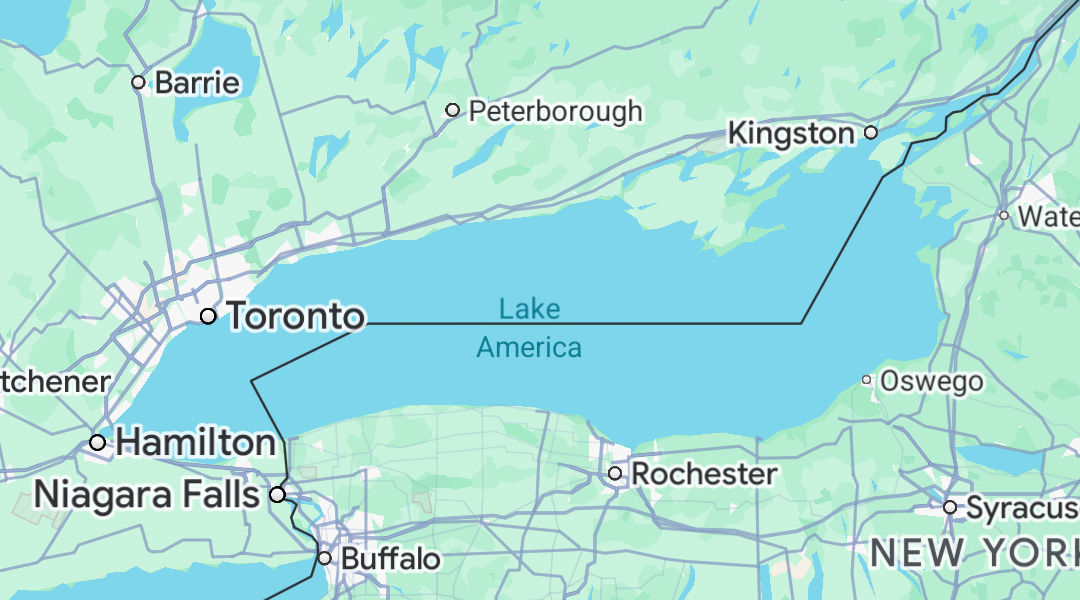
Trade talks between the US and Canada broke down last week, leading to a wave of tariffs and retaliatory tariffs. US President Donald Trump also fell back on an old favorite to needle his opponents, signing an executive order on Thursday to rename Lake Ontario to "Lake America."
The body of water, which straddles the US-Canada border, gave its name to the Canadian province rather than the other way around. Regardless, the US government now refers to this great lake as Lake America—or it will soon. Official US government maps have yet to be updated, but Google wasted no time adopting the new, Trumpian name.
Google began rolling out this change for US users on Saturday. The company posted a brief update on its Google Maps blog, noting that it follows the US Geographic Names Information System (GNIS) for its maps, so the company implies it had no choice but to rename Lake Ontario in Google Maps, which is the most popular mapping platform in the US by a wide margin.
The alternative pay plan that the White House issued this week carves out exceptions to give larger raises to federal law enforcement and military personnel.
Donald Trump may be preparing to announce sweeping new semiconductor tariffs at the absolute worst time, the tech industry fears.
On Thursday, Politico reported that a wide range of new semiconductor tariffs, which the tech industry expects will “doom” artificial intelligence innovation in the US, could be imposed in the coming “weeks or months.”
About eight people familiar with the Trump administration’s plans were granted anonymity to discuss how the tariffs might work. They suggested that the framework for tariffs may change as it becomes finalized, but one approach under consideration could “dramatically expand the number of tech products subject to the duties, hitting not just chips but potentially many of the goods made with them, such as gaming consoles or the servers that fill data centers.”

 Login
Login