Watchtower Labs co-founders, from left, Souren Aghajanyan, John Morman, and Akhil Iyer. (Watchtower Labs Photo)
Watchtower Labs, a Bellevue, Wash.-based defense tech startup, emerged from stealth Wednesday with $35 million to build AI software that helps military planners make faster decisions about logistics and operations.
Shield Capital and Conviction co-led the seed round, with participation from Founders Fund and In-Q-Tel, the investment arm that supports the U.S. intelligence community. It’s the first outside funding for Watchtower, which was incubated inside Shield.
Watchtower was co-founded by CEO Akhil Iyer, a former Marine Corps infantry and special operations officer who said that like many veterans, he was frustrated that the technology on commercial iPhones wasn’t making it into the field with troops.
After leaving the military, Iyer worked on counter-drone technology and later invested in defense startups at Shield Capital, where he watched senior military leaders try to figure out how to put AI to practical use.
“One of those key problems is how do we best allocate scarce resources across the globe,” Iyer said. “Planning for that is really hard.”
Iyer’s Watchtower co-founders are CTO Souren Aghajanyan and head of engineering John Morman, longtime Microsoft engineering leaders who worked on large distributed systems and fraud protection. Iyer said his first call after deciding to build Watchtower went to Lou Manousos, who founded security company RiskIQ, sold it to Microsoft in 2021 and later became a corporate vice president there. Aghajanyan and Morman had worked on Manousos’ team, and they were already thinking about how simulation and AI could improve planning.
The company’s software lets planners ask questions in plain language, then runs simulations to map out possible scenarios and options, starting with military logistics: moving fuel, spare parts, munitions and people where they’re needed in time. Watchtower models hundreds of possible futures against real-world constraints and shows the assumptions and tradeoffs behind each option, while decision makers stay in charge of the final call.
Iyer said the platform pairs agentic AI with heavy-duty math.
“You can’t LLM your way to a really complicated math problem, yet at least,” he said. “It needs to be set up in the right way, and you need to do some real analysis behind it.”
Many existing military tools focus on giving commanders a clear picture of what they have right now and where it is, Iyer said. Fewer look ahead to what’s coming. Watchtower’s bet is that it can bridge AI and simulation and optimization software to do that.
Watchtower is starting with logistics, but Iyer said supply decisions are tied to operations, so the company plans to broaden its software into wider operational planning.
Watchtower has several military contracts, Iyer said. The most important is a prototype contract it won in January through the Defense Innovation Unit’s Joint Sustainment Decision Tool program, which is building AI tools to help the military forecast logistics needs weeks in advance.
Watchtower and Air Space Intelligence were picked after a competitive process, according to the DIU. The program’s partners include U.S. Indo-Pacific Command (the lead partner), U.S. Northern Command and the Defense Logistics Agency. The tools are meant to track and forecast critical supplies such as munitions, fuel, medical materiel and spare parts.
Iyer said the $35 million will go first toward building out the team, then toward delivering on the contracts Watchtower has won and expanding its platform beyond logistics. The startup has revenue but isn’t disclosing figures.
Watchtower has about 30 employees across offices in Bellevue, the Bay Area, Hawaii and the Washington, D.C., area, with more than a dozen in Bellevue. Iyer, who is based in San Francisco, said the company is moving to a larger Bellevue office and hopes to double its headcount. The Seattle area is a core focus for hiring, he said, because of its density of “very technical folks that maybe wanted to work on things with a little bit more mission impact.”
Recruits don’t need a military background, Iyer said. He noted that quite a few team members immigrated to the U.S. and see the work as a way to give back.
Watchtower is hiring for in-person roles in Bellevue that require U.S. citizenship, according to a LinkedIn post from Aghajanyan, including engineers for its simulation engine, distributed systems and machine learning work.
Watchtower joins a growing defense tech cluster in the Seattle area that includes:
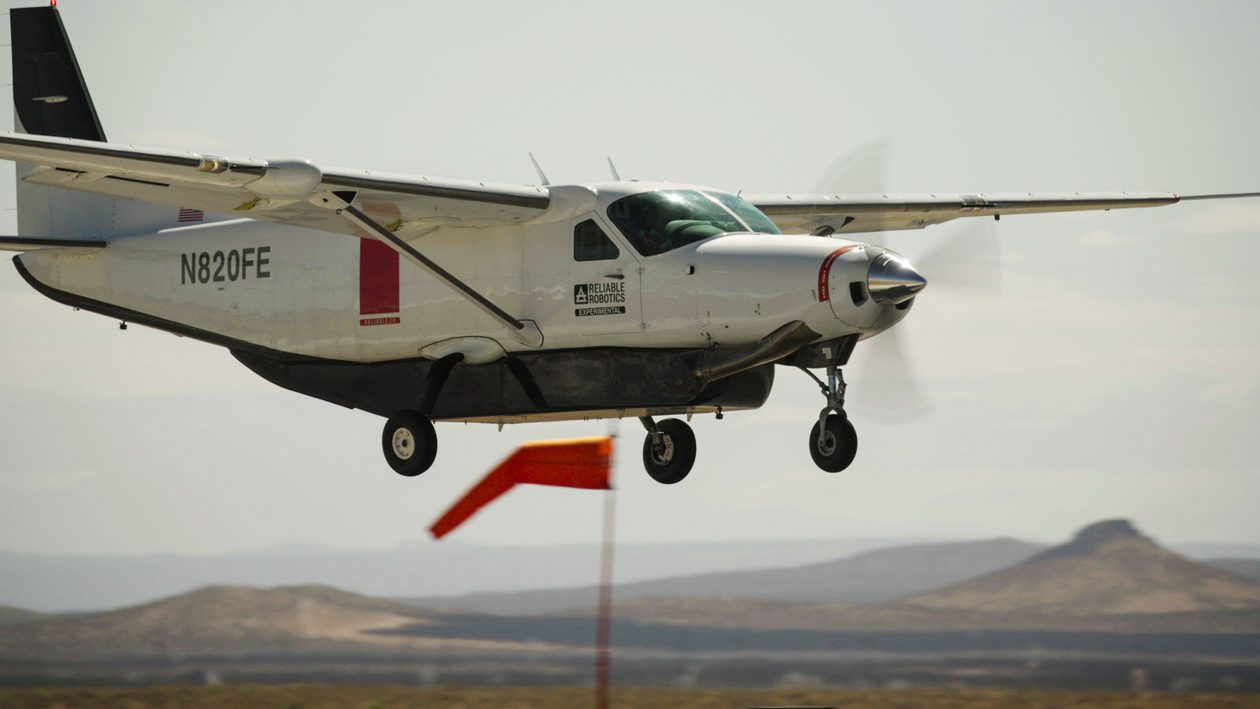
Reliable’s automated Cessna 208B Grand Cavan conducts autonomous operations in Mojave, Calif. (Reliable Robotics Photo)
Aviation startup Reliable Robotics is opening a new engineering hub in the Seattle area, establishing a radar research and development center in Bothell.
The Mountain View, Calif.-based company also announced Tuesday that it has raised $115 million, pushing its valuation above $1 billion. The funding will help expand its aircraft fleet, production facilities and engineering team as it works toward federal certification of its autonomous flight technology.
Reliable’s new office in the Bothell Highlands north of Seattle will open with about 25 employees and serve as its Radar Center of Excellence, a facility for developing and testing systems designed to help aircraft detect and avoid other aircraft. The company plans to grow the team and is heavily recruiting in the region, including roles across radar, embedded software, flight controls, guidance and navigation, simulation and systems engineering.
The expansion adds another player to the Seattle area’s growing mix of aerospace, robotics and autonomous systems companies.
Last month, GeekWire reported that San Diego-based Shield AI selected Des Moines, Wash., as the production and engineering hub for its X-BAT, an AI-piloted aircraft designed to take off and land vertically. The heavily-funded company is planning a 420,000-square-foot manufacturing and engineering facility and says it expects to employ about 4,000 people in the region by the early 2030s.
Reliable is developing systems that can automate aircraft operations, including engine startup, taxiing, takeoff and landing. Its longer-term ambitions include enabling aircraft to fly without a pilot aboard, with remote operators overseeing flights from the ground. The company is working toward certification from the Federal Aviation Administration.
Founded by former SpaceX engineers in 2017, Reliable has spent nearly a decade developing technology designed to work with existing aircraft rather than requiring entirely new planes. Its initial system is intended to keep a pilot in the cockpit while automating key flight operations, with more advanced levels of autonomy planned over time.
The 250-person company’s latest financing, including $90 million led by Nimble Partners and a $25 million term loan from Silicon Valley Bank, brings total funding to $380 million.
The company’s new Bothell lab will bring together engineers to design, build and test radar systems, including its active electronically scanned array air-to-air radar.
The technology is intended to support detect-and-avoid capabilities that would help autonomous aircraft safely operate in the national airspace alongside conventional planes.
“Seattle represents the past, present and future of aviation. For decades, engineers here have developed aircraft and systems that change how the world connects,” Chris Schulenberg, Reliable’s vice president of programs, said in the company’s announcement. “By expanding into the Pacific Northwest, Reliable is uniting the tech talent in Silicon Valley with the aviation expertise of Seattle.”
The Bothell office — located at 21222 30th Drive SE — will be led by Schulenberg and Marc Pos, a senior technical fellow focused on radar who previously spent more than two decades at Honeywell.
“Radar development is a hands-on process,” Pos said in a statement. “By bringing a team together in a centralized lab and engineering environment, with all of the resources we need at our fingertips, we can move from design through development and testing with the rigor, speed and precision unique to Reliable.”
Reliable also plans to expand its engineering operations in San Diego, where it will focus on aviation autonomy for military applications.
The two offices bring the company’s footprint to five locations, joining its headquarters and aircraft hangars in California and the operating hub of its subsidiary airline, Reliable Airlines, in Albuquerque, N.M.
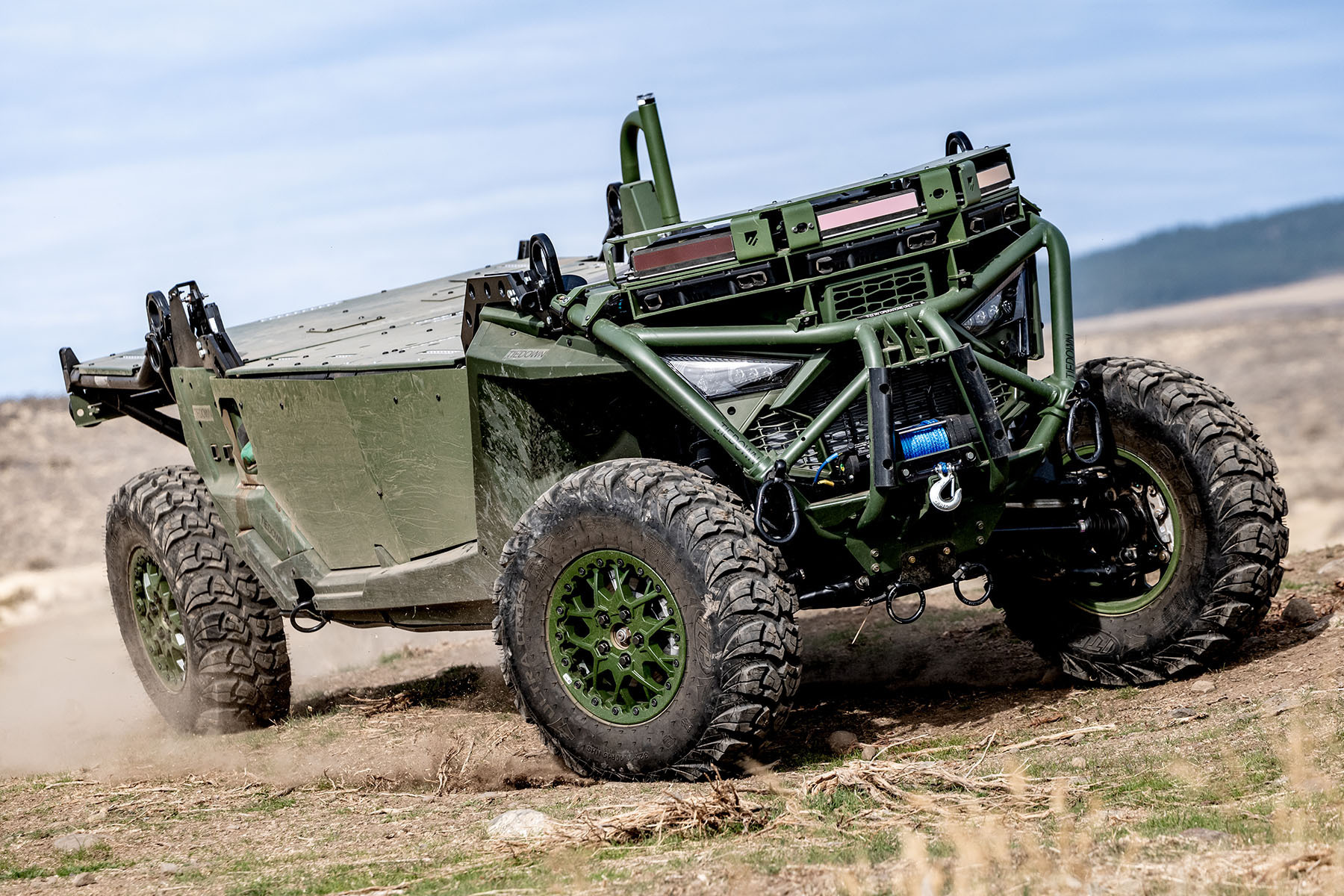
Overland AI’s IBEX vehicle at the company’s proving grounds. (Overland AI Photo)
Seattle defense startup Overland AI has unveiled IBEX, a new fully autonomous ground vehicle selected by the U.S. Marine Corps to support counter-drone air defense operations and execute high-risk frontline missions, including resupply, breaching, and electronic warfare.
IBEX was developed under a Department of War APFIT production contract that recently expanded to $25 million with added funding for the Army’s 75th Ranger Regiment. The initial $20 million milestone deal made Overland AI the first ground autonomy startup to serve as a primary defense hardware supplier, with the Marine Corps selecting the platform for integration into its Marine Air Defense Integrated System (MADIS).
Built on the chassis, engine, and drivetrain of the Polaris MRZR — an ultra-light utility vehicle already used, fueled, and maintained across the armed forces — IBEX can carry a 2,000-pound payload and reach fully autonomous speeds exceeding 35 mph. The vehicle offers a 250-mile cruising range at 20 mph and is sized to fit inside a V-22 Osprey for air transport.
IBEX is powered by Overland AI’s proprietary OverDrive software stack, which combines real-time terrain perception with adaptive route planning to navigate complex, off-road environments at speed without relying on GPS signals or pre-mapped routes. Drivers can control multiple uncrewed vehicles simultaneously using OverWatch, the startup’s command-and-control software.
IBEX provides 5 kW of export power to run onboard sensors and defense systems, addressing energy limits in forward field operations. The company describes each vehicle as a combined power, communications, and compute node designed to operate independently in environments with limited or disrupted communications.
“We pride ourselves on developing technology that is informed directly by the warfighter,” Greg Okopal, co-founder and chief operating officer of Overland AI, said in a statement, adding that IBEX can be deployed on day one and maintained with the parts and fuel units already have.
The vehicle joins the startup’s existing flagship platform, ULTRA, as the company continues scaling production at its Seattle manufacturing facility to meet growing military demand for autonomous ground systems.
Founded in 2022 as a spinout from the University of Washington, Overland AI has rapidly expanded its defense operations, raising $100 million in Series B funding earlier this year.
The startup — No. 7 on the GeekWire 200 ranked index of the Pacific Northwest’s top startups — has raised over $140 million in venture funding to date.
In 2025, Overland opened a 22,000-square-foot production facility in the Rainier Beach neighborhood south of downtown Seattle. And this summer, the startup established an engineering outpost in Burlingame, Calif., aiming to tap into the Bay Area’s robotics and autonomy talent pool.
Overland AI’s growth reflects a broader defense technology boom across the Seattle region, where established firms and fast-growing startups are building major hardware and software footprints.
Companies expanding in the region include Shield AI, which selected the Seattle area for a massive manufacturing facility to build its autonomous X-BAT fighter jet; Anduril, which sees a path to 1,000 Seattle-area engineers across its Bellevue and Seattle hubs; and Echodyne, which opened a $40 million radar manufacturing factory in Woodinville to support drone detection demand.
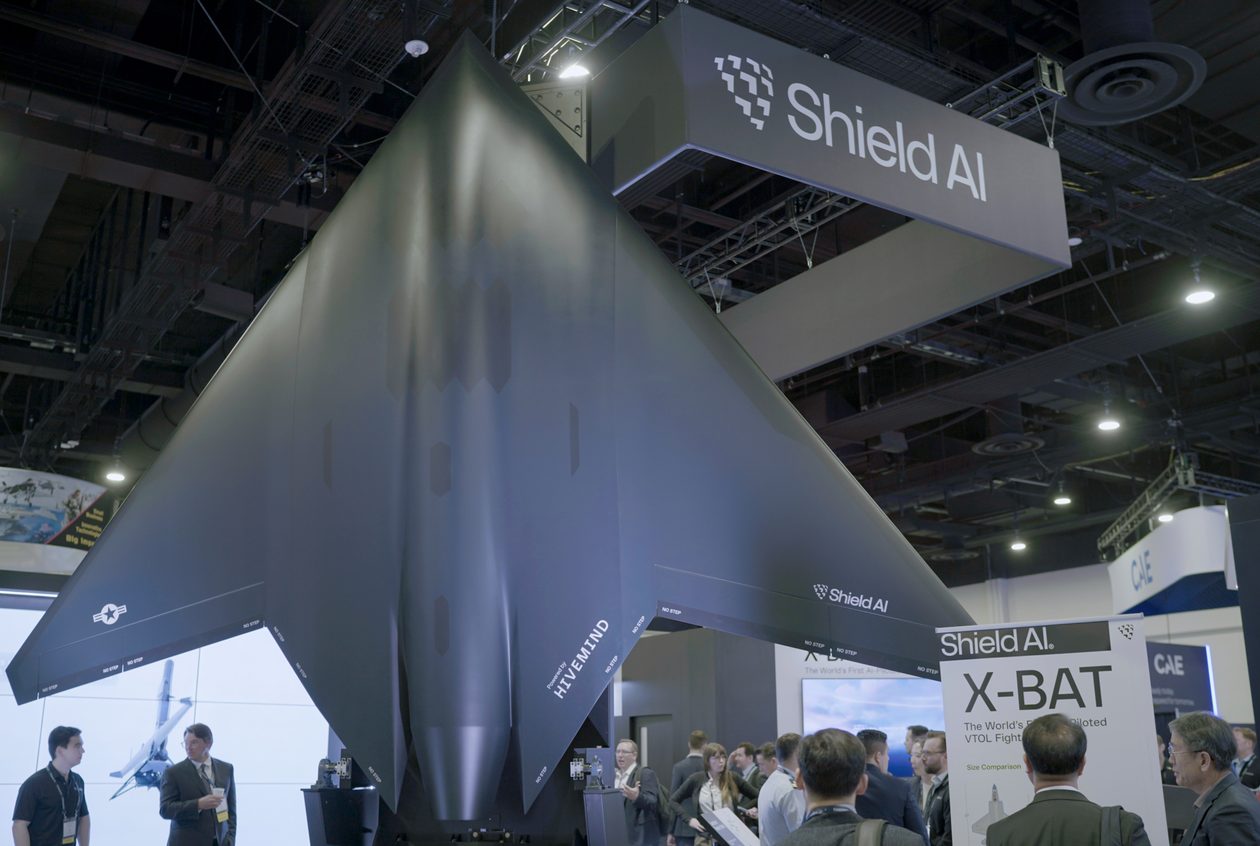
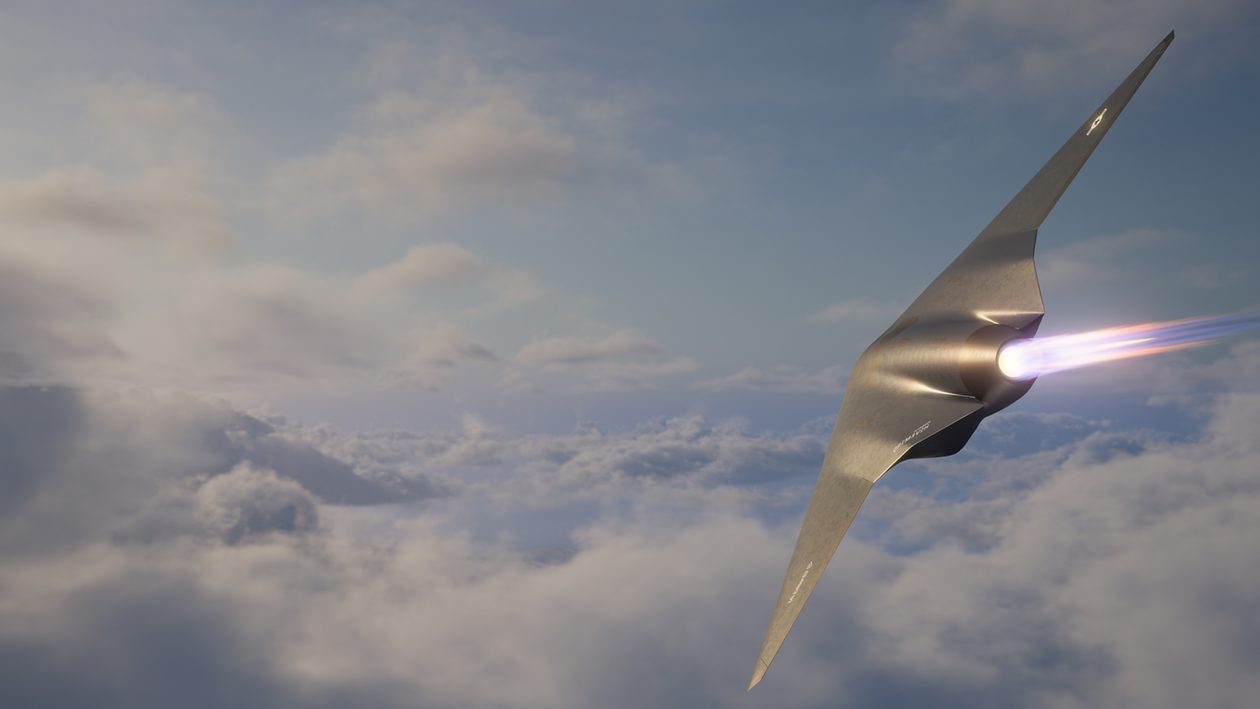
Shield AI’s new X-BAT autonomous fighter jet is designed to take off and land vertically. Photo via Shield AI.
Defense technology startup Shield AI has secured a $150 million contract from the U.S. Navy to advance development of its X-BAT autonomous fighter jet — providing fresh federal backing for the program as the company establishes its first major manufacturing footprint south of Seattle.
Last week, GeekWire reported on Shield AI’s plans to open a 420,000-square-foot engineering and production facility in Des Moines, Wash., dubbed “X-Forge 3.” The company, which is looking to add an additional one million square feet of space in the region, said it expects to employ about 4,000 workers in the Seattle area by the early 2030s.
The new $150 million contract with the Navy adds funding from the Office of the Under Secretary of Defense for Acquisition and Sustainment through its Defense Exportability Features program. The agreement supports efforts to design security and export capabilities directly into the X-BAT, a process that enables advanced U.S. military hardware to eventually be sold to international allies without exposing sensitive domestic technologies.
San Diego-based Shield AI, which raised a $2 billion venture capital round at a $12.7 billion valuation earlier this year, is matching the award with $150 million of its own capital.
Combined with a prior $100 million joint investment finalized in August under the Navy and Defense Innovation Unit’s (DIU) expeditionary strike effort, cumulative commitments behind the X-BAT now stand at $400 million.
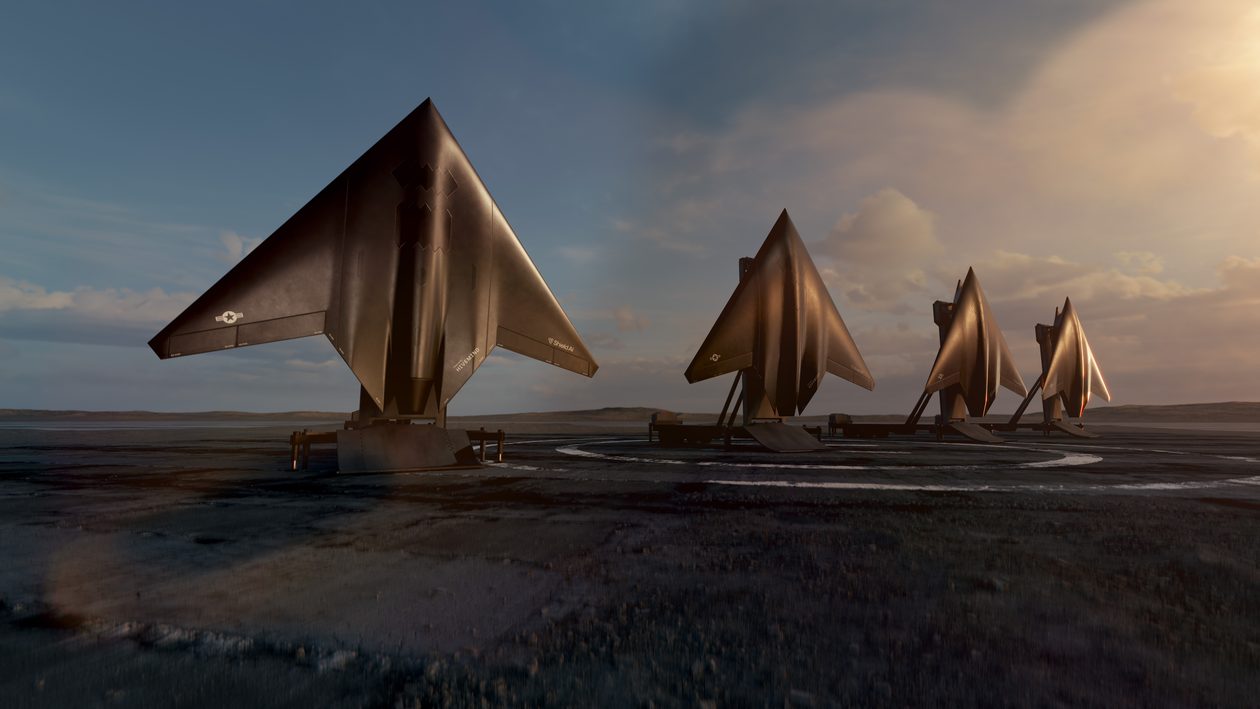
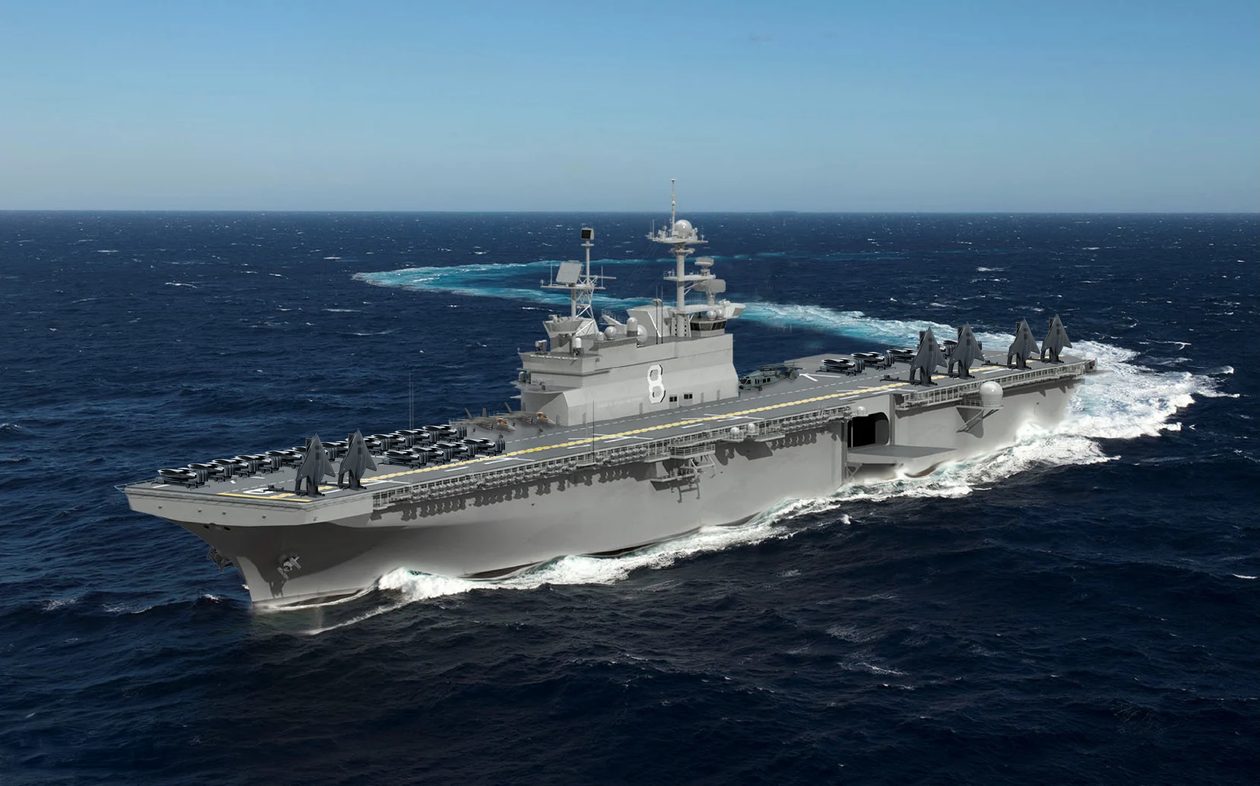
Designed to take off and land vertically, the X-BAT is built to operate from amphibious assault ships, destroyers, commercial cargo decks, and highway strips without relying on traditional concrete runways or aircraft carrier catapults. It launches from a specialized Launch and Recovery Vehicle — a mobile trailer that erects the jet vertically, allowing it to be towed on interstate highways or loaded onto ships.
At the time of its introduction last year, Shield AI co-founder and president Brandon Tseng, a former Navy SEAL, called X-BAT a “transformative, runway-independent aircraft” and noted that “airpower without runways is the holy grail of deterrence.”
The urgency behind runway-independent airpower was underscored last weekend when the U.S. Air Force withdrew strategic B-1 bombers from R.A.F. Fairford in Britain following reports of potential drone threats targeting the air base.
Shield AI expects to begin producing aircraft in Des Moines in 2028, scaling to a target production rate of roughly 150 jets per year by the early 2030s. While prototyping is based in Frisco, Texas, and flight testing will take place at Newton City-County Airport in Kansas, the Des Moines plant will house the core production line and engineering teams.
In an interview with GeekWire, Shield AI executives emphasized the speed at which it hopes to roll out the AI-piloted aircraft in Des Moines.
“This is a large program,” Armor Harris, senior vice president of aircraft at Shield AI, told GeekWire. “Building a next generation fighter jet is no small endeavor, and with the amount of interest that we’ve seen, both from our U.S. government customers and from international customers, we could be looking at building these at rates greater than fighter jets have been built in a really long time.”
Harris noted that keeping development and manufacturing closely linked allows the company to move significantly faster than traditional defense procurement cycles.
“We are testing early and often while working on the aircraft, mission systems, ship suitability and production in parallel,” Harris said in Thursday’s press release. “That approach helps us identify and resolve issues earlier, reduce development risk and move more quickly toward flight testing.”
An engineering team of roughly 500 across Shield AI and key suppliers — including GE Aerospace — is currently building flight-test aircraft.
While the X-BAT has yet to make its maiden flight, the program cleared major hardware milestones in mid-2026. Engineers completed ground engine light-off and thrust-vectoring nozzle integration using GE Aerospace’s F110 engine, alongside wind-tunnel testing to validate internal weapons bay aerodynamics at both low and high speeds.
The aircraft is powered by Shield AI’s Hivemind autonomy software, an AI pilot designed to execute tactical strike missions in contested environments where GPS and satellite communications are jammed.
The jet features a 1,000-nautical-mile combat radius and a 2,000-nautical-mile total range, topping the estimated 590-nautical-mile combat radius of the conventional Lockheed Martin F-35A.
Initial flight tests are scheduled for late 2026 in Kansas, with first production aircraft deliveries targeted for late 2028.
“X-BAT is being built to enhance the lethality, survivability and combat power of U.S. Naval Aviation,” said J.J. “Yank” Cummings, Shield AI’s head of mission solutions for the U.S. Navy and former commanding officer of the aircraft carrier USS Gerald R. Ford. “Its runway-independent design and small deck footprint can increase sortie generation and extend long-range air combat power.”
Shield AI’s new X-BAT autonomous fighter jet is designed to take off and land vertically. Rendering via Shield AI.
Traditional military air operations rely heavily on fixed, vulnerable targets: long concrete runways and aircraft carriers.
Shield AI’s new X-BAT autonomous fighter jet is designed to bypass that infrastructure entirely, utilizing a vertical takeoff mechanism and a mobile launch trailer that can operate from highways, remote outposts or standard cargo ships.
Operated without a human in the cockpit, the aircraft relies on aboard algorithms to navigate and execute strike missions where GPS and satellite communications are jammed. The X-BAT has yet to make its maiden flight, but Shield AI and GE Aerospace cleared a critical milestone this summer by completing ground engine tests and integrating the jet’s F110 thrust-vectoring nozzle.
With news that the X-BAT will be mass produced in the Seattle area — bringing 4,000 jobs to the region by the early 2030s — we decided to take a closer look at this groundbreaking aircraft.
Takeoff/Landing Style: Vertical Takeoff and Landing (VTOL)
ObjectiveCombat Radius: About 1,000 nautical mile combat radius (out and back), topping the roughly 590 nautical miles of the Air Force’s F-35A.
Total Range: 2,000 nautical miles.
Internal Payload Bay Capacity: Up to 2,000-pound class weapons.
Engine: GE Aerospace F110
Software: Shield AI Hivemind autonomy system.
Primary Propulsion & Flight Control: Autonomous AI agent, replacing human onboard pilot.
Logistics & Mobility: Road-transportable via dedicated Launch and Recovery Vehicle (LRV) trailer; highway-mobile and ship-deployable (destroyers, LHA/LHD amphibious assault ships, expeditionary bases). Tagline: “Earth is our runway.”
Target Production Rate: ~150 aircraft per year by early 2030s
Key Operational Milestones: First vertical flights expected in 2026. Production is set to start in Des Moines in mid-2027. The first jet is projected to be built in early 2028 and fly by that summer. The Navy could start using it by the end of 2029. Full production is planned for the early 2030s.
The X-BAT autonomous fighter jet will be built at a new facility in Washington state. Renderings and images via Shield AI.
DES MOINES, Wash. — Defense tech powerhouse Shield AI is establishing a massive advanced manufacturing hub in Washington state, tapping the Seattle region’s deep aerospace and tech roots to build a next-generation autonomous fighter jet called the X-BAT.
The project could transform the regional labor market: Shield AI says it expects to have 4,000 workers in the region by the early 2030s as it ramps up mass production of the AI-piloted, 26-foot long aircraft.
It marks a major expansion of advanced aerospace manufacturing in the Seattle region, bringing autonomous military aviation directly into Boeing’s backyard and cementing the state’s position at the center of the AI-defined defense era.
The San Diego-based company, valued at $12.7 billion following a $2 billion venture capital round earlier this year, is looking to complete construction on a 420,000-square-foot facility in Des Moines, Wash., just south of Seattle, next spring.
That physical footprint is expected to grow quickly. Armor Harris, senior vice president of aircraft at Shield AI, told GeekWire that the company is actively looking to add another 1 million square feet in the region to support its long-term manufacturing push.
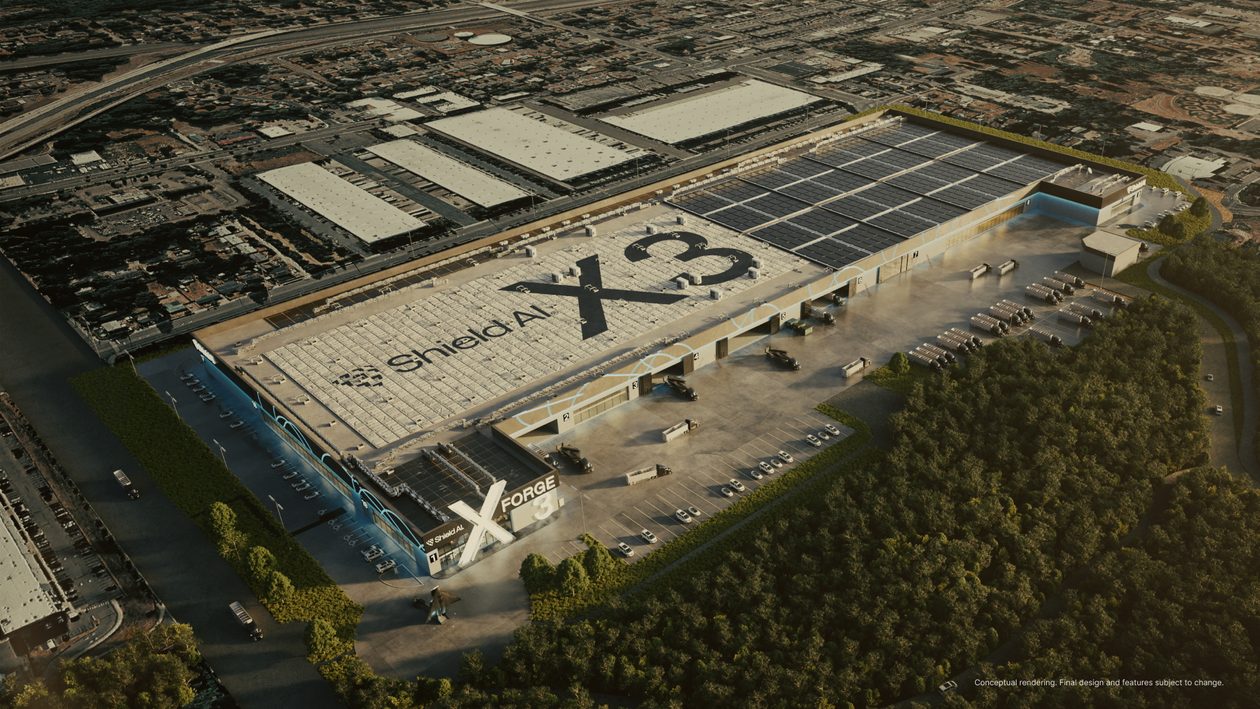
Named X-Forge 3, the initial facility will serve as the primary manufacturing and engineering center for the X-BAT. It’s now under construction about 15 minutes south of Sea-Tac airport in the Des Moines Creek Business Park West, at 1800 S 216th St.
Developed by Panattoni, the site was selected by Shield AI midway through construction. The company is now taking it to completion, with Harris noting that they are “putting the roof on right now.”
Shield AI’s new X-Forge 3 facility south of Sea-Tac airport is currently under construction with an opening date slated for next Spring.
Unveiled last year, the X-BAT is an AI-piloted strike fighter that takes off and lands vertically, carries up to 2,000-pound class weapons in internal bays, and is designed for a 1,000-nautical-mile combat radius — which, when it takes flight, would top the estimated 590 nautical mile combat radius of the Lockheed Martin F-35A.
An economic analysis released by the company estimates Shield AI’s X-BAT program will inject roughly $73 billion into Washington state’s economy over the next two decades as production scales toward full capacity. Projections provided by the company say up to 27,000 direct and indirect jobs — including suppliers — will be generated by the expansion by 2046.
“This is a large program,” said Harris in an interview with GeekWire. “Building a next generation fighter jet is no small endeavor, and with the amount of interest that we’ve seen, both from our U.S. government customers and from international customers, we could be looking at building these at rates greater than fighter jets have been built in a really long time.”
Harris said he expects the first X-BAT aircraft to roll off the line in Des Moines in 2028, with full production ramping up to about 150 aircraft per year by the early 2030s.
The company evaluated more than a dozen sites for the facility, and chose the Seattle area for a simple reason: talent.
Harris cited the region’s robust aerospace legacy, as well as technology giants like Amazon and Microsoft and a burgeoning space and satellite industry which has taken shape in recent years. A number of fast-growing and heavily funded defense tech companies — including Anduril, Armada and Nominal — have also established beachheads in the region in recent years.
He described the X-BAT as a “modern sixth-generation fighter jet” that’s essentially a “flying sensor suite,” ingesting information in real time in order to make lightning-fast decisions.
Deep aviation and technology roots
Building that type of aircraft takes a very specialized workforce, one that Harris said is rooted across technology, aerospace, artificial intelligence, materials science and advanced manufacturing. Those are major strengths of the Seattle area workforce.
“We’re able to tap into that existing lineage and not have to necessarily train a workforce from the ground up, which would be hard to do on the timelines we’re trying to execute,” said Harris, who is planning to relocate to Washington state from Dallas.
To support its ambitious production schedule, Shield AI is actively recruiting across both software engineering and specialized aerospace roles. The initial hiring push for the Des Moines facility spans autonomy developers, flight-control software engineers, composite technicians, and shop-floor assembly specialists.
In one job listing for an engineering manager to lead the X-BAT hardware test software team, the company notes that the ideal candidate “has personally built or led the development of automated hardware test systems used in production, manufacturing, qualification, or other high-consequence environments.”
In another Seattle area job listing for a staff fuel engineer, the company says it is looking for a someone with “strong thermofluid fundamentals, engineering judgment, and the ability to understand fuel system behavior across demanding aircraft operating conditions while serving as the focal point between propulsion, vehicle teams, suppliers, and flight operations.”
Pay across those engineering roles ranges from $169,000 to $300,000 annually, according to the company job postings.
The company currently lists more than 110 open roles in the Seattle area, including a dozen or more in categories such as avionics and electrical; mechanical and thermal; software and networks; and aerostructures.
Choosing Washington also allowed Shield AI to buck a pervasive defense industry trend: separating engineering teams from physical factory floors to shave down labor costs.
While shifting assembly lines to lower-cost regions can cut costs, Harris said that remote manufacturing introduces hidden operational friction when building complex, software-defined aircraft like the X-BAT.
“We fundamentally believe in the colocation of engineering and production is the fastest way to bring capability to our customers,” said Harris, adding that combining engineering and production in a common facility is “one of the secret sauces of Shield.”
In a statement, U.S. Rep. Adam Smith (D-Wash.) — whose district includes Des Moines — welcomed Shield AI and the X-BAT manufacturing facility to King County.
“This hub will create high-quality jobs, strengthen Puget Sound’s expanding technology and aerospace sectors, and further diversify our local economy,” Smith said. “Reimagining aviation will have a rightful home here in Washington’s Ninth District.”
Katherine Caffrey, the city manager for City of Des Moines, welcomed the new jobs and economic investment in the community.
“Des Moines sits at the heart of the Puget Sound aerospace industry, and these jobs and this investment reflects exactly what we want Des Moines to be, a place where families can build strong careers close to home,” Caffrey said.
The ‘holy grail of deterrence’
Shield AI officially introduced the X-BAT program to the public at an October 2025 event in Washington, D.C., unveiling the aircraft before an audience of military leaders, elected officials and defense industry partners.
At the time, Shield AI co-founder and president Brandon Tseng, a former Navy SEAL, called X-BAT a “transformative, runway-independent aircraft” and noted that “airpower without runways is the holy grail of deterrence.”
That vision quickly gained momentum.
Last month, the U.S. Navy backed the program through an initial $50 million development contract, envisioning the autonomous fighter jets operating directly from destroyers, amphibious assault ships and converted cargo vessels to project long-range airpower without relying on traditional aircraft carriers.
Shield AI recently won a contract with the U.S. Navy for the X-BAT, designed to take off and land vertically.
That momentum grew internationally earlier this month, when Shield AI signed a five-year letter of intent with Polish defense companies PGZ and WZL-2. Under the framework, the companies are exploring plans to help build, supply, and repair the X-BAT, a partnership that could give NATO allies a fighter jet capable of operating even if local airfields and runways are destroyed or non-existent.
The X-BAT launches and lands vertically using a specialized Launch and Recovery Vehicle —a mobile trailer that erects the jet vertically, allowing it to be towed on interstate highways or loaded onto cargo ships to set up a field launch pad in minutes.
Harris noted that while a final site selection for manufacturing the LRV trailers has not been made, expanding production into the Puget Sound region remains on the table given the area’s deep manufacturing base.
In addition to the mammoth manufacturing facility in Des Moines, Shield AI announced that it is expanding its presence in both Texas and Kansas.
In Frisco, Texas, the company operates its X-Forge 1 site to handle core prototyping, software integration, and initial engineering for the autonomous fighter. Meanwhile, at X-Forge 2 in Newton, Kansas, Shield AI has expanded its airport footprint to serve as the program’s dedicated flight test, customer acceptance and maintenance hub.
Shield AI expects its X-Forge 2 site in Kansas to support approximately 1,800 regional jobs by the early 2030s, growing to 2,900 positions by 2046 with a projected $5 billion in regional economic impact over that period.
Addressing the cross-country logistics of moving completed aircraft from the Puget Sound assembly line to Kansas for flight testing, Harris explained that the X-BAT can be easily moved via the existing transportation corridors.
“The X-BAT is designed to be road transportable,” he said. “So we’re taking advantage of that.”
Beyond the immediate manufacturing logistics, Harris views the multi-billion-dollar expansion as a major long-term validation of the region’s industrial relevance.
“There’s been a strong narrative of like, ‘Hey, all the jobs are migrating elsewhere,’ and I think this is a big win for the region to capture a major program from a rapidly growing company like this,” Harris said. “This can be the backbone for years of growth in the future.”
That’s a message that Gov. Bob Ferguson is getting behind, saying Washington state is a place where “big ideas take flight.”
“Shield AI’s decision to build its new X-BAT manufacturing facility here is another sign that the future of aerospace is being built in Washington,” Ferguson said in a statement. “We welcome Shield AI and the thousands of good-paying jobs this investment will bring.”
The choreography in Ankara last week was impressive, even by Recep Tayyip Erdogan's standards. Cannons fired, mounted honor guards paraded, and jets flew overhead trailing red, white, and blue smoke as Donald Trump arrived for the NATO summit. By the time the two leaders sat down together, the American President was already telling reporters that Turkey has been "much more loyal" than other allies, and that reinstating Ankara into the F-35 program is "certainly something we will consider." He went further, promising to lift the sanctions imposed under CAATSA after Turkey's 2019 purchase of the Russian S-400 air defense system.
Washington should slow down and reconsider any such move. The temptation to reward Erdogan for a good show of pageantry and for playing a useful back channel to Tehran is understandable. But the case for readmitting Turkey to America's most sensitive fighter jet program does not hold up, and the reasons go well beyond the S-400 that got Ankara expelled in the first place.
Let’s start with Turkey’s original sin. Turkey was removed from the F-35 program precisely because the S-400 system stationed on Turkish soil poses a collection risk to the F-35's stealth signature and sensor data. Nothing about that system has left the country. Trump's own suggestion that he has "no concerns at all" about Turkey operating Russian and American systems side by side ignores the technical judgment his own administration reached in 2019: an S-400 battery within range of an F-35 is an intelligence-gathering platform aimed at the jet's most guarded secrets.
Turkey now appears it wants to atone for its sins: In the days that followed the NATO summit, well-placed sources in Ankara announced Turkey’s intention to sell or transfer its S-400s to another country, possibly Qatar or the United Arab Emirates. Doing so may satisfy the letter of the law, section 1245 of the 2020 National Defense Authorization Act, which bars F-35 transfers to Turkey unless Washington certifies Ankara no longer "possesses" the S-400.
Then come regional concerns. Israel has lobbied hard against the F-35 sale, with Prime Minister Benjamin Netanyahu warning that Turkish F-35s would erode the air superiority that guarantees Israeli and American posture across the Middle East. Athens and Nicosia have made similar appeals, citing Turkey's continued military pressure in the Aegean and its decades-long occupation of northern Cyprus. These are warnings from allies and partners who would sit on the receiving end of Turkish airpower upgraded with fifth-generation stealth.
But there is a fourth danger that has drawn far less attention in Washington, and it may matter more than any of the others: Turkey's telecommunications backbone is no longer fully Turkish. The country's leading systems integrator, Netaş, is roughly 48 percent owned by ZTE, and Huawei is deeply embedded in the networks operated by Turkcell, Türk Telekom, and Vodafone Turkey. Under China's 2017 National Intelligence Law, that ownership is not a passive investment. Beijing can compel any Chinese firm, anywhere it operates, to hand over data on demand, and corporate assurances of independence carry no legal weight against that obligation.
Washington has already treated this exact problem as disqualifying. In 2021, a $23 billion F-35 and drone package for the United Arab Emirates collapsed, in part because Huawei was building Abu Dhabi's 5G network and American intelligence had identified a suspected Chinese military-linked facility at Khalifa Port.
Turkey’s embrace of Chinese telecoms also cuts against the Alliance’s moves towards securing the critical infrastructure underpinning its military mobility — the bridges, rail links, and digital networks that allow allies to uphold deterrence. Across the continent, these networks have become a critical target over the course of the war in Ukraine, as adversarial actors linked to Russia use grey zone tactics to undermine collective resilience and damage alliance cohesion.
Washington increasingly views countering this threat as a top priority. In May, the Trump administration urged NATO members to spend a portion of the 1.5 percent of GDP allocated to defense-related spending on removing Huawei components from their domestic networks, highlighting the vulnerabilities posed by Chinese equipment and hacking campaigns such as Salt Typhoon. While that call is already being heeded by several NATO allies — Sweden and the UK have been particularly proactive in securing their systems — Ankara remains a laggard, undermining its contribution to alliance interoperability.
The risks are not simply tied to the F-35 itself, but to its entire operating environment. If sold, the fighter will be operating within an ecosystem saturated by Chinese-produced telecom equipment, reliant on a deployment infrastructure whose roots directly tie back to Beijing, operated by a capital pulling in the opposite direction of a key Alliance priority. While the U.S. has heavily invested in protecting the F-35, no system is ever fully secure, and any sale would force the jet to operate in a vulnerable environment for decades to come.
Turkey’s pending S-400 sale may remove dangerous hardware, but it does not eliminate the systemic risk associated with the deal.
The Cipher Brief is committed to publishing a range of perspectives on national security issues submitted by deeply experienced national security professionals. Opinions expressed are those of the author and do not represent the views or opinions of The Cipher Brief.
Have a perspective to share based on your experience in the national security field? Send it to Editor@thecipherbrief.com for publication consideration.

 Login