Everyone remembers the exchanges that made it — Binance, Coinbase, Kraken. Nobody remembers the dozens that launched the same year and quietly disappeared. The difference usually wasn’t the idea. It was what happened during the actual crypto exchange software development phase, long before the first trade was ever placed.
If you’re exploring cryptocurrency exchange development right now, here’s what actually separates the platforms that scale from the ones that stall.
The Real Question Isn’t “Build or Buy” — It’s “What Am I Actually Building For?”
Before touching architecture, successful founders answer three questions:
Who is this exchange for? Retail traders, institutional desks, a specific region, or a niche asset class?
What kind of trading does it need to support? Simple spot trading, margin, futures, or all three?
How will it stay compliant where it operates? Licensing requirements differ wildly between the US, EU, UAE, and Singapore.
These answers shape everything downstream — the matching engine, the custody model, even the UI. Skipping this step is the single most common reason exchange projects go over budget and over timeline.
What Crypto Exchange Software Development Actually Involves
A production-grade exchange isn’t one product — it’s a stack of interdependent systems:
Matching engine The core that pairs buy and sell orders. It needs to handle thousands of orders per second with near-zero latency, or traders will simply go elsewhere during volatile markets — exactly when volume (and revenue) is highest.
Wallet infrastructure Hot wallets for daily liquidity, cold wallets for long-term security, and increasingly, multi-party computation (MPC) setups that remove single points of failure. Wallet architecture is where most historical exchange hacks actually happened, so this isn’t an area to shortcut.
Order book and liquidity management Either building deep order books organically or integrating with external liquidity providers so early users aren’t staring at empty markets.
KYC/AML and compliance layer Identity verification, transaction monitoring, and jurisdiction-based restrictions built in from day one, not retrofitted after a regulator asks questions.
Admin and risk management dashboard Real-time visibility into trading volumes, suspicious activity, withdrawal patterns, and system health — the operational backbone that keeps a growing exchange from becoming unmanageable.
Trading APIs For algorithmic traders and third-party integrations, since a meaningful share of exchange volume on mature platforms comes through API access rather than the web interface.
Custom Build vs. White-Label: The Trade-Off Nobody Explains Clearly
White-label solutions get you to market fast and cost less upfront. They’re a reasonable choice if you’re testing a niche market or a specific region and speed matters more than differentiation.
Custom cryptocurrency exchange development takes longer and costs more, but it means you own the architecture, aren’t boxed in by a vendor’s roadmap, and can build features — say, a specific derivatives product or a novel fee model — that a template simply won’t support.
Most experienced teams will tell you the same thing: white-label to validate demand, custom-build once you know exactly what you’re scaling.
Security Isn’t a Feature — It’s the Product
Ask any trader why they chose one exchange over another with identical fees, and security reputation is almost always in the top three answers. That means:
Multi-signature and MPC wallet setups, not single-key custody
Regular third-party security audits, not just internal review
Cold storage for the majority of user funds
Rate limiting and anomaly detection against bot-driven attacks
A tested incident response plan, because “if” eventually becomes “when”
Exchanges that treat security as a checkbox rather than core infrastructure tend to learn this lesson the expensive way.
The Mistakes That Sink Exchange Launches
Underestimating liquidity needs. An exchange with no depth in its order book loses trader trust in the first week.
Compliance as an afterthought. Retrofitting KYC/AML after launch is far costlier than building it in from the start — and can trigger regulatory action in the meantime.
Ignoring mobile. A large share of retail trading volume now happens on mobile apps, not desktop.
Weak customer support infrastructure. Frozen withdrawals with no responsive support channel are the fastest way to lose users to a competitor.
Where the Opportunity Still Is
Despite how crowded the space looks, there’s still room — particularly in regional exchanges tailored to local regulation and payment methods, niche asset exchanges (DeFi tokens, RWAs, NFT-linked assets), and institutional-grade platforms built for compliance-heavy markets that generic global exchanges don’t serve well.
Final Thought
The exchanges that lasted weren’t necessarily first to market. They were the ones that got the unglamorous fundamentals right matching engine performance, wallet security, and compliance — before chasing growth. Whether you’re evaluating a development partner or scoping the build yourself, that’s the order that actually matters.
Scroll through crypto Twitter or finance news lately and you will see the same two words everywhere: prediction markets. Election odds, sports outcomes, interest rate calls, even award show results are now things people trade like stocks. Kalshi alone processed $9.55 billion in trading volume in January 2026. That is up from $6.31 billion the month before, per Token Terminal data.
A year earlier, the same monthly number sat at just $175 million. What used to be a niche tool for political forecasters is now one of the fastest growing categories in crypto. If you run a crypto exchange, invest in one, or plan to build one, this is not a trend you can scroll past.
Why Prediction Markets Are Exploding in 2026
Prediction markets are not new. Economists have used them for decades because they forecast elections better than polls do. What changed is the infrastructure underneath them. Blockchain settlement, stablecoins, and mobile first apps turned a slow academic tool into a fast, liquid market that never closes.
Platforms like Kalshi and Polymarket proved something. People do not just want to bet on sports. They want to trade opinions on almost anything, from Fed decisions to box office numbers. Combined monthly volume across the sector hit $17.21 billion in January 2026 alone. That is a 48 percent jump from December.
Then U.S regulators started treating some event contracts as real financial instruments instead of gambling. That opened the door for compliant exchange products built around them. This regulatory shift matters more than any single hype cycle.
What Are Prediction Markets and How Do They Work?
A prediction market lets people trade contracts tied to a real world event. If you think something will happen, you buy a YES contract. If not, you buy NO. When the event resolves, the winning side gets paid, usually one dollar or token per contract, and the losing side gets nothing.
The contract price doubles as a probability. If YES trades at 65 cents, the market thinks there is roughly a 65 percent chance the event happens. That number updates live as news breaks and traders pile in. Compare that to a sportsbook, where the house sets the line instead of the crowd.
Every market follows the same basic path. Someone proposes a question with clear resolution rules. The market opens for trading. An oracle confirms what actually happened. Then the platform settles every contract automatically. That last step, automated settlement, is exactly where crypto infrastructure earns its keep.
Why This Is the Next Crypto Exchange Opportunity
Crypto exchanges already have what prediction markets need. Wallets, matching engines, stablecoin rails, and users comfortable trading probability and volatility. Turning real world events into tradable markets is a natural next step, not a leap into unfamiliar territory.
A crypto exchange and a prediction market platform mostly differ in what gets listed and how settlement happens. That is why exchange operators keep exploring prediction market platform development instead of starting from scratch. Order book logic, custody systems, and compliance groundwork can mostly carry over.
Teams already deep into a prediction market exchange development project usually find they are extending infrastructure they already built, not inventing something new.
Prediction Markets vs Sportsbooks and Financial Markets
People lump prediction markets in with sports betting, and that undersells them. A sportsbook sets the odds and takes the other side of your bet. A prediction market works differently, since prices come from supply and demand between traders and the platform just matches orders and takes a fee. That looks a lot more like a futures exchange than a betting shop.
Whether prediction markets count as gambling or finance is still being argued jurisdiction by jurisdiction. But the mechanics look like an exchange, not a casino. Kalshi’s fee structure backs that up. It reportedly earns around 1.2 percent of total trading volume, similar to how a traditional exchange charges on turnover.
2026 Trends Reshaping the Industry
Stablecoins tie the whole industry together. They enable 24/7 global trading. No banking hours, no currency conversion delays. Here is what is actually driving growth this year:
Sports markets, the biggest volume driver, accounting for the large majority of daily trading activity on platforms like Kalshi
Political and election markets, which bring the most attention and new users
Weather and climate markets, useful for hedging real world uncertainty
Finance and technology event markets, covering things like rate decisions and product launches
Entertainment and awards markets, where fans trade on outcomes they already follow
How Blockchain Is Transforming Prediction Markets
Centralized prediction markets are fast and simple, but you have to trust the operator. Decentralized versions run everything through smart contracts, which removes that trust requirement but can slow things down. That tradeoff is why most serious platforms launching in 2026 pick a hybrid model, keeping the trading engine centralized while settlement moves on chain.
Smart contracts handle settlement automatically, locking funds and releasing them the moment an outcome is confirmed. Oracles make this trustworthy, since they pull verified real world data on chain, and getting oracle selection wrong is one of the fastest ways a market loses credibility. Stablecoins act as the settlement layer throughout, and cross chain design keeps mattering more as liquidity spreads across different blockchains.
What Makes a Platform Successful
Liquidity is everything. A market with no active traders on both sides is not really a market, just a static bet. Beyond that, a platform earns trust through a few concrete things:
Deep liquidity across popular and niche markets alike
Fast, transparent resolution once an event ends
Wide market variety, not just sports or politics
Simple mobile onboarding with minimal friction
Visible proof against manipulation and frozen withdrawals
A clean trading interface backed by a fast matching engine
Solid wallet and stablecoin integration
Real time charts and price alerts
AI features that surface trending markets and personalize discovery
Business Models and Revenue Streams
Most platforms earn the bulk of revenue from trading fees. Kalshi’s own numbers make the case. It brought in roughly $260 million in revenue in 2025, nearly ten times what it made the year before. The full revenue stack usually looks like this:
Trading and transaction fees on every buy or sell order
Withdrawal fees on fiat or stablecoin cash outs
Market creation or listing fees for custom questions
API and data licensing sold to funds, media, and researchers
B2B licensing of the underlying platform technology to other operators
Building, Regulating, and Growing a Prediction Market Business
Building a platform generally moves through this sequence:
Define the business model and target market
Choose a centralized, decentralized, or hybrid architecture
Build the trading and matching engine
Integrate oracles and resolution mechanisms
Add wallet, stablecoin, and payment infrastructure
Implement KYC, AML, and risk controls
Test, audit, and launch
Cost depends heavily on scope. A basic MVP with manual resolution costs far less than a full platform with automated oracle settlement built in from day one. That is why many teams start with a scoped MVP and scale from there.
Regulation is a moving target. U.S. rules are still being worked out case by case, and platforms have to manage a recurring set of risks:
Geo restrictions and user eligibility by jurisdiction
KYC and AML compliance
Market manipulation and insider information
Oracle and resolution disputes
Liquidity and user acquisition together
General regulatory uncertainty as rules keep shifting
Platforms that build strong safeguards against these risks early tend to turn compliance into an advantage instead of a cost.
How AI Could Transform Prediction Markets
AI is already changing how people find and evaluate markets. It surfaces relevant questions based on what someone already trades, and scans news to flag when a price is lagging behind real information. On the operations side, AI helps platforms monitor liquidity and catch suspicious trading patterns as they happen.
Prediction Markets vs Crypto Exchanges
A crypto exchange’s business depends on token listings and price volatility. A prediction market’s business depends on something bigger: the sheer number of measurable events in the world. Technologically, the two are close cousins. But user growth potential might be the real differentiator.
Crypto exchanges are mostly limited to people already interested in crypto. Prediction markets can pull in anyone interested in sports, politics, or finance. That wider audience is a strong argument for prediction markets becoming their own exchange category.
The Future Beyond 2026
Past 2026, prediction platforms will likely grow into broader global event exchanges. They will cover categories that are not tradable markets today. Tokenized contracts will make cross border participation easier.
Institutions will start using these markets for real risk hedging, not just speculation. Over time, prediction markets could become a new financial information layer, the same way stock prices give real time data on companies.
Should You Launch a Prediction Market Platform in 2026?
The strongest niches sit outside the most crowded categories. Sports and politics are already dominated by well funded platforms. Weather, niche finance, and vertical specific markets still have room for a differentiated entrant. What actually differentiates a new platform is rarely the interface, it is resolution speed and trust in how disputes get handled.
Launching one makes the most sense when you already have exchange infrastructure, or a niche audience you understand better than the incumbents do. Before you commit, weigh two things. Your access to reliable oracles. And whether you can sustain liquidity long enough for the platform to become self reinforcing.
Prediction markets are not a passing trend riding on election season attention. They are turning into infrastructure that touches sports, politics, finance, and everyday uncertainty all at once, and the volume numbers from the last twelve months back that up.
For anyone already running exchange technology, this is one of the more natural adjacent markets to explore. The hardest parts, custody, matching, and compliance, are problems you have likely already solved once.
The cryptocurrency exchange industry has changed considerably over the past few years. In 2026, launching an exchange involves much more than creating a trading interface and connecting a few blockchain networks.
Businesses now need to think about security, liquidity, transaction processing, wallet infrastructure, scalability, compliance requirements, blockchain connectivity, and the overall user experience.
This makes the choice of a development partner an important part of planning an exchange.
But comparing cryptocurrency exchange development companies can be difficult. Many providers offer similar services, while their technical approaches, areas of expertise, customization options, and project experience can differ.
So, rather than looking only at marketing claims, it makes sense to evaluate companies based on the areas that matter when building and operating an exchange.
This article looks at five cryptocurrency exchange development companies worth knowing in 2026 and explains what businesses should consider when comparing them.
What Should You Look for in an Exchange Development Company?
Before getting into the list, it is useful to establish a few evaluation criteria.
A development company should ideally understand the technical requirements that sit behind the visible trading interface.
1. Exchange Architecture
The trading interface is only one part of an exchange. A complete platform can include a matching engine, order management system, wallets, blockchain nodes, databases, APIs, administrative controls, user management, and third-party integrations.
The architecture connecting these components can have a major impact on performance and scalability.
2. Security
Security is particularly important because exchanges manage digital assets and sensitive user information.
Businesses should examine how a development partner approaches authentication, wallet protection, encryption, access controls, API security, transaction monitoring, infrastructure protection, and smart contract security where applicable.
3. Scalability
An exchange that performs well with a small number of users may face very different technical requirements as activity increases.
The architecture should therefore account for future growth in users, trading pairs, transactions, trading volume, and blockchain integrations.
4. Liquidity
Liquidity directly affects the trading experience. Businesses should understand how the proposed platform can connect with liquidity providers, aggregators, market makers, or other sources of market liquidity.
5. Customization
There is no single exchange model that fits every business. Some organizations may want a centralized exchange, while others may be interested in decentralized, hybrid, P2P, or white-label solutions.
The ability to customize the platform around a specific business model can therefore be an important consideration.
With these factors in mind, here are five companies worth researching in 2026.
1. Dappfort
Dappfort is a blockchain and Web3 development company that works on cryptocurrency exchange and digital asset solutions.
Its exchange development work covers different models, including centralized, decentralized, hybrid, and P2P exchanges.
One reason businesses may want to evaluate Dappfort is its broader focus on blockchain infrastructure rather than limiting exchange development to the trading interface.
An exchange can require several interconnected components, including wallet infrastructure, blockchain integrations, liquidity connectivity, APIs, administrative functionality, and security mechanisms.
Dappfort’s exchange development offering addresses these areas as part of its broader blockchain and Web3 development capabilities.
Another consideration is customization. Businesses developing an exchange may have specific requirements around trading functionality, supported assets, blockchain networks, user management, fees, liquidity, or administrative controls. The development approach needs to account for these requirements instead of assuming that every exchange should use the same architecture.
For businesses researching exchange development, Dappfort’s cryptocurrency exchange development services provide information about the different components that can be involved in building an exchange platform.
Areas to evaluate:
Centralized exchange development
Decentralized exchange development
Hybrid exchange development
P2P exchange development
Wallet infrastructure
Blockchain integration
Liquidity integration
Smart contract development
Web3 development
Custom platform development
The important point is not simply that a company offers these services. Businesses should determine how those capabilities fit their particular exchange model and long-term plans.
2. Opris
Opris is a cryptocurrency and blockchain development provider that offers solutions across different exchange models.
Its offerings include centralized exchanges, decentralized exchanges, and white-label exchange solutions.
White-label platforms can be an option for businesses that want to start with an existing exchange foundation instead of developing every component from the ground up.
However, businesses considering this approach should investigate how much of the platform can be customized.
Questions around the trading interface, supported assets, wallet infrastructure, liquidity, administrative functionality, integrations, and future upgrades can make a significant difference.
Areas to evaluate:
Centralized exchange solutions
Decentralized exchange solutions
White-label platforms
Trading functionality
Liquidity integration
Wallet functionality
Blockchain connectivity
Customization options
For businesses comparing ready-made and custom approaches, understanding the trade-offs between development speed and architectural flexibility is particularly important.
3. Antier Solutions
Antier Solutions is a blockchain development company with experience across cryptocurrency, digital assets, and Web3 applications.
Its broader blockchain capabilities can be relevant for businesses that want their exchange to connect with other blockchain-based products or services.
When evaluating a provider with this type of background, businesses should look beyond the exchange interface.
The underlying infrastructure, supported blockchain networks, wallet architecture, security approach, scalability strategy, and integration capabilities are all worth examining.
An exchange may eventually need to connect with additional applications, assets, payment systems, or blockchain networks. Planning for these possibilities during the initial architecture stage can reduce complications later.
Areas to evaluate:
Cryptocurrency exchange development
Blockchain solutions
Digital asset applications
Smart contract development
Web3 development
Blockchain integrations
Custom development
The suitability of any provider ultimately depends on how well its technical capabilities match the requirements of the planned platform.
4. SoluLab
SoluLab is a software and blockchain development company that works across several technology areas, including blockchain and Web3 solutions.
For businesses researching cryptocurrency exchange development, its broader software development capabilities can be relevant when an exchange needs to interact with other applications or business systems.
A cryptocurrency exchange is rarely a completely isolated product.
It may need APIs, payment integrations, blockchain connectivity, wallet infrastructure, analytics, user management, and administrative systems.
This means businesses should evaluate not only whether a company can develop the exchange itself, but also whether it can handle the surrounding technical ecosystem.
Areas to evaluate:
Blockchain development
Cryptocurrency solutions
Web3 development
Smart contracts
Custom software
Digital asset applications
API and system integrations
Businesses should also ask how the proposed architecture will handle future platform expansion.
5. Blockchain App Factory
Blockchain App Factory is another blockchain development provider that businesses may encounter when researching cryptocurrency exchange development companies.
Its work spans different blockchain and digital asset use cases, making it another company that can be included in an initial comparison.
For an exchange project, businesses should examine the provider’s capabilities around trading infrastructure, blockchain integration, wallet functionality, security, customization, and ongoing technical support.
One useful way to approach the evaluation is to separate the initial launch requirements from future development requirements.
For example, an exchange may initially support a limited number of assets but later expand to additional networks and trading pairs. The original architecture needs to leave enough room for that growth.
Areas to evaluate:
Cryptocurrency exchange development
Blockchain development
Wallet solutions
Web3 applications
Smart contracts
Digital asset solutions
Platform customization
The objective should be to determine whether the company’s technical approach is suitable for the specific exchange rather than choosing based only on the number of advertised services.
How Should Businesses Compare Exchange Development Companies?
A list of development companies is useful as a starting point, but it should not be the final step.
The right development partner depends heavily on the type of exchange being planned.
For example, a centralized exchange may require:
A high-performance matching engine
Custodial wallet infrastructure
Liquidity connections
Trading APIs
User management
KYC and AML integrations
Administrative controls
A decentralized exchange has a different technical structure.
It may rely more heavily on:
Smart contracts
On-chain transactions
Automated market makers
Token integrations
Blockchain infrastructure
Smart contract security
A hybrid exchange can require elements of both approaches. This is why businesses should define their requirements before comparing providers.
Questions to Ask Before Choosing a Development Partner
What type of exchange are you building?
Start by identifying whether the platform will be centralized, decentralized, hybrid, P2P, white-label, or another model. The answer will influence the technology architecture and development requirements.
How will security be handled?
Ask how user accounts, wallets, private keys, transactions, APIs, and administrative systems will be protected. It is also worth asking how security testing and monitoring will be handled after launch.
Where will liquidity come from?
Understand whether liquidity will be provided through external providers, liquidity aggregators, market makers, internal mechanisms, or a combination of approaches.
Can the architecture scale?
Ask how the platform is expected to handle growth in users, transactions, trading pairs, and blockchain activity. A development partner should be able to explain the architecture in practical terms rather than simply saying that the platform is scalable.
What can be customized?
Find out which components can be modified. This could include the user interface, trading engine, admin panel, wallet infrastructure, fee structure, supported assets, APIs, and user management system.
What happens after launch?
Exchange development does not end when the platform goes live. Updates, infrastructure monitoring, maintenance, security improvements, blockchain upgrades, new integrations, and feature development may all be required over time.
Understanding the post-launch support model before development begins can prevent misunderstandings later.
Why the Development Approach Matters in 2026?
The technology behind an exchange can influence the business far beyond its initial launch.
A poorly planned architecture can make future upgrades difficult. Adding new blockchain networks may become complicated. Increasing transaction volume can expose performance limitations. Security improvements may require major changes if they were not considered during the original development.
A better approach is to think about the exchange as an evolving technology platform.
The initial version should address the immediate business requirements while leaving room for future improvements.
This could mean planning for additional blockchain networks, new trading pairs, different liquidity sources, institutional users, new payment methods, or additional digital asset products.
The development company therefore becomes more than a technical vendor. Its understanding of architecture and long-term platform requirements can influence how easily the exchange evolves.
Final Thoughts
Choosing a cryptocurrency exchange development company in 2026 requires more than comparing feature lists.
Businesses should examine the technology architecture, security approach, scalability strategy, liquidity model, customization options, blockchain expertise, and long-term support offered by each potential development partner.
Dappfort, Opris, Antier Solutions, SoluLab, and Blockchain App Factory are five companies that can be included in the research process.
However, the best choice will depend on the individual business requirements.
A company planning a centralized exchange may have very different priorities from one building a decentralized or hybrid platform.
The most practical approach is to first define the exchange model, target users, supported assets, required integrations, security expectations, scalability requirements, and future roadmap.
Once those requirements are clear, businesses can compare development companies based on their ability to build and support the infrastructure needed for that specific vision.
In an industry where the technology behind the platform can directly affect its reliability and ability to grow, choosing the right development approach may be just as important as choosing the development company itself.
Learn how to choose the right crypto exchange solution in 2026 by understanding security, compliance, essential features, scalability, technology, cost, and future trends.
Crypto Exchange Solution
Introduction
Choosing a crypto exchange solution in 2026 requires more than comparing prices or counting features. A business needs to understand how the platform will support users, protect transactions, manage liquidity, connect with other services, and grow with demand. The right choice should match the business model, target market, technical resources, compliance needs, and long term goals. White Label Crypto Exchange Software can be one option, but the important decision is not the label. The real question is whether the solution fits the business. This guide explains the main areas to evaluate so businesses can make a practical and informed decision.
Understand Your Business Requirements
Start by defining what the exchange must actually do. Identify supported assets, expected user volume, target countries, payment methods, trading pairs, and customer service needs. Decide whether the business needs spot trading, margin trading, derivatives, staking, or other services. While budget is crucial, it shouldn’t be the sole consideration. Consider development, hosting, security monitoring, compliance, maintenance, support, and future upgrades.
Check Security and Compliance
Security should be evaluated before design or speed. Look for strong authentication, encryption, secure wallet management, withdrawal controls, access permissions, monitoring, backups, and protection against common attacks. Compliance depends on the country and business model. Check requirements related to customer verification, transaction monitoring, data protection, licensing, tax reporting, and financial regulations. Legal requirements can change, so businesses should verify current rules with qualified professionals before launching.
Evaluate the Most Important Features
1. Trading engine
A reliable trading engine should process orders accurately and efficiently. Check order matching performance, supported order types, execution speed, and stability during high activity.
2. Wallet management
The wallet system should support secure deposits, withdrawals, address management, transaction tracking, and appropriate asset controls.
3. Liquidity management
Liquidity affects trading quality and user experience. Check how liquidity can be connected, monitored, and managed across supported markets.
4. User account system
Users need simple registration, identity verification, account security, transaction history, notifications, and clear dashboards. A complicated account experience can increase support requests.
5. Admin controls
Administrators should have controls for users, assets, fees, transactions, permissions, reports, and system activity.
6.API and integrations
APIs allow connections with payment services, market data providers, analytics platforms, security tools, and other business systems. Well documented APIs can reduce future development effort.
7.Reporting and analytics
Reports should help teams understand trading activity, revenue, user behavior, transaction trends, and operational performance.
Compare Technology and Total Cost
Do not compare solutions only by the first quoted cost. Study scalability, database performance, cloud compatibility, API quality, update processes, and integration flexibility. Calculate total cost over time. Include setup, customization, infrastructure, security, compliance tools, technical support, maintenance, and future development.
Think About the Future of Crypto Exchanges
The exchange market is becoming more focused on automation, stronger security, better user experience, and intelligent data use. Artificial intelligence can support fraud detection, customer assistance, risk monitoring, personalization, and operational analysis. Mobile first experiences, faster settlement, broader payment connectivity, stronger compliance automation, and transparency will remain important. The best solution is not necessarily the one with every feature today. It is the one that can adapt when user expectations, regulations, and technology change.
Test Before Making the Final Decision
Before choosing a solution, request a practical demonstration or test environment. Check registration, verification, deposits, withdrawals, order placement, trading history, notifications, admin controls, reports, and API behavior. Test the experience from both user and administrator perspectives. Create realistic scenarios, including high traffic, failed transactions, suspicious activity, password recovery, and system interruptions.
Frequently Asked Questions
What is the most important factor when choosing an exchange solution?
Security, compliance, reliability, scalability, and user experience should be evaluated together. No single feature guarantees success.
Is the cheapest solution the best choice?
Not always. A low initial cost may become expensive when customization, maintenance, security, integrations, or scaling are added later.
How important is scalability?
It is essential because users, transactions, and trading activity can increase quickly. Technology should support growth without major performance problems.
Should businesses focus on AI features?
AI can provide useful automation and analysis, but it should solve real business problems. Security, compliance, reliability, and strong core technology should come first.
How should businesses compare different providers?
Use the same checklist for every option. Compare security, compliance support, features, technology, integrations, scalability, documentation, support, total cost, and testing results.
Overall
Choosing the right crypto exchange solution in 2026 is a structured decision, not a quick purchase. Businesses should begin with clear requirements, then examine security, compliance, core features, technology, total cost, scalability, and future readiness. Practical testing is equally important because real workflows can reveal issues that feature lists cannot show. A strong decision comes from matching technology with business goals, user expectations, operational capability, and changing market conditions. When each factor is evaluated carefully, businesses can create a clearer foundation for a secure, useful, scalable, and future ready crypto exchange experience.
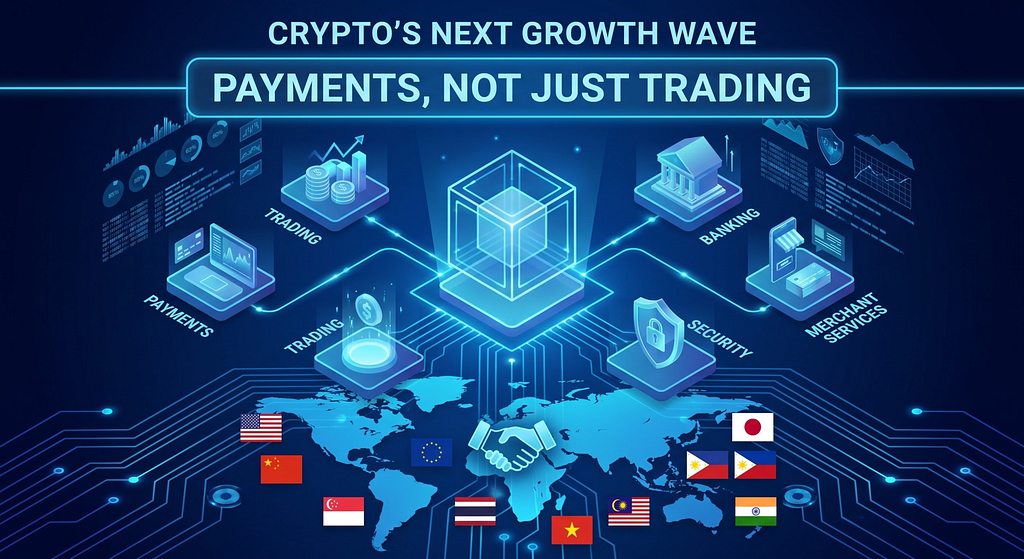
As digital assets move closer to everyday commerce, the biggest opportunity may be hiding outside the exchange.
For most of crypto’s history, trading has been the center of attention.
Users bought Bitcoin.
They traded altcoins.
Exchanges competed for volume.
New tokens created new market cycles.
But the industry is slowly approaching a different question:
What happens when people stop treating crypto primarily as an investment and start using it as money?
That shift could fundamentally change the Web3 market.
Crypto Has a Usage Problem
Crypto has millions of users.
But a large part of activity is still connected to speculation.
People enter the ecosystem because they expect prices to rise.
That creates liquidity and attention, but it does not necessarily create everyday utility.
A technology becomes much more powerful when people use it even when they are not trying to make money from it.
This is where payments become important.
Payments Could Bring a Different Type of User
A trader opens an exchange because they want to trade.
A business may use digital assets because it needs to move money.
These are very different motivations.
A company operating internationally may care about:
Settlement speed
Cross-border payments
Transaction costs
Currency conversion
Liquidity
Operational efficiency
For these businesses, digital assets are not necessarily an investment.
They are a tool.
And that distinction matters.
The Most Important Crypto Users May Not Call Themselves Crypto Users
Imagine a customer paying an online merchant.
The customer sees a familiar payment interface.
The merchant receives the value they need.
The transaction settles through blockchain technology in the background.
Neither side necessarily needs to understand:
Which blockchain is being used
How wallets work
What a smart contract does
The blockchain simply becomes part of the infrastructure.
This may be the point where Web3 finally becomes mainstream.
Not when everyone understands blockchain.
But when nobody needs to.
Businesses Have Different Priorities
For retail traders, market prices are critical.
For businesses, other factors can matter more:
Reliability.
Settlement.
Compliance.
Integration.
Security.
Scalability.
This creates an entirely different product opportunity.
Instead of building another platform primarily designed around trading, companies can build digital asset services around real business workflows.
The Exchange Could Become Part of a Larger Financial Ecosystem
This does not mean trading will disappear.
Far from it.
Trading remains an important component of digital asset markets.
But future platforms may connect trading with other financial activities.
Users could potentially:
Trade assets
Transfer value
Make payments
Manage portfolios
Access financial services
The exchange becomes one component of a broader financial platform.
This Creates an Opportunity for Regional Businesses
Cross-border payments are particularly interesting in emerging digital economies.
Businesses operating across Southeast Asia, the Middle East, and other fast-growing regions often deal with multiple currencies and financial systems.
A digital asset platform designed around these specific markets could potentially solve problems that a global, generic platform does not prioritize.
This is where localization becomes important again.
The technology can be global.
The product experience does not have to be.
The Next Competition May Be About Integration
The future of digital finance will not be determined only by who has the best trading interface.
It may be determined by who integrates digital assets into existing business workflows most effectively.
That means platforms will need to connect with:
Payment systems
Financial applications
Business software
Liquidity providers
Blockchain networks
The goal is simple:
Make digital assets useful without making them complicated.
Why This Matters for Web3 Businesses
The opportunity is much larger than creating another crypto trading platform.
Businesses can build products around:
Digital payments
Merchant services
Cross-border settlement
Digital asset management
Financial platforms
The underlying technology may be similar.
The business model can be completely different.
That is why the next phase of Web3 may produce companies that look less like traditional crypto startups and more like financial technology companies.
Final Thoughts
Crypto’s first major use case was speculation.
Its next major use case could be utility.
Trading brought people into the ecosystem.
Payments could make digital assets part of everyday economic activity.
And that would represent a much bigger transformation.
Because the ultimate success of Web3 will not be measured by how many people own crypto.
It will be measured by how many businesses and individuals use digital assets without even thinking about the technology behind them.
The future of crypto may not be about trading more.
It may be about making value move better.
About SoonTech
At SoonTech, we help businesses build customizable Web3 and digital asset platforms designed around different markets, business models, and customer needs.

 Login
Login