
 Login
Login
Why 88% of merchants want crypto payments, but only 39% actually accept them
Lately, I’ve been researching how traditional financial apps handle changing user demand. Across several payment reports and fintech conversations, one consistent pattern kept popping up: nearly 88% of merchants say they receive regular inquiries about digital asset payments, yet only 39% can actually process them.
That gap is massive. Hundreds of thousands of active accounts use their primary payment provider for daily fiat transfers, but millions of dollars end up quietly flowing out to external exchanges the moment users want to touch crypto.
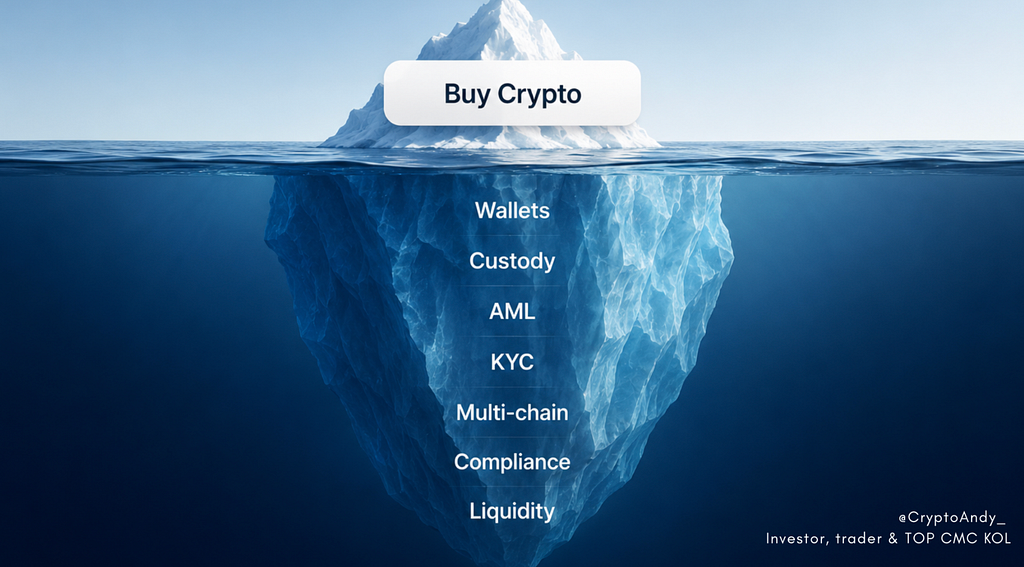
The Infrastructure Trap
The obvious reaction might be: “Why not just build native crypto features in-house?”
But looking closely at the engineering and compliance side reveals why so few teams pull it off.
Adding digital asset capabilities isn’t just about setting up a few APIs.
It requires building multi-chain security, designing vault-grade custody architectures, and spending months navigating strict regulatory frameworks like MiCA.
For a typical Electronic Money Institution (EMI), attempting to build all of this from scratch takes years, costs millions, and steals resources away from the core roadmap.
How Crypto-as-a-Service Bridges the Gap
Looking at how the industry is adapting, the most efficient workaround isn’t building a second company — it’s integration.
Through Crypto-as-a-Service, institutions plug into existing liquidity, custody, and licensing frameworks to roll out white-label crypto features under their own brand.
Here is how three notable players approach this infrastructure model:
- WhiteBIT CaaS strikes a clean balance between extensive asset coverage and straightforward integration. By connecting to WhiteBIT’s CaaS infrastructure, institutions can gain access to 340+ digital assets across 80+ networks while offloading the backend VASP licensing and automated KYC/AML checks.
- Coinbase CaaS focuses on high-touch institutional execution, deep liquidity, and subcustody tailored for banks and enterprise brokers. Their infrastructure covers everything from USDC settlement rails to Base L2 integration for higher-throughput applications.
- BitGo emphasizes federal oversight, multi-signature wallet security, and institutional insurance. Through plug-and-play APIs, fintechs can embed trading, staking, and wallet transfers directly into their app while leveraging BitGo’s licensing posture.
What This Could Mean for a Business
- Faster time-to-market: integrating an existing framework could cut deployment timelines from years down to weeks, allowing teams to test new offerings without scaling up engineering headcount.
- Simplified compliance overhead: partnering with specialized infrastructure providers might help offload complex licensing, custody management, and AML/KYC obligations to an external entity.
- Better capital retention: offering native digital asset functionality could help keep user balances and daily transaction volume within your own ecosystem instead of watching funds flow out to third-party exchanges.
- New potential monetization channels: unlocking crypto capabilities opens up potential new revenue streams through trading spreads, custody fees, or integrated yield products.
From what I can see,
the financial platforms that scale fastest over the next few years won’t be the ones trying to build every complex piece of tech in-house. They’ll be the ones that double down on their core user experience and integrate for everything else.
If your customers are already moving funds out to interact with crypto, the real question isn’t whether to follow them — it’s how fast you can bridge that gap without taking on overwhelming operational overhead.
Why 88% of merchants want crypto payments, but only 39% actually accept them was originally published in Coinmonks on Medium, where people are continuing the conversation by highlighting and responding to this story.
