The Commodity Futures Trading Commission (CFTC) has sued Utah to defend its claimed exclusive authority over federally registered prediction markets, as the state files (PDF) 14 criminal charges against Kalshi and its co-founders for allegedly violating anti-gambling laws. The Verge reports: On Wednesday, Utah's Attorney General Derek Brown filed charges against Kalshi co-founders Tarek Mansour and Luana Lopes Lara, including 12 counts of online gambling promotion, a third-degree felony, one count of a pattern of unlawful activity, a second-degree felony, and general gambling promotion, a Class A misdemeanor. The civil lawsuit calls Kalshi a "back-alley gambling den," and Attorney General Brown didn't mince words in a statement to Gizmodo.
"Gambling is illegal in Utah, whether you place the bet, run the game, or promote it. Calling it a 'prediction market' doesn't change what it is, and being federally registered doesn't put a company above the law," said Brown. "A federal court has already ruled that Utah's gambling laws apply to Kalshi," continued Brown. "Kalshi kept taking bets from Utahns anyway. That is illegal, and we're putting a stop to it."
[...] The Commodity Futures Trading Commission (CFTC) has been jumping into action to protect Kalshi and Polymarket by filing lawsuits against any state that brings charges against the betting sites. President Trump's son, Donald Trump Jr., is a paid advisor to both companies. The CFTC announced Wednesday that it was suing the state of Utah as part of its "commitment to maintaining its exclusive jurisdiction over CFTC-registered prediction markets." The argument is that the feds alone should be regulating these sites.
"Utah seeks to shut down prediction markets across a wide variety of markets," CFTC Chairman Michael S. Selig said in a statement. "Event contracts do not just serve hedging and investment purposes -- they also provide the public with information about the outcome of future events. Congress entrusted the CFTC to be the federal regulator with sole responsibility to oversee these markets," continued Selig. "As I've said before, the CFTC has the expertise and responsibility to defend its exclusive jurisdiction over commodity derivatives, and that's exactly what we'll do."
A for-sale sign on a home sold through Zillow Offers, the company’s home-flipping business, which Zillow shut down in 2021. The company has agreed to pay $212.5 million to settle an investor lawsuit over its statements about the business. (Zillow Photo)
Zillow Group will pay $212.5 million to settle a shareholder class action lawsuit over its handling of Zillow Offers, the home-flipping business it shut down in 2021.
The lawsuit alleged that Zillow executives painted an overly positive picture of Zillow Offers in the months before the shutdown, without disclosing how poorly the company was able to predict home prices. That kept the stock artificially high until Zillow revealed the problems and announced the shutdown in November 2021, according to the complaint.
The Seattle-based company disclosed the settlement Wednesday in an SEC filing. About $48 million of the payment is expected to come from insurance. The deal requires court approval and includes no admission of wrongdoing.
In a statement, a Zillow spokesperson said, “We are pleased that the parties have reached a resolution on the matter.”
The settlement comes about three weeks after the U.S. Supreme Court declined to hear Zillow’s challenge to the case’s class status. The U.S. Chamber of Commerce and other business groups backed Zillow’s petition.
Steve Berman, managing partner of Seattle law firm Hagens Berman, the court-appointed class counsel, told Real Estate News he believes it’s the largest single securities settlement in the history of the Western District of Washington, the federal court district that includes Seattle.
Separate shareholder lawsuits filed on the company’s behalf against its leaders, known as derivative suits, remain pending, according to the filing.
Zillow bet its future on buying and selling homes in 2019, when co-founder Rich Barton returned as CEO and projected the business would reach $20 billion in annual revenue within three to five years. The company used its pricing algorithms to buy houses, fix them up and resell them.
The effort unraveled in the fall of 2021. An analyst report found that two-thirds of 650 homes it sampled from Zillow’s inventory were listed for less than the company paid.
Days later, Zillow shut down the business, cut about 2,000 jobs and took a $304 million inventory writedown, with Barton citing the unpredictability of its home-price forecasts. Zillow’s stock fell 32% over two days, according to Reuters.
The original lawsuit, filed that month in federal court in Seattle, cited upbeat statements executives made in the months before the shutdown.
They included a September 2021 remark by Jeremy Wacksman, then Zillow’s chief operating officer and now its CEO, that “the strength and the appeal for Zillow Offers just continues to grow.” Investor Jeremy Jaeger later became the lead plaintiff.
The class covers investors who bought Zillow Class A or Class C shares between Aug. 5 and Nov. 2, 2021. If the judge grants preliminary approval, Zillow will pay the money into a settlement fund within 20 business days.
Two Democratic senators who have long overseen US intelligence say the Trump administration is illegally withholding a secret court’s findings from Congress until lawmakers renew a program that lets federal agents read Americans’ communications without a warrant.
Seven months ago, the Foreign Intelligence Surveillance Court objected to search filters that let intelligence analysts pull Americans’ messages from intercepted data without the approvals, written justifications, or records the law requires. The court approved another year of surveillance anyway. The ruling has never been made public, and Senators Ron Wyden of Oregon and Adam Schiff of California say the administration’s own deadline for releasing it passed in September.
The program, Section 702 of the Foreign Intelligence Surveillance Act (FISA), lapsed in June after Congress failed to renew it, though collection continues under the court’s March approval. The administration’s own public documentation says rulings like this one are reviewed for public release “within 180 days of issuance.” That window closed September 13, even as intelligence officials press lawmakers to reauthorize the program by the end of the year.
A New Mexico judge has ordered Meta to pay $25 billion after a jury found Facebook liable for deceiving users about privacy during the Cambridge Analytica scandal. State Attorney General Raul Torrez called it "one of the largest, if not the single largest state verdict against a company in American history." While Meta plans to appeal the ruling, the funds that are to be collected will go toward state education spending. The Associated Press reports: Jurors in September found Meta liable for over 43 million violations of New Mexico consumer protection laws when a political consulting firm, Cambridge Analytica, harvested Facebook user data to generate targeted political ads for the 2016 election. Forty-eight other states settled with Facebook in a nationwide case, but New Mexico chose to take the social media company to court on its own. [...] During the trial, jurors assessed whether Facebook misled users about privacy and content moderation 34 separate times. State prosecutors, though, argued Facebook's statements deceived the entire population of New Mexico and extended beyond social media users.
In the end, jurors agreed with this premise and found Facebook liable for 2.1 million violations on certain counts, bringing the total number of violations to over 43 million. Facebook's attorneys have argued in subsequent court filings that the state's consumer protection laws don't apply to people in New Mexico who weren't using the platform at the time. [...] In one of the few wins for the defense, jurors found the state didn't prove that Facebook made false claims about removing harmful content, including misinformation about the COVID-19 pandemic.
The state said the company favored certain accounts and allowed for violent or inaccurate content to proliferate. Attorney Randi McGinn said in her closing argument for the state that Facebook profited off harmful content, which CEO Mark Zuckerberg denied during his video deposition. Zuckerberg said the company has to carefully balance freedom of speech with content moderation. Attorneys for Facebook said the company has adapted its policies since the state's lawsuit was filed in 2021 and that it removes 99% of content that violates standards.
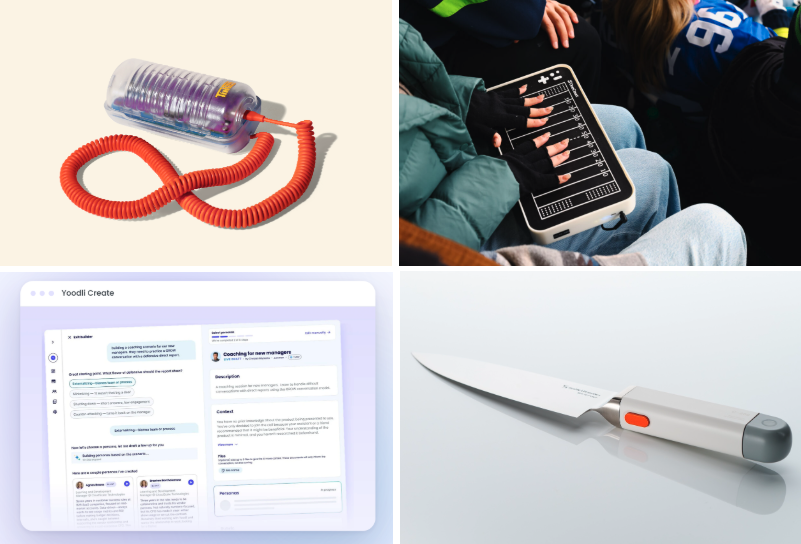
Innovations from Seattle startups that made Time’s Best Inventions list, clockwise from top left: Tin Can’s landline-style phone; OneCourt’s tactile tablet for low-vision sports fans; Seattle Ultrasonics chef’s knife; Yoodli’s “Create” tool. (Images via Tin Can, OneCourt, Seattle Ultrasonics, Yoodli)
Seattle-area innovators made a strong showing on Time’s 2026 Best Inventions list released Thursday, claiming spots for breakthroughs ranging from a tactile sports tablet for low-vision fans to an ultrasonic chef’s knife.
The annual roundup — featuring 300 innovations, with Apple CEO John Ternus and the new iPhone Duo gracing the cover — includes startups like Yoodli, Tin Can, and OneCourt, alongside major regional hardware operations like SpaceX’s Redmond-based Starlink team and Bellevue’s Valve.
Apple CEO John Ternus and the iPhone Duo on the cover of Time. (Time Photo)
While the main headline focused on Apple’s leadership transition and new flagship hardware, the Pacific Northwest’s outsized presence on this year’s list highlights the region’s growing influence across everything from consumer AI and assistive hardware to outdoor gear.
Among the region’s tech giants, Amazon landed two spots on the list, for both its Amazon Pharmacy Kiosk in the medical category and its voice-directed Proteus warehouse robots in logistics. But Microsoft was shut out entirely, missing a placement in both the main 300 list and special mentions.
“These are creations changing how we live, work, play, and think about what’s possible,” Time’s editor’s wrote, adding that each contender was evaluated on key factors, including originality, efficacy, ambition, and impact.
Here’s a breakdown of regional innovations honored by Time:
OneCourt (Accessibility): Developed a tactile tablet that translates real-time player and ball data into physical vibrations, allowing blind and low-vision fans to track live sports action with their fingertips.
Yoodli (Education): Recognized for its AI platform for human skills, which uses realistic AI roleplays and real-time coaching to help users build and practice workplace communication skills.
Tin Can (Parenting): Earned a spot for its landline-style home phone built specifically for kids, offering a safe way for families to stay connected without screens.
Seattle Ultrasonics C-200 (Food & Drink): Created by Modernist Cuisine alum Scott Heimendinger, this ultrasonic chef’s knife vibrates tens of thousands of times per second to slice effortlessly through food.
SpaceX Starlink V5 (Connectivity): Engineered by SpaceX’s team in Redmond, the newest internet terminal is roughly 35% smaller and 52% lighter than its predecessor, making on-the-go satellite connectivity easier to mount and deploy.
Valve Steam Machine (Entertainment & Gaming): The Bellevue-based gaming giant made the list for its latest hardware push to bring PC gaming into the living room.
NBBJ (Architecture): The legendary Seattle-founded architecture firm was recognized for its design of the Life and Mind Building at the University of Oxford.
Pebblebee Halo (Privacy & Security): Created by the Issaquah-based startup founded by former Boeing engineers, earning a special mention for its latest tracking and safety hardware.
Therm-a-Rest NeoLoft (Outdoors): Honored for its ultra-comfortable sleeping pad, designed under Seattle-based parent company Cascade Designs.
Superfeet ME3D (Sports & Fitness): Selected for its personalized 3D-printed insoles, crafted by the Ferndale, Wash.-based footwear innovation company.
Several other Pacific Northwest companies made the cut. Three Vancouver, B.C., startups earned recognition: Moment Energy for its clean energy storage made from second-life EV batteries, Glüxkind for its AI-powered self-pushing stroller, the Rosa, and Form for its Smart Swim 2 Pro real-time coaching goggles. And in Oregon, Nike secured a spot in apparel for its innovative ACG cooling running shirt.
Eight US states, including Kansas, Arizona, and Montana, have sued OpenAI, alleging that ChatGPT encourages children to harm themselves. The states are seeking changes to how the company's products interact with young users and the forfeiture of profits generated from their activity. Reuters reports: Attorneys general from the states, which include Iowa, Kansas and Arizona, filed the lawsuits independently in state courts, claiming ChatGPT is designed to be agreeable and engaging to earn the trust of users. But the chatbot reinforces delusions, encourages dangerous behavior and assists users in planning violence like mass shootings, the lawsuits claim. The lawsuits represent the most significant coordinated state action against an artificial intelligence company, adding to a wave of legal challenges OpenAI faces as it prepares for a public listing. Florida's attorney general filed the first such state suit in June.
The lawsuits accuse the company of violating state consumer protection laws by misleading users about the safety of ChatGPT. The states also allege that the company created a public nuisance by endangering the health of their residents. The lawsuits seek orders forcing OpenAI to make changes to how ChatGPT works. Among other things, the states want the company barred from developing AI models that can improve themselves unless it can ensure those models are aligned with human values. The states ... are also seeking civil monetary penalties for OpenAI's violations of state law as well as damages.
Defense Secretary Pete Hegseth speaks before President Donald Trump at an event for Anduril Industries, Inc., at Sparrows Point Shipyard, Tuesday, Oct. 6, 2026, in Sparrows Point, Md. (AP Photo/Julia Demaree Nikhinson)
In a major development confirmed on SEPTEMBER 29, 2026, Confirmed announcement/filing for Pokemon Collector $55 Million Crypto Exploit Trial Opens In Federal Court. This operational move highlights expanding activity across the digital asset ecosystem and underscores key developments for market participants.
Key Operational Milestones & Context
According to primary regulatory and corporate filings verified on SEPTEMBER 29, 2026, this development introduces crucial infrastructure enhancements. Industry leaders note that maintaining robust compliance, security, and market liquidity remains essential as digital asset services integrate into broader institutional frameworks.
The transition reflects a strategic pivot toward scalable, transparent operations. Analysts emphasize that ongoing technological upgrades will play a central role in sustaining user confidence and market stability over the coming quarter.
Market Outlook and Industry Impact
As institutional participation accelerates across global markets, this landmark event sets a notable precedent. Traders and investors are closely evaluating liquidity signals and collateral flows following the announcement.
Jeff Kohler is asking the U.S. Supreme Court to clarify patent law after courts sided with Google to invalidate his software patent. (Photo courtesy of Jeff Kohler)
Jeff Kohler was working as a software engineer in 2005 when he started spending his nights and weekends on a side project: a web conferencing system that could record and replay live sessions. He filed for a patent without the help of a patent attorney, stuffing two CDs full of C++ source code into the application to show his work.
The patent was issued in 2010, and years later, after Kohler had joined Microsoft, the Redmond company licensed his technology for its Teams video-conferencing platform.
When YouTube later added the ability for viewers to pause, rewind, and change the playback speed of live video, Kohler saw in the feature what he considered to be his own invention. Kohler, who lives in Bellevue, Wash., sued Google for patent infringement in U.S. District Court in Seattle in April 2023.
But rather than defending the feature’s originality, Google argued that Kohler’s patent was too abstract to be eligible for patent protection. The district court agreed and dismissed the case, and the U.S. Court of Appeals for the Federal Circuit affirmed that decision.
Both decisions cited Alice Corp. v. CLS Bank International, a 2014 U.S. Supreme Court ruling that raised the bar for software patent eligibility by holding that an inventor cannot patent an “abstract idea” implemented with generic technology.
Since then, Alice has been used to invalidate thousands of software patents, and the Supreme Court has repeatedly declined to revisit the standard. Now, Kohler is asking the Supreme Court to take up his case, not to overturn Alice, but to clarify how courts should apply it.
“The patent legal system has become hostile to inventors,” Kohler said. “Because of Alice, my case got stopped before it even started.”
HowAlicechanged patent law
When Alice was handed down, patent trolls were on the rise: shadowy entities that bought vague patents to sue tech companies on shaky claims of patent infringement.
That changed under the 2014 ruling, which requires that a patent clear two hurdles: the idea cannot be “abstract,” and it must propose a sufficiently “inventive concept.” The standard has become “a crucial tool” for fighting patent trolls, in the words of the Electronic Frontier Foundation.
But critics say it’s ill-suited to software patents. Because software inventions often rely on pre-existing hardware to run the source code, courts tend to find many of these patents to be insufficiently inventive.
Jon McMichael, an IP litigation partner at Fenwick who has written about Kohler’s case, said this challenge is common in patents where inventors rely on general-purpose computers and off-the-shelf hardware to implement their ideas.
“That’s where those patent holders run into more problems,” he said.
Experts say the courts’ application of Alice has broadened to invalidate the patents of real inventors in addition to those of patent trolls. Toshiko Takenaka, a University of Washington IP law professor who is working on an academic paper about Kohler’s case, said Alice’s ability to quickly defeat bad actors comes “at the expense of the best inventors.”
“Software patents are too frequently being invalidated without giving the owner the opportunity to defend it,” Takenaka said. “This inventor provided something ordinary computers could not do, right? So therefore, in my view, this is an eligible invention.”
Some judges have raised similar concerns, including Federal Circuit Chief Judge Kimberly Moore, who authored the opinion affirming the dismissal of Kohler’s case. In a 2020 concurrence in a separate case, Moore wrote that she and her fellow judges were “unanimous in our unprecedented plea for guidance” from the Supreme Court on how to interpret Alice, which she called a “patent-killing judicial exception of our own creation.”
A quest for legal clarity
After filing his patent, Kohler spent more than 15 years at Microsoft, where he helped launch HoloLens and rose to senior director of product management for the Surface line. He later served as a product leader at Meta for its Horizon platform.
Kohler says he’s hopeful the Supreme Court will agree to hear his case because his petition takes a new approach, asking the court to clarify how to apply the Alice test rather than disputing the test entirely. His new attorney, Kathryn Jean Miller, who does not have prior patent law experience, was admitted to practice before the Supreme Court bar for this case.
“It’s me and my lawyer against the world,” Kohler said. “I never thought I would be doing something like this.”
The Supreme Court has declined more than 89 petitions related to Alice, some of which had the Solicitor General’s endorsement. The justices will decide on Sept. 28 whether to hear Kohler’s case and likely announce their decision the following week.
Kohler is hoping that other inventors will file amicus briefs, which are due by Sept. 23, to illustrate to the court the need for clarification.
“There’s a broad coalition of people who would like some sanity brought back to patent law, from small inventors and startups to former judges,” Kohler said. “That’s what I’m trying to do with my petition.”

 Login