Rheinmetall has booked an order worth a medium three-digit million-euro sum for its share of 69 more Schakal wheeled infantry fighting vehicles for Germany and the Netherlands, the company announced, after the European procurement agency OCCAR exercised the first option under the program’s 2025 contract. OCCAR placed the order with ARTEC, the Rheinmetall and KNDS […]
Being prepared is a common survival tactic, but I can’t count how many times I needed something for a car breakdown or road emergency and didn’t have it. Beyond the basics, like an air inflator, a screwdriver set, a road emergency kit, jack stands, and paper towels, there are essential tools you should always keep on hand in case you need to repair your vehicle or someone else's. Here are six Harbor Freight mechanic tools I always keep in my car’s trunk so that I am ready when something goes wrong.
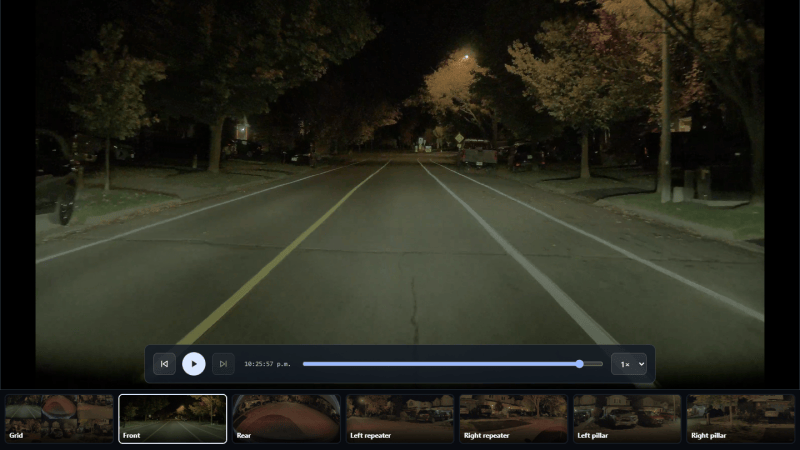
For as many sensors, cameras, and computers as there are on modern cars, they ought to be a dream to poke around in and customize to one’s liking. Unfortunately they’re generally plagued by the same locked-down, proprietary software that most consumer electronics ship with, making it very difficult to interact with these systems in ways the manufacturer doesn’t approve of. There are a few exceptions to this rule, though, and [Sasha] built this system which backs up the footage from their electric car’s on-board cameras automatically to a NAS.
The system is built around a Raspberry Pi Zero 2 W which plugs directly into a USB port in the car’s glovebox. To set it up, the software only needs to be flashed onto the Pi and then it can be controlled from a smartphone. It can connect to any NAS over a variety of protocols and keeps track of what footage has been backed up, and can even automatically restart a backup if the car drives away before it has completed. It also automatically frees up space on the car’s internal drives by deleting any files that have already been synced to the NAS. All of the data is kept in the user’s control as well, and nothing leaves the LAN unless the user sets up backups to a cloud service on their own.
If you have the correct electric car and a Pi other than a Zero 2 W, [Sasha] also has a package for other Raspberry Pis that should work. Unfortunately this was designed for a specific electric car; other makes and models won’t work with this out of the box, but we hope that won’t stop others from checking out the GitHub page anyway trying to figure out what’s going on under the hoods of their car’s electrical and computer systems. Sometimes this leads to things you might not expect, like using the car itself as a video game controller.
As I sat in the cab of the pickup truck and manually rolled down the windows, I closed my eyes and, for the briefest moment, flashed back to opening the windows on a cold, winter day in my dad’s 1975 Ford Ranger to let more cigarette smoke escape. I opened my eyes and looked through the windshield at a wall in the Slate Customer Experience Center studded with bright color chips.
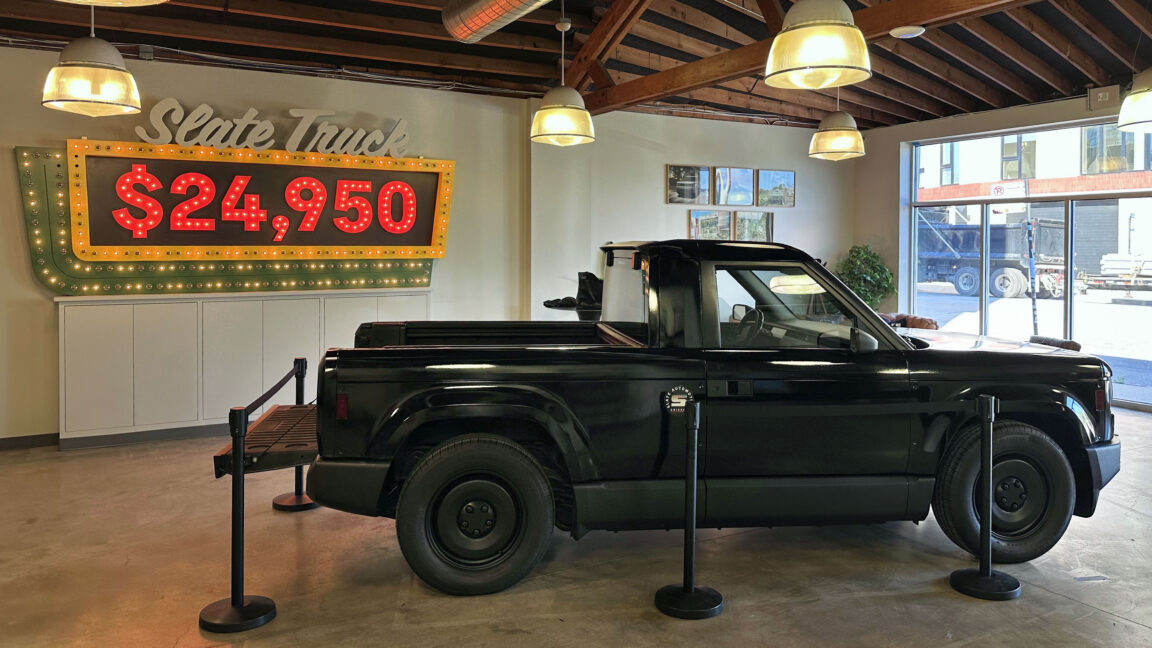
Last week, in a former Tesla store staffed by some former Tesla employees, Slate opened its first showroom. Located in the Fulton Market District just northwest of the Chicago Loop, the Slate Experience Center is a place for would-be buyers to poke around a prototype, check out customization options, buy some Slate merch, and even preorder a new Slate Truck with a $300 deposit.
Designed for the American obsession with pickup trucks, the Slate Truck is a bare-bones electric pickup truck retailing for $24,950. It sports plastic panels, a minimalist interior design sensibility, actual window winders, and a projected range of 205 miles. Ars went for a ride in a Slate Truck over the summer, but we haven't had a chance to shop for one. So I stopped by the Slate Experience Center so I could, er, experience the Slate.
Times Mobility says a data breach exposed data linked to 6.6 million accounts, including 1.6 million identity records with driver's license images and documents too.
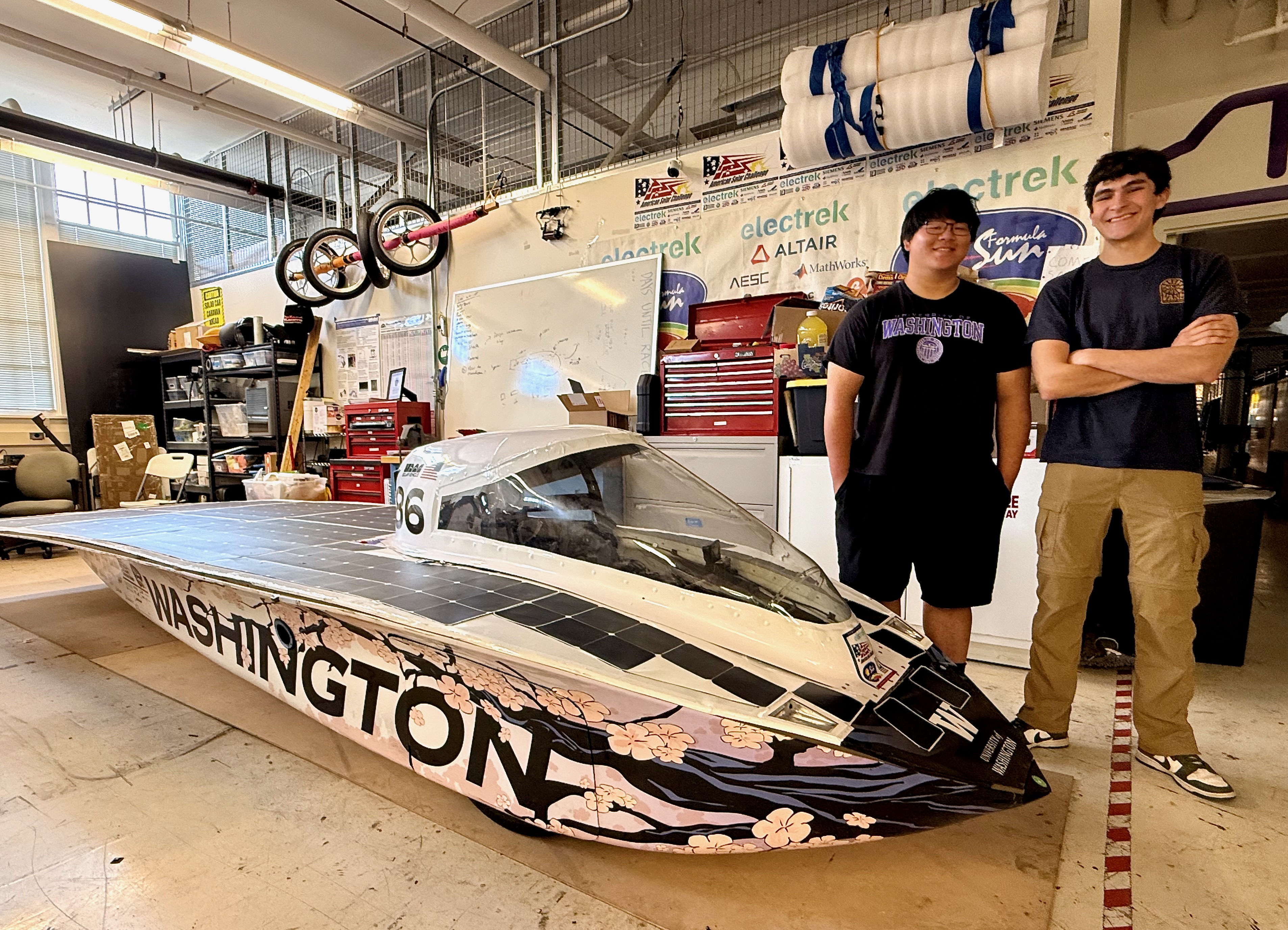
Elijah Yan, left, and Rudy Heredia-Jantz, members of the Solar Vehicle Team at UW, with Sakura, the solar-powered vehicle the student-led team constructed in their shop at the University of Washington. (GeekWire Photo / Kurt Schlosser)
In a cramped corner workspace in a mechanical engineering building at the University of Washington, a team of students is working to harness the power of the sun.
They operate on a fraction of the budget of elite international programs, fitting build hours around class schedules and other extracurriculars. Yet this summer, the scrappy crew took their handmade, solar-powered car — dubbed Sakura — out of the shop and onto the open road.
Over seven days in July and 1,778 miles from Minnesota to Texas, they outpaced nearly every competitor to finish fourth overall and cross the line as the top-ranking American team in the American Solar Challenge.
Now entering its fourth year, the Solar Vehicle Team at UW (SVTUW) is still a relative newcomer to collegiate solar racing. Officially affiliated with the university’s Mechanical Engineering Department, the roughly 50-person group has evolved into a broader interdisciplinary effort spanning electrical engineering, computer science, business, aerodynamics, and more.
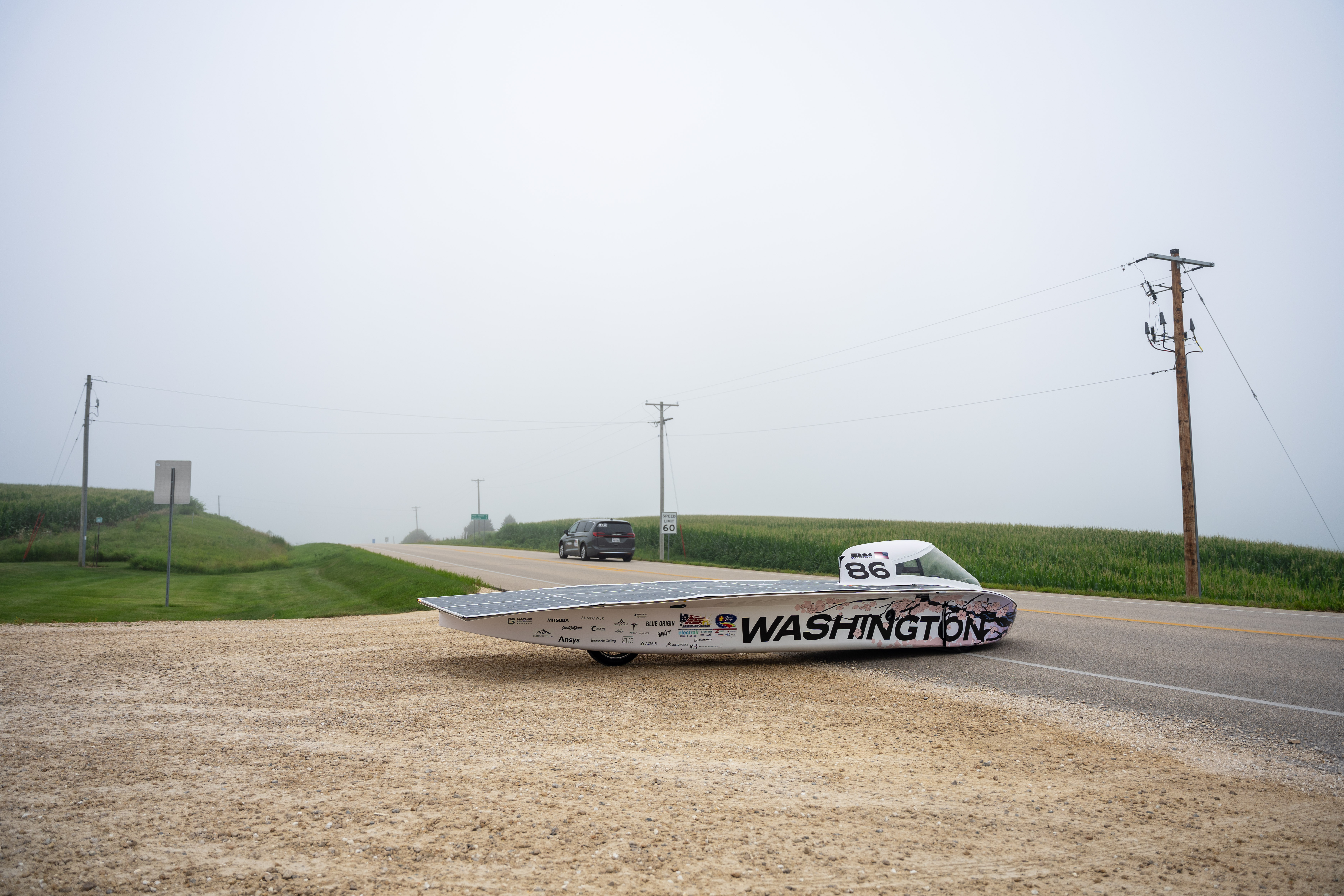
The UW solar car merges onto a roadway in Lansing, Iowa, near where the movie “Field of Dreams” was made, during the American Solar Challenge race in July. (American Solar Challenge Photo / Rishi Mohan)
Operated entirely by undergrads, the club handles every aspect of the operation in-house — from sponsor outreach and logistics to hands-on fabrication.
While top international competitors rely on multi-million dollar budgets and years of development, the Huskies assembled their vehicle (named after the Japanese word for cherry blossom) in just 11 months — a lightning-fast turnaround for a machine built entirely from scratch.
For team president Rudy Heredia-Jantz, an electrical and computer engineering senior, even making it to the starting line felt like a triumph.
“Frankly, we have no idea [how we pulled it off],” Heredia-Jantz said. “This car — it was a little bit of a miracle. We did not have it up and running until the day before we left for competition. We didn’t even have it moving. We just spun the rear motor, threw it in the trailer, and figured we’ll blow something up eventually.”
Things did indeed blow up — 12 tires in total along the way — but the Huskies kept rolling. For a third-year program competing against seasoned international juggernauts, simply keeping the car on the road was an achievement; outpacing them was a statement.
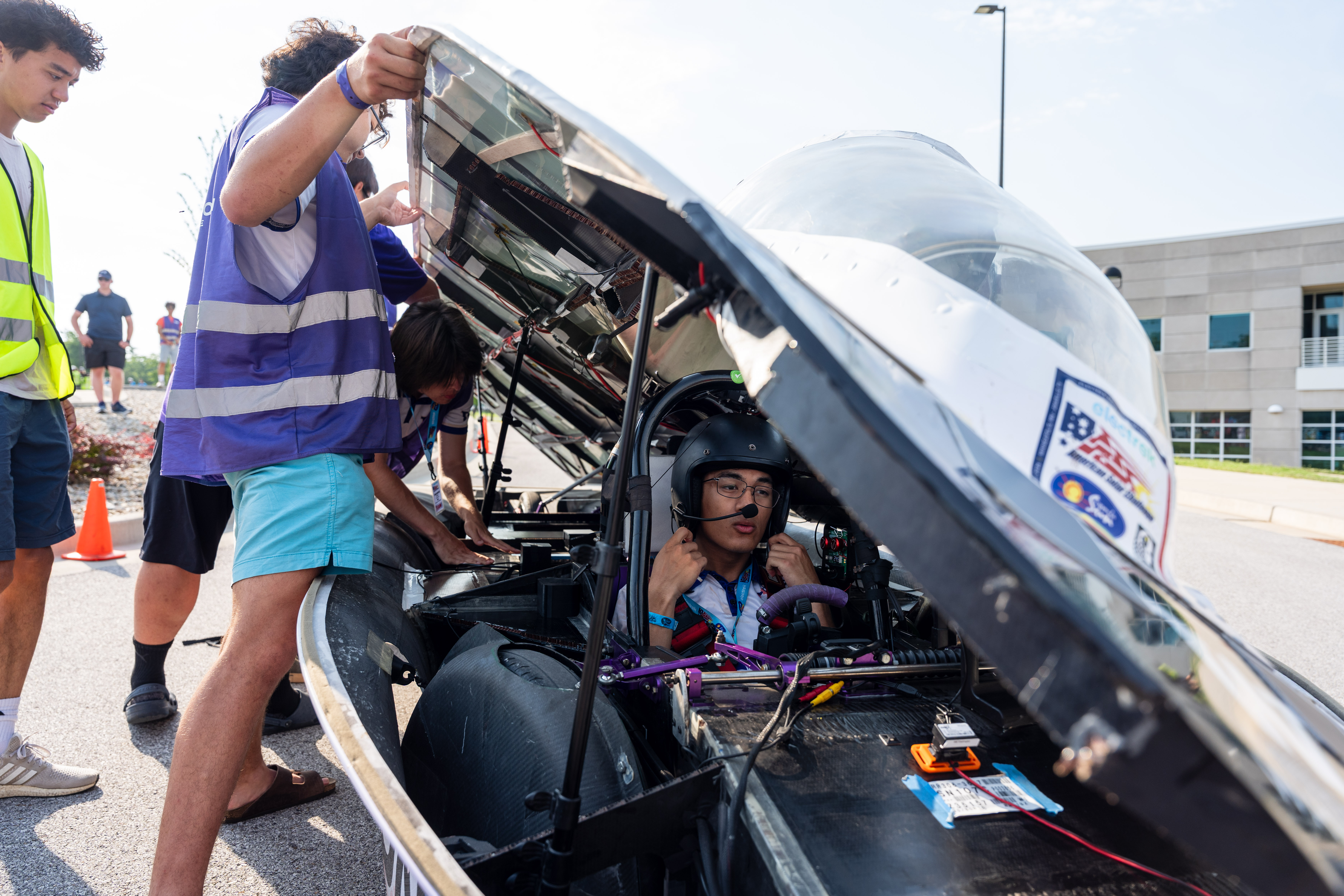
UW student Nikhil Garg, the 2025-2026 electrical lead for the solar vehicle team, is seen behind the wheel during the American Solar Challenge. (American Solar Challenge Photo / Rishi Mohan)
UW didn’t just survive the route to Texas — they blew past expectations for a young club, clinching the Aesthetics Award and Spirit of the Event Award alongside their top-four finish.
For second-year mechanical engineering student Elijah Yan, who serves as the team’s mechanical lead, the learning curve was immediate.
“Building a car is just not something I’ve done before, so it’s very new to me, and it’s super cool to learn that type of stuff — suspension stuff, how to do vehicle dynamics,” Yan said.
That hands-on engineering paid off when Sakura hit highway speeds on open pavement. Designed to maximize efficiency, the ultra-lightweight vehicle — weighing roughly 500 pounds with a driver inside — stretches 19 feet long to fit its array of solar panels while keeping its profile as narrow as possible.
Under the hood, Sakura is a blend of precision engineering and strict energy conservation:
Solar array: 386 Maxeon Gen 7 photovoltaic cells covering six square meters, producing up to 1,540 watts of max power output directly from sunlight.
Battery pack: A student-built 5.125 kWh lithium-ion battery in a 36S9P cell configuration (121V nominal), supplemented by a secondary backup battery used solely for system startups.
Drivetrain and motor: Powered by a 2 kW Mitsuba 2096-III hub motor capable of pushing the 500-pound vehicle up to 65 mph on open highways.
Data and cockpit: A custom steering wheel equipped with push-to-talk comms, digital telemetry displays, and regenerative braking controls, paired with an onboard Samsung Galaxy smartphone that streams real-time battery and motor analytics back to the pit crew.
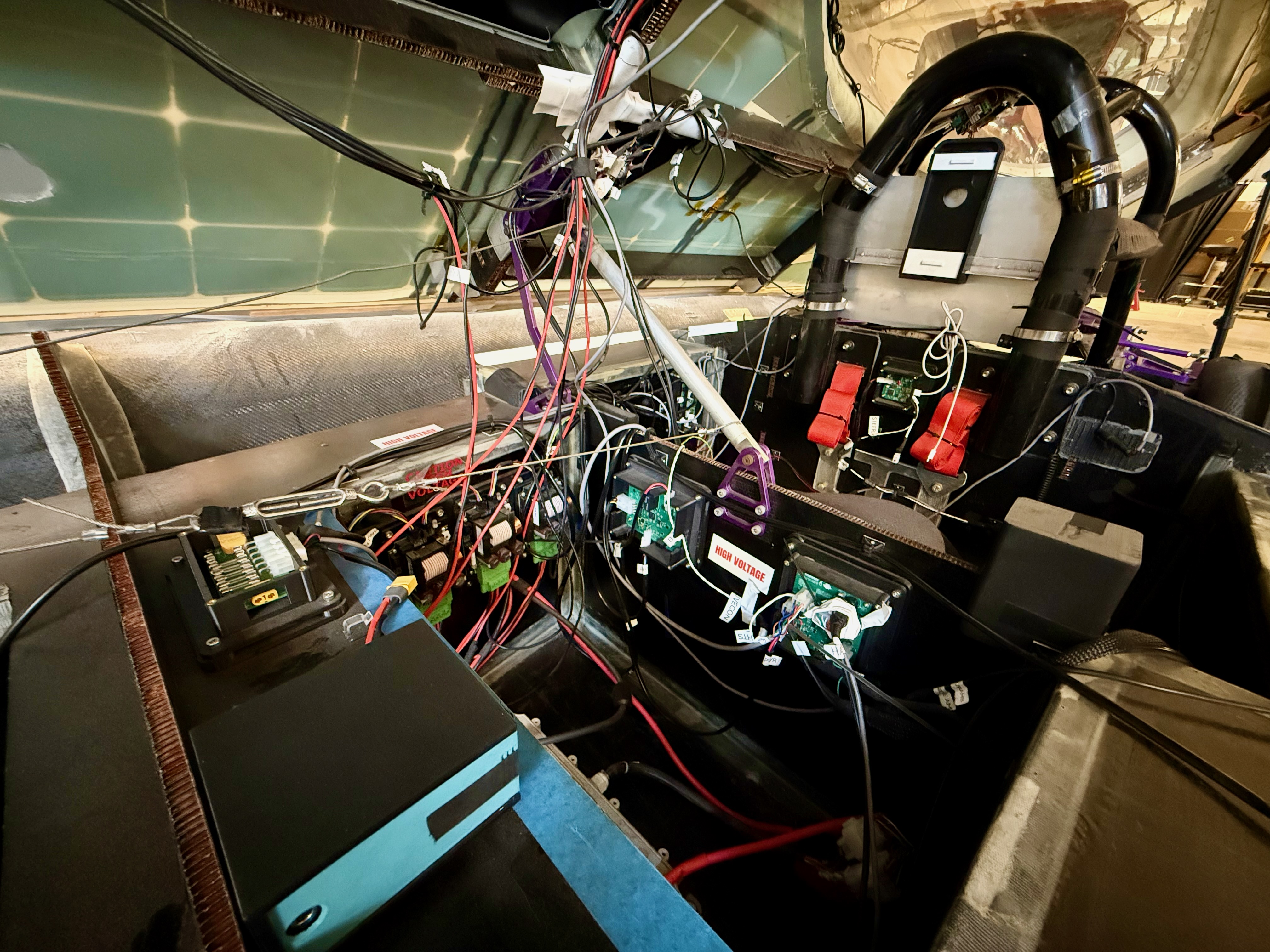
A look just behind the cockpit of the UW solar car. (GeekWire Photo / Kurt Schlosser)
To pull off a competitive build on a shoestring budget, the team combined its resourcefulness with local industry support. The vehicle’s lightweight frame, for instance, relies on carbon fiber sandwich panel flooring donated by Boeing, held together with specialized fiberglass tape.
“It’s the perks of being a Seattle-based team — we work with some amazing materials,” Heredia-Jantz said.
Yet even with aerospace-grade composites, bringing a prototype car across the finish line required plenty of improvised shop hustle.
“The car is held together with cardboard and duct tape, essentially,” Yan joked.
And managing the technical hardware on the road is as much a game of data processing as it is driving.
During the race, a dedicated strategy team monitors Sakura‘s health in real time. Using a custom dashboard that feeds off the onboard smartphone’s data stream, students track battery state-of-charge, individual array voltages, and motor temperatures from a trailing support vehicle.
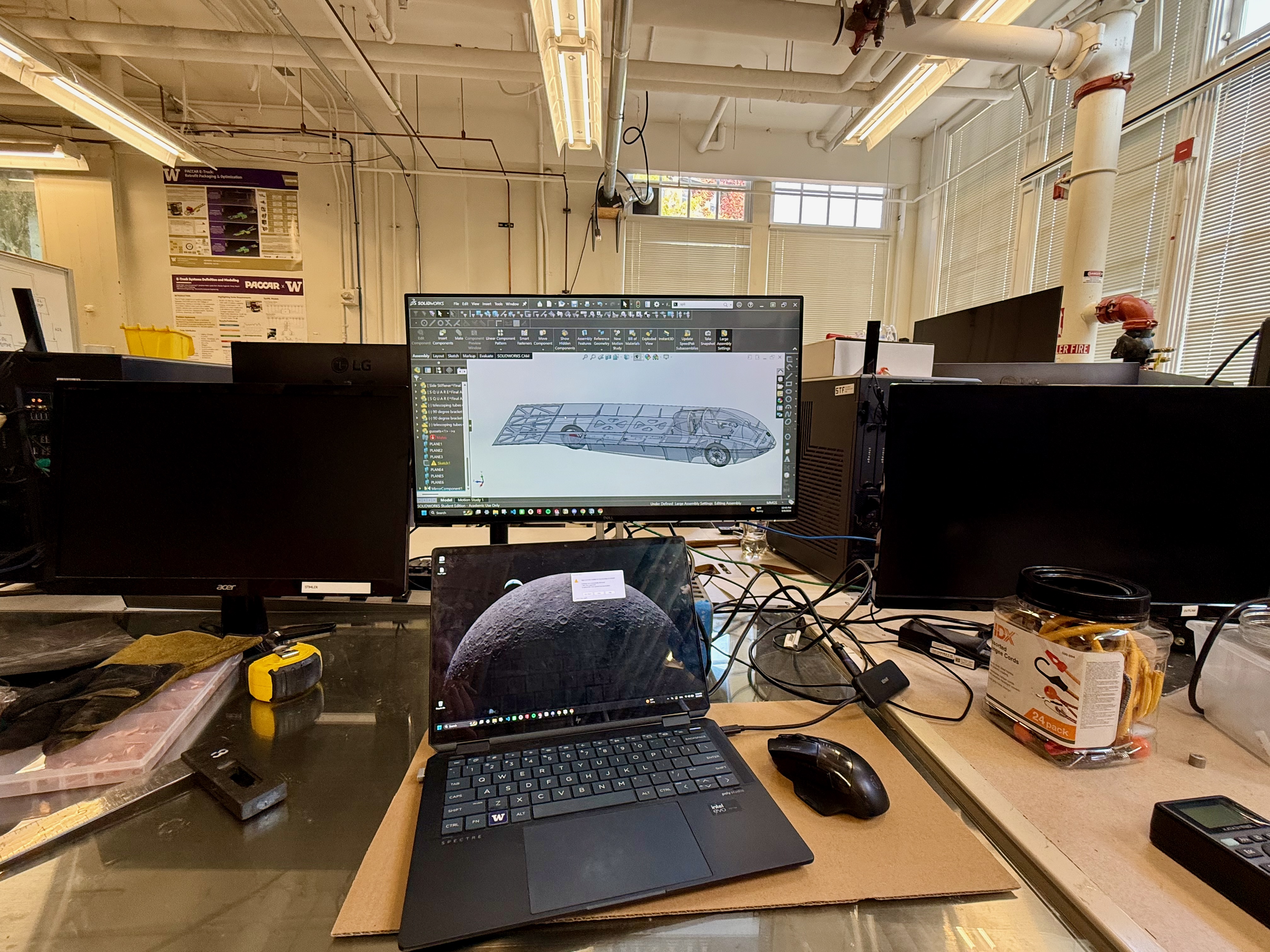
A mock-up of the UW’s solar car as seen on a computer in the team’s lab. (GeekWire Photo / Kurt Schlosser)
By pairing live telemetry with incoming weather forecasts, the crew calculates optimal cruise speeds on the fly — relaying instructions to the driver via walkie-talkie so they can balance energy consumption, leverage regenerative braking, and avoid tripping the battery’s protection systems on steep climbs or hard accelerations.
That real-time power management was also put to the test right before the cross-country journey, when the team competed in the Formula Sun Grand Prix — an annual three-day track race where cars run on a single initial charge and whatever sunlight they can harvest along the way. Despite navigating a track that pushed their power distribution system to its limits, the track time gave the team crucial baseline data and momentum before taking on the road race.
Now the club is already preparing for its next evolution. While repairing Sakura for upcoming competitions, students are designing their next-generation vehicle from scratch — overhauling power distribution, reinforcing the chassis, and building a new solar array.
For a club building sun-powered technology in a city known for grey skies, the project is ultimately driven by something deeper than weather.
“I believe this team is building something special in the early morning hours on UW’s campus: talent that shows up before sunrise, a refusal to wait for better resources before doing great work, and a stubbornness that looks a lot like faith,” said Caoilin Krathaus, the team’s administrative lead. “It reminds me of the story behind Boys in the Boat, and what I’ve always thought of as the true Husky experience.”
Cybercriminals used to hacking home routers and security cameras have found another Internet-connected device to add to their botnets: your car, according to research published by Kaspersky Lab.

 Login

 Rheinmetall has booked an order worth a medium three-digit million-euro sum for its share of 69 more Schakal wheeled infantry fighting vehicles for Germany and the Netherlands, the company announced, after the European procurement agency OCCAR exercised the first option under the program’s 2025 contract. OCCAR placed the order with ARTEC, the Rheinmetall and KNDS […]