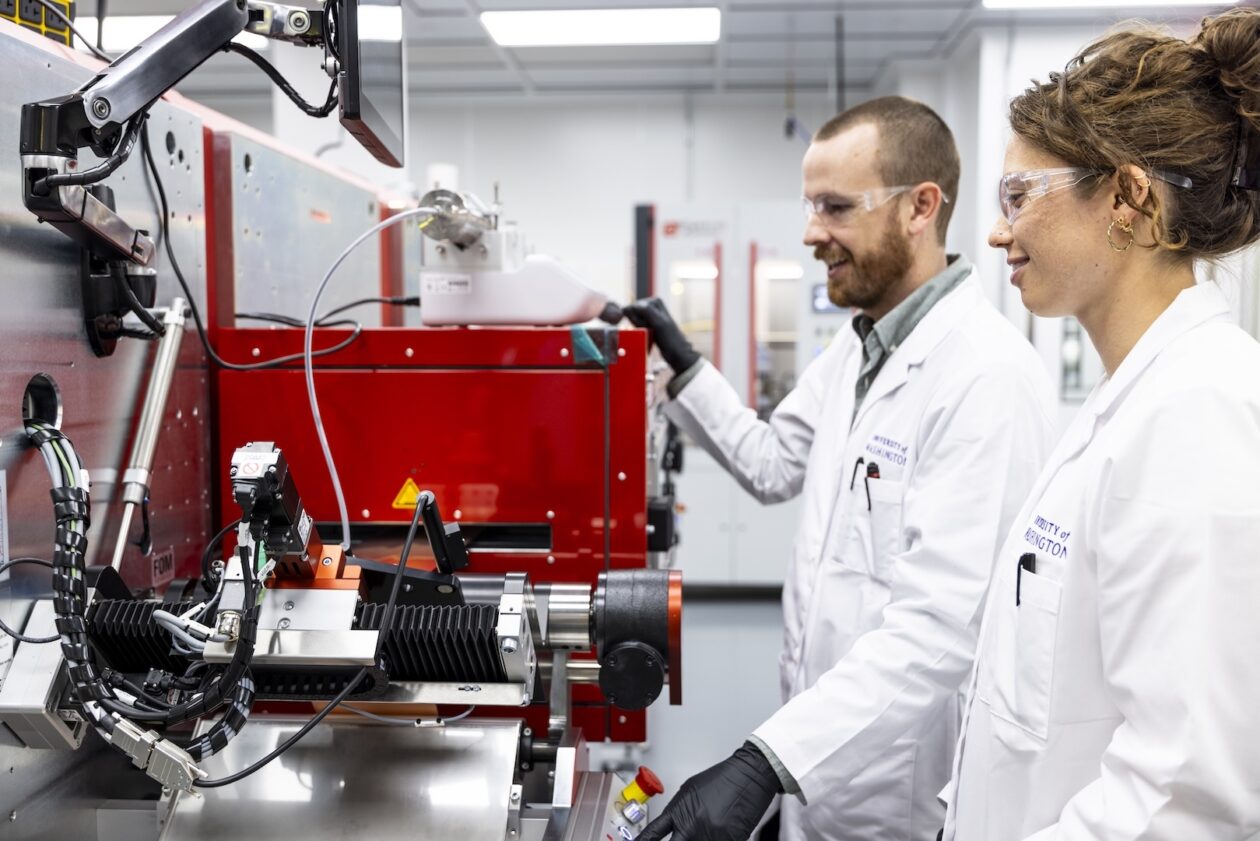
Staff in the Washington Clean Energy Testbeds use machinery in the expanded battery lab. (UW Photo)
The University of Washington on Thursday celebrated the opening of a public-access battery manufacturing lab that aims to propel energy innovation.
The new lab — the first of its kind on the West Coast — is housed within the UW’s Clean Energy Testbeds, a site that has helped launch multiple battery startups.
The expanded facility for researchers and entrepreneurs comes as battery demand surges, particularly for large deployments supporting solar energy and grid operations. Over the past three years, U.S. utility-scale battery storage capacity has grown at an average annual rate of about 70%, according to federal data. Other key applications include batteries for defense and transportation.
While China and other Asian nations overwhelmingly dominate the global supply of batteries, there is still room for U.S. companies to grow, particularly in developing new technologies, said Dan Schwartz, founding director of the Clean Energy Institute, which operates the Testbeds.
“We want to be part of the new chemistries that can serve new markets,” he said.
Those innovations include batteries using sodium or potassium ions, or replacing graphite with silicon-carbon materials in traditional lithium-ion batteries.
The new 1,600-square-foot lab was created by repurposing storage space inside the current 15,000-square-foot testbed facility, located east of the UW’s main Seattle campus. The $7.5 million capital project was completed in February and funded by the state’s Climate Commitment Act, which also supports additional facility staff.
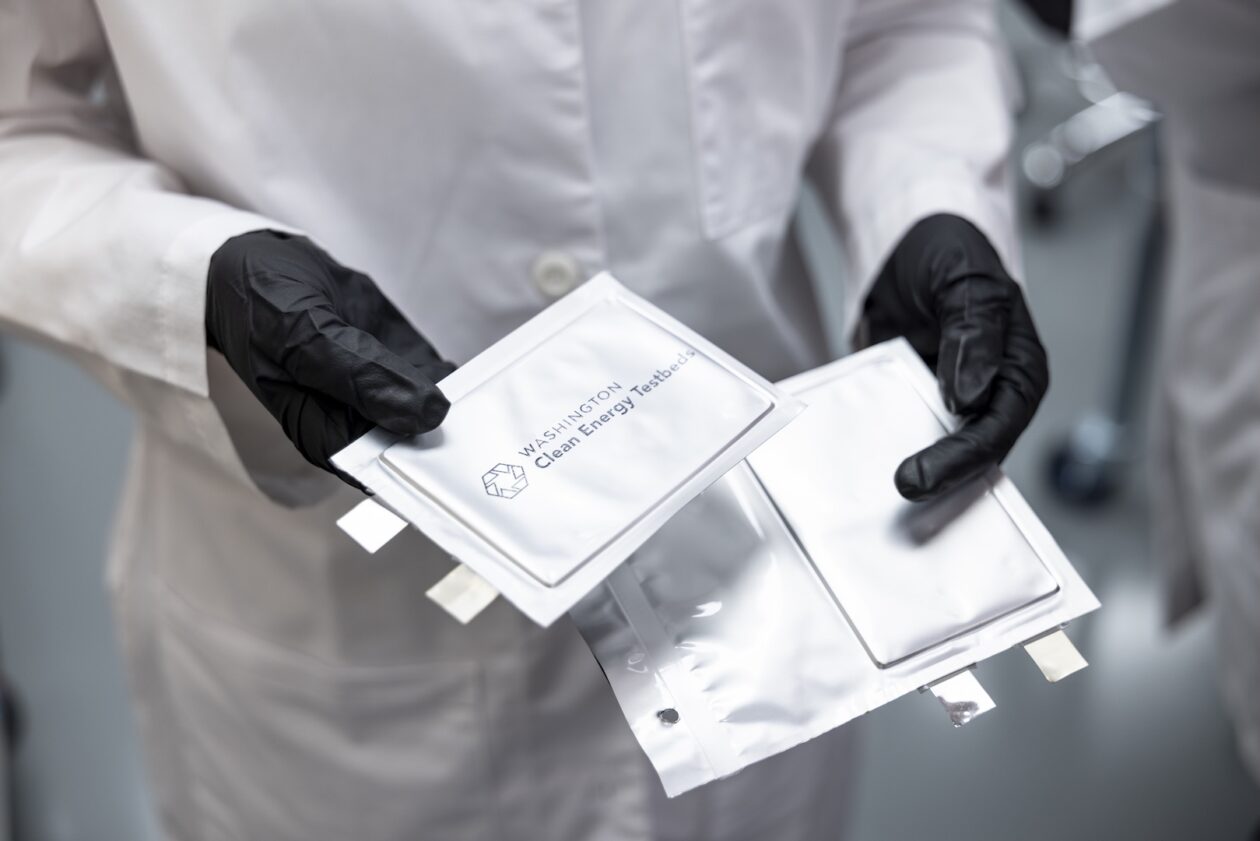
The lab is focused on building pouch cells, a format that offers more flexibility than traditional cylindrical cells used in consumer goods. The metallic pouch, which resembles a Pop-Tart package, enables users to create and test both small-scale experimental cells and larger prototypes for wide-ranging applications.
The facility features a dry room equipped to mix electrode slurries, coat electrodes and assemble components inside plastic-lined aluminum pouches, alongside a room with tools to test battery performance. UW experts are on-hand to help.
Seattle startup Emerald Battery Labs produced its first pouch cells in the new facility. The company is developing sodium-ion batteries, which use cheaper raw materials, offer longer lifespans and pose fewer fire risks compared to lithium-ion alternatives.
“We wouldn’t have started this company in Seattle if not for the Testbeds,” said Kjell Schroder, co-founder and CTO of Emerald Battery Labs, in a statement. He added that the facility allows the startup to iterate and produce demo cells “for a range of potential applications without major capital expenditure.”
The UW announced plans for the lab in October 2024 with an expected summer 2025 launch. Permitting challenges and long lead times for high-demand tools delayed the opening until early 2026, Schwartz said.
The entire Clean Energy Testbeds was originally slated to relocate to a new building called Brightwork, but ground was never broken and the project was quietly scuttled.
Schwartz said the new lab is booked out for the coming months. Other companies using the space include a California startup called Project K Energy that’s pursuing potassium-ion batteries. The Testbeds also partners with academic institutions such as Big Bend Community College in Moses Lake, Wash., to offer battery fabrication workshops.
Schwartz sees potential for the facility to support specialized, high-value applications with Pacific Northwest ties, including aviation, data centers and electric semi-trucks.
When it comes to clean energy, “batteries are just winning,” Schwartz said. “And the question is, who’s going to win in all the sectors that batteries are transforming?”
Sennheiser’s $299.95 Momentum True Wireless 5 adds user-replaceable batteries to both the earbuds and charging case, plus longer battery life and Bluetooth 6.0.
Sennheiser’s $299.95 Momentum True Wireless 5 adds user-replaceable batteries to both the earbuds and charging case, plus longer battery life and Bluetooth 6.0.
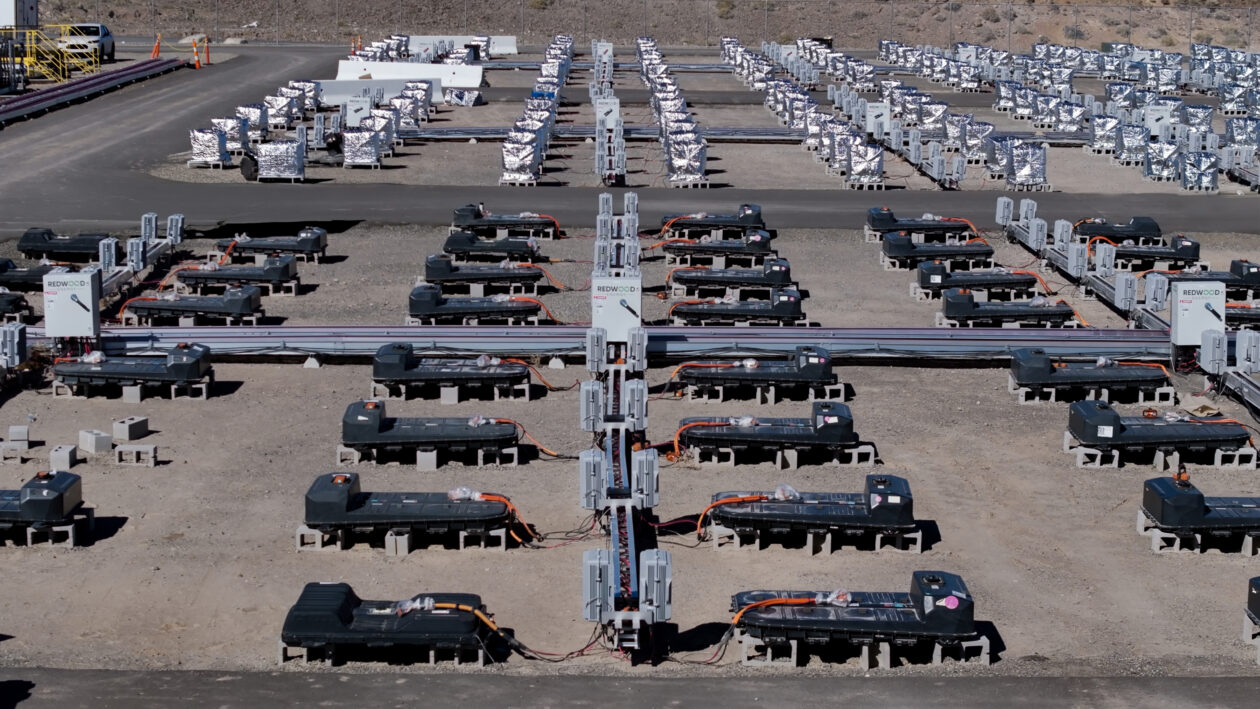
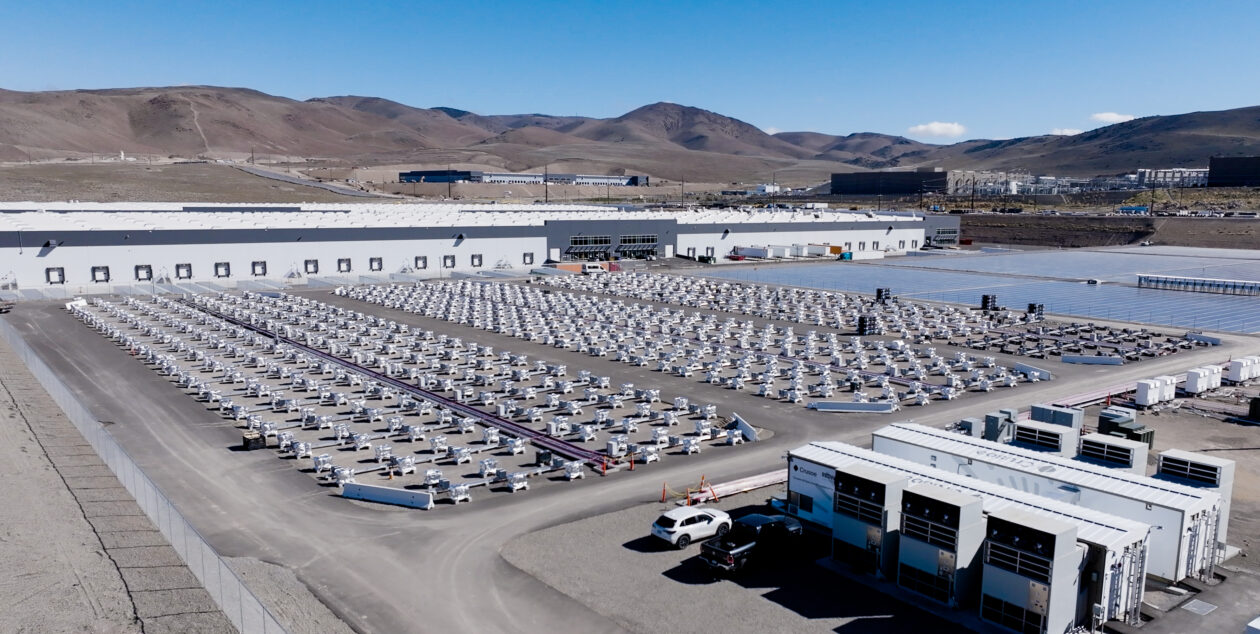
In the foreground are battery packs just as they would look installed in an EV, now repurposed by Redwood Materials and plugged into the microgrid serving Crusoe’s data center at Redwood’s campus in Nevada. (Redwood Photo)
A decade or two on the road will drain an EV battery’s range and hobble its acceleration. But while it peters out for daily commutes, that battery still has a lot of juice left.
A cohort of battery entrepreneurs is giving these units a second life, powering off-grid communities, industrial sites and energy-hungry data centers. Industry leaders — British Columbia’s Moment Energy and Redwood Materials in Nevada — are rapidly scaling up as the supply of aging batteries surges.
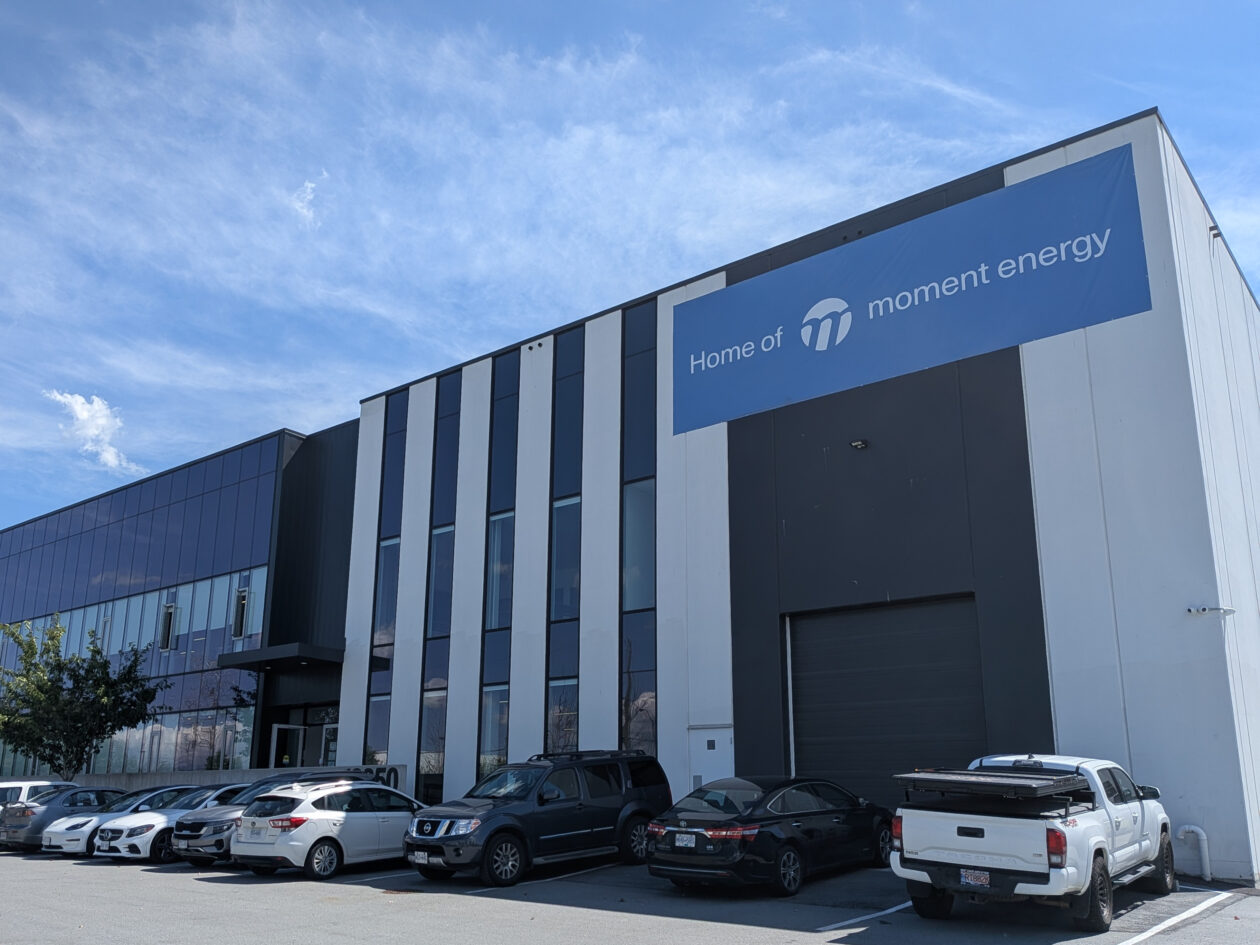
This summer, Moment moved into its 100,000-square-foot Megafactory 1 near Vancouver, converting a shell into its new HQ and manufacturing space in six weeks. It’s also building a Texas Gigafactory expected to open in January.
Redwood is likewise ramping up after unveiling the world’s largest used-EV battery system in June 2025: A 63-megawatt-hour solar and battery installation powering a Nevada data center run by AI infrastructure company Crusoe.
Absent reuse, these batteries end up in landfills or recycling shredders.
“Why recycle this battery prematurely when there’s over 95% life left?” asked Eddy Chiang, CEO and co-founder of Moment. When the batteries get recycled, some companies send the material to China for refinement, exporting valuable raw materials.
The market’s potential is massive. Chiang estimates that the used batteries available today could match Denver’s electricity use 20 times over — and 90 times over in four years.
The ‘Christmas light’ problem
Moment Energy moved into its new 100,000 square foot MegaFactory 1 in Surrey, B.C., which will allow it to increase manufacturing of its repurposed EV battery storage systems. (GeekWire Photo / Lisa Stiffler)
So why pull an EV battery that still has 80% or more of its life left? Think Christmas lights, says Chiang.
Particularly with lights sold in the past, “if one light bulb burnt out, the whole string burns out,” he said. “And that’s what’s happening in the battery pack. The actual failure mode for EVs is actually due to a single cell failure, like that light bulb.”
EV battery packs contain hundreds or thousands of cells that are grouped into modules, which are housed in large metal shells affixed under the vehicle’s floorboard. The cells can be similar to the AA batteries in consumer electronics, while others are larger blocks or pouches.
When Moment receives used batteries, it first runs diagnostics to test their performance. Then it breaks down the packs into modules, and racks them in cooled shipping containers. Moment uses proprietary software to redirect energy away from weak cells to healthy ones to extend battery life.
The company’s largest storage system is called Luna, delivering up to 1 megawatt hour of energy, which is enough electricity to power roughly 49 Seattle households for 24 hours. It’s preparing to launch a new model, but keeping the details under wraps.
Moment customers range from God’s Pocket Resort, an eco-lodge on a tiny Canadian island where its system slashed the use of diesel generators, to Vancouver International Airport, which avoided up to $20 million in grid upgrades to power fast chargers for its EV fleet, Chiang said. “Instead, they bought a couple of our batteries.”
From recycling to reusing
The rows of silver-wrapped cubes contain repurposed EV battery packs providing power to a Crusoe data center, which is in the bottom right of the photo, paired with solar panels to the right that are part of the microgrid. (Redwood Photo)
Redwood Materials began nearly a decade ago as a battery recycler led by former Tesla executives. But in recent years, they recognized a missed opportunity.
“We had a group of people standing around watching our recycling operation, looking at these giant battery packs that we’re going to so much effort to disassemble, and just wondering, ‘Can we do more with these before we shred them?'” said Colin Campbell, Redwood’s chief technology officer.
Now 95% of the EV batteries Redwood receives are reused rather than recycled. And despite its Tesla roots, the startup accepts batteries from any automaker and has created a “universal translator” that manages battery packs with different voltages, power and chemistry.
Campbell touts the conversion of the EV devices to stationary storage as straightforward.
In its simplest terms, Redwood’s energy storage sites are “an electric vehicle parking lot with the wheels removed,” he said. “So it’s just literally the battery that was in the car. There’s lots of them arranged in a grid together and plugged in.”
That plug-and-play approach solved major headaches for Crusoe. By pairing repurposed EV batteries with solar power for its new AI data center in Nevada, Crusoe bypassed multi-year grid-connection delays, saved money and avoided emissions from diesel generators.
Scott Williams, vice president of energy at Crusoe, said the solution has worked well for his company, which builds data centers and offers its own AI cloud services.
“We’ve signaled to Redwood that we’re going to grow with them,” Williams said, including “multiple gigawatt hours paired with our modular units, which is super exciting.”
Industry headwinds
Despite the momentum, the sector faces headwinds. Communities have resisted large battery projects due to fire concerns, sparked by high-profile incidents like California’s Moss Landing fire.
The companies emphasize that EV batteries are built to survive high-speed crashes, making them inherently safer than standard stationary battery storage. The Moss Landing fire involved older, non-EV batteries in a very different setup than the startups are using. Additionally, Moment’s systems hold extensive UL safety certifications and Redwood has passed a UL fire-safety test.
Another industry hurdle is competition. Overbuilt recycling capacity — plus U.S. and European mandates requiring recycled content in new batteries — creates competition for used EV packs.
Yet from a climate perspective, repurposing is vital. Batteries are almost always “the most carbon-intensive component” in any electronic device, said Grayson Shor, executive director of the Pacific Northwest Battery Collaborative and co-founder of the startup Buckstop.
Repurposed EV systems can extend that initial carbon investment by providing clean power for 20 to 30 years and meet urgent energy demand.
“Everybody’s like, ‘Where are we going to get electricity?'” Campbell says. “And we have a really excellent option already here.”

 Login
Login