Reading view

There are new articles available, click to refresh the page.

A Smarter DIY Air Filter

A vaguely perforated metal cylinder sits on a wooden box with a grey cylinder and LCD display atop it. There are holes in the top of the grey cylinder for air to flow through.

As predominantly indoor creatures, it’s important to maintain a healthy habitat for the hacker. [Kishan Pratap Singh] designed a clever solution in AirSense, an ESP32-powered air filter.

If you’re thinking of cleaning the air in your environment, you might also want to know some properties about the air coming out of the filter. AirSense measures PM2.5 dust concentration, Air Quality Index (AQI), temperature, humidity, and atmospheric pressure. The various sensors are mounted along the exhaust path of the filter, which lets your know what kind of air it’s pumping out.

The system drives a 150 mm exhaust fan mounted in a 3D printed cap that pulls air through a cylindrical Xiaomi HEPA filter inside a perforated metal trash can enclosure. The ESP32 and an LCD readout of the environmental data also live in the cap, giving the device a sleek look. While [Singh] chose to run the filter continuously, we wonder if it might be interesting to set it up to only filter the air if air quality drops below a certain level to conserve power, especially if you’re on a time-of-use power plan. That would require redesigning the sensor assembly (or running the unit in reverse), so maybe it’s over-complicating things?

We’ve seen the Xiaomi Air purifier filter mentioned before, but under the auspices of hacking it’s filter DRM, an open source air filter designed by [Naomi Wu], and even an ESP32 pressed into service to plug an air purifier into Home Assistant.

Neural Net Reads the Gas Meter

In an ideal world, the role of technology would be to make all of our lives easier. And although all the ads suddenly appearing in our smart TVs and gaming systems might make it seem otherwise, some technology can still improve our lives if we work hard at it. For [Cian], that meant training a neural network to read his gas meter so he wouldn’t have to do it himself.

The root issue here is twofold, first that [Cian]’s gas company hasn’t upgraded their own technology to modern, remote-readable meters, and second that the meter can’t be read by a gas employee because it’s hidden in the depths of [Cian]’s basement. This latter fact requires him to delve into Moria-like depths to get to the meter, so the solution here was to place a Raspberry Pi in this location instead. With a camera pointed at the meter, it’s not quite capable of discerning digits on its own so a neural network was trained in order to get accurate readings of the dial. And, finally, since the machine is networked already [Cian] set it up to automatically notify the gas company of its reading so he is now completely out of the loop.

For automating tedious tasks like these, the Raspberry Pi with something like OpenCV as a computer vision tool is a fairly mature platform for light machine learning duties like these. We’ve seen license plate readers as well as neighborhood traffic surveys built on these platforms to help automate human labor away, making our lives easier one single-board computer at a time.

I ditched smart bulbs for $25 presence sensors—and my wallet thanks me

Smart bulbs are a common gateway into the world of smart home devices. Setting one up is as simple as screwing in a light bulb, and you get instant results with the ability to turn your lights on and off remotely, change the brightness, and even use different colors with the right bulbs. Smart bulbs aren't always the best solution to every problem, however.

3 magical Home Assistant projects to try this weekend (July 17-19)

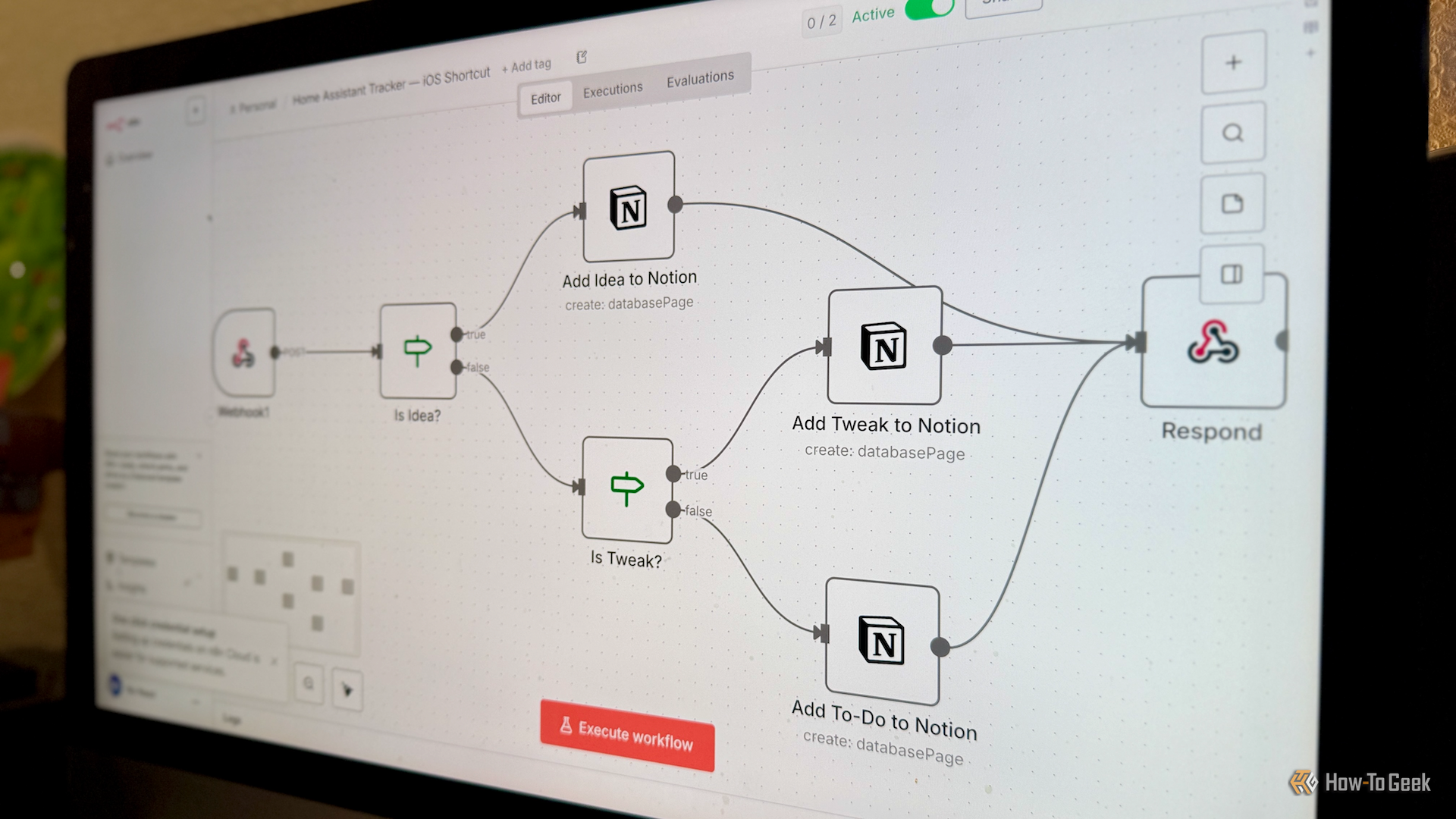
I have a lot of smart home automations that can sometimes feel like magic. I still get a small thrill when I sit down in the reading chair in the living room, and the lamp next to the chair turns on automatically. While some automations can feel like magic, there are plenty of Home Assistant projects that can replicate actual magic.

5 ways a local LLM has become a key part of my smart home

I use local LLMs for multiple purposes, including stripping personal information from documents before I upload them to Claude or ChatGPT and generating a daily RSS digest for my Kindle. Despite the slow performance of even the smaller LLMs on my hardware, I use them for a number of things in my smart home.

Senate bill would codify language accessibility standards targeted by Trump

The bill would reinstate governmentwide language accessibility requirements, after Trump declared English as the "official" language of the United States.

© The Associated Press

FILE - In this July 17, 2020 file photo, Rep. Andy Kim, D-N.J., speaks during a House Small Business Committee hearing on oversight of the Small Business Administration and Department of Treasury pandemic programs on Capitol Hill in Washington. The U.S. Chamber of Commerce has decided to endorse 23 freshmen House Democrats in this fall’s elections. The move represents a gesture of bipartisanship by the nation's largest business organization, which has long leaned strongly toward Republicans. (Erin Scott/Pool via AP)

Linux for Hackers: Building Your Tool Arsenal

Welcome back, aspiring cyberwarriors!

Think back to the first time you installed Kali Linux. It was probably one of those moments where you realized just how many cybersecurity tools existed. Your applications menu was packed with hundreds of tools covering everything from recon and vulnerability scanning to exploitation, password attacks, wireless security and much more.

At first, it was exciting. But most beginners spend hours clicking through the menus wondering what every tool does and when they should actually use it. Unfortunately, the sheer number of applications quickly becomes overwhelming. Even if you dedicate time to learning them, chances are you’ll forget many of their names simply because there are so many available. On top of that, documentation isn’t always beginner-friendly. Some projects have excellent documentation, while others assume you already know exactly what the tool is supposed to do before you even start reading.

The good news is that you don’t have to memorize hundreds of commands or remember every tool available. Instead, you can build your own arsenal of references that helps you quickly find the right tool.

In this article, we’re going to build exactly that. We’ll explore two resources called Arsenal-NG and Arsenal, both of which are designed to make finding offensive security tools, payloads, commands much faster.

Arsenal-NG

The first tool we’ll look at is Arsenal-NG. The name pretty much explains what it does. Arsenal-NG is essentially a searchable collection of offensive security tools, commands, and predefined workflows. Whether you’re doing reconnaissance, exploiting a service, generating payloads, Arsenal-NG can help you find the right tool for the job.

Let’s install it.

kali > git clone https://github.com/halilkirazkaya/arsenal-ng.git
kali > cd arsenal-ng
kali > make build
installing arsenal

Once compilation finishes, you can launch the program directly. For convenience, you may also want to move the binary into one of the directories listed in your PATH environment variable. Doing so allows you to start Arsenal-NG from any directory. 

kali > arsenal-ng
arsenal overview

When it starts, you’ll immediately notice a large collection of tools organized inside the interface. Each tool includes predefined presets for different kinds of operations. 

To display the complete list of available tools, simply run tools

tools

If you already know what kind of task you’re trying to accomplish but don’t remember what tool can do it, you can use the built-in search feature. Searching by keywords makes it easy to discover them.

arsenal keyword search

Once you’ve found the tool you need, selecting one of its presets walks you through the required parameters. There you simply provide the requested information and let it generate the command for you.

arsenal filling out the template

If you need additional information about the application itself, run help.

arsenal menu

Arsenal

Unlike Arsenal-NG, Arsenal focuses primarily on web exploitation and can be used directly from your browser. There is no installation process, making it convenient when you simply need a quick reference.

You can access it here.

One thing worth mentioning is that the website supports multiple languages. If the interface isn’t already in English, simply switch the language using the selector in the upper-right corner. Once inside, you’ll notice that the content is organized into several different sections, each designed to help with a different phase of a web penetration test.

One of them is Payloads.

arsenal payloads

This area contains a huge collection of payloads covering many different types of web vulnerabilities and exploitation techniques. Whether you’re working with command injection, SQL injection, XSS, SSTI, XXE, deserialization, or other common web vulnerabilities, chances are you’ll find useful examples here.

Another valuable section is Attack Chains.

arsenal attack chains

Rather than simply providing payloads, Attack Chains guide you through the overall exploitation process. They outline the sequence of steps typically required to compromise a target.

The Commands section is another good reference.

arsenal commands

You can build the command you need by selecting the appropriate options.

Then we have Wordlists.

arsenal wordlists

There are numerous wordlists organized into logical categories, making it much easier to find exactly what you’re looking for. Each category often contains several different wordlists optimized for different situations. 

You’ll also find a large collection of Scripts.

arsenal scripts

These scripts cover a wide variety of purposes, including reconnaissance, AI-related security checks, subdomain takeovers, automation and more.

Of course, we’ve only scratched the surface. Arsenal contains more additional sections that are worth exploring on your own. Spend some time clicking through the different categories and seeing what they have.

Summary

Building your own cybersecurity arsenal isn’t about memorizing every command ever written. In fact, no experienced pentester or hacker remembers every tool, every option or every payload. There are simply too many of them, and new ones are being developed all the time. Arsenal-NG and Arsenal can help you organize knowledge. They are valuable when you’re getting started and they remain just as useful years later when you’re experienced.

Since many of these tools fall into different categories, such as network pentesting, web pentesting, bug bounty hunting, and more, the best way to develop your skills is through our Member Gold subscription. It gives you access to a wide variety of training courses covering different areas.

The post Linux for Hackers: Building Your Tool Arsenal first appeared on Hackers Arise.

❌