 Login

Meta says Muse has over 10M users, with shopping a top activity
Meta Muse users are adopting the app for shopping and personal productivity, the company said during its Q3 earnings call. The AI app now has over 10M users.


Amazon blocked Meta’s Muse AI agent from its store Sunday night, and leaders across the tech industry have spent the past two days debating the bigger questions raised by the move.
Among them: whether the big platforms will agree on rules for agents crossing into each other’s territory, how money will change hands when they do, and how many people will actually want AI agents doing their shopping in the first place.
This will be “a bigger battle than anyone anticipates,” wrote Palo Alto Networks CEO Nikesh Arora in a post on X, predicting that Apple, Google and possibly TikTok will build their own personal agents. Every shopping and services app will have to decide whether to let outside agents in, he wrote.
The industry is “basically two weeks into this entire topic,” Box CEO Aaron Levie said on CNBC Tuesday morning. Agents are “going to change how we interact with most forms of commerce,” he said, and “different companies will respond in different ways.”
Elon Musk is already pointing to a potential technical loophole. Amazon “won’t be able to tell whether the buyer is a human or an AI acting on their behalf if access is via the user’s IP address & cookies,” the xAI founder wrote on X Monday.
Amazon’s Conditions of Use require agents to identify themselves as agents in every request they make to its site. That is one of the violations that Amazon cited in blocking Muse this weekend.
Deals in the works? Amazon CEO Andy Jassy has said on earnings calls that the company was having conversations with companies that want to run agents for commerce. Those talks are still underway, The Information reported Monday, but it’s not clear whether any agreements are close to happening.
Meta CEO Mark Zuckerberg said on the Sources podcast that Muse would “take a very small cut of whatever the transaction is” — potentially paid by the businesses users buy from.
Amazon’s retail margins are thin, and its advertising business, which generated more than $68 billion in revenue last year, depends on people browsing its pages, not agents jumping in to complete purchases.
Amazon vs. Perplexity: Possibly foreshadowing where the Meta dispute is headed, Amazon sued Perplexity in November over Comet, the AI company’s browser, which had an agent that shopped on Amazon.com through customers’ own accounts.
Amazon won a preliminary order blocking it in March, then lost that order on Aug. 4, when the Ninth Circuit found Amazon unlikely to win its anti-hacking claim, because the user — not the AI company — was the one accessing Amazon’s computers. The court denied Amazon’s request for a rehearing on Sept. 10.
The underlying case is still going, and the decision did leave Amazon an opening. It said Amazon could still sue over its contract with customers, and on Monday Amazon did just that: adding a claim that Perplexity caused customers to break that agreement, the same Conditions of Use the company used to block Muse.
What about Amazon’s agent? The e-commerce giant’s Buy for Me agent “does some of the things that Amazon is trying to stop other AI agents from doing,” pointed out journalist Jason Del Rey, who publishes The Aisle newsletter. Amazon’s answer is that Buy for Me identifies itself and lets brands opt out, two things it says Muse doesn’t do.
Meta, for the record, has not responded publicly to the Amazon dispute. But investors have. Meta stock jumped 11% Monday to its highest close in a year, and rose again Tuesday morning.
After all of this, are agents really better shoppers? Martin Peers of The Information used Muse on Monday to buy a pen and a notebook from small retailers. He found the process “surprisingly smooth,” but wrote that it was “still a lot faster and easier to go directly to Amazon.”
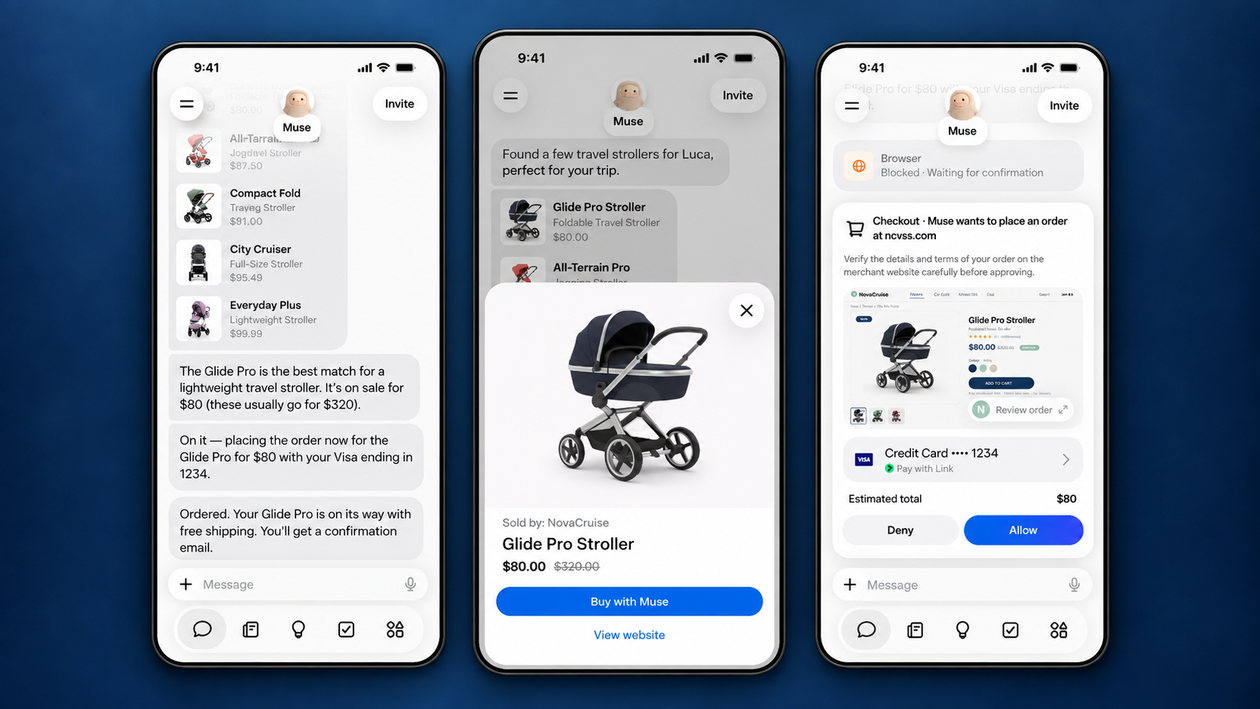
Amazon says it has cut off Meta’s new Muse personal AI agent from shopping on Amazon.com on behalf of customers, after attempting unsuccessfully to get the Facebook parent company to voluntarily exclude the e-commerce site from the experience.
The problem, Amazon says, is that it never agreed to any of it. Meta didn’t tell Amazon that Muse would access its store, the agent doesn’t identify itself when it browses, and it appears to capture and store customer credentials, which the company says could create privacy and security risks.
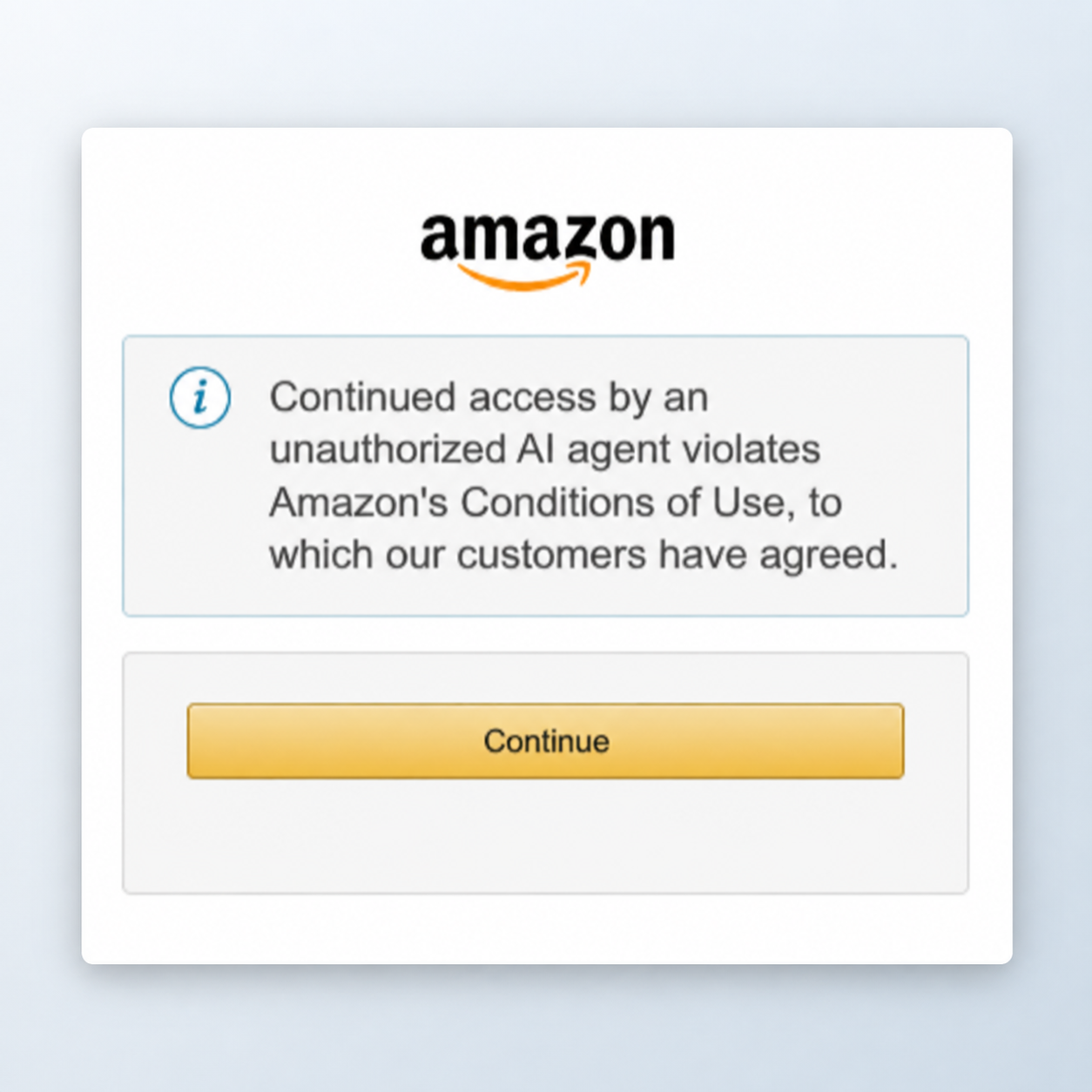
As of Sunday night, people trying to use Muse to shop on Amazon were seeing the popup, “Continued access by an unauthorized AI agent violates Amazon’s Conditions of Use, to which our customers have agreed.”
“We think it’s fairly straightforward that third-party applications that offer to make purchases on behalf of customers from other businesses should operate openly and respect service provider decisions about whether or not to participate,” an Amazon spokesperson said in a statement.
Meta did not immediately respond to a request for comment Sunday night.
The company said previously that Muse “has no visibility into people’s passwords or payment methods,” and that credentials a user shares “go into secure storage, so Muse can use them without seeing them, including passwords a person types into the browser themselves.”
Business partners: The standoff between the tech giants is especially notable because the two companies work together: Amazon products have been purchasable inside Facebook and Instagram since 2023, and Meta signed a multibillion-dollar deal in April to run agentic AI workloads on Amazon’s Graviton chips.
It’s part of a larger debate over who controls the online shopping experience and the customer relationship when AI agents buy items on behalf of consumers.
Amazon has spent the past year trying to keep outside agents off its site, suing Perplexity over its Comet browser and moving to block shopping agents from Google and OpenAI.
On Sunday night, Amazon said it is in direct conversation with Meta about the issue. Asked whether it would consider taking legal action, the company declined to comment.
The business stakes are high for Amazon. In addition to operating its flagship e-commerce site, Amazon generated more than $68 billion in ad revenue last year — a business that depends on people browsing its pages and seeing sponsored products.
Security implications: Muse can reach account pages and order history if a customer prompts it to do so, Amazon says. Because the agent doesn’t identify itself, the company says, that amounts to an undisclosed third party moving through customer accounts, processing transactions and handling sensitive data without Amazon’s knowledge or consent.
Amazon said agents that operate openly help keep the customer experience safe and reliable, and that other services buying on a customer’s behalf typically do so with the merchant’s agreement. It cited food delivery apps and the restaurants they take orders for, and online travel agencies and the airlines they book tickets with.
“Agentic third-party applications such as Muse have the same obligations, and we’ve requested that Meta remove Amazon from the experience,” Amazon’s spokesperson said in the statement.
Legal maneuvering: Amazon won a preliminary injunction against Perplexity in March, then lost it on Aug. 4, when the Ninth Circuit ruled that the user — not the AI company — was the one accessing Amazon’s computers under federal anti-hacking law.
The court denied Amazon’s petition for rehearing on Sept. 10. However, the ruling left one avenue open for Amazon: claims built on contracts and terms of service. The message Muse users are now seeing doesn’t accuse anyone of hacking but cites Amazon’s Conditions of Use.
How Muse works: Meta launched Muse on Sept. 8 as a personal agent that carries out multi-step tasks rather than answering one-off questions, connecting to services including email, calendar, payments, dining and shopping.
It’s free, with paid subscription tiers, and available on iOS, Android, muse.ai and WhatsApp.
Meta says the agent runs on a secure virtual machine, with its own browser, and checks with the user before sensitive actions like sending an email or making a purchase. A separate monitoring agent called Sentinel has to approve anything Muse sends to the internet.
The Muse launch materials describe the mechanism now at the center of the dispute: If a service has a public API, Muse can connect to it using credentials the user provides. If it has no API at all, Meta says, the agent “can use the service through a browser the way you would.”
Muse has caught on fast. A week after launch, it became the No. 1 free app in Apple’s U.S. App Store, ahead of ChatGPT. Early users have described it switching an auto insurance policy, hunting down discount codes at checkout, and loading an online grocery cart.
Amazon launched Alexa for Shopping in May, an AI agent that researches products and makes recommendations. Its own agentic shopping feature, Buy for Me, finds items on external brands’ sites, but the company points out that Buy for Me identifies itself and lets brands opt out.
