 Login

ADEX: AI Involved in 52% of Detected Ad Fraud Schemes – Shopping Agents Could be Next
New ADEX research shows how AI is making familiar scams cheaper and harder to detect, while fraudsters prepare to target AI shopping assistants.

See what you missed in Daily Tech Insider from Oct. 19–23.
The post This Week in Tech: AI Agents Clock In as Apple Buyers Wait and IT Scrambles appeared first on TechRepublic.
See what you missed in Daily Tech Insider from Oct. 19–23.
The post This Week in Tech: AI Agents Clock In as Apple Buyers Wait and IT Scrambles appeared first on TechRepublic.
Anthropic introduces Claude Duet, a proactive AI agent that automates business tasks across connected apps. Explore its features, limitations and availability.
The post Anthropic Launches Claude Duet to Automate Business Tasks Across 6,000+ Apps appeared first on TechRepublic.
Anthropic introduces Claude Duet, a proactive AI agent that automates business tasks across connected apps. Explore its features, limitations and availability.
The post Anthropic Launches Claude Duet to Automate Business Tasks Across 6,000+ Apps appeared first on TechRepublic.
MiniMax launches M3.1 Flash with claims of faster, cheaper AI agents. See how its pricing, benchmarks, and reliability compare with enterprise requirements.
The post China’s MiniMax Says Its New AI Model Cuts Agent Costs by 70% appeared first on TechRepublic.
Four Google DeepMind AI agents defeated Minecraft's Ender Dragon after 27 hours and 605 deaths, revealing both the promise and limitations of autonomous AI.
The post Google’s AI Agents Finally Beat Minecraft. It Took 27 Hours and 605 Deaths appeared first on TechRepublic.
Learn how AI tool calling works, how it differs from APIs and MCP, and what businesses should know about integrations, permissions and security risks.
The post What Is Tool Calling in AI? How It Works and Why It Matters appeared first on TechRepublic.
Learn how AI tool calling works, how it differs from APIs and MCP, and what businesses should know about integrations, permissions and security risks.
The post What Is Tool Calling in AI? How It Works and Why It Matters appeared first on TechRepublic.

© Federal News Network
AI agents expose gaps in enterprise access controls and audit trails. Here's how security leaders can rethink identity, data governance, and oversight.
The post Your Security Stack Knows Who Logged In. But Does It Know What AI Agents Do Next? appeared first on TechRepublic.
AI agents expose gaps in enterprise access controls and audit trails. Here's how security leaders can rethink identity, data governance, and oversight.
The post Your Security Stack Knows Who Logged In. But Does It Know What AI Agents Do Next? appeared first on TechRepublic.
SpaceXSI launches Grok Voice 3.0 for AI customer support. Explore benchmark results, API pricing, billing details, and what businesses should test.
The post SpaceXSI Launches Grok Voice 3.0 for AI Customer Support appeared first on TechRepublic.
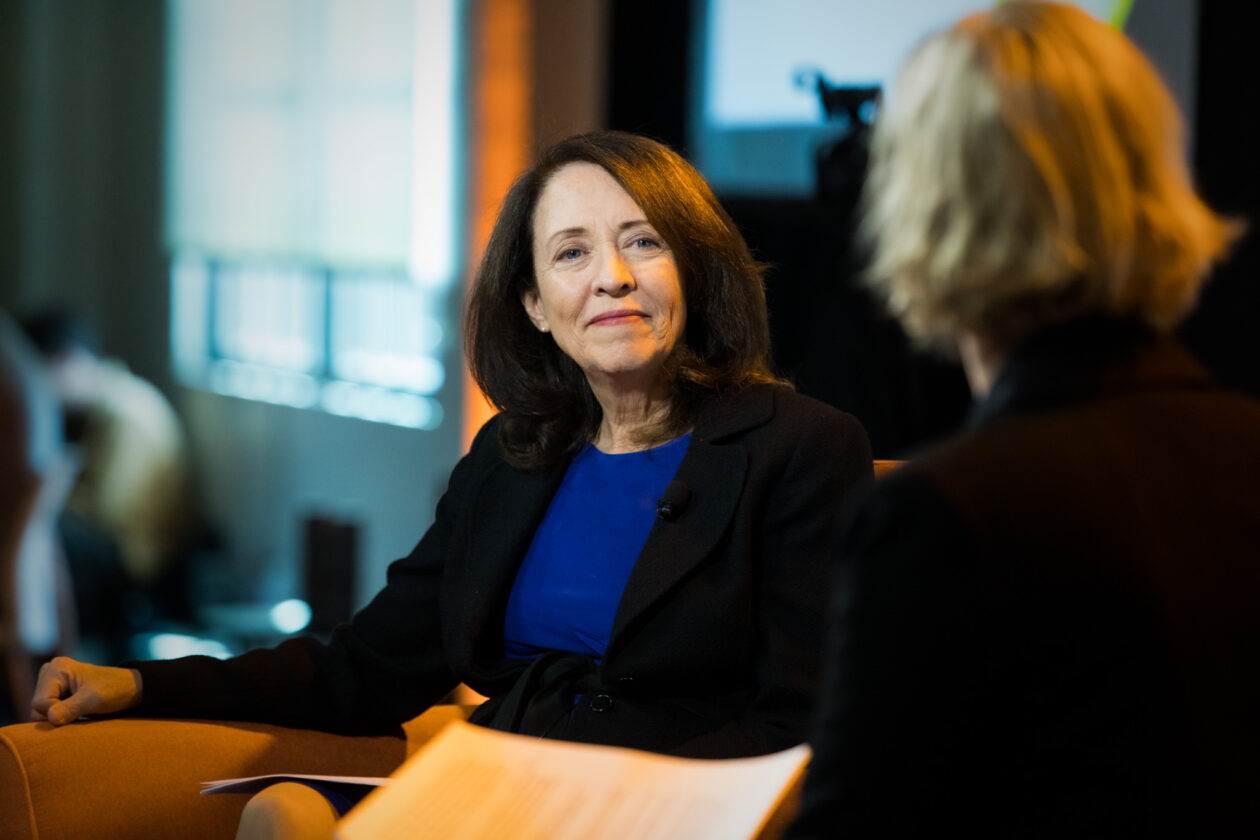
With President Donald Trump, states and tech giants taking varied and largely uncoordinated steps to put guardrails on artificial intelligence as the technology speeds ahead, U.S. Sen. Maria Cantwell, D-Wash., has outlined a comprehensive AI governance framework.
“To manage risks from advanced AI systems we need clear safety standards, continuous testing, and reporting of serious failures,” Cantwell said in a statement. “America can lead the world in AI by building systems that are not only more capable, but safer and more secure.”
Last month, Cantwell took to the Senate floor to demand urgent federal regulations and mandatory independent safety testing for frontier AI models before their release. She warned that recent incidents in which autonomous AI agents carried out unauthorized cyberattacks show that dangerous threats are already here, well before the arrival of superintelligence.
The framework proposed Wednesday includes six principles for regulating frontier AI development and deployment:
Microsoft Vice Chair and President Brad Smith weighed in on the proposal, telling The Seattle Times that the framework “advances the public discussion the nation needs as we consider the future of AI.”
Cantwell, the ranking member of the Senate Committee on Commerce, Science and Transportation, has a background in technology as a former RealNetworks vice president. She has long pushed for AI regulation, going back to December 2017, when she joined other lawmakers in introducing the bipartisan Future of AI Act.
Two years ago, Cantwell advocated for five bipartisan AI measures included in a larger package of artificial intelligence legislation that addressed many of the concerns outlined in her six principles. Senate Republicans defeated the legislation. Cantwell reintroduced one of the five measures, the Future of AI Innovation Act, in February.
On Sept. 9, California Gov. Gavin Newsom signed Senate Bill 813 and Assembly Bill 1405, establishing the first state framework for independent assessment and verification of AI safety and risks. On the same day, OpenAI called for mandatory, “capability-based” national regulation — meaning requirements tied to what an AI system can do.
On Sept. 29, Trump announced a voluntary safety agreement with Nvidia, SpaceX, OpenAI, Anthropic, Meta and Google calling for “robust internal controls” to prevent unauthorized hacking and to work with independent external auditors. The deal does not include consequences for noncompliance.
