Reading view

There are new articles available, click to refresh the page.

Tech Moves: Microsoft, Amazon and Kestra promotions; Gradial names CMO; Yoodli adds VP
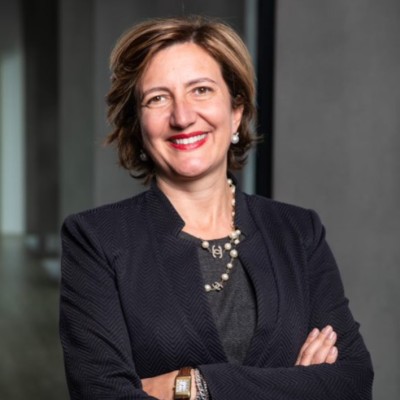
Silvia Candiani. (LinkedIn Photo)

Silvia Candiani has been named corporate vice president of Worldwide Telco & Media within the Microsoft Frontier Company, a $2.5 billion initiative launched by the tech giant in July to embed engineers inside customers to build and run AI systems. In her new role, Candiani will lead Microsoft Frontier Company’s work with some of the largest telecommunications operators and media conglomerates.

“The momentum across our industry is extraordinary, and I believe we are only at the beginning of what AI can make possible,” said Candiani, who is based in Milan.

Before joining Microsoft in 2010 as a general manager, Candiani was a marketing director for Vodafone in Italy for more than a decade.
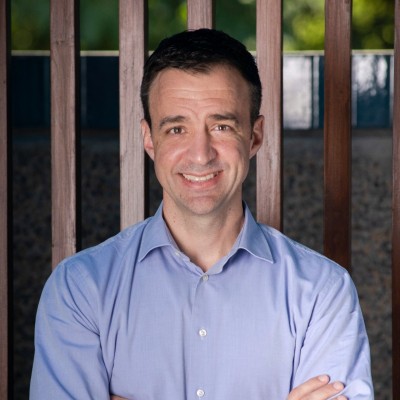
Kevin Frey. (LinkedIn Photo)

Kevin Frey has been appointed vice president and chief impact officer of Microsoft Elevate, the company’s philanthropic effort providing technology support, donations, sales and AI training for educational organizations and nonprofits. Frey joined from UNICEF, where he was the first CEO of Generation Unlimited, the organization’s skills and employment initiative.

Frey said he was joining Microsoft because it’s “one of the only organizations in the world with the scale, scope and influence to bend the arc of the AI-powered future we are entering.”

“I will be spending my time and energy trying to ensure that the benefits of AI are shared broadly and safely across society — by every teacher, every student and every worker — regardless of their postal code,” he added.

— And while we’re on Microsoft, Anne Linge has been promoted to director of communications for commercial and consumer experiences after nearly 10 years with the company. She previously worked in communications at Weber Shandwick and Waggener Edstrom Worldwide, which has since rebranded as We.
Alexis Bateman. (LinkedIn Photo)

Alexis Bateman has been promoted to director of global sustainability at Amazon Web Services after more than five years with the company. She was director of the MIT Center for Transportation & Logistics for 14 years before coming to Amazon.

Her work with AWS has given her the chance to help “shape sustainability at enormous scale,” Bateman said. “AI and cloud are transforming technology and society at an unprecedented pace, creating both enormous challenges and incredible opportunities for sustainability.”
Lynn Girotto. (LinkedIn Photo)

Gradial has appointed Lynn Girotto as chief marketing officer. In June, the Seattle startup announced $65 million in new funding for its agentic AI platform that automates enterprise marketing. The company is No. 127 on the GeekWire 200, a ranked index of the Pacific Northwest’s top startups.

Girotto joins from Qualtrics, where she was CMO for two years. She has previously led marketing teams at companies including Vimeo, Tableau and Getty Images, and was a senior director at Microsoft for nine years earlier in her career.

“The best marketers I know want to build ideas and customer relationships, not manage processes,” Girotto said. “Gradial is the first company I’ve seen that’s built to give them that time back.”

Kam Ghaffarian. (LinkedIn Photo)

— A Seattle-area nonprofit group known as the Fermi Explorer Mission announced that Kam Ghaffarian has joined as co-founder. Earlier this month, the organization shared its plans to send a spacecraft on an 80,000-year trip to the nearest alien star system, Alpha Centauri.

Ghaffarian is a billionaire who helped launch companies including X-energy, Axiom and Intuitive Machines. “By committing to launching a spacecraft to Alpha Centauri by 2029, we are not just pushing the boundaries of current technology; we are inspiring a new generation to look up and dream of interstellar exploration,” Ghaffarian said.

Philip Johnston, co-founder and CEO of the Fermi Explorer Mission, also leads Redmond, Wash.-based Starcloud, a startup aiming to launch up to 88,000 satellites to serve as AI data centers.

Rachel Cougan. (LinkedIn Photo)

Yoodli, the Seattle-based AI roleplay platform for enterprise training, has named Rachel Cougan vice president of human resources. Cougan previously served as a fractional HR leader through her consultancy, Possible HR. Before that, she was VP of people for Logixboard and Hiya, and also served as VP of talent for Textio.

Yoodli, which launched in 2021, has grown to more than 100 employees. The company is No. 17 on the GeekWire 200.

Daniel Finney. (LinkedIn Photo)

Kestra Medical Technologies has promoted Daniel Finney to vice president of research and development. The Kirkland, Wash.-based company sells cardiac monitoring and therapeutic devices. It raised $202 million in its IPO in March 2025 and was nominated for Deal of the Year at this year’s GeekWire Awards.

Finney has been with Kestra since 2019. CEO Brian Webster praised his role in developing the company’s FDA-approved monitoring device, adding that his “technical depth, product experience, and demonstrated leadership positions him to guide our next phase of innovation.”

Finney succeeds Phillip Foshee, Jr., who recently retired after leading Kestra’s R&D organization for nearly a decade.

PATH has named Dr. Jeremy Farrar chief of its Asia, Middle East and Europe regional division. Farrar, a globally recognized leader in public health and clinical medicine, will join PATH effective Oct. 1 and be based in Geneva. His past roles include assistant director-general at the World Health Organization and director of the Wellcome Trust.

PATH CEO Nikolaj Gilbert praised the appointment, and noted that Farrar “possesses deep knowledge of the realities that prevent access, the people that make health care possible, and the need for PATH’s mission of ensuring breakthrough innovations reach all who need them.”

— The Seattle Metropolitan Chamber has added eight members to its board of trustees:

  • Deniz Anders, Nordstrom’s executive vice president and chief marketing officer
  • Reuven Carlyle, founder of Earth Finance and former state senator
  • Carl Gipson, vice president of government and community affairs for Comcast
  • Trevor Gooby, executive vice president and chief operating officer for the Seattle Mariners
  • Daniel Huber, BNBuilders’ vice president of operations for the Northwest and Colorado
  • Karen Lee, CEO of Plymouth Housing
  • Holli Martinez, vice president, head of belonging, recognition and corporate responsibility for T-Mobile
  • Rajat Puri, executive vice president and chief operating officer for Premera Blue Cross
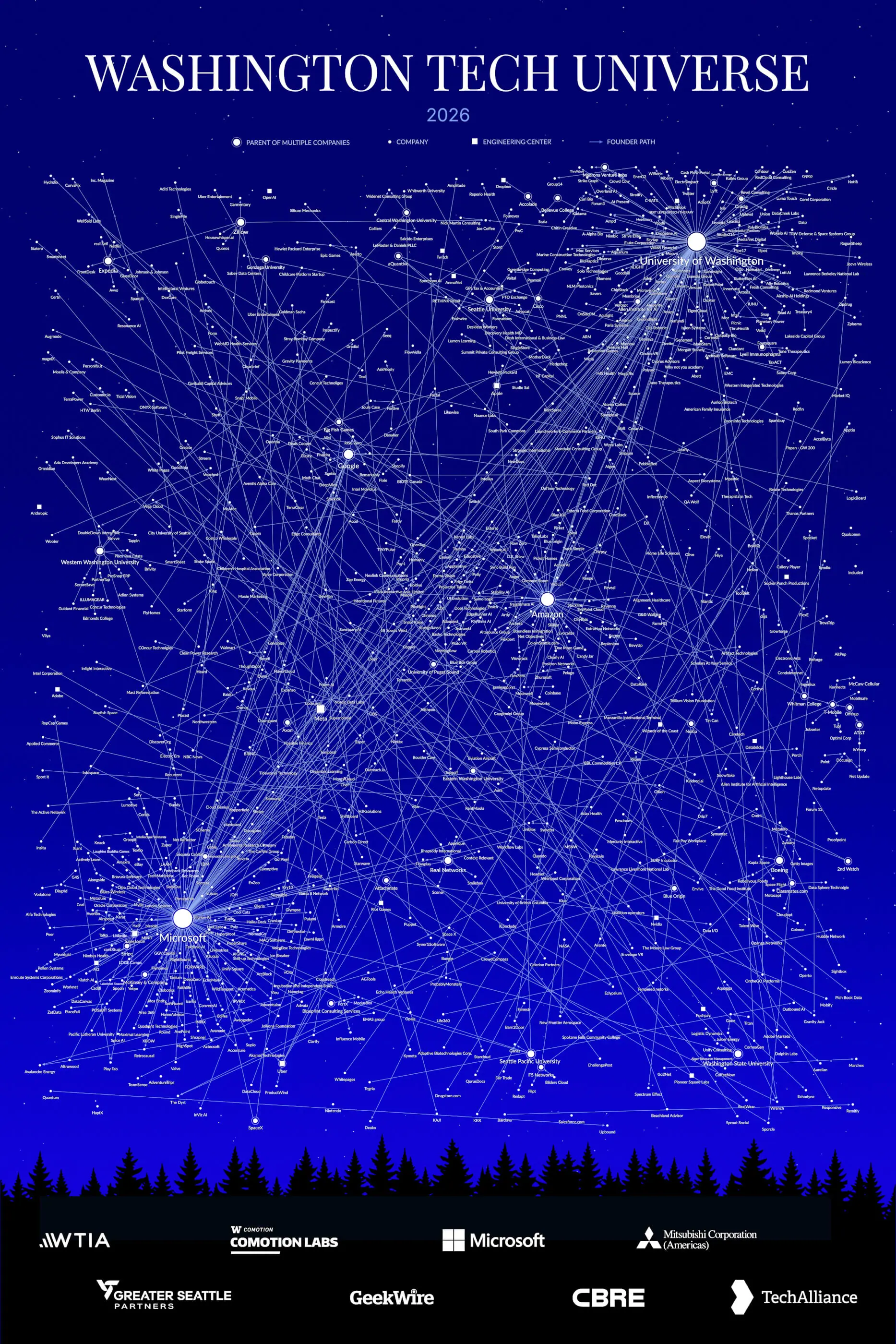
New map traces Washington state’s tech ‘universe’ to a few key hubs, and shows what’s at risk

A small slice of the new “Washington Tech Universe” map. See the full version here.

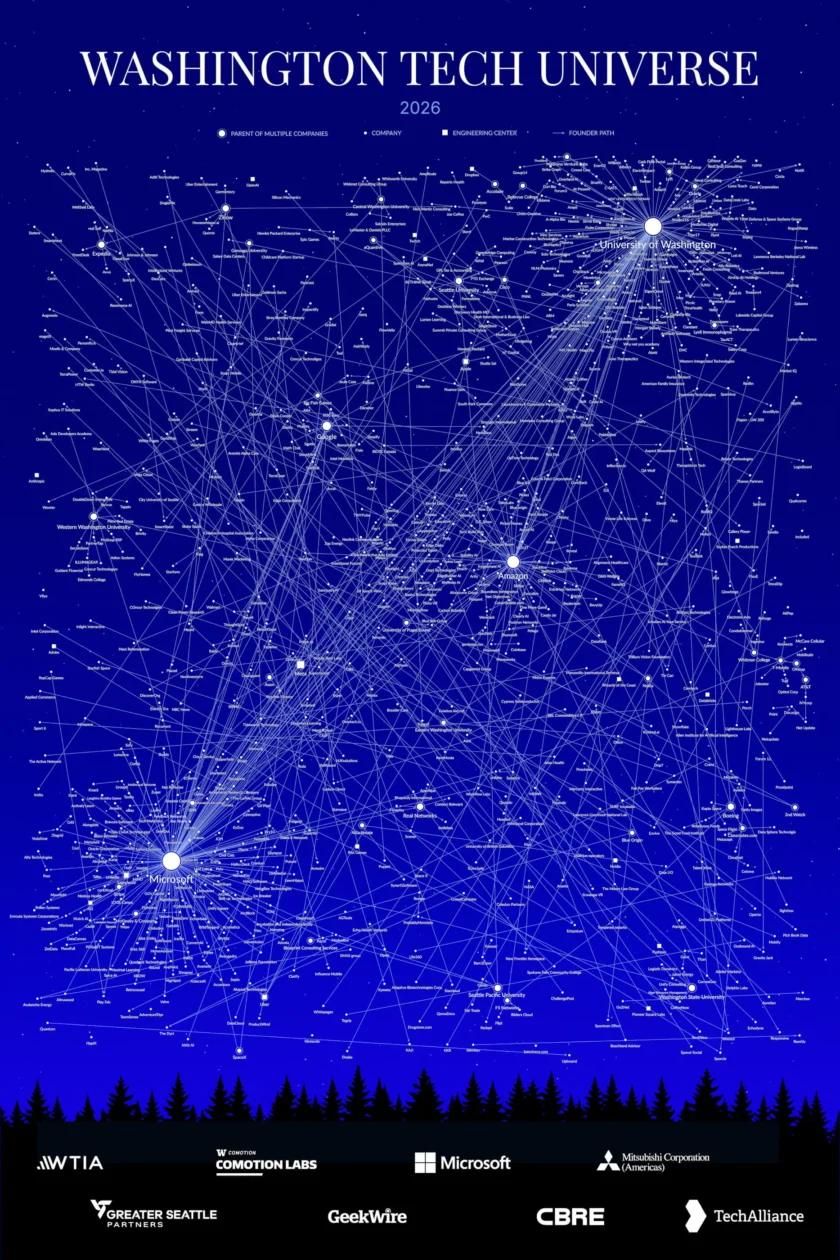
How interconnected is Washington’s tech industry? Enough that a large share of the state’s companies can trace their lineage to Microsoft, the University of Washington, Amazon, and a handful of other institutions.

A new visualization from the Washington Technology Industry Association (WTIA), unveiled this week, charts those family trees. But the “Washington Tech Universe” map offers only a partial view: Washington is home to 25,000 tech companies, and just 625 are featured.

“This is not a ranker of all the best companies,” said Nick Ellingson, WTIA’s vice president of innovation and entrepreneurship, during a presentation at Seattle Tech Week. The point, he said, is to show the region’s connectivity and to make the case for investing in the community as a whole.

The “Tech Universe Map” comes 11 years after the trade group published a similar visualization. According to Ellingson, the update came because people kept asking for it, not because of a single event. It’s unrelated to WTIA’s efforts to help Washington establish a public AI narrative.

That said, the 2026 edition is markedly different from the one in 2015: The new map looks at the entire state, aiming to comprehensively chart the connections among different companies, while the prior version was limited to companies in Seattle, with a more narrow focus on acquisitions and similar data.

Microsoft and UW produce the most founders

WTIA’s data shows that today, Washington has four main founder “hubs,” with Microsoft being the largest. About a quarter of the mapped companies — 161 of 625 — have at least one founder who came out of Microsoft. UW is the second with 143 companies, followed by Amazon, which anchors 58 firms. Google rounds out the group with 20 connections, though it’s a pipeline that didn’t exist in WTIA’s 2015 map.

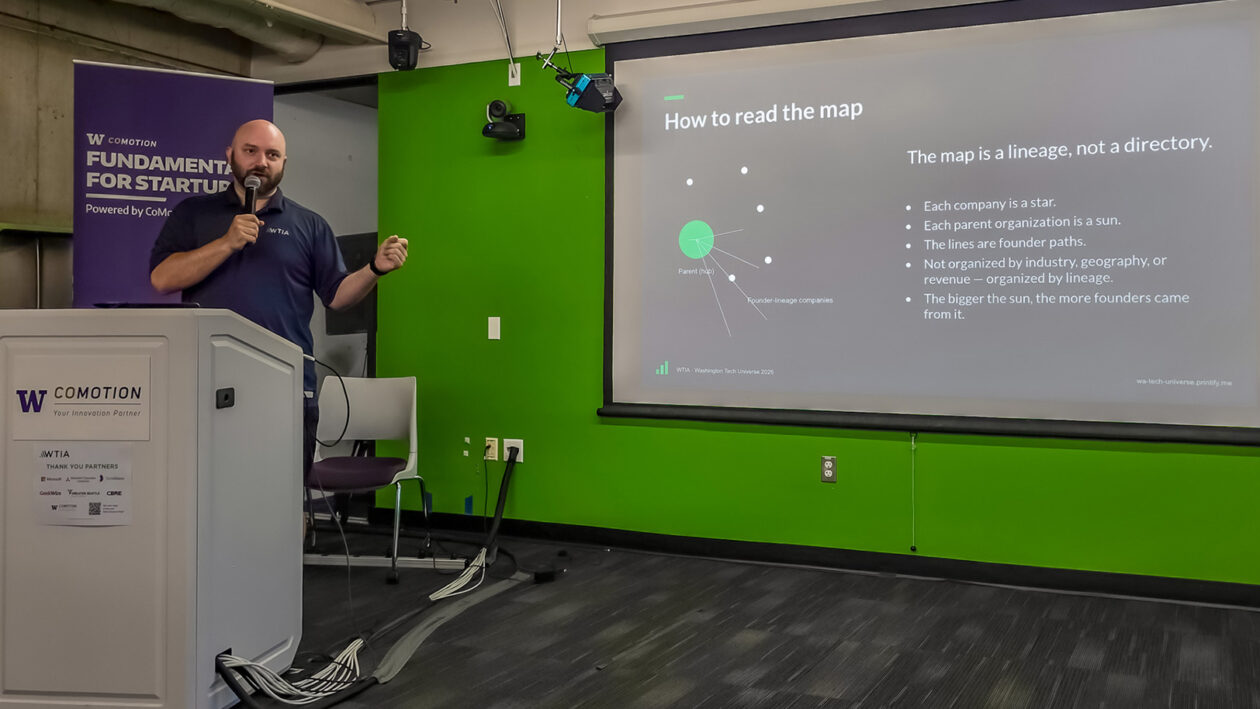
WTIA’s Vice President of Innovation and Entrepreneurship, Nick Ellingson, unveils the 2026 “Tech Universe Map” at the University of Washington’s Comotion Lab on July 27, 2026, explaining how to read the map. (Photo by Ken Yeung, click to enlarge)

UW isn’t the only school producing founders. WTIA’s map traces company lineages to Washington State, Western Washington, Central Washington, Eastern Washington, Whitman College, Seattle University, and Seattle Pacific. Still, UW accounts for 70% of the map’s university connections.

Broken down, the data shows that nearly two out of three companies (64%) grew out of another company listed on WTIA’s map. A third came out of a university, or out of a company that operates in Washington without being headquartered here.

Google is the clearest example of the latter since it’s based in California but has a significant presence here. Moreover, WTIA found that 44% of mapped companies had founders who previously worked at two or more Washington organizations before starting theirs.

Ellingson called the hubs “gravity wells that bend the entire region toward the next generation of founders” in the announcement.

However, he cautioned that this pipeline concentrated around four main sources could be a risk. Some of the hubs he expects to grow next, such as Google, OpenAI, Anthropic, and Nvidia, are headquartered elsewhere and maintain engineering centers here, a presence that is easier to scale back. Microsoft, Amazon, and UW aren’t going anywhere. The next generation of hubs has no such guarantee.

The Washington Tech Universe map. See the full version here.

To mitigate this risk, Ellingson called for broad community support for these hubs, saying it would keep the flywheel going.

These companies, he said, “are growing not just the jobs at their companies, but they’re creating the next employers, venture-scale startups, and tech companies that go on to build amazing things, and hire the next generation of talent here and bring more talent to the area, who then go and create their own startups.”

The next hubs are forming around AI

WTIA also recognized AI’s impact on Washington’s tech ecosystem. Although the technology was not a formal selection criterion, it became evident that AI would be a dominant theme among the featured companies. In fact, firms like Read AI, Karat, Yoodli, Outreach, and Pictory appear on the map for the first time. And Ellingson revealed that “many of the startups on the map are AI startups.”

“Twenty-three percent of the AI talent in the United States is here in Seattle,” he said.

That, along with the burgeoning startup ecosystem, is why organizations like the Allen Institute for AI (Ai2) and AI House, are poised to have large constellations of their own. AI House was formerly the AI2 Incubator. It spun out as an independent entity in 2022 and rebranded in June.

WTIA noted that Ai2 is the first research lab on its map to operate as a “founder factory.”

Other AI companies making their presence known on the “Tech Universe Map” include OpenAI and Anthropic. While not Washington-native, both AI model makers have established or expanded their outposts in the state since 2015.

Ellingson predicted that, like Ai2, both would eventually become major hubs.

How companies were selected

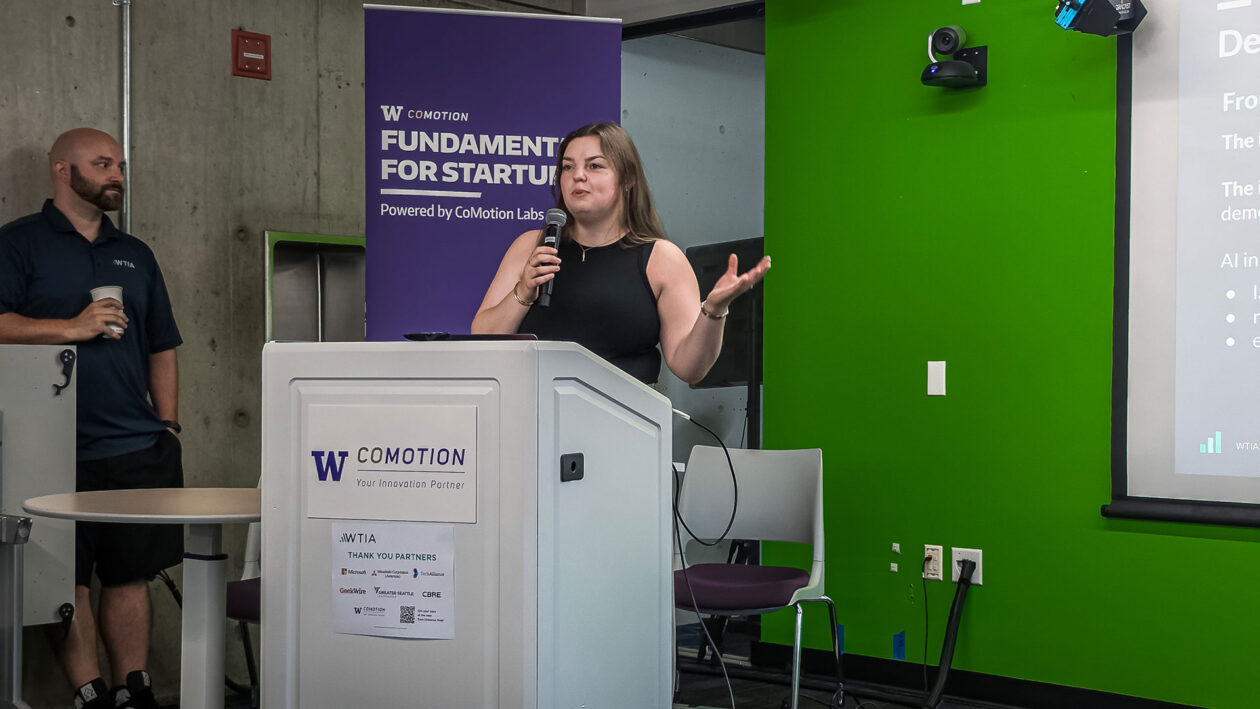
UW alumni Jessica Forcucci explains her design process in creating WTIA’s 2026 “Tech Universe Map.” (Photo by Ken Yeung)

To create the “Tech Universe Map,” WTIA started out with a dataset of 3,500 Washington-based tech companies with at least $1 million in funding or revenue according to PitchBook.

The group was filtered further to those that were headquartered or had notable engineering centers in the state, were still active, and had “meaningful” Washington-grown connections through founder or university lineage. The GeekWire 200 was also used in the process.

WTIA enlisted the help of UW graduate Jessica Forcucci and a team of designers to create the visualization. In brief remarks, Forcucci explained her vision for the “Tech Universe Map,” saying the goal was to “demonstrate the interconnectivity” these companies had with each other.

Predicting what the next map will look like

As Washington’s tech ecosystem evolves, Ellingson predicted there will not only be bigger constellations of AI companies, but also quantum, fusion and advanced energy, and space and defense. He believed more tech clusters will blossom statewide beyond King County.

Ellingson said WTIA is seeing real growth in Wenatchee, the Tri-Cities and Spokane. Those regional clusters are small now, he said, but he expects them to be substantial by 2031.

To make the next map happen, Ellingson urged people to open doors for others, make introductions without expecting anything in return, and give first, building community and forming new constellations.

Posters of the Tech Universe Map are available for purchase.

Note: GeekWire is a media sponsor of the Tech Universe Map project.

Tech Moves: Remitly names CISO; Joseph Williams leads cybersecurity ed at WWU; Yoodli gets product VP

Jeff Lyon. (LinkedIn Photo)

Jeff Lyon is now chief information security officer at Seattle’s Remitly. Lyon joins from Coinbase, where he was head of infrastructure security for two years. Past roles include security leadership at Robinhood and Amazon Web Services. Lyon also served as a petty officer with the U.S. Navy for more than nine years.

“Remitly’s mission to transform lives through trusted financial services that transcend borders resonates deeply and is a natural progression of my work building security organizations, secure applications, and safe-by-default platforms across fintech,” Lyon said in a LinkedIn post.

Remitly has seen a reshuffling of leadership since co-founder and CEO Matt Oppenheimer departed in February. Ankur Sinha resigned as chief product and technology officer in June, and Rina Hahn left as chief marketing officer earlier this month. Veteran tech and finance executive Sebastian Gunningham now leads the company.

Joseph Williams. (Dept. of Commerce Photo)

Joseph Williams, a longtime Seattle-area leader at the intersection of tech and public service, was named director of Cybersecurity Programs at Western Washington University.

Williams most recently served as the governance, risk management and compliance (GRC) practice director at consulting firm Artemis Connection. His varied career includes working as information and communications technology sector lead for the Washington State Department of Commerce; Seattle office director for Pacific Northwest National Laboratory; and divisional CTO at Microsoft.

In 2025, Williams was named GeekWire’s Public Policy Champion for Innovation.

Williams’ experience “sets the stage for propelling our cybersecurity programs to new heights as we seek to equip and empower our graduates to be successful in exciting careers in a fast-changing technology landscape,” said Filip Jagodzinski, computer sciences’ department chair.

Kartik Murthy. (LinkedIn Photo)

Kartik Murthy was named vice president of product for Yoodli, a roleplay platform using AI to help people improve their professional skills.

Murthy joins the Seattle-based startup from the cybersecurity company Coalition, where he served as head of product for four years. He has held product management roles at companies including Meta, Google and Uber. 

“In a world where many AI products try to automate workflows, Yoodli is taking a bet on humans and it’s already paying off,” Murthy said on LinkedIn.

Phoebe Weiser. (LinkedIn Photo)

Phoebe Weiser is now an investor at the longtime Seattle venture firm Madrona. She joins from Databricks, where she worked as a product manager, and previously held internship and full-time roles at Microsoft.

“After building in security at Microsoft and data engineering at Databricks, I’m looking forward to partnering with the next generation of founders. I’m especially grateful to the managers, mentors, and teammates over the past few years for everything they taught me about building products at scale,” she said on LinkedIn.

Salman Taherian is now head of AI for Grant Thornton, a Chicago firm offering audit, assurance, tax and advisory services. Taherian, who is based at the company’s office in Bellevue, Wash., joins from Amazon Web Services where he was global head of agentic AI and strategic partner accounts. Past employers include Wipro Limited and Relx.

— Two Fred Hutch Cancer Center researchers have received endowed chairs:

  • Kate Markey, an assistant professor at Fred Hutch and UW Medicine, has received the Innovators Network Endowed Chair. Markey is a bone marrow transplant physician and studies how gut bacteria affect recovery for cancer patients.
  • Sita Kugel, a pancreatic cancer researcher and Fred Hutch professor, is the inaugural recipient of the Leung Roy Family Endowed Chair.

Jeff Weintraub was appointed chief operating officer and chief financial officer for Nabu, a Seattle startup that publicly launched this year that’s building tools for software product teams. Its co-founders are Jon Grant and Eric Thompson.

Weintraub was most recently at Apple for more than 12 years, leaving the role of director of consumer and enterprise support engineering. Earlier in his career he was with Intel and also owned a bathroom fixture manufacturing company.

❌