❌

Reading view

There are new articles available, click to refresh the page.

Meshtastic Pet Tracking

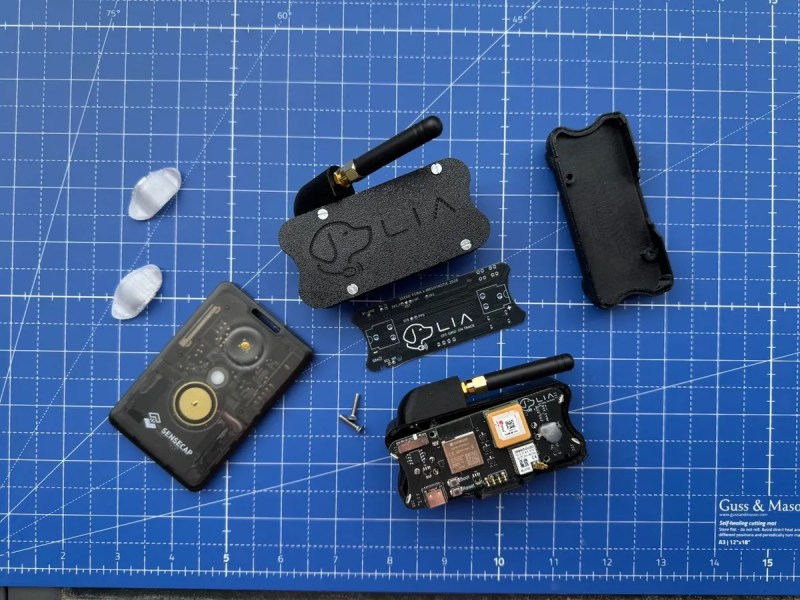
Four black plastic devices, two with a black, stubby antenna, sit on a blue cutting mat with white guidelines. There is also a PCB and a couple grey-ish clips in the assortment. One of the devices is open, showing another PCB with various components including a GPS antenna and LoRa radio. A silhouette of a dog is screen printed next to the text "LIA" on the PCBs, and the same text and image is present in the shell of the device in the top center.

Most commercial pet trackers require a subscription or network connection to function. [Jon G Aguado] wanted a better way and designed LIA, a Meshtastic collar tracker.

LIA uses a custom PCB containing a ESP32-S3, LoRa radio, GPS/GNSS receiver, and a charge controller for the 18650 or 5023450 pouch Li-ion cell powering the device. Everything fits inside a 3D printed enclosure, and the device is charged via a magnetic 4-pin USB pogo connector to increase weather resistance.

One of the neat features of this particular tracker is that [Aguado] gave it two different power modes. High power gets a location fix every 30 seconds and has a pair of bright LEDs for visual assistance, low power only gets a fix every minute or so, and it can also be set to off, which is something we wish more device manufacturers remembered should be an option.

We hope anyone planning on using Meshtastic and LoRa in the US is aware of the issues surrounding FCC compliance, and if you want to track your pet another way, maybe KineFox is an option?
Restoring an Altimeter Watch to Former Heights

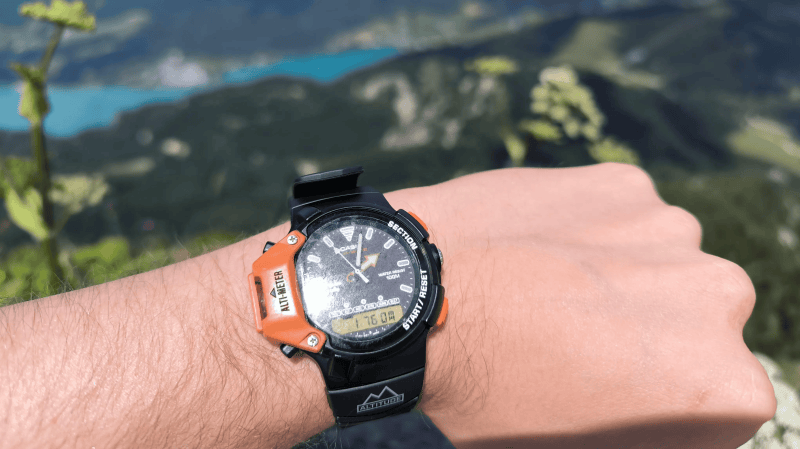
A man's arm is shown against a mountainous backdrop. The man is wearing a black watch with an orange segment on one side.

Finding inexpensive broken hardware for sale, buying it, and restoring it to working condition is a long-standing tradition for hackers on a limited budge. But there are some devices that are so difficult to repair that it’s usually not worth the trouble. [Vintage560] is braver than most, though, and restored an internally-damaged Casio AW-330-AT altimeter watch.

The exterior of the watch was in good condition, other than missing a readily-replaced strap, but the battery had leaked into the interior, and the watch didn’t respond in any way to new batteries. Cleaning out the guts with isopropyl alcohol, repositioning a plastic insulator, and bending some contacts back into shape at least got some segments of the LCD display to activate, while over two days of turning the crown smoothed out resistance in the analog train.

Actually getting the LCD to work properly required disassembling the watch, taking particular care with the altitude sensor. It wasn’t clear what was wrong with the LCD β€” the controller seemed to be working properly, and several rounds of cleaning and adjusting the ZEBRA connector didn’t make any difference.

Eventually, [Vintage560] simply purchased a new screen. On close inspection, it looked as though chemicals from the leaking battery might have dissolved some of the transparent indium tin oxide contacts on the old display. With the watch now working [Vintage560] tested it on a trip to the Alps, and with a few periodic calibrations, it remained quite accurate.

Usually when we see Casio watch hacks, the watch in question is the F91W, whether it’s being used for contactless payments, being retrofitted as a smartwatch, or going 5,000 meters underwater.

❌