❌

Reading view

There are new articles available, click to refresh the page.

Seattle VR studio Polyarc, creator of β€˜Moss’ series, closes down after almost 12 years

(Polyarc games press image)

The Seattle-based video game developer behind the award-winning virtual reality adventure Moss has closed its doors.

The announcement was made via Polyarc Games’ LinkedIn page on Friday afternoon. No specific reason was offered for the studio’s closure.

β€œAfter nearly 12 years riding the joyous rollercoaster of emotions that is making video games, our time together has come to an end,” wrote an unnamed Polyarc representative. β€œThank you to everyone at Polyarc. Our work is now finished.”

Twenty-nine employees will be dismissed due to the studio’s closure, including co-founders Chris Alderson, Danny Bulla, and CEO Tam Armstrong. Polyarc has posted a list of contact information and profiles for all affected employees, in an attempt to help them line up their next positions.

Polyarc’s first and best-known release was 2018’s Moss, where players helped guide a young mouse named Quill through a fantasy world on a journey to save her uncle. It was followed by 2022’s Moss: Book II, a direct sequel that continued Quill’s story, and the 2025 strategy spin-off Glassbreakers.

Polyarc’s most recent release was this year’s Moss: The Forgotten Relic for PC and console, which collected both Moss games into a single non-VR experience.

Armstrong, Bulla, and Alderson founded Polyarc as a startup in 2015. All three were former employees of Bungie in Bellevue, where they’d all worked in different capacities on Bungie’s online shooter Destiny.

Polyarc’s closure comes almost six months after its announcement in March that it’d had to significantly reduce the size of the company, and almost eight months after a wave of layoffs at Meta that forced a major reduction at Bellevue, Wash.-based VR studio Camouflaj (Republique, Batman: Arkham Shadow).

As noted in January, Meta is perhaps the largest current player in the virtual reality sector, largely off the ubiquity of its standalone Quest headsets. When Meta decided to deemphasize its VR efforts in January, reportedly in favor of wearable computing and AI research, it touched off a negative ripple effect throughout the virtual reality field.

There is a chance that Valve’s upcoming Steam Frame may serve as an effective bailout for the VR sector by reigniting consumer interest, but at time of writing, the Frame has no release date. It’s apparently imminent, as suggested by a big leak in August, but there’s nothing definite. If the Steam Machine’s release in June was any indication, however, we can assume the Steam Frame will launch without warning on some random Tuesday morning in the next two months.
Reactive Heat and Wind Come to VR, Thanks to Smart Plugs

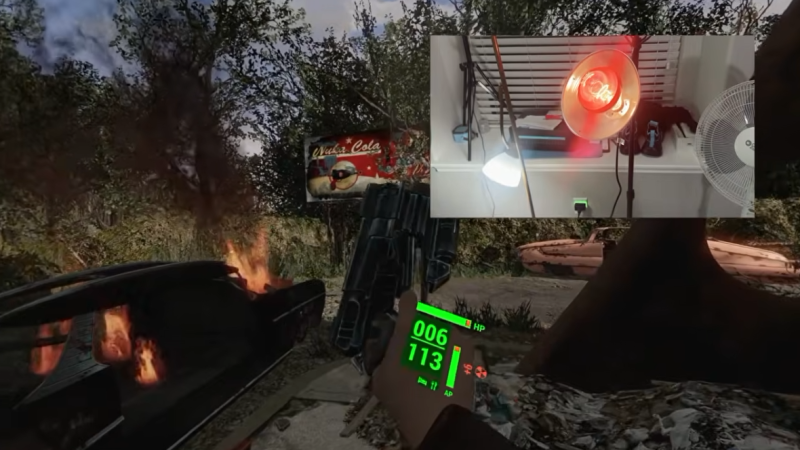
Want to feel the heat of nearby fire, explosions, or radiation? Or even just the gentle warmth and breeze of a sunny day in the wasteland? If you said yes, you’re in luck because [GingasVR] created an immersive heat mod and wind mod for the VR version of Fallout 4 that leverages economical smart outlets and game scripting to do just that.

The heart of this hack lies in gluing two things that don’t normally go together. In this case [GingasVR] uses a bit of game scripting to control TP-Link HS100 or HS110 Smart Plugs, allowing virtual events to control things in the real world. An ordinary fan in a smart plug creates wind on demand, and heat comes from a 250 wattΒ infrared heat lamp aimed toward the player. For heat, an IR lamp is the way to go because it’s highly directional, can be quickly cycled on and off, and responds rapidly.

The range of immersive effects opened up by this is pretty compelling. Sunny weather yields a gentle glow of warmth, but nearby explosions cause a short full-blast flash of heat. The heat of fires also grows and fades with proximity. This being Fallout, [GingasVR] ensured local radiation has an effect on the heat level as well. Want to see it in action? She briefly explains around the 3:20 mark in this video.

Using ordinary appliances and smart plugs controlled from within VR to modify environmental effects is clever, and we like that it’s entirely nondestructive. The scripting mod for the game doesn’t overwrite any game files, and the hardware used requires no modifications.

Not into Fallout? [GingasVR] has similar Skyrim VR mod, if that’s more your bag. And if you’re modding Skyrim VR anyway, consider adding a β€œmeditation device” headband to make magic respond to your actual state of mind.

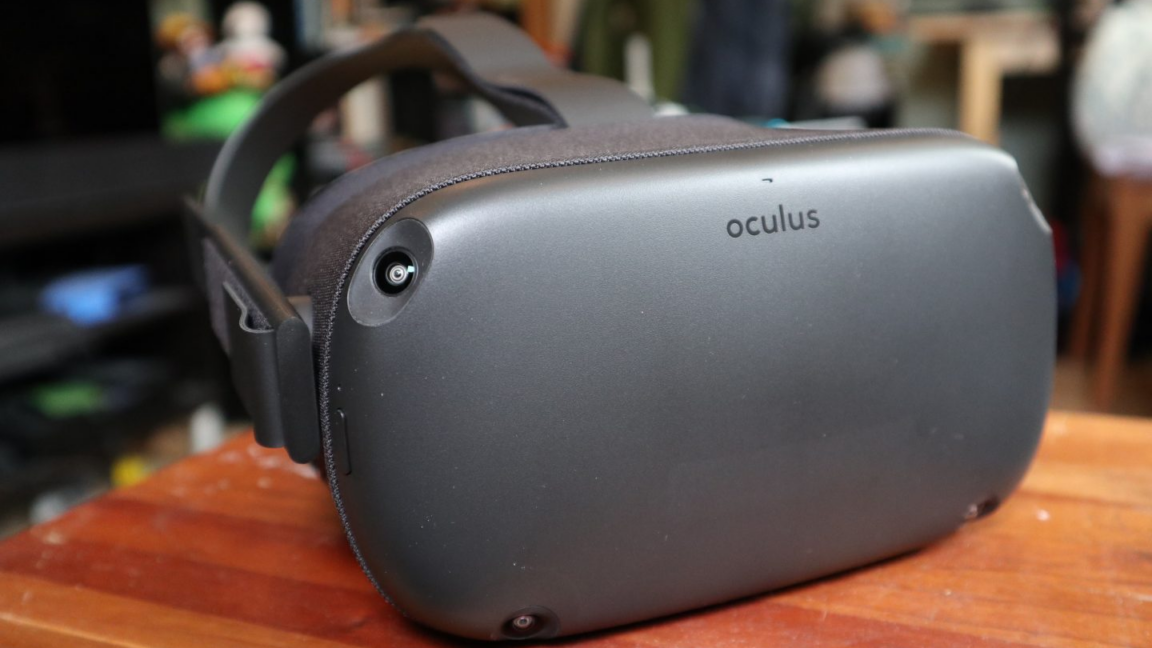
New bootloader lets you take the "Meta" out of the original Meta Quest

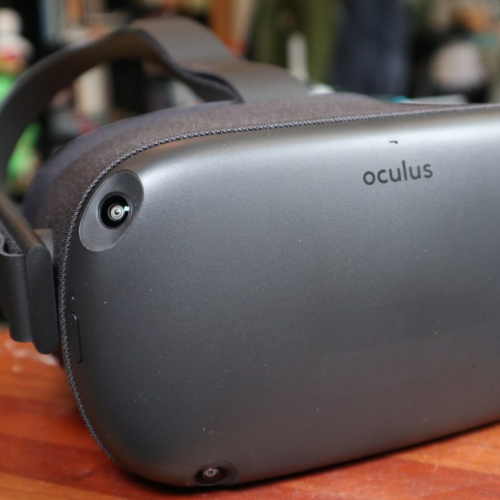
Remember the original Quest headset that Meta (then Oculus) trumpeted back in 2019? Meta seems to hope you don't, since the company officially stopped supporting the wireless VR headset in 2023 to focus on the more popular Quests 2 and 3. However, tinkerers haven't abandoned the hardware and recently released a new root-access exploit and bootloader that gives "developers and enthusiasts full control over Quest 1 hardware."

The QuestStack project integrates previously known vulnerabilities in the Quest's Android fastboot process into a privilege escalation chain that leads easily to full root access on the device. The bootloading process is now streamlined enough that it can be completed without any downloads through a web interface after connecting the headset to a PC.

With this exploit, the original Quest hardware can now be officially divorced from any reliance on Meta's servers or services to be useful. That means enterprising Quest owners should be able to sideload apps without needing to register for a Meta Developer account and activating Developer Mode through Meta's mobile app. It also means users should be able to go through the initial setup and login steps for a fresh Quest headset even if and when Meta decides to shut down the servers that currently support this process.

Read full article

Comments

Β© Sam Machkovech

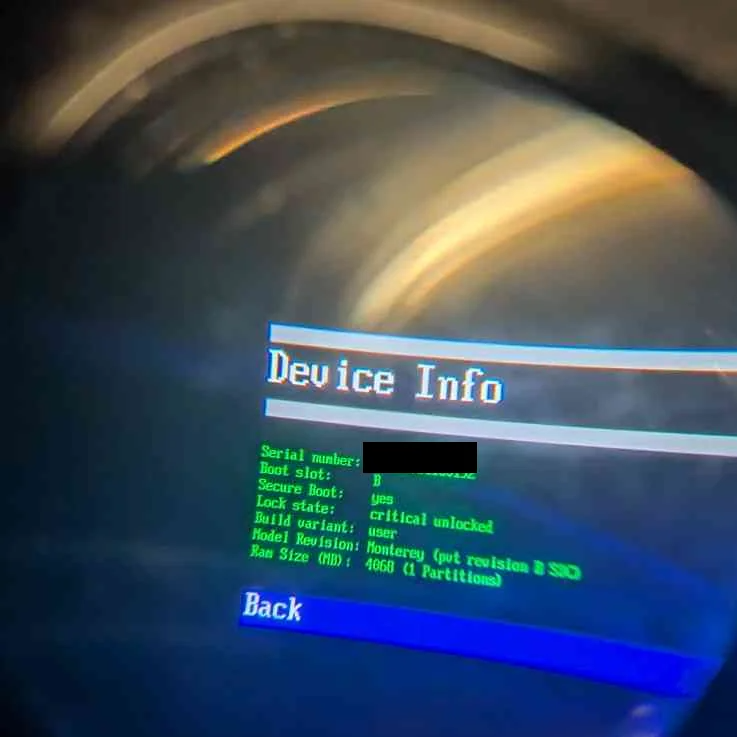
Quest VR Headset Becomes Unlocked Hardware

The Quest virtual reality headset gets a fully unlocked bootloader thanks to the QuestStack tool, which automates a complex process of privilege escalation to provide stable, privileged access to the hardware. This solidly frees the headset from its existence as a device tied to Meta’s walled garden, although the tool only works on the Quest 1.

Image credit: notmastergamerok on Reddit

Not simple enough? No problem, there’s also a web version by [darknight1050] that makes the unlock process as simple as plug in headset, visit web page, receive unlocked bootloader.

The first-generation Quest headset is an older (released in 2019) piece of hardware that is still perfectly capable, although it has been surpassed by later models in terms of performance and optics.

It has also been essentially forgotten as far as parent company Meta is concerned, with no requirement for new content to be compatible with it, nor consideration in general given to the device for some time now.

Hardware that is no longer supported should be opened. The Oculus Go got an official unlocked OS build which was a positive thing, but the Go was also a pretty limited device. The Quest 1 β€” the β€˜Oculus’ part of the name having been dropped around the time Facebook renamed itself to β€˜Meta’ β€” is considerably more capable than the Go was. Now people can have privileged access to its hardware, which may help save some of them from junk piles while enabling folks to do as they please with the hardware they purchased.

Watch Soldering Up Close and From Any Angle, in VR

A manual skill like soldering is so much easier to learn and grasp when one can watch it in action, and there’s a brand new way to do that using virtual reality (VR). It isn’t just a series of 3D videos shot at someone’s workbench, either.

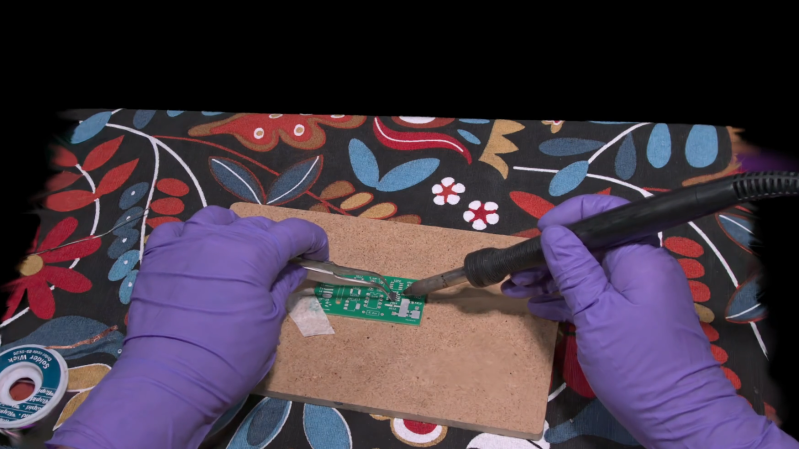
See soldering in action from any angle, with fine details preserved even close up.

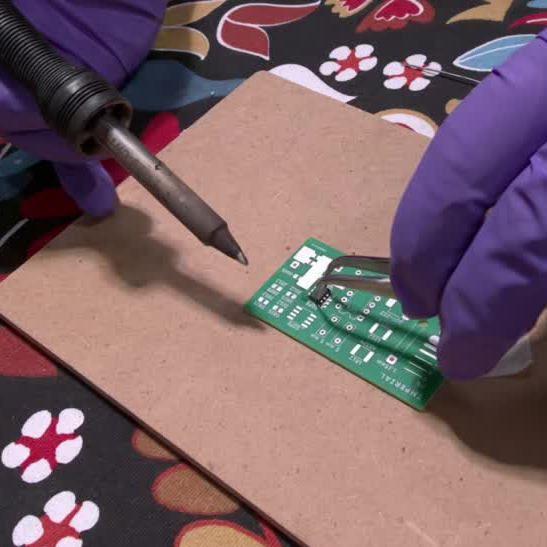
PCB Hand-Soldering Basics is a series of thirteen videos that demonstrate soldering using Gaussian splats, a method of displaying 3D content that allows the viewer to freely look at things from any angle. Gaussian splats aren’t new, but what makes this different is the sheer level of detail and the fact that it’s focused on handheld tool use rather than displaying a famous location, landmark, or something similarly β€œbig”.

Throughout the videos fine detail on the iron, parts, and the PCB itself remain visible from any angle and even from close up. Here’s a short video captured from within a VR headset that is probably the next best thing to seeing it yourself.

An educational production, it was was made in cooperation with the Department of Electrical and Electronic Engineering at Imperial College London. A few more details are in a LinkedIn post by [Tanmay Lad], who was part of the team involved in the production. The goal is to offer a unique, front-row seat to hand soldering with the ability to zoom in or look at it in 3D from any angle.

Not familiar with Gaussian splats? We’ve previously covered a great overview. They look great and are computationally cheap to render, and being able to get up close and see such detail is not really something one expects.

❌