We were looking into the marvelous recent project by [Throaty Mumbo] to recreate and reimagine the forgotten world of VHS-tape-based video games. Wait, what? Yes, back in the day, when computer graphics were more primitive, there were attempts to mix the gameplay of video games with the graphics from a video cassette. Take the Action Max system. It worked with a light-gun that pointed at the screen while the video played, and you tried to shoot at things as they flew by. Think Duck Hunt, but in glorious VHS video quality with cheesy acting, and the same gameplay loop every time, because it’s on the tape.
The unreleased Control-Vision VHS gaming system, co-developed with none other than Steve Wozniak, took the idea a little further and ran simultaneous sub-videos, and your actions would choose which of the sub-tracks would play at any given time. This let them do things like switch between videos depending on whether you caught the bad guys or missed them entirely, for instance.
These games came in the late 1980s, though, and they were all derivatives of the seminal Dragon’s Lair, which is probably the least fun video game I’ve ever had the chance to play, but among the most entertaining in a weird way. Instead of a linear VHS tape, Dragon’s Lair, and the later but equally unplayable Space Ace, were based on the then-new video disc technology that could swap between entirely different tracks almost seamlessly.
“Almost” is the key word here, though. Although the animations were absolutely marvelously cartoony, and looked stunning in an arcade up against video games of the time, there was a significant fraction of a second of delay between commanding an action with the joystick and the machine swapping up to the correct track. There were a couple of sections where back-to-back actions were necessary, and the challenge was to work around the game’s exact track-swapping-glitch time. As good as they looked, the gameplay was no fun.
But the game was influential, as evidenced by its VHS-based clones. If you’d like to give it a try, you’ll not be surprised to hear that there’s an emulator for Dragon’s Lair and its spin-off games.
What do all of these have to do with each other? We love how these games took a current technology – in this case video discs or video tapes – and tried to make it do something else: These games were all hacks. If you look at them in that light, maybe you can look past the horrible acting in Night Trap or the frustrating glitches in Dragon’s Lair. (Or maybe not. Give me Robotron: 2084 any day.)
This article is part of the Hackaday.com newsletter, delivered every seven days for each of the last 200+ weeks. It also includes our favorite articles from the last seven days that you can see on the web version of the newsletter.
Want this type of article to hit your inbox every Friday morning? You should sign up!
Bungie, the Bellevue, Wash.-based video game studio behind Destiny and Marathon, began its week with an apology from its new studio head, as it tries to win back its audience after several recent missteps.
On Monday morning, in a blog post and video entitled “The Next Chapter for Bungie,” new studio head Poria Torkan and Josh Deane, Bungie’s head of product, directly addressed Bungie’s community regarding its extraction shooter Marathon and the future of the Destiny franchise.
“For more than 30 years, Bungie has built these amazing worlds, and communities have been formed around them,” Torkan said in the video. “Over the last few years, we lost sight of that. The consequences have been real. We lost trust. We lost incredible colleagues. And our ambitions as a studio stalled.”
Almost three years ago, Bungie’s star was on a meteoric rise. Sony had acquired the studio in a deal valued at $3.6 billion, completed in July 2022. Destiny 2 was one of the most popular games-as-a-service on the modern market, which led to talks of expansion.
June also marked the departure of studio head Justin Truman, who’d replaced outgoing head Pete Parsons in 2025, and what was reported to be the end of development on Destiny 2.
If you’d asked an industry analyst what would happen to Bungie in July, the most likely answer was that it would be either turned into a support studio for other developers in the PlayStation network or shut down entirely. Instead, Torkan and Deane, as Bungie’s new leadership team, appear to be on an apology tour.
“We’re not asking for your trust,” Torkan said. “We know we have to earn it, and to do that, we need our games to deliver in ways that exceed your expectations of what you’ve come to love about the games that we make.”
The first step along that road is, according to Torkan, raiding Destiny 2’s infamous “content vault.”
Starting in 2020, three years into Destiny 2’s run, Bungie would routinely remove older parts of the game from the live service, such as its launch campaign and several early raids.
In theory, this was to make the client easier for Bungie to update, since it only had to focus on the newest parts of Destiny 2. In practice, this was like deleting the first episodes of a TV show to “make room” whenever a new one came out. If a player hadn’t been keeping up with D2 from the beginning, it was difficult to figure out what was actually going on in-game without a wiki dive or lore video.
Further, if a player wanted to go back and re-play those earlier parts of Destiny 2, they couldn’t. The first third or so of D2, despite being part of a live-service game, was effectively lost media. According to Torkan and Deane, Bungie is now working to bring back that “vaulted” content to the modern version of Destiny 2.
In addition, while neither Torkan nor Deane actually used the phrase “Destiny 3,” Torkan did say that Bungie is “absolutely not done with Destiny.” Their first priority, however, is remaking and restoring the lost levels in Destiny 2.
“That restoration will hopefully lay the foundation for how we reforge new Destiny stories and games that you all deserve and that we want to create,” Deane said.
While Bungie had already announced plans for the future of Marathon, Deane, the game’s general manager, said today that Marathon will continue to evolve into a “deeper survival experience,” with more agency for players in both PvE and PvP modes.
A consistent thread throughout both the video and post, however, was a focus on Bungie’s audience and fan community.
“How we build this new Bungie… has to be through the spirit of putting players above everything else,” Deane said. “We have to find a way back to making games that we want to play, but with you at the center. We have to meet you where you are, build what you want, and reforge our creative soul to prove that Bungie is still capable of building worlds that are part of your life, your time, your stories, and most importantly, your communities.”
“We need to restore Destiny to a place you can call home again,” Deane continued. “Evolve Marathon for more of you to enjoy and to create a new inspiring future for Bungie no matter what.”
“We’ve made commitments like these before,” Torkan said. “We understand the skepticism. We spent too much time trying to do too much, and that came at a real cost.”
The Seattle-based video game developer behind the award-winning virtual reality adventure Moss has closed its doors.
The announcement was made via Polyarc Games’ LinkedIn page on Friday afternoon. No specific reason was offered for the studio’s closure.
“After nearly 12 years riding the joyous rollercoaster of emotions that is making video games, our time together has come to an end,” wrote an unnamed Polyarc representative. “Thank you to everyone at Polyarc. Our work is now finished.”
Twenty-nine employees will be dismissed due to the studio’s closure, including co-founders Chris Alderson, Danny Bulla, and CEO Tam Armstrong. Polyarc has posted a list of contact information and profiles for all affected employees, in an attempt to help them line up their next positions.
Polyarc’s first and best-known release was 2018’s Moss, where players helped guide a young mouse named Quill through a fantasy world on a journey to save her uncle. It was followed by 2022’s Moss: Book II, a direct sequel that continued Quill’s story, and the 2025 strategy spin-off Glassbreakers.
Polyarc’s most recent release was this year’s Moss: The Forgotten Relic for PC and console, which collected both Moss games into a single non-VR experience.
Armstrong, Bulla, and Alderson founded Polyarc as a startup in 2015. All three were former employees of Bungie in Bellevue, where they’d all worked in different capacities on Bungie’s online shooter Destiny.
Polyarc’s closure comes almost six months after its announcement in March that it’d had to significantly reduce the size of the company, and almost eight months after a wave of layoffs at Meta that forced a major reduction at Bellevue, Wash.-based VR studio Camouflaj (Republique, Batman: Arkham Shadow).
As noted in January, Meta is perhaps the largest current player in the virtual reality sector, largely off the ubiquity of its standalone Quest headsets. When Meta decided to deemphasize its VR efforts in January, reportedly in favor of wearable computing and AI research, it touched off a negative ripple effect throughout the virtual reality field.
There is a chance that Valve’s upcoming Steam Frame may serve as an effective bailout for the VR sector by reigniting consumer interest, but at time of writing, the Frame has no release date. It’s apparently imminent, as suggested by a big leak in August, but there’s nothing definite. If the Steam Machine’s release in June was any indication, however, we can assume the Steam Frame will launch without warning on some random Tuesday morning in the next two months. (Edit, 9/14: Or the following Monday after this was written.)
 Login


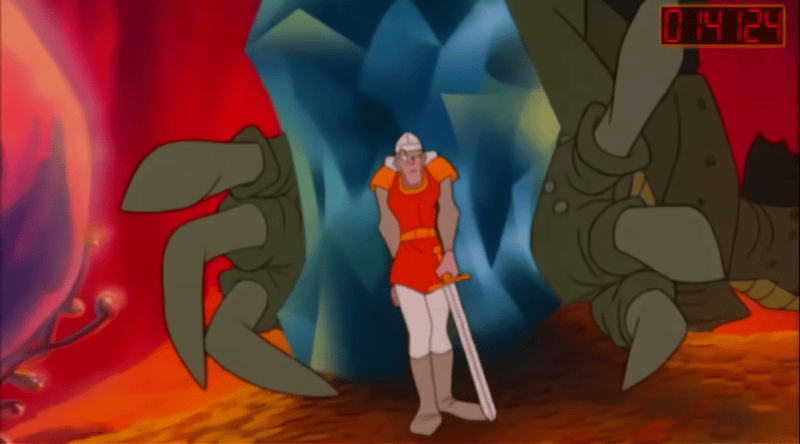
 “Almost” is the key word here, though. Although the animations were absolutely marvelously cartoony, and looked stunning in an arcade up against video games of the time, there was a significant fraction of a second of delay between commanding an action with the joystick and the machine swapping up to the correct track. There were a couple of sections where back-to-back actions were necessary, and the challenge was to work around the game’s exact track-swapping-glitch time. As good as they looked, the gameplay was no fun.


