Crypto companies announced $151 million in disclosed financing across five deals from Sep. 5–11, 2026. The largest was Nasdaq Ventures’ agreement to invest $100 million in Kraken parent Payward; Latitude’s $35 million Series A ranked second. The total includes Nasdaq’s…
ARK Investment Management has asked the U.S. Securities and Exchange Commission to approve a tokenized share class for its $562 million venture fund, allowing ownership records to be maintained using distributed ledger technology. According to an application filed with the…
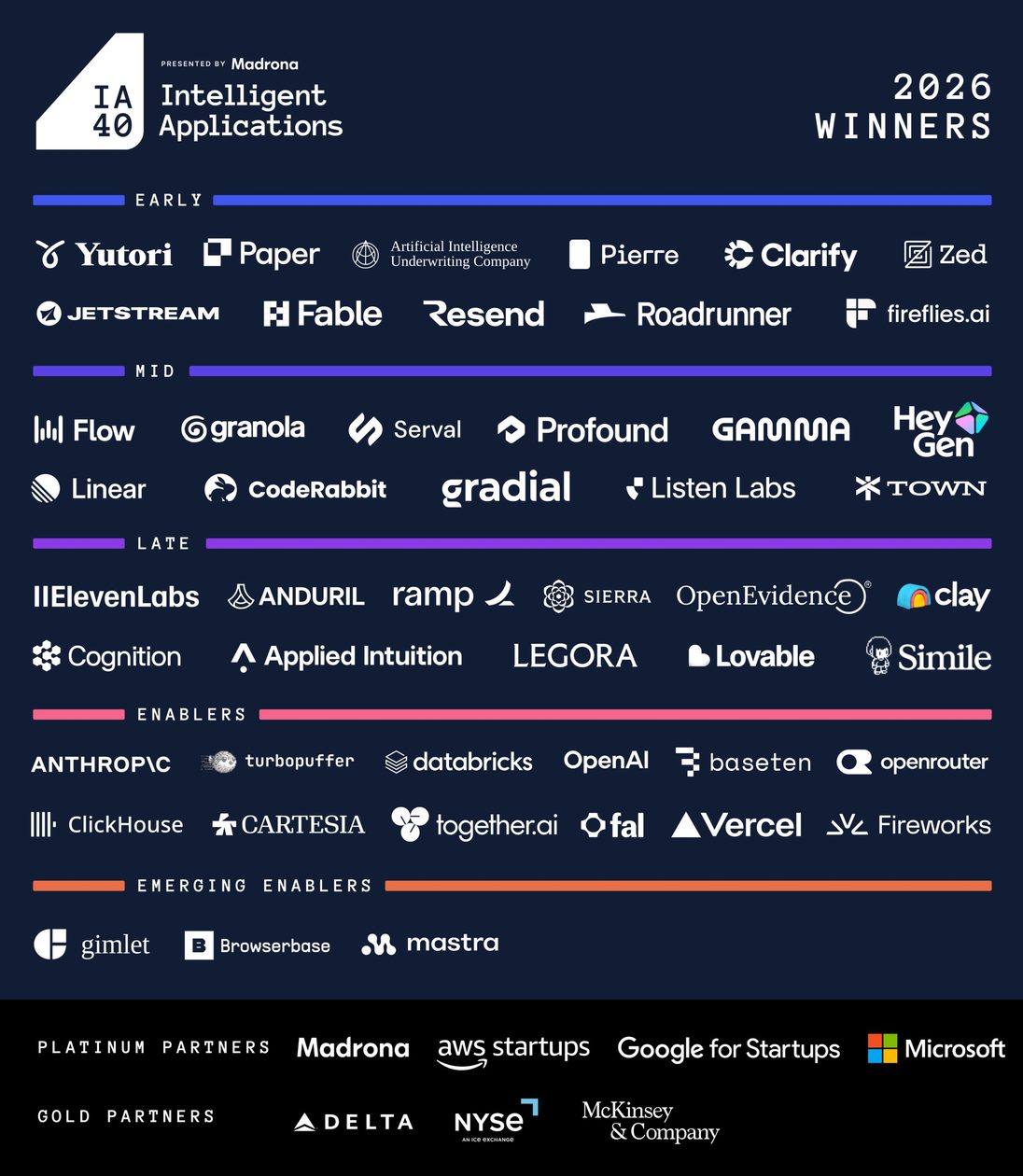
The winners on Madrona’s 2026 Intelligent Applications 40 list, grouped by funding stage. (Madrona Image)
Seattle-based venture capital firm Madrona released its sixth annual Intelligent Applications 40 list this week, naming 45 private AI companies (the five extras come from ties) that have collectively raised $410 billion from investors across the industry.
Three of them — Anthropic, OpenAI and Databricks — account for 92% of that total.
The uneven distribution of funding reflects a larger split in the tech industry, as the largest AI companies make huge bets on the computing capacity needed to meet demand for their models, while almost everyone else builds businesses on top of them.
The frontier labs are “increasingly funded by strategic capital from the likes of Amazon, Google, Nvidia and SoftBank rather than traditional venture,” Madrona’s Matt McIlwain and Rolanda Fu wrote in a post accompanying the list. That scale, they added, “makes every other category on this list look capital light by comparison.”
On top of that, he said, hundreds of billions of dollars are flowing into OpenAI and Anthropic.
“And what I say to both the big tech companies and to the people funding the model companies: thank you very much,” McIlwain said on Bloomberg TV, noting that the five largest tech companies will spend an estimated $750 billion in capital expenditures this year.
But even setting those big three aside, McIlwain said, the rest of the winners have raised an average of more than $800 million each. That’s a total of $34 billion combined. Companies across the list are raising far more than they used to, enough that Madrona had to redraw its own categories.
The list sorts companies by total capital raised, and this year the ceiling for “early stage” rose to $50 million, up from the $30 million threshold that held for the previous five lists. The cutoff for “emerging enablers,” its category for smaller infrastructure companies, doubled to $100 million.
“Companies across the board are raising more money, and the definition for what ‘early’ means continues to shift higher,” McIlwain and Fu wrote.
Madrona has published the IA40 since 2021 as a roster of the private companies it considers most important in building and enabling AI applications. According to the firm, this year’s list drew on input from 72 investors representing 54 venture and corporate firms, who nominated and voted on more than 450 companies, with PitchBook data factored into the scoring.
Gradial, which builds AI agents for enterprise marketing, is a first-time winner in the mid-stage category; it raised $65 million in June at a $675 million valuation, bringing its total to $120 million.
Last year’s list included two other Seattle-area companies in addition to Clarify.
OpenAI acquired one of them, Bellevue-based Statsig, for $1.1 billion in September 2025, making Statsig founder Vijaye Raji its CTO of applications.
Security startup Dropzone AI, which was on the list last year, did not repeat this year.
Madrona, one of the Seattle region’s largest and oldest venture capital firms, is an investor in all four — Clarify, Gradial, Statsig and Dropzone AI — although it also invests outside the region, and many of the companies on the IA40 are not in its portfolio.
Databricks, the San Francisco-based data and AI company (which leased 142,000 square feet in Bellevue this year), is the only company to appear on all six IA40 lists. That said, 23 of last year’s 40 winners returned this year, a 58% repeat rate, up from 33% the year before.
McIlwain and Fu wrote that the biggest and most established companies on the list are holding their spots, noting that “the age of experimentation is giving way to an age of enterprise readiness,” with buyers and investors “paying premiums for companies that can demonstrate real ROI.”
Madrona will recognize the winners at its IA40 Summit in Seattle on Sept. 29 and 30.
Updated with Matt McIlwain’s comments to Bloomberg TV.
EIT Pharma said Monday that the oversubscribed round also drew participation from Good Ventures, Arrowtown and others. The company said the money will support FDA review of lonafarnib, an oral treatment candidate for chronic hepatitis D, along with manufacturing and commercial preparations, subject to regulatory approval.
The Food and Drug Administration accepted the company’s New Drug Application for review on Aug. 11.
Kawas, EIT Pharma’s CEO, said in a news release Monday that the oversubscribed round validates the company’s founding belief that “advancing important medicines is about recognizing unrealized potential.”
Chronic hepatitis D is a serious liver disease that affects people who are already infected with hepatitis B. The FDA approved the first U.S. treatment for chronic hepatitis D in May: Gilead’s injectable Hepcludex, or bulevirtide-gmod. EIT Pharma is positioning lonafarnib as a potential oral alternative, if approved.
Kawas resigned as CEO of Athira Pharma in 2021 after a board investigation found she had altered images in research she co-authored as a graduate student. She said at the time that the changes were enhancements that did not alter the underlying data.
Athira has since changed its name to LeonaBio and shifted its focus from Alzheimer’s disease to breast cancer.
Blue Voice is trained on department-specific laws, local ordinances, protocols, and guidelines that general-purpose AI tools can't access on the public internet.
Levanta builds marketing tools so influencers and creators can connect with brands. Image via Levanta.
Influencers and online creators have become an increasingly powerful way for brands to sell products. But managing those relationships can get complicated — especially for companies selling across Amazon, Walmart, Shopify and other channels.
That’s the market Seattle startup Levanta is targeting, which today is announcing $22 million in new funding led by Volition Capital. The company provides software that helps brands find creators, send them products, set up affiliate commissions, track sales and handle payments.
The company says it now has more than 90,000 vetted creators on its platform. Brands can offer creators products to review or promote, pay commissions when their links generate sales, or arrange flat-fee partnerships. Levanta tracks the performance across Amazon, Walmart and Shopify and handles payments.
The startup originally focused on Amazon sellers but has expanded to Walmart and Shopify. Its revenue is up 80% year-over-year in 2026, according to the company.
“Every marketplace has thousands of sellers that want more customers, and there are millions of creators and affiliates capable of driving those customers,” said CEO and co-founder Ian Brodie in a press release. “The missing piece is infrastructure that connects the two, handles the economics, and accurately measures what happens.”
In 2023, Goldman Sachs estimated that the the influencer marketing category was expected to grow to $480 million by 2027.
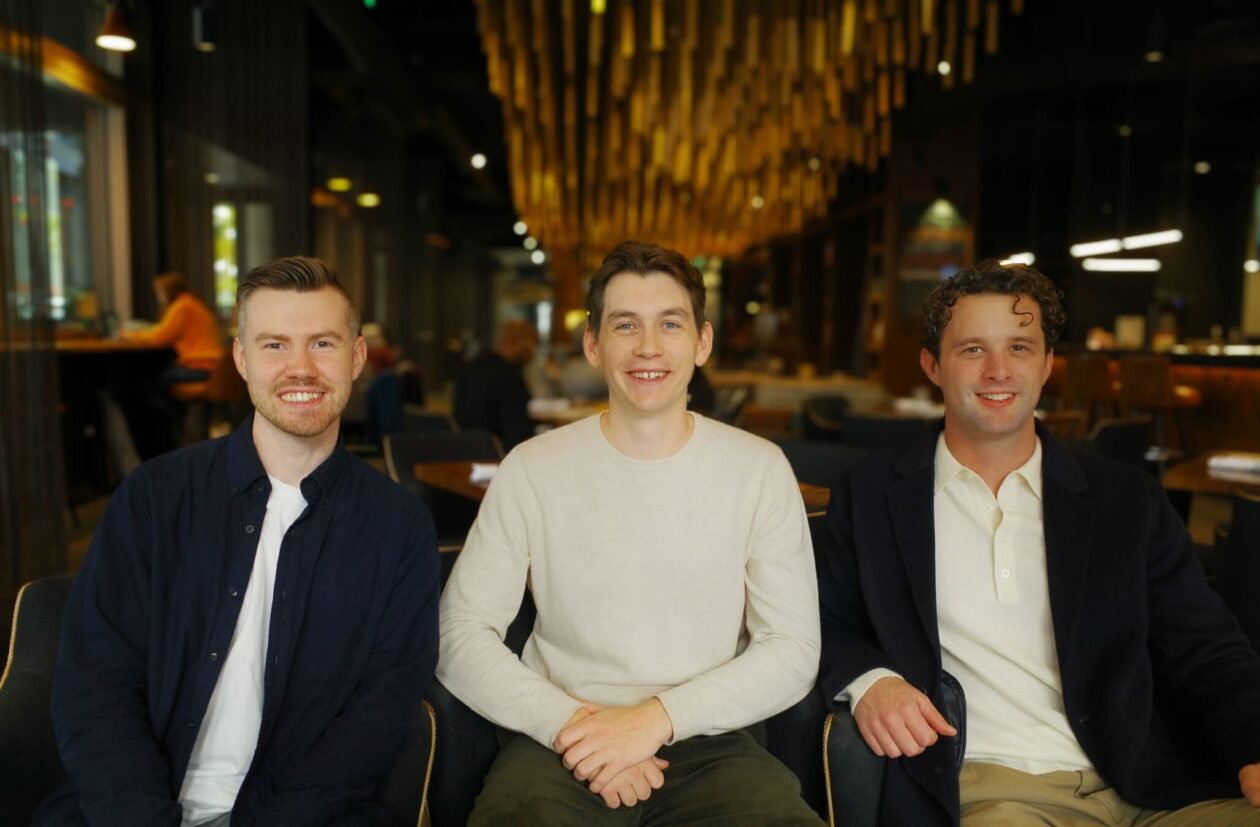
Levanta co-founders, from left: Spencer McKenney, Ian Brodie, and Rob Schab. (Levanta Photo)
Levanta was founded in 2023 by Brodie, CTO Spencer McKenney and Chief Marketplace Officer Rob Schab, all University of Washington graduates. The three previously founded Grovia.io, an affiliate marketing company that was acquired by Acceleration Partners in 2022.
With more than 100 employees, Levanta is the rare startup that has already reached profitability with Brodie telling Business Insider that it has been profitable or roughly break-even since its launch. With the new funding, it also provided cash liquidity to some eligible employees.
“This is a milestone moment for Levanta and it reflects how far the company has come and the value our team has created together,” Brodie said in the release. “At the same time, it allows us to reward the people who have been instrumental in building the foundation of the business while ensuring they remain deeply aligned with where we’re going next as we continue building Levanta for the long term.”
The new funding will support expansion to additional retail marketplaces and international growth.
Previous Levanta backers include Long Run Capital, OpenSky Ventures and Arrived Homes CEO Ryan Frazier. The latest series B round brings Levanta’s total funding to more than $43 million.
This week on the GeekWire podcast: Microsoft and Amazon both reported quarterly numbers, and both stocks rose on cloud results that beat expectations. Is all that AI spending paying off? And in related news, Microsoft sees a rare annual headcount decline, hitting product R&D hardest.
Plus: Satya Nadella builds a Power BI dashboard out of an analyst’s research report, and touts it on the earnings call to make a bigger point. Jeff Bezos names Amazon’s chips business as the long-awaited fourth pillar. And AI House managing director Jacob Colker delivers a much-needed pep talk for Seattle tech, calling on the region to recognize and build on its strengths.
Seattle Tech Week attendees fill AI House at Pier 70, spilling onto the deck overlooking Elliott Bay. (GeekWire Photos / Todd Bishop)
Attending as many Seattle Tech Week events as possible and talking with as many people as I could, I was struck by the number of people looking for work and the volume of visitors from the Bay Area, including a number of investors looking to get a sense for what the regional tech scene is about.
It was hard not to imagine them being impressed with the sheer level of engagement and enthusiasm, even if they didn’t happen to catch Jacob Colker’s rallying cry. With more than 250 events (and waiting lists for many of them) it was more than any one person could take in.
It wasn’t Seattle AI Week — that’s still to come in October — but given the moment in tech and the world, the topic of artificial intelligence was naturally the main throughline of the week.
A panel that changed my perspective was early in the week, called “Foundation Models Go Vertical,” hosted by the Seattle pre-seed firm Ascend at Washington 1000 downtown. Founding general partner Kirby Winfield told the room that 600 people had tried to get in.
One of the biggest insights was from Manos Koukoumidis, CEO of Kirkland-based Oumi and a former Google Cloud AI engineering manager who led large language model efforts there.
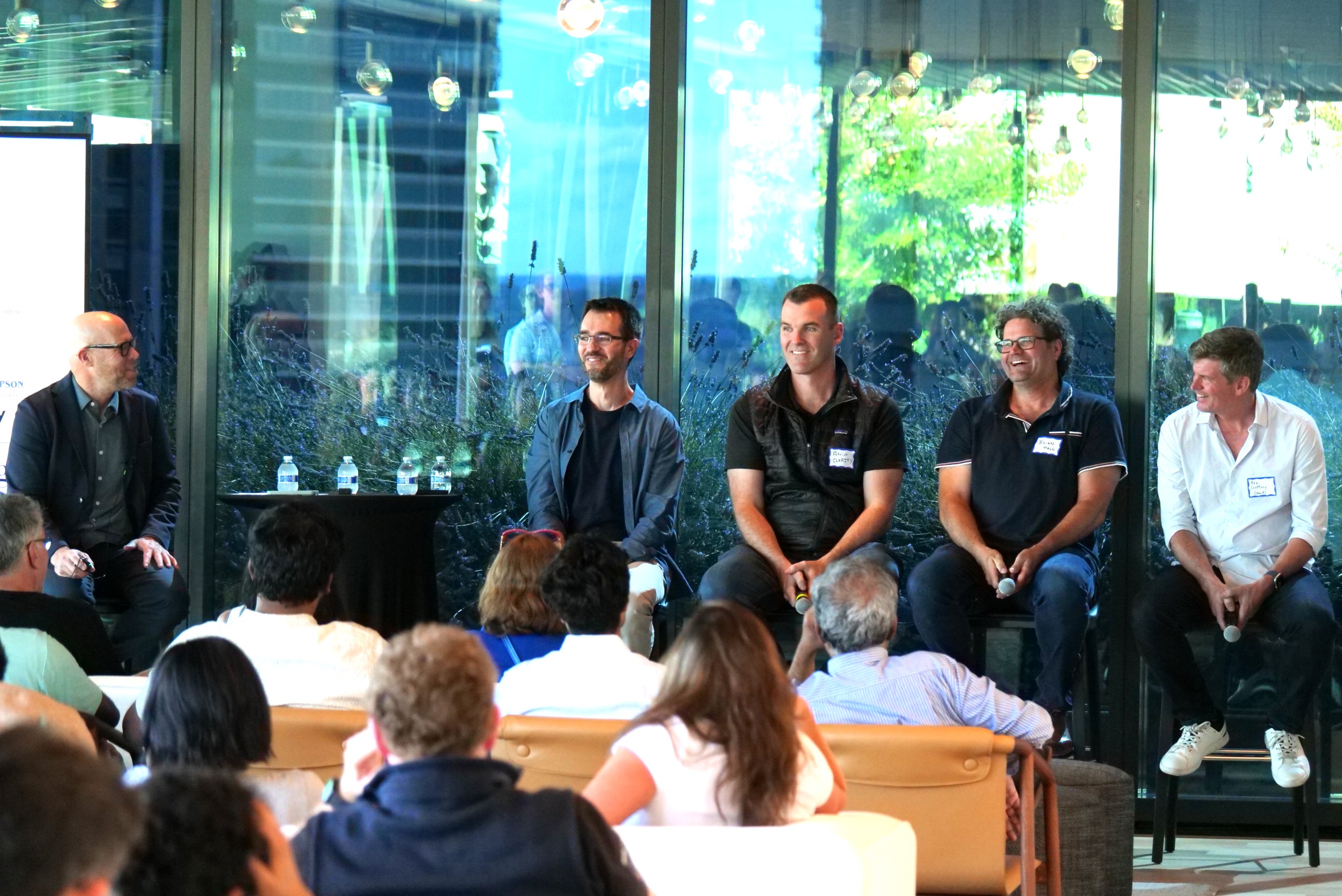
From left: moderator Boaz Ashkenazy of the Shift AI podcast, Manos Koukoumidis of Oumi, Patrick Thompson of Clarify, Brian Hall of Mistral AI, and Ben Gaffney of OpenAI at the “Foundation Models Go Vertical” panel, hosted by Ascend. (GeekWire Photo / Todd Bishop)
Companies that are racing to build on top of the frontier models, he said, are renting a kind of intelligence that has very little to do with their own businesses.
“Enterprises are using a model that is trained on 5% of the world’s data that sits on the web, not the other 95%,” he said, referring to the data sitting inside their own organizations.
Which led him to the question (and the point) that I keep coming back to: If the intelligence at the center of the product belongs to someone else, he asked, “are you really an AI company, or an application company on top of somebody else’s intelligence?”
The next day, in the audience for a recording of the Founded & Funded podcast by Seattle Tech Week organizer Madrona, I posed the question that we debated on last week’s episode of our GeekWire Podcast: what should Seattle founders and investors make of venture numbers that rank Philadelphia, Austin, and New York ahead of them?
It was the right place to ask, given that the show featured Nizar Tarhuni, EVP for research and market intelligence at PitchBook, which tracks the numbers, and Madrona partner Sabrina Albert.
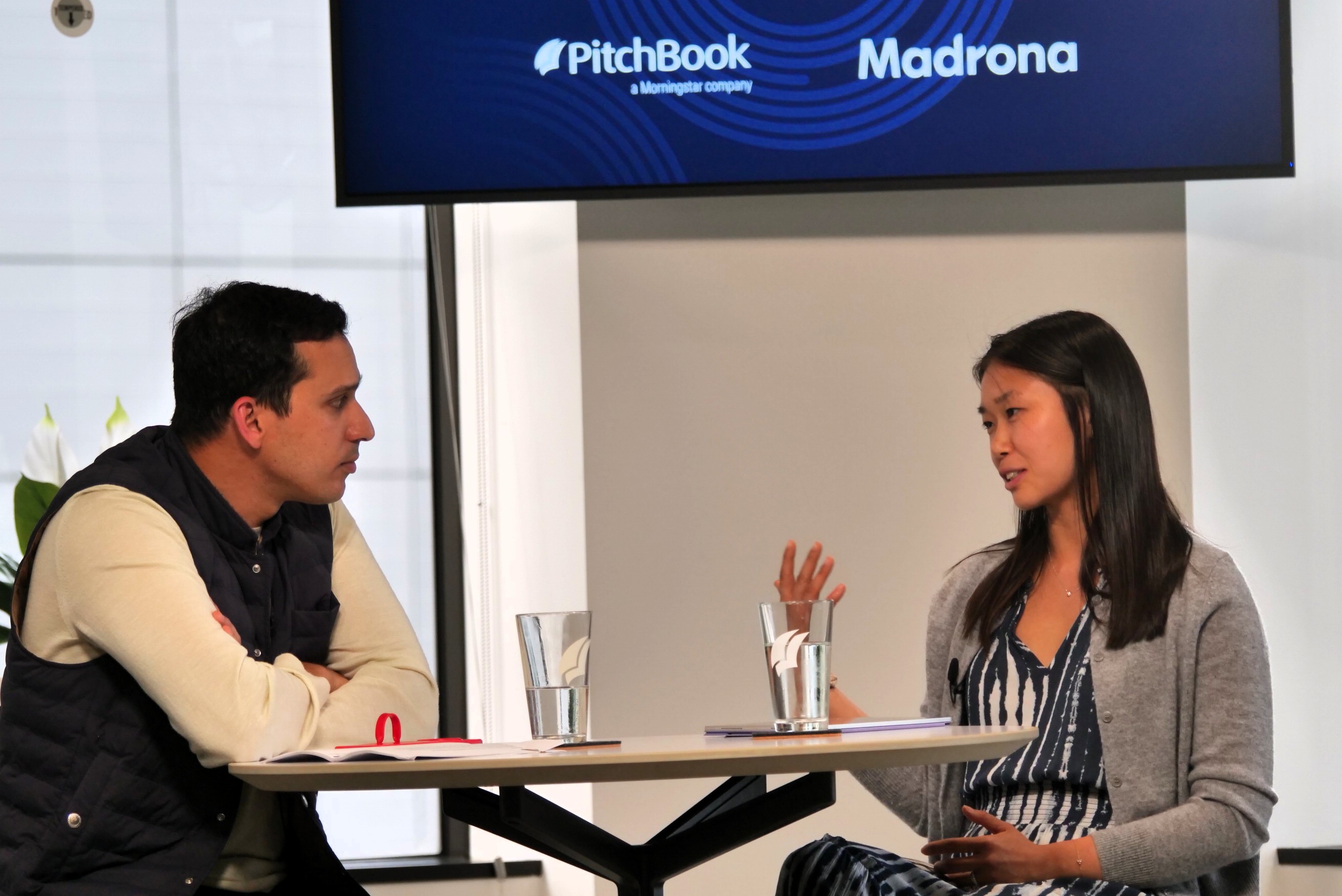
PitchBook’s Nizar Tarhuni and Madrona partner Sabrina Albert during a live recording of Madrona’s Founded & Funded podcast at Seattle Tech Week. (GeekWire Photo / Todd Bishop)
Albert pointed out that the numbers don’t capture everything. A company can have a big engineering group in Seattle, or even a co-founder here, and still be counted as a Bay Area company, she said. Large engineering offices for OpenAI and Anthropic are the latest examples.
Tarhuni made a similar point: “There’s so much talent in some of the biggest unicorns that are actually working out of Seattle,” he said. In terms of overall economic activity, he added, “there’s a lot more here that doesn’t make its way into those numbers.”
Other quotes and insights that stood out from the sessions we attended:
Patrick Thompson, CEO of Seattle-based Clarify, said his company’s Anthropic bill had tripled in three months. He has shifted spending to AWS Bedrock, citing reliability problems, and now runs smaller models locally on his own laptop for low-level work.
Madrona’s Albert, on the shift to selling outcomes: “Before, when you were thinking about traditional software, you would charge for a seat or a unit of software. But now you can really fundamentally change it. … If I deliver this outcome for you, then you can actually pay me for it.”
Ken Horenstein, founder of Pack Ventures, which invests in startups tied to the University of Washington, on the knock that Seattle is slow: research institutions here are “choosing problems that are 10, 15, 20, 50-year problems,” he said. “Sometimes people put that as a negative rap on us because we don’t go really fast and flame really bright like you might see in other markets. But I actually think that can be used as a benefit.”
Ben Gaffney, deputy general counsel at OpenAI, on the notion that AI is thinning out headcount: “Even within the legal team that I work in, we need more people. Even though we’re getting all these massive productivity gains, it isn’t like you don’t need people to supervise this stuff.”
Brian Hall, the longtime Microsoft, AWS and Google executive who became chief marketing officer at Mistral AI in June, on where this all ends up: “We’re gonna laugh when we thought that AI was gonna save us time.”
Ascend’s Winfield, on the limits of what investors provide: “If I invested in you, it’s not because I’m smart about your market. It’s because you’re smart about your market. … If you’re looking for answers from your investors, you’re in trouble.”
Karl Siebrecht, co-founder and CEO of Flexe, at a networking event, telling founders to stop networking: “Spending time as a founder trying to market yourself to investors, I think, is a fallacy. If you focus on building a valuable company … I can promise you, investors will find you.”
Molly Klein, founder and CEO of Perk Events, who runs some of GeekWire’s biggest events, on why any of this happens in the first place: “Events are hands-down the strongest business development tool that you have,” she said. “One conversation may take six emails in three weeks. At an event, it happens in 10 minutes, because you’re getting that face-to-face time.”
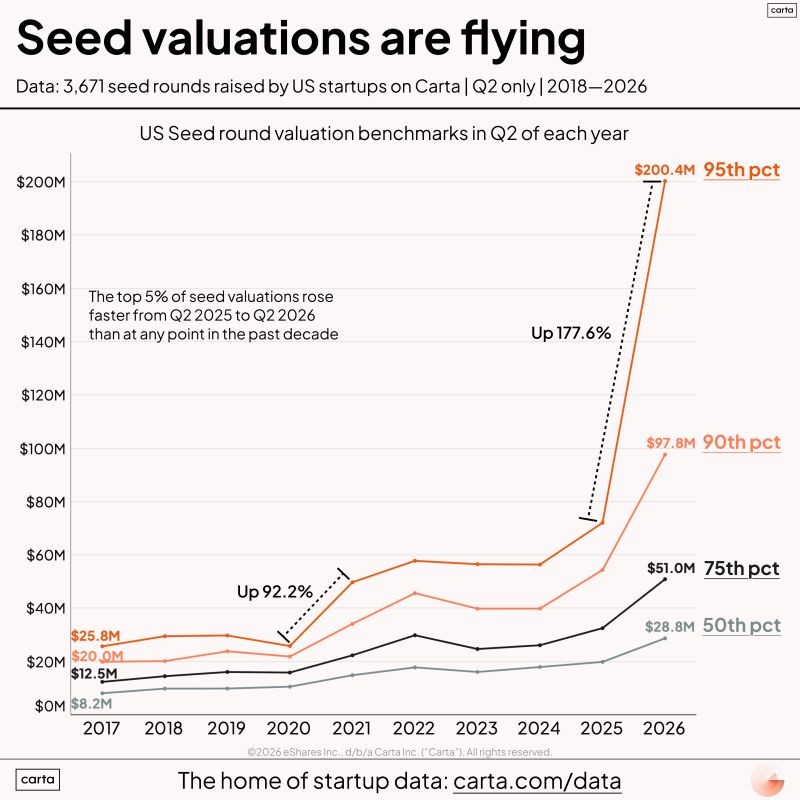
Click to enlarge. The top 5% of U.S. seed-round valuations reached $200.4 million in Q2 2026, up 177% from a year earlier, even as fewer companies were funded. (Chart: Peter Walker / Carta)
Guest Opinion: When I moved to Seattle in 2000 and started in venture capital, I read the book “The Silicon Boys: And Their Valley of Dreams,” which told the story of how venture capital drove the innovation ecosystem.
Entrepreneurs toiled day and night in their garages. Venture capitalists discovered these entrepreneurs, writing “small” checks for ownership and partnering side by side to build blue-chip companies. John Doerr of Kleiner Perkins alone backed Intuit, Netscape, Amazon, and Google.
More than 25 years later, venture capital is going through a dramatic evolution, chasing once-in-a-lifetime IPOs like SpaceX, Anthropic and OpenAI. There is more venture capital available than ever before, and it is harder than ever for most founders to get funded, especially if you are not working on foundational AI.
Today’s founders need to think hard about alternative financing and growth strategies, rather than relying on venture capital. But before we get to those solutions and ideas, here are just a few examples of what’s happening in the market.
Anthropic envy: The Wall Street Journal covers the story of Spark Capital’s Yasmin Razavi, a former McKinsey consultant who invested $75 million in Anthropic when much of Silicon Valley passed at a $4 billion valuation in 2023. That stake is now worth about $7 billion — nearly 100x in three years! Silicon Valley is now chasing this pattern.
More money, fewer winners: In 2025, US venture firms deployed roughly $319 billion, according to the PitchBook-NVCA Venture Monitor. In the first half of 2026 alone, they put in $412.7 billion, more than all of 2025. Capital has never been more abundant. But according to Silicon Valley Bank, 33% of all US venture dollars went to the top 1% of companies by valuation, up from 12% in 2022.
Seed valuations for the “right company” are at an all-time high.The bar for the next round is not a little higher. It is roughly double what it was a few years ago.
Peter Walker from Carta tracks seed valuations over time showing that the top 5% of seed deals are up 177% year over year, rising from about $72 million to $200 million. Carta found that 30.6% of companies that raised a seed round in early 2018 reached a Series A within two years. For the 2022 cohort, that number fell to 15.4%.
The practical takeaway for founders: The median revenue you now need to raise a Series A has roughly tripled, to about $3.5 million in ARR.
VC for the select few: A company that would have raised easily a few years ago now can’t get funded at all. Reid Christian from CRV argues the way to raise now is to be “Legible to Capital.” Two kinds of startups are getting funded, he says: “stupidly obvious credentialed teams with a semblance of an idea” priced at $50-200M, and later-stage rounds that “don’t require any amount of thinking.”
If the founders are the right demographic — “young, cracked, or repeat,” the right schools, “nepo, etc.” — capital finds them. Everyone else, he writes, is “just fighting pattern recognition in a lemming industry.”
So what should a founder do?
Go for it and raise VC: If you are building the next OpenAI, go raise VC. Recruit the best team possible and swing for the fences. Make sure you execute and your growth rates match the high expectations for a 2026 VC-backed company.
Heather Redman of Flying Fish Partners says companies “are getting pre-seed financed at ‘modest’ valuations and then going and executing like crazy to show dramatic growth … and raising great successive follow-on rounds.”
Seattle’s Tin Can is a great example of a contrarian bet (landlines for kids) that is showing tremendous growth and follow-on VC funding success.
Seek other sources of capital: Kirby Winfield of Ascend says, “If you don’t have reasonable confidence in hitting $3M-$5M ARR within 18-24 months of your first commercial contract you probably shouldn’t raise venture in 2026.”
If that’s not you, that’s fine — it just means priced venture equity may be the wrong instrument. Other sources of capital to consider:
Angel funding: Individual angel investors write smaller checks, move faster, and don’t carry the same growth expectations or blocking rights as institutional VCs. A round assembled from angels lets you raise less, give up less ownership, and avoid the signaling trap where a lead investor’s follow-on decision dictates your next round. The tradeoff is more relationships to manage and less firepower behind you for follow-on financing — but you keep control of your own timeline.
Venture debt: For companies with revenue and real margins, venture debt extends runway without dilution. It’s a loan taken alongside or shortly after an equity round, repaid over time with interest. The catch: it usually assumes an equity sponsor standing behind you, and it’s debt that must be paid back, so it works best as a bridge to a clear milestone.
Revenue-based financing: This approach, which advances capital against your recurring revenue, is one of the fastest-growing categories in startup finance. If you have predictable revenue and real margins, you have more options than a priced equity round. Providers advance a multiple of your monthly recurring revenue and get repaid as a percentage of it. It’s built for exactly the company this market has stranded: too small for a mega-round, too healthy to need one.
Get profitable fast: The cheapest capital you will ever raise is your own revenue. The best founders are not thinking about VC or chasing the next investment milestone. They’re heads-down building their businesses. AI has made this easier than at any point in history. A small team that controls its own burn controls its own destiny.
Aviel Ginzburg of Foundations and Founders’ Co-op offers this parting advice for founders: “Recognize that venture is just as confused as they are. We aren’t gatekeepers here, we’re getting disrupted.”
Marlinspike Co-Founder Neil Keegan and Vice President Nick Snoad sat down with Cyber Defense Magazine to discuss how the firm is navigating the increasingly complex intersection of national security, artificial...

 Login
Login