
Reading view

There are new articles available, click to refresh the page.

Forget the Trump Bump — Bitcoin Would Be Fine Under Democrats, Says VanEck 

Bitcoin Magazine

Forget the Trump Bump — Bitcoin Would Be Fine Under Democrats, Says VanEck 

President Donald Trump may be the most crypto-friendly leader the U.S. has had so far — but what would happen to Bitcoin if the Democrats were to get back in power? 

Well, it wouldn’t necessarily be bad, according to asset manager VanEck’s Head of Digital Assets Research, Matthew Sigel. 

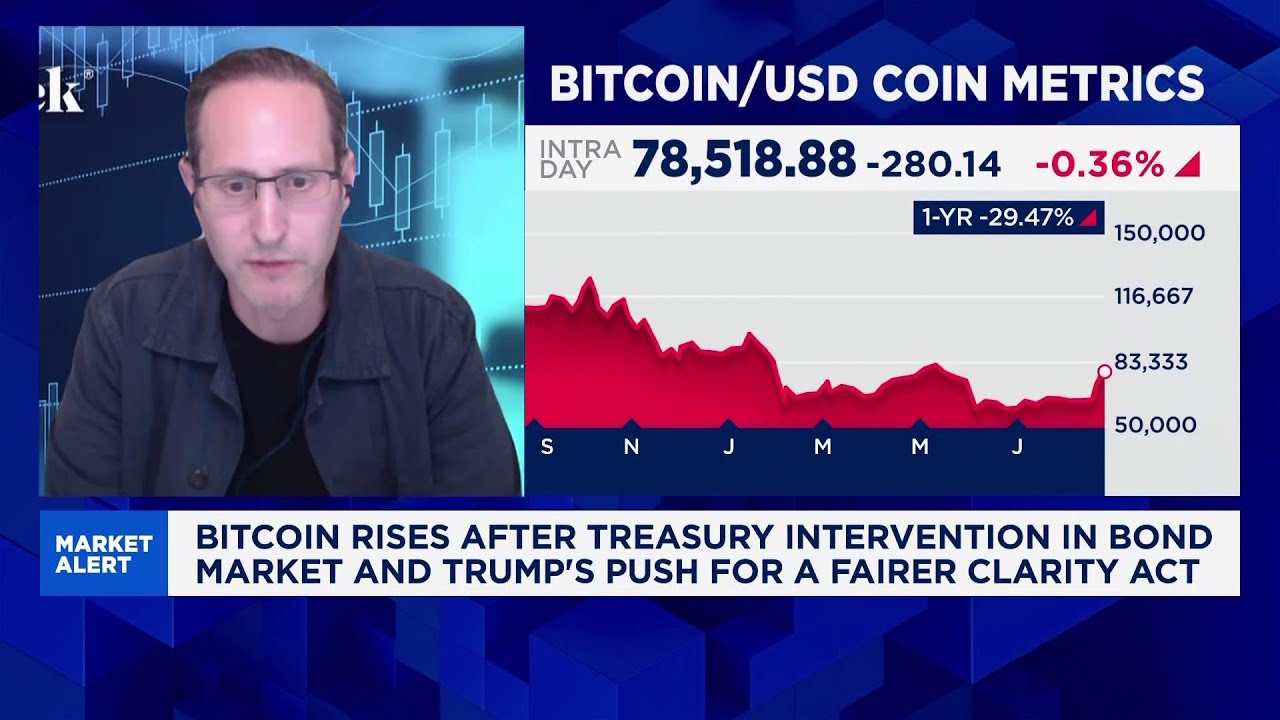
Speaking on CNBC Wednesday, the analyst also said that contrary to what many believe, ex-President Joe Biden wasn’t anti-Bitcoin. 

Republicans have repeatedly blasted Democrats as anti-crypto. Regulators under ex-president Joe Biden cracked down on digital asset companies, filing various lawsuits.  

“Biden was actually okay for Bitcoin,” Sigel said. “It’s the rest of cryptos that might have a problem [if Democrats get back in power].” 

He added: “With the ascendant socialist wing of the Democrat Party, I can tell you here in New York City that there are plenty who are reminded of why there is value in a decentralized, scarce asset that can’t be printed and spent on nonsense.”

President Trump campaigned on a ticket to help the digital asset industry and has passed a number of pro-crypto executive orders, including setting up a Bitcoin Strategic Reserve

The price of Bitcoin surged off the back of Trump’s 2024 victory and notched a new record last year. Despite some sluggish months in 2026, the leading digital asset began to rise again last week after the president urged lawmakers to get the long-awaited crypto Clarity Act over the line.

Bitcoin has jumped nearly 24% over the past seven days, touching as high as $81,160 this week before dropping again to its current price of $78,438. 

Pro-crypto lawmakers had hoped to pass the Clarity Act before Congress broke for August recess, but the vote slipped to September after Democrats balked at the latest draft. 

Some Republican senators have accused Democrats of deliberately holding the legislation back. 

The Clarity Act aims to create a legal framework classifying digital assets as securities, commodities or payment stablecoins, and determining which regulator oversees each.

Sigel’s comments echo those of Coinbase’s Chief Policy Officer, Faryar Shirzad, who said in July that crypto was “maybe the most bipartisan issue in Washington.”

Speaking about the delay in a vote on the Clarity Act, Shirzad said that while some lawmakers were holding back the long-awaited legislation, younger Democrats were for the framework. 

“A lot of the opposition is generational — so it is Democrats who oppose it — but I think younger members who understand the technology, understand that money is transforming how we should engage financially, how we need to adapt, and so it’s really a generational shift,” he said on The Hill’s Rising show. 

This post Forget the Trump Bump — Bitcoin Would Be Fine Under Democrats, Says VanEck  first appeared on Bitcoin Magazine and is written by Mathew Di Salvo.
💾

VanEck's Matthew Sigel says Democrat's victory in the midterm elections would not hurt Bitcoin, but could be a problem for other cryptocurrencies. He says Pr...

Bitcoin’s Wild Swings Go Quiet, Even as the Bears Won’t Let Go

Bitcoin Magazine

Bitcoin’s Wild Swings Go Quiet, Even as the Bears Won’t Let Go

Bitcoin is deep into its bear market, though it’s doing something it doesn’t typically do: sit still. 

That’s according to a new report by VanEck, which noted that thirty-day realized volatility has fallen to 27.2% annualized, down from 30.4% the prior month and less than half bitcoin’s long-run average of roughly 80%. 

For an asset known for double-digit daily swings, that’s an unusually still market.

The calm comes as bitcoin claws back from a June low near $58,500, holding inside a tight $62,265-to-$66,509 band through most of July. 

Bitcoin capitulation check https://t.co/r7xrKXjiNR pic.twitter.com/nuSaTDQUTz

— matthew sigel, recovering CFA (@matthew_sigel) August 18, 2026

Bitcoin remains about 9% below its 200-day moving average — a narrower gap than the 14% discount seen a month ago — and still sits roughly 49% below its all-time high.

Trading activity tells a similar story of a market on pause. Spot volume over the trailing 30 days is down 27% from the prior month, landing in just the 10th percentile of its own history, VanEck noted. 

Analysts at investment firm note the summer slowdown is deeper than in either 2024 or 2025, pushing spot volumes down toward levels last seen in the 2023 bear market.

At the same time, longtime holders have started letting go of coins, VanEck said. Bitcoin held for more than a year fell by about 356,000 BTC (-2.9%) over the month, pushing the long-term holder share of total supply below 60% for the first time in months. 

The selling was concentrated in coins held one to three years, while the oldest holders — those sitting on coins for more than a decade — barely moved, down just 0.1%.

Coming into a period historically associated with bitcoin’s four-year boom-and-bust cycle, VanEck’s research points to 8 of 12 tracked capitulation signals currently flashing, consistent with the later stages of a drawdown. 

Based on the length of prior cycles, the firm sees a bottom potentially forming anywhere between September and November of this year — though it cautions that the historical record of returns following similar signal clusters is mixed, and only shows a clear edge over a full one-year horizon.

For now, bitcoin’s story is less about direction and more about the unusual stillness of a market that, by its own history, rarely stays this quiet for long.

This post Bitcoin’s Wild Swings Go Quiet, Even as the Bears Won’t Let Go first appeared on Bitcoin Magazine and is written by Mathew Di Salvo.

Bitcoin’s Bear Cycle Looks Familiar — And That Might Be the Bullish Case

Bitcoin Magazine

Bitcoin’s Bear Cycle Looks Familiar — And That Might Be the Bullish Case

Bitcoin has fallen from a record high of roughly $126,080 in October to trade recently in the low-$60,000s — a decline of nearly 50% that has rattled sentiment. But it may just be business as usual. 

According to a Thursday report from asset manager VanEck, Bitcoin’s current slump tracks the asset’s historical four-year halving cycle, in which mining rewards are periodically cut in half, tightening new supply and often preceding a bear phase. The firm framed this downturn as a recurring feature of Bitcoin’s market structure rather than a break from it.

VanEck’s GEO framework — which tracks Global Liquidity, Ecosystem Leverage, and On-Chain Activity — currently shows two of three signals reading neutral, with ecosystem leverage in constructive territory. The firm says that combination points to early signs of a bottom forming, and that it may be time to begin scaling into positions.

Separate research from blockchain analytics firm CryptoQuant points in a similar direction. The firm’s analysts highlighted on-chain data showing that long-term Bitcoin holders — typically the market’s steadiest, most loss-tolerant cohort — are now sitting on deeper unrealized losses than the market overall, based on adjusted Net Unrealized Profit/Loss (NUPL) data. 

Analyst MorenoDV noted this week that this exact dynamic, long-term holders hurting more than average, has shown up at every prior major cycle bottom.

Still, CryptoQuant urged caution against declaring a bottom prematurely. In past cycles, that same long-term-holder metric fell to much deeper negative extremes before a true low was reached. 

Current readings haven’t gotten there yet, meaning the biggest cryptocurrency could still face one more sharp capitulation move — unless stronger institutional demand and a more resilient holder base allow this cycle to bottom out with less damage than previous ones.

Taken together, the two reports suggest a market that looks stressed by historical standards, but not yet at the extremes that have marked past cycle floors.

This post Bitcoin’s Bear Cycle Looks Familiar — And That Might Be the Bullish Case first appeared on Bitcoin Magazine and is written by Mathew Di Salvo.

❌