
Reading view

There are new articles available, click to refresh the page.

Russia’s AI Blueprint Exposes an Authoritarian Playbook

Russia, China, and Iran are all sharing the same playbook for corrupting Western elections. The United States is on track to be the next target this November.

A troveof Russian documents leaked in May outlines Moscow’s plans to use AI to warp foreign decision-making and sway elections. The Kremlin’s “Projects 2026” strategy reveals Russia’s plot to influence upcoming elections in Europe and Israel. Their tactics are similar to those used by China and Iran for years, and what emerges isn’t a Russian innovation — it’s a shared authoritarian playbook.

Projects 2026 calls for the creation of an opinion leader database to monitor the social media profiles of 10,000 influential individuals across Europe, including the 100 most prominent opposition figures in France alone. This is precisely the model Chinese state-aligned company GoLaxy piloted against the United States in 2025. The firm reportedly built constantly evolving psychological profiles of 117 members of Congress and roughly 2,000 additional American opinion leaders.

Researchers at Vanderbilt University warned that GoLaxy appeared prepared to target these individuals with messaging aligned with Beijing’s priorities. By monitoring the social media profiles of Western leaders, China and Russia are able to map the target’s values, beliefs, emotional tendencies, and vulnerabilities, making their influence operations more tailored and impactful.

In addition to using AI to build psychological profiles, the authoritarian playbook calls for countries like Russia and Iran to flood their targets with tailored generative AI content. Projects 2026’s “AI News” initiative calls for producing more than 500 short videos to target French audiences across six social media platforms. This tactic mirrors Iranian information operations during the 2025 and 2026 wars with Israel and the United States, when pro-Iranian networks pushed AI-generated and AI-assisted videos tailored to different audiences across X and TikTok, which racked up millions of views. These countries are running highly productive propaganda engines.

The most durable piece of Projects 2026 isn’t the content at all — it’s the plan to create fictitious think tanks and research institutes that can hand Russian narratives a “legitimate information source,” making them more likely to be cited by real news outlets and large language models. The leak shows this already underway: A site called the “World Center for Strategic Studies,” registered in March 2026, published unsigned analysis aimed at Western think tank audiences, with versions planned in German, French, and Spanish. The fake think tank doesn’t need to fool a discerning reader. It needs to get quoted, indexed permanently, and cited by the next AI model that goes looking for sources on the topic.

Iran ran a cruder version of this same play: Iranian state-sponsored cyber espionage groups have repeatedly impersonated real institutions — such as the Royal United Services Institute, the Aspen Institute, and the Washington Institute — to steal credentials and plant material under a trusted name. Projects 2026 proposes something more sustainable: Don’t just hijack existing credibility but manufacture new institutions and let them accrue it over time.

Projects 2026 also proposes building a real Israel-based research institute staffed by Israeli citizens with genuine academic credentials. This approach is reminiscent of the 2014 “Iran Expert Initiative,” where Iranian Foreign Ministry officials attempted to court and influence Western think tank researchers to promote their perspectives and give them legitimacy. Emails leaked in 2023 showed that Iranian diplomats had worked with Western experts across 10 think tanks to aggressively tout the merits of the 2015 nuclear deal between Tehran and major world powers, formally known as the Joint Comprehensive Plan of Action.

In the age of AI, influencing think tanks is narrative laundering at its most dangerous. Once a fabricated or state-aligned source gets cited by a legitimate outlet or indexed by a search engine, it can become part of the training and retrieval corpus that AI systems draw upon.

While the plays are reusable, the targets are new, and for Russia, the target is European elections.

The leaked documents outline a plan to swing Armenia’s parliamentary vote through a Russian-diaspora outlet and a “Mitteleuropa” initiative aimed at reshaping alignments in Hungary and Slovakia. This is where the surveillance, flooding, and laundering modules converge. To counter it, policy solutions must be swift and targeted.

First, allied governments should require disclosure of foreign funding and foreign state links for any media outlet, think tank, or “research institute” operating ahead of an election in an at-risk state — closing exactly the gap that lets a “World Center for Strategic Studies” pass as domestic and independent. Research by the Foundation for Defense of Democracies (FDD) into Qatari money in American higher education shows what a real transparency regimen requires: disclosures reaching individual researchers, not just institutions; low reporting thresholds with real penalties; registration in the style of the Foreign Agents Registration Act for state-directed “institutes” masquerading as independent organizations; and provisions against the kind of obstruction Qatar used to block Texas A&M’s funding records in court. Russia is proposing to build the same laundering vehicle in Europe that Gulf money has already normalized in American academia. The fix already exists — it just needs to be strengthened.

Second, platforms should both demonetize and remove unlabeled AI-generated political content during designated pre-election windows in at-risk states. X’s own emergency policy during the Iran war, which suspended digital influencers’ ability to monetize their content for 90 days on undisclosed AI-generated war footage, shows platforms already have the infrastructure to act fast when the stakes are high enough. But demonetization alone left the content up and circulating; independent researchers found AI-generated war footage kept flooding feeds regardless of the policy. Elections warrant a harder line: If posts feature undisclosed AI-generated content during an active election period, they shouldn’t just lose ad revenue. They should come down.

Third, Washington should prepare for future attempts at election influence by boosting the protection mechanisms it already has in place. Currently, 31 states have passed election deepfake laws, but they are under legal scrutiny because they touch on domestic speech. Federal action targeting foreign actors rests on firm ground. The 2002 McCain-Feingold Act prevents electioneering communications by foreign actors, but this only applies to broadcast, cable, and satellite communications. It must be updated to explicitly include paid internet and digital advertisements. It should also close the gap on AI-generated political content and require labeling so that foreign deepfakes can’t hide behind current ambiguities.

Projects 2026 is not evidence that Russia has cracked something new. It’s evidence that Moscow, Beijing, and Tehran are now running the same AI playbook against the same democracies, taking turns testing which module works best. The future outlined in Projects 2026 may not be here yet, but objects in the mirror are closer than they appear.

Leah Siskind is director of impact and an AI research fellow for the Center on Cyber and Technology Innovation (CCTI) at the Foundation for Defense of Democracies (FDD). For more analysis from Leah and FDD, please subscribe HERE. Follow FDD on X @FDD and @FDD_CCTI. FDD is a Washington, DC-based, nonpartisan research institute focusing on national security and foreign policy.

The Cipher Brief is committed to publishing a range of perspectives on national security issues submitted by deeply experienced national security professionals. Opinions expressed are those of the author and do not represent the views or opinions of The Cipher Brief.

Have a perspective to share based on your experience in the national security field? Send it to Editor@thecipherbrief.com for publication consideration.

Read more expert-driven national security insights, perspective and analysis in The Cipher Brief
The Gulf Bought Its Air Defense From Kyiv. We Sold Them The Radar.

Chief Warrant Officer 5 (Ret.) Joey Gagnard concluded nearly three decades of service in the U.S. military, retiring from the special operations community in early 2025. He serves as CEO of Atlas Special Projects and Director of Field Operations at Swarmer.

Disclosure: Atlas Special Projects leads investor delegations to Ukraine and maintains working relationships with Ukrainian drone manufacturers, some of which would benefit from the arrangements argued for below. The argument is my own.

Welcome to The Iron Triangle, the Cipher Brief column serving Procurement Officers tasked with buying the future, Investors funding the next generation of defense technology, and the Policy Wonks analyzing its impact on the global order.

Riyadh, spring 2026. Between February 28 and the April 8 ceasefire, Iran put roughly 6,400 missiles and drones into the Gulf states and Jordan, more than eighty percent of everything it fired at anyone. Six countries fought six separate wars against one coordinated adversary, with no shared early warning and interceptor stockpiles that ran thin in days. An Iranian drone struck a tactical operations center in Kuwait and killed six Americans.

Three suppliers answered the same incoming fire. Here is the ledger.

The United States answered with paper. Over $36.6 billion in Foreign Military Sales notifications to the Middle East in a single quarter, headlined by 730 PAC-3 MSE missiles to Saudi Arabia for $9 billion. That is a little over $12 million per round, aimed at a Shahed that costs about as much as a used pickup, on a delivery schedule measured in years.

Ukraine answered with people. Washington asked Kyiv on a Thursday to send interceptor teams to protect American bases in Jordan, and Kyiv said yes the same day. Within weeks about two hundred Ukrainian advisors were on the ground in Saudi Arabia, Qatar, and the UAE with interceptors that Ukraine sells for between $800 and $3,000 and builds at two thousand a day. Days after the Jordan request, the President went on Fox News Radio and said, “We don’t need their help in drone defense. We know more about drones than anybody.”

Turkey answered with a delivery date. Kuwait signed a government-to-government protocol with Aselsan, Havelsan, and Baykar for Hisar and Korkut air defense, and Riyadh, Doha, and Abu Dhabi opened their own talks with Ankara, because Turkey could put hardware on a ramp this decade and the American backlog for Patriot and THAAD runs to several years.

Then, on March 27, Saudi Arabia signed a ten-year defense partnership with Ukraine built around counter-drone technology and co-production facilities on Saudi soil. Qatar signed two days later. The UAS followed in April. Ten years each, minimum.

So the outcome of America’s largest arms-sales quarter in memory is that our closest Gulf partners now buy their sensors from us and their answer to the actual threat from Kyiv and Ankara. We sold them the radar. Somebody else sold them the thing that shoots.

Expensive Confetti

The arithmetic is not subtle, and the Gulf did it faster than we did. Iran can turn out hundreds of Shaheds a week. The U.S. builds roughly six hundred Patriot interceptors a year, for the whole world, with a waiting list. A Patriot battery is a good answer to a question Iran stopped asking in about 2019.

The Ukrainian answer is a different species. The Wild Hornets Sting costs about $2,500, flies at 195 miles an hour, fits in a duffel bag, and has killed nearly 4,000 Russian drones since may 2025. The SkyFall P1-SUN costs about $1,000, flies at 280 miles per hour, and took down 1,500 Shaheds in its first four months. One Ukrainian firm sold a thousand of them for $3.5 million, total, which is less than a third of one PAC-3 round. More than twenty Ukrainian companies now build interceptors and the Octopus alone is licensed to fifteen of them.

None of this makes the Patriot obsolete. Interceptor drones do not touch ballistic missiles ,and the 6,400 included plenty. But the Gulf learned in six weeks what Ukraine learned in three years: you defend against a thousand cheap things with two thousand cheaper things, and you save the twelve-million-dollar round for what it was built to hit.

Built in Munich

Here is the detail that turns the Gulf story into an Iron Triangle story. The Pentagon has bought exactly one interceptor with a Ukrainian combat record. In May, Joint Interagency Task Force 401 gave Perennial Autonomy, Eric Schmidt’s company, a three-year, $500 million ceiling for the Merops interceptor, a fifteen-thousand-dollar fixed-wing that has downed more than 4,000 Russian drones over Ukraine. It is the right buy. It is also built in Germany, through a partnership with Munich’s Twentyfour Industries.

The American flag interceptor, proven in Ukraine, bought by the Pentagon for the homeland, is made in Bavaria. This is not a scandal. It is a symptom. The design talent is in Kyiv, the production tooling is in Europe, and the one thing that has to be in the United States, the contract, is the only part we have managed to put here.

Meanwhile the July agreement that lets Ukraine sell to the Pentagon for the first time since 2022 approves six Ukrainian companies to ship about one hundred drones for testing under Drone DOminance, and contemplates, someday, Ukrainian production on American soil. One hundred drones. Kyiv ships that many to Riyadh before the coffee is brewed.

What an American Flag Would Actually Mean

Not an American airframe. That race is over; twenty Ukrainian firms iterate faster than any American line will for years, and pretending otherwise is how we ended up with a hundred test articles and a factory in Munich. The American contribution is the three things nobody else at the table can bring.

The first is the kill chain. An interceptor without a sensor network is expensive confetti with a propeller. Ukraine’s cheap drones work because they fly under a national acoustic and radar mesh that took three years to build. The Gulf has no such thing; the after-action reports say so. Turkey cannot integrate Korkut with Patriot and THAAD. The United States owns IBCS, the LTAMDS radars Kuwait just bought eight of for $8 billion, and the $4.5 billion discrimination radar the UAE is buying for THAAD. The offer writes itself: your thousand-dollar Ukrainian interceptor gets cued by our eight-billion-dollar sensor layer. That is the flag.

The second is the paper. Licensed co-production under FMS is a forty-year-old tool. Abrams in Egypt. F-16 in Turkey. Patriot itself in Japan. The structure is a trilateral: Ukrainian design and Ukrainian intellectual property, Gulf capital and final assembly to satisfy Vision 2030 localization, American components, integration, and the FMS wrapper that turns a purchase into a security relationship. The UK has already proven the licensing half, building Octopus interceptors in Britain at a thousand a month and sending them back to Ukraine.

The third is reciprocity. Kyiv’s own ask was one sentence: “We can help you fight against Shaheds. Help us fight against ballistic missiles.” Gulf money buys the interceptor line. A slice of the PAC-3 allocation that the Gulf money is already funding flows to Ukraine. Stings for Patriots. Three countries get what they cannot build, and the United States is the reason it happens.

What It Has Not Happened

Every obstacle is one I have written about before, which is the depressing part.

Start with ITAR. The moment a Ukrainian design is produced by an American licensee with American controlled content, it becomes ITAR-controlled, its re-export to Riyadh needs a DDTC license, and Kyiv loses the freedom to sell the same design to Oslo. Ukrainian founders already decline to domicile intellectual property here for exactly this reason. The fix is the one I argued for in July: a trusted-trader tier, or an AUKUS-style exemption scoped to the trilateral, with the IP staying in Kyiv and the United States as licensee rather than owner.

Then the parts bin. A thousand-dollar P1-SUN is a thousand-dollar P1-SUN because of Chinese motors, cells, and cameras. Under an American flag it must clear NDAA Section 848 and, if the Department of War is the buyer of record, the Blue UAS list. The cost of making the interceptor American is not the airframe. It is the audit and the re-sourcing, and nobody in the building has priced how much of the thousand dollars survives that. Turkey does not have this problem. That is the entire reason Turkey is winning the Gulf.

Then tempo. Ukraine signed three Gulf deals in about three weeks. FMS notification to first delivery is measured in Congressional recesses. Either the trilateral runs on Direct Commercial Sales with expedited licensing, or it is a press release.

And then the politics, which I will state once and then be finished. The Commander in Chief said we do not need their help days after his own government asked for it, and the Pentagon spent the spring resisting broader cooperation. The Gulf hosts Russian diplomacy. Kyiv keeps state control over exports, with its own forces first in line. None of these are fatal. All of them are real.

For the Procurement Officer. Your requirement is not an interceptor. It is a kill chain that accepts an interceptor you did not design. Write the sensor and command-and-control interface as the requirement and let the airframe compete, or you will spend the next POM cycle buying an American drone that arrives in 2029.

The Investment Thesis. The value in this market is not in the airframe and it never was. It is in the integration layer, the domestic component that lets a Ukrainian design survive Section 848. And the licensing paper. The company that can take a thousand-dollar Kyiv design and hand the Pentagon an American-compliant unit at two thousand, on a line this side of the Atlantic, is worth more than the company that designs the next one.

The Policy Wonk’s Warning. The security guarantee is being unbundled from the hardware. For seventy years those were the same product. Our partners are learning they can buy the guarantee from us and the shooting from someone else, and the day they discover they can buy the sensors elsewhere too, the guarantee is just a speech.

My Take. I have been in the room in Kyiv when founders explain, patiently, why they will not bring their IP to America. It is not ingratitude. It is that our export regime treats an ally’s design as a hostage the moment it touches our supply chain. We asked those same founders for help defending our bases in Jordan, and they sent people the same day, and then we told the world we did not need them. I have watched a lot of good capability lose to bad processes. I have not often watched it lose to bad manners.

The Risk. A co-production line in the Gulf is a leakage path to whoever the Gulf talks to next, and that list includes Beijing and Moscow, which is precisely why the British license sends its output home to Ukraine rather than into a third market. Iran is already fielding jet-powered Shaheds that outrun a Sting. And anyone who reads this as an argument to cancel the Patriot order has misread it; the 730 rounds to Riyadh are for the thing the drones cannot touch. The argument is not fewer Patriots. It is that a thousand-dollar problem should not be the one part of Gulf air defense that American has nothing to do with.

We spent the spring selling our partners the most sophisticated radar on earth. Kyiv and Ankara sold them what the radar is for. When the next 6.400 comes over the horizon and the Saudi interceptor that meets them has a Ukrainian design, Turkish neighbors, Chinese motors, and an American radar track, whose air defense is that?

The Cipher Brief is committed to publishing a range of perspectives on national security issues submitted by deeply experienced national security professionals. Opinions expressed are those of the author and do not represent the views or opinions of The Cipher Brief.

Have a perspective to share based on your experience in the national security field? Send it to Editor@thecipherbrief.com for publication consideration.

Read more expert-driven national security insights, perspective and analysis in The Cipher Brief
A Former CIA Station Chief on Kyiv Under Drone Siege


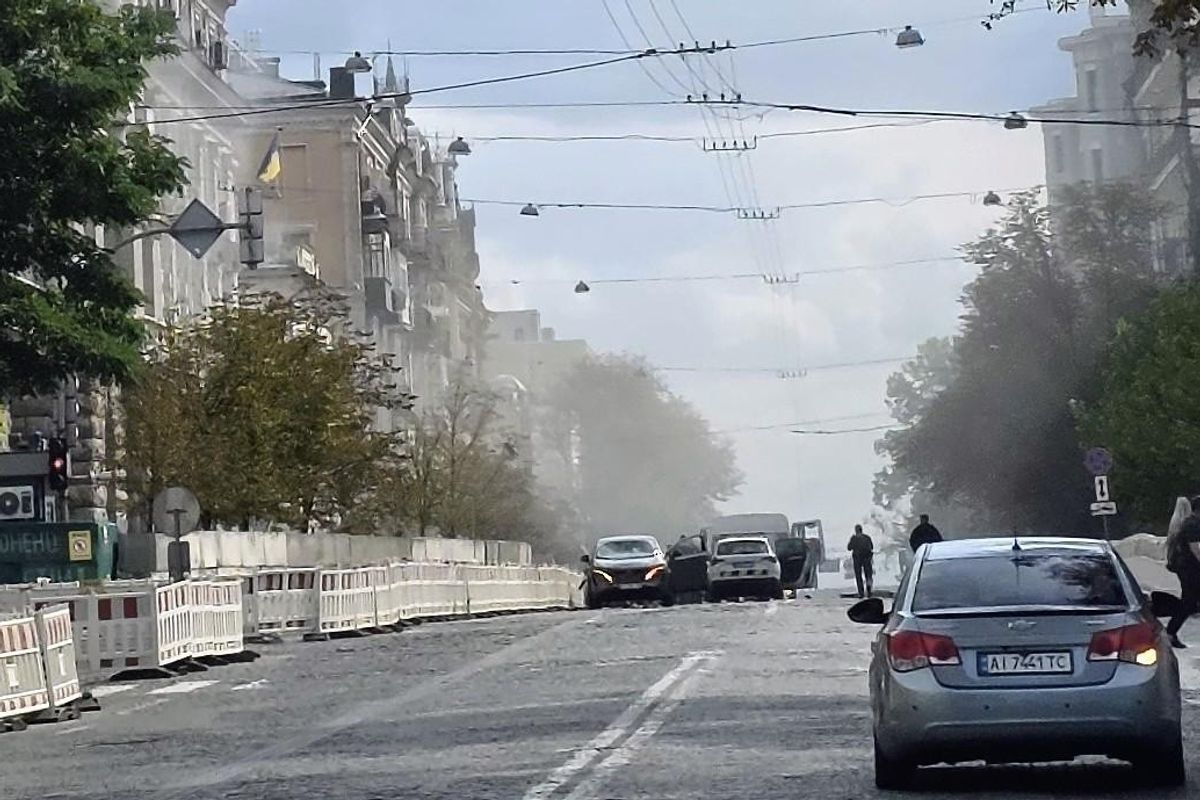
Reporting live from Kyiv, Cipher Brief expert and former senior CIA officer Ralph Goff walks CEO and Publisher Suzanne Kelly through a drone strike that hit the SBU headquarters in the heart of the city today.

Ukraine’s SBU — the Security Service of Ukraine (Sluzhba bezpeky Ukrainy) — is best described as Ukraine’s principal domestic security and counterintelligence service, although its wartime role has become substantially broader and more operational.

The closest U.S. analogy would be a combination of responsibilities that are divided between the FBI, the CIA and specialized military/intelligence capabilities, here in the U.S. The SBU is responsible for counterintelligence, counterespionage, counterterrorism, protecting state secrets and investigating threats to Ukrainian national security. Since Russia’s full-scale invasion, it has also become a significant wartime intelligence and covert-action organization.

Kelly talked with Goff about the impact of a Russian drone attack on the organization's headquarters and the surprising resilience of Kyiv residents in the strike's aftermath.

Kelly: You've been on the ground in Kyiv for a couple of days, but there was quite an incident this morning amid near-nonstop air raids that have lasted for more than a week now. Tell us about where you were and what you heard this morning near SBU Headquarters.

Goff: Today in Kyiv we had some air raid alerts overnight, then some in the morning, and a couple more during the day. But today was followed up with a couple of drone strikes right in the middle of Kyiv. Early this afternoon, one struck the headquarters of the Internal Security Service, the SBU, which seems like a very deliberate, targeted attack by the Russians. Unfortunately, there were some casualties, I don't think anyone was killed, but there were wounded, and some damage to the building. It was a very clear sign from the Russians that their jet-powered Geran drones are not only hard to intercept, but very accurate.

Kelly: The Cipher Brief has been in that area of Kyiv with you several times in the past, Ralph. That's essentially the inner circle, where the government operates. We've been wondering how long it would be before some of these significant targets got hit, given Ukraine's shortage of anti-missile systems. What's it been like on the ground since you arrived three or four days ago? Is there a heightened sense of anxiety?

Goff: There is, among parts of the population, but I'd say for most people it's more a heightened sense of annoyance. Here we had a drone strike right in the heart of Kyiv, at the SBU building, and most people's biggest concern afterward was how it messed up traffic downtown, it's a major artery, so there were traffic jams all around. History is replete with examples where so-called strategic bombing of civilian targets or major cities to break the will of an enemy has never worked, and I don't see that working here either.

I do think it's a clear sign that Ukraine has to find a way to close the gap and counter these new high-speed, high-performance drones. We hear reports of an 85 to 90 percent interception rate on conventional, piston-engine drones, the regular Shahed-type drones. But with the jet-powered drones, we've heard the interception rate drops to much lower figures, which I won't get into because I don't want to give the enemy that kind of data. And when it comes to missiles, the press has already reported that the Ukrainians are so low on counter-missile capabilities that they rarely intercept any ballistic missiles launched into Ukraine.

Kelly: When you're watching this war from afar, it's hard to get a clear sense of how much time is left before Kyiv, Lviv, and other major cities are in real trouble. Kyiv has always had the strongest air defenses. Is Kyiv running out of time?

Goff: I don't think they're running out of time so much as, I think they will close the gap, they will solve the technical issues and improve their defenses, but it will take time, and they'll suffer in the meantime. I'll say it's going to be a bad winter; I'm fairly certain of that. But the Russians didn't break the Ukrainian spirit last winter, and they won't break it this year either.

On the other hand, there's an interesting dichotomy of feelings and morale. At the front, I was talking to a friend who's been deeply involved in providing intelligence assistance to frontline units, a non-governmental source, and he said that for the first time since he's been here, every unit he visited had high morale. We're looking at a battlefield now where the casualty ratio is probably eight to one in favor of the Ukrainians. Eight to one, that's an astounding number. So you have this high morale at the front, where soldiers are saying, “we think we can pull this off.” And then in the cities, you have people increasingly concerned about the welfare of their families and children because of these blatantly terroristic attacks on civilian targets. There's a real dichotomy emerging in the middle of this war.

Kelly: On that eight-to-one figure, is that because so much of the fighting on the front lines now is essentially robot-on-robot, drone-on-drone combat? Or is something else driving that number?

Goff: That's a large part of it, but at the end of the day you still need soldiers fighting soldiers. What it comes down to is who has better mastery of the battlefield, and the Ukrainians have information dominance. On top of that, they're the defenders, they can dig in and weather the storm, whereas the Russians are still relying on high-cost, high-attrition tactics, sending soldiers out literally in ones and twos to try to infiltrate Ukrainian positions. But they're very vulnerable, because the battlefield has become so saturated with drone coverage and surveillance, what we call ISR, intelligence, surveillance and reconnaissance. The Ukrainians have really mastered that, and it's given them a huge advantage. That could change, the Russians aren't sitting back, they're innovating too, but for now the Ukrainians have an edge, and they're going to keep innovating to maintain it.

Kelly: There have been a lot of headlines about domestic issues that President Zelensky is dealing with this week in Kyiv, even as he wages this war, including the departure of Minister Fedorov, who's been pushing forward on defense technology and made some announcements this week here in the U.S. about that. What's different now in terms of the strength, stability, and unity of the government? We know the unity of the people is hard to break, but how are you looking at this through the government lens?

Goff: The big difference now is that the innovation and technical advances made by the Ukrainians don't depend on one person. This isn't some technological breakthrough that depends on one minister or one ministry, it's government-wide, across the various ministries and different commands. It's a multi-echelon effort where technological innovation isn't just pushed down to the lowest levels, it's driven by the lowest levels. It runs from top to bottom and bottom to top. So whether you change a minister or change a commander, like the change from Syrskyi to Drapatyi, that doesn't change. The innovation has reached all levels, and it's here to stay.

Kelly: I'm jealous The Cipher Brief isn't there with you right now, we usually are, and we like being there because you're attending a number of interesting and enlightening meetings while in Kyiv. Has anything surprised you this time, or really stuck with you, from this round of meetings?

Goff: Nothing ever really surprises me here. I think one of the reasons I come is for my own benefit, I always leave more inspired than when I arrived. A good example: we had this horrendous drone strike in the middle of the city, and within minutes people were just going about their daily lives. The emergency response was there, I watched ambulances flowing to the scene, first responders arriving. I actually marveled at that, because my initial instinct was to stay away, given the Russian penchant for the “double tap”, hit the target, wait a few minutes until first responders arrive, then hit it again. Even knowing that's a Russian tactic, the first responders were there within minutes.

As I continued on to my next meeting, people were going about their lives, doing their shopping, going to work, going to the grocery store. They weren't deterred by the event. And while that doesn't surprise me, it does inspire me.

Kelly: What about the significance of the SBU? A lot of people may not understand exactly what it does, it's similar to our own intelligence gathering but with other functions too, almost a combination of the CIA and FBI if we're relating it to the U.S. Tell us about some of its operations and why it's an important organization in Ukraine.

Goff: It's an important organization because, yes, they have the primary mandate for internal security in Ukraine, but they're also involved in long-range strikes into Russia. If you see press reporting on some sort of assassination attempt, like the Russian air force general who was shot the other day, that's pretty much the SBU, showing they have a long reach into Russia. So they're playing on multiple levels, and they're an important player. This is a sign that Russia knows who they are and where they are.

But taking out the SBU headquarters is probably inconvenient for some time, and there will be losses. The Ukrainians have decentralized much the same way they've decentralized the structure of their military intelligence community, they've decentralized command and control. So if you take out the SBU headquarters, I'm sure within minutes there's a backup headquarters and contingency plans in place. The Ukrainians are well aware of Russia's capability to strike their headquarters.

Kelly: It's been a little while since you were working as a CIA station chief, you held six different postings in that role. If you were filing something back to the United States today, what's the most important thing you'd want people to understand about what you're seeing there?

Goff: That the war is entering a different phase. And if the war is entering a different phase, it means the Ukrainians are going to have to react differently, which means their allies are going to have to react differently, which means those of us in the intelligence community are also going to have to change our game and adjust. We're going to have to be prepared to support the Ukrainian effort to defend themselves, and if that means an active defense against the Russians, that would be my recommendation.


The Cipher Brief is committed to publishing a range of perspectives on national security issues submitted by deeply experienced national security professionals. Opinions expressed are those of the author and do not represent the views or opinions of The Cipher Brief.

Have a perspective to share based on your experience in the national security field? Send it to Editor@thecipherbrief.com for publication consideration.

Read more expert-driven national security insights, perspective and analysis in The Cipher Brief
Ukraine Is No Longer the Country Russia Thought It Was

Understanding a country's strategic culture helps assess how it will react to crisis, negotiation, and national security events. Strategic culture generally is static and when it evolves, it happens slowly, as history, events, and culture accumulate over generations. In 2021, the prevailing view of Ukraine’s strategic culture was that it was a country focused on securing its national identity and sovereignty apart from Russia and it was a country prone to rely on negotiations and diplomacy. The balance between these two themes was about even with Ukraine leaning toward diplomacy and multilaterism over sovereignty when pushed by the international community. Most students of strategic culture did not assess that Ukraine would react to a Russian invasion with the military force that it has. Now students of strategic culture see the theme of independence and sovereignty as the key aspect of Ukraine’s strategic culture with a growing theme of being modern day military experts. The rapid transformation of the assessment of Ukrainian strategic culture is astounding. Either strategic culture academics got Ukraine wrong, or the Russian invasion changed Ukraine cataclysmically. I suspect it is a bit of both.

Strategic Culture

Strategic culture refers to a nation's shared beliefs, assumptions, and habitual behaviors regarding the use of force and the pursuit of security objectives. Jack L. Snyder introduced the term in 1977, arguing that a state's behavior cannot be explained by material capabilities or geography alone, but by those factors combined with history, cultural norms, and shared societal beliefs. Strategic culture is generally resistant to change. While it is often invoked to explain Russia's decision to invade Ukraine — its relevance to Ukraine's response has been comparatively overlooked.

Ukraine's Early Strategic Culture

Ukraine's strategic culture has been shaped by centuries of foreign domination and by its Soviet legacy. Early studies of strategic culture in independent Ukraine identified securing a national identity separate from Russia as the paramount objective. Those same early studies concluded that Ukraine favored diplomatic engagement, multilateral cooperation, and alliance-building over military action — pointing to Ukraine's surrender of its nuclear arsenal after the Soviet collapse and its acquiescence to Russia's 2014 seizure of Crimea as evidence. But this reading likely mistook constraint for preference. Ukraine was a newly independent state with a fledgling security establishment and military; it lacked the structure and capacity to stand up to either the United States or Russia, both of which pressed it toward disarmament and restraint. And, while significant events, neither of those two events were an immediate threat to Ukrainian independence. What looked like a cultural preference for negotiation may have been the best available option available for a young, under-resourced state. This misreading of Ukrainian resolve and strategic culture set Russia up for a catastrophic miscalculation that has cost over a million lives and will take decades for both countries to recover from.

The first principle of Ukraine’s strategic culture — safeguarding a distinct national identity — endures today. But the second focus on diplomacy and multinationalism-- has changed. If successful, the Russian invasion would have meant that this first principle would have to be abrogated and Ukrainian identity would once again have been subsumed by Moscow. Ukraine could not tolerate that: fighting for independence and Ukrainian identity outweighs alliance-building and negotiations as the organizing goal of its strategic culture. Today, Kyiv increasingly foot stomps aspects of Ukrainian identity that were suppressed under Soviet rule, and its foreign policy has grown more assertive, favoring offensive posture over purely defensive behavior. What has emerged is a culture that balances patience for international negotiation with adaptability and a hardened determination not to be conquered again, at any cost.

Two Defining Characteristics

Two characteristics of Ukrainian strategic culture stand out as key to explaining Ukrainian resistance to Russia:

Ukraine's growing emphasis on its Cossack heritage appears designed to construct a new state myth and reshape national self-perception from one of victimhood to one of warrior. Invoking the Cossacks — a self-governing, democratic, and militarily capable community prone to raids and revolt — underscores both Ukraine's independence and its capacity for military action. Domestically, images of the great hetmans now appear more prominently on currency and in textbooks.

Ukrainian strategic culture rests on the primacy of sovereignty, independence, and territorial integrity — values Russia has threatened or dismissed both historically and in the present. Language has become a central tool of this identity claim: early post-independence legislation established the primacy of Ukrainian language to rebuild a cohesive national identity, and that legislative push accelerated around the outbreak of armed conflict in 2014, alongside a marked cooling toward proposals to formalize Russian as a second official language. For Ukrainians, language is intrinsic to national identity. I recall being tutored in Ukrainian by an émigré in the late 1980s; he was a tough teacher, and he would grow angry whenever I mistakenly lapsed into Russian even though it was our common language and at times the only language in which we could communicate.

Ukrainian Strategic Culture Today

Ukraine's strategic culture now manifests as an asymmetrical, creative approach to security — one that offsets comparatively limited military resources with international partnerships, novel approaches to warfare, and disciplined strategic messaging. It emphasizes flexibility, resilience, gray-zone tactics, and pragmatic decision-making. Increasingly, we are seeing Ukraine promoting its tactics and military resources internationally.

Ukraine's strategic norms are still evolving, but the trajectory since independence is clear: independence and ingenuity have become the paramount, defining components of Ukrainian strategic culture, expressed through firm state priorities. A lasting orientation toward the West, paired with renewed emphasis on Slavic and Cossack roots, matters too, if somewhat less centrally. Above all, a study of modern day Ukrainian strategic culture tells us that Ukraine will do what it must to preserve its hard-won independence — while still maintaining its position as a respected leader within the global community.

Recently, the new Ukrainian Minister of Defense, Yevhenii Khmara, said

”Ukraine has always seen tragedy. Its history is a long inventory of it. What separates this generation from all the ones before is that it has a real chance to defeat the enemy.”

This tells you a lot about the mindset of senior Ukrainian decision makers and how they are messaging their people and the international community.

Why it Matters

Understanding Ukrainian strategic culture helps us to determine what approach to take to help end the war in Ukraine. Paramount for the country is ensuring Ukraine’s sovereignty and independence. For Ukraine, that is nonnegotiable. Any negotiating concepts that leave room for other nations to impose themselves on Ukrainian decision making is a nonstarter for Kyiv. Recognizing Ukraine’s sacrifices not only in the last four years but the tragic historical road they have been on with pre Soviet Russia and the Soviets will go far in any negotiations. Finally, acknowledging and highlighting how well Ukraine has out played Russia would also go a long way. Next, I will present Russian strategic culture and then discuss where the two clash.

The Cipher Brief is committed to publishing a range of perspectives on national security issues submitted by deeply experienced national security professionals. Opinions expressed are those of the author and do not represent the views or opinions of The Cipher Brief.

Have a perspective to share based on your experience in the national security field? Send it to Editor@thecipherbrief.com for publication consideration.

Read more expert-driven national security insights, perspective and analysis in The Cipher Brief
Fighter jets help destroy Russian drone boat near European offshore gas platform

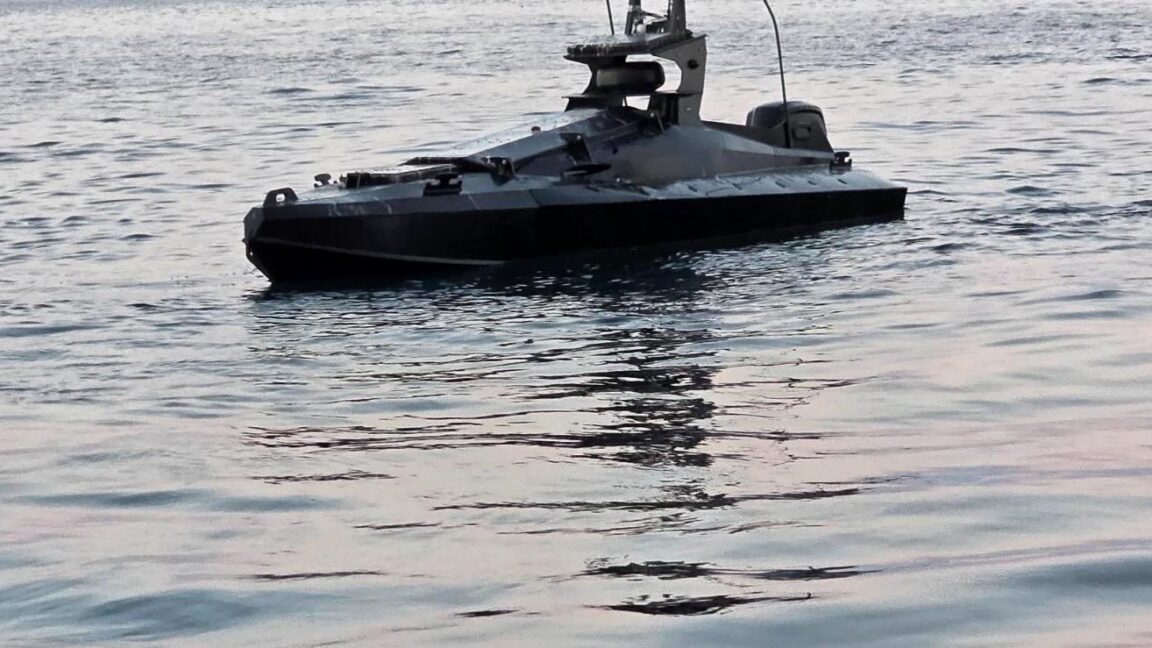
This week, Romania accused Russia of sending a drone boat loaded with explosives to a vital European natural gas platform in the Black Sea. A Romanian F-16 fighter jet used its cannons to disable the surface drone so that explosive ordnance experts could blow it up safely.

On August 20, the Romanian Coast Guard first spotted the maritime drone a few hundred meters away from the Neptun Deep project’s main drilling platform, where several hundred workers were busy with the platform’s ongoing installation, Defense Minister Radu Miruță said in a Facebook post. The offshore gas project would make Romania the largest gas producer in the European Union once it starts full production in 2027.

To protect the lives of the workers and the offshore gas infrastructure, the Romanian military scrambled two F-16 fighter jets to stop the drone with cannon fire, Miruță said. Army specialists later carried out a controlled detonation, as seen in a Facebook video shared by the defense minister.

Read full article

Comments

© Romanian Ministry of Defense

The West Must Tell Russians the Truth About the War

Tell the Russian people about the carnage in Russia’s war with Ukraine. Tell them about the Russian lives lost and the crushing financial cost of a five-year invasion of a sovereign nation. Former President Ronald Reagan ensured that he got information into the former Soviet Union to truthfully speak to the people about their government’s lies about the cost – in lives and money – of their war in Afghanistan. After ten years, in 1989, the Soviets withdrew from Afghanistan, the final chapter in the Cold War.

Russia’s Vladimi Putin seemingly doesn’t care about the Russian lives lost or the crushing financial cost of a five-year invasion of Ukraine. Over 1.4 million Russian casualties (killed, wounded, missing, or captured), and over 500,000 killed at a cost of over $500 billion. Are the people in Russia aware of the magnitude of this tragedy? Are they aware of Mr. Putin’s view that Ukraine has no right to exist and he is justified in invading a sovereign Ukraine that gave up its nuclear weapons for security assurances?

Indeed, Ukraine’s casualties are over 600,000, with close to 140,000 killed, including 16,000 civilians. The cost so far is close to $600 billion, with a price tag of $U.S. 1 trillion to reconstruct a devastated Ukraine. This is the price Ukraine is paying because of the Russian invasion and Mr. Putin’s goal of attempting to recreate the Russian empire.

President Donald Trump has reached out to Mr. Putin numerous times to secure a cease fire and an eventual peace treaty. To date, those efforts have been unsuccessful, but Mr. Trump persists, fortunately. But until we secure a cease fire, Ukraine needs the support of the U.S. and the European Union, for the weapons and missile defense systems needed for its survival.

Fortunately, the recent NATO Summit of 32 allied countries reaffirmed their strong support to Ukraine, pledging 70 billion Euros to Ukraine and giving Ukraine a green light to produce PATRIOT missile interceptors.

But the U.S. – and our NATO allies -- can do more to get the truth to the Russian people. The truth about the hundreds of thousands of Russians killed in Ukraine and the bereaved families that are paying the ultimate price.

Although the United States Information Agency closed in October 1999, it transferred its important mission to the Department of State. And hopefully our colleagues at State are working hard to ensure that we are getting the message to the Russian people that the war must end; that they and the people in Ukraine have suffered enough. That Mr. Putin and his cronies need to explain why so many men and women died, in a war Mr. Putin created, as he enriches himself. A war that has made the Russian Federation a pariah state.

This should be a whole government mission: to disseminate primarily in Russia the truth about the hundreds of thousands of Russians (and Ukrainians) killed and maimed in a war created by an arrogant and inept Putin.

Although the audience for this important message is the Russian people, China should also be mindful of the tragedy of the war in Ukraine. Indeed, China is aligned with a Russian pariah state, heavily sanctioned by the international community. Is this the image China wants to share with the world?

The NATO Summit was clear in its support of Ukraine, the victim of a cruel and brutal Russian invasion. It’s time for the Russian government to listen to the Russian people and end this bloody war.

The author is the former associate director of national intelligence. All statement of fact, opinion or analysis expressed are those of the author and do not reflect the official positions or views of the U.S. government. Nothing in the contents should be construed as asserting or implying U.S. government authentication of information or endorsement of the author’s views.

The Cipher Brief is committed to publishing a range of perspectives on national security issues submitted by deeply experienced national security professionals. Opinions expressed are those of the author and do not represent the views or opinions of The Cipher Brief.

Have a perspective to share based on your experience in the national security field? Send it to Editor@thecipherbrief.com for publication consideration.

Read more expert-driven national security insights, perspective and analysis in The Cipher Brief

Putin’s Running Out of Scare Tactics and Options

Russian President Vladimir Putin can no longer conceal the cost of his Ukraine war from the Russian public. There are fuel shortages throughout the Russian Federation. Videos show hundreds of automobiles lining up to get a few liters of gasoline at gas stations around Moscow. Gasoline sales to civilian vehicles in occupied Crimea have been suspended as the Ukrainian blockade of the peninsula takes effect. Russia continues to make painfully slow progress in its efforts to capture territory in Ukraine and at a staggering cost in casualties.

“…sound out idols... by pos[ing] questions here with a hammer... scrutiny will reveal that they are actually hollow and meaningless—not the high, noble standards of conduct that their proponents claim them to be." Friedrich Nietzsche

Twilight of the Idols

Ukrainian Defense Minister Mykhailo Fedorov recently says that Ukraine has successfully regained the strategic initiative on the battlefield and Kyiv’s use of long-range weapons to hit targets deep inside of Russia is aiming to force Moscow to end the war through asymmetric attrition. Ukraine has recently intensified precision strikes 20-300 kms behind Russian lines to isolate Russian infantry, destroy high value air defense systems and disrupt the flow of supplies to the front line. The long-range drone campaign is systematically targeting Russia’s energy infrastructure with devastating economic and psychological effect.

Vehicles are lining up to cross the Kerch Strait bridge following successful Ukrainian drone strikes on the Tavriiska thermal power plant, major electrical substations and the Kerch and Dzhankoi oil depots. These strikes have caused blackouts in Sevastopol and Simferopol, the two largest cities in the peninsula. The panic caused by the energy shortages and the fear of total collapse has led many to flee, causing the massive backups at the bridge—with sometimes as many as 2,500-3,000 vehicles lining up to cross. The Crimean Peninsula is the crown jewel of Putin’s campaign against Ukraine which he re-ignited with its annexation in March of 2014.

But Crimea is just one of the many challenges facing Putin. Omsk is burning, having been struck on July 6 by Ukrainian forces in their deepest strategic strike of the war. The Omsk oil refinery is located approximately 2600 kms from Ukrainian territory and is Russia’s largest oil refinery and its top producer of gasoline. There are still lingering oily black clouds over Moscow from the June 18 Ukrainian strike on the Gazprom Neft refinery in southeast Moscow—just ten miles from the Kremlin. The refinery was struck by over 200 drones and sent thick greasy black clouds of burning petroleum directly over the high-rise and residential areas fthat are avored by Moscow’s elites. The clouds created “black rain” and forced disruptions at Moscow’s four airports.

A few weeks before, there were oily black clouds over St. Petersburg as Russia hosted its annual St. Petersburg International Economic Forum in early June. International visitors to the Forum (whose attendance has seen a significant drop since 2022) were re-routed to avoid risk of Ukrainian drone strikes and to avoid the clouds of burning petroleum. This read like quite the humiliation for the architect of Russia’s current economic disaster.

As devastating as Ukraine’s attacks have been, the situation on the front is even worse.

A recent thinktank study indicates that Russian forces have suffered 1.4 million total casualties including 450,000 deaths on the battlefield. Approximately 32% of Russian casualties result in death, a fatality ratio that is much higher than modern Western military standards would allow. Reports by analysts and Russian military bloggers indicate that once a Russian soldier is deployed directly into an active combat zone, their average life expectancy drops to just 20-25 minutes. The average survival time for a raw recruit measured from the moment they arrive at a regional training ground to their death in Ukraine, ranges from ten days to three weeks. Even by the Russian standards that were established for casualties in World War II, these losses are staggering and must be causing alarm bells to go off amongst Russia’s elite leadership. There is more visible criticism of how Putin is conducting this war than has even been seen before.

On the diplomatic front, challenges for the Russian president are rising. This week’s NATO summit is yielding results on Europe’s commitment to defense spending and re-armament, led by Germany which is considering incurring state debt to finance defense spending which would be unprecedented for a postwar German government. Putin’s confidence in his ability to count on President Trump to put pressure on Ukraine to end the war on terms that are favorable to Moscow may be eroding and Trump has recently acknowledged Ukraine’s success in the war.

Putin’s reliable ally in Belarus, Alexander Lukashenko, seems also to be reconsidering the state of play and his enthusiasm for allowing Moscow to drag Belarus deeper into the conflict with Ukraine. resident Zelensky recently demanded Belarus take offline four relay facilities in Belarus’s Brest and Gomel regions near the Ukrainian border. These relay stations acted as signal boosters for Russian drones used to attack Ukrainian cities. The relays have been taken offline.

President Zelensky has just authorized a forty-day intelligence and security operation to heavily amplify pressure on the Kremlin to end the war. He is arguing that Russia’s elites live in Moscow and St. Petersburg and therefore, the war must be brought to their doorsteps. He also predicted that “When not one hundred drones but a thousand start reaching Moscow…Putin will be advised to move somewhere beyond the Urals. Zelensky is right and Ukrainians know Russia better than anyone in the West.

Despite the pressure he is under, it is too early to count Putin out. He has largely and cleverly managed his tenure as Russia’s leader. He is still two years short of Stalin’s 29 year record at the helm, but he is getting close and in his 27 years of running Russia, he has dug his tentacles deep into every level of the country’s power structure and has certainly accumulated kompromat on any potential rival or replacement. Many have speculated that if Putin departs the scene, his replacement could be an even worse partner for the U.S. and the West. I won’t argue that any replacement or coalition that follows Putin will be less anti West than Putin, but whatever constellation follows, they will not have the benefit of having roots and leverage as deep in Russia as Putin does.

For the moment, Putin still has escalatory options he can use to respond to increasing pressure.

In recent weeks, Russia has taken steps to close or severely restrict seven critical railway border crossings and road traffic crossings into Finland, Estonia, and Latvia. Apparently, negotiations are under way to restrict crossings into Kazakhstan and other central Asian states. The motivations for the abrupt closures are unclear but they suggest that Putin may be considering a mass mobilization and is trying to stem the likely departure of military age males to avoid the departures that have occurred since February 2022.

Mobilization alone will not solve Russia’s problem of shortages of equipment and training for conscripts as well as Russia’s World War I-style battlefront tactics. President Zelensky spoke on the margins of the NATO summit this week and said Ukraine is causing over 30,000 Russian casualties a month.

Putin can also rattle the nuclear saber again, but that is likely to be largely ignored as has his previous saber rattling. Most experts are confident that Putin has received firm guidance from his only remaining reliable ally China that he should not open the nuclear Pandora’s box in Ukraine.

The intelligence and security services in the Baltic States, Sweden, and Poland have recently assessed that Putin may try a provocation against one of the bordering NATO states in order to force an Article V action—which he hopes Trump would reject. But few analysts think Putin would risk an all-out war against NATO. That would be a path that could only accelerate Ukraine’s path toward NATO membership and could lead to further disasters for the Russian military, which many experts considered to be the most powerful conventional military in Europe prior to February 2022.

Putin’s most likely response to his current challenges is to continue to take advantage of weaknesses in Ukraine’s air defenses, particularly against ballistic missile attacks and hope that at some point, Ukraine’s morale weakens and pressure increases on Zelensky to end the war on terms that are more favorable to Russia. Such a change in Zelensky or Ukraine is inconceivable to any rational analysis of the current state of the war, but Putin is clearly not rational.

The Cipher Brief is committed to publishing a range of perspectives on national security issues submitted by deeply experienced national security professionals. Opinions expressed are those of the author and do not represent the views or opinions of The Cipher Brief.

Have a perspective to share based on your experience in the national security field? Send it to Editor@thecipherbrief.com for publication consideration.

Read more expert-driven national security insights, perspective and analysis in The Cipher Brief

The West Needs to Prepare for a Russian Defeat in Ukraine

We are good at winning wars and generally bad at what comes after. Far from a partisan observation; this is a pattern with receipts. We removed Saddam Hussein in three weeks and then spent eight years discovering that we had no plan for Iraq. We helped topple Qaddafi in 2011 and left Libya to sort itself out, which it did into a decade of competing militias and open-air slave markets. We spent twenty years in Afghanistan and still managed to be surprised when the government we built collapsed in eleven days. The American way of war ends at the moment of victory. The credits roll, everyone goes home, and the sequel is a disaster nobody bothered to consider.

There is exactly one modern exception, and it is instructive. When the Soviet Union came apart in 1991, a Democratic senator from Georgia and a Republican senator from Indiana looked at roughly 30,000 nuclear warheads scattered across four newly independent, newly broke republics and decided, radically, to think ahead. The Nunn-Lugar program spent American money to secure, consolidate, and dismantle those weapons before they could walk out the door to Tehran or to a bidder we would like even less. It was unglamorous, it was expensive, and it worked. Three decades after the largest state collapse in modern history, there has been no loose-nuke catastrophe. We planned once. It went well. We have not repeated the experiment since.

I raise this because we may be about to need it again, and the warning lights are coming on faster than the planning is.

Start with the battlefield. Russia has absorbed somewhere near 1.4 million casualties since February 2022 in order to advance, in its showcase offensives, at a pace measured in tens of meters a day. That is more than any major power has taken in any conflict since the Second World War. In early 2026 that grinding pace stalled outright, and for the first time since 2023 Ukraine recaptured more ground than it lost. Russian military recruitment fell twenty percent in the first quarter of this year, into the teeth of the worst labor shortage the Russian economy has ever recorded. An army that cannot recruit and an economy that cannot spare the men are not a combination that trends toward Berlin.

Then follow the money, because wars end when the money does. Russia's federal budget deficit hit 5.9 trillion rubles in just the first four months of 2026. That is larger than the entire deficit it ran in all of 2025, and against a full-year plan of 3.9 trillion. The liquid portion of the sovereign wealth fund, the rainy-day cushion, has shrunk from 6.5 percent of GDP at the start of the war to 1.8 percent this April. Oil and gas revenue in 2025 fell to its lowest level since 2020, and in the first two months of 2026 it dropped nearly by half year-on-year. The Kremlin is raising its value-added tax from 20 to 22 percent and cannot borrow abroad, because we long ago cut it off from the markets. Putin is a man selling his furniture to make rent.

And here is the part that should be keeping planners awake at night: Ukraine has learned to hit the one thing Russia cannot armor. Kyiv's drones have taken more than a third of Russia's oil-refining capacity offline, roughly 38 percent by some counts. Gasoline output is down seventeen percent from a year ago. Refineries at Kirishi, Ryazan, Nizhny Novgorod, Yaroslavl, and outside Moscow itself have been forced to halt or throttle production. Russia, one of the largest oil producers on earth, has banned gasoline exports and is now rationing fuel to its own citizens, who are queuing at pumps in a country that floats on crude. A petrostate that cannot keep its own drivers in gasoline is a petrostate whose social contract is running on fumes.

Now the honest caveat, because I have watched too many confident men predict Moscow's collapse and end up eating the prediction. Russia has a genius for absorbing punishment that would break others, and "the regime is about to fall" has been the graveyard of Western analysis for a century. Vladimir Putin may well hang on for years. I am not promising you a collapse. I am telling you that a Russian defeat, a real one, military exhaustion bleeding into political rupture, inside the next two years, has moved from a fringe scenario to one that a serious government insures against. You do not buy fire insurance because you expect to burn. You buy it because you cannot afford the one time you do.

So what does the insurance look like in this case? A few things, none of which require us to want Russia to come apart.

First, dust off Nunn-Lugar and write the sequel now, before the crisis. Russia has roughly 1,800 strategic warheads today. If central authority in Moscow wobbles, the question of who controls them becomes the only question that matters. What’s worse, New START quietly expired this past February and is no longer around to give us the courtesy of counting them. We need pre-negotiated channels for securing those weapons, ideally including China and India, whose interest in not having loose Russian nukes on the market is every bit as sharp as ours.

Second, decide in advance what we will and will not recognize. A fragmenting Russian Federation could throw off breakaway republics the way the USSR did in 1991. The moment to agree on which borders and which authorities we will treat as legitimate is before a dozen regional governors declare themselves president, not while it is happening. Improvised recognition is how you turn a collapse into a set of proxy wars that makes Putin’s destabilizing behaviors look like child’s play.

Third, keep the technocrats employed. The most dangerous export of a collapsing weapons state is not a warhead; it is the underpaid engineer who knows how to build one. In 1992 we worried about Russian scientists boarding flights to Iran, Iraq, and Libya. This time we should build the landing pads, research funding, visas, civilian projects, before they start looking for the exits.

Fourth, tell Ukraine and our European allies what "victory" actually means, so that we are not improvising the peace the way we improvised Baghdad. A defeated Russia is not a solved Russia. It will still have grievances, a reconstituting army, and a long memory. The objective is a Russia that loses this war and cannot start the next one, a vacuum we will spend the 2030s regretting.

None of this is a prediction that Moscow falls next spring. It is the recognition that we have been surprised by nearly every ending we should have seen coming, and that the cost of preparing for a Russian defeat that never arrives is a few think-tank salaries and some awkward classified memos. The cost of not preparing for one that does is measured in warheads we cannot account for.

We have the receipts on what happens when we refuse to think ahead. We also have a single example of what happens when we do. Let’s choose the sequel we actually storyboarded.

The Cipher Brief is committed to publishing a range of perspectives on national security issues submitted by deeply experienced national security professionals. Opinions expressed are those of the author and do not represent the views or opinions of The Cipher Brief.

Have a perspective to share based on your experience in the national security field? Send it to Editor@thecipherbrief.com for publication consideration.

Read more expert-driven national security insights, perspective and analysis in The Cipher Brief

❌