❌

Reading view

There are new articles available, click to refresh the page.

Microsoft taps Stripe co-founder John Collison for its board as two longtime directors depart
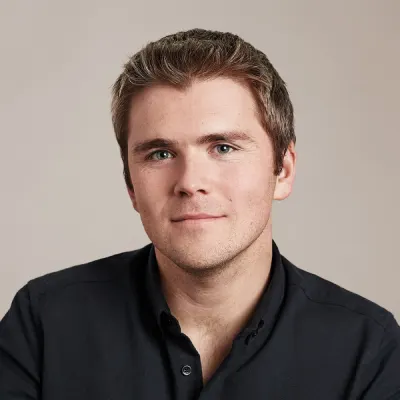
Headshot of Stripe co-founder and President John Collison, wearing a dark collared shirt against a light gray background.
Stripe co-founder and President John Collison has been nominated to join Microsoft’s board of directors. (Stripe Photo)

When Stripe co-founder John Collison interviewed Satya Nadella on his company’s podcast last fall, he asked the Microsoft CEO for advice on building a platform business. Collison will soon get to see how Microsoft does it up close.

Collison, 36, the co-founder and president of the Bay Area-based payments platform, has been nominated to Microsoft’s board, the tech giant disclosed Wednesday in its annual proxy statement.

He would fill one of two board seats opening up at Microsoft’s Dec. 8 annual meeting. LinkedIn co-founder Reid Hoffman said in June that he would leave, and the proxy reveals that Disney CFO Hugh Johnston, who chairs the board’s audit committee, is not seeking re-election either. Both have served on the board since 2017.

The proxy also notes that former EY CEO Carmine Di Sibio, appointed to the board in May, will stand for election by shareholders for the first time.

Microsoft’s board currently has 13 members, including Di Sibio. With Hoffman and Johnston leaving and Collison joining, it will go back to 12, the same number it had before Di Sibio joined in May.

Microsoft says Collison “brings extensive entrepreneurial and operational experience, along with deep expertise in technology.” He started Stripe with his brother, Patrick, in 2010, and businesses using Stripe processed $1.9 trillion in payments in 2025. Collison does not sit on any other public company board.

The board determined that he is independent, after considering ordinary business dealings between Microsoft and companies tied to its directors. The proxy doesn’t mention any business between Microsoft and Stripe, but the two companies already work together.

Stripe helps power Copilot Checkout, which Microsoft launched in January to let U.S. users of its AI assistant buy from Etsy sellers and other retailers without leaving the chat. In 2023, the companies teamed up to let businesses take card payments for paid events in Microsoft Teams.

The companies’ work together came up in the November episode of Stripe’s “Cheeky Pint” podcast. Collison said Stripe was building a platform business in agentic commerce, in which AI agents shop and pay on behalf of people, and asked Nadella what advice he had for a company building in such an early market.

Nadella said the key would be making it simple for small merchants to sell through AI agents, without asking them to set up servers or adopt a string of new technical protocols themselves.

The relationship goes back years. Nadella said he first visited Stripe’s San Francisco office when he was running Microsoft’s cloud business, before he became CEO.

He said Stripe reminded Microsoft of something it had once been good at, “following the developer, being where the startups are,” and said that thinking “led me even to GitHub,” the code-sharing platform Microsoft acquired in 2018 for $7.5 billion.

Tech Moves: Microsoft AI exec joins Niantic Spatial; Allen fund names first investment chief; Zillow AI leader heads to Stripe

Dave Citron. (Photo courtesy Niantic Spatial)

— Niantic Spatial hired Dave Citron as chief product officer. He joined from Microsoft AI, where he was corporate vice president of product on the Superintelligence team and helped build and launch Microsoft’s first frontier foundation models.

San Francisco-based Niantic Spatial, spun out of Pokémon Go maker Niantic, builds spatial AI models and services, including a visual positioning system trained in part on images crowdsourced from Pokémon Go players. The company has an engineering team in Bellevue, Wash.

The Seattle-area executive was previously senior director of product for the Gemini app at Google DeepMind and worked on Google Meet and Google Duo. He began his career at Microsoft in 2005, helping take OneDrive from its first release to more than 200 million monthly users.

“AI is remarkably good at reading and writing, but it still doesn’t understand the physical world well enough to act in it safely,” Citron said in the announcement.

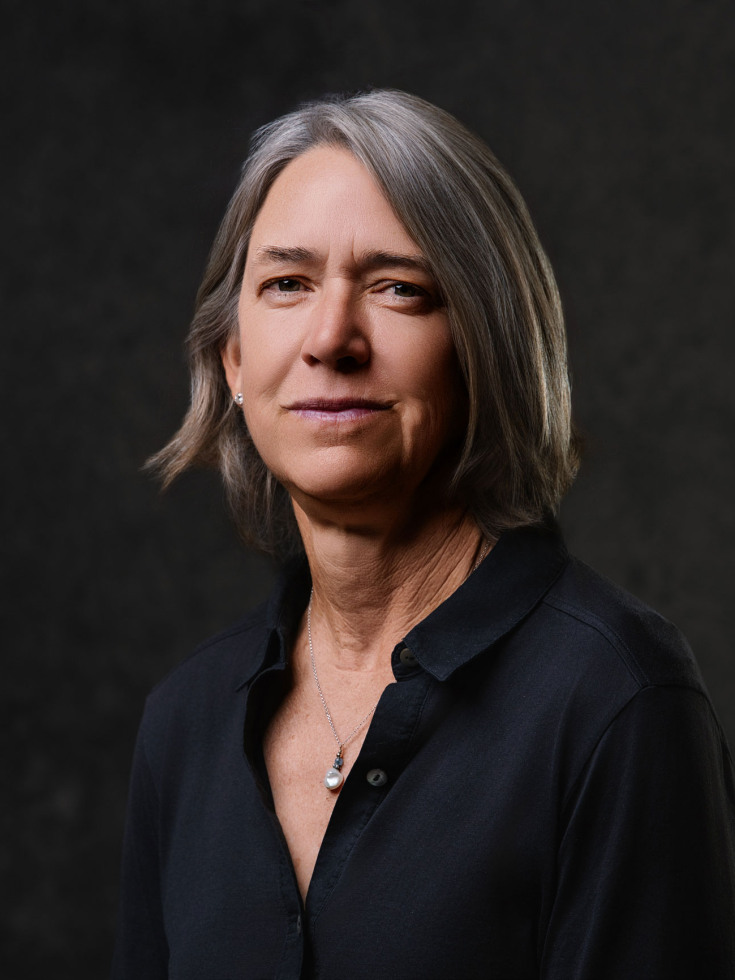
Jane Dietze. (Brown University Photo)

— The Fund for Science and Technology, the Seattle-based foundation responsible for giving away a large portion of the late Microsoft co-founder Paul Allen’s fortune, named Jane Dietze its first chief investment officer. She starts Jan. 4, 2027, after finishing the year at Brown University, where she has held that role since 2018.

Brown says its endowment grew from $3.2 billion to $8 billion over the 10 years through fiscal 2025. Her deputy, Joshua Kennedy, will succeed her. Dietze previously held investment roles at Bowdoin College, Fortress Investment Group and Columbia Capital.

The foundation launched publicly in August 2025 with a mandate to deploy at least $500 million over four years in bioscience, the environment and AI for good. It also funds the Allen Institute and Ai2, the Allen Institute for AI.

The fund started with a $3.1 billion endowment from Allen’s estate and is expected to oversee a large portion of the proceeds from the sale of Allen’s sports teams. Its first CEO, Lynda Stuart, stepped down in May.

Nicholas Stevens. (LinkedIn Photo)

— Nicholas Stevens joined payments giant Stripe as head of product for agentic commerce, working from Seattle, after a decade at Zillow. He was most recently Zillow’s vice president of product for AI and data, leading product strategy for the company’s AI products and data platform.

His LinkedIn profile notes that he drove the partnership that made Zillow one of seven global launch partners for OpenAI’s ChatGPT apps platform. He previously worked in product at Prismatic.

“I believe AI buying & selling on your behalf can be magical,” he wrote.

— Scowtt, a Kirkland, Wash.-based startup that uses AI to predict which sales prospects will become customers, named Ben Trenda chief revenue officer. Trenda is an ad tech veteran who worked at Overture/Yahoo, AOL and Rubicon Project, and co-founded iSocket. Scowtt says it is approaching $10 million in annual recurring revenue.

Emily Levesque. (Photo courtesy AAS)

— The American Astronomical Society named University of Washington astronomy professor Emily Levesque the next editor in chief of its journals, including The Astrophysical Journal. She takes charge in August 2027, succeeding Ethan Vishniac.

— ThriftBooks, the online used-book seller founded in Seattle in 2003, named Carla Anderson Skogland chief financial officer. She had been interim CFO since April. Anderson Skogland, who is based in the Seattle area, was previously CFO of Sono Bello. She spent 11 years at Amazon, and earlier worked at T-Mobile and for more than 15 years at Starbucks.

— Michael Mann is stepping down as executive director of Clean & Prosperous, a climate policy group that backed Washington’s Climate Commitment Act, once a successor is chosen. He took over on an interim basis from the late founder David Giuliani and led the group for five years. Mann, founder of consulting firm Cyan Strategies, previously led the City of Seattle’s Office of Sustainability and Environment.

Lani Ramos. (LinkedIn Photo)

— Lani Ramos joined Yoodli, a Seattle startup that uses AI roleplays for communications training, to build its renewals function. Ramos spent 13 years at Tableau and Salesforce, most recently as director of renewal for North America.

— Former Starbucks CFO Rachel Ruggeri joined the board of San Diego-based Jack in the Box. Ruggeri, a Seattle-area finance leader, spent more than two decades at Starbucks and was its CFO from 2021 to March 2025. She also serves on the board of Stryker.

— Victor Fetter is stepping down at the end of the year as chief technology and business systems officer at Everett, Wash.-based Fortive after nearly seven years. Rich Noonan, Fortive’s chief information security and technology operations officer, will become CIO. Fetter, who is based in Mississippi, plans to expand his board work and angel investing.

— And in case you missed it:

❌