Login

Seattle-area startup Group14 raises $169M, plans battery materials factory in Spain
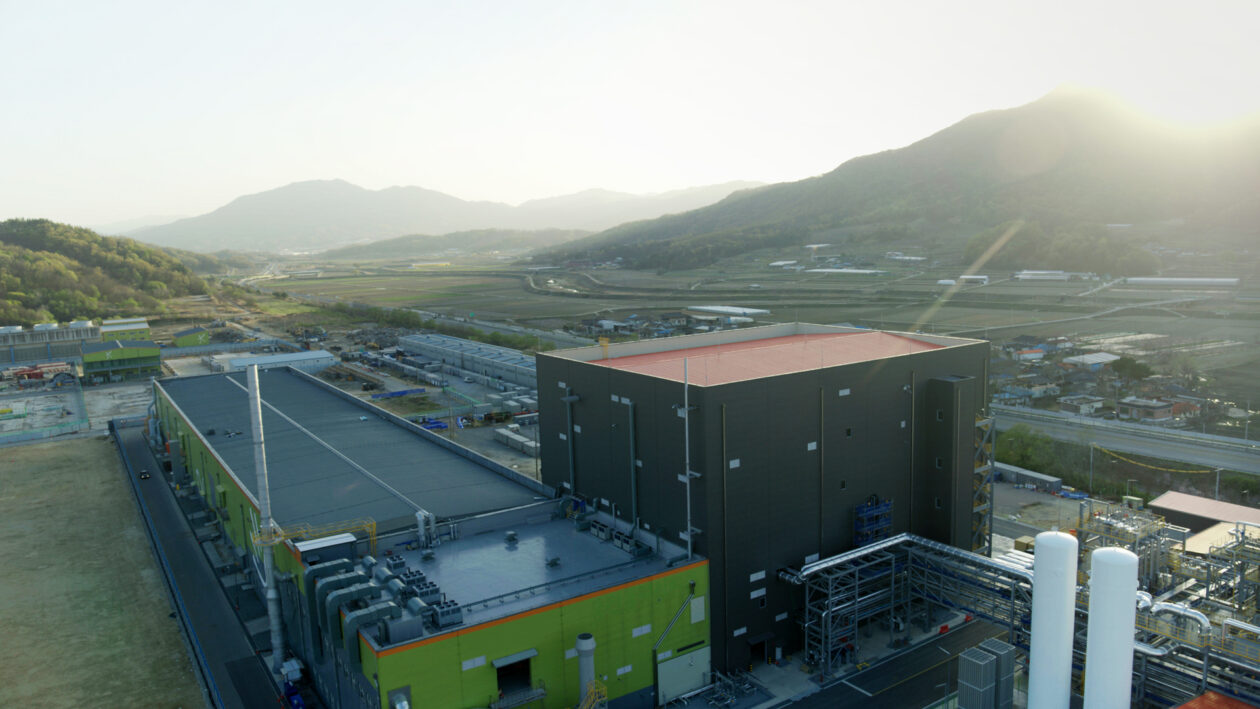
Next-generation battery materials startup Group14 Technologies today announced $169 million in new funding and plans to build a manufacturing facility in Spain, expanding a production network that includes Washington state and South Korea.
“In order to be a global player in a global industry, we need a global footprint, which means it’s not about picking one specific region and going all in,” Group14 CEO Rick Luebbe told GeekWire. “We really need to grow all regions.”
The startup has developed a silicon-carbon material that replaces graphite in lithium-ion battery anodes, enabling higher energy density and faster charging, according to the company. The material already ships primarily to consumer-electronics customers, while the company pursues automotive and data center applications, Luebbe said.
The funding came from a European investor, Luebbe said, but he did not name the firm. It extends the company’s $463 million Series D round and brings Group14’s total funding to nearly $1.5 billion.

The new facility will be located in Sagunto, near Valencia, with production targeted for mid-2029. Luebbe said the site offers clean energy, skilled labor from the chemical industry and proximity to automotive customers, given that Spain is the second-largest vehicle producer in Europe after Germany.
Group14 already has a presence on the continent, acquiring Germany’s Schmid Silicon Technology Holding GmbH in 2023 to secure a European source of silane gas, a key ingredient in its battery material.
Just as the U.S. has been working to bolster its domestic battery manufacturing and reduce its reliance on Chinese supplies, Europe is doing the same, Luebbe said. The company wants to be part of that solution and is eager to make its move.
“Building chemical plants takes a long time, and so you’ve got to think ahead and be able to establish that global footprint and development strategy,” Luebbe said. “We’ve learned a lot in the lifetime of Group14.”
Group14 was founded in 2015 and six years later began operating its first commercial-scale factory, called Battery Active Materials-1, or BAM-1, at its headquarters in Woodinville, Wash.
In 2023, it broke ground on BAM-2 in central Washington’s Moses Lake with funding that included $100 million from the Bipartisan Infrastructure Law. The site has two modules that at full capacity will be able to produce up to 4,000 tons of silicon-carbon battery material annually, enough for at least 200,000 electric vehicles.
The company originally aimed to start production by late 2024, a target later pushed to early 2026. Group14 laid off an undisclosed number of Washington workers in July 2025 and furloughed additional employees at Moses Lake in January as it shifted resources toward South Korea.
Luebbe said this week that the company is now targeting mid-2027 to bring the first module online, following equipment installation and commissioning. The second module does not yet have a firm completion date.
“It’s a very complicated infrastructure, and it takes a lot longer than we had anticipated to do the final installation and commissioning,” he added.
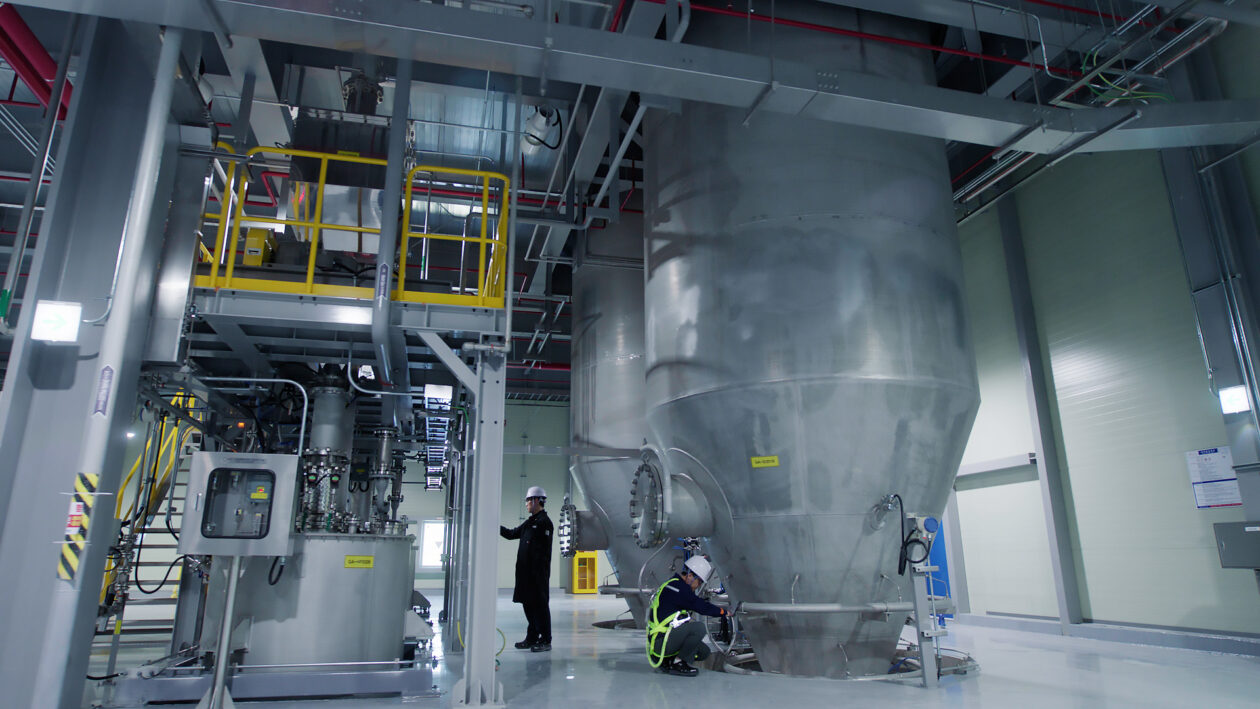
The company has at least secured the power it needs. It previously contracted sufficient clean energy to run the site, as well as a planned silane gas facility. Since Group14 began its development, data center deployments have accelerated in the region and projects are competing for clean electricity from hydropower dams.
While BAM-2 has been delayed, Group14’s BAM-3 site in South Korea — which originally began as a joint venture with SK materials — has been producing anode material since 2024. The facility has been scaling up and expects to reach its 2,000-ton annual capacity within about six months, Luebbe said.
Group14 is shipping primarily to consumer-electronics customers, which qualify new materials faster than automakers. Luebbe also sees a growing opportunity in data-center battery backup units, where silicon-anode batteries could help smooth rapid spikes in AI-server power demand.
“I’m anticipating data center batteries, battery backup units, to be the second biggest market for us behind EVs,” he said.