Reading view

There are new articles available, click to refresh the page.

Launching Rockets is Hard, Bring them Back is Harder

Since the first V2 rocket sailed above the Kármán line back in 1944 and right up until the modern era, the trajectory of most space-bound rockets was more or less the same: after expending their propellants they would either crash into some desolate steppe or plunge into the ocean. In either event, the rocket was disposable. The important bit up top might go on to explore the stars or send a human crew off on their mission, but the booster rocket that lifted the spacecraft out of the atmosphere was always going to be sacrificed for the cause.

But in the 1970s NASA had a wild idea: what if we didn’t smash a brand-new rocket valued at millions of dollars into the ocean every time we wanted to put something in orbit? Instead, they would build a hybrid space vehicle that blended the vertical takeoff and raw power of a rocket with the capabilities of an airplane, allowing it and whatever it was carrying to make a gentle runway landing at the end of its mission. As such, the Space Shuttle was born.

With the benefit of hindsight, we now know the Shuttle wasn’t quite the spaceflight revolution that NASA had hoped for. The age of reusable rockets didn’t truly begin until 2015, when SpaceX landed the first stage of their Falcon 9. To date they’ve repeated the feat nearly 600 times, all the while increasing the reliability and speed of their operations. Today the Falcon 9 is the most prolific launch vehicle in history, and nearly every other rocket in active development is being designed to include some element of reusability.

Most recently, China demonstrated that they could recover their Long March 10B rocket by gently bringing it down into what amounts to a giant butterfly net. While it might seem a bit quaint compared to rockets that land on their tails like something out of a 1950s sci-fi movie, the idea offers considerable promise.

There and Back Again

But why did it take 70+ years before we were able to regularly refly orbital-class rockets? It’s not that there’s anything inherently complex about reusing a spent rocket. Sure, there’s a case to be made that material science improvements have made the engines robust enough for repeated use. But even if you had to rebuild the engines after each flight it would still be better than slamming the whole vehicle into the ocean. Similarly, there’s nothing particularly unique about the structure of the Falcon 9 that enables it to fly multiple times — it’s a big metal tube with tanks inside of it, just like essentially every rocket that has flown before it.

The revolutionary technology demonstrated by SpaceX in 2015 didn’t have anything to do with making their rocket go up, it was that they were able to safely bring it back without damaging or physically altering it. The Falcon 9 first stage that came back to Earth was in the same condition it was when it left the launch pad eight minutes or so earlier, albeit with empty propellant tanks and a layer of soot on the outside.

As such, most of the variability we see when comparing the reuse of past, present, and future rockets comes not from how the vehicle ascends, but how it ultimately comes to rest back down on Earth.

Splashdown is Easy, But Rough

Without question, the easiest way to recover a rocket intact is to simply slow it down before it hits the surface of the ocean using parachutes This is how all American crewed capsules, and more applicably the Space Shuttle’s Solid Rocket Boosters (SRBs), have been recovered after their flights.

Once pumped out, the hollow SRBs could be towed to shore.

But even when descending under multiple huge parachutes, splashdown isn’t exactly a gentle event. It could probably best be described as “survivable”, in that the vehicle and crew will come through the experience in one piece, but neither is likely to be terribly happy about it.

The situation of course ends up being even worse for the rocket, as its structure is going to be subjected to the brunt of the impact force. Additionally, a complex aerospace vehicle getting partially submerged in salt water is a recipe for corrosion and electrical issues, to say nothing of the thermal shock the hot engines will experience when getting dunked.

One could argue that the only reason this method of recovery worked for the Shuttle SRBs is because of their relative simplicity when compared to a liquid-fueled rocket capable of independent flight. At the risk of oversimplifying the structure of the SRB, at splashdown it was effectively a hollow tube with minimal avionics and thrust vector control (TVC) hardware that could simply be replaced before the next flight.

Still, the NASA document Solid Rocket Booster (SRB) Refurbishment Practices goes over the considerable work required to bring each booster back to flight status after coming down in the ocean. Given the challenges of refurbishing the boosters, it’s perhaps unsurprising that NASA elected to forgo their reuse on the Space Launch System despite its SRBs being largely identical to their Shuttle predecessors.

Teaching Rockets New Tricks

In the very early days, while they were still trying to reach orbit with the Falcon 1, SpaceX had actually considered a Shuttle SRB-style recovery procedure. But in the end they decided to outfit the Falcon 9 with deployable landing legs and the rest, as they say, is history.

The DC-X demonstrated propulsive landing in 1993, but couldn’t reach orbit.

Landing legs allow a rocket to come down on effectively any flat surface, be it a concrete pad next to the launch facility or a floating platform. But there are some fairly serious drawbacks to this approach. For one thing, the requirement for precise terminal guidance means parachutes are out of the question. The rocket needs fins, attitude thrusters, or other control surfaces to come down on the center of the pad.

It also means the rocket needs to perform a propulsive landing. That is, use its own primary engines to bring its velocity on touchdown to as close to zero as possible. This in turn requires engines that can not only restart in flight — a capability that has not traditionally been required by first stage boosters — but are able to throttle down low enough to control the rocket’s descent without simply pushing it back upwards. It’s difficult to overstate how unnatural a state of operation this is for a rocket. Indeed, it’s the antithesis of how nearly every rocket has operated since the Song Dynasty started experimenting with gunpowder in the 10th century.

Even if you can accomplish all that, the true cost of landing a rocket is in the extra mass. Although the legs will be stowed away and unused for 99.8% of the rocket’s flight time, it still has to lug all that weight uphill. If that wasn’t bad enough, there’s also the extra weight of whatever control mechanism is in place to guide the rocket’s descent trajectory as well as the propellant that needs to be kept in reserve for the landing burn.

All told, landing a rocket on legs comes with a massive payload penalty. In the case of the Falcon 9, the rocket’s maximum capacity to Low Earth Orbit (LEO) in its expendable configuration is approximately 22,800 kg (50,300 lb). But when outfitted with the hardware necessary to land, that number is reduced by nearly 25% to 17,500 kg (38,600 lb).

Dropping the Dead Weight

There was a time, not so very long ago, when critics doubted the financial viability of recovering and reusing rockets like the Falcon 9. But today, reuse has gone from theoretical to standard operating procedure. Outside of a few Old Space holdouts, it’s top of mind for every launch provider and critical for remaining competitive in a fast-moving commercial market. In November, Blue Origin even managed to land their New Glenn heavy-lift rocket on only its second flight.

So at this point the question isn’t whether or not future rockets will be reusable, but rather, what is the most efficient way to achieve that reusability?

The first stage of Starship after being caught in mid-air.

With that in mind, it’s easy to see the appeal of China’s net recovery. While the rocket must still perform a propulsive descent — although in theory the necessary positional accuracy, and therefore the technical challenge, is somewhat reduced — it doesn’t need to have landing legs installed. This mass savings increases the vehicle’s useful payload capacity, which in turn makes it more profitable to operate. Achieving the same end goal while being easier and cheaper is an improvement in anyone’s book.

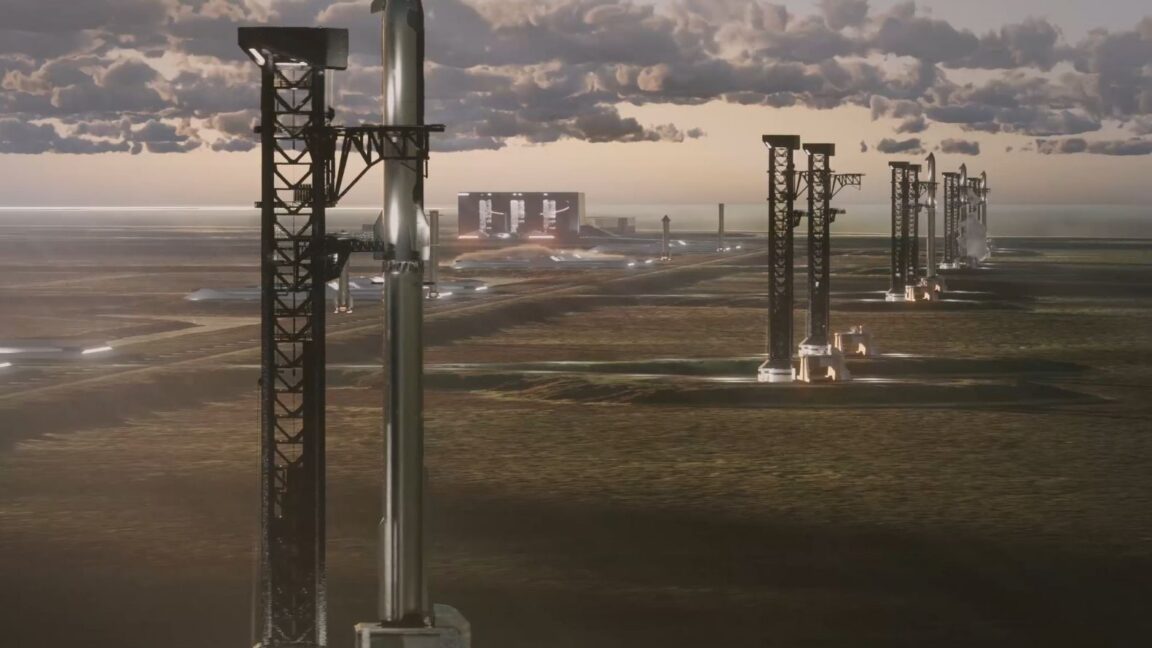
Admittedly, having the rocket come down in a huge net adds a certain amount of whimsy to the whole endeavor, but the overall logic is sound enough. It should also be said that SpaceX, for all the success they’ve had with landing their Falcon 9 on a set of deployable legs, are themselves planning on catching both the first and second stages of their next-generation Starship vehicle. Instead of a net, their goal is to pluck the rocket out of the air with a huge robotic pincer mechanism.

One is reminded of the old joke about how the Americans and Russians approached the problem of writing in space: NASA spent millions of dollars developing a pen that would work in microgravity, while their Russian counterparts simply used pencils. If China can demonstrate the ability to reuse a rocket they snagged in their net, the more elaborate methods of recovery employed by American rockets may one day look like a similarly overengineered solution.

Hackaday Links: July 19, 2026

Hackaday Links Column Banner

We’ll start this week off by giving our congratulations to Skyroot Aerospace of India for successfully launching the country’s first privately developed orbital rocket yesterday. The company’s Vikram-1 booster stands 24 m (79 ft) tall and uses a somewhat unusual four-stage arrangement, with the first three stages using solid propellant and the final liquid-fueled stage being responsible for putting the payload into a precise orbit. With this successful launch, India becomes only the third country in the world with a private company capable of performing orbital launches.

Generally, the rocket should be moving when the countdown hits zero.

On the other end of the spectrum, we have SpaceX’s prototype Starship, which elected not to leave Earth during a last-second (literally) launch termination on Thursday. Aborted launches are, of course, nothing new in the world of rocketry, especially when dealing with an in-development vehicle that has 33 engines that need to fire up at the same moment before it can leave the pad. But this dramatic abort was unique as it was the first time lift-off of the massive 124.4 meter (408 ft) rocket had been called off when the engines were already running.

Onboard systems took advantage of the very narrow window between the time the Raptor engines are switched on and the rocket actually leaves the launchpad to decide that it was not a good day to visit space after all. Word from SpaceX is that two of the Raptor engines on the first stage will be replaced and that they should be ready to make another launch attempt sometime this upcoming week.

While getting rockets off the ground is never easy, one thing that seems to have no trouble going up is the price of gasoline. Even still, Americans seem largely uninterested in electric vehicles, or at the very least, the slate of EVs that are currently available to them — especially now that the $7,500 federal tax credit has ended. Yesterday, TechCrunch ran an article about all the EVs that have exited the US market over the last year due to stagnant sales or import difficulties, and it’s quite a list.

Some of the vehicles, like the Sony-branded Afeela, aren’t exactly surprising. But major players like Honda, Volkswagen, Nissan, and Hyundai also decided not to bring the 2026 models of various EVs in their lineup to the US. Polestar has been forced out of the market entirely due to new import restrictions on Chinese tech. Even Tesla is paring down their offerings by discontinuing their Model X and S vehicles.

Speaking of struggling sales, earlier this week, Amateur Photographer detailed a fairly dire situation over at GoPro. The company, once the undisputed market leader in rugged action cameras, looks like it might fold before the end of the year if they can’t bolster their cash reserves. GoPro’s legendary status for reliability in the most extreme of conditions is still intact, with NASA trusting the company’s cameras to return external views of the Orion capsule during its historic trip around the Moon on Artemis II. But for more mundane pursuits, consumers are increasingly reaching for cheaper alternatives.

One more piece of bad news while we’re at it: OnePlus took to their community forums on Thursday to announce they’ll no longer be selling new phones in Europe and North America. Anyone who owns a OnePlus phone in these territories will still get software support and updates through the originally marketed end date, and the warranty on the hardware itself will still be honored. But after that, they’ll have to find a new company to do business with. While the company wasn’t exactly a household name, they did offer some compelling hardware, and it’s always a shame to see fewer options on the market.

We’re pretty sure Dennis Nedry would read Hackaday if he hadn’t been eaten by a dinosaur.

In hopes it will lighten the mood a bit, we’ll leave you with this exhaustive look at the computers featured in 1993’s Jurassic Park, put together by Fabien Sanglard. It covers everything from laptops, which appeared in the background of shots, to the bank of glorious Thinking Machines CM-5 with their iconic arrays of twinkling red LEDs in the park’s control room. There’s even a section that dives into the software side of things, detailing the real-world applications as well as the more fanciful creations. As Fabien notes, the original Jurassic Park novel featured some surprisingly detailed descriptions of the computer tech used at the park, as author Michael Crichton was himself an accomplished programmer.


See something interesting that you think would be a good fit for our weekly Links column? Drop us a line; we’d love to hear about it.

SpaceX scrubs Starship launch after some of its engines didn't start

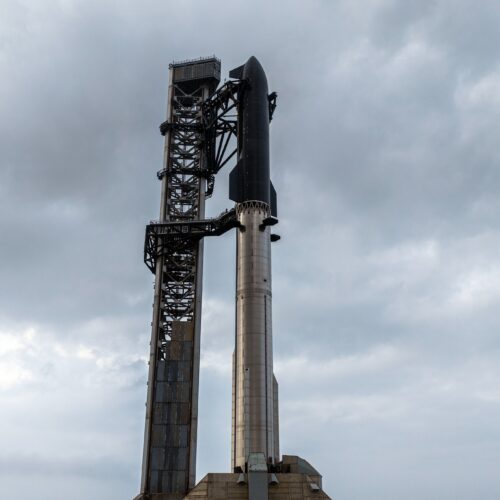
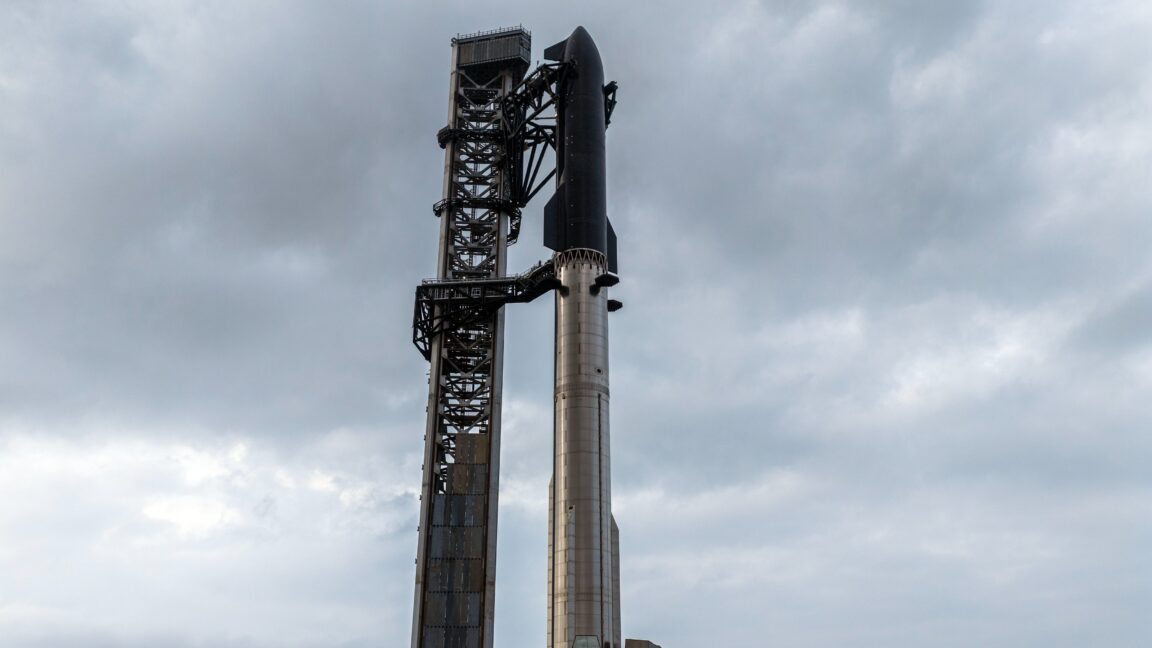
SpaceX called off a test flight of its powerful Starship rocket and Super Heavy booster as the countdown clock reached zero Thursday at the company's spaceport in South Texas.

The launch team at Starbase, Texas, just north of the US-Mexico border, aimed to launch the more than 400-foot-tall rocket at 5:45 pm local time (6:45 pm EDT; 22:45 UTC). The countdown proceeded smoothly throughout the day, culminating in the loading of more than 11.5 million pounds of liquid methane and liquid oxygen into the two-stage rocket.

But the computers controlling the countdown called an abort during the Super Heavy booster's engine startup sequence. SpaceX scrubbed the launch attempt, and engineers began preparations to drain the rocket's propellant tanks. Officials did not immediately announce when they plan to try to launch again.

Read full article

Comments

© SpaceX

SpaceX is gearing up for Starship's 13th test flight later this week

The next test flight of SpaceX's Starship spacecraft and Super Heavy booster could take off as soon as Thursday, and much of the hour-long mission will look a lot like the last Starship flight in May.

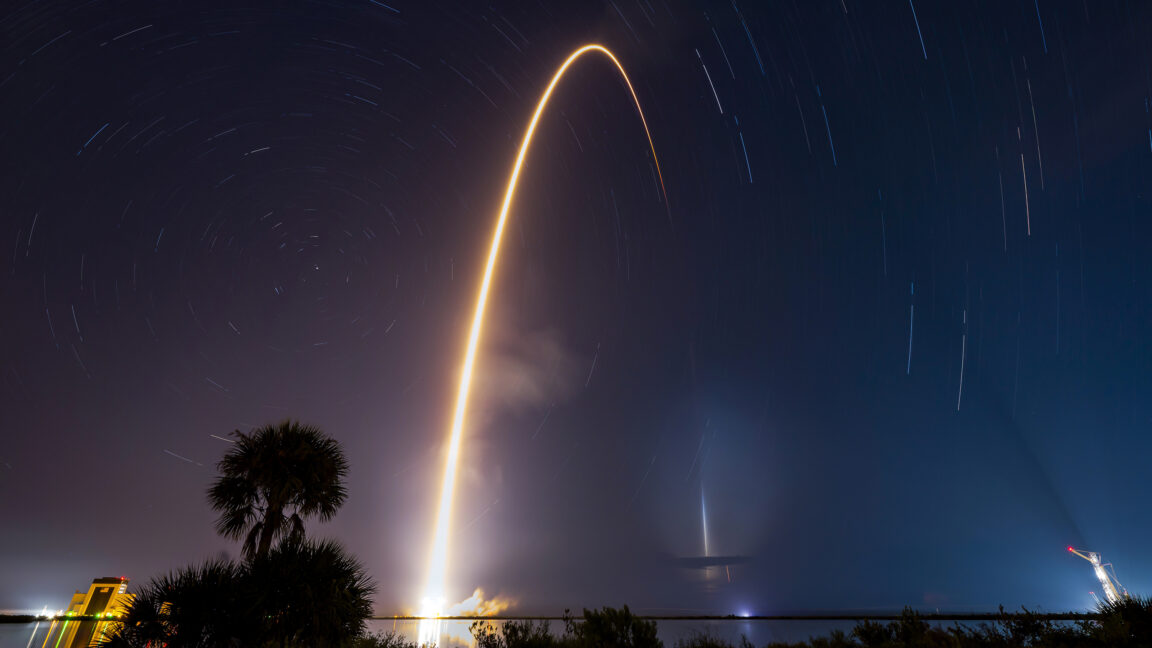
But there are a few key differences for this launch, set to occur during a launch window that opens at 5:45 pm CDT (22:45 UTC) on Thursday. The most notable change is the inclusion of real, functioning Starlink satellites inside Starship's cargo bay. SpaceX previously tested the ship's payload deployment mechanism using simulators mimicking the mass and dimensions of the company's next-generation Starlink Version 3 broadband satellites.

This time—Starship's 13th full-scale test flight and the second to use SpaceX's newest version of Starship—technicians have installed 20 Starlink V3 satellites into the ship's deployer, a system of pulleys and cables designed to eject a stack of satellites one at a time through an opening on the side of the spacecraft. The satellites will not be part of SpaceX's operational network, but engineers will attempt to briefly establish laser communication links between the Starlink V3s and other spacecraft flying in low-Earth orbit. If successful, these links will validate Starlink V3's interoperability with SpaceX's previous generation of Starlink satellites.

Read full article

Comments

© SpaceX

Elon Musk’s Mars illusion

Elon Musk takes a bow at NASA’s Kennedy Space Center in May 2020 after the launch of SpaceX’s Crew Dragon Demo-2 mission, which carried two astronauts to the International Space Station, about 250 miles up, and a world away from Mars. (GeekWire Photo / Kevin Lisota)

Ever since its founding, SpaceX has fixed upon a single idea: Elon Musk’s vision of colonizing Mars. Everything the company does is geared to that foundational goal.

Two years ago, Musk posted on X that there could be a city on Mars within 20 years, “but for sure in 30.”

“Civilization secured,” he added, implying that even if our troubled lives here on Earth come to some catastrophic end in the coming decades, don’t worry, humans will endure on Mars.

Musk’s initial steps toward this ambition have produced awesome engineering successes. People have never seen the likes of the light displays that shower across night skies from SpaceX’s rockets and satellites. They watched astounded in late 2024 when the gigantic Starship’s booster rocket first descended gently to nestle into enclosing mechanical arms at the launch site in Texas.

Yet the work of scientists studying Mars suggests that it’s far-fetched, perhaps delusional, to think a human colony could be established there. You don’t need to be a billionaire or a rocket scientist to realize Musk’s timeframe is certainly a fantasy; there won’t be a city on Mars in his lifetime or that of his children or his grandchildren. Think many, many decades at best. But more likely, never.

Retail investors rushed to buy SpaceX stock after the IPO in June. Though the share price has already fallen back below where it was that day, many see it as a long-term investment. The reality is that the improbability of the Mars project shadows SpaceX’s long-term future.

SpaceX’s Starship, the rocket Musk is counting on to reach Mars, lifts off in a test flight in Texas in 2024. (Steve Jurvetson / CC BY 2.0)

While humans will at some point likely overcome the massively daunting engineering and logistics challenges of getting to Mars and even staying for some time, there’s no technology available to form a permanent settlement there.

Musk may be excused as being playful with his time scale.

“Oh, Elon is famously bad at giving time estimates,” said Erika DeBenedictis, a biological engineer and Mars scientist, founder of Pioneer Labs, which is researching how to grow plants on Mars. “Things always take longer than he says, but they do tend to happen.”

Musk has been quite specific. Last year, he said SpaceX had a 50:50 chance of sending its first uncrewed Starships toward Mars in 2026, with crewed landings to follow “as soon as 2029, although 2031 is more likely,” he posted on X.  

Then, this February, he said SpaceX would build a city on the moon first and start building a Mars city “in about 5 to 7 years.”

While his targets and timing keep moving, the problems go deeper than that. The question is not when humanity will expand beyond Earth, but whether it ever will.

Establishing a city on Mars depends crucially on a concept called “terraforming,” which means physically transforming the planet’s surface environment into something resembling that of Earth, at least partially hospitable for humans.

To DeBenedictis, the sterile science fiction notion of people confined inside glass domes, looking out upon a forbiddingly bleak landscape and living off protein shakes and dried food, is deeply unappealing. “I wouldn’t want it and I wouldn’t want it for my daughter,” she said. “It just seems terrible.”

“It doesn’t have to be that way,” she adds. “I want the planet to be green.”

DeBenedictis concedes at the outset of an interview that this is “probably impossible,” though in the tone of someone who lives to chase the impossible.

In contrast, Musk glibly mentions terraforming as if it were within reach. In truth, science has only highly conjectural ideas about how it might be done. The hypothetical options scientists are researching now, if they work at all, will take many decades if not centuries to make Mars habitable. And they may never work.

A titanic ambition

Despite this, investment bankers and those with pre-IPO access were primed to ride the coattails of Musk’s colossal wealth for a big payout on SpaceX’s Wall Street launch day. Musk supercharged the June IPO by absorbing his xAI project into SpaceX. The IPO filing positioned xAI as a $26.5 trillion market opportunity, dwarfing all the other business segments of SpaceX, which the filing pegged at a mere $2 trillion. What’s an IPO without a transcendent AI promise these days?

The controversies around Musk’s politics and conduct — his embrace of President Trump and other authoritarian leaders, his incendiary rhetoric, his reposting on his X platform of right-wing influencers agitating around immigration and race, his eager wielding of a chainsaw to U.S. government services — were set aside by investors as they scrambled to buy in.

Wall Street weighed only Musk’s entrepreneurial success and his ability to conjure the future and spin financial dreams. The Economist in May called Musk’s risk-taking and mobilizing of resources “capitalism at its most remarkable.”

For Wall Street, that made the SpaceX IPO a surefire winner. The share price duly rocketed up and made Musk briefly a trillionaire. Though he lost that status when the share price subsequently slid, he’s still by far the richest man in the world with a net worth into the $900 billions.

That fortune is built upon the market perception that Musk can turn dreams into reality. Mass-producing all-electric, virtually self-driving cars was once a pipedream. Rockets landing on their tails graced the covers of 1950s science fiction novels. By force of will, Musk made both a reality. Whatever pipe he’s smoking now, shouldn’t we give his Mars dream some healthy respect?

That dream is specified precisely on the SpaceX website: “A permanent human colony on Mars with at least one million inhabitants.”

A SpaceX facility in Redmond, Wash., where the company designs and builds its Starlink internet satellites. (GeekWire Photo / Alan Boyle)

Musk designed the huge Starship rocket to go to Mars. And when Musk first unveiled his plan for the internet satellite venture that became Starlink in Seattle more than a decade ago — the satellites are made in Redmond — he told Bloomberg Businessweek he saw it as “a long-term revenue source for SpaceX to be able to fund a city on Mars.”

Nearer term, SpaceX is to provide the lunar lander for NASA’s Artemis project that should return humans to the moon within a few years and lay the groundwork for a permanent moonbase; Musk sees it as a stepping stone to the true goal.

The problem is, Mars is not even remotely habitable. It’s deathly cold. There’s nothing on the surface but dust and rocks, in places some deeply frozen CO2. Regular dust storms whip the surface. The planet has zero vegetation; not a tree, not a leaf, not a blade of grass. The oxygen-free Martian air is unbreathable.

Venture outside without a space suit and you’ll die within a minute in the poisonous, low-pressure atmosphere. During unpredictable solar flares, cosmic radiation is a separate threat to life.

Martian gravity, one-third of Earth’s, may deform the human body over time. Astronauts on the zero-gravity International Space Station must work out constantly to retain muscle strength. Even then, if they spend too long in space they must be carried from the space capsule after splashdown.

“I don’t see any prospect for there to be permanent settlements,” said senior NASA astrogeophysicist Chris McKay, who for more than 40 years has studied the possibility of supporting human life beyond Earth, and on Mars specifically. “Why would anybody want to live there?”

Bruce Jakosky, professor emeritus at the Laboratory for Atmospheric and Space Physics at the University of Colorado, Boulder, who has studied Mars his entire career since he worked on the Mars rover Viking mission in the mid-1970s, says he thinks it will happen someday, but adds, “I have no idea when or how.”

“It’s far enough into the future that, once you get beyond, say, 30 years, you can’t tell the difference between that and infinity into the future,” Jakosky said.

That’s scientific realism. Buzz Lightyear talks about getting to infinity and beyond, but he’s a toy.

What’s really achievable on Mars

Despite the cold facts, Musk has so successfully sold the notion that if he put out a call for volunteers for the first Starship mission to Mars, hundreds of space scientists, enthusiasts, adventurers and Musk fanbros would eagerly sign up.

Indeed, he already has a Mars mission volunteer. On the launch webcast of SpaceX’s latest and largest Starship rocket in late May, a presenter introduced cryptocurrency billionaire and civilian astronaut Chun Wang, revealing that he’s been tapped to lead the first crewed flyby mission to Mars at some unspecified future date — a round trip of about two years, going there and back without landing on the surface.

And yes, it’s inevitable humans will get to Mars one day. Crewed spacecraft may land on Mars within a couple of decades.

The first astronauts to land will plan to explore the surface and hopefully return in triumph two years later, the next occasion when the Mars solar orbit again aligns with Earth. DeBenedictis dismissively describes this as the “expensive camping trip” phase of exploration, “mostly for the photo opp.”

Decades from now, humans may take a much harder, more substantive step: establishing a scientific base on Mars; we have such bases in Antarctica today. Researchers could rotate in and out every couple of years.

Creating a permanent colony on Mars is something far different. It implies lifetime commitments and subsequent generations growing up and building their lives there. As Elton John sang, “Mars ain’t the kind of place to raise your kids. In fact, it’s cold as hell. And there’s no one there to raise them if you did.”

A child born on Mars — a Martian! — would likely adapt to the low gravity as it developed. We have zero data on the physical consequences. Such a child could grow up so different in muscular and skeletal strength that he or she would be unable to walk on Earth.

“The first mothers that give birth will be guinea pigs,” said NASA’s McKay.

And yet, Musk has laid out a plan he insists can establish a human colony on Mars within his lifetime. After Optimus humanoid robots designed by Tesla do some advance exploring on the Martian surface, eventually “a few thousand” Starship rockets will head off together from Earth orbit to Mars, loaded with people and more than a million tons of equipment, dried food and supplies.

A SpaceX illustration imagines life at a future Mars colony, with a family watching a Starship from inside a glass dome. (SpaceX Image)

The SpaceX website offers a few images envisioning life in the early days of a Mars colony. A mom and two kids look out from inside a glass dome as a Starship lands nearby. The accompanying text on the website glances over some of the most glaring problems.

The extreme temperature fluctuations, from 70°F to -225°F, with an average of about -85°F? “It is a little cold, but we can warm it up.”

The atmosphere of mostly unbreathable CO2? That’s good for plants; those don’t need oxygen. “We can grow plants on Mars just by compressing the atmosphere.”

That one-third gravity compared to Earth? “You would be able to lift heavy things and bound around.”

In a speech a year ago to employees at the Texas rocket site — the video is on the SpaceX website — Musk conceded that Mars is inhospitable but said terraforming will provide the solution.

“You can’t really walk around on the surface of Mars, at least as yet until Mars is terraformed to be like Earth,” Musk told the employees. “You need to walk around with a Mars suit and be initially in kind of like glass domes.”

“But it would work,” he added. “And eventually we can make Mars into an Earthlike planet.”

Yes. Terraforming. How exactly could that be achieved? And how long would it take?

The science on terraforming

SpaceX did not respond to requests to grant an interview or to offer comment on the feasibility of Musk’s vision. But Mars scientists have studied the question. Edwin Kite, associate professor of planetary science at the University of Chicago, resident at the Berkeley-Calif.-based Astera Institute that funds futuristic science, is a leading researcher on terraforming Mars. In a paper published in April in collaboration with two dozen other Mars scientists, including DeBenedictis, he assessed the feasibility of the potential pathways currently being studied.

His paper begins with a bracing caveat: “It is unknown whether human civilization can thrive off-Earth.”

But if we want to try living on Mars, the paper says, the first requirement will be to warm the freezing planet or at least regions of the planet. It lays out three possible ways to do so.

A SpaceX illustration imagines a future Mars base, with a central habitat dome, and pressurized greenhouses. (SpaceX Image)

Some local regions on Mars could hypothetically be warmed by spreading a translucent, high-tech blanket that would block harmful UV radiation but otherwise allow sunlight through to warm the Martian soil. The solar warmth trapped beneath the blanket, made from a plastic-like biomaterial, would melt ice under the ground. The heat and water would then potentially support primitive life forms, starting with microbes, bacteria and algae and, in time, plants.

However, even warmed, wet Martian soil is salty and laden with bleach-like chemicals hostile to life. No known micro-organism on Earth can survive in such conditions.

That’s where DeBenedictis’s research comes in. Her team — funded in large part by crypto billionaire and space entrepreneur Jed McCaleb, who founded the Astera Institute — is trying through selective breeding and genome modification to engineer new, hardier biological organisms that could get life started in the Martian soil. She is looking to microbes that could digest the bleach and others that could produce more of the bioplastic, allowing extension of the soil-heating blanket to a larger area.

The idea: as the soil improves with this microbial organic matter, more complex organisms could take hold. Eventually, she says, “you could actually do things like grow potatoes in the dirt.”

DeBenedictis is super optimistic about biology turning Mars green. It could have a cover of basic plants “in my lifetime,” she says.

Pioneer Labs has been going for just two years. Its early-stage research is developing lab-grown microbes inside enclosed, stirred, heated, radiation-shielded vessels, like high-tech Instant Pots. It’s a long way from growing potatoes.

DeBenedictis notes that although the lack of oxygen means humans still couldn’t breathe outside, plants grown under these bioplastic blankets would produce oxygen through photosynthesis. That might eventually build up a breathable atmosphere on Mars at some point in the far future. Kite said the timeframe for that would be centuries, at least — “much longer than your civilization-relevant time scales.”

The second warming method outlined in Kite’s paper: large reflecting mirrors in orbit around Mars, beaming down sunlight to warm a contained scientific base and the region immediately around it. The first reflectors would launch from Earth as solar sails, unfurling in space and flying themselves to Mars, propelled by sunlight.

Kite projects that doubling the sunlight reaching an area of less than half a square mile on Mars would require a large constellation of reflectors in sun-synchronous orbit, with a combined surface of nearly 300 square miles.

That’s a huge armada of solar sails heading off to Mars, all of which would have to be managed and maintained from Earth.

The third and most extravagant pathway being studied: warm the entire planet by forcing artificial global warming.

At one time, it was hoped that local warming on Mars would release frozen CO2 in the ground as a greenhouse gas that would thicken the atmosphere and gradually warm the whole planet, the same process now warming Earth. But a 2018 paper by Jakosky dashed that plan. Analysis of sensor data and imagery from the latest satellites orbiting Mars showed there’s not enough frozen CO2 on the surface to provide significant greenhouse warming.

That paper concluded that “terraforming Mars is not possible using present-day technology.”

Embed from Getty Images

To overcome that setback, scientists developed a new idea: pumping a few million tons of aerosol particles into the atmosphere, artificial dust manufactured on Mars from material in the soil. These clouds of dust, which would very slowly settle and have to be continuously spewed out, would warm Mars by trapping the solar heat.

But the time scale for this is the longest under consideration. NASA’s McKay, in a 1991 paper, analyzed the timeframe for a greenhouse effect on Mars, based on how much of the solar energy reaching its surface might be realistically trapped. He calculated that it would take 100 years to warm the surface to an Earth-like temperature, and “perhaps 100,000 years” to eventually produce an oxygen-rich atmosphere from plant photosynthesis.

Kite, in an interview, said it would take “decades, at least” just to build the robotically-operated factories on the Martian surface that would manufacture and disperse the aerosols across the planet. His paper projects the cost of the aerosol project at $1 trillion.

DeBenedictis said this enormous investment and the extended time scale of planetwide warming make the more local methods the only practical options.

Yet even if any of these planet-warming methods work, that still leaves the other major problems. While machines can extract oxygen from the CO2 in the atmosphere and pump it into sealed indoor living spaces, the air remains unbreathable outside. The extremely low pressure and potentially deadly cosmic rays remain unaddressed. Inside and out, the low gravity will still, over time, exert its unpredictable physical impact on human bodies.

In short, even if these wildly speculative, generations-long projects succeed somewhat in warming Mars, the result will fall disappointingly short of Earth-like. Dreams of colonizing Mars could still reach a dead end.

Concluding his summary of the various possible paths toward terraforming Mars, Kite notes that “no approach has been shown to be simultaneously affordable, safe, scalable, and to enable extending life beyond Earth.”

As one might expect from a group of Mars researchers, Kite’s paper urges that terraforming research continue, arguing that “a finding that no approach is viable” would at least curtail the vast expense and bring more realism to plans for large numbers of people to self-sustain anywhere beyond Earth.

SpaceX woos investors

SpaceX’s IPO prospectus relegated such downer conclusions to the “risk factors” section that offers legal cover in any such financial filing. The Mars mission and similar space endeavors, the filing said, “involve significant technical complexity, unproven technologies, or technologies that do not exist or may require significant advancement.”

Outside that CYA boilerplate, the prospectus offered investors a Musk-style sprinkling of high-flown stardust. The SpaceX “mission is to build the systems and technologies necessary to make life multiplanetary, to understand the true nature of the universe, and to extend the light of consciousness to the stars.”

In case that was insufficiently inspiring, the prospectus added a dash of fear, stating that humanity needs to spread beyond Earth to survive a potential planetary catastrophe. “We do not want humans to have the same fate as dinosaurs,” it stated.

When Musk addressed employees in Texas as the IPO opened trading on June 12, he gushed enthusiasm for his vision: “There have to be things that make you excited about the future, that make you glad to wake up in the morning because you can’t wait to see what happens next.”

The risk to future funding

For Musk, maintaining such enthusiasm will be essential. For beyond the scientific and engineering challenges of the Mars enterprise, politics and economics could be showstoppers.

After the inspiration of the first human moon landing in 1969, the public quickly lost interest in subsequent Apollo missions. However scientifically interesting, the moon seemed to offer little but dust and rocks.

SpaceX’s stunning rocket launches and the recent Artemis mission that swung astronauts around the moon have reignited space travel enthusiasm in a new generation.

But interest could collapse again.

Kite’s paper notes that “If in the future crew were lost and there were no obvious short-term financial benefits to exploration, society might cease to pay the high costs of sending people to space.”

Orbiting space satellites — chiefly communications, navigation, imagery, surveillance, and missile detection — will continue to rake in cash for SpaceX, much of it from the government. And Musk is well-placed to grab lucrative Pentagon contracts to deploy weapons to kill enemy satellites and defenses to protect ours.

And leveraging the hot-buzz AI trend, SpaceX now plans to build satellites that will act as solar-powered AI data centers in space. The value of this is uncertain; why pay the enormous costs to put data computers into orbit when you can run them on Earth? Still, it seems less of a pipedream than a city on Mars.

But crewed space missions beyond Earth orbit produce no immediate applications. An investment sinkhole, they demand clear-eyed purpose, not delusion.

In an interview, Jakosky — who like McKay, Kite and DeBenedictis fervently wants humans to be interplanetary one day — said he doesn’t buy Musk’s idea that if, say, climate change makes Earth less habitable, Mars can be a “back-up planet.”

Terraforming Mars is just too far out, he believes.

“It’s an incredible amount of money and resources that would be better spent understanding our own climate here,” Jakosky said. “It’s always going to be easier to terraform the Earth, bring it back to the current conditions, than it is going to be to terraform Mars.”

The realistic future

If the Mars project fades in the years ahead, Musk may try pivoting entirely to AI as the new vision — and investment draw — for SpaceX.

In the meantime, the next big technical milestone, one needed just to reach the moon, never mind Mars, will be refueling rockets in space. If this and other hard-to-pull-off engineering challenges can be met, what’s realistically ahead for Mars exploration?

It would be much easier to build a city in Antarctica than on Mars but we haven’t done so. (Why? Oh yes, no one wants to live there.) Instead, we have scientific bases there, where researchers rotate in and out after a few months. Tourists visit Antarctica in the summer to see the penguins. At the largest U.S. base, McMurdo Station, there’s even a bar and a chapel.

NASA’s McKay foresees such a base as the future human footprint on Mars — at least for a century. Beyond that, who knows?

The low sun over the ice near McMurdo Station, Antarctica, in September 2020. Scientists see a research outpost like it — not a colony — as the realistic model for any human foothold on Mars. (Neil Crawn / U.S. Antarctic Program / NSF)

He has traveled to Antarctica for nearly 40 years, typically staying no more than two months, specifically to study the effects of the cold, dry environment for his Mars research.

But in the long, dark Antarctic winter, those scientific and military research bases largely empty out. There are no nurseries, no elementary schools, and no full-time residents.

“I go there for a season and contribute to the research and then come home,” McKay said. “I don’t want to take my family there.”

McKay, who grew up watching Star Trek, still hopes that the “long, long, long-term vision” of humans on other planets will one day materialize.

“The problem with some of the current thinking is that it jumps from zero, right now, from one or two robotic missions to, OK, let’s set up a million people on Mars, with nurseries and kids and everything,” he said. “That’s crazy.”

“Humans moving into space, I think that is inevitable,” McKay said. “But it might be that it takes thousands of years.”

Payloads used to dictate the terms of launch. That's finally changing.

It wasn't easy to find anyone outside of SpaceX clamoring for a rocket like Starship just 10 years ago. Today, the space industry can't wait for Starship to finally deliver.

With a payload capacity of more than 100 metric tons (220,000 pounds) to low-Earth orbit, SpaceX's new rocket is changing the thinking of just about everyone in the space industry. With the unrealized but potentially game-changing benefits of refueling, Starship could carry the same amount of payload to higher orbits, the Moon, or Mars.

It's important to note that Starship is still very much in its experimental phase, far from proving Elon Musk's loftiest claims about what it can do. Still, NASA and the US military are considering novel ways to use Starship to fly to the Moon or transport cargo to far-flung war zones. Scientists are eager to use its enormous volume to launch giant space telescopes. Competitors are taking notice. China, the strongest strategic adversary America has ever faced, is looking for its own Starship. Now, some US satellite manufacturers are adapting for the substantial capacity of the world's most powerful rocket.

Read full article

Comments

© SpaceX

❌