Reading view

There are new articles available, click to refresh the page.

What to know about Vinod Khosla, the Silicon Valley legend whose family is buying the Seahawks

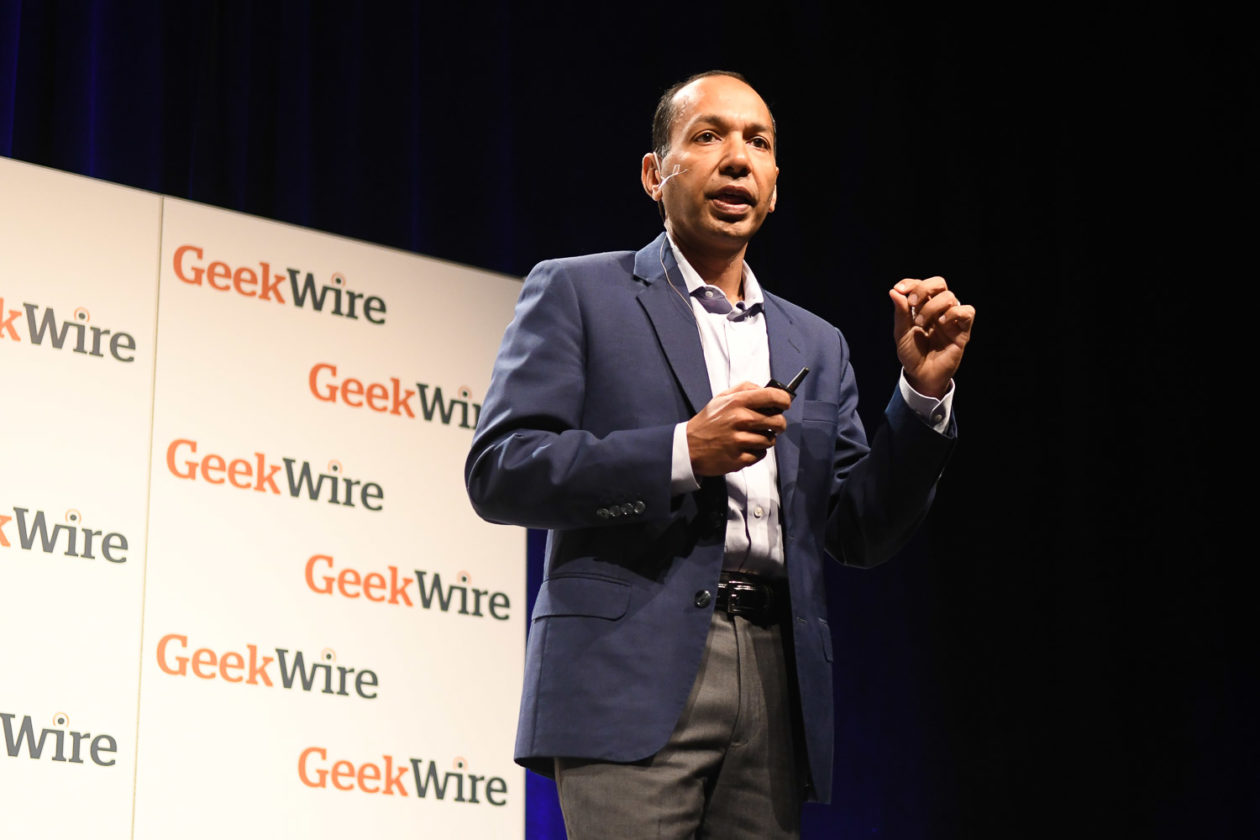
Vinod Khosla speaks at a fireside chat at AI House in Seattle in March 2025. (GeekWire File Photo)

Vinod Khosla has spent four decades building and funding companies around a single idea: hire the right people and get out of their way. He’s one of the most respected and influential investors in Silicon Valley, with a track record of big bets and a habit of not backing down.

On Saturday, a group led by the billionaire venture capitalist and his family agreed to buy the Seattle Seahawks from the estate of the late Microsoft co-founder Paul Allen for a reported $9.6 billion, which would be the highest price ever paid for an NFL team.

Khosla, 71, was born in Pune, India. He earned degrees from the Indian Institute of Technology in New Delhi and Carnegie Mellon before getting his MBA at Stanford, where he landed in Silicon Valley for good. After co-founding Sun in 1982, he spent nearly two decades as a partner at the legendary venture firm Kleiner Perkins before launching Khosla Ventures in 2004.

His firm now manages roughly $15 billion and has backed companies including DoorDash, Affirm, and Opendoor. Khosla was the first VC to invest in OpenAI, putting in $50 million in 2019. Forbes ranked him No. 1 on its Midas List of top tech investors this year and estimates his net worth at $15.6 billion.

But the Seahawks deal isn’t just about Vinod. The Allen estate’s public statement confirming the formal sale agreement described the buyer as “an ownership group led by the Khosla family,” and Vinod’s own quote in the statement was delivered “on behalf of the Khosla family.”

Estate of Paul G. Allen Reaches Agreement to Sell Seattle Seahawks pic.twitter.com/Pmv8i6FEp8

— Seattle Seahawks (@Seahawks) July 11, 2026

An NFL memo sent to all 32 teams Saturday, reported by ESPN’s Adam Schefter and others, identified his wife, Neeru Khosla, as the controlling owner, and said their son, Neal Khosla, “would be expected to have a significant leadership role in the ownership group.”

Neal may be the one to watch. He has described himself on his personal website as “an obsessive sports fan” who likes “bringing a quantitative and analytical lens to understanding the game within the game,” the Seattle Times reports.

He and his father have been San Francisco 49ers season ticket holders for 30 years, and Neal has consulted for both the 49ers and the Miami Heat. The Khosla family last year bought a 3.1% stake in the 49ers — the Seahawks’ NFC West division rivals — which they’ll now have to sell.

But Vinod Khosla’s track record is the clearest window into how the family will approach its Seahawks ownership. Here’s what we know about him based on his long career in tech.

He focuses on people and talent above all else. “A company becomes the people it hires, not the plan it makes,” Khosla said in a 2016 Startup Grind interview.

“Experience doesn’t matter. The rate of learning matters,” he told Sam Altman in a Y Combinator interview the same year, using a football analogy (fittingly as it now turns out): “Pick for the best athlete, not the person who’s the most established wide receiver who knows how to run one pattern.”

At Sun, Khosla spent an inordinate amount of his time on recruiting. He personally reconstructed the org chart of competitor DEC to identify talent that the company could poach.

Speaking at Seattle’s AI House in March 2025, Khosla’s main advice for startup founders was that their success will be driven by the people they hire and the questions they ask.

“The single most important decision by far you will make is the team you build,” he said at the time. “The more questions that get asked around your conference table, the better it will go, the faster you will learn, and the faster you will accumulate advantages.”

Vinod Khosla speaks at the Bloomberg Green conference in Seattle in July 2025. (GeekWire Photo / Lisa Stiffler)

“Talent drives everything,” he said at another event in Seattle last summer, the Bloomberg Green Seattle conference on climate change.

For the record, the Seahawks’ current leadership is ostensibly locked in: general manager John Schneider is under contract through 2031, and head coach Mike Macdonald, who led the team to its Super Bowl win in February, is signed through 2029, according to The Seattle Times.

Whether the trademark Khosla obsession with talent will translate into getting involved with draft picks and player personnel will be an interesting question to watch.

He’s a Bay Area guy, not a Seattle guy. Khosla has lived and worked in Silicon Valley since earning his MBA at Stanford in 1980. Khosla Ventures is based in Menlo Park. The family’s 49ers ties underscore that this is not a homegrown owner.

Khosla has made a handful of appearances in the Seattle area over the years. His firm led a $11 million round for Seattle-based AI legal startup Lexion in 2021, and a $15 million round in Viome, the wellness startup co-founded by Seattle-area entrepreneur Naveen Jain, in 2017.

But he has no deep roots in the Pacific Northwest, which is a major difference from Seattle native Paul Allen and his family. How quickly the Khosla family builds a connection to the city and Seahawks fans may matter as much as anything they do on the football side.

He supports the people he picks, but tells it like it is. In more than 30 years on startup boards, Khosla says he has never once voted against a management team, even when he strongly disagrees.

“I’ll argue with them, I’ll debate with them, I’ll push them, but I will not vote against them,” he said in the Startup Grind interview. The Khosla Ventures website puts it more plainly: “Once we pick a management team, we back it and don’t second-guess it.”

For a Seahawks fan base that watched Paul Allen’s sister Jody Allen take a largely hands-off approach as chair of the Allen estate, the philosophy may sound familiar, although Khosla’s version would also come with a willingness to challenge leaders behind closed doors.

For example, Khosla has said he deliberately takes positions he doesn’t believe in when coaching founders — not to mislead them, but to force them to think through risks they haven’t considered.

The Khosla Ventures approach, as explained on its site, is “brutal honesty over hypocritical politeness.”

He’s not without controversy. In 2008, Khosla bought a 53-acre property south of Half Moon Bay, Calif., that included the only access road to Martins Beach, a stretch of coastline that surfers and families had used for decades. He locked the gate and blocked public access, setting off a legal battle that has lasted more than a decade and drawn widespread criticism.

The case has gone to the California Supreme Court and back.

“Every Generation Gets the Beach Villain It Deserves,” the New York Times headlined a 2018 story about the dispute. Khosla has argued it’s a private property rights issue. Critics see it as a billionaire putting his own interests above the public.

The takeaway: he doesn’t back down, even when public opinion is against him.

He’s persistent in business, as well. That habit of not backing down has been consistent throughout his tech and investing career.

When Sun was told it had lost a critical early deal to a rival, Khosla flew from San Francisco to Boston and camped out in the prospective customer’s office until the CEO agreed to see him. By the end of the day, the company had signed with Sun, according to The Generalist.

When defective Philips monitors nearly bankrupted Sun, Khosla went home at 3 a.m. and was back by 7 a.m. for months until the crisis passed, he said in the Y Combinator interview.

“Survive long enough in your field to have time to get lucky,” he told founders at one meetup.

During a 2011 appearance in Seattle, Khosla offered this take on betting big: “I don’t mind the low probability of success, but I better be impactful if we do succeed.” He was talking about startups, but the same idea no doubt applies to chasing another Lombardi Trophy.

Data vs. gut instinct: Seahawks coach leans into analytics to support, not drive, in-game decisions

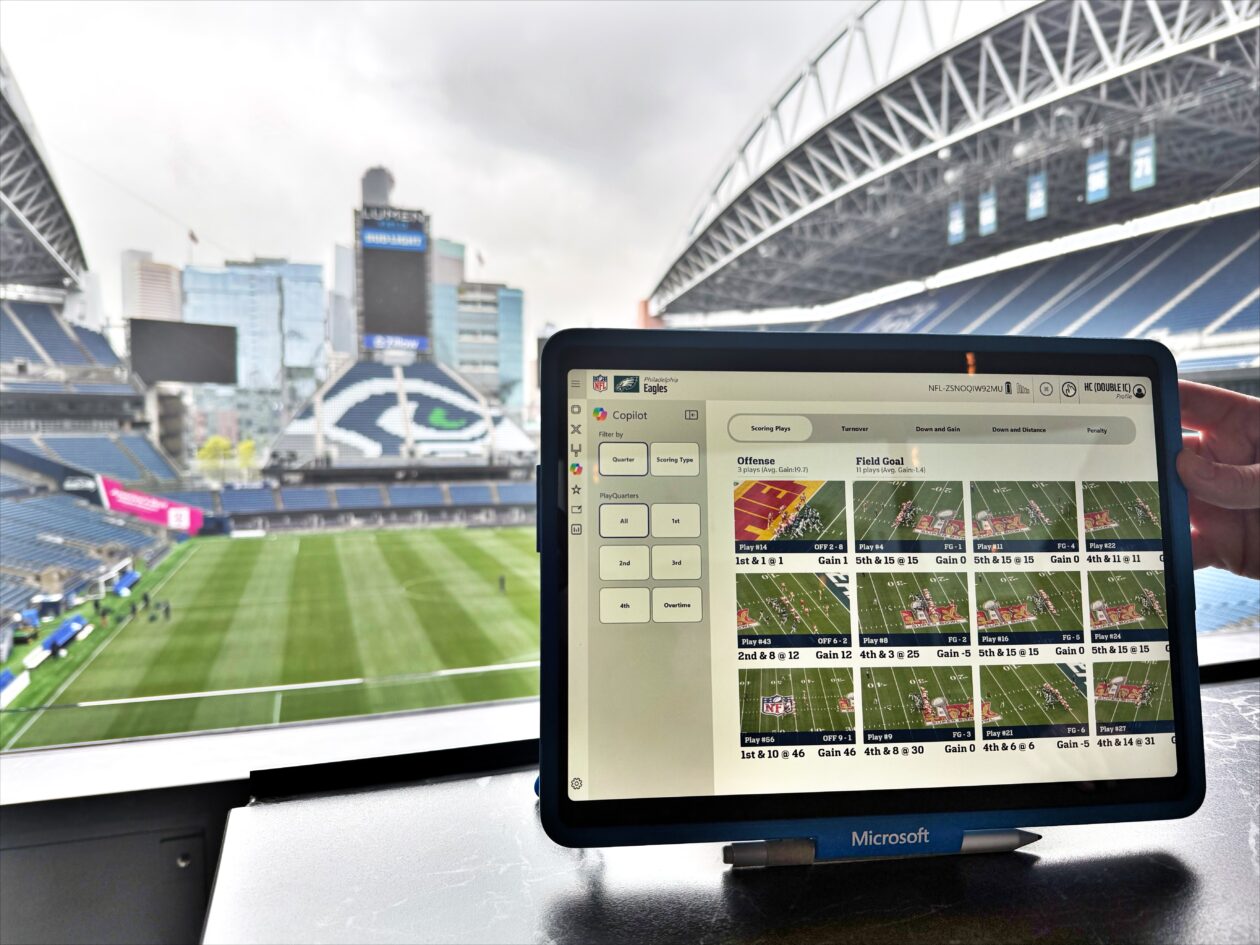
Seattle Seahawks head coach and self-professed football nerd Mike Macdonald just doesn’t understand why any coach or team would ignore the chance to lean into data and analytics.

“Why wouldn’t we use the best information out there?” he said during an interview this week on the Dan Patrick Show. “Why would you be scared about things that are going to possibly help you?”

Macdonald called himself a “psycho data guy” who needs “numbers and tendencies.” He has a new Super Bowl ring to show for his coaching style, but he’s also clear that while advanced technology and metrics may help support the team’s planning and in-game decisions, they don’t drive those decisions completely.

“You don’t have to do what the numbers say,” Macdonald said, adding that variables such as how a game is going, the feel for your own team, and gut instinct can all cancel out data suggestions.

That data-be-damned mentality came into play at the start of last season when the Seahawks, facing a 4th-and-1 from the San Francisco 49ers’ 19-yard line, ignored the analytical model that said to go for it. Macdonald opted to kick a field goal for a three-point lead and ended up losing when the 49ers came back and scored a touchdown.

Seattle started 0-1 and six months later won its second NFL title.

This year, Seattle opens against the New England Patriots, the team they beat 29-13 in Super Bowl LX.

Macdonald hasn’t learned much yet from that game, because he said he’s only watched it once, via tape and not the standard TV broadcast.

“Are you worried there’s a different ending?” Patrick laughed.

The drive to make a better golf app: Former pro athlete bets big on ‘Barkie’ and AI as a caddie

Dane Renkert, co-founder and CEO of Barkie, an AI-powered app for golfers. (Barkie Photo)

Perhaps the only downside to building a golf-focused startup is that it leaves less time to actually play golf.

Dane Renkert will take that tradeoff, for now, as he works on something that he says will change the way people play and interact around the game.

Renkert is co-founder and CEO of Barkie, a Bellingham, Wash.-based startup building an app that aims to be a true AI caddie in every golfer’s pocket — one that tracks scores by voice alone, settles betting games automatically, and rarely requires a golfer to look down at a screen.

Renkert is no slouch as an athlete and golfer. A Washington State University graduate, he played professional baseball for the Milwaukee Brewers before moving into tech and sales leadership roles at Docugami, Komiko, and Ben Kinney Companies. As a competitive golfer, he placed 13th at the 2009 World Long Drive Championship and now boasts a scratch handicap.

The name of the company is a nod to golf terminology — a “barkie” is an honest, hard-fought par saved after a golfer’s drive ricochets off a tree.

The inspiration for the startup stems from Renkert’s own frustration with existing golf mobile apps, which he argues have essentially operated as digital spreadsheets for the last decade. Incumbents like 18 Birdies, The Grint, and Golf Genius require constant manual data entry throughout a round, Renkert said.

Noting that seven out of 10 golfers still use a paper scorecard and pencil because they like the tradition or want to avoid screen distraction, Renkert set out to build a platform centered on a simple philosophy: “keep your head up and not down.”

To translate that concept into software, Renkert initially teamed up in 2025 with co-founder Zubin Wadia, an MIT grad whom he worked alongside for five years at Docugami, the Bellevue, Wash.-based AI startup. Wadia remains a strategic advisor to Barkie.

To achieve the “heads up” experience, Barkie is differentiating itself by launching a full voice user interface that eliminates manual typing entirely. Using standard gear like an Apple Watch or AirPods, golfers can simply speak the outcome of a hole to dynamically update a digital scorecard in the background.

According to Renkert, Barkie is the first to market with an AI-native, voice-first caddie that allows for natural, fluent speech on the course rather than forcing players to toggle through menus and hit arrows to log data.

“The voice thing, in particular, I believe is a massive lift technically, but it’s a big lift from a user experience side as well,” Renkert said, adding that the platform is designed to seamlessly augment the traditions of the game rather than disrupt them.

Screenshots of the Barkie app on an iPhone and Apple Watch, showing golf course GPS and scoring capabilities. (Barkie Images)

Under the hood, Barkie relies on a patent-pending dual-layer system to prevent the application from making mistakes or hallucinating numbers. A guardrailed large language model handles the conversational front end — interpreting natural voice requests, answering rules questions, or trading friendly banter.

A separate, rules-based engineering backend handles all the scoring, strokes-gained calculations, and betting math. This split ensures that while golfers can talk to the app like a human caddie, the actual bookkeeping remains completely accurate.

When the betting function comes online, that same backend will settle real-money side games — Nassau, skins, wolf, hammer bets — instantly once a round ends, sparing golfers the aggravation of hashing out who owes what on the 18th green.

Barkie’s simplest use case doesn’t require voice at all. Through a feature called ScoreShot, golfers can snap a photo of a paper scorecard. The app digitizes it and pushes the data directly to GHIN, the USGA’s official handicap system, via a partnership Renkert says gives Barkie access to course-specific data like slope rating and tee-box selection. Golfers without a club membership or GHIN account can still generate a handicap through the app, calculated according to World Handicap System guidelines.

Either way, the result is hole-by-hole performance data that Renkert says no other golf app currently offers — letting players see which holes they’re strongest and weakest on, and, he added, which holes they should be pressing their buddies on.

Barkie is available for download on iOS (optimized for iPhone, iPad, and Apple Watch companion setups) and Android devices via the App Store and Google Play Store.

The app offers a free tier that includes GPS mapping features. The premium tier unlocks unlimited hands-free voice tracking, advanced Strokes Gained analytics, the Barkie Betting Engine, and full GHIN integration. Limited-time pricing is available at $4.99 monthly or $29.99 annually.

Barkie investor and advisor Rob Gough. (Barkie Photo)

Barkie has attracted seed funding from friends and family and notable investors, including Rob Gough, an entrepreneur and collector perhaps best known outside tech circles for his record-setting $5.2 million purchase of a 1952 Topps Mickey Mantle baseball card. According to his LinkedIn, Gough is also an investor in Jeff Bezos’ AI startup Prometheus, which raised $12 billion in Series B funding last month.

“I invested in Barkie.ai because I believe they’re building something that delivers real value to golfers, not just another AI demo,” Gough said in a statement. “Great companies have an unfair advantage, and Barkie has exactly that: a founder with deep domain expertise as a scratch golfer who genuinely understands the game, combined with a world-class AI team recruited from companies like Meta, Google, and NASA.”

Barkie’s cap table also includes former Seattle Seahawks linebacker Lofa Tatupu, who serves as an advisor to the company.

Armed with high-profile backing and a team recruited from tech giants, Renkert isn’t shy about his ambitions to disrupt the entrenched players in the space.

“I want the incumbents to know I have a lot of backing, and I’m coming for you,” Renkert said. “I’m not trying to compete with you, I’m trying to take it over.”

For now, taking over means grinding behind a desk instead of on a fairway. Renkert admits that building the startup cut heavily into his own time on the course this past year — even leading to a rough showing when he tried to qualify for the U.S. Amateur.

But the grind is the point.

“I’ve done a lot of cool things in my life, but this is the hardest I’ve ever worked for something,” Renkert said. “I believe, hopefully, this will be my mantle piece.”

❌