Are you ready for some football?! If not, your parents are probably asking for the password to all the streaming services you set up for them. The 2026-2027 NFL season is once again spread across multiple streamers, so many that it might be hard to keep track of who’s playing where. Fear not, because we’ve found all the places to cheer for your favorite team, how to watch, and a couple of other perks to stream the upcoming NFL season.
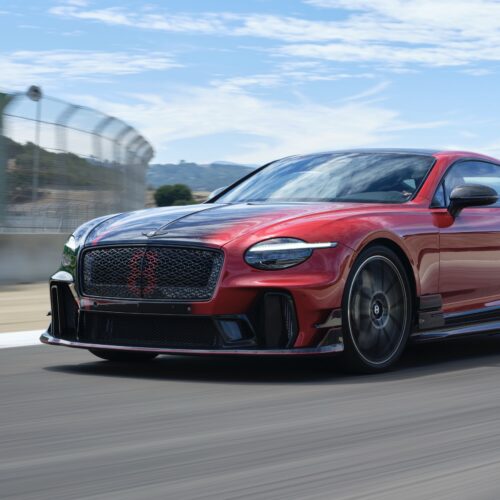
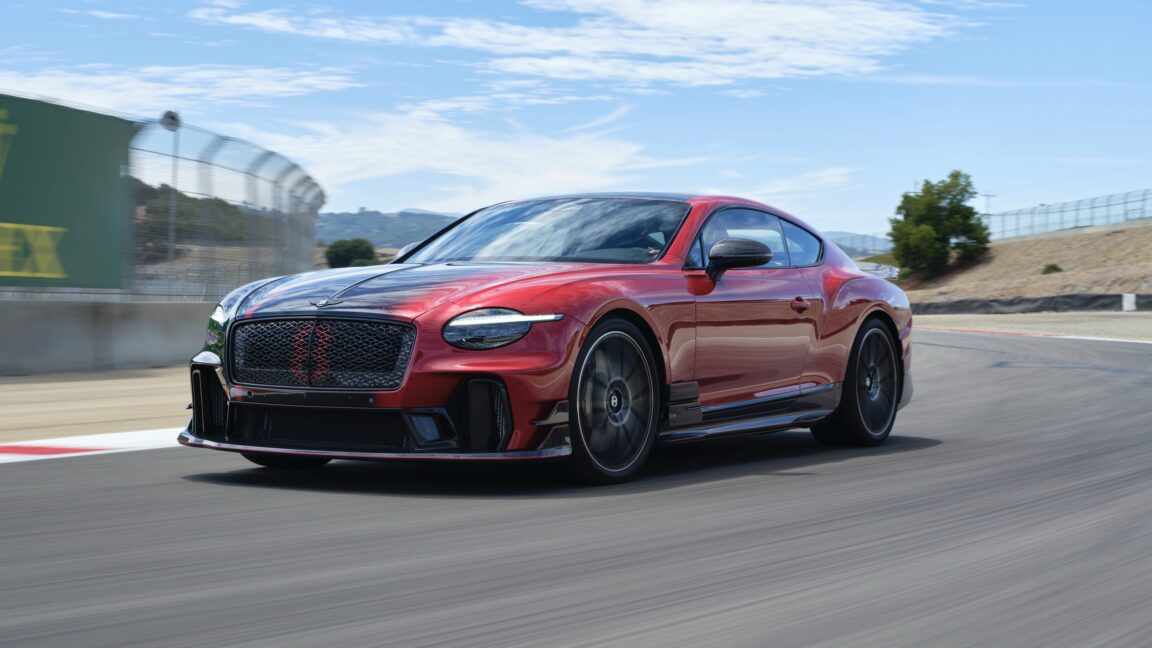
MONTEREY, Calif.—Elsewhere on these pages, you can find our first track drive of the new Bentley Supersports. Shorn of its hybrid system and stripped back to rear-wheel drive, it's not only the most driver-focused Bentley we can remember, but it's also apparently the lightest car the company has made in 85 years. But you have to go back even further into the Bentley archive to find the first car to wear the Super Sports badge. And since Bentley had done just that, bringing along to Laguna Seca an example from the time, it would have been rude to refuse the offer of a ride.
Bentley built 18 Super Sports between 1925 and 1927, taking its standard 3 Litre model and shortening the wheelbase by 9.5 inches (241 mm). Like today's Super Sports, that shaved some mass and made it a more responsive driver's car. But a fast one, too. The radiator was more tapered and thus presented less resistance against the flow of air, although like many cars at the time, the bodywork was a matter of whichever coachbuilder the owner decided upon.
Smoky's two-seat bodywork was compact for the time.
The lever for the three-speed transmission is just outside the car. Not sure the FIA or NHTSA would let you get away with that today.
Credit:
Jonathan Gitlin
Like today with the Continental GT and the new Supersports, the 3.0 L engine Bentley in the original Super Sports was more special than one you'd find in the standard car, with new pistons, a lighter flywheel, more compression, and different carburetors. Together with its unique gearing, the factory would guarantee a Super Sports that could exceed 100 mph (160 km/h); the millions of Ford Model Ts that took the roads those same years were hard-pushed to break 40 mph (64 km/h).
MONTEREY, Calif.—Last week, we brought news of the Bentley Torcal, a new electric vehicle that the luxury automaker has been cooking up at its HQ in Crewe, England. The company wants to attract new customers with its first battery EV, part of a plan to make sustainability as much a part of the brand's character as its high-end fit and finish. W12 engines have given way to V8 plug-in hybrid power, and the new Continental GT is all the better for it.
But around the same time as Ars got its first experience of that new PHEV two-door on a rather wet Spanish racetrack, some of Bentley's boffins were wondering what might happen if you also built one without the hybrid stuff.
Or all-wheel drive—something that has been a characteristic of every new road-going Bentley since the turn of the century. That would certainly cut the curb weight. So, too, would leaving out the rear seats. That sort of idea leads down a well-trodden path for some OEMs, and Porsche in particular is famous for making stripped-out road cars inspired by its race cars and making money from them, too.
Polymarket priced the World Cup in real time for over a month — every match, every stage, tournament winner odds moving by the hour as results came in. Now that it’s over, the more interesting question isn’t whether the market “worked.” It’s where it was sharp and where it wasn’t, because the gap between the two tells you more about how prediction markets actually function than any single correct call does.
Where the Market Was Genuinely Sharp
Group-stage outcomes priced tightly against actual results almost every time. When a heavy favorite faced a weak opponent, Polymarket’s implied probability tracked close to how those matchups have historically played out — nothing revolutionary, but a solid baseline signal that the market was reading available information correctly rather than just following public sentiment.
The more telling accuracy showed up in tournament-winner odds after the quarterfinal stage. Once the field narrowed, pricing tightened fast around two or three realistic contenders, and it stayed there — no wild swings on rumor, no overreaction to a single strong group-stage performance. That stability is exactly what you’d want from a market that’s actually aggregating information well, rather than one just chasing headlines.
Where It Missed
The clearest miss of the tournament was Germany. Entering the round of 32 against Paraguay, Germany sat at 10th in the FIFA rankings against Paraguay’s 41st, and pricing reflected that gap heavily in Germany’s favor — a four-time champion against a team that had opened the tournament with a 4–1 loss to the US. Paraguay took a first-half lead through Julio Enciso, Germany equalized through Kai Havertz, and the match went to penalties, where Paraguay won 4–3 — Germany’s first-ever World Cup shootout defeat, and one of the biggest upsets in the tournament’s knockout-stage history. The pricing wasn’t wrong to favor Germany; it was wrong to favor them as heavily as a 31-place ranking gap implied, in a single-elimination match that comes down to 90 minutes plus a coin-flip-adjacent shootout.
The broader miss was penalty shootouts generally, and the numbers back that up in an unexpected way: penalty conversion across the tournament dropped to 65% — the worst rate since 1966. Beyond Germany-Paraguay, the Netherlands were knocked out by Morocco in the round of 32 as well, another top-ranked side upset by a team pricing had clearly favored going in. Pre-match odds on matches that looked headed for a shootout consistently leaned toward the favorite, even as the tournament was quietly setting a decades-long record for missed kicks — the format doesn’t care much about the 90 minutes that preceded it, and this year it barely cared about accuracy at all.
Why the Misses Matter More Than the Hits
A market being right when the answer is obvious isn’t informative. Group-stage favorites usually win — you don’t need a prediction market to tell you that, a basic power ranking gets you most of the way there. The value in prediction markets shows up specifically in the harder cases: correctly weighting a 31-rank underdog’s live chances once a match is level and heading to penalties, or resisting the pull to treat a shootout as anything but close to random once it arrives.
By that standard, the World Cup market did well on the easy calls and priced Germany-Paraguay like the seed rankings mattered more than they did once the game turned into a coin flip. The volume and speed of price discovery were genuinely impressive — Paraguay’s win alone generated one of the tournament’s most-traded markets in the hours after. The edge over a good analyst’s gut read was smaller than the hype around prediction markets usually suggests, and a tournament that set a decades-long record for missed penalties is exactly the environment where that blind spot shows up hardest.
What This Says About Trading Sports Markets Generally
The practical lesson isn’t “trust the market” or “fade the market” — it’s knowing which category a given bet falls into. Markets on questions the crowd can price well from public information (is Team A meaningfully better than Team B) deserve real weight. Markets on questions that hinge on information the crowd doesn’t have — internal fitness reports, fatigue that hasn’t shown up in results yet — deserve more skepticism, because the price is often just reflecting the same public story everyone already knows, not some deeper insight.
If you’re trading sports markets on Polymarket going forward, the World Cup run is a useful data point: the market is a solid baseline, not an oracle, and the gap between those two is exactly where an attentive trader finds value.
For anyone looking to trade markets like these directly, Overdog connects to Polymarket’s contracts through Telegram — same markets, same pricing, no separate site access required.
GeekWire co-founder John Cook talks with Dan Clubbe of The Redmen TV about Jeff Bezos’ investment in Liverpool FC. (The Redmen TV Video)
What does Jeff Bezos’ new ownership stake in English Premier League powerhouse Liverpool FC mean for the storied soccer club?
I was invited by Dan Clubbe of the Liverpool fan site The Redmen TV to talk about the Amazon founder’s recent investment, Bezos’ first real foray into sports ownership.
Across the 45-minute discussion, I shared thoughts about Bezos’ transformation from the nerdy, khaki-wearing entrepreneur of his early career to the higher-profile “Buff Bezos” of the past decade.
On the surface, it appears as if Bezos will, for now, take an arm’s-length approach to Liverpool. He’s investing through a consortium, 1892 Holdings, that owns about a 38% interest in the team and an option to buy it outright.
One point I made: Bezos leads a very busy life. The sci-fi nerd’s true passion is his space company, Blue Origin, and he is also spending considerable time as the co-CEO at newly formed AI startup Prometheus. And with a new wife (Lauren Sanchez Bezos, who seems to be the true sports fan between them) there may not be enough hours in the day for the Miami resident to worry much about the inner workings at Anfield.
But Bezos does bring enormous capital and business acumen to the team.
To better understand what this might mean for Liverpool, I suggested Clubbe and his mighty team of reporters take a closer look at Amazon’s famous Leadership Principles.
Some of the most relevant Leadership Principles include “Ownership,” which asks leaders to think long term and not trade lasting value for a quick result; “Customer Obsession,” which means starting with what the customer wants and working backward; and “Insist on the Highest Standards,” setting the bar higher than most people think reasonable.
That said, the Amazon principle of “Frugality” doesn’t really play well these days on the world soccer stage.
We talked about the changing nature of global soccer, driven by big personalities and big money, and the balancing act it takes to build a soccer club while respecting the community of fans. I noted how this tightrope was a hard one for Bezos to walk in terms of his relationship to Amazon’s hometown of Seattle, something that might give Liverpool fans pause.
Watch highlights from the discussion above, and subscribe to The Redmen TV for our full discussion. Listen to a much shorter analysis on last week’s GeekWire podcast.
The Amazon founder is reportedly part of a group interested in buying a 30% stake in Liverpool Football Club, the storied English Premier League soccer team whose legendary fans belt out the show tune “You’ll Never Walk Alone” before each home match.
Bezos would join a group that includes the former co-owner of soccer club Queens Park Rangers, Amit Bhatia, who is looking to pay £1.35 billion (about $1.8 billion) for the stake, reports The Guardian. The stake is being sold by current owner Fenway Sports Group, the firm that also owns The Boston Red Sox.
Bezos, who founded Amazon in Seattle in 1994, is considered the fourth richest person on the planet with a net worth estimated by Forbes at $224 billion.
The billionaire has long been rumored as a possible sports team owner, and his name was often tossed out as a possible buyer of the Seattle Seahawks and the Washington Commanders. Earlier this month, venture capitalist Vinod Khosla and his family emerged as the lead bidder for the Super Bowl champion Seahawks at a reported purchase price of $9.6 billion.
In addition to his recent marriage to former journalist Lauren Sanchez, Bezos also is highly engaged with his space venture Blue Origin and a new AI company by the name of Prometheus, which just raised $12 billion and where he serves as co-CEO.
Owning a piece of a UK soccer club has become a status symbol of sorts for wealthy Americans, perhaps driven by the popularity of shows like Ted Lasso and Welcome to Wrexham. The latter is a documentary that tracks Hollywood stars Ryan Reynolds and Rob McElhenney and their exploits of owning the Welsh team Wrexham FC.
American owners currently own outright or a piece of some of the top clubs in the English Premier League, including Chelsea led by Todd Boehly; Arsenal owned by Stanley Kroenke; and Manchester United owned by the Glazer family. Liverpool also is considered one of the top soccer clubs on the planet, winning the Premier League trophy in the 2024-2025 season.
On a smaller scale, Remitly co-founder Shivaas Gulati joined an ownership consortium two years ago that purchased Southend United, a football club founded in 1906 and located in Southend-on-Sea, about an hour from London. They play in the National League, which is the fifth tier of English soccer.
The English Premier League season starts on Friday, Aug. 21 when defending Premier League champs Arsenal take on newly-promoted side Coventry City.

 Login
Login