Login

Data farmers: Ag-tech startup Aigen grows AI-generated weeds to train its solar-powered farm robots
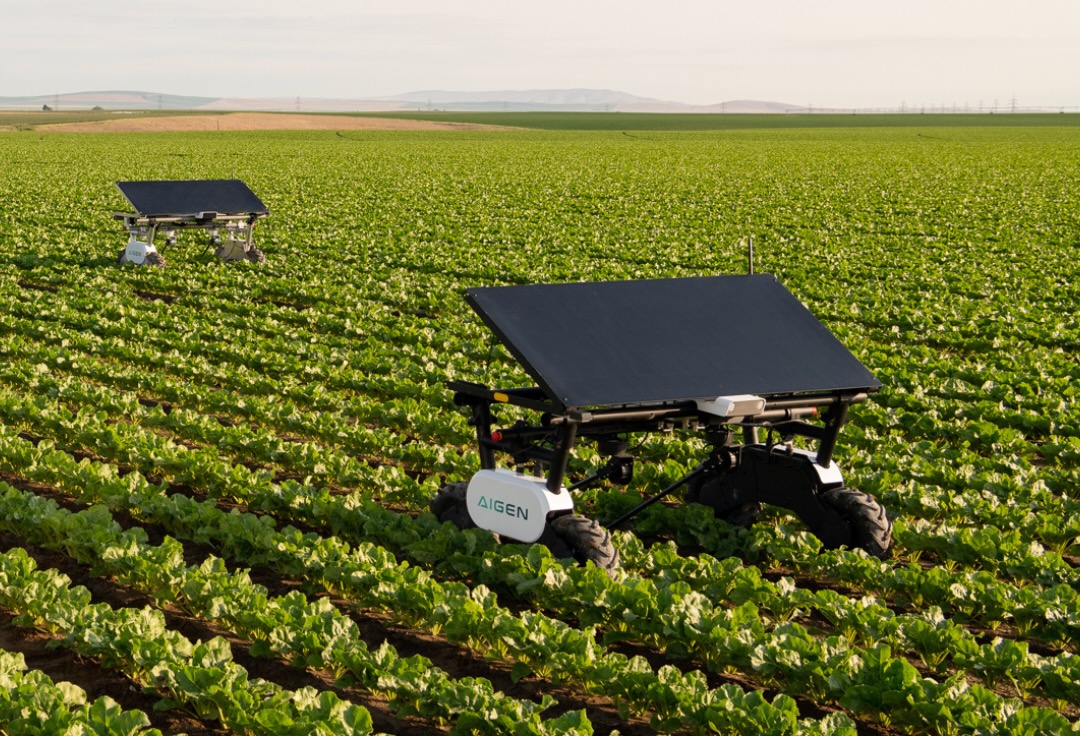
For years, Aigen has been building and tweaking solar-powered robots designed to pull weeds on farms. But the Redmond, Wash., startup is also raising a crop of its own: a growing, AI-generated collection of digital weeds and plants that teaches those robots what to pull.
That synthetic data, which Aigen calls Alchemy, is changing what the company can sell. Training its robots on a new crop used to require three to four years of collecting and labeling real-world images, co-founder and CTO Richard Wurden said. Now it takes about a week, helping Aigen attract growers of asparagus, hops, flowers, lettuce and more.
Wurden spoke with GeekWire by phone from FIRA USA, a three-day agricultural robotics expo at Yakima’s State Fair Park that wrapped up Thursday. He said Aigen made several sales at the show, including to growers it previously couldn’t serve.
“Now we’re saying yes to a bunch of crops, where previously we were locked into just doing a few,” he said.
Aigen is nearly sold out of robots for the 2027 season following the show, according to the company.
Aigen’s solar design is also getting more attention as fuel costs climb. U.S. diesel prices are up roughly 70% from a year ago, according to EIA data, and averaged nearly $6.30 a gallon this month, according to AAA. Many rival weed-control machines are pulled by diesel tractors, Wurden said, while Aigen’s robots run entirely on solar panels with a battery backup.
“It just so happens running a solar-powered robot without pesticides is the best possible timing right now,” he said.
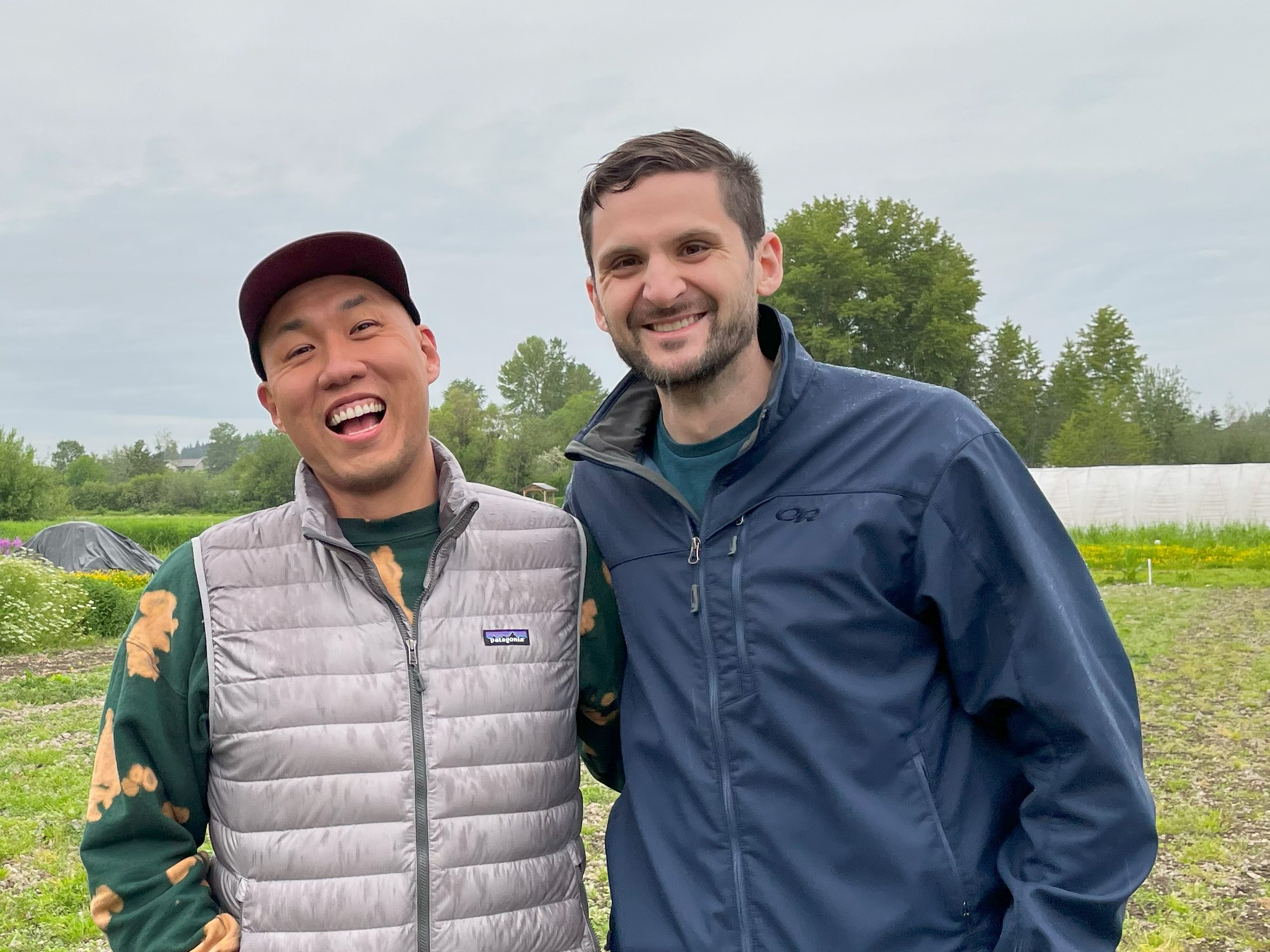
Wurden and CEO Kenny Lee founded Aigen in 2020 after meeting in a climate-focused Slack group and discovering they lived about five minutes apart. Wurden, a mechanical engineer, previously worked on battery systems at Tesla and at Seattle electric boat maker Pure Watercraft. Lee is a cybersecurity veteran who co-founded Weblife.io, which Proofpoint acquired in 2017.
The mission is personal for both founders. Lee had non-Hodgkin’s lymphoma and Wurden has type 1 diabetes — diseases Wurden said have been linked to herbicide use.
The startup raised a $4 million seed round in 2022 and a $12 million round in 2023 led by ReGen Ventures, with participation from NEA and others. Wurden said the company has raised about $26 million in total. The startup now has about 15 employees.
Aigen’s Element robots are about 6 feet wide and topped with a roughly 400-watt solar panel. Cameras and AI distinguish weeds from crops, and mechanical arms pull the weeds out at the root. The robots cost $50,000 to $70,000 each depending on configuration, and Aigen typically sells them in packs of five, Wurden said.
Aigen has built more than 100 robots, all assembled in Redmond, and logged more than 15,000 hours in fields in California, Minnesota and North Dakota. Customers include organic soybean growers in North Dakota and tomato growers in California, Wurden said, and the company is expanding a recent pilot with an unnamed Fortune 500 company.
Alchemy has also become a product in its own right.
Large agribusinesses are using Aigen’s synthetic data, Wurden said. Because the plants are generated in simulation, each one comes perfectly labeled. That matters when weeds and crops overlap in ways that are hard to sort out from real photos, especially under shifting daylight. Aigen’s robots don’t use artificial lights. Wurden said the startup built the system out of necessity, because it couldn’t afford to pay people to label images by hand.
“Our AI now labels the data for us,” he said.
The company is choosy about who gets that data. Wurden said the company would work with precision-spraying companies that use less herbicide, but not with operations that broadcast-spray fields.
Next up: robots on Washington farms early next year, the company says. It’s also developing an orchard version with arms that reach out to weed between trees. And a next-generation robot is in the works.
Aigen is one of several Washington startups using AI to fight weeds. Issaquah-based TerraClear maps individual weeds so farmers’ existing sprayers hit only those spots. Seattle-based Carbon Robotics zaps weeds with lasers and trained its AI on 150 million labeled images of real plants. Aigen is betting synthetic data can teach its robots new crops faster.
Wurden said it’s refreshing to see technologists working on these problems rather than focusing on ad clicks or another gadget or service that may not be good for society.
“I support every company working on ag technology and things that help farmers, because farmers have felt like they’re left behind for a long time,” he said. “It’s a good way to cross the aisle in politics, too. Everybody needs food.”