Solana price slipped below the psychological $100 level as broader crypto selling, a bearish 4-hour Supertrend signal, and nearby liquidation clusters increased the risk of another leg lower. Solana price falls below $100 According to data from crypto.news, Solana (SOL)…
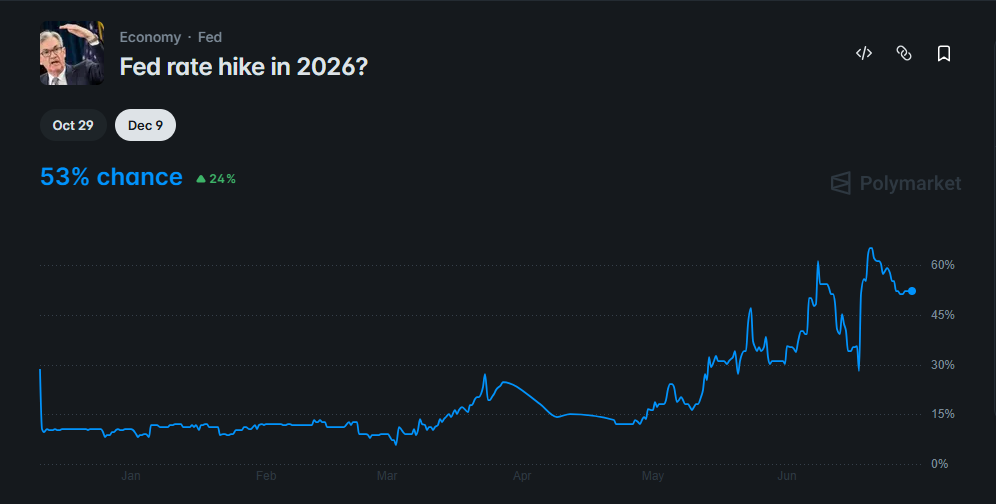
Kalshi settles bets with a rulebook and a person applying it. Polymarket settles them with a token-holder vote. World settles them with a data feed, no panel, no dispute window, nobody to call. Three live models now, and each one fails differently.
World has opened its standalone Solana prediction market platform to more than 1 million waitlisted users after creating over 150,000 markets through its Phantom integration. World gives waitlisted users direct market access World said in a Sept. 9 announcement that…
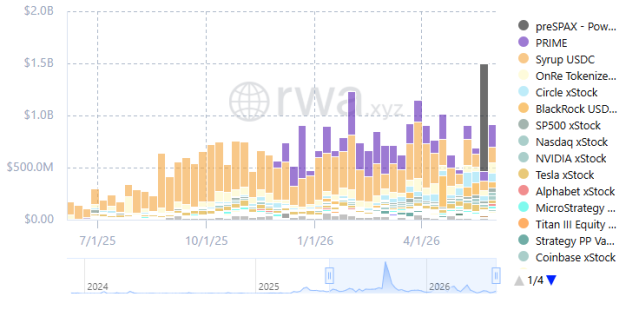
Solana has captured $348 million in net real-world asset inflows over a 30-day period, pushing its tokenized RWA value to $720 million, according to RWA.xyz data.
That is a strong number for a network usually associated with memecoins, retail trading, fast DeFi, and consumer crypto apps. RWAs give Solana a slightly different story: institutional-style capital moving into tokenized Treasuries, credit products, and other real-world asset structures.
It is important not to blur these categories.
RWA inflows are not the same thing as meme-token liquidity. They are not the same as speculative trading volume. They represent capital moving into tokenized asset products, which is a very different kind of activity.
For more details, visit the official App platform.
TL;DR
Solana recorded $348 million in 30-day net RWA inflows.
Solana RWA TVL reached $720 million.
The data points to tokenized asset growth, not meme-market speculation.
Why RWA Growth On Solana Matters
Solana’s image has changed a few times.
At different moments, it has been seen as an Ethereum challenger, an NFT chain, a memecoin chain, a DeFi chain, and a consumer crypto network. RWA growth adds another layer.
Tokenized real-world assets are often treated as a more institutional category.
They can include U.S. Treasury products, private credit, tokenized funds, real estate exposure, and other assets that connect traditional finance with blockchain settlement.
For Solana to attract meaningful RWA inflows, it suggests the network’s speed and low fees are starting to matter beyond retail speculation.
The $720M TVL Level Gives It Weight
A $720 million RWA base is not small.
It does not put Solana at the top of every tokenization leaderboard, but it gives the chain real presence in the sector. The 30-day inflow number is even more interesting because it shows recent momentum rather than only accumulated value.
Momentum matters in RWA because institutional capital tends to move carefully.
If tokenized Treasury products and credit pools are expanding on Solana, the ecosystem may be gaining trust from issuers, allocators, or infrastructure providers who need more than fast trading.
Solana’s Speed Could Help RWA Products
RWAs do not always need high-frequency settlement, but speed and cost still matter.
Lower transaction fees can make token transfers, collateral movement, and settlement operations easier. Fast confirmation times can also make user experience smoother, especially if tokenized assets are integrated into DeFi or trading platforms.
That gives Solana a practical pitch.
It can offer RWA issuers a network with liquidity, users, low costs, and growing financial infrastructure.
Do Not Overstate Institutional Adoption
The careful part is language.
RWA inflows do not mean every major institution has adopted Solana. They do not prove that all tokenized products on the network are institutionally used. They also do not guarantee that the capital will remain if yields, incentives, or market conditions change.
The data shows inflows and TVL.
That is strong enough without exaggerating it.
The Solana Market View
Solana’s RWA growth gives the network a more rounded story.
It is still a retail-heavy, fast-moving ecosystem. But the $348 million 30-day inflow figure shows tokenized asset activity is building alongside the louder trading narratives.
That matters because sustainable networks usually need more than one use case.
If Solana can keep attracting both consumer activity and institutional-style asset flows, its ecosystem becomes harder to pigeonhole.
This article draws on RWA.xyz Solana network data and public DeFiLlama Solana metrics.
This article was written by the News Desk and edited by Samuel Rae.
This report is based on information released by App. at App
Solana app Fomo has overtaken Pump.fun in 24-hour protocol revenue, generating $1.4 million in fees during the latest tracking window.
That is a pretty sharp move, because Pump.fun has been one of the defining apps in Solana’s retail trading cycle. For another app to flip it, even for a single day, tells us something about how quickly attention can move inside the Solana ecosystem.
But there is an obvious caveat.
One strong 24-hour window does not mean Fomo has permanently taken Pump.fun’s place. Crypto app revenue can swing fast, especially when traders pile into a new mechanic, launch format, or incentive loop. Still, this is exactly the kind of on-chain shift Solana traders watch closely.
For more details, visit the official Defillama platform.
TL;DR
Solana app Fomo generated $1.4 million in 24-hour protocol revenue.
That put it ahead of Pump.fun during the tracked window.
The flip is notable, but it does not prove permanent market dominance.
Why The Fomo Flip Matters
Solana has become one of the most active environments for fast-moving consumer crypto apps.
A big part of that comes down to cheap transactions, fast settlement, and a retail user base that is willing to try new trading experiences quickly. When an app catches attention on Solana, volume can appear almost immediately.
That is what makes the Fomo data interesting.
This is not just another token chart. Protocol revenue shows users are paying to interact with the app. That means actual fee generation, not only speculative market cap movement.
For Solana, fee-generating apps are important because they show there is economic activity happening on the network.
Pump.fun Is Still The Benchmark
Pump.fun has become a kind of reference point for Solana app culture.
It turned token creation into something simple, chaotic, and wildly popular. That made it one of the clearest examples of Solana’s retail flywheel: users create assets, traders chase them, liquidity moves fast, and fees stack up.
So when Fomo moves ahead of Pump.fun on daily revenue, people notice.
It does not mean Pump.fun is finished. It means traders are willing to rotate into another venue when the incentives, mechanics, or social energy line up.
That is how Solana works at its most intense.
Revenue Spikes Need Context
The danger is overreading the number.
A 24-hour spike can come from a launch event, a temporary incentive, a viral trading cycle, or concentrated activity around a small group of assets. That can make one day look bigger than the longer-term trend.
The better question is whether Fomo can repeat it.
If the app keeps generating strong fees over several days or weeks, the story becomes much more meaningful. If revenue drops back quickly, this may be remembered as a short burst of attention.
Either way, the $1.4 million day deserves coverage because it shows how quickly Solana’s app leaderboard can change.
Solana’s App Layer Is The Main Story
SOL price is not really the center here.
The better story is that Solana’s application layer remains lively. Apps are competing for users, creators, fee flows, and attention. That is exactly what a healthy consumer crypto ecosystem needs, even if some of the activity is speculative.
For builders, this kind of rotation proves there is still room to challenge incumbents.
For traders, it shows where capital is moving right now.
What To Watch Now
The next thing to watch is whether Fomo’s revenue holds up after the first surge.
If it keeps pulling traders away from Pump.fun, Solana may have a new app battle on its hands. If Pump.fun quickly retakes the lead, then Fomo’s flip still matters, but more as a sign of short-term rotation.
Either way, Solana’s revenue map is moving again.
And in this ecosystem, that usually means traders are awake.
This article draws on DeFiLlama Solana fee analytics and public Solana network data.
This article was written by the News Desk and edited by Samuel Rae.
This report is based on information released by Defillama. at Defillama
Solana price fell 1.4% on Sept. 7 after another rejection near $107, while weakening capital flows and nearby liquidation clusters increased the risk of further volatility. Solana price retreats after $107 rejection According to data from crypto.news, Solana (SOL) price…
Raydium has expanded LaunchLab to support trading between any token pair, with LaunchOnSF’s StonkFun becoming the first integration to use the new system on Solana. According to Raydium’s Sept. 7 announcement on X, LaunchLab can now pair a newly launched…
Solana validator adoption of the v1.18 client has reached 85% of consensus stake, marking an important infrastructure milestone for the network.
This is one of those updates that will not excite casual traders as much as a meme coin rally. But for the health of the chain, it matters.
Validator software upgrades are how networks improve performance, reliability, and execution over time. In Solana’s case, the v1.18 release is tied to improvements around transaction scheduling, block propagation, and reduced state contention during periods of heavy demand.
That matters because Solana’s whole pitch depends on staying fast when activity gets intense.
For more details, visit the official Github platform.
TL;DR
Solana validator client v1.18 has reached 85% consensus stake adoption.
The release includes improvements around transaction scheduling and network performance.
The upgrade does not change SOL tokenomics.
Why Validator Adoption Matters
A blockchain upgrade is only meaningful if validators actually run it.
Developers can release new software, but the network depends on validator adoption. If too little stake upgrades, new features or performance changes may not become broadly effective. If enough stake upgrades, the network can move forward with more confidence.
That is why the 85% mark matters.
It shows that a large share of Solana’s consensus weight has moved to the newer client version. Not every validator has necessarily upgraded, but the network has reached a meaningful adoption threshold.
For a high-throughput chain, that is a big operational signal.
Solana Needs Performance To Stay Its Brand
Solana is judged differently from many chains.
Ethereum is judged on security, settlement depth, and ecosystem breadth. Bitcoin is judged on monetary strength and resilience. Solana is judged heavily on performance.
Fast blocks, cheap transactions, and high-volume activity are central to the network’s identity.
That means software upgrades are not background noise. They are part of the product. If Solana wants to support DeFi launches, memecoin trading bursts, NFT activity, payments, and consumer apps, the validator layer has to keep improving.
Transaction Scheduling Is A Real Bottleneck
High activity can create stress.
When lots of users and bots compete for blockspace, the network needs to order, process, and propagate transactions efficiently. Poor scheduling can lead to congestion, failed transactions, and a worse user experience.
Solana has dealt with those issues before.
So improvements to the transaction scheduler and state contention are worth watching. They are not glamorous, but they speak directly to whether the network can handle the kind of activity its supporters expect.
Not A Tokenomics Event
This update should not be confused with a supply change.
The v1.18 client adoption milestone does not alter SOL issuance, staking rewards, fee burns, inflation, or governance economics by itself. It is a software and infrastructure update.
That is still important.
A chain can have good tokenomics and poor performance, or strong performance and weak economics. This story is about the performance side.
The Network Signal
Solana’s v1.18 adoption shows the validator network moving through another infrastructure upgrade cycle.
For builders, that can mean more confidence in the chain’s ability to handle demanding apps. For users, it may eventually translate into smoother execution during busy periods. For traders, it is a reminder that Solana’s story is not only about price.
The network is still being tuned.
And for a chain that sells itself on speed, those boring-looking technical milestones are exactly the ones that count.
This article draws on Solana v1.18 release materials and validator adoption data.
This article was written by the News Desk and edited by Samuel Rae.
This report is based on information released by Github. at Github
Solana ecosystem tokens have outpaced the broader altcoin market in recent performance benchmarks, giving traders another reason to watch the network’s internal rotation rather than SOL alone.
That is the interesting part here. Solana is not just one token story anymore.
When the ecosystem is active, capital can move through memecoins, DeFi tokens, infrastructure names, liquid staking assets, wallets, launchpads, and consumer-facing projects. Sometimes SOL leads. Sometimes the smaller ecosystem tokens move harder.
The latest performance data points to that second dynamic.
For more details, visit the official Coingecko platform.
TL;DR
Solana ecosystem tokens have outperformed broader altcoin benchmarks.
The move shows rotation inside the Solana ecosystem, not just demand for SOL.
Performance data should not be turned into a future price prediction.
Solana Rotation Has Its Own Rhythm
Solana has become one of the most active retail ecosystems in crypto.
Low fees and fast settlement make it easier for traders to move quickly between assets. That can create intense rotation when sentiment improves. Capital enters SOL, then spills into ecosystem tokens, memecoins, DeFi apps, and other smaller plays.
This is part of what makes Solana exciting.
It is also what makes it risky.
When liquidity is strong, ecosystem tokens can run faster than the broader market. When sentiment fades, those same tokens can fall quickly.
That is why performance benchmarks need context.
Ecosystem Tokens Tell A Different Story Than SOL
SOL is the network’s main asset.
It reflects broad investor appetite for Solana as an ecosystem. But smaller Solana tokens can show where traders are taking more specific risk. They may point to attention around a particular app, sector, launch, or narrative.
That makes ecosystem performance useful.
If multiple Solana-linked tokens are outperforming, it can suggest that activity is spreading beyond the base asset. That often happens when traders feel more confident and start looking for higher-beta opportunities inside a strong chain.
Outperformance Is Not Always Quality
This is worth saying clearly.
A token outperforming does not automatically mean the project is strong. Some moves are driven by speculation, thin liquidity, incentives, listings, or social momentum. Solana’s ecosystem has plenty of serious builders, but it also has plenty of fast-moving risk.
So the data needs a careful read.
The useful point is that Solana-linked assets are attracting attention. The harder question is which parts of that attention are durable.
Why Traders Watch Ecosystem Breadth
Breadth matters in crypto.
If only one asset is moving, the rally can be narrow. If many tokens within an ecosystem are moving, the market may be showing deeper participation.
For Solana, stronger ecosystem breadth can support the idea that the network is not only benefiting from SOL demand, but from wider on-chain activity and speculation.
That can feed back into the main network narrative.
But again, it is not automatic. Performance needs to be paired with usage, liquidity, developer activity, and product traction.
The Market Signal
The latest benchmark shows Solana ecosystem tokens running ahead of the wider altcoin market.
That tells us traders are taking risk inside the Solana ecosystem again. It also suggests that the network’s internal market remains lively after a strong August.
The next test is whether the move spreads into real activity.
If trading volume, app usage, and liquidity support the price action, the ecosystem story gets stronger. If the move is mostly speculative, it may cool quickly.
Either way, Solana remains one of the main places where altcoin rotation is happening.
This article draws on CoinGecko Solana ecosystem performance data.
This article was written by the News Desk and edited by Samuel Rae.
This report is based on information released by Coingecko. at Coingecko
U.S. spot Solana ETFs recorded $925,000 in net daily inflows as September trading opened, giving SOL markets a fresh regulated-demand signal after a strong August.
The figure is modest compared with larger Bitcoin and Ethereum ETF flow days, but it still matters. Solana funds are at an earlier stage of market development, and even smaller daily inflows can help show whether regulated investors are building interest in SOL exposure.
For traders, the key point is not the size alone. It is the direction.
Money moved into the products at the start of a new month, suggesting that Solana’s institutional access story remains active.
For more details, visit the official Farside platform.
TL;DR
U.S. spot Solana ETFs recorded $925,000 in net daily inflows.
The inflows came as September trading opened.
The number is a daily flow figure, not total AUM or cumulative demand.
Solana ETF Demand Is Still Developing
Bitcoin ETFs have already become a central part of crypto market structure.
Ethereum ETFs are also building a clear institutional channel. Solana ETFs, by comparison, remain a newer and more closely watched category. The market is still trying to understand how much demand exists for regulated SOL exposure.
That makes daily flow data important.
It gives investors a direct read on whether capital is moving into or out of the products. A $925,000 inflow is not huge, but it is positive. After Solana’s strong August rally, that matters because traders want to know whether momentum is being supported by regulated demand or mostly by spot-market rotation.
Why The Timing Matters
September’s opening sessions can set the tone for the month.
Traders often reassess positioning after month-end. Funds may adjust exposure. ETF flows can show whether investors are leaning into a trend or taking profits after a strong move.
For Solana, the inflow follows a period of renewed attention around the network, its ecosystem, and its market performance.
That makes the ETF data useful.
It suggests that at least some investors are willing to keep adding SOL exposure rather than stepping away after August’s move.
Keep The Number In Context
The inflow should not be overstated.
A single daily print does not prove sustained institutional adoption. It does not guarantee continued SOL strength. It does not say anything about total long-term demand unless it becomes part of a longer pattern.
Daily ETF flows can reverse quickly.
The more important question is whether Solana funds can produce consistent inflows across several sessions and whether those flows deepen as more investors become comfortable with the product category.
Solana’s Institutional Case
Solana’s appeal to investors comes from several angles.
The network offers high throughput, low fees, an active developer base, strong retail recognition, DeFi activity, memecoin liquidity, and growing institutional interest. ETF access can package that exposure in a more familiar format for investors who do not want to hold SOL directly.
That wrapper matters.
It can move Solana from exchange-native trading into brokerage and portfolio channels.
The Market Signal
The $925,000 inflow is a small but positive data point.
It tells traders that Solana ETF demand did not disappear as the new month opened. It also gives the market another figure to compare against Bitcoin and Ethereum ETF flows.
For now, Solana’s regulated-access story remains intact.
The next few sessions will decide whether this was a quiet positive start or the beginning of a stronger September flow trend.
This article draws on U.S. spot Solana ETF flow data from Farside Investors.
This article was written by the News Desk and edited by Samuel Rae.
This report is based on information released by Farside. at Farside
Solana Mobile’s SKR token has become one of the strongest weekly performers among the top 200 crypto assets, putting the Solana mobile ecosystem back in the spotlight.
Market data showed SKR leading the weekly gainers list after a sharp move that outpaced most large and mid-cap tokens. The rally reflects renewed attention on Solana Mobile, which has become an important part of Solana’s consumer-facing strategy.
That said, performance rankings need careful framing.
A weekly gainer list shows momentum. It does not prove long-term adoption, sustainable user demand, or lasting token value. SKR now needs product traction to support the market attention.
For more details, visit the official Coingecko platform.
TL;DR
Solana Mobile’s SKR token ranked among the top weekly gainers in the crypto top 200.
The move renewed attention on Solana’s mobile ecosystem.
A strong weekly gain is not proof of durable adoption.
Why Solana Mobile Matters
Solana Mobile is one of the more unusual ecosystem bets in crypto.
Most chains center on wallets, DeFi apps, exchanges, and developer tools. Solana has also pushed into hardware and mobile distribution, trying to make crypto more accessible through consumer devices and app experiences.
That is a difficult strategy, but potentially powerful.
If mobile users can access wallets, payments, apps, and token experiences more smoothly, Solana could build a distribution channel that does not depend entirely on desktop wallets or centralized exchanges.
SKR’s rally brings that thesis back into view.
Token Momentum Can Move Fast
Crypto market rankings can change quickly.
A token can enter the top gainers list because of product news, speculation, liquidity shifts, exchange listings, ecosystem incentives, or social momentum. In SKR’s case, the Solana Mobile connection gives traders a clear narrative.
Mobile crypto remains a category with huge ambition.
The question is whether the market is pricing actual adoption or simply chasing a fresh ecosystem story.
That distinction matters.
Consumer Crypto Is Still Hard
Building consumer crypto products is not easy.
Users need simple onboarding, safe wallets, useful apps, strong security, and reasons to return. Hardware adds another layer of complexity: manufacturing, distribution, support, app compatibility, and developer interest.
Solana Mobile is trying to solve some of those problems.
But token performance alone does not prove the device or ecosystem has solved them.
Market excitement can arrive before user behavior confirms the thesis.
Why Traders Are Watching SKR
SKR gives traders a way to express a view on Solana’s consumer layer.
If Solana Mobile gains traction, the token may benefit from ecosystem activity, user growth, or product demand. If mobile adoption disappoints, the rally may fade.
That makes SKR more specific than SOL itself.
SOL represents the broader Solana network. SKR is tied more closely to one consumer-facing vertical inside that ecosystem.
That can make it move more aggressively in both directions.
What Comes Next
The next test is whether Solana Mobile can convert attention into usage.
Traders will look for device demand, app activity, wallet usage, developer adoption, and any official ecosystem updates. Without those, SKR’s weekly gain may remain a market momentum story rather than a product adoption story.
For now, the token’s surge shows that Solana’s mobile strategy still has market attention.
The challenge is turning that attention into a working consumer crypto ecosystem.
This article is based on public market data for Solana Mobile’s SKR token.
This article was written by the News Desk and edited by Samuel Rae.
This report is based on information released by Coingecko. at Coingecko
Solana has broken out of a 10-month downtrend after a strong August rally, with SOL reclaiming the $100 level and finishing the month up roughly 46%.
CoinGecko market data showed SOL recovering sharply through August, reversing a long stretch of weakness and putting momentum back on the side of bulls. The move makes Solana one of the stronger large-cap assets in the latest market rotation.
Still, this is a market structure story, not a guaranteed continuation call.
A 46% monthly rally is meaningful, but it does not prove the next leg higher is automatic. Solana now needs follow-through, stable liquidity, and continued ecosystem strength to hold the breakout.
For more details, visit the official Coingecko platform.
TL;DR
SOL reclaimed the $100 level after a 46% August rally.
The move broke a 10-month downtrend.
The breakout needs confirmation before traders treat it as a durable trend shift.
Why The Downtrend Break Matters
Long downtrends shape trader psychology.
When an asset trends lower for months, rallies often get sold. Traders become cautious, liquidity thins, and investors wait for evidence that momentum has changed. Breaking that structure can shift sentiment quickly.
Solana’s August move does that.
Reclaiming $100 gives the market a clean psychological level. Breaking the downtrend gives technical traders a reason to re-evaluate. A strong monthly performance gives momentum funds and retail traders another reason to pay attention.
That combination can be powerful.
Solana Has More Than One Catalyst
Solana’s rally is not happening in a vacuum.
The network has seen renewed attention around ETF access, mobile ecosystem activity, DeFi usage, governance debates, and high-throughput applications. Traders may also be rotating into assets that lagged earlier in the cycle but still have strong communities and liquidity.
SOL benefits from that setup.
It remains one of the few non-Bitcoin, non-Ethereum assets with enough liquidity, brand strength, developer activity, and exchange support to attract large flows during a risk-on move.
That helps explain why it can move quickly when sentiment turns.
Reclaiming $100 Is Symbolic
Round levels matter.
For Solana, $100 is not just a number. It is a sentiment marker. Holding above it can make the asset feel stronger, especially after a long downtrend. Falling back below it could make the breakout look less convincing.
That is why the next few sessions matter.
Traders will watch whether SOL builds support above $100 or treats the level as a temporary stop during a volatility spike.
Avoiding The Price Prediction Trap
A breakout does not guarantee a target.
Solana has moved strongly, but the market can still reverse. Broader crypto weakness, Bitcoin volatility, ETF flow changes, macro stress, or network-specific issues could all pressure the asset.
The responsible read is that SOL has improved its technical position.
That is different from promising a specific next price level.
What The Market Watches Next
The next signals are volume, ETF flows, on-chain activity, and whether Solana’s ecosystem keeps producing real usage.
If spot demand continues and network metrics support the move, the downtrend break may become more durable. If the rally is mostly momentum-driven, traders may become cautious once volatility cools.
For now, Solana has done something important.
It broke a long downtrend, reclaimed $100, and returned to the center of the large-cap altcoin conversation.
This article is based on public Solana market data from CoinGecko.
This article was written by the News Desk and edited by Samuel Rae.
This report is based on information released by Coingecko. at Coingecko
Charles Schwab is expanding its crypto platform beyond Bitcoin and Ethereum, adding support for Solana, Avalanche, and Chainlink exposure, according to validated platform materials.
The move is notable because Schwab is not a crypto-native exchange. It is one of the largest brokerage names in US finance, and its product decisions can shape how traditional investors access digital assets.
The expansion suggests that regulated investor demand is moving beyond the two largest crypto assets.
Bitcoin and Ethereum remain the core institutional products. But Solana, Avalanche, and Chainlink are now being treated as liquid enough, recognizable enough, or strategically relevant enough to enter the next layer of brokerage crypto access.
For more details, visit the official Schwab platform.
TL;DR
Charles Schwab is expanding crypto access beyond Bitcoin and Ethereum.
Solana, Avalanche, and Chainlink are being added to the platform.
The move should not be described as a spot ETF launch or custody approval unless Schwab’s materials say so.
Why Schwab Matters
Schwab brings traditional-market credibility.
When a major brokerage expands crypto access, it can lower the barrier for investors who do not want to use offshore exchanges, self-custody, or complex wallet setups. That matters because many investors prefer familiar account infrastructure.
Schwab’s move also helps normalize crypto as a broader asset class.
Bitcoin and Ethereum were the obvious starting points. Adding more assets suggests the platform sees demand for exposure beyond BTC and ETH.
That is a meaningful shift.
Solana, Avalanche And Chainlink Offer Different Narratives
The three added assets are not interchangeable.
Solana is a high-throughput smart contract network with a large retail and DeFi ecosystem. Avalanche has focused heavily on subnets, institutional deployments, and tokenized asset infrastructure. Chainlink provides oracle and cross-chain data services used across many crypto applications.
Together, they give investors exposure to different parts of the digital asset market.
That may be the point. A broader platform can let investors express views on smart contracts, tokenization, infrastructure, and cross-chain data rather than only holding the two largest assets.
Not The Same As ETF Approval
The distinction is important.
Platform support does not mean the SEC has approved spot ETFs for all three assets. It does not necessarily mean Schwab is offering direct custody in every possible sense. The exact product structure matters.
Investors need to understand whether they are trading spot crypto, accessing exposure through a specific wrapper, or using another product type.
The headline is access expansion. The details determine what kind of access.
Brokerage Distribution Could Shape Altcoin Demand
If major brokerage platforms keep expanding crypto menus, the altcoin market could change.
Many investors currently access smaller crypto assets through exchanges. Brokerage access could bring a different kind of buyer: retirement-account investors, advisory clients, portfolio allocators, and retail traders who prefer traditional platforms.
That may increase liquidity and visibility for supported assets.
But it may also create a sharper divide. Assets supported by major brokerages could gain legitimacy, while unsupported tokens may remain more purely crypto-native.
The Clean Read
Schwab’s expansion is another sign that crypto access is moving into mainstream financial platforms.
Bitcoin and Ethereum are no longer the whole conversation. Solana, Avalanche, and Chainlink are being pulled into the next wave of brokerage-supported digital asset exposure.
The move does not settle regulatory questions. It does not guarantee demand. It does not turn every altcoin into an institutional asset.
But it does show that one of the biggest names in brokerage is willing to widen the digital asset menu.
That matters for the market’s next phase.
This article is based on Charles Schwab platform materials and related public information.
This article was written by the News Desk and edited by Samuel Rae.
This report is based on information released by Schwab. at Schwab
Solana validators have begun voting on SGP-0003, a governance proposal that would restructure parts of the network’s fee model and potentially increase daily SOL burns.
The vote opened on August 23 and runs through Epoch 1023, which is expected to conclude on August 27. The proposal introduces a variable, resource-based transaction fee that would be burned in full, replacing the current flat-fee model for the affected resources.
If approved, the change is projected to increase daily SOL burns from roughly 650 SOL to between 7,500 and 9,000 SOL.
That is a major token-economics proposal, but it is not active yet.
The vote is ongoing. SOL has not become deflationary because of the proposal, and the network’s supply dynamics have not yet changed.
TL;DR
Solana validators are voting on SGP-0003.
The proposal would introduce a fully burned resource-based fee.
Projected daily burns could rise from about 650 SOL to 7,500–9,000 SOL if approved.
Why Fee Burns Matter
Solana is known for speed and low transaction costs.
But high activity does not automatically mean strong token capture. Investors and validators often debate how network usage should feed into SOL’s long-term economics.
Fee burning is one way to connect activity with supply dynamics.
If more fees are burned when more resources are consumed, the network creates a clearer link between usage and token scarcity. That does not guarantee price appreciation, but it can make the economic model easier to understand.
That is why SGP-0003 is getting attention.
Resource-Based Fees Could Change Incentives
A resource-based fee model is more flexible than a flat-fee structure.
Different transactions can place different demands on the network. A variable fee model can better reflect the cost of consuming specific resources. Burning those fees in full then removes that amount of SOL from circulation.
The design aims to make heavy usage more economically meaningful.
But there are trade-offs. Validators, users, developers, and applications all care about fee predictability. Solana’s low-cost user experience has been part of its appeal, so any fee redesign must avoid undermining that advantage.
Validator Voting Is The Key Step
The proposal is now in the hands of validators.
That matters because Solana governance depends on validator participation and network coordination. A proposal can look attractive on paper, but it still needs support from those responsible for running the network.
If SGP-0003 passes, attention will move to implementation.
If it fails, Solana’s fee and supply debate will continue in another form.
Either way, the vote shows that token economics are becoming a more active governance topic for the network.
Do Not Call SOL Deflationary Yet
The projection of 7,500 to 9,000 SOL burned per day is eye-catching.
But it is conditional. It depends on approval, implementation, network usage, and how the fee mechanism works under real conditions. It should not be described as an existing burn rate.
Nor should it be used to claim SOL is already deflationary.
A network’s supply profile depends on issuance, burns, staking dynamics, and activity. Fee burning is one part of the equation.
What Comes Next
The voting window through August 27 will decide whether SGP-0003 moves forward.
If validators approve it, Solana’s community will watch how quickly the change can be implemented and whether real burn levels match projections. If not, the proposal may be revised or replaced.
For now, Solana is having the kind of economic debate mature networks eventually face.
The chain has proven it can handle activity. Now validators are deciding how that activity should affect SOL’s supply mechanics.
US spot Solana ETFs recorded $15 million in daily net inflows on August 20, marking their largest single-session inflow in three weeks.
The figure is important because it is a daily flow number, not a cumulative total. It gives traders a cleaner read on fresh institutional demand for SOL exposure through regulated ETF products.
Solana already had a broader ETF milestone earlier in the week, but this session-specific figure tells a different story.
It shows renewed near-term buying, rather than only long-term cumulative asset gathering.
TL;DR
US spot Solana ETFs saw $15 million in daily net inflows.
The session was the strongest in three weeks.
The figure is daily flow data, not cumulative inflows.
Why Solana ETF Flows Matter
Solana is increasingly being watched as the next major institutional crypto asset after Bitcoin and Ethereum.
Bitcoin has the strongest ETF base. Ethereum has the second-largest institutional narrative. Solana is trying to prove that regulated investor demand can extend deeper into the altcoin market.
ETF inflows help measure that.
When investors allocate through spot Solana ETFs, they are choosing SOL exposure through traditional brokerage and custody infrastructure rather than only through exchanges or wallets.
That matters for adoption because some investors cannot or will not interact directly with crypto networks.
The Daily Number Is The Story
A $15 million inflow may not sound huge compared with Bitcoin ETF numbers.
But for Solana, the significance is relative. It was the largest daily inflow in three weeks, showing that demand improved at a specific moment rather than slowly accumulating in the background.
Daily flow spikes can change sentiment.
They suggest investors are responding to market conditions, price action, or broader appetite for non-BTC crypto exposure.
If those inflows continue, the Solana ETF narrative becomes stronger.
Do Not Confuse It With Cumulative Flows
The distinction matters because Solana ETF stories can be easy to blur.
Cumulative inflows show how much net capital has entered the products over time. Daily inflows show what happened in one session. Both are useful, but they measure different things.
This $15 million figure is daily net inflow data.
It should not be described as a total asset base or a lifetime flow milestone. It also should not be used to imply every recent session was equally strong.
Precision matters in ETF coverage.
Solana’s Institutional Case Is Still Early
Solana has advantages that institutional investors may find attractive: fast settlement, active developer activity, strong liquidity, and a large retail base.
But institutional adoption takes time.
ETF demand needs to be steady, not just occasional. Market makers need depth. Products need tight spreads. Investors need confidence that SOL’s network and ecosystem can support long-term relevance.
A strong inflow day is helpful, but it is only one data point.
What To Watch Next
The next question is whether Solana ETFs can sustain inflows across multiple sessions.
If the products continue to attract capital, SOL may become a more established part of regulated crypto allocation. If flows fade, the August 20 number may look like a temporary demand burst during a broader rally.
Traders will also watch whether ETF demand lines up with spot volume and on-chain activity.
For now, Solana has another positive institutional signal.
The ETF inflow number is not enormous compared with Bitcoin, but for SOL it is meaningful — and it shows regulated demand is still alive.
 Login
Login