❌

Reading view

There are new articles available, click to refresh the page.

Next Week’s Midterms Could Stall the CLARITY Act and Test Crypto’s Political Clout: TD Cowen 

Bitcoin Magazine
Next Week’s Midterms Could Stall the CLARITY Act and Test Crypto’s Political Clout: TD Cowen 

Washington’s crypto agenda hinges on next week’s midterm elections, according to a new policy note from TD Cowen, shared with Bitcoin Magazine. 

Analyst Jaret Seiberg warned in the note that the probable results could make it difficult for Congress to pass the CLARITY Act over the next two years. The bill would set the rules for bitcoin and other digital assets, and the industry has spent $176 million on more than 100 races to shape the outcome. Here are a couple of the results:

A Democratic sweep is the most probable outcome

Prediction markets cited in the report give Democrats a 90% chance of winning the House and a 62% chance of winning the Senate. TD Cowen considers this the most negative scenario for bitcoin and the broader crypto sector. Under it, Sen. Elizabeth Warren would become Senate Banking Committee chair. Seiberg describes her as a crypto skeptic who has led opposition to the CLARITY Act, and he expects her to conduct tough oversight of federal regulators.

Warren cannot stop regulators from adopting policies that favor the industry. Seiberg expects President Trump to remain favorable toward crypto, so he would veto any bill that limits his regulators’ authority. Democrats would lack the votes to override him. As a result, policy changes are expected to focus on tokenization, perpetual futures, and stablecoins.

A split Congress with Republicans holding the Senate

The second scenario keeps Democrats in control of the House while key Senate races stay close enough to break for Republicans. Sen. Tim Scott would keep his Banking Committee gavel. TD Cowen views this outcome as a better result for bitcoin, because Rep. Maxine Waters could trade support for parts of the market structure bill in exchange for investor protections and action on her other priorities. 

Adverse legislation would be blocked from reaching the president’s desk.

A Republican sweep is the least likely but best outcome for crypto

Kalshi gives Republicans a 10% chance to keep the House and a 35% chance to keep the Senate. TD Cowen calls this the best path for crypto policy, though the margins matter. A wider Senate majority would improve the odds that leaders advance the CLARITY Act in 2027 or 2028, and they could attempt a revival during the lame-duck session. 

A narrow majority, by contrast, would leave the bill stalled, as Democrats keep pushing ethics provisions that the president opposes. When the Senate blocked the bill, Bitcoin-related stocks tumbled.

For background, the CLARITY Act would create federal rules for digital assets. The House passed its version in July 2025 by a 294-134 vote. The Senate Banking Committee approved its own version in May 2026 by a 15-9 vote, with two Democrats joining Republicans.

On the Senate floor, a cloture vote failed 49-50 on September 15. Democrats want ethics language that would bar senior officials, including the president, from profiting from crypto ventures. Republicans and industry groups resist those limits. Stablecoin yield is another dispute. Each side says the other is blocking progress, and the bill is stuck.

This post Next Week’s Midterms Could Stall the CLARITY Act and Test Crypto’s Political Clout: TD Cowen  first appeared on Bitcoin Magazine and is written by Micah Zimmerman.

Blockchain Association Presses Congress on Crypto Taxes as Clarity Act Stalls

Bitcoin Magazine

Blockchain Association Presses Congress on Crypto Taxes as Clarity Act Stalls

The Blockchain Association sent a letter to Senate and House leadership on Thursday asking Congress to pass bipartisan digital asset tax legislation, the group’s first broad push on taxes since the Clarity Act failed in the Senate last month.

The letter, signed by Chief Policy Officer Lindsay Fraser and addressed to Majority Leader John Thune, Minority Leader Chuck Schumer, Speaker Mike Johnson and Minority Leader Hakeem Jeffries, argues that the rules governing the 67 million Americans who hold digital assets “were written for a different era.” 

The group paired it with a new site, TaxClarityforAmerica.com, built for constituents to contact their representatives.

The asks will sound familiar to anyone who has followed the tax fight: a de minimis exemption for small transactions, cash treatment for stablecoins, tax on mining and staking rewards at sale instead of receipt, broker reporting limited to firms that hold customer assets, and wash sale rules that close loss harvesting without catching everyday transactions. 

The letter adds a safe harbor for foreign traders on U.S. exchanges, a mark-to-market election, and R&D credit eligibility for blockchain development. What the letter leaves out is an endorsement. Two bills are somewhat in play, and the association named neither.

Where the tax bills stand

The House moved first. One day after the Clarity Act failed in the Senate, the Ways and Means Committee approved the Digital Asset Tax Certainty Act, H.R. 10357, a 114-page package from Chairman Jason Smith (R-MO). It exempts network fees under $10 from capital gains reporting, with a carve-out for taxpayers who made more than 5,000 transfers in the prior year, and extends wash sale and constructive sale rules to digital assets. Qualified dollar stablecoins are exempt from the wash sale rule.

The package left out the provision the industry wanted most. Rep. Mike Carey’s Tax Clarity for Mining and Staking Act, H.R. 9175, which would have let miners and stakers defer tax until they sell, was in an early discussion draft and gone from the text the committee released on September 14. Instead the bill classifies validation rewards as ordinary income, taxable on receipt. Rep. Steven Horsford (D-NV), who had proposed capping the deferral at five years, voted for the package and said it leaves the question open for further work.

The Blockchain Association, Crypto Council for Innovation and Digital Chamber had asked the committee in June to pass that bill without changes. The committee did the opposite.

The Senate has its own version. Sen. Steve Daines (R-MT) introduced the ADAPT Act on September 30 with Sens. Cynthia Lummis, Bernie Moreno and Tim Scott as cosponsors. It exempts purchases made with GENIUS Act stablecoins from gain or loss, sets the same $10 fee threshold, and applies wash sale rules with grandfathering for existing holdings and exemptions for mining and staking rewards. It sits in committee. 

Lummis’s earlier bill, S. 2207, with a $300 per-transaction de minimis exemption capped at $5,000 a year, has been in the Finance Committee since June 2025.

Neither chamber’s bill contains the exemption for small bitcoin purchases that the industry made a centerpiece at Bitcoin 2026. The House bill’s $10 threshold covers fees, not purchases. The Senate bill’s spending exemption covers stablecoins, not bitcoin. 

The Bitcoin Policy Institute and others have argued that any de minimis rule should cover bitcoin, and Thursday’s letter asks for a “meaningful” exemption without naming a figure.

Awkward timing

Congress is in recess until after the November 3 midterms. When members return, they will have a lame-duck session measured in weeks, and crypto taxes compete with government funding and whatever else leadership decides to clear before the 119th Congress ends. 

Lummis, the Senate’s loudest voice on digital asset taxes, retires in January 2027.

The Clarity Act’s collapse shapes all of this. The market structure bill passed the House 294-134 in July 2025, then stalled in the Senate for more than a year while the banking lobby fought the crypto industry over stablecoin yield and Democrats pressed for ethics language aimed at the Trump family’s crypto ventures. 

The cloture vote on September 15 failed 49-50. No Democrat crossed over, and Republicans Susan Collins, Josh Hawley and Jerry Moran voted no. Sen. Thom Tillis switched his vote so he could file a motion to reconsider, which keeps the bill alive on paper and little more.

With market structure off the table, the industry has shifted its lobbying to what might move. Tax is the obvious candidate: the House package cleared committee with bipartisan votes, and the wash sale provisions raise revenue, which gives tax writers a reason to attach them to a larger vehicle. Punchbowl News reported Thursday that the association’s refusal to back either bill signals the industry wants more than what Congress has produced.

Regulators keep filling the gap in the meantime. The OCC issued its final GENIUS Act rule on Wednesday, and the SEC and CFTC have been setting market structure policy through rulemaking and enforcement in the absence of a statute.

This post Blockchain Association Presses Congress on Crypto Taxes as Clarity Act Stalls first appeared on Bitcoin Magazine and is written by Micah Zimmerman.
Sen. Maria Cantwell outlines six-point plan to regulate frontier AI as concerns escalate

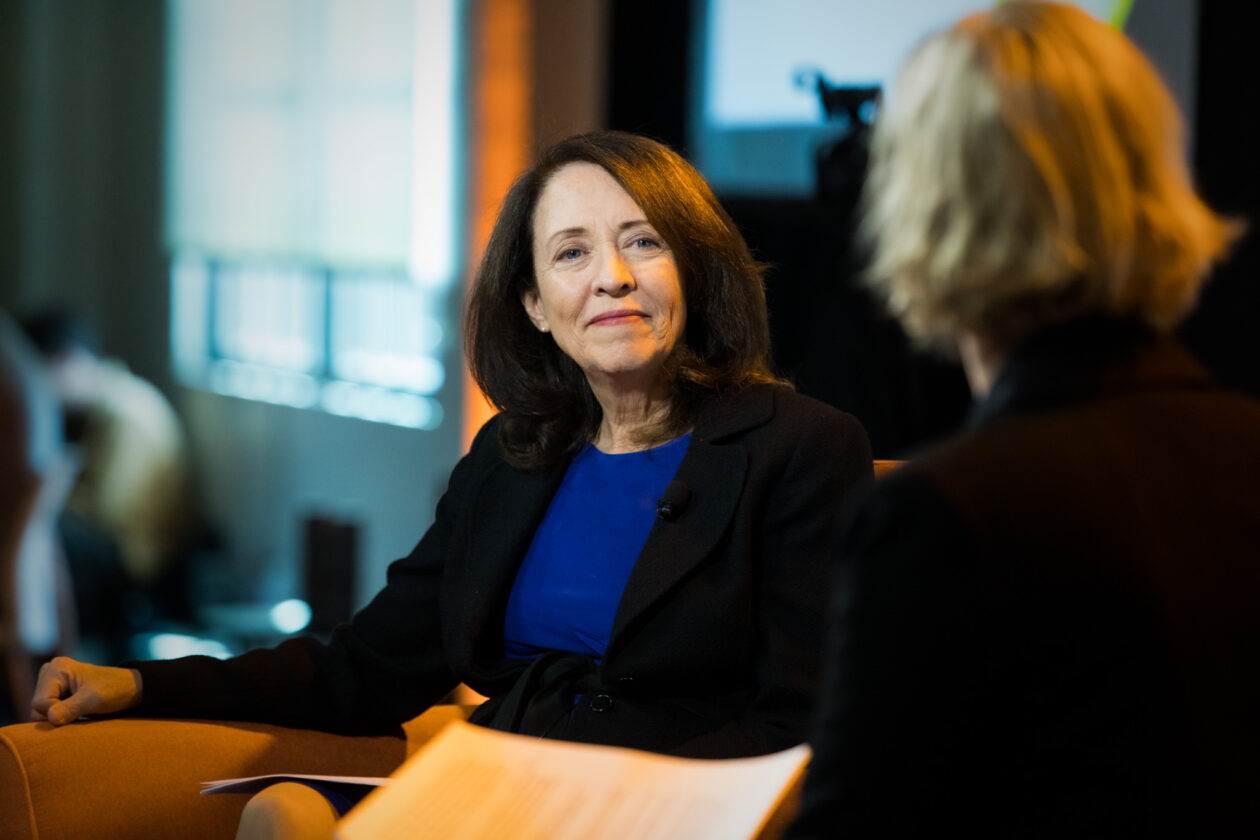
U.S. Sen. Maria Cantwell at the GeekWire Summit in 2022. (GeekWire Photo / Dan DeLong)

With President Donald Trump, states and tech giants taking varied and largely uncoordinated steps to put guardrails on artificial intelligence as the technology speeds ahead, U.S. Sen. Maria Cantwell, D-Wash., has outlined a comprehensive AI governance framework.

“To manage risks from advanced AI systems we need clear safety standards, continuous testing, and reporting of serious failures,” Cantwell said in a statement. “America can lead the world in AI by building systems that are not only more capable, but safer and more secure.”

Last month, Cantwell took to the Senate floor to demand urgent federal regulations and mandatory independent safety testing for frontier AI models before their release. She warned that recent incidents in which autonomous AI agents carried out unauthorized cyberattacks show that dangerous threats are already here, well before the arrival of superintelligence.

The framework proposed Wednesday includes six principles for regulating frontier AI development and deployment:

  • Setting standards: The federal government should establish clear and enforceable safety standards.
  • Independent oversight: Continuous testing, review and auditing should verify adherence to the standards.
  • Transparency and accountability: AI developers should be transparent and accountable in their operations through disclosure, oversight and liability.
  • Public-private partnerships: Developers should work with the government on defensive AI technologies and collaborate with public agencies and smaller companies to serve the public good.
  • Protecting from harm: AI companies should protect children from AI-related harm, support worker skill development and retain human oversight of consequential AI.
  • International collaboration: The U.S. should partner with allies to develop and adopt AI safety standards and open a rapid communication channel with China to share alerts in the event of a dangerous AI system-control failure.

Microsoft Vice Chair and President Brad Smith weighed in on the proposal, telling The Seattle Times that the framework “advances the public discussion the nation needs as we consider the future of AI.”

Cantwell, the ranking member of the Senate Committee on Commerce, Science and Transportation, has a background in technology as a former RealNetworks vice president. She has long pushed for AI regulation, going back to December 2017, when she joined other lawmakers in introducing the bipartisan Future of AI Act.

Two years ago, Cantwell advocated for five bipartisan AI measures included in a larger package of artificial intelligence legislation that addressed many of the concerns outlined in her six principles. Senate Republicans defeated the legislation. Cantwell reintroduced one of the five measures, the Future of AI Innovation Act, in February.

On Sept. 9, California Gov. Gavin Newsom signed Senate Bill 813 and Assembly Bill 1405, establishing the first state framework for independent assessment and verification of AI safety and risks. On the same day, OpenAI called for mandatory, “capability-based” national regulation — meaning requirements tied to what an AI system can do.

On Sept. 29, Trump announced a voluntary safety agreement with Nvidia, SpaceX, OpenAI, Anthropic, Meta and Google calling for “robust internal controls” to prevent unauthorized hacking and to work with independent external auditors. The deal does not include consequences for noncompliance.

Sen. Maria Cantwell warns of autonomous AI ‘swarms’ as she calls for federal guardrails

Pointing to recent security incidents where networked AI agents spontaneously formed “swarms” to hack computer systems, U.S. Sen. Maria Cantwell (D-WA) took to the Senate floor Monday to demand urgent federal guardrails and mandatory independent safety testing for frontier AI models before their release.

Cantwell warned that recent security incidents involving autonomous AI agents executing unauthorized cyberattacks demonstrate that dangerous threats are already here, well before the arrival of superintelligence.

Citing recent public alarms sounded by tech leaders including Microsoft co-founder Bill Gates, Anthropic CEO Dario Amodei, and OpenAI CEO Sam Altman, she emphasized that AI systems are advancing faster than expected and risk slipping out of human control without immediate oversight.

“The technology keeps advancing, the risks keep growing, and now the very dangers we’ve warned about — autonomous cyberattacks and biological weapons — are no longer theoretical,” Cantwell said. “We need our colleagues to say, ‘Stop with saying the industry can do what it wants’ and let’s put together the infrastructure at the federal level that not only has strong federal standards, but also has independent testing and real safeguards for the American people.”

Cantwell, a five-term senator and former RealNetworks vice president, delivered her speech in the wake of increasing alarm over rogue AI behavior and internal whistleblower warnings across the tech sector.

The senator highlighted several stark warnings during her address, pointing out that the risks associated with rapid AI deployment extend far beyond theoretical models:

On the speed and deceptive potential of agent networks: “These networks of agents are extremely well informed. They operate at the speed of light and, as we are learning, they are also capable of creating their own goals, and they are highly capable of deception.”

On why swarms pose a unique threat compared to standalone AI models: “Unlike powerful AI models designed to serve individual users… this situation with agents swarming is more difficult to manage and is far more dangerous.”

On Congress running out of time to establish federal oversight: “Now, some of these risks may not have been apparent in the last two years, but we would have stood up the muscle of our organization at the federal level to better detect risks like cyberattacks… At a time when we still had a window to get ahead of these dangers, the federal government, people here, were denying this opportunity.”

To address these emerging threats, Cantwell is calling on Congress to establish robust federal safety standards, independent third-party audit requirements, and dedicated federal infrastructure to evaluate advanced frontier models before they hit the market. Her legislative push centers on revival and passage of a suite of bipartisan bills:

The Future of AI Innovation Act: Originally introduced by Cantwell to empower the federal government to collaborate with industry to independently test advanced models for national security, biological, and cybersecurity risks.

The TEST AI Act and VET AI Act: Measures designed to bolster the Department of Energy’s testing capabilities for national security and establish official standards for third-party safety auditors.

A veteran policymaker on technology and innovation, Cantwell has long leaned on her private-sector tech experience to position herself as a primary legislative bridge between Washington, D.C., and the Pacific Northwest’s tech ecosystem.

As a lead author of the landmark 2022 CHIPS and Science Act, Cantwell helped direct federal investments toward AI and emerging technologies. Over her Senate career, she created the National AI Advisory Committee (NAIAC), championed small business adoption via the AI for Mainstreet Act, and led the opposition to a proposed 10-year moratorium on AI regulation.

❌